Top 15 Best Japanese Gyuto Knives That Will Change Cooking
Chopping vegetables or slicing meat with a dull or poorly balanced knife often turns a quick meal prep into a frustrating chore. The best japanese gyuto knives stand out because they hold a sharp edge longer and offer precision that avoids crushing or tearing food. These qualities are noticeable right away in the kitchen when you need consistent performance during daily use.
What makes a good gyuto knife depends mostly on the steel quality, blade length, and handle design. High-carbon steel is typical, as it keeps a sharper edge and is easier to resharpen, but it needs drying after use to prevent rust.
Blades usually range from 180 to 210 mm, balancing control and cutting area. The handle should fit comfortably in your hand, often made from wood or composite materials, to reduce fatigue during extended prep times.
Need a Quick Check?
| Image | Product | Price |
|---|---|---|
Our Top Picks 1  | Mitsumoto Sakari Gyuto | Check Price |
Our Top Picks 2  | Japanese VG10 Chef Knife | Check Price |
Our Top Picks 3  | Hoshanho Gyuto Knife | Check Price |
Our Selected Top 15 Japanese Gyuto Knives for Different Needs
This list features carefully chosen Japanese gyuto knives that cater to various cooking styles and preferences. Each review details the knife’s performance, ideal user, and highlights key strengths and weaknesses to help you make an informed decision.
1. MITSUMOTO SAKARI Gyuto Chef Knife
Perfect for serious home cooks and professionals, the MITSUMOTO SAKARI Gyuto Chef Knife stands out with its careful hand-forged construction. Its biggest strength lies in the San-Mai layered blade, which combines durability with excellent edge retention, making it a trustworthy tool for precise slicing tasks.
Setting up is simple since the knife comes ready to use with a sharp edge. The 8-inch Gyuto blade shape fits well in hand for controlled chopping, slicing, and rocking techniques. Its tsuchime hammered texture and black forged finish help food slide smoothly off the blade, keeping your cutting surface cleaner and allowing better grip during prep.
The combination of 9Cr18MoV high carbon steel core and the San-Mai triple-layer design creates a strong and steady cutting edge. The knife handles daily kitchen tasks with easy pull cuts through meat, vegetables, and herbs. While many appreciate the sharpness and clean slicing capacity, some mention the black kurouchi finish may require extra care to maintain its look over time.
The layered San-Mai blade offers excellent cutting strength and edge stability, widely praised for smooth slicing and clean cuts in reviews. On the downside, the kurouchi black forged finish tends to need more care to prevent discoloration or wear over time.
Those who enjoy working with traditional hand-forged Japanese knives will find this Gyuto satisfying, especially for intricate slicing and prep. Users looking for an ultra-lightweight or no-maintenance blade might want to consider other options made from different steel or finishes.
Pros
- Strong, steady edge thanks to San-Mai construction
- Textured blade reduces food sticking while slicing
- Sharp out of the box with precise pull cuts
- Classic hand-forged look with functional design
Cons
- Black kurouchi finish may require extra maintenance
- Heavier compared to some modern stainless blades
| Specification | Details |
|---|---|
| Blade length | 8-inch |
| Blade material | 9Cr18MoV high carbon stainless steel core |
| Blade construction | 3-layer San-Mai structure |
| Finish | Tsuchime hammered texture, kurouchi black forged |
| Model Number | MS-135 |
2. Japanese VG10 Chef Knife
Precision and sharpness matter most when prepping meals, and this knife fits the bill perfectly. Designed for chefs who value clean, precise cuts, it’s perfect for anyone seeking control and accuracy.
Its standout feature is the razor-sharp edge that cuts through ingredients without tearing or wedging.
Setup involves unpacking a single chef knife complete with a manual and wipe cloth for maintenance. Its hand-sharpened edge and tapered geometry mean slicing feels smooth day-to-day.
The knife holds a balance between weight and agility, making it comfortable to use for extended kitchen routines while maintaining sharpness.
Made from VG10 steel with three layers and hardened above 60 HRC, it stays sharp longer and resists dulling. Cutting resistance feels low, allowing precise, clean cuts along the full length of the blade. The main drawback mentioned is the need to handle it carefully due to the very thin tip, which can be less durable under heavy force.
Users appreciate the sharp, precise edge that makes clean cuts without tearing ingredients. Common feedback points to careful use needed because the thin tip can be fragile under tough pressure. Day-to-day cutting benefits from the durable VG10 steel and balanced construction.
Anyone who values fine slicing and kitchen precision will find satisfaction here. Those looking for a heavier, multi-purpose or tough-duty knife might want to consider an alternative better suited to rough handling.
Pros
- Hand-forged with precise cutting geometry
- Edge retention thanks to VG10 steel core
- Light cutting feel with tapered blade design
- Comes with detailed manual and care cloth
Cons
- Thin tip requires careful handling
- Not ideal for heavy prying or tough tasks
| Specification | Details |
|---|---|
| Brand Name | KAWAHIRO |
| Model Number | KH-6601 |
| Steel Type | VG10 |
| Hardness | 60+ HRC |
| Included Components | Certificate of Authenticity, Manual, Wipe Cloth, Chef Knife |
3. HOSHANHO Gyuto Chef Knife
Featuring a core of Japan 10Cr15CoMoV super steel wrapped in 9 layers of high carbon steel, this knife stands out for its durability and sharpness. Ideal for home cooks and professionals who want a knife that stays sharp and resists rust with regular use.
Set up is straightforward, just out of the box it feels balanced in the hand thanks to its 8-inch design. The 12-15 degree hand-polished V-shaped blade cuts through veggies and meat cleanly. Cleaning involves simple hand washing, avoiding rust thanks to the corrosion-resistant steel layers.
The sandwich blade design keeps it stable and sharp longer.
Cutting performance is precise, with the wet V-shaped sharpening technology maintaining a keen edge while handling different ingredients. The high carbon steel core ensures the blade keeps its toughness over time. Most praise focuses on the sharpness and longevity.
A noted downside is that it requires careful cleaning to maintain its condition.
Reports often mention how well the blade retains its edge after prolonged use, thanks to the wet sharpening process and steel choice. Cleaning carefully is important, as mishandling can affect the high carbon steel core’s condition over time.
Cooks who want a sharp, balanced Japanese gyuto that lasts will appreciate this knife. Those seeking a no-maintenance or dishwasher-safe option might want a different model designed for easier upkeep.
Pros
- Extremely sharp hand-polished V-shaped blade
- Durable 9-layer high carbon steel construction
- Corrosion and rust-resistant outer layers
- Balanced feel suitable for various cutting tasks
Cons
- Needs careful washing to avoid blade damage
- Blade edges can be delicate under rough use
| Specification | Details |
|---|---|
| Blade Material | Japan 10Cr15CoMoV super steel core |
| Layers | 9 layers high carbon steel |
| Blade Length | 8 inch |
| Blade Angle | 12-15 degrees |
| Manufacturer Part Number | HSHES-2024-003-1 |
4. HOSHANHO High Carbon Steel Chef Knife
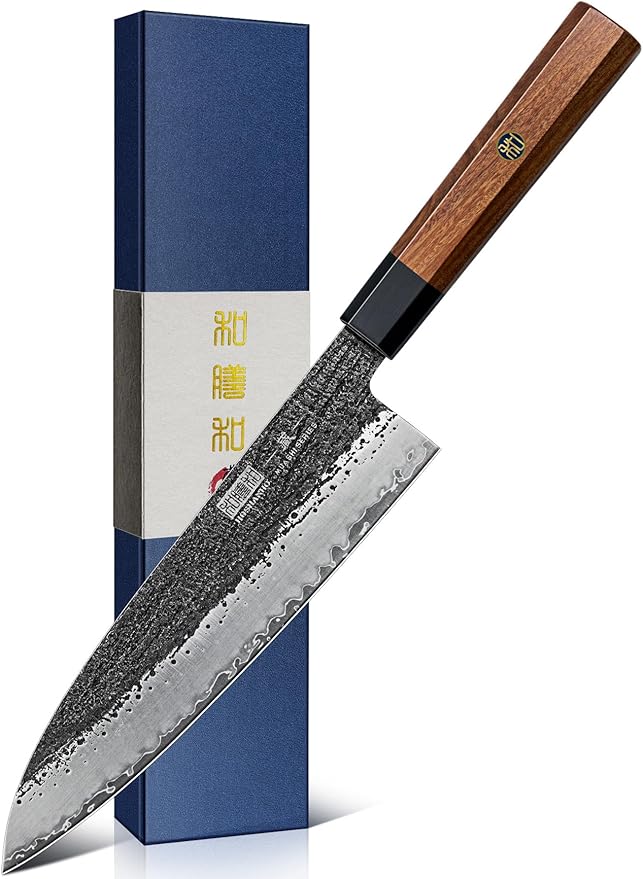
People who appreciate precision and durability in their kitchen knives will find this Japanese Gyuto well suited to their needs. It stands out for its sharpness and long-lasting edge, great for cooks looking to maintain clean, exact cuts over time without frequent sharpening.
Setting it up is simple since it comes ready to slice right out of the box with a hand-sharpened 12° cutting edge. Daily use involves cutting a wide range of ingredients from sashimi to root vegetables, where the sharpness and corrosion resistance really shine. The knife feels balanced and comfortable to handle during meal prep.
The blade’s high carbon steel core ensures excellent cutting performance and superior wear resistance. It keeps its sharpness longer than many traditional knives and handles tough jobs without dulling quickly. Common praise focuses on its sharpness and durability, while some mention it requires careful cleaning to avoid corrosion despite the cladding protecting the blade.
The knife is praised for its sharp hand-polished 12° edge that cuts through a wide range of ingredients with ease. At the same time, the main complaint is the need for careful cleaning to maintain the corrosion-resistant cladding and avoid rust.
This knife suits someone who values sharpness and wear resistance and can handle routine maintenance to keep it in shape. Those looking for a lower-maintenance option might want to explore alternatives with less demanding care requirements.
Pros
- Sharp edge holds longer than traditional knives
- Balanced feel for precision cutting
- Corrosion resistance with composite steel cladding
- Versatile for slicing sashimi and vegetables
Cons
- Requires careful cleaning to prevent corrosion
- Edge angle may need occasional touch-ups for heavy use
| Specification | Details |
|---|---|
| Blade Steel | Japanese 10CR15MOV high carbon steel |
| Blade Hardness | Up to 62 HRC |
| Blade Edge | Hand-sharpened 12° cutting edge |
| Blade Structure | Sandwich composite with corrosion-resistant cladding |
| Blade Length | 8 Inch |
| Unit Count | 1 Count |
5. Japanese VG10 Damascus Chef Knife

Expertly crafted with a VG-10 steel core and 67-layer Damascus cladding, this chef knife stands out for its remarkable sharpness and resistance to stains. Well-suited for serious home cooks and professionals, its biggest strength lies in maintaining a razor-sharp edge that makes slicing through meat, fish, and vegetables surprisingly smooth.
Preparing meals becomes a straightforward task with this knife, thanks to the hand-sharpened blade that’s ready to cut smoothly from day one. The balance and weight feel just right in hand, not too heavy or light, which helps with precision during prolonged kitchen use.
Cleaning is simple since the materials resist rust, so it stays looking great without extra work.
Performance shines through with its surgical precision and durable construction. The blade’s sharpness easily handles various cutting tasks, showcasing consistent quality in craftsmanship. The strongest praise highlights the edge retention and sharpness, while a common gripe is that the handle might not suit everyone in terms of comfort or grip size.
The most praised feature is the blade’s ability to stay sharp and cut cleanly, making prep work smooth and precise. A repeated complaint relates to the handle’s comfort level, where some find it less ergonomic compared to other designs.
This knife suits cooks who need a sharp, durable tool for varied kitchen tasks and appreciate Japanese steel quality. Those looking for a more versatile grip or a full set may prefer exploring other options.
Pros
- Razor-sharp edge straight from the box
- Long-lasting sharpness thanks to VG-10 core
- Elegant stain-resistant Damascus cladding
- Balanced weight suitable for precise cutting
Cons
- Handle shape may not fit all hand sizes
- Single knife, no set included
| Specification | Details |
|---|---|
| Brand Name | Atumuryou |
| Model Number | AT8101-US02 |
| Material | VG-10 Steel Core with 67-layer Damascus Cladding |
| Hardness | 62 HRC |
| Included Components | Chef Knife |
| Manufacture Year | 2025 |
6. VG10 Damascus Gyuto Knife

Kanngou VG10 Damascus Gyuto Knife is designed for those who want a combination of durability and precision in the kitchen. It excels in maintaining a sharp edge longer than typical blades, making it suitable for serious home cooks and professionals who appreciate fine Japanese craftsmanship.
Setup includes a gift box and wash cloths, adding convenience right from the start. The knife’s 67 layers of Damascus steel with a VG-10 core bring excellent corrosion resistance and strength.
The hand-sharpened edge to a 10 to 12-degree angle means it’s ready for detailed cutting and slicing tasks every day without losing sharpness quickly.
Cutting performance stays sharp far beyond standard knives, thanks to the VG-10 core and AUS-10 steel core sharpening method. The blade’s wavy Damascus pattern adds flexibility and helps prevent chipping during use.
Strong points include its durability and edge retention. The most noted drawback is that such sharp edges require careful handling and maintenance to avoid accidents.
The knife’s lasting sharpness and strong blade construction are standout features. Regular sharpening and careful handling remain essential to prevent damage or accidents while using it. The Damascus pattern is not just for looks but strengthens the blade during everyday use.
Anyone who values sharp, long-lasting blades and appreciates Japanese steel craftsmanship will enjoy this knife. Those seeking low-maintenance or less sharp options should look elsewhere. It’s ideal for cooks comfortable managing a high-maintenance, razor-sharp blade.
Pros
- Exceptional edge retention with VG-10 core
- Beautiful and functional Damascus steel pattern
- Sharpness lasts twice as long as standard blades
- Comes with convenient wash cloths and gift box
Cons
- Requires careful handling due to very sharp edge
- Needs regular maintenance to keep peak performance
| Specification | Details |
|---|---|
| Blade Material | 67 Layers Damascus Steel with VG-10 Core |
| Hardness | HRC 60-62 |
| Sharpening Angle | 10 to 12 degrees (3-step Honbazuke method) |
| Manufacturer | Kanngou |
| Included Components | Wash Clothes, Gift Box |
| Model Number | KG8601 |
7. Japanese VG10 Damascus Chef Knife

Sliding through vegetables and fish feels smooth and natural with a finely balanced blade that’s razor-sharp right out of the box. Ideal for chefs who value precision and delicate cutting, this knife makes paper-thin slices manageable without struggle, helping maintain ingredient texture.
Its standout feature is the way it glides smoothly through food with very little resistance.
Out of the box, it comes ready with a manual and a wipe cloth for care, along with a certificate confirming authenticity. The knife’s weight feels well distributed thanks to its tapered design, helping reduce fatigue during long prep sessions.
Daily cutting of tomatoes or sashimi highlights its ability to minimize damage to moisture retention in ingredients.
Built with an advanced distal taper blade, the knife thins from heel to tip, allowing for clean, precise cuts. It’s crafted with VG10 Damascus steel, prized for sharpness and durability. Many find it extremely sharp and easy to handle for detailed work, though some mention it requires careful upkeep to maintain that sharp edge over time.
People praise how smoothly the blade cuts through soft and delicate foods without crushing them, preserving natural moisture. The most common issue mentioned is the need for careful upkeep to keep the edge sharp and prevent chips.
Those who appreciate fine slicing and want a light, precise knife will enjoy this model. Anyone who prefers a low-maintenance knife or cuts only tough ingredients should consider other options.
Pros
- Razor-sharp right from first use
- Advanced distal taper blade design
- Lightweight with great balance
- Care package includes manual and cloth
Cons
- Requires regular maintenance to keep sharpness
- Edge delicate, may chip if misused
| Specification | Details |
|---|---|
| Brand Name | KAWAHIRO |
| Model Number | KH-6701 |
| Manufacture Year | 2026 |
| Blade Length | 210mm |
| Included Components | Certificate of Authenticity, Chef Knife, Manual, Wipe cloth |
8. MITSUMOTO SAKARI Chef Knife Set

A solid 4-piece Japanese knife set designed for home cooks who want precise, reliable blades. Most appreciated for the sharpness and balanced weight of the Gyuto knife, it’s well-suited for someone looking to handle all daily cutting tasks efficiently in a coordinated set.
Getting started is straightforward thanks to the included knife blade oil and the elegant sandalwood box for convenient storage. The set covers a wide range of kitchen prep needs, from slicing with the Gyuto to vegetable chopping with the Nakiri.
The hand-forged blades feel sturdy in hand, and their balanced weight helps maintain control during prolonged use.
Cutting performance is sharp and consistent because of the 3-layer 9Cr18MoV stainless steel blades with deep-cryogenic treatment. Hardness is around HRC 58±2, which maintains strength without sacrificing toughness.
Most users praise the blade’s edge retention and balance. Some mention the handles could be more ergonomically shaped for extended tasks.
The knives retain sharpness well and feel solid due to the 3-layer forged construction and treated steel. Most users find the set reliable and balanced, though a few note the handles don’t suit longer sessions perfectly.
Ideal for home cooks wanting a coordinated set with good edge retention and versatile knives. Those who prefer very lightweight or highly ergonomic handles might want to explore other options.
Pros
- Varied knives cover all common kitchen tasks
- Deep-cryogenic treatment improves blade durability
- Hand-forged San-Mai construction adds strength
- Comes with protective sandalwood box and blade oil
Cons
- Handle shape can feel less ergonomic over time
- Some may prefer lighter or differently balanced knives
| Specification | Details |
|---|---|
| Set Name | MITSUMOTO SAKARI 4-Piece Japanese Chef Knife Set |
| Number of Items | 4 |
| Blade Material | 3-Layer 9Cr18MoV high carbon stainless steel |
| Blade Hardness | HRC 58±2 |
| Included Components | Sandawood Box, knife blade oil |
9. Made in Cookware Japanese Damascus Gyuto

Known for its Damascus steel blade with a VG10 core, this Gyuto knife is designed for cooks who value sharpness and balance. Its thin, lightweight blade suits those who want a versatile kitchen tool capable of handling various cutting techniques effectively.
The 7 1/4” blade is ready to use straight out of the box and provides plenty of length for slicing, dicing, and chopping. The 15-degree blade angle helps keep cuts precise, while the full tang construction supports balanced handling. Its 7.25oz weight feels light enough for detailed work without sacrificing control.
Cutting performance is consistently sharp and precise thanks to the high-carbon VG10 core. The layered Damascus steel not only looks attractive with its 66 folded layers but also adds durability.
Common praise highlights the balance and edge retention. Some users mention blade maintenance as a minor hassle due to its thinness.
Sharpness and balance stand out as the knife’s strongest features, providing consistent precision during prep. Cleaning and upkeep demand some extra care due to the delicate blade thickness, which might not suit heavy-duty chopping.
Chefs who appreciate detailed cutting and a visually distinctive blade will find this knife satisfying. Those wanting a thicker, more durable blade for rougher work might consider other options instead.
Pros
- Sharp edge holds longer with VG10 core
- Lightweight design aids precision
- Balanced feel from full tang blade
- Unique Damascus pattern on blade
Cons
- Blade requires careful maintenance
- Thin blade can feel delicate
| Specification | Details |
|---|---|
| Blade Angle | 15 Degrees |
| Blade Length | 7 1/4” |
| Blade Thickness | 2.3mm |
| Weight | 7.25oz |
| Material | Japanese Damascus Steel with VG10 Core |
| Model Number | CUT-8-KNF-JP |
10. Shun Sora Chefs Knife

Sharpness stands out immediately when using the Shun Sora 8-inch Chef’s Knife, ideal for cooks who want a knife that handles different kitchen tasks with precision. Its traditional look mixed with modern technology gives it a clean, well-balanced feel suited for a variety of slicing, dicing, and mincing jobs.
Setting it up requires no extra fuss as it comes ready to use right out of the box. The VG10 steel blade supported by stainless steel keeps its sharpness longer.
The 16-degree edge angle helps with precise cuts, and the narrow gyuto-style blade makes it easy to maneuver through vegetables and meats alike. Cleanup is straightforward due to the stainless steel upper blade, and the knife feels comfortable in hand during extended use.
It performs well by holding a sharp edge while being durable and easy to control. The knife is handcrafted in Japan, combining VG10 steel with 420J stainless steel, which delivers both hardness and rust resistance.
Customers often praise its sharp edge and balance. A common drawback mentioned is the blade’s fragility when used improperly or on harder materials.
The knife receives strong praise for its sharpness and balance, making slicing and dicing tasks smooth and accurate. However, many note the blade’s vulnerability to chipping if used on unsuitable surfaces, meaning cautious handling is essential.
Those who cook regularly and appreciate Japanese craftsmanship will enjoy this knife’s performance and feel. It may not be suitable for heavy-duty chopping or use on hard objects, so users wanting a more rugged tool might want to consider alternatives.
Pros
- Razor-sharp edge with precise 16-degree angle
- Comfortable to hold for various cutting tasks
- NSF Certified and handcrafted in Japan
- Attractive combination of traditional and contemporary design
Cons
- Blade can chip if used on hard materials
- Requires careful maintenance to keep edge sharp
| Specification | Details |
|---|---|
| Brand Name | Shun |
| Model Number | VB0706 |
| Blade Length | 8 inches |
| Blade Steel | VG10 with 420J stainless steel |
| Manufactured By | Kershaw |
| Certification | NSF Certified |
11. Kimura Japanese Gyuto Chef Knife

Kimura’s 8-inch Japanese Gyuto is made for those who want a high-quality chef knife with excellent edge retention and durability. Its standout feature is the premium High Carbon Chrome Molybdenum Stainless Steel blade, sharpened precisely to 15 degrees for sharpness and precision, making it ideal for serious cooking at home or in a professional kitchen.
Using the knife feels comfortable thanks to the ergonomic POM Resin handle that doesn’t slip, even when your hands are wet. The full bolster gives you options on how to hold it, supporting different grips without discomfort.
It’s balanced well for control during slicing, chopping, or dicing, making day-to-day meal prep smoother and more enjoyable.
Cutting through vegetables, meat, and fish is efficient due to the heat-treated 57 HRC blade. The craftsmanship from Seki, Japan guarantees a sharp edge that resists dulling for a good stretch. Most praise focuses on how sharp and durable the blade stays, while common criticism points to a bit of weight that some find tiresome for extended use.
The blade stays sharp for long thanks to skilled hand sharpening and a heat-treated steel that balances durability with edge retention. Many note the comfort of the ergonomic handle but do mention the overall weight can be tiring through longer chopping sessions.
Anyone who values a solid, sharp blade and ergonomic handling will appreciate this knife’s design and build. People looking for a lightweight option might want to consider alternatives that are easier to hold for extended periods.
Pros
- Sharp edge hand sharpened to 15 degrees
- Durable high carbon stainless steel blade
- Comfortable non-slip POM Resin handle
- Full bolster supports various grip styles
Cons
- Some users find the knife on the heavier side
- Not suited for those preferring a lighter blade
| Specification | Details |
|---|---|
| Blade material | High Carbon Chrome Molybdenum Stainless Steel |
| Blade hardness | 57 HRC |
| Blade length | 8 inch |
| Handle material | POM Resin |
| Country of manufacture | Japan (Seki) |
12. Imarku Japanese Gyuto Chef Knife
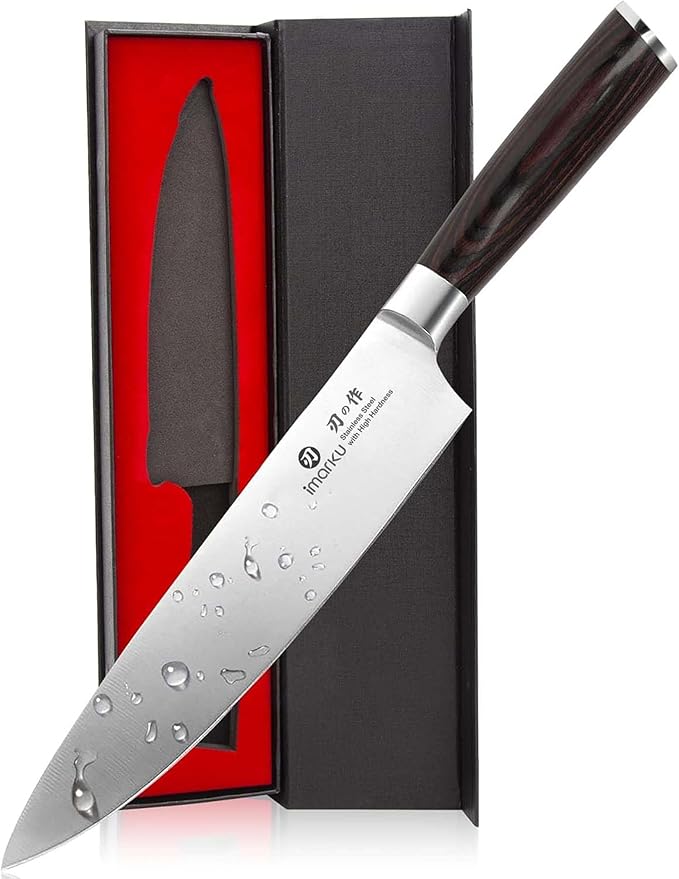
Chopping and slicing speed up significantly when you have a sharp, durable knife designed for all kinds of kitchen tasks. This 8-inch Gyuto chef knife suits both home cooks and pros who want a reliable tool for cutting, dicing, and even handling meat on the bone without swapping knives.
Getting to grips with the knife is easy due to its ergonomic design, which feels balanced and comfortable in hand. Cleaning is straightforward since it’s made of high-carbon stainless steel that resists rust.
Regular kitchen prep flows well, as it easily handles vegetables and proteins alike, cutting smoothly and maintaining sharpness between uses thanks to its sturdy steel.
Performance never disappoints when slicing or chopping thanks to its sharp, hard blade with a Rockwell Hardness Scale rating of 56-58. The blade’s 0.6-0.75% carbon content makes it quite tough, about twice as hard as many similar knives.
Most praise its lasting sharp edge, while some mention the weight may feel a bit heavy for extended use.
The high-carbon content and Rockwell Hardness score give the blade a sharp, hard edge that lasts through multiple kitchen tasks, praised often in reviews. Some find the blade weight a bit heavy over time, which can affect comfort during prolonged use.
Anyone wanting a versatile, tough knife for various cutting needs will appreciate this tool. Those looking for a lighter blade or low-maintenance piece might consider alternatives better suited to those preferences.
Pros
- Hard steel blade holds sharp edge well
- Ergonomic design feels balanced and comfortable
- Multipurpose for chopping, slicing, dicing, and cutting meat
Cons
- Heavier weight may tire hand during long use
- Cleaning requires care to maintain steel condition
| Specification | Details |
|---|---|
| Blade Material | High-Carbon Stainless Steel |
| Carbon Content | 0.6-0.75% |
| Blade Length | 8 inches |
| Hardness (HRC) | 56-58 |
| Included Components | 1 pc chef knife |
13. Dalstrong Japanese Gyuto Chef Knife

Boasting a hand-finished 8–12° edge per side and made from high-quality Japanese AUS-10V steel, this 8-inch gyuto knife excels at precision slicing for everyday meal prep. Ideal for those who want a sharp, durable knife that handles chopping, dicing, and slicing with excellent control and minimal food sticking.
Daily use involves straightforward handling thanks to the contoured G-10 handle, which offers a secure grip tailored for a pinch hold. The wide blade provides ample knuckle clearance, making prolonged cutting comfortable. The hammered finish helps reduce food buildup on the blade, cutting down on interruptions while preparing various ingredients like onions, herbs, and boneless meat.
Performance is sharp and stays that way because of the AUS-10V steel core rated at 62+ on the Rockwell hardness scale, retaining its edge through frequent use. Build quality is solid, with a smooth spine for better control and a blade designed to reduce stickiness.
While it’s praised for sharpness and durability, some note the handle might feel a bit unfamiliar at first and can take some time to get used to.
The sharpness and durability of the blade receive consistent praise, especially the polished edge and reduced food sticking from the hammered finish. The handle design, while secure, is the most commonly mentioned adjustment for comfort and grip stability.
Anyone who spends time on detailed vegetable prep or slicing meat will appreciate this knife’s precision and edge retention. Cooks preferring a classic western handle or lighter knives might want to consider alternatives better suited to their preferences.
Pros
- Sharp edge with excellent edge retention
- Hammered blade reduces food sticking
- Comfortable G-10 handle suited for pinch grip
- Wide blade allows for knuckle clearance
Cons
- Handle shape may feel unusual initially
- Blade may require careful maintenance
| Specification | Details |
|---|---|
| Blade Length | 8 inches |
| Steel Type | Japanese AUS-10V |
| Edge Angle | 8–12° per side |
| Handle Material | Contoured G-10 |
| Rockwell Hardness | 62+ |
14. Yoshihiro VG10 Damascus Gyuto Knife

Perfect for home cooks and aspiring chefs who want a reliable all-rounder, the Yoshihiro VG10 Damascus Gyuto Knife stands out with its sharpness and beautiful Damascus pattern. It suits anyone needing a versatile Japanese chef’s knife that combines solid performance with eye-catching design.
Getting started is simple since the handle shape follows a Western style, making it comfortable for many grips. The mahogany handle feels sturdy but light, balancing well with the blade. Cleaning requires normal hand washing to maintain the stain resistance from the VG10 stainless steel core without worrying about rust.
Slicing through meat, vegetables, and fish feels precise thanks to the 60 Hrc hardness and double-edged blade. The 16 layers of steel forged around the VG10 core add durability and a subtle hammered texture that prevents sticking.
Most users praise its sharpness and craftsmanship, though some mention the lack of a saya cover as a minor downside.
Sharpness and craftsmanship stand out the most, making slicing smooth and easy. Some find the lack of a saya cover inconvenient for storage or transport. Cleaning and maintaining the knife is straightforward thanks to the stain-resistant VG10 stainless steel core and balanced handle.
Anyone looking for a sharp, visually appealing Gyuto with a comfortable Western grip will be happy with this knife. Those needing added storage protection or a larger handle might want to consider other options tailored for those preferences.
Pros
- Sharp VG10 core holds edge well
- Comfortable Western-style mahogany handle
- Attractive 16-layer Damascus pattern
- Good stain resistance for easy maintenance
Cons
- No saya cover included for blade protection
- Handle may feel small for bigger hands
| Specification | Details |
|---|---|
| Blade Material | VG10 Stainless Steel |
| Edge Angle | Double Edged |
| Handle Material | Mahogany |
| HRC | 60 |
| Handle Shape | Western |
| Knife Style | Gyuto Chef Knife |
15. Yoshihiro AUS10 Wa Gyuto Chef Knife

A compact 8.25 gyuto suited for cooks wanting agile control without sacrificing versatility. The standout feature is its lightweight yet sturdy blade made from ice hardened AUS10 steel that holds a sharp edge, perfect for precise slicing and chopping in the kitchen.
Handling feels balanced thanks to the ebony triple ring Wa-style handle, which fits comfortably in hand during prep work. The blade’s gentle curve supports a rocking motion for vegetables yet its pointed tip excels at quick chopping, making it a reliable tool for various kitchen tasks. Daily maintenance is manageable since it resists stains well.
Cutting performance is excellent with a thin, razor-sharp blade that moves smoothly through meat and produce alike. Construction from a single piece of high carbon stainless steel offers durability, while the ice hardening at HRC 61 keeps the edge long-lasting.
Some mention the smaller 210mm size may not suit those used to longer blades.
The sharpness and balance of the blade consistently stand out as key positives in reviews, making chopping and slicing tasks smoother. Some find the 210mm length less suited for bigger tasks, preferring longer blades for heavy-duty work.
Cooks looking for a nimble, precise chef knife will appreciate the performance and feel, while those wanting longer reach or heavier knives might explore alternatives. The handle’s traditional design suits those who value comfort during extensive kitchen prep.
Pros
- Lightweight and easy to handle
- Sharp blade holds edge well
- Resistant to stains
- Comfortable octagonal ebony handle
Cons
- Blade length may feel short for some
- Requires regular sharpening to maintain edge
| Specification | Details |
|---|---|
| Blade Length | 8.25″ (210MM) |
| Steel Type | ICE HARDENED AUS10 |
| Hardness | HRC 61 |
| Handle Material | Ebony Wood Triple Ring Wa Handle |
| Model Number | WP-PCNR-BNLX |
| Included Components | Knife, Knife Sheath |
Best Japanese Gyuto Knives Comparison Table
| Product | Brand | Model Number | Included Components | Unit Count |
|---|---|---|---|---|
| Mitsumoto Sakari Gyuto | MITSUMOTO SAKARI | MS-135 | – | 1 Count |
| Japanese VG10 Chef Knife | KAWAHIRO | KH-6601 | Certificate, Manual, Cloth | 1 Count |
| Hoshanho Gyuto Knife | HOSHANHO | 8 inch Chef Knife | 8 inch chef knife | 1 Count |
| Hoshanho Carbon Steel Knife | HOSHANHO | 8 Inch Chef Knife | 8 Inch Chef Knife | 1 Count |
| Japanese VG10 Damascus Knife | Atumuryou | AT8101-US02 | Chef Knife | 1 Count |
| VG10 Damascus Gyuto | Kanngou | KG8601 | Wash Clothes, Gift Box | 1 Count |
| VG10 Damascus Chef Knife | KAWAHIRO | KH-6701 | Certificate, Manual, Cloth | 1 Count |
| Mitsumoto Sakari Knife Set | MITSUMOTO SAKARI | MS-2680 | 4-Piece Set, Oil, Box | 4 Count |
| Made In Cookware Damascus Gyuto | Made In | CUT-8-KNF-JP | Japanese Damascus Steel Knife | 1 Count |
| Shun Sora Chef Knife | Shun | VB0706 | Chef Knife, NSF Certified | 1 Count |
| Kimura Japanese Gyuto | Kimura | Kimura | Japanese Kitchen Knife | 1 Count |
| Imarku Japanese Gyuto | imarku | 8-inch chef knife | 1 pc chef knife | 1 Count |
| Dalstrong Japanese Gyuto | Dalstrong | SSXChef | Knife, Sheath, Gift Box | 1 Count |
| Yoshihiro VG10 Damascus | Yoshihiro | HDGY21 | Kitchen Knife | 1 Count |
| Yoshihiro AUS10 Wa Gyuto | Yoshihiro | WP-PCNR-BNLX | Knife, Knife Sheath | 1 Count |
- BrandMITSUMOTO SAKARI
- Model NumberMS-135
- Included Components–
- Unit Count1 Count
- BrandKAWAHIRO
- Model NumberKH-6601
- Included ComponentsCertificate, Manual, Cloth
- Unit Count1 Count
- BrandHOSHANHO
- Model Number8 inch Chef Knife
- Included Components8 inch chef knife
- Unit Count1 Count
- BrandHOSHANHO
- Model Number8 Inch Chef Knife
- Included Components8 Inch Chef Knife
- Unit Count1 Count
- BrandAtumuryou
- Model NumberAT8101-US02
- Included ComponentsChef Knife
- Unit Count1 Count
- BrandKanngou
- Model NumberKG8601
- Included ComponentsWash Clothes, Gift Box
- Unit Count1 Count
- BrandKAWAHIRO
- Model NumberKH-6701
- Included ComponentsCertificate, Manual, Cloth
- Unit Count1 Count
- BrandMITSUMOTO SAKARI
- Model NumberMS-2680
- Included Components4-Piece Set, Oil, Box
- Unit Count4 Count
- BrandMade In
- Model NumberCUT-8-KNF-JP
- Included ComponentsJapanese Damascus Steel Knife
- Unit Count1 Count
- BrandShun
- Model NumberVB0706
- Included ComponentsChef Knife, NSF Certified
- Unit Count1 Count
- BrandKimura
- Model NumberKimura
- Included ComponentsJapanese Kitchen Knife
- Unit Count1 Count
- Brandimarku
- Model Number8-inch chef knife
- Included Components1 pc chef knife
- Unit Count1 Count
- BrandDalstrong
- Model NumberSSXChef
- Included ComponentsKnife, Sheath, Gift Box
- Unit Count1 Count
- BrandYoshihiro
- Model NumberHDGY21
- Included ComponentsKitchen Knife
- Unit Count1 Count
- BrandYoshihiro
- Model NumberWP-PCNR-BNLX
- Included ComponentsKnife, Knife Sheath
- Unit Count1 Count
How to Choose the Right Japanese Gyuto Knife
Consider the blade material, sharpness, weight, and handle comfort when selecting a Japanese Gyuto knife. Choosing the right balance of these factors ensures better performance, durability, and ease of use, ultimately saving money by avoiding frequent replacements or discomfort during extended use.
Blade Material and Construction
High-carbon steel blades tend to hold a sharper edge longer than stainless steel, but they also need more careful maintenance to avoid rust and staining. Stainless steel options don’t require as much upkeep and are more resistant to corrosion, making them better suited for everyday kitchen use, especially in humid environments.
The trade-off is usually in sharpness and edge retention.
Blade hardness, measured on the Rockwell scale, determines how long the edge stays sharp and how easy it is to sharpen. Harder blades (around 60-62 HRC) maintain their edge longer but can feel brittle and require more skill to sharpen. Softer steels sharpen easily but lose their edge faster.
Forging and layering techniques add to the blade’s durability and cutting ability. Hand-forged blades with multiple layers ( Damascus-style) tend to offer a good balance between strength, flexibility, and sharpness.
Blade Size and Shape
Blades in the 180 to 210 mm (7 to 8 inches) range are versatile for most kitchen tasks, from slicing vegetables to cutting meat. Longer blades around 240 mm help when working with larger items or for those who want more cutting surface, while shorter ones offer better control for detail work. Blade thickness affects precision, thinner blades slice more cleanly but can bend if used improperly, while thicker blades are sturdier but may drag through food more.
The curvature along the edge dictates how easily the knife rocks on the cutting board. A more curved belly suits rocking motions used in chopping herbs or dicing, while a straighter edge is better for push cuts.
The tip shape also influences chopping style; a pointed tip works well for piercing and fine cuts, whereas a rounded tip allows smooth rocking.
Handle Design and Comfort
Handles made from wood, composite materials, or resin all feel different in the hand. Wood offers a warm, natural grip but can absorb moisture over time, requiring extra care.
Resin or synthetic handles resist moisture and provide a consistent grip. Weight distribution between handle and blade affects balance and effort during cutting, which is noticeable during long prep sessions.
Ergonomics come into play for comfort, handles shaped to fit the hand reduce fatigue, especially when chopping or slicing for extended periods. Different knife grips require different handle shapes: a pinch grip pairs well with a narrow, contoured handle, while a full-hand grip works better with a thicker, rounded handle. Choosing the right handle avoids strain and improves control.
Edge Sharpness and Maintenance
Knives that come from the factory razor-sharp are impressive but their edge retention varies depending on the steel and heat treatment. Maintaining a sharp edge requires consistent honing and occasional sharpening. Most Japanese blades benefit from whetstones rather than pull-through sharpeners, preserving the blade’s fine angle and sharpness.
Rust resistance plays a big role in how easy the knife is to clean and store. High-carbon steel might develop patina or rust spots without proper drying and oiling, which adds to maintenance time.
Stainless steel knives are more forgiving and quicker to clean, making them more practical for busy kitchens where regular care might be overlooked.
Weight and Balance
The weight of the knife alters the wrist’s workload and control over cuts. Heavier knives can speed up cutting when chopping but may cause fatigue after prolonged use.
Lighter knives feel nimble and offer better precision but might require more effort for tougher ingredients.
Balance between blade and handle is as important as raw weight. A well-balanced knife feels like an extension of the hand, giving consistent control across different cutting tasks. Personal preference heavily influences the choice here, some cooks prefer a front-heavy knife for power, while others go for a handle-heavy or evenly balanced knife to match their style.
Proper Care and Sharpening Techniques for Japanese Gyuto Knives
Maintaining a Japanese Gyuto knife involves regular sharpening to preserve its thin, sharp edge. These knives often feature harder steel than western knives and require fine sharpening stones with grits ranging from 1000 to 8000.
Starting with a coarser stone removes chips or dullness, then moving to finer stones polishes the edge for a precise cut. Avoid electric sharpeners, as the rapid blade wear can reduce the knife’s lifespan.
Prevent corrosion by drying the knife immediately after washing with warm water and mild soap. Never put a Gyuto in a dishwasher, which can damage both the blade and handle.
Use a soft cloth for drying and store the knife in a protective sheath or on a magnetic strip to keep the edge safe from nicks and scratches.
Safety Tips and Handling Practices When Using a Gyuto Knife
Handling a Gyuto knife safely means using a firm grip and maintaining control at all times. The blade is typically thinner and sharper than standard western knives, making precision cuts easier but increasing the risk of accidental slips. Hold the handle with your dominant hand, placing your index finger on the spine to guide the blade if needed.
Cut on stable surfaces like wooden or plastic cutting boards to avoid blade damage or slips. Keep fingers curled and tucked away from the blade’s path when chopping. Avoid twisting or prying motions that can cause the blade to snap or slip.
Store the knife separately from other utensils to prevent accidental contact, which can dull or damage the cutting edge.
Comparing Japanese Gyuto Knives with Other Popular Chef’s Knives
Japanese Gyuto knives differ from other chef’s knives primarily in blade geometry and steel composition. Their blades tend to be thinner and have a sharper edge angle, around 15 degrees per side, compared to the 20 degrees typical in western chef’s knives. This allows for more precise slicing and less resistance during cuts, especially with vegetables and delicate proteins.
The steel used in Gyuto knives is often harder, which means they hold their edge longer but require more careful sharpening. Western knives are usually tougher and more forgiving, better suited for heavier tasks such as cutting through bones or tougher vegetables. The handle design also varies; Gyutos tend to have lighter, often wooden handles shaped for a traditional grip, while western knives may feature heavier, ergonomically designed handles for different control dynamics.
People Also Asked
How Do I Properly Care for a Japanese Gyuto Knife?
Clean a Japanese Gyuto knife immediately after use with warm water and dry it thoroughly to prevent rust. Avoid the dishwasher since harsh detergents and moisture can damage the blade and handle. Regular honing keeps the edge sharp between sharpenings.
What Size Gyuto Knife Is Ideal for Home Cooks?
A 210mm blade is generally the best size for home cooks, balancing versatility and control. It suits most kitchen tasks without feeling too heavy or unwieldy.
Are Japanese Gyuto Knives Safe to Use for Beginners?
Japanese Gyuto knives can be safe for beginners, but they require careful handling due to their sharp, thin blades. Practicing proper cutting techniques and paying attention helps avoid accidents.
How Long Does a Typical Japanese Gyuto Knife Last?
A well-maintained Japanese Gyuto knife can last many years, even decades. Consistent sharpening and proper storage prevent dulling and damage that shorten its life.
What Are Common Problems with Japanese Gyuto Knives?
Common problems include chipping from cutting hard materials and rusting if left wet. Thin blades may also bend or dull faster without regular maintenance.
Conclusion
Choosing the right Japanese gyuto knife boils down to balancing sharpness, weight, and handle comfort. The blade should hold an edge well and feel comfortable in your hand for precise cutting. The weight matters because it affects control during long prep sessions, so find one that feels natural for your cutting style.
Consider how often you will use the knife and pick a size that fits your kitchen space and budget. Spending extra on a well-made blade pays off if you use it daily.
Review the comparison table and detailed picks above to match your needs with the best options.