Top 15 Best Under Sink Reverse Osmosis Filter You Need Now
Water that tastes off or causes clogging because of sediment buildup is a familiar problem for anyone using a cheap or poorly installed system. The best under sink reverse osmosis filter can solve these issues by effectively removing contaminants and delivering clean water directly from the tap.
A low-quality filter often wastes water and requires frequent cartridge replacements, which adds to the hassle and cost over time.
The key factors that separate a good under sink reverse osmosis filter include the quality of the membrane, the system’s flow rate, and the ease of maintenance. Membranes made from thin-film composite material typically provide better filtration, blocking particles down to 0.0001 microns.
A flow rate around 50 to 70 gallons per day balances performance without excess water waste. Lastly, filters that are easy to access and replace encourage regular maintenance, keeping the system efficient and safe over years of use.
Need a Quick Check?
| Image | Product | Price |
|---|---|---|
Our Top Picks 1  | Waterdrop G3P600 RO System | Check Price |
Our Top Picks 2 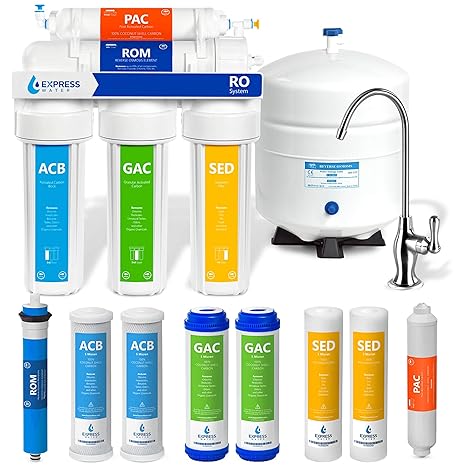 | Express Water RO5DX | Check Price |
Our Top Picks 3  | Glacier Fresh GFU03 RO Filter | Check Price |
Our Selected Top 15 Under Sink Reverse Osmosis Filter Worth Considering
This list features carefully chosen under sink reverse osmosis filters, each reviewed for performance, suitability, and key advantages and disadvantages. Readers will gain clear insights to help identify the best option based on their specific water filtration needs and kitchen setup.
1. Waterdrop G3P600 Reverse Osmosis Water Filter System
People wanting high-quality, contaminant-free water without a bulky tank will appreciate the Waterdrop G3P600 reverse osmosis system. Its biggest strength lies in the 8-stage filtration that handles a wide range of impurities while fitting neatly under a sink.
It’s perfect for those focused on water purity and reliable safety certifications.
Setup involves connecting the system under the sink and plugging it into power. The smart display faucet makes daily use straightforward, showing filter status at a glance.
The tankless design frees up space and keeps water flowing without waiting times typical of storage tanks. Maintenance requires periodic cartridge changes, making upkeep manageable for anyone comfortable with standard home water filters.
The filtration is thorough, reducing contaminants like chlorine, heavy metals, and PFAS effectively, meeting multiple NSF standards. The build feels solid, made from lead-free materials, reassuring for health-conscious users.
Positive remarks often highlight water taste improvement, while the most common complaint mentions the relatively slow flow rate at 0.42 gallons per minute.
The best feature is its ability to remove a broad spectrum of contaminants while maintaining safety certifications, delivering noticeably fresher-tasting water. The most common user concern centers on the slow flow rate, which can feel inconvenient for quick water needs.
This system suits anyone looking for highly purified water without sacrificing cabinet space or wanting constant updates on filter health. Those needing faster water output or no electricity dependency might prefer different solutions.
Pros
- Reduces wide range of contaminants effectively
- Tankless design saves under-sink space
- Smart display faucet shows filter status
- Certified safe, lead-free materials
Cons
- Flow rate is relatively slow at 0.42 gpm
- Requires electric power to operate
| Specification | Details |
|---|---|
| 8-stage Filtration | Yes |
| Maximum Flow Rate | 0.42 gpm |
| Purification Method | Carbon Block, Reverse Osmosis |
| Power Source | Corded Electric |
| Supported Water TDS Level Maximum (PPM) | 1500 |
| Operating Pressure Range | 87 psi |
2. Express Water RO5DX Reverse Osmosis System
Express Water RO5DX stands out by offering a highly effective under-sink reverse osmosis system that removes a wide range of contaminants, including lead, chlorine, fluoride, and PFAs. Ideal for anyone looking to improve tap water taste and safety without professional installation, its biggest strength is the significant reduction of impurities for crisp, clean water.
Installation is straightforward thanks to its clear design meant for DIY setup, saving money on professional help. No power source is needed, making it simple and eco-friendly to operate. Daily use involves filling the tank, which stores purified water ready for use right from the faucet at up to 0.8 gallons per minute, ensuring you have a steady supply of filtered water.
The system effectively reduces total dissolved solids (TDS), providing very pure water with a broad temperature range between 39 and 100 °F. Built to fit neatly under most sinks, the tank design keeps storage compact. The strongest praise focuses on how pure and pleasant the water tastes, while the most common complaint is its moderate flow rate, which some find slower compared to other filters.
The water produced tastes clean and crisp, making it clear that the filtration is highly effective. Users do note that water comes out slower compared to other filters, which can be a minor inconvenience during heavy use. Installation is simple and requires no electricity, appealing to those comfortable with routine maintenance.
People wanting highly purified water without extra setup costs will appreciate the system’s strengths. Those needing faster water flow or handling very high TDS levels might want to explore other options. It works best for everyday home use to get consistently good tasting, contaminant-free water.
Pros
- Reduces up to 99.99% of common contaminants
- Easy DIY installation under sink
- No electricity required to operate
- Tank storage for ready access to water
Cons
- Flow rate slower than some other systems
- Maximum TDS supported only up to 300 PPM
| Specification | Details |
|---|---|
| Purification Method | Reverse Osmosis |
| Maximum Flow Rate | 0.8 gpm |
| Installation Type | Under Sink |
| Power Source | No Power Needed |
| Supported Water TDS Level Maximum (PPM) | 300 |
3. Glacier Fresh GFU03 Reverse Osmosis Water Filter
Glacier Fresh GFU03 Reverse Osmmosis Water Filter is designed to fit under your sink without taking up much space, thanks to its tankless design. It suits anyone wanting clean drinking water without dealing with noisy pumps or bulky external tanks, offering a quiet and compact solution.
Setup is straightforward since there is no need to drill or use electricity. The water-powered system operates silently and saves up to 70% of under-sink cabinet space.
Daily use requires just normal water flow pressure and temperature, letting you enjoy fresh water at up to 0.6 gallons per minute. The filtration stages work continuously without extra maintenance from electric parts.
Performance-wise, it removes contaminants like chlorine, lead, fluoride, and heavy metals through seven filtration stages meeting strict NSF standards. The build quality supports steady operation between 41°F and 100°F, with pressure handling from 0.25 to 0.7 MPa.
Praises often highlight its silent, tankless design, while some point out the limited flow rate as a downside.
People appreciate the near-silent, tankless design that fits easily under sinks and avoids electrical risks. A common downside is the relatively low water flow speed, which can feel slow during heavy use. The compact system offers smart space-saving benefits.
Anyone looking for quiet, electric-free purification with limited space will find this a solid fit. Those needing faster water output or higher flexibility in pressure range may want a different model.
Pros
- Quiet operation without electricity required
- Saves 70% of under-sink cabinet space
- Removes heavy metals and chemicals effectively
- No drilling needed for installation
Cons
- Maximum flow rate of 0.6 gpm may be slow for some
- Requires specific pressure range to operate efficiently
| Specification | Details |
|---|---|
| Maximum Flow Rate | 0.6 gpm |
| Operating Pressure Range | 0.25Mpa-0.7Mpa |
| Purification Method | Carbon Block, Reverse Osmosis |
| Power Source | No Electric Drive |
| Lower Temperature Range | 41 °F |
| Upper Temperature Rating | 100 °F |
4. AquaTru Under Sink Reverse Osmosis Water Filter

Getting clean water straight from the tap feels convenient and reassuring with this setup. It works best for anyone wanting certainty over their drinking water safety without complicated installation.
Its biggest strength lies in detecting leaks early and automatically stopping water flow to prevent damage.
Setup takes some space under the sink due to the storage tank but comes with clear instructions. You get a dedicated faucet for easy access to purified water.
The control panel actively monitors filter life and battery status, making maintenance straightforward. Leak detection adds an important safety layer by alerting you and shutting off water if a problem arises.
Performance nails its purpose by removing 84 harmful contaminants including lead, fluoride, and microplastics. The build feels solid enough for everyday kitchen use with filters lasting about two years. One strong point is the automatic shutdown during leaks, but some mention the electric power requirement and size as drawbacks.
Leak detection combined with automatic water shutoff is a standout feature, giving extra security you don’t often find in similar filters. The unit effectively clears a broad range of harmful substances, ensuring water purity. On the downside, some find the electric power requirement and bulky tank less convenient.
People focused on water safety and regular maintenance ease appreciate this filter’s alerts and leak protection. Those looking for a smaller, non-electric system might consider alternative options that fit tighter spaces or operate without power.
Pros
- Detects leaks and automatically shuts off water
- Removes 84 harmful contaminants
- Filter alerts simplify maintenance
- Stores up to 1.7 gallons of purified water
Cons
- Requires corded electric power
- Tank size can take up significant under-sink space
| Specification | Details |
|---|---|
| Certification | Certified by IAPMO to NSF/ANSI Standards |
| Filter Life Cycle | 2 years |
| Installation Type | Under Sink |
| Power Source | Corded Electric |
| Container Type | Tank |
| Water Storage Capacity | 1.7 gallons |
5. APEC Water ROES-50 Reverse Osmosis System

Reliable and straightforward, the APEC ROES-50 fits well under most kitchen sinks and suits anyone who wants clean, great-tasting water without fuss. Its biggest strength lies in its ability to filter out over 99.99% of contaminants, offering safe water every day.
Installation is pretty manageable thanks to color-coded tubing and quick connection fittings, making setup less intimidating for a DIYer. Daily maintenance involves changing the filters every six months, which is easy given the system’s clear design and standard parts.
Performance-wise, water tastes noticeably pure, and the system handles up to 50 gallons a day efficiently. The sturdy build ensures longevity, though some mention the low maximum flow rate of 0.03 gpm as a downside for filling larger containers quickly.
Many appreciate the ease of setup and clear piping details, making it approachable for non-experts. The main complaint centers on the slow water flow, which can be a bottleneck when needing larger quantities quickly.
This system works well for anyone prioritizing thorough filtration and straightforward maintenance. Those needing higher flow rates or handling extremely high TDS water should explore other options better suited for heavy-duty use.
Pros
- Removes 1000+ impurities including heavy metals
- DIY-friendly installation with clear color-coded tubing
- Reliable flow capacity for home use
- Filter lasts six months before replacement
Cons
- Low maximum flow rate slows water fill-up
- Only supports TDS levels up to 2000 ppm
| Specification | Details |
|---|---|
| Maximum Flow Rate | 0.03 gpm |
| Filter Life Cycle | 6 months |
| Operating Pressure Range | 40-85 psi |
| Maximum Temperature | 100 °F |
| Supported Water TDS Level Maximum (PPM) | 2000 |
6. Waterdrop G6A6 Reverse Osmosis System

Compact tankless design makes the Waterdrop G6A6 a great fit for kitchens with limited under-sink space. Ideal for anyone wanting a powerful reverse osmosis system without losing room for other essentials. Its small footprint saves over 80% of space compared to traditional models, perfect when space is tight.
Installation under the sink is straightforward, with clear instructions for connecting to your water line and faucet. Daily use requires no tank, so water is filtered on demand, cutting down on wait time and potential bacterial buildup.
The 24-month filter lifecycle means infrequent replacements, reducing maintenance effort and ongoing costs.
Water purification performance is excellent, reducing up to 99% of contaminants according to SGS testing. The build uses lead-free materials certified by IAPMO for safe drinking water.
Most praise focuses on its small size and efficient filtration, while some mention water flow can be slower compared to tank-based systems.
Reviews highlight the compact design and effective contaminant reduction as top strengths. Common feedback points to slower water flow relative to systems with storage tanks, which can be noticeable during high usage.
Those with limited under-sink space and a desire for on-demand purified water will appreciate the design. Users needing faster water delivery might prefer a system with a tank to avoid wait times.
Pros
- Compact tankless design saves under-sink space
- Certified lead-free materials for safety
- Reduces up to 99% contaminants
- Long filter life of 24 months
Cons
- Slower water flow compared to tank systems
- Requires space under sink for installation
| Specification | Details |
|---|---|
| Purification Method | Reverse Osmosis |
| Installation Type | Under Sink |
| Filter Life Cycle | 24 months |
| Container Type | Dispenser |
| Special Features | Tankless |
7. iSpring RCC7-BN Reverse Osmosis Water Filter

Clean, almost entirely contaminant-free water is what stands out most with the iSpring RCC7-BN RO system. Ideal for anyone concerned with hard water or toxic substances in tap water, this under-sink filter removes a wide range of impurities for better tasting and safer drinking water. Its strength lies in tackling over 1,000 harmful contaminants effectively.
Installation involves setting up a five-stage filtration system along with a dedicated faucet, which fits neatly under the sink. Day-to-day use is straightforward since the system includes a storage tank for ready water access. One important feature is how it cuts down on hard water minerals which helps prevent scale buildup in plumbing and appliances, keeping water tasting fresh and appliances running smoother.
Effectiveness in removing contaminants is impressive, achieving up to 99% reduction of dangerous chemicals and heavy metals. The build feels solid, designed to last with clear labeling for easy filter changes.
While many appreciate the improved water quality, some note that the flow rate from the faucet can be slower compared to standard taps, which is a minor trade-off for purity.
This filtration system removes contaminants thoroughly and improves taste noticeably. The slow water flow from the filter’s faucet is mentioned frequently as a mild inconvenience next to its overall performance. Setup includes clear instructions but filter changes need some care to maintain water quality.
People looking for cleaner, softer water who don’t mind a slightly slower faucet flow will appreciate this system. Those needing quick faucet flow or minimal maintenance might look for options with different flow specs or easier cartridge swaps.
Pros
- Removes lead, fluoride, chlorine, and PFAS
- Includes storage tank for on-demand water
- Certified to NSF/ANSI 58 quality standards
- Reduces hard water scale build-up
Cons
- Slower water flow from the dedicated faucet
- Filter replacement can require attention
| Specification | Details |
|---|---|
| Model Number | RCC7-BN |
| Set Name | 5-Stage |
| Filtration Capability | Removes up to 99% of 1,000+ contaminants |
| Warranty | 1-YEAR MANUFACTURER WARRANTY |
| Included Components | Filters, filtration system, tank, faucet |
| Certification | NSF/ANSI 58 certified |
8. Waterdrop 10UA Under Sink Water Filter System

Great for anyone looking for a reliable under sink filter focused on municipal tap water, it stands out for its affordable replacement filters that keep running costs low. The cost-saving aspect alone makes it a solid choice over other filters with pricier upkeep.
Installation is straightforward; the unit fits neatly under the sink and connects only to cold water lines. It runs purely on mechanical water pressure, so no electricity is needed. Daily use is simple with a good flow rate of up to 2.5 gallons per minute, making water access convenient without long waits.
Replacement filters last a full year or 18,750 gallons, which helps maintain clean water without frequent maintenance.
It filters effectively with activated carbon, certified to NSF/ANSI 42 and NSF/ANSI/CAN 372 standards for safety and material quality. The build feels solid enough for regular kitchen use. Most praise mentions its long-lasting filter life and cost efficiency, while the main drawback is the limitation to cold municipal water only, not suitable for well or hot water.
The filter is praised for its economical replacement filters and solid year-long lifespan. Its main limitation is its restriction to cold municipal water sources, which may not fit all household setups.
People with city water and standard kitchen plumbing will find this a convenient, budget-friendly option. Those needing hot water filtration or well water treatment should look at other systems designed for those conditions.
Pros
- Low replacement filter cost under $25.99
- Easy to install under the sink
- Good water flow rate at 2.5 gpm
- Filters up to 18,750 gallons per filter
Cons
- Only works with cold municipal water
- Not suitable for well or hot water
| Specification | Details |
|---|---|
| Filter Life Cycle | 1 years |
| Maximum Flow Rate | 2.5 gpm |
| Purification Method | Activated Carbon |
| Supported Water TDS Level Maximum | 700 PPM |
| Temperature Range | 35 °F to 100 °F |
| Replacement Filter | WD-RF10 |
9. Waterdrop G5P500A Reverse Osmosis Water Filter

Hard water or city tap water often carries unpleasant tastes and harmful contaminants, which makes having a reliable under sink filtration system important. Ideal for households wanting safe, clean water without bulky equipment, this system’s biggest strength is its advanced 8-stage filtration that tackles a wide range of impurities effectively.
Installation is straightforward and doesn’t require a large tank, which saves under-sink space. The compact tankless design means you won’t have to deal with extra maintenance for a reservoir.
Daily use provides water free from chlorine smells, heavy metals, and other common tap water issues, while the added alkaline minerals improve taste and health benefits.
Water quality consistently feels pure and refreshing, thanks to the 0.0001 μm RO membrane that removes nearly all particles. The addition of minerals like calcium and magnesium adds a nice balance that some systems lack.
Reviews often praise its capacity and purification, though a few note the flow rate at 1.31 liters per minute might feel slow during heavy use.
Waterdrop G5P500A filters water through an 8-stage process that removes many contaminants like lead and fluoride while adding minerals for taste. It uses a very fine 0.0001μm reverse osmosis membrane. Some find installation instructions unclear, making setup more time-consuming than expected. The tankless design saves space under the sink.
People wanting clean, mineral-enriched water in a compact system will find this useful. Those needing a filter with simpler installation support or wanting to store filtered water in a tank might prefer a different model. It suits kitchens with limited space but requires some patience during setup.
Pros
- Removes chlorine, lead, fluoride, and heavy metals
- Compact, tankless design saves space
- Alkaline mineralization improves water taste
- High capacity of 500 gallons per day
Cons
- Flow rate can be slow during peak use
- Requires electric power to operate
| Specification | Details |
|---|---|
| Filtration Stages | 8-stage Filtration |
| Purification Method | Reverse Osmosis |
| Flow Rate | 1.31 liters per minute |
| Operating Pressure Range | 14.5-87 psi |
| Power Source | Corded Electric |
| Maximum Supported Water TDS | 500 PPM |
10. Philips Reverse Osmosis Water Filtration System

Delivering 600 gallons per day without a tank, this under sink reverse osmosis system suits homes needing fast, purified water on demand. Its single best feature is the high flow rate that fills an 8 oz cup in around 8 seconds, ideal for busy kitchens and frequent water use.
Installation fits under the sink with options for vertical or horizontal placement, keeping your cabinet space flexible. Changing filters requires no tools, making maintenance straightforward. The automatic flushing reduces buildup, so the system stays cleaner longer.
Power comes from a corded electric source, ensuring a steady, reliable operation day after day.
Filtration uses a 5-stage process with a biomimetic membrane that removes tiny contaminants down to 0.0001 micron. Its build centers around a 4.3-inch-wide tankless design that saves space.
Reviews note consistent water purity and ease of use as major strengths, though some find the maximum flow rate of 0.41 gpm less than ideal for higher demand moments.
Consistent and great-tasting water is praised most, while the common complaint revolves around limited flow rate during peak use. The design reduces footprint under the sink, but the system depends on electric power to function properly.
Best for those who prioritize quick access to purified water within standard household use. Not the best match for very high water consumption or locations without easy electric access under the sink. Buyers needing larger flow may want to explore other options.
Pros
- Fast fill rate for 8 oz cup in 8 seconds
- Tankless design saves under sink space
- Simple, tool-free filter replacement
- Automatic flushing maintains membrane cleanliness
Cons
- Flow rate might limit heavy water usage
- Requires corded electric power connection
| Specification | Details |
|---|---|
| Maximum Flow Rate | 0.41 gpm |
| Power Source | Corded Electric |
| Installation Type | Under Sink |
| Filtration Stages | 5-Stage Filtration |
| Maximum Water TDS Level | 500 PPM |
11. Waterdrop G2P600 Under Sink Reverse Osmosis System
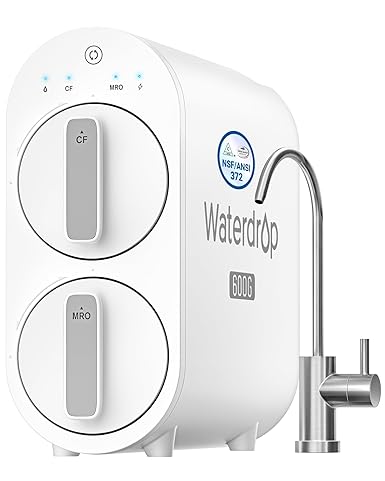
People with large households or small offices looking for fast, reliable purified water will find a lot to like here. The standout feature is the system’s high output of 600 gallons per day, making it ideal for those needing steady filtered water without waiting. Its tankless design also keeps things compact under the sink.
Installation is relatively straightforward, helped by the package including two filters right off the bat. The system connects under the sink and runs on corded electric power, so a nearby outlet is necessary. Daily use feels smooth because the water flow is quick and steady, filling a 200ml cup in about 8 seconds means you won’t be stuck waiting.
Tankless design also means less space used and fewer parts to maintain.
Performance is impressive for a household reverse osmosis system, filtering out impurities across 7 stages and handling up to 500 PPM of total dissolved solids. Materials meet lead-free standards, adding a safety layer.
Positive remarks often mention fast flow and reduced water waste. On the downside, some find the setup a bit tight due to the compact size, and the max water temperature limit of 87 °F can be limiting in warmer climates.
Fast water delivery and reduced waste make daily use convenient, as many praise the steady, quick flow. Some users mention installation can feel cramped because of the tankless, compact form. The product handles tap water up to 500 PPM TDS well but requires electric power to run the system.
Big families or offices needing a large volume of filtered water quickly will appreciate this setup. People with warm water supplies nearing 87 °F or those lacking under-sink space might want to explore other models.
Pros
- Fast 600 GPD water output
- Tankless design saves space
- Lead-free NSF/ANSI 372 certified materials
- Stable flow fills cup in 8 seconds
Cons
- Limited maximum water temperature of 87 °F
- Compact size can make installation tight
| Specification | Details |
|---|---|
| Maximum Flow Rate | 25 milliliters_per_second |
| Purification Method | Reverse Osmosis |
| Installation Type | Under Sink |
| Supported Water TDS Level Maximum (PPM) | 500 |
| Power Source | Corded Electric |
| Upper Temperature Rating | 87 °F |
12. iSpring RCC7P-AK Reverse Osmosis System

Designed to work with low water pressure, the iSpring RCC7P-AK delivers reliable reverse osmosis filtration under your sink. It suits homes that want thorough contaminant removal without sacrificing water flow, thanks to its built-in booster pump. Its standout feature is the alkaline remineralization stage, which keeps water tasting fresh rather than acidic like some RO systems.
Setting up involves a corded electric booster pump that maintains steady water pressure for efficient filtration. Routine use means cleaner water with fewer contaminants like lead, chlorine, and PFAS, while the mineral stage helps maintain balanced alkalinity.
Changing filters every 12 months is straightforward and keeps the system running well without wasting excess water.
Performance is solid with the system removing up to 99% of over 1,000 pollutants, including tough ones like arsenic and fluoride. Construction feels sturdy under the sink, with standard materials for RO systems. The booster pump is a key plus, though some find the setup a bit bulky.
Most praise its water taste, while some have noted occasional noise from the pump.
The system consistently provides high-quality water with a fresher taste thanks to its alkaline remineralization stage. The booster pump improves performance but tends to generate some noise during operation, which is the most common downside.
Homes with low water pressure and a focus on clean, great-tasting water will appreciate this system. It may not be ideal for those lacking space under their sink or seeking a completely silent water filter.
Pros
- Booster pump supports low water pressure
- Removes up to 99% of over 1,000 contaminants
- Alkaline stage improves water taste
- Filters last 12 months before replacement
Cons
- Electric pump can produce noticeable noise
- Installation may require extra space under sink
| Specification | Details |
|---|---|
| Purification Method | Reverse Osmosis, Alkaline, Activated Carbon, Carbon block |
| Power Source | Corded Electric |
| Supported Water TDS Level Maximum (PPM) | 2000 |
| Filter Life Cycle | 12 months |
| Upper Temperature Rating | 100 °F |
13. Waterdrop T3-C Reverse Osmosis Water Filtration System

Waterdrop T3-C Reverse Osmosis Water Filtration System delivers pure water through an advanced 8-stage filtration process designed for anyone wanting clean, healthy water directly from under the sink. Its biggest strength is the high-speed 450 gallons per day output, providing a consistent and fast flow without the usual tank storage.
Installation is straightforward but requires drilling holes in the countertop to fit the faucet, which may need some basic DIY skills. Day-to-day use is simplified by smart alerts that notify when filter changes are needed. The all-in-one cartridge makes swaps quick and less messy, avoiding complicated steps most reverse osmosis systems involve.
Performance stays reliable with solid removal of heavy metals, chlorine, PFOA, and PFOS, thanks to its precise 0.0001μm RO membrane. The unit feels solid under the sink and the compact, tankless design saves space. Many appreciate the fast flow rate, though some mention the faucet installation as a hurdle.
The system is praised for its fast flow and easy filter changes thanks to smart alerts and cartridge design. The main complaint concerns the need for countertop drilling to install the faucet, which some find inconvenient or difficult without proper tools.
Anyone wanting fast access to filtered water in a limited space will enjoy the tankless setup and smooth operation. Those uncomfortable with drilling may prefer other models that use standard faucet fittings or no additional holes.
Pros
- Fast 450GPD water flow
- Smart alerts for filter replacement
- Compact tankless design
- Easy cartridge swaps
Cons
- Requires drilling holes for faucet installation
- Needs plug-in power source
| Specification | Details |
|---|---|
| Filtration Stages | 8-Stage |
| Water Flow Rate | 450GPD (Gallons Per Day) |
| RO Membrane Pore Size | 0.0001μm |
| Filter Life Cycle | 6 months |
| Installation Type | Under Sink |
| Certification | NSF/ANSI 372 |
14. Frizzlife PD600-TAM3 Reverse Osmosis Water Filter

Using water from under the sink feels fresh and balanced, with a noticeable difference in taste. Frizzlife PD600-TAM3 suits anyone wanting clean water that’s not just pure but also slightly alkaline, bringing back natural minerals.
Its biggest strength is delivering healthy, great-tasting water without needing a bulky storage tank.
Installation takes some effort, but the tankless design means less space is used under the sink. Daily use is simple thanks to the smart TDS display, which helps track water quality, and the built-in change filter indicator reminds when it’s time for maintenance.
The system connects to power with a cord, so it’s always ready to work reliably at home temperatures from 38 °F to 100 °F.
Water quality is consistently good, with the RO membrane removing most impurities and the third-stage filter adding back beneficial minerals while adjusting pH above 7.5. The build feels solid with replaceable cartridges. Many praise how the water tastes healthier, but some mention it could flow faster, as the max flow rate is 0.41 gpm, which might feel a bit slow during heavy use.
Water tastes noticeably healthier due to remineralization and alkalization. The slow flow rate at peak use is the most common complaint among users. Routine filter changes are easy with the indicator, but reliance on electricity can be a downside for some setups.
People wanting mineral-balanced alkaline water without a storage tank will appreciate this unit. Those needing faster water delivery or a completely manual system might prefer alternatives with higher flow rates or no power requirement.
Pros
- Tankless design saves under-sink space
- Smart TDS display for water quality monitoring
- Adjusts water pH to above 7.5
- 600GPD capacity handles daily water needs
Cons
- Maximum flow rate at 0.41 gpm may feel slow
- Requires electric power to operate
| Specification | Details |
|---|---|
| Maximum Flow Rate | 0.41 gpm |
| Purification Method | Reverse Osmosis, Alkaline/Remineralize |
| Power Source | Corded Electric |
| Lower Temperature Range | 38 °F |
| Change Filter Indicator | Yes |
| Tank Design | Tankless |
15. iSpring RO1200AK Alkaline Reverse Osmosis Water Filter

Great for anyone wanting quick access to both filtered and alkaline water without waiting. Its standout feature is a dual-handle faucet that lets you switch between carbon-filtered water for rinsing and reverse osmosis water with added alkalinity for drinking and cooking. This design extends membrane life and saves water compared to typical RO setups.
Installation fits under most sinks but requires a nearby electrical outlet for its tankless operation. The dual-handle faucet is intuitive, letting you grab regular filtered water or pure RO water with alkaline boost instantly.
Without a bulky tank, it frees up about 70% of space, and the flow rate is noticeably fast, filling a cup in about five seconds feels practical for daily use, whether rinsing produce or making coffee.
It does an effective job reducing chlorine, heavy metals, PFAS, and TDS, delivering clean, tasty water. The build quality feels solid with reliable components, though some users mention that the need for electricity may limit placement options. Fast water output and longer membrane life through the dual faucet design earn strong praise, while the common downside noted is the dependence on an electrical source.
The fast flow rate and dual-handle faucet receive high marks for convenience and water efficiency, while reliance on an electrical outlet is a common practical limitation noted. The system delivers clean, alkaline water quickly without a bulky tank.
Those wanting quick, easy access to both filtered rinsing water and alkaline drinking water will appreciate this setup. People lacking power outlets near their sink or needing a completely off-grid option should look elsewhere.
Pros
- Dual-flow faucet for separate rinsing and drinking water
- Tankless design saves 70% under-sink space
- Fast fill rate: 8 oz in about 5 seconds
- Effective removal of multiple contaminants
Cons
- Requires electrical outlet to operate
- May limit placement options under sink
| Specification | Details |
|---|---|
| Maximum Flow Rate | 0.83 gpm |
| Filter Life Cycle | 12 months |
| Purification Method | Reverse Osmosis |
| Installation Type | Under Sink |
| Special Features | Reduces chlorine, heavy metals, PFAS, TDS |
Best Under Sink Reverse Osmosis Filters Comparison Table
| Product | Filtration Stages | Capacity | Power Source | Special Feature |
|---|---|---|---|---|
| Waterdrop G3P600 RO System | 8-stage | 600 GPD | Corded Electric | Smart display faucet |
| Express Water RO5DX | – | – | No power needed | Reduce TDS |
| Glacier Fresh GFU03 RO Filter | 5-stage | – | No electric drive | Tankless, water saver |
| AquaTru Under Sink RO | – | – | Corded Electric | NSF/ANSI Certified |
| APEC ROES-50 System | – | – | AC power | Reduce TDS |
| Waterdrop G6A6 RO System | – | – | – | Tankless |
| iSpring RCC7-BN Filter | 5-stage | – | – | 1-year warranty |
| Waterdrop 10UA Under Sink | – | 18750 gallons | Mechanical water pressure | NSF certified |
| Waterdrop G5P500A RO Filter | 8-stage | 500 GPD | Corded Electric | Alkaline mineral |
| Philips RO Filtration System | 5-stage | – | – | Tankless design |
| Waterdrop G2P600 Under Sink | – | – | Corded Electric | 2:1 pure to drain |
| iSpring RCC7P-AK RO System | – | – | Corded Electric | Reduce PFAS, TDS |
| Waterdrop T3-C RO System | 8-stage | 450 GPD | Corded Electric | 2:1 pure to drain |
| Frizzlife PD600-TAM3 RO Filter | – | 600 GPD | Corded Electric | Smart TDS display |
| iSpring RO1200AK Alkaline | – | – | – | Reduce chlorine, PFAS |
- Filtration Stages8-stage
- Capacity600 GPD
- Power SourceCorded Electric
- Special FeatureSmart display faucet
- Filtration Stages–
- Capacity–
- Power SourceNo power needed
- Special FeatureReduce TDS
- Filtration Stages5-stage
- Capacity–
- Power SourceNo electric drive
- Special FeatureTankless, water saver
- Filtration Stages–
- Capacity–
- Power SourceCorded Electric
- Special FeatureNSF/ANSI Certified
- Filtration Stages–
- Capacity–
- Power SourceAC power
- Special FeatureReduce TDS
- Filtration Stages–
- Capacity–
- Power Source–
- Special FeatureTankless
- Filtration Stages5-stage
- Capacity–
- Power Source–
- Special Feature1-year warranty
- Filtration Stages–
- Capacity18750 gallons
- Power SourceMechanical water pressure
- Special FeatureNSF certified
- Filtration Stages8-stage
- Capacity500 GPD
- Power SourceCorded Electric
- Special FeatureAlkaline mineral
- Filtration Stages5-stage
- Capacity–
- Power Source–
- Special FeatureTankless design
- Filtration Stages–
- Capacity–
- Power SourceCorded Electric
- Special Feature2:1 pure to drain
- Filtration Stages–
- Capacity–
- Power SourceCorded Electric
- Special FeatureReduce PFAS, TDS
- Filtration Stages8-stage
- Capacity450 GPD
- Power SourceCorded Electric
- Special Feature2:1 pure to drain
- Filtration Stages–
- Capacity600 GPD
- Power SourceCorded Electric
- Special FeatureSmart TDS display
- Filtration Stages–
- Capacity–
- Power Source–
- Special FeatureReduce chlorine, PFAS
How to Choose the Best Under Sink Reverse Osmosis Filter
Consider factors like filtration stages, water output, and ease of installation to ensure efficient performance and long-term reliability. Choosing the right system prevents frequent maintenance and filter replacements, saving both money and inconvenience over time.
Filtration Stages and Quality
Some filters include just three stages while others have five or more. Systems with fewer stages often miss out on removing certain harmful substances.
I’ve found that models with at least four filters typically handle chlorine, lead, and microorganisms better because they combine sediment, carbon, and membrane filtering. Checking certifications like NSF/ANSI 58 or 53 gave me confidence that the system met recognized water quality standards.
Not all filters tackle the same contaminants. For instance, activated carbon is key for chlorine taste and odor, while a reverse osmosis membrane removes heavy metals like lead. Some units add UV purification or remineralization stages, but at a minimum, look for sediment, carbon block, and RO membrane filters to remove a broad range of impurities effectively.
Installation and Space Requirements
Under sink filtration units vary a lot in size. Compact models might be around 15 inches tall and 10 inches deep, but larger units can require more space. I measured my cabinet before buying to ensure a proper fit without blocking plumbing or storage.
Make sure to account for space needed to connect tubes and the faucet.
Installation complexity depends on plumbing skills and tools. Simple models usually need just a drill for mounting the faucet and basic wrenching, which can be done by a confident DIYer in 1 to 2 hours.
Others might require Teflon tape, saddle valves, or extra fittings. Having adjustable wrenches and a bucket handy helps. Professional installation is recommended if plumbing is old or complicated, but many can manage self-installation with clear instructions.
Water Output and Efficiency
Filtration capacity can range from 50 to 100+ gallons per day. Estimating your household’s daily water needs is helpful. I found a 75-gallon capacity suitable for a family of four, covering drinking, cooking, and pet water without delay.
Smaller units might slow you down during peak times.
Water wastage varies but often ranges between a 3:1 to 5:1 water-to-purified ratio. Some newer models improve efficiency, cutting waste to closer to 2:1. Flow rate influences convenience; slow flow rates cause longer wait times, especially noticeable at the faucet.
Aim for a system providing around 0.5 to 1 gallon per minute for steady user comfort.
Filter Replacement and Maintenance
Filter lifespan differs by type, sediment and carbon filters usually last 6 to 12 months, while membranes can last 2 to 3 years. I tracked replacement costs over time and found that cheaper upfront systems sometimes ended up pricier annually due to expensive filters.
Planning ahead for these ongoing costs is important.
The best units allow easy filter swaps without tools, often through twist-off cartridges or snap-in designs. This saved me a lot of frustration over units requiring complicated disassembly.
Some systems have built-in indicators or digital alerts to signal when a filter needs replacing, making maintenance straightforward and timely.
Build Quality and Warranty
Good filters use food-grade, BPA-free plastic and stainless steel fittings to avoid contaminants leaching into purified water. I noticed cheaper models sometimes use lower quality plastics that can yellow and crack over time. Durable units have thicker casings and corrosion-resistant parts, preventing leaks after months of use.
Warranty coverage varies widely. A solid 1 to 2-year warranty on parts and workmanship is common and provides a safety net for defects or early failures.
Longer warranties or money-back guarantees indicate manufacturer confidence. Check what components are covered to avoid surprises in case of leaks or pump issues.
Maintenance Tips to Prolong the Life of Your Under Sink Reverse Osmosis Filter
Changing filters on schedule is critical for keeping an under sink reverse osmosis system working properly. Most filters need replacement every 6 to 12 months, depending on water quality. Skipping or delaying this can lead to clogged membranes and reduced flow rates.
Periodic sanitizing of the system helps prevent bacterial buildup. Using a manufacturer-recommended cleaning solution or a diluted bleach rinse once a year works well.
Also, checking fittings and tubing for leaks keeps the system running efficiently and prevents water damage.
Key maintenance points to remember:
- Monitor filter life indicators if available or keep a calendar reminder for changes.
- Flush the RO membrane annually to clear contaminants.
- Inspect the storage tank pressure; it should be around 7-8 psi when empty.
- Replace any worn or cracked tubing to avoid leaks.
Regular attention extends the system’s lifespan and maintains water quality consistently.
Common Installation Mistakes and How to Avoid Them
One frequent mistake during installation is connecting the system to the wrong water supply line, which can cause poor water pressure or no flow altogether. The cold water line typically connects to the feed valve, so double-check before finalizing.
Ignoring the requirement for a dedicated drain saddle can lead to leaks or wastewater backing up. Make sure the drain connection fits tightly and is positioned on a sturdy drain pipe near the sink.
Installation tips to avoid problems:
- Turn off the main water supply before starting work to prevent flooding.
- Use plumber’s tape on threaded connections to ensure a good seal.
- Mount the system inside the cabinet with enough clearance for future filter changes.
- Flush the system fully before using the filtered water to clear out manufacturing residues.
Following these steps reduces installation issues and helps the system operate as intended.
Comparing Reverse Osmosis Systems with Other Water Filtration Alternatives
Reverse osmosis (RO) systems remove a wide range of contaminants by forcing water through a semipermeable membrane, which most alternative filters don’t do. This includes dissolved solids like lead, fluoride, and nitrates that standard carbon filters may miss.
Carbon filter systems are simpler and often less expensive but mainly target chlorine, sediment, and some organic compounds. They don’t reduce total dissolved solids (TDS) as effectively as RO.
Ultraviolet (UV) purifiers kill bacteria and viruses but do not filter particles or chemicals, so they’re often used alongside other filtration methods.
Main differences to consider:
- RO systems typically waste some water during filtration, unlike most alternatives.
- They require more regular maintenance and filter changes.
- Total equipment size tends to be larger, needing adequate under sink space.
Choosing depends on the specific water quality issues you need to address and how much maintenance fits your routine.
People Also Asked
How Do I Maintain My Under Sink Reverse Osmosis Filter?
Change the filters according to the manufacturer’s schedule, usually every 6 to 12 months, and sanitize the system yearly. Keeping the filters fresh prevents buildup and keeps water clean. Mark the date of filter replacement to stay on track.
What Size Under Sink Reverse Osmosis System Do I Need?
Choose a system that fits your household’s daily water needs, typically 50 to 100 gallons per day for an average family. Confirm the physical size fits under your sink to avoid installation issues. Check the output rate in gallons per day to match your usage.
Is an Under Sink Reverse Osmosis Filter Safe for Drinking Water?
Reverse osmosis filters remove many contaminants, making the water safe to drink when installed and maintained properly. Using a separate faucet specifically for RO water helps avoid cross-contamination. Regular filter changes preserve water quality.
How Long Does an Under Sink Reverse Osmosis Filter Last?
The membrane usually lasts 2 to 3 years, while pre- and post-filters need replacement every 6 to 12 months. Replacing filters on time ensures consistent water quality and system performance. Keep extra filters handy so you can replace them promptly.
What Are Common Problems with Under Sink Reverse Osmosis Systems?
Common issues include low water pressure, leaks, and slow filter flow, often caused by clogged filters or incorrect installation. Regularly checking fittings and replacing filters can prevent most problems. Inspect the system periodically for leaks under the sink.
Conclusion
Choosing an under sink reverse osmosis filter depends largely on three practical factors: the quality of filtration, ease of installation and maintenance, and the filter’s capacity relative to your household’s water usage. You want a system that cleans well but also fits your convenience and daily demands without frequent filter changes or complicated setups.
Make sure to consider the space under your sink and your budget before making a choice. Some units are more compact, while others might offer better value for frequent use.
Check the comparison table and detailed picks above to find a filter that aligns with your needs and setup.