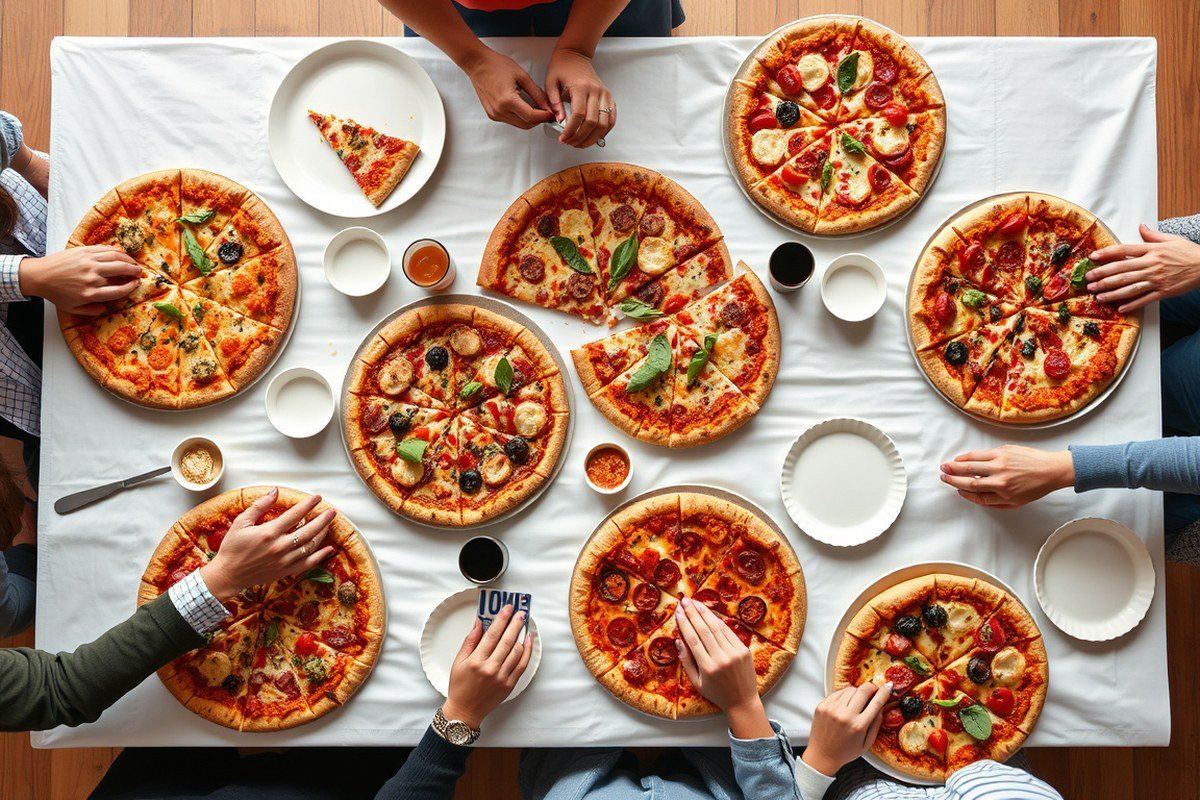
How Many Pizzas for 50 People: A Complete Guide with Expert Tips
For 50 people, plan on ordering about 15 to 18 large pizzas, depending on the mix of kids and adults and their appetites. This count assumes each large pizza has 8 slices and includes a buffer for hungry guests to ensure no one goes hungry. This guide helps party planners and hosts estimate exactly how many pizzas to order for 50 guests and how to adjust quantities based on slice size, toppings, guest preferences, and side dishes to manage your budget and avoid waste.
Key Takeaways
- Count 3 slices per adult and 2 slices per child for accurate pizza quantity estimates.
- A standard large pizza typically has 8 slices and measures 18 inches in diameter.
- Include a 15% buffer to cover guests with bigger appetites or unexpected extras.
- Order 10% of your pizzas with veggie or specialty toppings to accommodate dietary needs.
- Contact the pizza vendor at least 24 hours ahead when ordering 10 or more pizzas.
- Incorporate filling sides like salads or breadsticks to reduce the total pizzas needed by 15-25%.
How Many Pizzas Are Needed for 50 People?
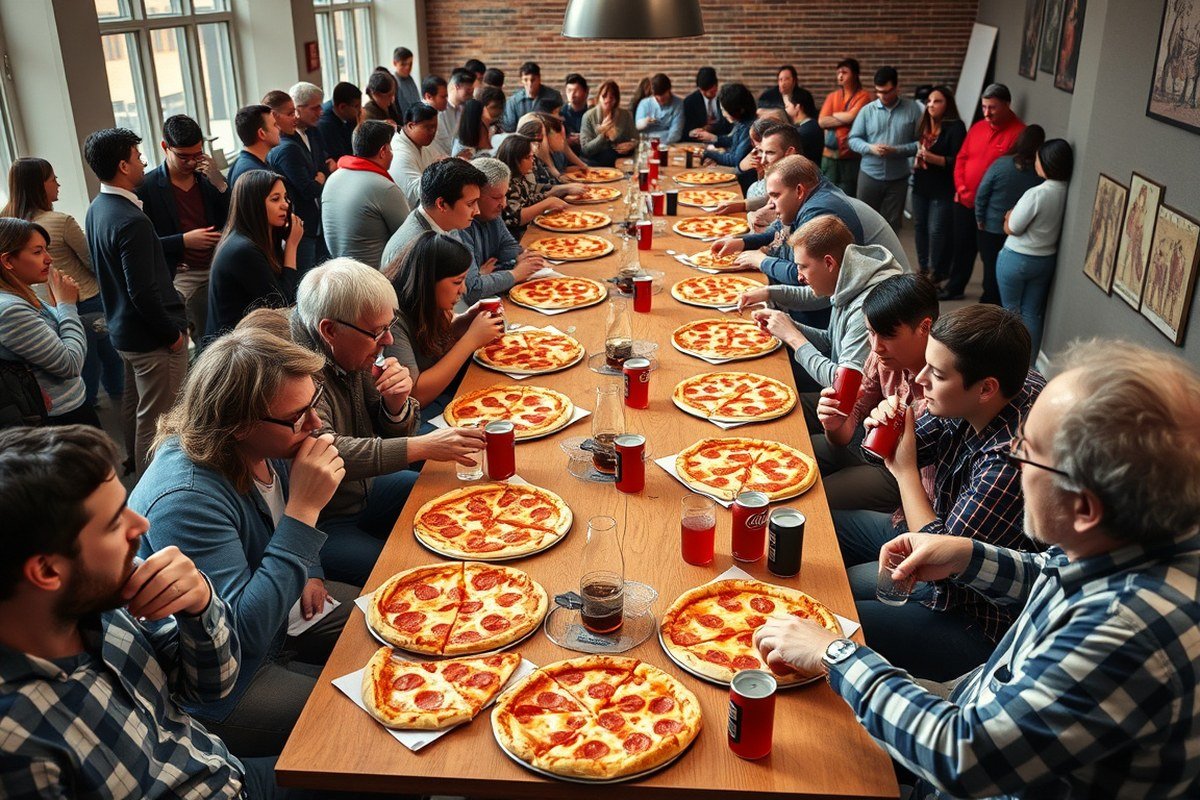
To feed 50 people with large pizzas cut into 8 slices each, start by estimating the number of adults and kids, then calculate slices needed per person with a buffer. A common assumption is a 60% kids to 40% adults split. For 50 guests, that means 30 kids and 20 adults. Kids typically eat 2 slices each, while adults usually consume 3 slices. That totals to (30 × 2) + (20 × 3) = 60 + 60 = 120 slices.
Adding a 15% buffer ensures there’s enough food in case of bigger appetites or unexpected guests. Multiply 120 slices by 1.15 to get 138 total slices needed. Since each large pizza has 8 slices, divide 138 by 8, which equals 17.25. Always round up when ordering pizza, so you’ll need 18 large pizzas to comfortably serve 50 people.
Using this method guarantees you allocate slices fairly between kids and adults while preventing shortages. For example, 30 kids getting 2 slices each equals 60 slices, and 20 adults having 3 slices each equals 60 slices, with 18 pizzas giving 144 slices total, slightly over the buffered estimate of 138 slices, offering extras for anyone who wants more.
This approach works well when kids have smaller appetites and adults stick to typical portions. If your group has teenagers or particularly hungry adults, consider increasing adults’ slice count to 4 slices each, which would raise the total slices needed to 160 (30 × 2 + 20 × 4 = 60 + 80), plus buffer to about 184 slices, meaning 23 pizzas.
Not adding a buffer can lead to running out of pizza, especially if guests return for seconds or if appetites are bigger than expected. On the other hand, ordering too many pizzas can result in waste and higher costs, so sticking close to this calculation helps balance cost-efficiency and guest satisfaction.
In situations where children are much younger (ages 2, 3), you might reduce their slices to 1 each, adjusting the calculation to fewer pizzas. Likewise, if you’re serving sides or other foods, reducing the pizza order by about 10% can be appropriate, but with a large group, it’s safer to keep the 15% buffer to avoid disappointment.
How Pizza Sizes and Slice Counts Affect Quantity
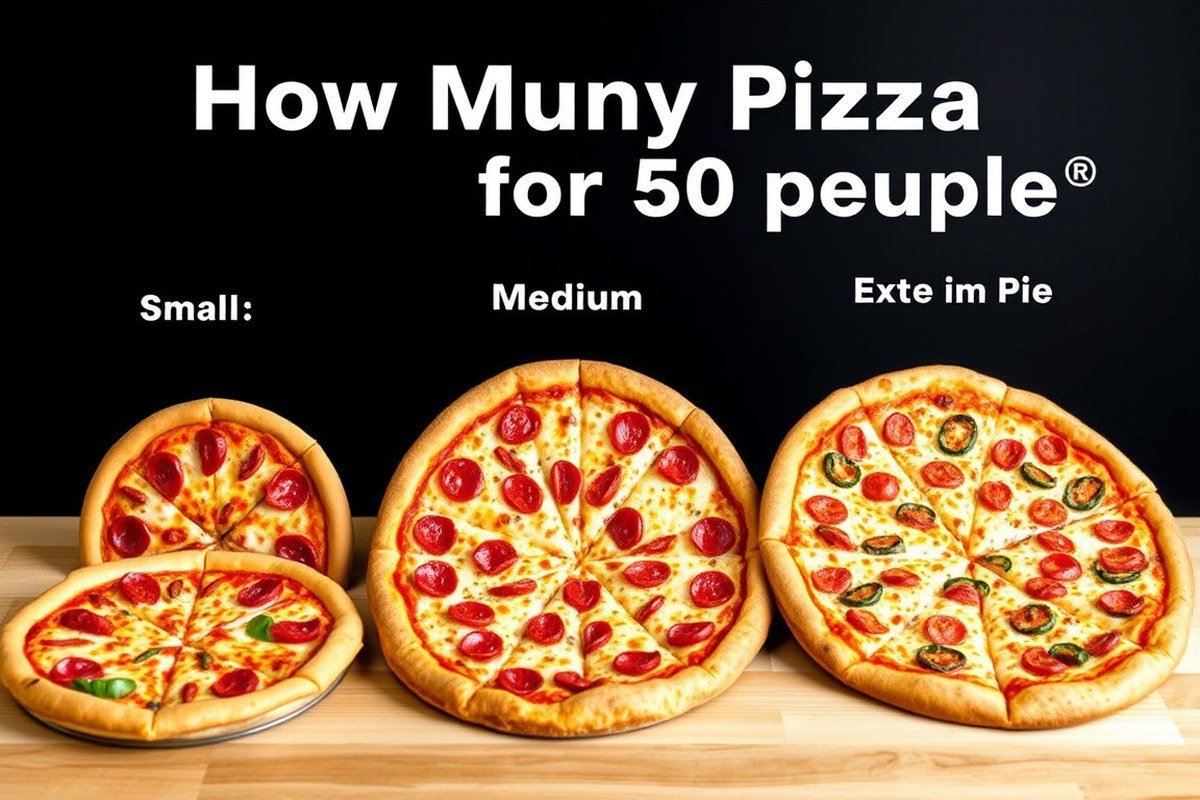
Knowing pizza sizes and slice counts is key to deciding how many pizzas to order for a party of 50. Most medium and large pizzas offer 8 slices, but the size difference means the slice size varies, which affects how many pizzas you need. Some large pizzas at certain chains come with 10 or 12 slices instead, so it’s essential to check slice counts before ordering.
Large pizzas generally provide the best value per slice. They cost about 20, 30% more than medium pizzas but give you 40, 50% more pizza by area. This means ordering large pizzas stretches your budget further, especially for bigger groups. Smaller pizzas have fewer slices and serve fewer people, so you end up buying more pies overall.
| Pizza Size | Diameter (inches) | Typical Slices | Average People Served |
|---|---|---|---|
| Small | 10 | 6 | 1, 2 |
| Medium | 12 | 8 | 2, 3 |
| Large | 14 | 8, 10 | 3, 5 |
| Extra Large | 16 | 6 or 12 | 4, 6 |
| Extra Extra Large | 18 | 6 or 12 | 6, 7 |
To convert slice needs into pizza count, start by estimating slices per person. Typical adult appetites call for about 3 slices each. Multiply 50 guests by 3 slices to get 150 slices needed. Divide that by the number of slices per pizza based on size. For instance, if ordering large pizzas with 10 slices each, you’d need 150 ÷ 10 = 15 pizzas.
Use this approach to scale the order up or down. If your guests tend to eat less or you’ll serve other foods, lower the slices per person estimate. Confirm slice counts with your pizza supplier, especially for extra-large sizes, since some chains slice large pizzas into 6 instead of 8 or more. This can affect your total pizza count significantly.
Tip: Always round up your pizza count after dividing slices needed by slices per pizza to avoid running short during the party.
Adjusting for Guest Appetite and Age Groups
Calculating the right number of pizzas depends heavily on your guests’ appetites and ages. Adults typically eat about three slices each, while kids usually settle for two slices. Adjusting the order based on the mix of adults, kids, teenagers, or groups with bigger appetites helps avoid both shortages and leftovers.
Typical Slice Consumption by Age Group
Adults generally eat three slices of pizza each, assuming pizza is the main food served. Younger children tend to eat around two slices since their portions are smaller. When sides or other food items are available, plan on about 2.5 slices per adult instead to avoid ordering too much. Remember, a large pizza usually contains eight slices, so this guides how many pizzas to order based on your guest count.
Understanding these differences matters because it directly impacts your pizza quantity. For example, if you have 50 guests made up mostly of adults and children, estimate three slices for each adult and two slices for each child. This calculation ensures no one goes hungry, but also keeps extra pizza to a minimum.
Adjusting Orders for Teenagers and Heavy Eaters
Teenagers and groups known for larger appetites, like athletes or when pizza is the only food served, often eat closer to four slices each. Planning for this increased consumption means increasing your pizza count accordingly. For example, 30 teenagers eating four slices apiece would need roughly 120 slices total, translating to 15 large pizzas with eight slices each.
To adjust for heavier eaters, multiply the number of such guests by four slices and add that to the total required slices for others. Failing to account for these bigger appetites can lead to running short of food, especially at events where pizza is the main dish. Ordering a few extra pizzas in anticipation of big eaters provides a safe buffer without overspending unnecessarily.
Reducing Order Size When Many Children Attend
Events with a high number of kids require fewer slices per guest. Since each child typically eats two slices, you can replace three adult slices with two child slices in your total count. For example, for 50 guests with half adults and half children, calculate slices as (25 adults × 3 slices) + (25 children × 2 slices) = 75 + 50 = 125 slices. Next, divide this by the number of slices per pizza to find your pizza order.
Adjusting for kids helps prevent ordering too much pizza, saving money and reducing waste. The difference between children and adults’ slice numbers matters most in events with many young guests. However, make sure you still plan a bit extra for unexpected appetites or mix-ups in age assumptions.
Planning Pizza Toppings and Dietary Preferences
To accommodate 50 guests, plan your pizza toppings by balancing popular choices with dietary preferences. Allocate roughly half of the pizzas to classic meat and cheese toppings, reserve a portion for specialty flavors, and set aside enough vegetarian or allergy-friendly pies. Labeling each pizza clearly helps your guests make quick choices and enjoy their meal without stress.
Recommended Topping Percentage Splits
Start by dividing your total pizza order into topping categories based on common preferences and dietary needs. For 50 people, about 50% of your pizzas should cater to traditional favorites like cheese and pepperoni, these tend to please the majority. Around 30% should feature specialty pizzas, which might include combinations like supreme or BBQ chicken. The remaining 20% should be vegetarian or other dietary options to ensure everyone has choices.
This breakdown helps satisfy different tastes while avoiding excessive leftovers. For example, if ordering 18 large pizzas, plan for 9 cheese/pepperoni, 5 specialty, and 4 vegetarian or allergen-friendly pies. These proportions reflect typical guest preferences, with meat toppings like pepperoni preferred by 38% of consumers and mushrooms topping vegetable choices at about 11%, according to surveys.
Handling Vegetarian and Allergen Needs
Paying attention to vegetarian, vegan, and common allergens is essential for guest satisfaction and safety. Ask your attendees in advance about any dietary restrictions. This helps determine how many specialty or veggie pizzas to order and whether ingredients like gluten-free crusts are necessary.
Order at least one or two vegetarian pizzas, about 10% of your total order, to provide enough for guests avoiding meat. Label these pizzas clearly to avoid confusion, especially if you include allergen-free options. A pizza marked “vegan” or “gluten-free” lets guests with dietary needs feel confident in their selection without needing to ask.
Clear communication of preferences also reduces food waste and frustrated guests. If you don’t inquire, you risk ordering too few suitable pizzas or causing delays as people sort through pies looking for safe choices.
Tips for Ordering Specialty Pizzas
Specialty pizzas often include multiple toppings and unique combinations that some guests prefer. Order these only if you have a good sense of your crowd’s tastes. Limit specialty pizzas to around 30% of your total order. This prevents overpaying for pies that might not get eaten if they don’t match guest preferences.
Place your order at least 24 hours ahead if ordering more than 10 pizzas to ensure timely preparation and possible party-package pricing. When ordering, use clear labels for each pizza type to make serving smooth for your guests and staff.
- Ask guests ahead for topping preferences or dietary restrictions
- Split toppings by 50% classic, 30% specialty, 20% vegetarian/allergen-friendly
- Label each pizza with its toppings for easy guest identification
- Order specialty pizzas only if you know your crowd’s favorites
- Call your pizza vendor 24 hours in advance for large orders
Providing a balanced variety with accurate labels ensures your guests enjoy their meal and feel considered, even with a crowd of 50. Preparing this way limits confusion at the event and helps avoid last-minute issues with unavailable or unwanted pizzas.
When and How to Place a Large Pizza Order
Place your order for 50 pizzas at least one day in advance to avoid last-minute issues and ensure availability. Confirm details the day before and allow extra time on the event day for delivery, especially with large orders. Tipping 10 to 15 percent of the pizza cost for delivery is standard, while pickup orders usually don’t require a tip.
Ordering Timeline for Large Groups
Schedule your order one day before the event to lock in the number of pizzas and delivery or pickup time. For groups of 50 or more, re-confirm the full order and time window with the pizzeria the day before. This helps avoid miscommunication and allows the kitchen to prepare enough pizzas without rushing.
On the event day, place delivery orders 75 to 90 minutes before mealtime to give the pizzeria enough time to bake multiple oven loads and the driver time to reach you. Pickup orders should be made about 30 minutes before you want the pizzas to arrive hot.
- Place order one day prior for 50+ pizzas
- Confirm order and delivery time window the day before
- Day-of delivery order: 75, 90 minutes ahead
- Day-of pickup order: 30 minutes ahead
- Have a contact person ready for delivery
- Plan for a pickup vehicle large enough to hold all pizzas
Good timing means pizzas arrive fresh and hot, reducing the risk of late arrivals or cold slices. Avoid last-minute orders since they can cause delays or incomplete deliveries.
Best Tipping Practices for Delivery
Tipping between 10 and 15 percent of the pre-tax pizza total is appropriate when the order is delivered. Delivery drivers handle heavy, often bulky orders and may make multiple stops, so tipping fairly rewards their effort.
For example, on a $300 pizza order, tipping $30 to $45 aligns with standard etiquette. When the delivery involves special handling, bad weather, or long-distance travel, consider tipping closer to 15 percent. Pickup orders usually do not require a tip, but you can tip a few dollars if someone provides exceptional service.
Tip your delivery driver in cash if possible to ensure they receive the full amount quickly.
Not tipping can create resentment or lead to lower priority service for large orders in the future. Include the tip on the credit card or pay cash upon delivery, whichever is more convenient.
Pickup vs Delivery Cost and Timing Comparison
Pickup usually costs less overall because it saves $5 to $8 in delivery fees plus driver tips. For an order of 10 or more pizzas, that can add up to $15 to $20 saved, enough to cover a large pizza. Arranging pickup ensures your pizzas arrive hotter and fresher because you control the timing and avoid delivery delays.
However, delivery is better when you cannot transport pizzas yourself or need them set up at a specific location. Scheduling delivery 75 to 90 minutes ahead accounts for kitchen prep and travel time but leaves less control over pizza temperature upon arrival.
- Delivery fees: $5 to $8 per order
- Driver tip: 10, 15% of pizza cost
- Pickup fee: usually $0
- Pickup timing: order 30 minutes before eating
- Delivery timing: order 75, 90 minutes before eating
- Pickup ensures hotter pizzas at arrival
- Delivery offers greater convenience but adds cost
To decide, compare the total cost including fees and tips versus your ability to pick up and transport pizzas. Running the numbers for your order size clarifies which option fits your budget and logistics best.
Incorporating Sides and Other Foods to Reduce Pizzas
Serving sides alongside pizza can significantly lower how many pizzas you’ll need for 50 people. Offering items like salads, breadsticks, chips, or fruit makes the meal more filling, so guests eat fewer slices. This works well if you want to keep costs down or reduce leftovers without sacrificing portion size or guest satisfaction.
To decide how much sides will reduce the pizza quantity, consider what you serve and who will be eating. For example, if you add salads and chips, you can plan for roughly three-quarters the amount of pizza you’d buy for pizza as the main and only food. According to typical recommendations, 13 large pizzas for 50 guests are sufficient when sides are present, compared to 19 large pizzas with no other food. Sides can cut your pizza order by about a third.
Good complementary sides for pizza include green salads with a variety of dressings, vegetable sticks with dips, garlic bread or cheesy breadsticks, and fruit trays. These options are generally affordable, easy to prepare, and appeal to a broad range of tastes. Including at least two side dishes offers variety and helps stretch the meal. For parties with children, simple sides like baby carrots, apple slices, or crackers work well and keep appetites satisfied.
The ratio you use will depend on your guests and the event context. For adults likely to have a hearty appetite, plan sides that are more substantial, such as pasta salad or stuffed breadsticks, to reduce pizza slightly more. For groups with many children or when sides are very filling, the pizza count can decrease even further. You might ask for large pizzas to be cut into more slices, 14 slices instead of 12, and serve smaller portions of sides alongside to balance the meal. This lets everyone have enough to eat without ordering too much pizza.
Here’s a simple script for adjusting your order: Start with 19 large pizzas as a baseline for 50 guests eating pizza alone. Next, subtract about six pizzas if you serve filling sides or expect many children. Aim for around 13 large pizzas with sides. When ordering, clearly communicate slice count preferences to the pizzeria to match your side servings. Finally, make sure your sides are ready to serve with minimal fuss to encourage guests to try everything, keeping pizza consumption balanced.
Trying to lower pizza quantity too much by overloading on sides risks leaving hungry guests if the sides don’t appeal or some guests prefer pizza overwhelmingly. Also, serving very few pizzas may require extra trips or late orders if you underestimate appetites. Checking with your guests about preferences or dietary restrictions ahead of time can prevent ordering mistakes. Proper planning and balanced portions create a smooth, enjoyable party with the right amount of pizza and sides.
How to Store and Reuse Leftover Pizza Safely
Leftover pizza from your party can be safely stored and enjoyed later if you follow a few simple rules. Generally, pizza should be refrigerated within two hours of serving to prevent bacterial growth. Once refrigerated, it remains safe to eat for about 3 to 4 days. Storing pizza properly preserves its taste and texture while keeping it safe to consume.
To keep your pizza fresh, wrap individual slices tightly with aluminum foil or plastic wrap. You can also place slices in an airtight container before refrigerating. Avoid stacking slices directly on top of each other without a barrier, as this can cause sogginess. For longer storage, pizza can be frozen. Wrap slices in foil and place them in a freezer-safe bag, where they can keep well for up to 1 to 2 months.
- Refrigerate pizza within 2 hours after the event ends
- Wrap slices individually with foil or plastic wrap
- Use an airtight container to prevent moisture loss
- Freeze slices for up to 2 months for extended storage
- Label frozen pizza with date to track freshness
- Defrost frozen pizza in the refrigerator before reheating
- Reheat pizza within 3-4 days if refrigerated
Reheating pizza carefully helps maintain its quality. The best method is to use an oven or toaster oven. Preheat the oven to 375°F (190°C), place the slices on a baking sheet or directly on the oven rack, and heat for 8 to 10 minutes. This approach crisps the crust without drying out the toppings.
Microwaving is faster but may make the crust soggy. To reduce this effect, heat pizza on a microwave-safe plate with a cup of water beside it to add moisture. Heat in 30-second intervals until warm. A skillet on medium heat is another option. Heat a non-stick pan, place the pizza slice in the pan, cover with a lid, and cook for 4 to 6 minutes. This method produces a crispy bottom while melting the cheese on top. Proper storage and reheating mean you can confidently save extra pizza from your party for later meals or snacks while avoiding waste and foodborne illness risks.
Step-by-Step Action Plan for Ordering Pizza for 50 Guests
Follow these steps to ensure you order the right amount of pizza without running short or creating too much waste.
- One month before the event: Estimate guest appetites using your knowledge of the group and plan for 3 to 4 slices per person for adults, fewer for kids. Confirm if any dietary restrictions require specialty pizzas. Success looks like a clear headcount with noted preferences.
- Three weeks before: Choose pizza sizes based on your venue’s serving setup, large pizzas typically have 8 slices each. Calculate total pizzas by dividing total slice needs by slices per pizza. You should have a precise pizza count to share.
- Two weeks before: Decide on toppings mix to satisfy common preferences and dietary needs, including at least one vegetarian or gluten-free option if needed. Confirm this with your group or hosts. A balanced menu plan means less risk of leftover waste.
- One week before: Contact your preferred pizzeria for availability and bulk order policies. Ask about delivery times and reheating instructions. Getting clear answers ensures smooth logistics.
- Three days before: Finalize the order and confirm any sides or salads to complement the pizza. Plan sides to help reduce the amount of pizza needed without leaving guests hungry.
- Day of the event: Receive the pizza order and check quantities and toppings immediately. Arrange for proper storage of any leftovers with clear instructions to your team or guests.
- After the event: Use leftovers safely by refrigerating promptly and consuming within 3 to 4 days or freezing for longer storage. Safe handling avoids health risks.
Frequently Asked Questions
How Many Pizzas Should I Order If Some Guests Are Children?
Order fewer pizzas per child, about 2 slices each, while adults get around 3 slices. This adjustment helps avoid waste and matches different appetites.
Can I Order Different Pizza Sizes for 50 People?
Yes, mixing sizes can be smart to offer variety and fit appetite differences. Large pizzas are common, but adding some medium sizes helps with kids and smaller eaters.
Should I Have Extra Pizzas for a Party Shorter Than Two Hours?
It’s a good idea to have a 10-15% buffer of extra slices even for short events. This covers unexpected guests or bigger appetites without too much leftover.
How Far in Advance Should I Place a Pizza Order for 50 Guests?
Place your order at least 24 hours ahead for large groups to ensure availability and on-time delivery. Some pizzerias may require earlier notice on busy days.
What Is the Best Way to Keep Pizzas Warm for a Large Gathering?
Use insulated pizza bags or warming trays to keep pies hot for serving. This ensures everyone enjoys fresh pizza throughout the event without needing to reheat.
How Many Slices Does a Large Pizza Typically Have for a Party?
Large pizzas usually have 8 slices, providing about 3 adult servings each. Knowing the slice count helps accurately calculate total pizzas needed for 50 guests.
Wrapping Up
Getting the right number of pizzas for 50 people comes down to understanding appetites, choosing the right sizes, and accounting for dietary needs. Start by estimating slices per person and use those figures to calculate how many pizzas to order. Your next step is to contact your pizzeria with these numbers to lock in your order and take care of toppings and sides. This approach saves money and keeps your guests satisfied without excessive leftovers.




One Comment