How Much to Tip Delivery Driver: Complete Guide with Tips & Examples
Tip your delivery driver 15 to 20 percent of the total bill, with a minimum of $3 to $5 for small orders. Use a higher fixed tip like $5 when the percentage falls too low on smaller totals or add extra for difficult conditions. How much to tip delivery driver depends on your order size, effort, and any challenges the driver faces during delivery.
This advice applies to food, grocery, and other deliveries in the US to ensure fair pay for drivers whose tips often make up a large part of their income. You will get easy tipping rules and examples to adjust your tip wisely for different situations and service types.
Key Takeaways
- Tip at least 15% of your food or grocery order total, with a $3, $5 minimum to respect drivers’ time and costs.
- Increase your tip by $2, $5 for bad weather, long distances, or heavy, difficult deliveries.
- For grocery orders with heavy bags, tip around 12, 15% or a minimum of $5, $7 depending on basket size.
- When using delivery apps, your tip goes entirely to the driver, so avoid below-minimum tips that drivers often reject.
- Choose cash tips if possible, as drivers receive app tips after fees and waits, but app tips remain common and accepted.
- Small orders under $20 deserve a minimum flat tip instead of a low percentage to fairly compensate the driver’s effort.
How Much Should You Tip a Delivery Driver?

Standard tipping for delivery drivers typically ranges from 15% to 20% of the total order amount before taxes and fees. This percentage ensures that drivers are fairly compensated for their time, fuel, and effort. For example, if your food order totals $40, a proper tip would be between $6 and $8. That provides a clear rule for deciding how much to tip: multiply your subtotal by 0.15 or 0.20.
Small orders, especially those under $15, call for a flat minimum tip between $3 and $5. Percentage-based tips on small orders often fall below the minimum threshold needed to reflect the driver’s effort and expenses. For instance, a 15% tip on a $12 order is only $1.80, which is generally too low considering the delivery time and gas costs. In these cases, choose a flat $3 tip to ensure your driver is fairly rewarded.
Delivery drivers rely heavily on tips because their base pay is usually modest. Many drivers report that tips make up about half or more of their total earnings from delivery jobs. A driver in Pennsylvania noted that roughly 50% of his weekly income comes from tips alone. Without sufficient tipping, drivers can earn less than minimum wage when factoring in vehicle maintenance, gas, and time spent.
Tipping directly impacts both the driver’s take-home pay and their motivation to continue delivering. Since delivery drivers often absorb costs like fuel and vehicle wear, tipping between 15% and 20% helps cover these expenses while reflecting appreciation for quick and careful service. A higher tip also acknowledges challenging conditions like bad weather or late-night deliveries, although those are best handled with an additional amount rather than changing the base percentage.
To determine your tip, follow this formula: take the subtotal of your order and multiply it by 0.15 for the minimum standard or 0.20 for excellent service. If your order is under $15, simply tip a flat $3. For example, a $10 order earns a $3 tip, and a $50 order earns between $7.50 and $10. This method balances fairness and practicality, helping you support drivers appropriately regardless of order size.
How to Adjust Your Tip Based on Order Type and Size
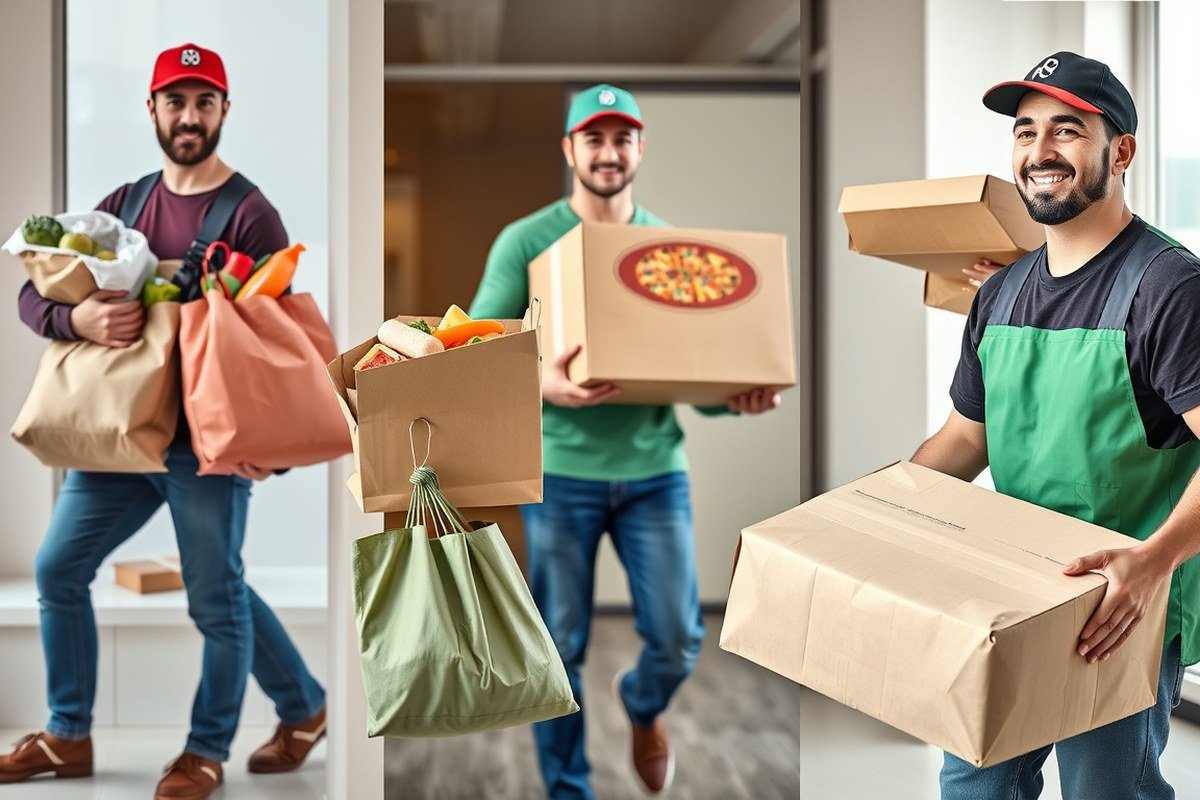
Tipping varies by the type and size of your delivery order, reflecting the effort and time required. For typical food deliveries, a tip between 15% and 20% of your order total or a flat minimum of $3 to $5 works well. Grocery deliveries usually require a bit more, especially when the driver shops for you or carries heavy bags. Larger grocery orders or those with many bulky items call for 15% to 20% tips, with minimums starting at $15. Catering and furniture deliveries often need flat dollar amounts per person, typically $10 to $20 each, to fairly compensate for the extra setup or handling involved.
Very small food or grocery orders should not get less than $3 to $5 to reflect delivery effort fairly. For large catering or group food orders exceeding $100, tipping 10% to 15% is reasonable since the total bill is often higher. Furniture deliveries usually have lower percentage tips but higher flat minimums because of their heavy lifting and coordination demands. Across delivery types, consider whether the driver has to carry heavy or multiple bags and add $5 to $10 extra when that applies.
| Delivery Type | Recommended Tip | Minimum Tip |
|---|---|---|
| Food delivery (DoorDash, Uber Eats) | 15, 20% | $3, $5 |
| Pizza delivery | 15, 20% or $3, $5 | $3 |
| Grocery delivery (Instacart, etc.) | 15, 20% | $5, $10 |
| Large/heavy grocery order ($150+) | 15, 20% | $15, $25 |
| Alcohol delivery | 15, 20% | $5 |
| Flower / gift delivery | $5, $10 flat | $5 |
| Furniture / large item delivery | $10, $20 per person | $10 |
Choosing between a percentage and a flat tip amount depends on your order’s nature and size. For example, small food deliveries under $25 benefit from a flat tip around $3 to $5 so drivers are compensated fairly for their time regardless of order value. For large grocery or catered meals, calculate a tip toward the lower end of 15% to avoid an overly large tip while still rewarding extra effort. Furniture deliveries generally require flat tips because a percentage would be inconsistent with the physical demands on the delivery team.
Practical tip: Avoid tipping below $3 on any delivery, even if your order is small, to acknowledge the driver’s service and effort properly.
To tip confidently, think first about the delivery effort involved: shopping and carrying groceries requires more time and care than dropping off a pizza, and bulky furniture needs more help than small food parcels. Adjust your tip by setting a percentage within the recommended ranges or using a flat fee that fits the service type. Doing so helps ensure drivers are rewarded fairly, encourages good service, and supports their work with the right amount every time.
When and How Much Extra to Tip for Distance, Weather, and Effort
Adjusting your tip based on distance, weather, and effort shows appreciation for the extra challenges delivery drivers face. For example, if your driver has to cover a long distance, especially crossing town, you should add at least $2 to $3 on top of your usual tip. This compensates for the added time, fuel, and wear on their vehicle. A standard pizza delivery tip might be $3 to $5 for short trips, but increase that to $5 or more if the driver travels far or faces bad weather like heavy rain or snow.
Bad weather impacts the safety and comfort of delivery drivers, making it reasonable to boost your tip by $2 to $5. Drivers work outdoors in conditions you likely avoided, such as rain, wind, icy roads, or extreme temperatures below freezing. This extra amount acknowledges their effort and the risk involved. You can add this increase regardless of the delivery size, especially if the driver arrives promptly despite the tough conditions.
Extra effort like carrying heavy or numerous grocery bags upstairs also deserves a higher tip. If the driver navigates multiple flights of stairs or a confusing building complex, expect to add another $2 to $3. The same goes for large or bulky orders that require more physical work. Grocery delivery workers may get a base tip around 10 to 15 percent, but include a bump for these efforts to avoid underpaying.
- Add $2, 3 extra for long-distance deliveries over several miles or cross-town trips.
- Increase tip by $2, 5 during bad weather, such as rain, snow, or freezing temperatures.
- Tip at least $2, 3 more if the driver carries heavy or multiple bags upstairs or faces complex access issues.
- Consider a 20% or higher tip for very difficult deliveries, like multiple flights with lots of heavy items.
- Give additional tip if the driver places your order in a secure or hidden location upon request.
Using this checklist ensures you compensate delivery drivers fairly for unusual effort. When tipping through an app, many allow you to customize your tip after the delivery, so add these amounts based on what happened. For cash tipping, prepare a few extra dollars in small bills before bad weather or large deliveries. A typical $5 tip can increase to $7 or $8 with these factors, rewarding attentive and hardworking drivers. Keeping track of these conditions and calculating a fair tip reassures drivers their efforts do not go unnoticed while supporting their income directly.
How Delivery App Fees and Driver Pay Affect Your Tip
Delivery drivers usually receive a starting payment from the app, ranging from $2 to $4 per order. This payment varies based on the delivery distance, expected time, and how complicated the order is, but it generally stays low on major US platforms. Drivers rely wholly on tips from customers, which they keep in full. The service and delivery charges shown on your bill do not go to the driver; instead, those fees help cover the platform’s overhead and do not act as driver wages.
Because most of a delivery driver’s income comes from tips, tipping directly and generously makes a meaningful difference. For example, a typical delivery might show a base pay of $8 plus an additional $6 tip, and drivers are more likely to accept these higher-tipped orders promptly. They actually see your tip amount before deciding to take your order, so leaving an adequate tip not only supports them financially but also speeds up the delivery of your food or groceries.
The delivery fees you pay, usually around $3 to $8 for apps like DoorDash, Uber Eats, and Grubhub, stay with the app and never fully reach the driver. These fees contribute to the platform’s expenses but do not reflect fair pay for the driver, who relies heavily on tips. In contrast, traditional direct employees, such as restaurant delivery drivers, might earn an hourly wage of $8 to $15 depending on the state, plus tips. Contracted app drivers usually do not receive hourly wages and depend almost entirely on base pay plus tips.
To understand the impact of your tip, consider that base pay alone can leave a driver with an income that might not cover expenses like gas or vehicle wear, especially during tough weather or long distance runs. A consistent tip of $4 to $5 or more per delivery can make the difference between a driver choosing to accept your order or passing it up for better-paying jobs. Some drivers handle multiple deliveries during busy times and depend on those tips to reach a reasonable hourly amount.
While you might see sizable “service” or “delivery” fees at checkout, those fees fund the app’s infrastructure, marketing, and customer support, not the delivery person. The tip is the only part that directly rewards their effort and time. Because drivers see tips upfront, signaling your tipping intent clearly helps ensure that your order gets picked up faster.
Local laws and regulations can affect drivers’ wages and tipping practices, so these details can vary by city or state. For the most part, the financial structure looks similar across all major US delivery apps, where the tip supplements a small base pay and service fees stay with the platform. Your direct tipping to the driver matters most for their earnings and service speed.
Tips for Tipping Grocery Delivery Shoppers Properly
When tipping grocery delivery shoppers, a good base is around 10 to 15 percent of the order total, reflecting the extra effort beyond simple drop-off. This range is higher than typical food delivery tips, as shoppers spend time selecting items, bagging, and often handling heavy loads. Additional tips should account for substitutions, missing items, or difficult deliveries like carrying groceries upstairs.
Baseline Percentage for Grocery Delivery
Grocery shoppers perform more tasks than food delivery drivers, including walking through aisles, picking fresh and correct items, and bagging them carefully. Because of this added effort, a standard tip between 10 and 15 percent is fair, higher than the 5 percent default tip found on many delivery apps such as Amazon Fresh or Instacart.
For example, on a $100 grocery order, a 10 percent tip equals $10, while 15 percent is $15. When your order includes mostly small or light items, aim for a tip close to 10 percent. For larger, heavier orders, aim toward 15 percent to acknowledge the physical work involved.
Additional Tip for Complex or Heavy Deliveries
Extra charges help reward shoppers going beyond the basics. Heavy items like cases of water or large bags of pet food require more strength and care. Carrying multiple bags upstairs or handling large orders with 10 or more bags also justifies a higher tip.
For instance, a $200 order containing heavy or bulky items often deserves $25 to $30 in tipping, reflecting around 12.5 to 15 percent. When stairs are involved and no elevator is available, adding a flat $5 to $10 bonus is reasonable. Steps for tipping heavy or complex grocery deliveries:
- Calculate the base tip at 10 to 15 percent of the total order amount.
- Assess the physical effort required, noting heavy or bulky items and number of bags.
- Add a flat $5 to $10 for extra effort like carrying groceries upstairs.
- Adjust further if the delivery includes time-consuming special handling or multiple stops.
- Use cash tips if possible for a direct handoff, or select a custom tip amount in the app.
- Thank the shopper with a kind word to reinforce your appreciation.
Default app tips tend to start at 5 percent, which many shoppers find too low given their workload, so manually increasing the tip is often appreciated.
Handling Substitutions and Missing Items
Shoppers usually notify you about substitutions if items are out of stock, and they pick alternatives based on your preferences. Tipping should reflect their care in making reasonable substitutions and updating you promptly.
Unexpected missing items justify keeping your tip the same or lowering it a bit only if the shopper’s communication or effort was insufficient. Generally, the tip covers the shopper’s time and care, even if the store inventory limits affect what’s available.
Cash vs. App Tipping: What’s Best for Delivery Drivers?
Tipping delivery drivers in cash ensures they receive the money immediately and directly, which is why many drivers prefer cash tips. It avoids app delays and uncertainties, especially if you want to tip more than the app suggests. However, if you type $0 in the app expecting to tip cash, drivers may delay or even skip your order because they don’t know a tip is coming. To avoid this, it’s best to enter a reasonable tip amount in the app, around 10-15%, then give an additional cash tip, usually $2 to $5, for excellent service.
App tipping is convenient and secure, and tips generally reach drivers quickly, but not instantly. Some services, like DoorDash, are testing “tip after delivery” options and warnings that zero-tip orders might face delays. The app also allows you to choose preset percentages, but if you want to tip more, cash is the only way to do it safely and effectively on delivery.
During the pandemic, tipping in cash requires care. Sanitize your hands before and after handling cash, or leave the money in a visible spot at your door rather than handing it directly to minimize contact. Drivers appreciate a clear gesture so they don’t miss the tip. Alternatively, use the app for your base tip and add a sealed envelope for extra cash. Below is a comparison of tipping cash versus using a delivery app that highlights key driver preferences, timing, and practical tips:
| Factor | Cash Tip | App Tip |
|---|---|---|
| Driver Preference | Generally preferred, instant, complete control over amount | Accepted, but some drivers prefer cash for immediacy |
| Tip Timing | Immediate upon delivery | Usually within hours or up to a day, varies by platform |
| Convenience | Requires carrying cash and contact | Easy to customize amount, no need for cash on hand |
| Transparency | No app record, fully private | Shown in app, traceable on receipt |
| Risk of Delay | Can cause delay if app tip is $0 and driver unaware | Less likely, especially if tip entered upfront |
| Safe Pandemic Practice | Use sanitized hands or leave cash visible at door | No risk, fully contactless |
For small orders or if you are unsure about the driver’s habits, add a modest tip in the app to speed up acceptance, then supplement with a cash tip if you want to reward exceptional service or difficult delivery conditions. Cash is best when you want to tip outside of app presets or give an extra thank-you for things like bad weather or heavy items.
Common Tipping Etiquette and Mistakes to Avoid
Tip delivery drivers after they complete the delivery to ensure appropriate compensation and acknowledge their effort. Present cash tips neatly and clearly, and avoid common mistakes like skipping tips or being dismissive, which can frustrate drivers. Knowing when and how to tip properly preserves a good relationship and reflects your appreciation fairly.
When to Tip Delivery Drivers
Tipping drivers after the delivery gives you a chance to assess the service you received, including timeliness and order accuracy. Most people leave around 20% of the order total as a tip for standard service. If the driver goes beyond what’s expected, carrying heavy items upstairs or helping with additional requests, consider increasing your tip slightly as a recognition of extra effort.
Don’t tip before the delivery unless you have an agreed arrangement, such as for recurring or scheduled deliveries. Waiting until the driver arrives ensures you reward the actual service provided and avoids overpaying in case of errors or delays.
How to Present Cash Tips Politely
Handing cash tips politely means making it clear the cash is a tip and handling the exchange respectfully. Folding the bills neatly or putting them in a small envelope can avoid any confusion. You can also place the tip on top of the payment or inside the bag if you won’t meet the driver face-to-face, but this practice is less personal. Try this simple script when tipping in person:
“Thank you for bringing my order. Here’s something for you, I appreciate your effort.”
This acknowledges their work and clearly frames the cash as the tip. Never toss money or leave it hidden, as this can seem disrespectful.
Tipping Mistakes That Offend Drivers
Certain tipping behaviors commonly frustrate delivery drivers and should be avoided:
- Not tipping at all, especially when service meets reasonable expectations
- Leaving tiny or change-only tips that don’t reflect the order size or effort
- Tipping before service is completed, risking misalignment on order quality
- Failing to communicate clearly about cash tips, causing confusion
- Ignoring difficult conditions like bad weather or long distances without extra tip
- Being rude or dismissive during handoff
Respectful tipping shows drivers you value their work and encourages better service in the future. Poor tipping can reduce motivation and fairness in pay.
What to Do If Service Was Poor
Tipping isn’t required if the delivery driver arranges poor service, such as being late without cause, missing items, or delivering the wrong order. In these cases, consider withholding the tip or reducing it significantly after confirming the problem wasn’t due to restaurant errors or app issues. You can communicate a polite but clear message along the lines of:
“I appreciate you bringing my order. Unfortunately, some items were missing, so I’m adjusting the tip accordingly.”
This feedback can help drivers and platforms improve. Reducing the tip rather than skipping it entirely can still show some appreciation if the driver made a reasonable effort despite issues beyond their control.
How to Calculate Your Tip Quickly and Fairly Every Time
To calculate a fair tip quickly, use a simple percentage method of 15-20% of your order total as the base. Apply a minimum dollar amount for small or difficult orders to make sure the driver is compensated fairly. Adjust the amount up for bad weather or long distances to reflect the extra effort involved.
Basic Percentage Tipping Formula
Start by estimating 15-20% of the food or grocery order total to find a reasonable tip amount. Calculating 20% tip quickly can be done by doubling 10% of the total. To find 10%, move the decimal point one place left. For example, for a $35 order, 10% is $3.50, so 20% is $7.00.
This method works well for most deliveries and sets a fair starting point based on order size. To calculate a 15% tip, take half of the 10% amount and add it to the 10% base. Using the $35 example, 15% equals $3.50 + $1.75 = $5.25.
Minimum Tip Application Rule
For small orders or deliveries with extra effort, apply a minimum tip, often around $5, to ensure the driver’s work is worth it after expenses. Orders under $25 or those delivered in difficult conditions should get at least this amount. This avoids underrating the driver’s time and helps prevent longer wait times caused by zero or very low tips.
Flat-dollar tipping is handy when an order is small, or you want to avoid constant percentage calculations. For example, for a $12 grocery order in dry weather, choose the $5 minimum tip instead of 15-20% since the percentage tip would only be $1.80 to $2.40, which could be too low to cover effort, mileage, and gas.
Adjusting Tip for Weather and Distance
Increase your tip beyond the 15-20% or minimum $5 when delivery conditions get tougher. Add $1 to $3 extra for poor weather like heavy rain, snow, or extreme heat over 90°F due to the added strain on travel and safety. For long distances or complicated routes, consider an additional $1 to $5 depending on how far or difficult the trip.
To adjust quickly, add a flat extra amount rather than recalculating percentages. This method helps you reward drivers fairly while being mindful of their effort and the challenges of your delivery. For example, a $40 order during a rainstorm with a 20% base tip ($8) plus a $2 weather adjustment results in a $10 total tip.
- Calculate 10% of the order total by moving the decimal point one place left.
- Double this amount to estimate a quick 20% tip.
- To tip 15%, add half of the 10% value to the original 10% amount.
- Check if the tip is less than $5; if yes, increase it to a $5 minimum.
- Add $1 to $3 for bad weather conditions like heavy rain or snow.
- Add $1 to $5 for unusually long distances or difficult access.
- Round the tip up to the nearest dollar if you want a simpler number to give in cash or app.
Practical tip: Setting a $5 minimum tip prevents leaving drivers with earnings below minimum wage after gas and time, especially for smaller orders.
Step-by-Step Action Plan for Tipping Delivery Drivers Fairly
Follow these steps to tip your delivery driver appropriately in different situations and feel confident knowing your tip matches the effort involved.
- Before placing your order: Check if your delivery app includes suggested tip amounts or if there’s an option to tip in cash. Knowing this ahead helps you plan your tip better.
- At order time: For standard food delivery under $30, tip 15% to 20% of the total cost. Increase the tip for larger or more complex orders. This ensures fair compensation right away.
- After reviewing distance and weather conditions: Add $2 to $5 extra for long distances, bad weather, or heavy packages. This bonus supports drivers handling tougher deliveries.
- During grocery deliveries: Tip shoppers around 10% to 15%, or $5 minimum on small orders, since they pick, pack, and deliver your items personally.
- When using cash tips: Hand the driver your tip directly upon delivery to guarantee they receive the full amount without app fees deducted.
- If tipping through an app: Verify the tip amount is added before finalizing your payment to avoid accidentally skipping the tip.
- After your delivery: Reflect on service quality. Consider increasing the tip for exceptional service or addressing issues by adjusting future tips accordingly.
- Within a month of regular deliveries: Monitor how your tips feel to drivers and adjust amounts if you notice changes in service or your budget.
Frequently Asked Questions
What Is the Minimum Tip Amount I Should Give a Delivery Driver?
The minimum tip is usually $5 or 20% of the total bill, whichever is higher. This guideline helps ensure the driver earns a fair amount even on small orders.
Should I Tip More for Alcohol or Large Grocery Deliveries?
Yes, tipping more for heavy or delicate items like alcohol is appreciated. For grocery deliveries, a baseline of 12-15% or $5-$7 on small baskets is fair.
Is It Okay to Tip Less If the Delivery Fee I Paid Is High?
No, delivery fees typically don’t go to the driver. Your tip is the only part that reaches the delivery person fully.
What’s the Best Way to Tip If I Don’t Carry Cash?
Use the app’s tipping feature to tip electronically when you place your order. This ensures the driver gets the tip without needing cash on hand.
How Do Drivers Feel About Low Tips on Large Orders?
Drivers remember low tips on big orders negatively because they require more work and time. Aim for at least 20% to be fair.
Can I Tip a Driver More for Bad Weather or Long Distance?
Yes, adding extra for tough conditions or long trips shows appreciation for their extra effort. Even modest bumps make a difference.
Wrapping Up
Understanding how much and when to tip delivery drivers helps you support the hardworking people bringing your food and groceries. Start by tipping at least 15% on typical orders, then adjust for conditions like distance or weather. Next time you place an order, use the suggested percentages from this guide to tip confidently and fairly.