
How to Cook Pork Chops in the Oven Perfectly Tender and Juicy Every Time
Baking pork chops in the oven at 350°F for 25 to 30 minutes ensures they come out perfectly tender and juicy. Cooking until the internal temperature reaches 145°F guarantees safety while preserving moisture. Knowing the right temperature, time, and resting method helps you avoid dry or tough pork chops every time.
This information is ideal for home cooks and beginners aiming to master how to cook pork chops in the oven with confidence. You’ll get clear steps to prepare, season, bake, and rest your pork chops for consistently delicious results.
Key Takeaways
- Preheat your oven to 350°F for even cooking and best tenderness.
- Use an instant-read thermometer to check pork chops reach 145°F internally.
- Allow pork chops to rest for 5 to 10 minutes after baking to lock in juices.
- Season pork chops before baking with salt, pepper, and your preferred herbs or marinades.
- For thicker pork chops, increase cook time slightly, around 25 to 30 minutes at 350°F.
- Baking on the highest oven rack helps achieve better browning and texture.
How to Cook Pork Chops in the Oven Step-by-Step
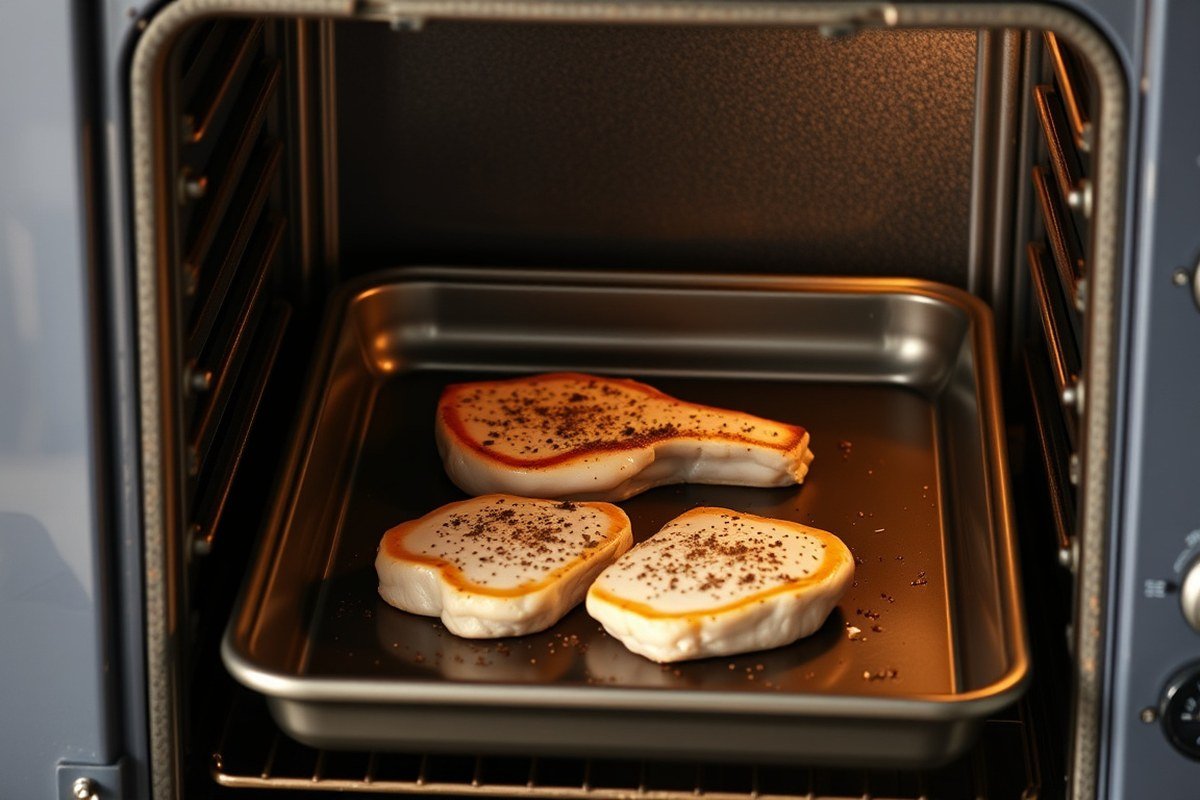
To cook pork chops in the oven successfully, start by seasoning and optionally searing them. Then bake at the right temperature and finish by resting the chops to keep them juicy and flavorful. Each step ensures the pork chops cook evenly and develop a tasty crust and tender interior.
Preparing and Seasoning Pork Chops
Begin by patting the pork chops dry with paper towels to remove excess moisture. This helps the seasoning stick and promotes better browning if you sear them. Season both sides generously with salt and pepper, and let them rest at room temperature for about 30 minutes. This dry brine step makes the pork tender and helps it cook more evenly in the oven.
You can also add a dry rub or marinade depending on your recipe or taste. Apply it evenly and allow the pork chops to absorb the flavors while resting. This preparation sets a solid foundation for juicy and flavorful pork chops.
Searing Pork Chops Before Baking
Searing is optional but recommended for a golden brown crust and added flavor. Heat a skillet over medium-high heat with a small amount of oil. Don’t move the chops during searing to ensure a nice crust forms.
Sear the pork chops for 2 to 3 minutes on the first side until golden brown. Flip and sear the other side for another 2 to 3 minutes. This quick sear locks in juices before transferring the chops to the oven for finishing.
Baking and Resting Instructions
Heat your oven to a temperature between 375°F and 400°F (190°C to 204°C). Arrange the pork chops, after searing or seasoning, in a baking dish or on a baking sheet with edges. Place the pan on the top rack of the oven to encourage thorough cooking and browning.
Bake the pork chops for 3 to 10 minutes depending on their thickness after searing, or for 25 to 30 minutes if baking directly without searing. Use a thermometer to check that the internal temperature reaches 145°F (63°C) for safe and juicy results.
Remove the pork chops from the oven and transfer them to a plate rather than leaving them in the hot pan. Loosely cover them with foil and allow them to rest for 5 to 10 minutes. This resting phase helps the juices redistribute, making the meat juicier and more tender.
- Pat pork chops dry and season with salt and pepper; let sit 30 minutes at room temperature.
- Optionally, apply a dry rub or marinade during this resting period.
- Heat oil in a skillet on medium-high and sear chops for 2-3 minutes per side until golden brown.
- Preheat oven to 375°F, 400°F (190°C, 204°C).
- Transfer pork chops to a baking dish or sheet and place on the upper oven rack.
- Bake 3-10 minutes after searing or 25-30 minutes if baking directly, until internal temperature hits 145°F (63°C).
- Remove chops and transfer to a plate; tent loosely with foil and rest 5-10 minutes before serving.
What Oven Temperature and Time Work Best for Pork Chops?

For perfectly baked pork chops, aim for an oven temperature of 400°F. This temperature balances cooking speed and moisture retention, preventing dry meat. The key factor influencing baking time is the chop’s thickness and whether it is bone-in or boneless. Bone-in chops require slightly longer cooking due to the thermal mass of the bone, which absorbs heat and slows the cooking process.
A good guideline is to bake boneless pork chops at 400°F for roughly 7 minutes per half-inch of thickness. Bone-in pork chops need about 8 minutes per half-inch. For example, a 1.5-inch boneless chop bakes for about 21 minutes, while a bone-in one at that thickness takes close to 24 minutes. These baking times apply to chops cooked uncovered in a fully preheated oven. Use a meat thermometer to check for an internal temperature of 145°F to ensure both safety and juiciness.
| Type | Thickness | Minutes Per Side on Stove | Minutes in Oven (After Stovetop Sear) |
|---|---|---|---|
| Boneless pork chops | ½ inch | 2-3 minutes | 3-4 minutes |
| Boneless pork chops | 1 inch | 2-3 minutes | 6-8 minutes |
| Bone-in pork chops | ½ inch | 2-3 minutes | 5-6 minutes |
| Bone-in pork chops | 1 inch | 2-3 minutes | 8-10 minutes |
Pork chops between ½ and 1 inch thick typically fit within these baking time ranges. Thicker chops, around 1.5 inches thick, generally require 21 to 24 minutes of baking without searing first. Baking at 350°F is another option, needing between 25 and 30 minutes, but this slower method risks drying the meat if not monitored carefully.
When baking, avoid covering the pork chops. Baking uncovered allows the surface to crisp slightly, improving texture and flavor. Bone-in chops tend to stay juicier, so choose them if you want more forgiving results. Boneless chops cook faster but risk drying out quicker, so timing is more critical.
Overcooking is the main cause of dry pork chops; always use a meat thermometer to ensure they reach exactly 145°F internal temperature for best results.
How to Check Pork Chop Doneness Safely and Accurately
Cook your pork chops until they reach an internal temperature of 145°F (63°C) to ensure they are both safe to eat and juicy. Food safety authorities recommend this temperature because it fully cooks the meat while keeping it moist and tender. Using a meat thermometer is the most reliable way to check doneness, as judging by appearance alone can lead to overcooking or undercooking.
Insert an instant-read meat thermometer into the thickest part of the pork chop, avoiding any bones, which can give false readings. Start checking the temperature a few minutes before the expected finish time, especially if your chops are about 1 inch thick, which generally take around 25 to 30 minutes in the oven at a moderate to high heat. Remove the pork chops from the oven once they reach 145°F, then let them rest for about 5 minutes. During resting, the temperature will stay stable or rise slightly, and juices will redistribute throughout the meat, keeping the chops tender. Visual cues can supplement thermometer readings but are less precise. Look for these signs to help judge doneness:
- Juices running clear, not pink or bloody
- Firmness to the touch, feeling springy but not hard
- Meat color turning from pinkish to a light, opaque white near the center
- A slight browning or caramelized crust on the outer surface
Be cautious using visual signs alone. Pork can look done while still being undercooked inside or appear dry when overcooked. For the best results, rely primarily on the thermometer reading. Avoid cooking pork chops far beyond 145°F, as higher temperatures tend to dry out the meat. Consistent practice with a thermometer improves your timing and confidence, preventing the common problem of dry, chewy pork.
How to Prepare and Season Pork Chops Before Baking
Before baking pork chops, proper preparation and seasoning are important for the best flavor and texture. Drying the chops thoroughly, seasoning at the right time, and choosing a marinade or dry rub suited to your taste will boost their juiciness and taste. Knowing how long to marinate also affects the depth of flavor and tenderness.
Essential Prep Before Seasoning
Start by patting the pork chops dry with paper towels to remove excess moisture. This step helps the seasoning or marinade stick better and ensures even browning when cooking. Let the chops rest at room temperature for about 15-20 minutes before seasoning. Salting should be done either immediately before cooking or at least 40 minutes ahead, or even the night before. Salting early helps the salt penetrate the meat, improving flavor and moisture retention. Avoid salting only a few minutes before cooking, as it draws moisture out without time for reabsorption, leading to dry chops.
Marinade and Dry Rub Options
Combining herbs and spices with oil creates a flavorful marinade. A typical combination might include onion powder, garlic powder, ground cumin, ground coriander, kosher salt, and extra virgin olive oil. This mixture improve the pork chops with deep flavors and retains moisture. Alternatively, dry rubs made with ingredients such as paprika, black pepper, salt, brown sugar, and dried thyme or rosemary provide a quick seasoning method. Be sure to cover all sides of the chops thoroughly with your chosen marinade or rub for even flavor.
Marinades infuse moisture and tenderize, making them ideal for thicker cuts or leaner pork chops. Dry rubs work well for improving the surface flavor and forming a tasty crust during baking.
Recommended Marination Times
A minimum of 30 minutes marinating time allows flavors to start penetrating the pork chops. Marinating for 2 to 4 hours will improve tenderness and depth of flavor noticeably. For the best results, especially when using a salt-based brine or acidic ingredients like vinegar or citrus juice, overnight marination (up to 12 hours) is effective. However, avoid marinating more than 24 hours as the texture can become mushy. When short on time, simply seasoning right before baking and allowing the meat to sit at room temperature for 15 minutes can still produce tasty results, although with less intense flavor than longer marinating.
- Pat pork chops dry to remove moisture.
- Let chops rest at room temperature for 15-20 minutes.
- Salt the meat either immediately or at least 40 minutes before baking for best moisture retention.
- Choose a marinade or dry rub based on desired flavor and cut thickness.
- Apply the marinade or dry rub evenly over all sides of the pork chops.
- Marinate at minimum 30 minutes, up to 12 hours depending on recipe and ingredients.
- Remove chops from marinade and allow excess liquid to drip off before baking.
Common Mistakes to Avoid When Baking Pork Chops
Overcooking pork chops is one of the most common mistakes, leading to dry, tough meat. Pork chops are lean and can become unpleasant quickly if left in the oven too long. Avoid this by monitoring oven time carefully and using a meat thermometer to check for an internal temperature of 145°F. This ensures they’re juicy while safe to eat. Also, thinner cuts cook faster and risk drying out, so choose chops about 1-inch thick for better control.
Underseasoning pork chops often results in bland dishes. Pork has a mild flavor and needs enough seasoning or marinade to highlight its taste. Salt the meat generously before cooking, and use a mix of herbs and spices to boost flavor. This simple step makes a big difference without extra effort.
- Overcooking, use a meat thermometer to reach 145°F internal temperature, then rest the chops.
- Choosing very thin chops, opt for 1-inch thickness for even cooking and juiciness.
- Skipping seasoning, always season with salt and spices before baking.
- Not resting the chops, let meat rest 5 minutes after baking to retain juices.
- Uneven cooking, sear pork chops first, then finish in the oven to lock in moisture.
Uneven cooking happens when pork chops are placed in the oven raw without a sear or when the oven temperature is too low. Searing the chops on the stovetop before baking helps create a crust that locks juices inside and starts the cooking process evenly. If you don’t have an oven-safe skillet, transfer the seared chops to a baking dish, but avoid overcrowding to ensure heat circulates well. Baking at the right temperature, usually around 375°F to 400°F, helps cook the meat evenly without drying out the edges.
Use a meat thermometer for a quick, accurate check, pulling pork chops at 145°F followed by a 5-minute rest creates juicy, tender results.
Resting cooked pork chops is another important step often skipped, but it allows the juices to redistribute throughout the meat instead of spilling out when cut. Let the chops sit on a plate loosely tented with foil for about 5 minutes after baking. This brief pause ensures the pork stays moist when served.
How Resting Pork Chops Improves Juiciness and Flavor
Resting pork chops after baking is essential to preserving their juiciness and improving tenderness. When pork chops come straight out of the oven, the heat forces the juices toward the center or even causes them to leak out once cut. Allowing them to rest for about 5 minutes lets these juices redistribute evenly throughout the meat, making each bite more moist and flavorful.
The best way to rest baked pork chops is to transfer them from the cooking tray to a warm plate, then loosely cover them with aluminum foil. This covering helps keep the pork chops warm without trapping steam, which could make the crust soggy. Avoid wrapping them tightly because this causes condensation and softens the texture you achieved during baking.
Five minutes is an ideal resting time for pork chops of average thickness, around ¾ to 1 inch thick. This period is long enough for the internal juices to reabsorb but short enough to prevent the meat from cooling down too much. Thicker chops or bone-in cuts might benefit from resting closer to 7 or 10 minutes, giving extra time for heat and moisture to balance.
Failing to rest pork chops results in noticeable loss of juices once cut, leading to drier, less tender meat. In contrast, resting creates a juicier and more tender eating experience, demonstrating the simple payoff of this quick step. After resting, serve the pork chops immediately for the best temperature and texture.
Resting does not require any special tools beyond foil and a plate, and it takes very little extra time. Those few minutes significantly improve the eating quality of oven-baked pork chops and should not be skipped in any recipe. This practice complements other moisture-retaining techniques like brining or cooking at the right temperature.
Best Side Dishes to Serve with Oven-Baked Pork Chops
Oven-baked pork chops work well with a variety of sides, including mashed potatoes, rice, and vegetables like broccoli, green beans, or glazed carrots. These sides balance the protein and add texture and flavor to your meal. Including a vegetable provides fiber and nutrients, while a carb offers energy and complements the rich taste of pork.
Timing matters when serving a full meal. For example, 1-inch boneless pork chops typically take about 16 to 18 minutes to bake at 375°F. Mashed potatoes usually take around 20 minutes to prepare on the stovetop, which means you can start cooking them just before you begin baking the pork chops. Choosing roasted vegetables means you can cook them in the oven with the pork chops, which saves time and reduces cleanup.
You can also create a sheet pan meal by adding vegetables like chopped carrots, potatoes, or Brussels sprouts to the same pan as the pork chops. Arrange the vegetables around the meat in a single layer to ensure even cooking. Because pork chops bake at a moderate temperature, most root vegetables will roast well in about 20 to 25 minutes. Adjust cut sizes to match cooking times, smaller pieces cook faster. Cover with foil loosely if you want to prevent over-browning while the pork finishes baking.
- Mashed potatoes or mashed sweet potatoes for creamy texture
- Steamed or roasted broccoli and green beans for a fresh crunch
- Glazed carrots with a touch of honey or brown sugar for sweetness
- Rice pilaf or seasoned white rice for a light, fluffy side
- Sheet pan mixed vegetables like Brussels sprouts and fingerling potatoes
Coordinating the cooking times of sides with pork chops allows you to serve everything hot and fresh. Start longer-cooking sides like mashed potatoes first, then pop the pork chops and quicker-roasting vegetables in the oven together. Baking sides on the same pan requires even spacing and careful checking to make sure the vegetables cook through without burning. This method reduces cleanup and creates a balanced meal with minimal fuss, saving you time while preparing a delicious dinner.
Storing and Reheating Baked Pork Chops for Best Quality
To keep baked pork chops safe and tasty, store them in airtight containers and refrigerate within two hours of cooking. They will last up to four days in the fridge. You can freeze pork chops to extend their shelf life. For reheating, use a skillet with a bit of water or other liquid to maintain moisture and prevent drying out.
Proper Storage for Leftovers
Place leftover baked pork chops in airtight containers or wrap them tightly in plastic wrap or aluminum foil to avoid exposure to air. This prevents bacterial growth and keeps the pork chops’ flavor intact. Store them in the refrigerator within two hours after cooking. Cold storage at or below 40°F slows spoilage and retains quality.
Leftover pork chops will stay safe and enjoyable for up to 4 days in the fridge. Beyond this period, risk of foodborne illness increases due to bacterial growth. Avoid leaving pork chops out at room temperature for extended periods, as this can quickly lead to spoilage.
Freezing Cooked vs Raw Pork Chops
Freezing is a good way to extend the life of pork chops. Raw pork chops can be stored in the freezer for 4 to 6 months without losing much quality. Cooked pork chops are best consumed within 2 to 3 months of freezing for optimal taste and texture.
Before freezing, wrap pork chops tightly in plastic wrap, followed by aluminum foil or a freezer bag to prevent freezer burn. Label the package with the freezing date for easy tracking.
Thaw frozen pork chops in the refrigerator overnight to keep them at safe temperatures. Avoid thawing at room temperature to reduce bacterial growth risks. You can also use the microwave to defrost if you plan to cook or reheat immediately afterward.
Reheating Techniques
To keep pork chops moist and flavorful when reheating, use a skillet on medium heat with a splash of water, broth, or apple juice. This method helps maintain moisture and prevents the meat from drying out.
Using an oven to reheat is also effective. Wrap pork chops in foil and heat at 300°F for about 15-20 minutes until warmed through.
A microwave can be quicker but risks drying out the meat. If you use a microwave, cover the pork chops with a damp paper towel and reheat on medium power in 30-second intervals to avoid overcooking. Follow these steps to reheat pork chops in a skillet for moist results:
- Place a skillet over medium heat and add a small splash of water, broth, or apple juice.
- Add the pork chops to the skillet and cover it with a lid.
- Heat for 3 to 4 minutes on one side.
- Flip the pork chops and heat for another 3 to 4 minutes.
- Check the internal temperature; it should reach at least 140°F for safe consumption.
- Remove from heat and let them rest for a minute before serving.
Always cool pork chops quickly and refrigerate within 2 hours after cooking to prevent harmful bacteria from multiplying.
Step-by-Step Action Plan for Perfect Oven-Baked Pork Chops
Follow these clear steps to get tender, juicy pork chops every time you use your oven.
- Before you start: Choose pork chops about 1-inch thick for even cooking and pat them dry to help seasoning stick.
- 15 minutes before baking: Season the pork chops with salt, pepper, and your favorite herbs or spices. Let them sit at room temperature to promote even cooking.
- Preheat the oven: Set it to 400°F to balance browning and internal cooking, avoiding dryness.
- At baking time: Place chops on a baking sheet lined with foil or parchment for easy cleanup and bake uncovered.
- During cooking (about 10-15 minutes): Use a meat thermometer to check internal temperature; pull chops at 145°F for safe doneness.
- Right after baking: Let pork chops rest for 5 minutes on a warm plate to keep juices locked inside.
- Before serving: Slice into the chop to check for pinkness (a slight pink is okay) and ensure juices run clear.
- After dinner: Store leftovers in an airtight container within 2 hours and reheat gently in a low oven or microwave to maintain moisture.
Frequently Asked Questions
How Do I Make Oven-Baked Pork Chops Tender and Juicy?
Brine the pork chops briefly and bring them to room temperature before baking. This helps the meat retain moisture and cook evenly for juicier results.
Can I Bake Frozen Pork Chops Without Thawing?
It’s best to thaw pork chops before baking for even cooking. Baking frozen ones takes longer and can result in uneven texture.
What’s the Best Way to Bake Pork Chops with a Crispy Crust?
Sear pork chops in a hot pan before transferring to the oven. This locks in juices and creates a crispy exterior.
How Do I Avoid Drying Out Pork Chops in the Oven?
Avoid overcooking and use a meat thermometer to reach 145°F, then rest the chops. Resting redistributes juices, keeping them moist.
How Long Do Thick Pork Chops Take to Bake in the Oven?
One-inch thick pork chops usually need 25-30 minutes at 350°F. Thicker chops require a few extra minutes, but check internal temp for doneness.
Can I Use a Marinade Instead of Seasoning for Oven-Baked Pork Chops?
Yes, marinating adds flavor and helps tenderize the meat. Just pat dry before baking to avoid steaming instead of roasting.
Final Thoughts
Perfecting pork chops in the oven takes a blend of proper temperature, timing, and seasoning. After your first batch, try tweaking your seasoning or oven time slightly to match your taste and chop thickness. Keep a meat thermometer close, as it’s your best tool for reliable results every time.



2 Comments