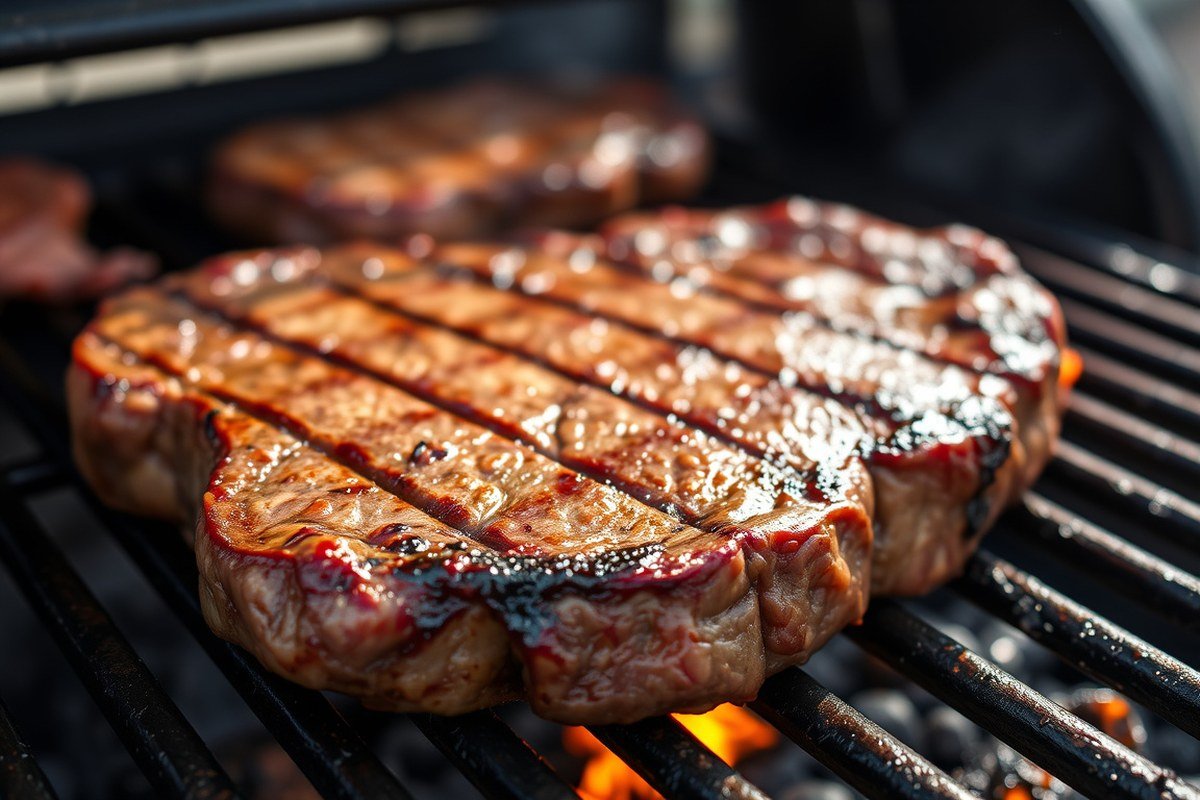
How to Grill a Steak Perfectly: 8 Steps for Juicy, Flavorful Results
To grill a steak perfectly, start by bringing the meat to room temperature at least 10 minutes before cooking and preheat your grill to high heat. Use direct heat to sear, flipping the steak every few minutes, and rely on an accurate thermometer to reach your ideal doneness. Rest the steak after grilling to retain its juices and achieve a tender, flavorful result.
These steps are for home cooks and barbecue enthusiasts aiming to improve their steak grilling skills. Follow clear, practical techniques that balance timing, heat control, and preparation to make every steak juicy, tender, and full of flavor.
Key Takeaways
- Let your steak sit at room temperature for at least 10 minutes before grilling to ensure even cooking.
- Preheat your grill to around 550°F for searing and finish by turning off the middle burners for indirect heat.
- Grill a 1-inch steak for 10 to 12 minutes to reach medium-rare at 145°F, adjusting for thickness and doneness.
- Flip steaks after 3 minutes, then rotate 90 degrees for grill marks, cooking each side carefully to within 10°F of target temperature.
- Pull steaks from the grill at 127-130°F for medium-rare to account for carryover cooking during resting.
- Rest steaks for at least 5 minutes after grilling to let internal juices redistribute and improve tenderness.
1. How to Grill a Steak Perfectly Step-by-Step
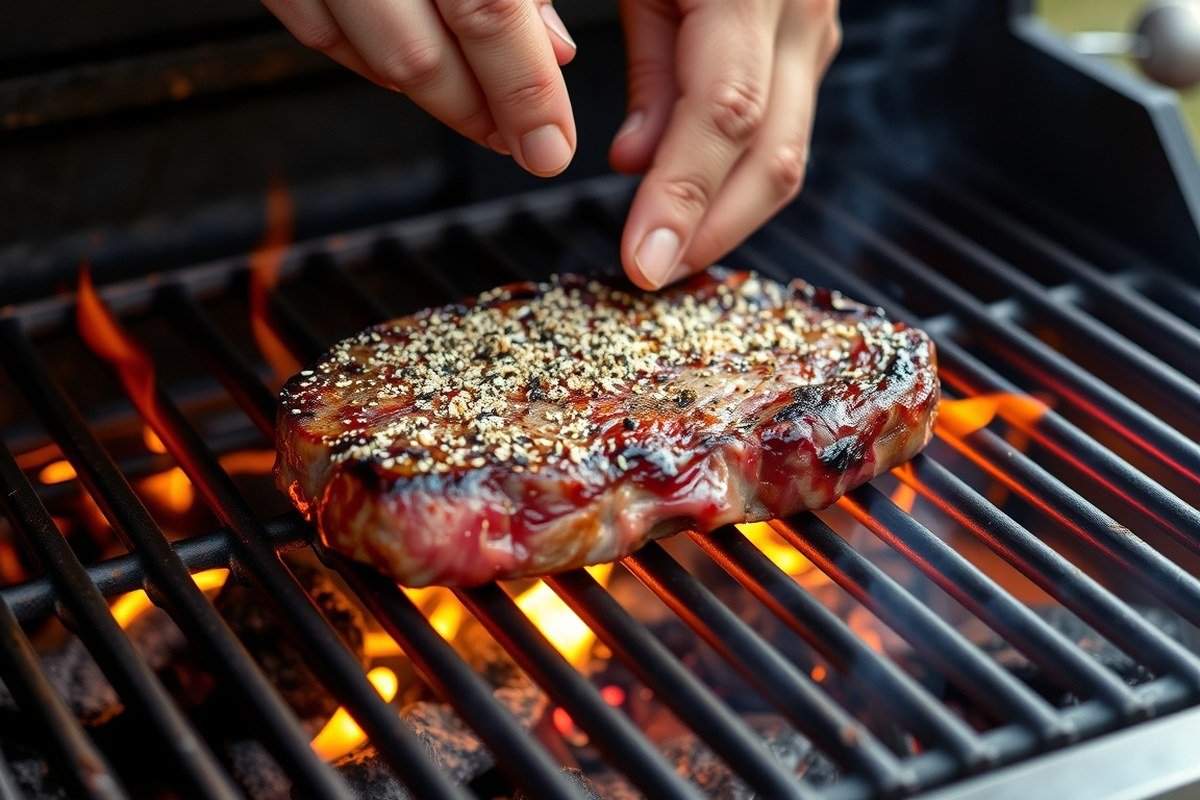
Grilling a steak perfectly comes down to careful preparation, precise timing, and attentive handling on the grill. Start by seasoning the steak at least 10 minutes before grilling to let flavors develop and moisture evaporate, which helps create a flavorful crust. For best results, season the steak generously with salt and pepper, then chill it uncovered in the fridge for up to 48 hours if planning ahead. This method deepens seasoning and dries the surface for better searing.
Your grill should be preheated to a high temperature, roughly 450-500°F, to ensure a good sear. Once ready, place the steak directly over the heat source. Avoid flipping multiple times; one flip halfway through grilling allows the meat to brown well and form grill marks. Turn the steak another 90 degrees halfway through cooking each side to create crosshatch grill marks and improve the crust.
- Preheat your grill. Let the grill reach medium-high heat, about 450-500°F. This takes roughly 10 minutes on most gas or charcoal grills.
- Season the steak. Sprinkle salt and pepper evenly on both sides at least 10 minutes before grilling. For deeper seasoning, chill the steak uncovered in the fridge up to 48 hours.
- Place the steak on the grill. Lay it directly over the hottest part of the grill grates. This direct heat sears the outside quickly.
- Grill the first side. Cook without moving the steak for 3-4 minutes for thin cuts, or 5-6 minutes for thicker cuts, until it develops a good crust.
- Flip and rotate. Turn the steak over once, then after 3 minutes, rotate it 90 degrees to create crosshatch grill marks. Continue cooking for another 2-3 minutes on this side.
- Check temperature. Use an instant-read thermometer to measure internal temperature. Remove the steak when it is about 10°F below your target doneness (for medium-rare, pull at 127-130°F).
- Rest the steak. Transfer to a plate and tent loosely with foil for 5-10 minutes. The residual heat will finish cooking, bringing the temperature up 5-10°F and juices will redistribute.
Thin steaks need approximately 3-4 minutes per side over high direct heat, while 1-inch steaks require 10-12 minutes total for medium-rare doneness. Turning once avoids losing heat and moisture but rotating the steak halfway through each side promotes even searing and attractive grill marks. Keep a spray bottle of water nearby or move the steak to indirect heat if flare-ups occur. Avoid pressing down on the steak to keep it juicy.
2. What Grill Temperature and Setup Work Best for Steak?
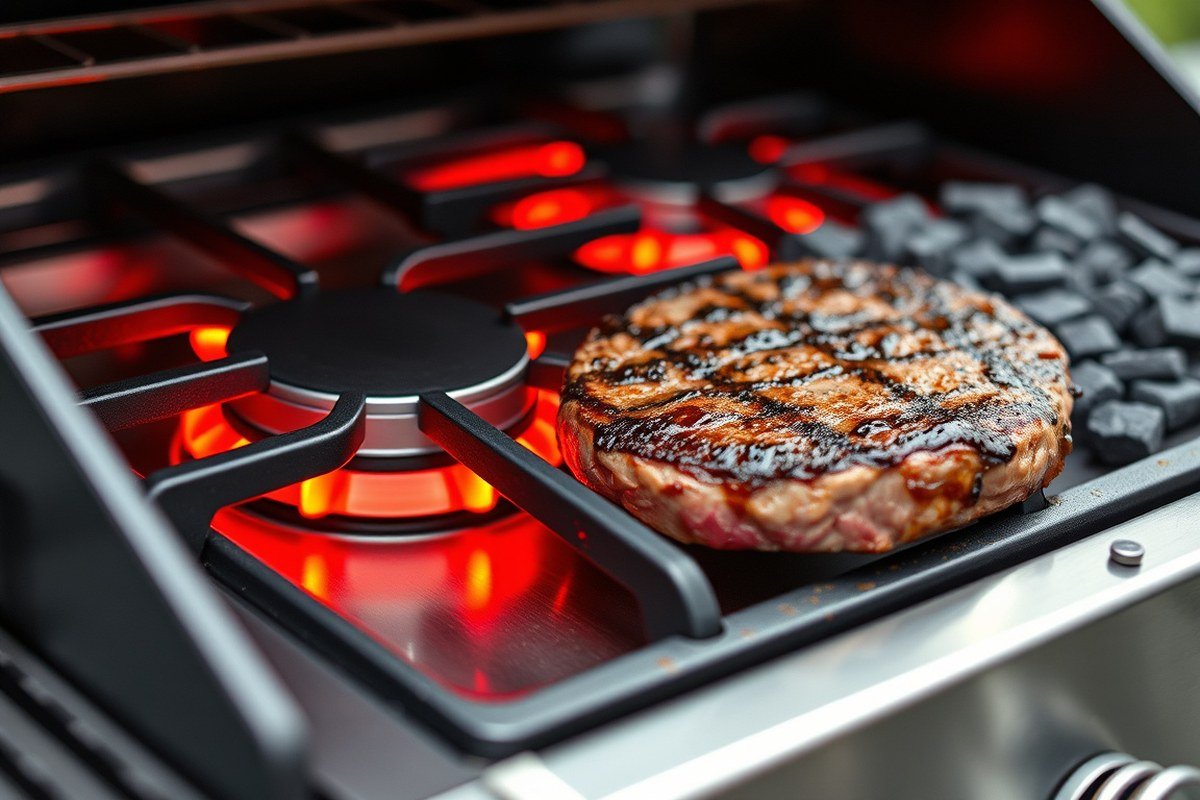
To grill a steak effectively, preheat your grill to about 450°F to 500°F for searing. Use a two-zone setup with a hot direct heat zone for searing and a cooler indirect heat zone for finishing cooking. This lets you get a crust on the steak while controlling internal temperature without burning or flare-ups.
Ideal Temperature Ranges for Searing and Cooking
Searing steaks requires a high grill temperature, typically between 450°F and 500°F. This range allows the Maillard reaction to occur, giving the steak a flavorful crust within a few minutes per side. After searing, move the steak to an indirect heat zone at around 250°F to 300°F to finish cooking gently. This prevents over-charring and lets the internal temperature rise evenly to your target doneness.
For example, a 1-inch thick steak can be seared for about 3 minutes per side over direct heat, then moved to indirect heat until it reaches around 125°F internal for medium-rare. Rest for about 5 minutes afterward to allow juices to redistribute.
| Cooking Phase | Temperature Range (°F) | Purpose | Time Example (1-inch steak) |
|---|---|---|---|
| Searing over direct heat | 450 – 500 | Create crust, Maillard reaction | 3 minutes per side |
| Finishing over indirect heat | 250 – 300 | Cook through evenly, prevent burning | 2 – 3 minutes or until 125°F internal |
| Indirect heat-alone (frozen steak temping) | Low, no direct flame | Bring frozen steak to ~90-95°F internal | Varies, until internal temp reaches 90-95°F |
Controlling grill temperature is critical to avoid flare-ups and temperature swings. High heat is essential for the initial crust but must be balanced with cooler zones to prevent overcooking.
Setting Up Two-Zone Cooking on Gas Grills
Gas grills can reach 450°F within about 10 minutes by igniting two or more burners on high. To create a two-zone setup, leave one burner(s) on high for direct heat and turn another burner to medium or off to establish an indirect heat zone. This setup lets you sear the steak directly over flames and then move it to the cooler zone to finish cooking gently.
Light all burners to preheat evenly. Then reduce heat on the center burner or one side burner to medium or off, depending on grill size. Use the hotter zone to sear steaks, then transfer to the cooler zone with the grill lid closed for indirect cooking.
Keep the grill lid closed when finishing steak over indirect heat to maintain even temperature and avoid flare-ups.
To manage flare-ups, move steaks away from direct flames and avoid excessive oil or marinade drips during searing. Closing vents or burners temporarily can help stabilize temperature drops during cooking.
Setting Up Two-Zone Cooking on Charcoal Grills
Charcoal grills require arranging briquettes into two areas: a hot pile for searing and a cooler zone with fewer or no briquettes for indirect cooking. Light enough briquettes to reach 450°F to 500°F on the hot side. Spread the rest away from the hot pile to create your cooler zone.
Use a chimney starter for consistent ignition and avoid lighter fluid to prevent off-flavors. Place the hot briquettes on one side of the grill grate. When searing, place steaks directly over the hot coals. Once the crust forms, move them to the cooler side to finish cooking. This method reduces burning risk and flare-ups caused by dripping fat.
Adjust vents as needed to control airflow and maintain temperature. Opening vents increases oxygen flow, boosting heat, while closing them lowers temperature. Monitor grill temperature with a built-in thermometer or grill-safe probe to keep the setup stable.
3. How Long to Grill Steak Based on Thickness and Doneness
Grilling time varies primarily by steak thickness and your preferred level of doneness. For a 1-inch thick steak, plan on about 3 to 5 minutes per side over high heat for rare to medium doneness. Thicker steaks, around 1.5 inches, will need longer, typically 4 to 6 minutes per side, and often a period of lower heat grilling afterward to reach the right internal temperature without burning the exterior.
Knowing the target internal temperature is essential for perfect grilling. The internal temperature corresponds to how cooked the steak will be inside. Check with an instant-read thermometer to avoid undercooking or overcooking:
| Doneness | Initial Sear Time (per side) | Additional Grill Time at Lower Heat | Internal Temp to Remove Steak (°F) | Final Temp After Resting (°F) |
|---|---|---|---|---|
| Rare | 2 minutes | 1-2 minutes | 115 | 120 |
| Medium Rare | 2 minutes | 2-3 minutes | 110-115 | 130 |
| Medium | 2 minutes | 3-4 minutes | 135 | 140 |
| Medium Well | 2 minutes | 4-5 minutes | 145 | 150 |
| Well Done | 2 minutes | 5-6 minutes | 155 | 160+ |
Removing a steak at 5°F below your target temperature allows for carryover cooking, residual heat raising the internal temperature while resting. This typically adds about 5°F to the steak’s temperature, finishing the cooking without additional grill time. For example, to achieve a medium-rare steak at 130°F final temperature, remove it when it hits 125°F on the thermometer.
An example: For a 1-inch thick steak cooked medium-rare, sear it over high heat for about 3 to 4 minutes per side. Then lower the heat or move the steak to a cooler part of the grill and cook for an additional 2 to 3 minutes. Use a thermometer to check that the steak reaches 110 to 115°F before taking it off. Rest it for 5 to 10 minutes to allow the carryover heat to bring it to 130°F.
Cooking time depends on your grill temperature, steak thickness, and desired doneness. Use the two-zone method, one high-heat zone for searing, another medium or low-heat zone for finishing, to control temperature. Steaks thicker than 1.5 inches may require longer in the indirect heat zone to cook evenly all the way through without charring the outside.
4. Choosing the Best Steak Cuts and Preparing Them
Steaks that grill best are tender cuts with some marbling and are at least 1 to 1½ inches thick. This thickness helps the steak cook evenly without drying out. Preparing them involves trimming excess fat to avoid flare-ups, seasoning well with salt, or marinating leaner cuts to boost flavor and tenderness.
Best Cuts for Grilling
Steaks like ribeye, New York strip, and filet mignon are popular for grilling due to their tenderness and fat content. Ribeyes have enough fat that you can simply season with salt and pepper, while leaner cuts like flank and tri-tip benefit from marinating before cooking. The cut affects cooking time and temperature because fattier steaks handle high direct heat without drying out, but lean cuts need gentler treatment to avoid toughness.
| Steak Cut | Fat Content | Best Prep | Cook Time (approx., 1.5 inches thick) |
|---|---|---|---|
| Ribeye | High marbling | Salt & pepper just before grilling | 8-10 minutes |
| New York Strip | Moderate marbling | Salt & pepper; no marinade needed | 7-9 minutes |
| Filet Mignon | Low marbling | Salt & pepper or light marinade | 6-8 minutes |
| Flank Steak | Low fat | Marinate for flavor & tenderness | 4-6 minutes |
| Tri-tip | Lean | Marinate recommended | 8-10 minutes (reverse sear works well) |
Recommended Thickness and Fat Trimming
Steaks should be at least 1 inch, ideally around 1½ inches thick to grill well. Thinner steaks cook too quickly, increasing the risk of overcooking. For beginners, thickness over 1½ inches offers more control because the steak is more forgiving and less likely to dry out.
Fat trimming is necessary mainly to prevent flare-ups on the grill. Trim excess fat from the edges but leaving some fat on the steak is beneficial for flavor and juiciness. Too much fat hanging off the sides causes quick burning, so a clean edge reduces charring.
- Choose steaks 1 to 1½ inches thick for more even cooking
- Trim excess fat from edges but keep some marbling
- Thicker steaks require longer grilling times at controlled heat
- Thin steaks (<1 inch) need quick, high-heat grilling
- Use a meat thermometer for steaks under 1 inch to avoid overcooking
For best results, take steaks out of the fridge about 30, 60 minutes before grilling to reach room temperature. This balances cooking time and prevents the outside from overcooking while the inside warms up.
Seasoning and Marinating Tips
Salt your steaks generously just before grilling to draw out moisture and create a flavorful crust. A good option is kosher salt, applied 30 to 60 minutes before cooking or even 24 hours ahead and refrigerated uncovered on a rack. This dry-brining process improves texture and flavor.
Marinating is advised mainly for lean cuts like flank or tri-tip. A marinade should contain an acid like vinegar or citrus to tenderize muscle fibers and some oil to keep the steak moist. Marinate for at least 30 minutes but no longer than 24 hours to avoid mushy texture.
- High-fat steaks (ribeye, strip) generally only need salt and pepper
- Lean steaks (flank, tri-tip) benefit from a 30-minute to 24-hour marinade
- Salt steaks 30, 60 minutes before cooking for better crust
- Use a mix of acid, oil, and spices in marinades for flavor and tenderness
- Let steaks rest at room temperature before grilling for even cooking
When using marinades, pat the steak dry before grilling to prevent steaming instead of searing. This will help you get a nice crust while keeping the inside juicy.
5. How to Tell When Your Steak Is Done Right
Using an instant-read meat thermometer provides the most reliable way to check steak doneness. Insert the thermometer probe gently into the side, near the center but not through to the grill. For medium-rare, look for an internal temperature between 120ºF and 125ºF; medium is around 145ºF, and medium-well approaches 160ºF. Pull the steak from the grill when it reads about 10º below your target temperature, as it will continue cooking while resting. Checking the temperature as you flip or turn your steak helps avoid overcooking.
The finger test offers a quick, no-tool method but is less accurate. Compare the firmness of your steak to different parts of your hand: relaxed palm corresponds to rare, touching your thumb to your index finger mimics medium-rare firmness, middle finger for medium, ring finger for medium-well, and pinky for well done. Practice feeling these differences before relying on this method, especially if you are new to grilling steak.
Visual and juice cues provide additional hints. A medium-rare steak’s juices will run slightly pinkish when you press lightly. The outer surface should show clear grill marks and a browned crust, signifying the Maillard reaction has taken place, which adds flavor. Avoid cutting into your steak early to check inside; piercing the meat lets juices escape, resulting in drier steak.
Deciding when to pull the steak off the grill depends on your chosen doneness and the steak thickness. For 1-inch steaks, grilling approximately 3 to 4 minutes per side on medium heat (about 300°F) with the lid closed is a good starting point. Use the thermometer as your main guide rather than time alone, since grill temperatures and steak starting temperatures can vary.
Checking steak temperature from the side rather than the top ensures you measure the thickest part, giving a more accurate internal temperature reading.
6. Why and How to Rest Steak After Grilling
Resting steak after grilling is essential because it allows carryover cooking to finish gently while juices redistribute throughout the meat. Carryover cooking happens when the residual heat inside the steak continues to raise its internal temperature by about 5°F after you remove it from the grill. This brings the steak up to the target doneness without overexposing the surface to heat, which helps retain moisture and avoid toughness.
For best results, let your steak rest on a clean cutting board or plate for 5 to 10 minutes before slicing. This time frame keeps the steak warm enough to serve while allowing the juices to settle evenly, preventing them from spilling out immediately when you cut into the meat. Resting shorter than 5 minutes leaves the juices unsettled, causing a dryer bite, while resting much longer than 10 minutes risks overcooking from carryover heat.
Loosely covering the steak with foil during resting helps maintain warmth without trapping steam, which can soften the crust. Avoid tightly wrapping it, as that can cause the exterior to lose its sear. The exact resting time should depend on the steak thickness: thinner steaks around 1 inch need closer to 5 minutes, while thicker steaks near 2 inches can benefit from up to 10 minutes.
Before grilling, letting your steak come to room temperature, around 20 to 30 minutes out of the fridge, ensures more even cooking but does not replace the resting period after grilling. Once off the heat, resting locks in juiciness that can be lost if you cut into the steak immediately, no matter how perfectly it’s grilled.
In cases where you grill multiple steaks or cuts with different thicknesses, rest them together for about 5 minutes, then slice the thinner pieces first to avoid over-resting the thinner cuts while the thicker ones finish resting. For very thick steaks or roasts, resting 10 minutes or more can be appropriate, but for everyday grilling, sticking to 5-10 minutes balances juiciness and waiting time.
To sum up a simple resting routine: remove your steak from the grill, place it on a warm plate or cutting board, loosely cover it with foil, and set a timer for 5 to 10 minutes based on thickness. This approach helps you avoid common pitfalls like drying out the steak or serving it too cool while capturing optimal temperature and juiciness.
7. Direct Grilling vs Reverse Searing: Which Method to Use?
Direct grilling and reverse searing are two popular methods for cooking steak, each with distinct benefits depending on the steak’s thickness and your desired outcome. Direct grilling uses high heat for quick cooking, suited to thinner cuts, while reverse searing involves slow cooking at a low temperature followed by a high-heat sear, ideal for thicker steaks.
Overview of Direct Grilling
Direct grilling means placing the steak directly over high heat, usually between 450°F and 500°F, to cook it quickly and develop a flavorful crust. This method works best for steaks thinner than 1.5 inches, like flank or skirt steak, since they cook through rapidly without drying out.
To execute direct grilling, preheat the grill to high heat, season the steak with salt, and grill each side for about 3 to 5 minutes depending on thickness and doneness preference. This technique requires close attention to avoid flare-ups and overcooking.
How Reverse Searing Works
Reverse searing flips traditional grilling by starting with low, indirect heat at about 225°F to slowly and evenly cook the steak through. After the internal temperature reaches roughly 10, 15°F below your target doneness, the steak moves to direct high heat, around 450°F, for a quick sear that locks in juices and creates a crust. Here’s a practical step-by-step for reverse searing on a gas or charcoal grill:
- Set the grill for indirect heat with one side at 225°F and the other side turned off or on low.
- Place the thick steak (over 1.5 inches) on the cooler side and close the lid.
- Cook until the internal temperature is about 10, 15°F below your desired doneness (use a meat thermometer).
- Move the steak to the hot side at 450°F for 1 to 2 minutes per side to sear.
- Remove the steak and rest for 5 to 10 minutes before serving.
This method takes longer but gives very even cooking from edge to center and minimizes overcooked edges.
Choosing the Right Method by Steak Type
Steak thickness is the major factor when deciding between direct grilling and reverse searing. Thin cuts less than 1.5 inches thick benefit from high-heat direct grilling for a quick, flavorful cook. Cuts like flank, sirloin, or skirt steak perform best with this fast approach.
Thicker steaks over 1.5 inches thick, such as ribeye, New York strip, or filet mignon, respond better to reverse searing. This method gently raises the steak’s internal temperature before finishing with a high-heat sear, which helps prevent a burnt crust with an undercooked center.
| Method | Steak Thickness | Heat Setup | Typical Cook Time | Best Cuts |
|---|---|---|---|---|
| Direct Grilling | Less than 1.5 inches | 450°F to 500°F direct high heat | 3-5 minutes per side | Flank, skirt, sirloin |
| Reverse Searing | More than 1.5 inches | 225°F indirect heat, then 450°F direct high heat | 15-30 minutes low, plus 1-2 minutes sear per side | Ribeye, New York strip, filet mignon |
Reverse searing demands patience and a thermometer for best results but produces steak with evenly cooked interior and crispy exterior. Direct grilling requires quicker timing and attention but delivers fast, delicious results for thinner cuts. Select the method that suits the steak thickness and your available grill setup.
8. Common Grilling Mistakes and How to Fix Them
Tough or dry steak often results from not heating the grill enough, or from overcooking. A very hot grill seals the surface quickly, locking juices inside. Aim for medium-hot coals or a preheated gas grill around 450°F to 500°F. Also, removing the steak too soon without resting lets those juices run out onto the plate instead of staying in the meat. Rest steak for at least 5 minutes on a warm plate after cooking to redistribute moisture evenly.
Flare-ups happen mainly because of excess fat or oil dripping onto the flames. Trim thick fat caps before grilling and avoid adding extra oil to the steak. Marinating is not recommended for grilling steaks because sugar in marinades burns easily, causing flare-ups and off flavors. Keep your steak dry with just a light seasoning of salt and pepper to improve the natural flavor and reduce burning risk.
Uneven cooking can be fixed by adjusting grill zones. Create a hot direct heat area for searing and a cooler indirect heat spot for finishing thicker pieces. Flip the steak only once halfway through, and when you see a hard sear that lets the steak release cleanly from the grates, rotate it 45° to get nice crosshatch grill marks. Moving the steak between zones reduces the chance of burning the outside while the inside remains undercooked.
- Preheat grill to at least 450°F before placing the steak
- Trim excess fat to prevent flare-ups
- Season simply with salt and pepper; avoid sugary marinades
- Cook thicker steaks with a two-zone setup for even doneness
- Flip only once, then rotate 45° for superior grill marks
- Rest steak 5 minutes off grill on a warm plate before serving
Never skip the resting step; it’s key to juicy, tender steak and prevents flavors from escaping onto your plate.
Watch out for over-oiling the steak or grill grates. Excess oil drip fuels flame bursts that blacken your meat rather than char it nicely. The cost in quality far outweighs the price of a little extra seasoning or trimming time. Follow these checks to avoid common errors and end up with steak grilled the way you intended, flavorful, juicy, and beautifully cooked every time.
Step-by-Step Action Plan for Grilling the Perfect Steak
Follow these steps to grill a steak with great flavor, ideal doneness, and a juicy texture.
- 1 hour before grilling: Take your steak out of the fridge and let it reach room temperature. This helps it cook evenly.
- 30 minutes before grilling: Season your steak generously with salt and pepper or your preferred dry rub. The seasoning will penetrate the meat for better flavor.
- 15 minutes before grilling: Preheat your grill to a high heat, around 450-500°F (232-260°C). Verify with a grill thermometer for accuracy.
- Grilling time: Place the steak directly over the hottest part of the grill for searing. Cook based on thickness and desired doneness, flipping once halfway through.
- At doneness target: Use a meat thermometer to check internal temperature (e.g., 130-135°F for medium-rare). Remove the steak from the grill when 5°F below your target to allow carryover cooking.
- Right after grilling: Let the steak rest, covered loosely with foil, for 5 to 10 minutes to allow juices to redistribute.
- Before serving: Slice against the grain for maximum tenderness and enjoy your perfectly grilled steak.
Frequently Asked Questions
What’s the Best Way to Marinate Steak Before Grilling?
Marinate steak at least 10 minutes before grilling to improve flavor. Avoid marinating longer than 24 hours to prevent texture changes.
Can I Grill a Frozen Steak Without Thawing It First?
It’s best to thaw steak completely before grilling for even cooking. Grilling frozen steak leads to uneven heat and a less tender result.
Should You Oil the Grill Grates Before Placing the Steak on Them?
Lightly oil grill grates before cooking to prevent sticking and maintain grill marks. Use a high smoke point oil and a folded paper towel for safety.
Is It Better to Salt Steak Before or After Grilling?
Salt steak at least 10 minutes before grilling to improve flavor and texture. Salting too late won’t let the salt penetrate properly, affecting taste.
How Often Should You Flip a Steak While Grilling?
Flip steak once halfway through cooking for better crust and even doneness. Frequent flipping can prevent proper searing and grill marks.
Can You Grill Steak Using Only Indirect Heat Without Searing?
You can cook steak with indirect heat but it won’t get a proper crust. Finish with high direct heat for best texture and flavor.
The Bottom Line
Achieving a perfectly grilled steak comes down to attention to timing, temperature, and resting. Once you feel comfortable with these steps, try experimenting with different seasonings and cuts to find your preferred style. Start grilling your next steak following these actions today and enjoy the results. Your taste buds will thank you.





3 Comments