How to Play Pinball for Beginners: A Complete Guide with Proven Tips
Learning how to play pinball for beginners starts with mastering ball control, flipper timing, and understanding the machine layout. Focus on one machine for at least 30 minutes to learn its shots and improve your skills efficiently. Controlling the plunge strength and using the flippers correctly will help you keep the ball in play and rack up points.
This guide is for new players wanting to get the basics right and develop solid pinball habits. You’ll gain clear steps on machine parts, flipper use, avoiding tilt, managing multiball, and scoring so you can enjoy and improve your pinball game.
Key Takeaways
- Spend at least 30 minutes on a single machine to learn shot locations and improve faster than switching machines frequently.
- The ball enters play through the shooter lane; adjust your launch power for different target lanes.
- Use quick, controlled flipper taps to keep the ball moving and avoid unnecessary drains.
- Avoid “tilt” by not shaking or hitting the machine too hard during gameplay.
- Multiball mode adds challenge and scoring chances; focus on controlling one ball at a time.
- Read the rules card to understand specific scoring methods and game objectives of each machine.
How to Play Pinball: Basic Steps for Beginners

Starting a game of pinball always begins with launching the ball and using the flippers to keep it in play. Your main goal during play is to score as many points as possible by hitting ramps, targets, and other playfield features without letting the ball drain past the flippers. Typically, you get three balls per game, meaning you have three chances to rack up points before the game ends. Here’s a simple step-by-step process to get you started and understand the core gameplay loop:
- Press Start to begin the game. This activates the machine and gives you your first ball to play with.
- Use the plunger or launch button to send the ball onto the playfield. Pull the plunger back gently or press the button and release it to launch the ball. The strength controls how far the ball travels, but just a firm launch is enough to set it in motion.
- Use the flipper buttons on each side to hit the ball. The two flippers at the bottom of the machine let you control the ball’s movement. Press them quickly to strike the ball upward and aim for targets, ramps, or loops.
- Keep the ball bouncing on the playfield. Your goal is to prevent the ball from falling down the drain between the flippers. Use quick reflexes and timing to catch or hit the ball with the flippers.
- Hit lit ramps, loops, and targets to score points and trigger game modes. Certain spots on the playfield light up to show scoring opportunities. Striking these features properly can earn bonuses like multiball or extra points.
- Manage your ball count. You typically receive three balls for each game. After one drains past the flippers, your next ball launches. The game ends after your last ball drains.
- Take brief pauses when necessary to control the ball. Slowing the ball or catching it on a flipper can help you plan your next shots and stay in control during the fast gameplay.
Playing this way helps you learn how to predict the ball’s path and make timely moves while aiming for higher scores. Each time you lose a ball, focus on improving your launch and flipper timing to get longer play sessions and more points. The fun comes from mastering control and keeping the ball on the playfield as long as possible.
Understanding Pinball Machine Parts and Terms
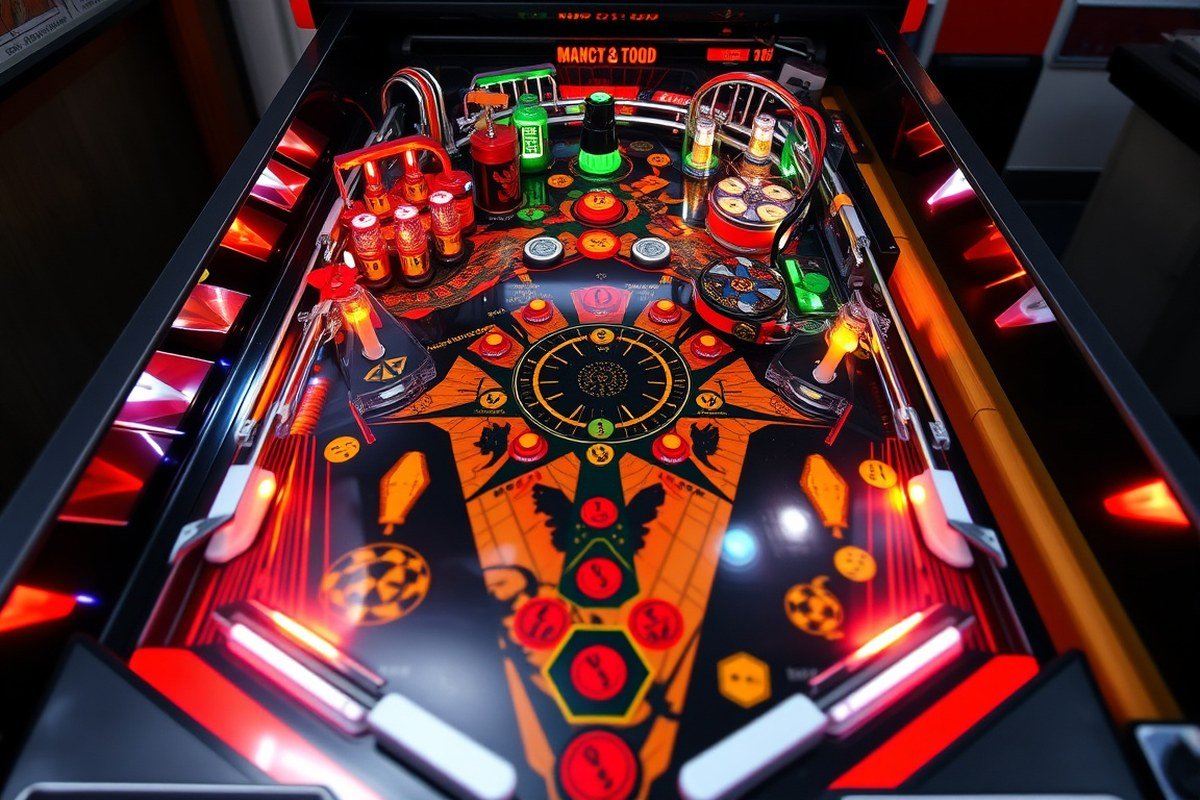
The main parts of a pinball machine include components that launch, control, and score the ball during play. Knowing terms like inlane, outlane, saucer, bumpers, and targets helps you identify key areas on the playfield. These parts work together to keep the ball moving and increase your score through interaction.
Flippers and Shooter Lane
Flippers are the paddle-like levers at the bottom center of the playfield that you use to launch and control the ball. They are your primary means of keeping the ball in play and aiming for specific targets. The shooter lane, located on the right or left side of the machine, is where the ball enters play. You pull back the plunger or press a button to shoot the ball onto the playfield. Learning to time your flipper presses right after the ball comes out of the shooter lane improves your control and lets you target certain features.
Flipper control matters because it directly affects how long you can keep the ball in play and what you can aim for. Practice shooting the ball smoothly from the shooter lane and hitting it with one flipper right away to prevent it from drifting into an outlane.
Bumpers, Targets, and Saucers
Bumpers are round, mushroom-shaped posts on the playfield that bounce the ball away when hit. They increase your score by adding points each time the ball contacts their skirts. Pop bumpers, a common bumper type, can fire the ball quickly in different directions, adding excitement and unpredictability.
Targets are individual or grouped objects you hit with the ball to earn points or trigger objectives. Target banks usually consist of three or more drop targets that fall when hit, revealing bonuses or advancing the game’s mode. Hitting all targets in a bank often lights special scoring opportunities.
Saucers are small pits or holes on the playfield that catch and hold the ball temporarily. They may advance the game or light modes when the ball lands in them. Saucers add strategic depth since you often have to release the ball with flippers to continue play.
Focus on hitting bumpers and targets early in the game to build your score and unlock objectives; missing these can quickly drain your ball through the outlanes.
Lanes and Rollover Switches
Lanes guide the ball’s movement along the sides or top of the playfield. There are two critical lane types: inlanes and outlanes. Inlanes feed the ball smoothly back to the flippers so you can keep playing. Outlanes run toward the drainage area where the ball exits play, ending your turn. Avoiding outlanes is key to a longer game.
Rollover switches are flat areas on the playfield that detect when the ball rolls over them. They often appear as lanes near the top of the machine and work as triggers for scoring bonuses or activating modes. For example, completing all rollover lanes might light a bonus multiplier that increases your points for hitting bumpers and targets.
- Flippers: Paddle levers controlling the ball
- Shooter lane: Where the ball enters play
- Bumpers: Bounce the ball, scoring points
- Targets: Objects to hit for points or modes
- Saucers: Ball-catching holes that trigger features
- Inlanes: Lanes returning the ball to flippers
- Outlanes: Lanes draining the ball and ending your turn
Understanding these parts gives you a foundation to recognize key scoring opportunities and avoid losing the ball too quickly. Each pinball machine may have a unique layout, but these components appear on nearly all models, so learning their function applies broadly.
How to Use Flipper Skills to Control the Ball
Mastering flipper skills like cradling, live catching, and bounce passes helps you control the ball better and improves your shot success. These techniques allow you to catch, hold, and transfer the ball smoothly, giving you time to plan your next move. Practicing timing and focusing on single-flipper control sharpens your reaction and accuracy during play.
Cradle and Live Catch Techniques
Cradling means holding the ball on a flipper instead of immediately flipping it away. This skill lets you pause and plan your next shot, which is key during multiball play or when aiming for difficult targets. A live catch involves flipping just before the ball reaches the flipper, so the flipper meets the ball gently at the top of its stroke, absorbing its speed and stopping it on the bat.
To perform the live catch, watch the ball as it approaches and press the flipper button slightly before contact. This is easiest when the ball travels down the same side as the flipper you are using. Cradling can help you prepare for a strong shot from a stationary ball, especially when the ball arrives slowly.
Performing Bounce Passes
A bounce pass gets the ball from one flipper to the other by letting it bounce off the flipper you flipped without catching it. This helps regain control when the ball is near the back end of the machine or when the next important shot is better made from the opposite flipper. For this to work, the ball needs enough speed; if it moves too slowly, it can bounce into the center drain. Here’s how to perform a successful bounce pass:
- Flip one flipper just as the ball nears it, but don’t try to catch the ball.
- Allow the ball to bounce off this flipper towards the opposite side.
- Prepare the other flipper to catch or shoot the ball immediately.
The bounce pass changes your ball’s direction without full control, so it requires practice to judge speed and timing correctly. It’s an alternative to flipping away the ball and can surprise opponents or help you reach difficult shots.
Timing and Single-Flipper Use
Focusing on timing each flipper press improves your accuracy and control. Flip one flipper at a time and learn to catch the ball reliably. Reading the instruction card on the machine helps you identify two solid shots from each flipper to practice.
Good timing lets you perform live catches and cradle shots and avoids wasted flips. Watching the ball’s speed and trajectory closely will help you decide when to flip and when to hold the flipper down. Practicing single-flipper shots first builds the foundation for smoother double-flipper play and better overall control.
What Does Tilt Mean and How to Avoid It
Tilt occurs when you push or move a pinball machine too hard, triggering its internal sensor that detects excessive force. This usually results in the ball being locked, your turn ending early, and loss of points. Nudging the machine gently can help keep the ball in play, but pushing it too far will cause a tilt penalty.
How Tilt Sensors Work
Every pinball machine has a tilt sensor inside the cabinet to prevent rough handling. This sensor is typically a pendulum or a ball resting on a ring that swings when the machine is pushed or shaken. The sensor signals a tilt when it swings beyond a certain point.
The sensor’s sensitivity varies by machine but is designed to catch any strong, quick moves that could damage the game. A slight nudge won’t set it off, but a strong shove, shake, or lift will. Once the tilt triggers, the ball launcher locks, and you lose your current ball or turn.
Safe Nudging Techniques
You can nudge a pinball machine to influence the ball’s path and keep it in play, especially when it’s headed toward the gutter or outlane. The key is to keep this movement controlled and gentle.
- Use your hand or forearm for short, gentle taps on the cabinet.
- Aim nudges when the ball is moving, not when it’s still, to avoid sudden jolts.
- Apply force for less than a second, brief pushes work better than long shoves.
- Keep nudging sideways or forward rather than shaking the cabinet up and down.
- Watch the ball and stop nudging as soon as you see a change in its direction.
- Avoid repetitive nudging, multiple shakes increase risk of tilt.
- Practice feeling the threshold where nudges feel too hard, then back off.
With practice, you’ll learn exactly how much force your machine’s tilt sensor tolerates. Different machines vary, so stay cautious and observe your machine’s reactions.
Recovering from a Tilt
Tilt penalties usually end your turn immediately and lock the ball shooter until the machine resets. On some machines, the score resets or your bonuses vanish. When playing a multi-player game and the previous player ended on a tilt, wait about 30 seconds for the machine to settle before starting your turn.
There’s no way to reverse a tilt once it happens, so prevention through controlled nudging is important. After a tilt, take a moment to calm down and reset your approach. Avoid rushing your next shots or nudges to prevent repeated penalties.
What Is Multiball and How to Manage It
Multiball in pinball is a thrilling mode where three or more balls are in play simultaneously. It typically activates after locking a ball or several balls in specific targets or scoops on the machine. During multiball, jackpots and bonus points become available by hitting particular shots, making it the prime scoring opportunity in the game.
To trigger multiball, focus on locking balls one at a time by aiming for the designated target areas indicated on the machine’s playfield or rules card. Once the required number of balls is locked, multiball starts immediately, releasing all locked balls back onto the field. On most machines, this involves three balls, but some may require two or more.
Managing multiple balls at once can feel chaotic at first. The main goal during multiball is to keep all balls in play as long as possible, since points add up quickly even without perfect precision. Using quick reflexes to defend your flippers and prevent balls from draining helps maximize scoring. Prioritize controlling at least one ball well while keeping an eye on the others to avoid losing them fast. Follow these steps to activate and manage multiball effectively:
- Identify the lock targets: Look for flashing targets or indications on the machine and in the rules card that show where to lock balls.
- Aim for the locks: Use your flippers to shoot the ball precisely into the lock area; this might take a few tries depending on your skill level.
- Repeat locking shots: Lock the required number of balls, usually two or three, to start multiball mode.
- Prepare for multiple balls: As multiball activates, get ready to defend both flippers and watch several balls entering play.
- Focus on making jackpot shots: Identify the key jackpot targets, often highlighted during multiball, and try to hit them with any ball available.
- Stay calm and prioritize: Concentrate on controlling at least one ball strongly rather than chasing all at once, and use nudging carefully to influence ball paths without tilting.
- Extend the multiball: Some machines allow you to relock balls during multiball to prolong the mode and score more points.
- Survive the drain: Guard your flippers diligently to prevent balls from draining and ending the multiball round early.
Don’t try to slam or nudge the machine wildly during multiball; a tilt can end your big scoring chance instantly.
Tips to Improve Your Accuracy and Ball Control
Developing shot accuracy in pinball starts with learning to stop and assess the ball’s position before making your move. When the ball settles in the cradle, pause and line up your shot carefully. This moment of calm lets you plan the exact target to hit, greatly increasing your chances of success. Practicing this step helps create muscle memory for precise flipper control and timing.
Controlling impulses is just as important as physical skill. Focused breathing can reduce the urge to rush shots. Try counting to three in your head before flipping, giving your mind enough time to evaluate the best play rather than reacting hastily. Training your mind to stay calm leads to fewer mistakes and longer ball control.
Effective ball control also depends on mastering the trap technique. This involves catching the ball on a flipper and holding it steady until you decide the next move. You can then gently roll the ball down the flipper for a subtle reposition or launch it forcefully for a targeted shot. Practicing this helps keep the ball active longer and avoid accidental drains.
- Focus on the cradle: stop the ball and plan your shot before flipping
- Practice the trap technique to hold and control the ball on the flipper
- Use a mental count (like 3 seconds) to delay impulsive flips
- Target specific playfield features instead of random shots
- Watch experienced players during tournaments to learn consistent strategies
- Start slow, then gradually increase speed as your aim improves
- Keep sessions short but regular; aim for 15 to 30 minutes daily for steady progress
When practicing, focus on hitting recognizable targets such as ramps, bumpers, or lanes associated with multiplier bonuses. Avoid just keeping the ball alive by flipping wildly; instead, aim to rack up points and build combos. Over time, this will turn your play from reactive to strategic. Recognize that accuracy improves slowly and requires patience, expect errors but keep your focus on each calculated shot.
Common Beginner Mistakes and How to Fix Them
Early drains are a common problem for beginners, often caused by poor ball control or missed opportunities to nudge the machine. Outlane drains happen when the ball rolls off the sides of the flippers and is lost prematurely, costing you valuable playtime. Over-flipping or double-flipping occurs when you press the flipper buttons too hard or too quickly, sending the ball erratically and making it hard to predict where it will go next.
Maintaining focus is another challenge, especially as the game speeds up or the ball enters multiball mode. Losing concentration leads to missed shots and unintentional tilts, which cuts your game short. Fixing these errors means adopting specific tactics to improve control and stay alert at the machine. The following table shows common mistakes, why they happen, and practical fixes you can apply immediately to improve your game:
| Mistake | Cause | How to Fix It |
|---|---|---|
| Early Outlane Drains | Lack of nudging or incorrect flipper timing | Stand straight, avoid leaning, and use a gentle nudge to keep the ball in play near the outlanes |
| Over-Flipping / Double-Flipping | Pressing flipper buttons too forcefully or repeatedly | Tap flippers lightly and wait briefly between presses to gain better ball control |
| Losing Focus | Getting distracted or overwhelmed during fast ball play/multiball | Take deep breaths, keep eyes on the ball, and use brief pauses between balls to reset your concentration |
| Tilt | Aggressive nudging or shaking | Nudge the machine gently and only when necessary; avoid leaning on the machine |
Steady posture is important. Standing straight prevents accidental leaning, which often causes tilts. Soft nudges help avoid outlane drains when timed with the ball’s movement, but aggressive or mistimed nudges lead to tilt and lost balls. Practice a light grip on the flipper buttons rather than slamming them to prevent double-flipping and gain more precise control over ball shots.
Stay calm and focus on tracking the ball visually. When multiple balls are in play, keep an eye on the most threatening ball first, then switch attention as needed. Pausing to breathe between balls helps reset your mind and keeps your reflexes sharp.
How to Use the Rules Card and Understand Scoring
Reading the rules card is one of the smartest moves you can make when starting with pinball. This card, usually found inside the glass or on the machine’s apron, lists the game’s objectives, scoring details, and special mode instructions. Knowing this information helps you plan shots and focus on goals like activating missions or scoring combos. Missions and modes often require hitting specific targets or sequences, so understanding them means you can target shots more effectively.
Missions are like mini-goals that unlock during play, offering extra points or special benefits. Modes can be temporary game states triggered by completing missions or hitting certain targets; they often increase scoring opportunities. Pinball scoring usually rewards combo shots, strings of hits on particular lanes or targets, and understanding these combos helps maximize your score. Instead of random shots, use strategy based on the rules card to build combos, complete missions, and trigger modes. Follow these steps to use the rules card and understand scoring to plan your gameplay:
- Locate the rules card. Look inside the glass on the lower part of the machine or on the apron near the flippers to find the rules card. It usually lists your game’s core objectives, scoring systems, and special modes.
- Scan for missions and modes. Identify any missions or modes described. For example, many modern games like 24/7 Pinball feature five missions you can complete, each unlocking different scoring or gameplay bonuses.
- Note scoring combos. Pay attention to instructions on combo shots or lanes that multiply your points. Older games reward accurate repeated shots, while newer ones may have complex combinations.
- Plan your shots based on priorities. Aim for targets that advance mission progress or trigger modes that offer multipliers.
- Adjust your approach during play. As missions get activated or modes start, shift your focus to targets or lanes to make the most of your scoring opportunities.
- Spend at least 30 minutes per machine. Learning the rules and practicing specific shots on one game helps you improve faster than switching machines frequently.
- Revisit the card as needed. If progress stalls, check the rules card again to refresh your understanding and find new strategies.
Keep in mind that missing a shot can lose momentum and reset combos, so use the rules card to target the highest-priority shots and avoid random aiming.
Step-by-Step Action Plan to Start Playing Pinball
Use this plan to begin practicing pinball effectively and build your confidence quickly.
- Before your first game: Read the rules card on the machine to understand scoring and objectives; this helps you know what to aim for.
- Day 1: Practice using only the flippers to hit the ball without nudging; track how many times you keep the ball in play to see improvement.
- Week 1: Focus on controlling the ball speed and aim by timing your flipper presses; notice if your shots become more consistent.
- After 1 week: Learn to avoid tilt by using gentle nudges when the ball is stuck; check if the machine stops tilting during your play.
- Week 2: Try to manage multiball by keeping several balls in play without losing one quickly; success means you can juggle multiple balls longer.
- Week 3: Experiment with aiming for high-value targets based on the rules card; your score should increase noticeably if you hit intended shots.
- After 3 weeks: Review common mistakes like over-flipping or panicked nudging; work on fixing those by playing slower and more deliberately.
Frequently Asked Questions
What Are the Basic Objectives for Beginners When Playing Pinball?
The main goal is to keep the ball in play using flippers while hitting targets to score points. Focus on learning how to control the ball and trigger bonuses to maximize your score.
How Can Beginners Improve Reaction Time in Pinball?
Practice regularly to improve your reflexes and hand-eye coordination. Playing games at different difficulty levels online can also help improve quick responses.
Should Beginners Use a Single Flipper or Both Flippers First?
Start by mastering both flippers together for better control of the ball. Using both helps you trap and aim the ball more accurately.
Is It Necessary to Learn Every Rule on the Rule Card Before Playing?
Reading the rule card helps but focus on key objectives first, then expand knowledge as you play more. It prevents confusion and guides scoring strategies.
How Do Beginners Handle Ball Drains Effectively?
Learn to trap or catch the ball on a flipper before it drains to extend playtime. Timing your flips carefully minimizes lost balls.
What Role Does Nudging Play in Beginner Pinball Games?
Nudging can save a ball from draining but must be gentle to avoid tilt penalties. Practice subtle nudges to influence the ball’s path without triggering faults.
Before You Go
Pinball is a combination of skill, timing, and understanding your machine’s features. Progress comes from practicing your control and focusing on scoring objectives. Pick a nearby machine and try applying your rules card knowledge during your next game to see your skills grow.