What Is a Growler? A Complete Guide to Craft Beer Storage & Use
A growler is a reusable bottle typically sized at 64 ounces, used for carrying draft beer from breweries. These containers come in glass, stainless steel, or ceramic and allow you to bring fresh craft beer home. Understanding what a growler does can guide you toward picking the right type and storing beer properly to maintain its taste and freshness.
This article suits craft beer enthusiasts and casual drinkers curious about beer storage containers. It covers the origins, types, filling methods, freshness limits, maintenance, and the differences between growlers and crowlers to help you make informed choices.
Key Takeaways
- Growlers typically hold 64 ounces, making them ideal for sharing but not for solo drinking sessions.
- Store your growler in a refrigerator between 38-44 degrees Fahrenheit to preserve beer quality.
- Consume beer from a filled growler within 24-48 hours; once opened, finish it within 24 hours.
- Glass growlers are common but clear ones often cost 25-35% more than amber versions.
- Stainless steel growlers offer durability and better insulation compared to glass and ceramic.
- CO2 pressure filling keeps beer fresher longer by reducing oxygen exposure during filling.
What Is a Growler and How Does It Work?
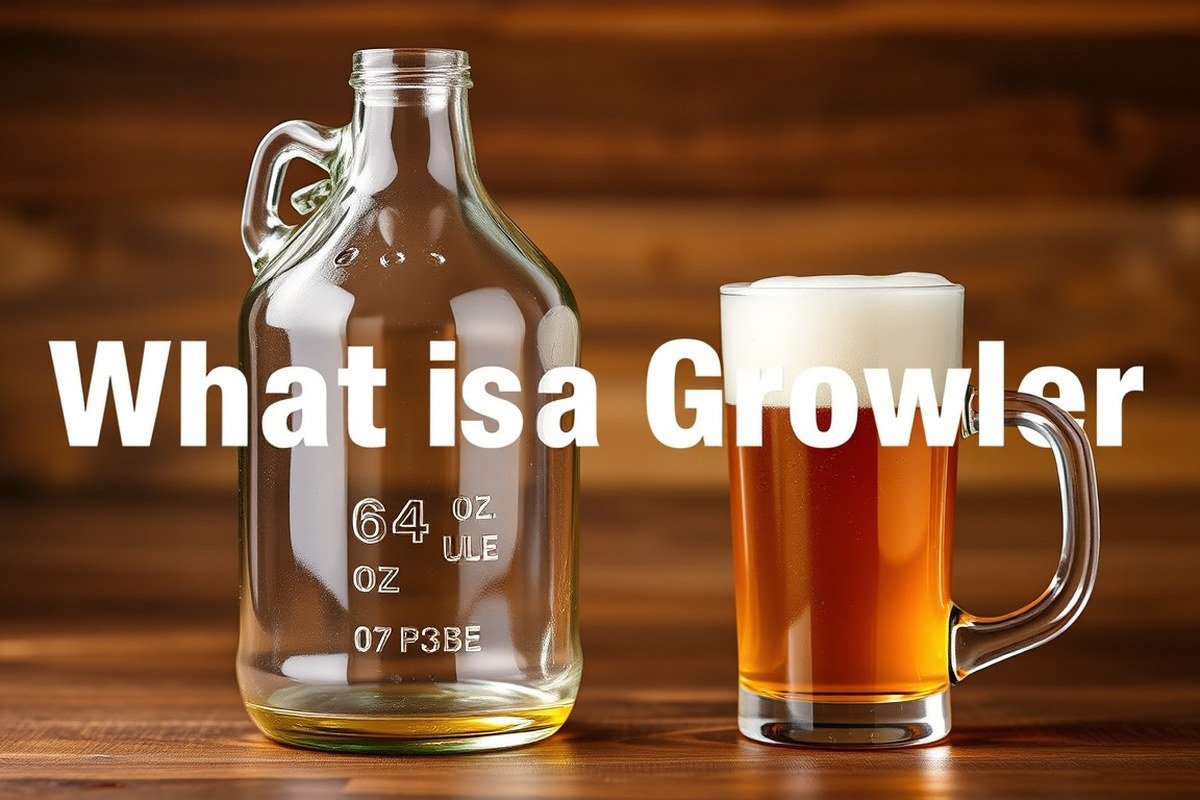
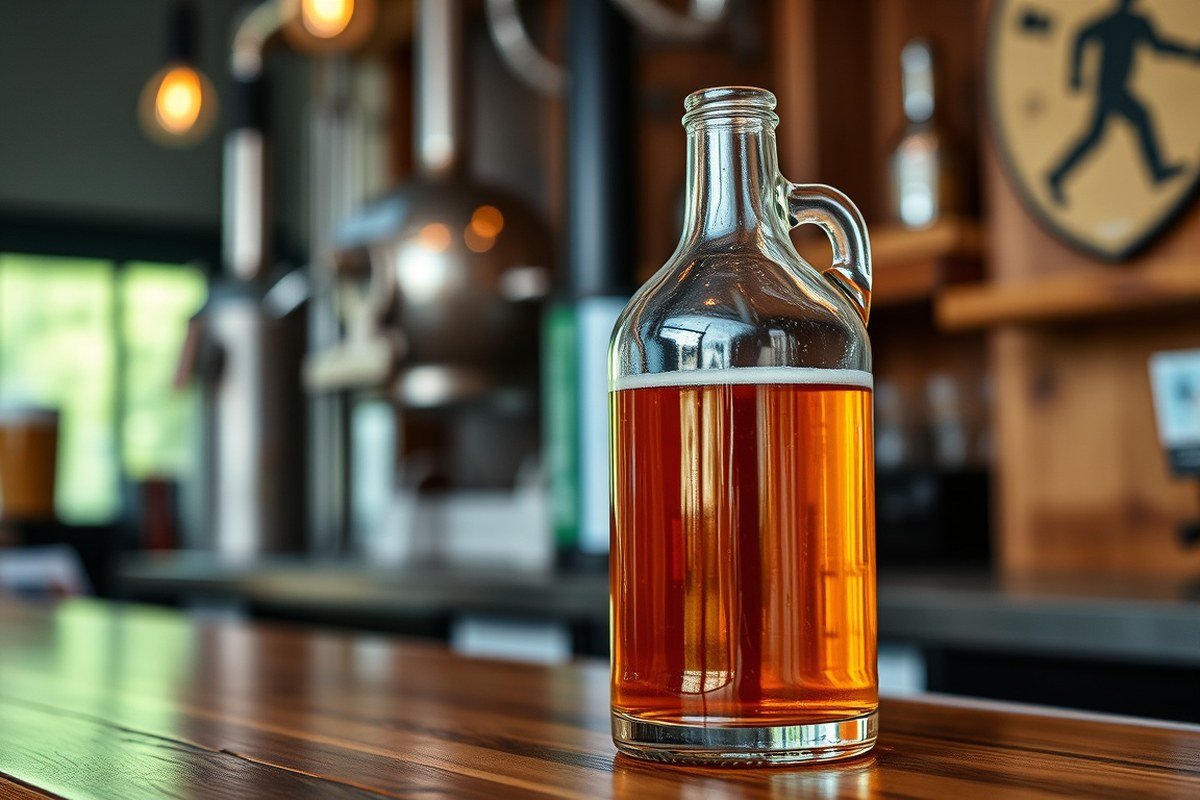
A growler is a reusable container designed mainly to transport draft beer from breweries or taprooms so you can enjoy fresh beer at home. These containers typically come in 32-ounce or 64-ounce sizes, with 64 ounces being the most common. The materials for growlers include glass, stainless steel, and ceramic. The size lets you carry enough beer to share without opening multiple bottles or cans, which helps keep the beer fresher overall.
The key to a growler’s ability to preserve beer freshness lies in its airtight seal. Unlike regular bottles or cans, a growler is specifically made to trap the beer’s natural carbonation, or CO2, inside. Once filled at the taproom, the growler’s lid screws on tightly or clamps down to prevent air from entering and carbon dioxide from escaping. This airtight closure slows down oxidation and prevents the beer from going flat quickly, which helps maintain the flavor and aroma closer to draft beer quality.
In contrast, bottled or canned beer is sealed at the brewery under controlled conditions, with cans often providing a better light and air barrier. However, once opened, bottles and cans lose their carbonation quickly if not consumed right away. With a growler, you fill it fresh on site and drink from it within about one week for the best taste. The airtight seal holds the CO2 in for a few days, but the beer will gradually lose carbonation faster than a sealed can or bottle that hasn’t been opened yet.
Using a growler requires you to handle it carefully to maximize freshness. Filling it directly from the tap minimizes oxygen exposure. The container should be kept cold and out of direct sunlight to slow down spoilage. While growlers do a good job protecting the beer from going flat compared to open bottles or partially drunk cans, the freshness window remains shorter than unopened packaged beer. The typical cost for refilling a 64-ounce growler is usually lower than buying the equivalent amount of bottled beer, making it economical as well as practical for fresh draft beer at home.
Some growlers include special features like thicker glass, vacuum insulation, or stainless steel bodies to improve temperature retention and durability. Cleaning and sanitizing the growler before each use is necessary to avoid off-flavors and contamination. Although a growler provides a better experience for draft beer fans wanting fresh beer at home, it is best consumed within days to enjoy the intended taste and carbonation that draft beer offers right from the tap.
Origins and History of the Growler Container
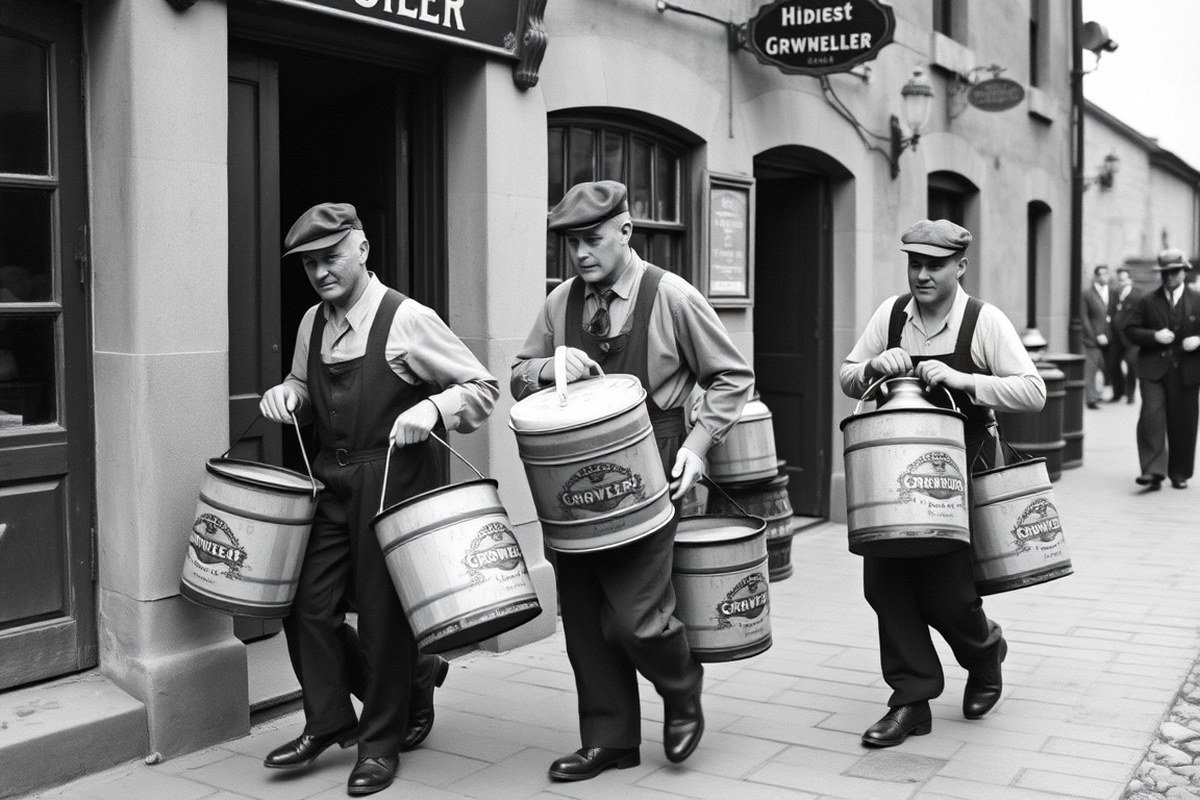
Growlers originated in the late 1800s as simple metal pails used for carrying beer from local pubs. Workers and patrons would bring these open containers home or to their workplaces. The term “growler” is believed to come from the sound of carbon dioxide escaping the container, though its exact origin remains debated. Early growlers were often unsealed pitchers or buckets, which meant beer would lose carbonation quickly and freshness declined with time.
By the early 20th century, it was common for people, especially children in local communities, to “rush the growler,” fetching beer in pails to bring to workers’ lunch breaks or families. These metal pails gradually gave way to glass containers as breweries aimed to preserve beer quality better. However, during the mid-1900s, waxed cardboard containers and then plastic emerged as popular low-cost, less fragile alternatives, briefly sidelining the growler.
The growler saw a big shift in the 1980s, when the modern sealed glass growler became popular. This innovation included airtight screw-top or flip-top lids designed to keep beer carbonated and fresh for longer after leaving the brewery. These sealed containers come in typical sizes such as 32 or 64 ounces, allowing customers to buy draft beer for home consumption while controlling their portion size and reducing waste.
Today’s growlers are made from various materials, including traditional clear or amber glass that protects beer from UV light, stainless steel with double-wall insulation for outdoor use, and even handcrafted ceramic vessels valued by collectors. Each material serves a different need, from short trips home to extended outdoor activities. The modern sealed designs help maintain beer quality, especially when refrigerated between 38 and 44 degrees Fahrenheit.
Avoid leaving a filled growler at room temperature for more than a few hours to preserve carbonation and avoid flat beer.
Understanding this evolution reveals why the growler remains an important part of craft beer culture. It not only offers an eco-friendly, reusable way to transport draft beer but also reflects a tradition of beer enjoyment stretching back nearly 200 years. For craft beer enthusiasts, using a growler connects you to that history while maximizing the freshness and flavor of your favorite brews.
Types of Growlers: Glass, Stainless Steel, and Ceramic Compared
Growlers are typically made from glass, stainless steel, or ceramic, each offering distinct advantages depending on how you plan to use and carry your beer. Your choice affects durability, insulation, and how well the growler protects the beer from light and temperature changes.
Glass Growlers Features and Uses
Glass growlers are the classic choice and often the most affordable option. Most hold 64 ounces and come in clear or amber glass, with amber providing better protection from light to keep your beer fresher. They are popular for their traditional look and the ability to see the beer inside.
The main drawback of glass is fragility. Glass growlers can break if dropped or handled roughly, which limits where you might take them. Because they don’t insulate well, beer will warm faster compared to other materials, so drinking the beer soon after filling is ideal.
Glass growlers are suitable for stationary storage at home or brewery visits where durability is less of a concern. They are easy to clean with soap and water and generally priced lower than other types.
Stainless Steel Growlers Benefits
Stainless steel growlers are the most durable and provide significantly better insulation than glass or ceramic. This helps keep your beer colder several hours after filling, making them ideal if you transport beer over longer distances or plan to enjoy it throughout the day.
These growlers are less common than glass but increasingly popular among craft beer enthusiasts who prioritize functionality and durability. Stainless steel does not break if dropped, and its airtight sealing helps maintain carbonation.
The main tradeoff is cost; quality stainless steel growlers tend to be the most expensive option. They also can lack the see-through aesthetics of glass. While more environmentally friendly than single-use containers, they have a higher production footprint than glass.
Ceramic Growlers and Decorative Options
Ceramic growlers strike a balance between durability and visual appeal, often featuring unique designs and color options. They provide better protection from light than glass and moderate insulation.
Compared to stainless steel, ceramic growlers are bulkier and slightly less practical for regular transport. They are more sturdy than glass but still can chip or crack under impact. Their decorative nature makes them appealing for display or gifts.
Cleaning ceramic growlers is straightforward with soap and water, similar to glass and stainless steel. Prices generally fall between glass and stainless steel, depending on design complexity. Here is a straightforward comparison table summarizing key characteristics:
| Material | Durability | Insulation | Light Protection | Aesthetics | Typical Price |
|---|---|---|---|---|---|
| Glass | Fragile, can break if dropped | Poor insulation, beer warms faster | Amber glass reduces light exposure | Classic, traditional look, see-through | Budget-friendly |
| Stainless Steel | Highly durable, drop resistant | Excellent insulation, keeps beer cold longer | Blocks light completely | Simple, functional design, opaque | Most expensive |
| Ceramic | More sturdy than glass, can chip | Moderate insulation | Blocks light well | Unique designs, decorative | Mid-range, varies by design |
Select materials based on where and how you use the growler. Glass fits well at the brewery or home when you want an affordable, traditional container. Stainless steel suits outdoor use or extended trips where durability and insulation matter. Ceramic offers a stylish option for gift-giving or display but is less practical for rough handling or long transport.
How to Properly Fill a Growler to Maximize Freshness
To fill a growler properly and keep the beer fresh, you need to limit oxygen exposure and maintain carbonation. This involves preparing the growler, using careful filling techniques such as angling and purging with CO2, and sealing the container tightly right after filling.
Prepare and Clean the Growler First
Start by thoroughly cleaning your growler with hot water and a brewery-approved sanitizer or mild detergent to prevent any contamination that could spoil the beer. Rinse out all cleaning agents completely before filling. Using a clean growler helps protect the beer’s taste and ensures your health and safety. Make sure the growler is dry or evenly moist but free of any residue before filling.
Check the growler’s lid or cap for damage or dirt and clean these parts as well. Having a tight-sealing cap that is in good condition is essential for preserving the beer’s carbonation once filled.
Filling Techniques to Avoid Oxidation
Minimizing oxygen contact during filling is critical because oxygen can quickly degrade beer flavor and aroma. You can reduce this by using a few key steps. When filling your growler at a brewery, ask whether they use equipment that purges the container with CO2 first, pushing out oxygen before the beer enters. For home filling, you can simulate this by gently flushing the growler with CO2 if you have the equipment or by filling slowly to avoid splashing.
Holding the growler at about a 45-degree angle while filling reduces foam and helps maintain carbonation. Filling from the bottom up using a narrow spout or growler filler also prevents excessive bubbling and oxygen mixing.
- Rinse the growler with cold water and sanitize if needed.
- Purge the growler with CO2 to push out oxygen when possible.
- Hold the growler at a 45-degree angle below the tap or spout.
- Fill slowly from the bottom up to reduce foam and oxygen contact.
- Leave minimal headspace, no more than 1 to 2 inches, to limit oxygen in the container.
Sealing and Storing Immediately
After filling, cap the growler quickly and tightly to avoid air exposure and carbonation loss. Screw caps or swing-top caps should be tightened securely right after the last pour. This step ensures the beer stays fresh and maintains its original carbonation levels longer.
Store the sealed growler in a cool and dark place, preferably in a refrigerator at or below 40°F, to slow down any chemical changes. Proper sealing and cold storage can keep your beer fresh for up to 2 to 3 days, though drinking it the same day is ideal for optimal taste and carbonation.
How Long Does Beer Stay Fresh in a Growler?
Beer in a growler stays fresh and well-carbonated for up to three days when unopened and stored properly, especially if filled using a counter-pressure system that preserves carbonation. Once opened, the beer should be consumed within 24 to 48 hours to avoid significant loss of carbonation and the onset of off-flavors due to oxidation. Glass growlers with airtight seals generally maintain freshness better than ceramic ones, but stainless steel growlers excel at temperature control and durability, helping keep beer cold longer which slightly extends freshness.
Unopened growlers should be kept refrigerated and used as soon as possible for the best taste. For example, a growler filled on a brewery visit and sealed under CO2 pressure will keep craft beer fresh for around three days without major drops in carbonation or flavor. After opening, breweries recommend drinking the beer within a day or two because exposure to air causes rapid oxidation, which dulls the beer’s aroma and taste.
Choosing a 64-ounce growler allows you to bring more beer home in one go, but larger volumes mean the beer may degrade faster once opened since you’ll likely open it multiple times over several days. For smaller 32-ounce growlers, finishing the beer quickly after opening minimizes the risk of bitterness or sourness from contamination or stale beer. Glass or stainless steel, make sure you clean your growler thoroughly after every use to avoid oils and bacteria affecting your next fill.
To extend freshness, fill your growler directly from draft lines using counter-pressure filling where possible. This method removes oxygen and keeps carbonation intact. Also, store growlers upright in the coldest part of your fridge and keep seals tight. Avoid leaving the growler at room temperature, which accelerates flavor deterioration. A flat or off taste in your beer usually means the growler was opened too long or didn’t seal properly.
Always chill your growler before filling and keep it refrigerated after to help maintain the beer’s carbonation and flavor for up to three days unopened, but drink it within 48 hours once opened.
Maintaining and Cleaning Your Growler for Safe Use
Cleaning your growler right after you use it is key to preventing residue buildup and off-flavors in your next beer. Start by thoroughly rinsing it with hot water, aim for a temperature around 120°F to 140°F, to flush out remaining beer and yeast. Letting beer residue dry inside the container can lead to sour or stale tastes, so rinse immediately to avoid this.
Using a long-handled growler cleaning brush designed to reach all the nooks and crannies will help you scrub away any stubborn residue. Avoid using harsh dish soaps, as even trace amounts can alter the beer’s flavor. Instead, try specially formulated growler cleaning tablets or a solution of one tablespoon of unscented bleach per gallon of water. After soaking your growler in the sanitizing solution for two to five minutes, rinse it three times with hot water to remove any sanitizer taste.
- Rinse growler immediately post-use with hot water
- Scrub interior with a long-handled growler cleaning brush
- Use cleaning tablets or 1 tbsp unscented bleach per gallon for sanitizing
- Triple rinse after sanitizing to remove any residual taste
- Dry upside down on a clean rack to avoid trapped moisture
- Inspect for any leftover odors or residue before refilling
Neglecting to clean your growler promptly is a common mistake that allows beer residue to harden and encourages bacterial growth, which damages flavor. Another error is using scented or oily soaps that leave behind residue affecting the beer’s taste. Also, storing the growler with the cap on while still wet can trap moisture and encourage mold.
The maintenance effort takes about 10 to 15 minutes and requires minimal supplies, but it pays off by keeping your growler sanitary and your beer tasting fresh. Stainless-steel growlers especially benefit from regular cleaning, as they can trap smells if neglected. Examine your growler closely before each fill for cloudiness or stuck particles. If you notice lingering smells despite cleaning, consider using a diluted vinegar soak or replacing the gasket or cap to prevent off-flavors.
Growler vs. Crowler: Key Differences to Know
Growlers and crowlers are both containers used to take fresh draft beer home, but they differ in size, material, sealing, and freshness retention. Growlers typically hold 64 ounces, made from reusable glass or metal, and feature a resealable cap. Crowlers are 32-ounce disposable aluminum cans, sealed on-site with a machine, which removes oxygen to keep beer fresh longer. Each has advantages depending on your drinking needs and portability preferences.
Size and Capacity Differences
Growlers come mainly in 32-ounce and 64-ounce sizes, with the 64-ounce (half-gallon) option being most popular. In contrast, crowlers offer a single size of 32 ounces, equal to two pints. This nearly one-liter difference means growlers hold twice as much beer as crowlers. If you plan to share or want a larger volume for later, growlers offer better value per fill.
Because growlers are reusable, they are made from sturdy glass or stainless steel to withstand repeated use. Crowlers are one-time-use aluminum cans, designed for single fill and disposal after drinking.
Sealing and Preservation Methods
Growlers seal with a screw cap or a hinged lid that you can open and reseal. This allows you to enjoy beer over multiple sittings but exposes the beer to oxygen each time it is opened. Growlers typically keep beer fresh for around a day or two once opened, with an airtight seal helping to slow oxidation.
Crowlers are sealed by a machine that crimps a pop-top lid onto the can after filling. This process removes almost all oxygen, extending the beer’s freshness to about 2 weeks unopened. Since they are single-use, crowlers cannot be resealed, meaning you need to consume the beer in a shorter time once opened.
Usage Scenarios for Each Container
Growlers work well when you want more beer in one container or plan to drink over several sittings. They suit gatherings or when you buy beer from a brewery multiple times because the container is reusable. Cleaning a growler properly after each use is important to maintain taste and safety.
Crowlers are convenient for single servings or when portability matters, as their aluminum packaging is lighter and less fragile than glass. They’re ideal if you want to try different beers without committing to a large volume or if you need a sealed container that keeps beer fresh longer while transporting. Crowlers generally cost less upfront since they aren’t reused.
| Feature | Growler | Crowler |
|---|---|---|
| Typical Size | 32 or 64 ounces | 32 ounces |
| Material | Reusable glass, stainless steel, or ceramic | Disposable aluminum |
| Sealing Method | Resealable screw cap or hinged lid | Machine-sealed pop-top lid |
| Freshness Retention After Opening | 1, 2 days | Typically must consume immediately |
| Freshness Unopened | About 1 week (varies with seal and storage) | Up to 2 weeks |
| Portability | Fragile, heavier | Lightweight, easier to transport |
| Cost | Higher upfront for reusable container | Lower upfront, single use |
Choosing between a growler and crowler depends on how much beer you want, how you plan to consume it, and your transport needs. For sharing larger quantities or saving beer over several days, a growler fits best. To carry a fresher, smaller amount more easily and avoid cleaning, crowlers offer a convenient alternative.
Choosing the Right Growler for Your Beer Needs
Choosing the right growler depends on your lifestyle, the beer styles you enjoy, your transport needs, and your budget. Start by considering how often you’ll use it and where. Carrying your beer often or over long distances calls for an insulated stainless steel growler, which provides durability and keeps beer colder for hours. These typically cost between $30 and $60 but provide better temperature control and protect beer flavors better than glass. For casual use at home or short trips, a glass growler, usually priced between $15 and $30, works well and allows you to see your beer. However, it’s more fragile and less insulating.
Your preferred beer style also guides your choice. For hoppy or delicate beers like IPAs or sours, an airtight seal is important to maintain carbonation and flavor. Growlers with screw caps or Swing-top lids tend to seal better than those with corks. Ceramic growlers prevent light exposure entirely, preserving beer that is sensitive to UV rays, but they are heavier and more expensive. Lighter beers for immediate consumption do not require as much insulation or protection.
Size matters, too. Standard growlers hold 64 ounces, roughly five pints, which suits most drinkers. Buying beer for gatherings or parties works well with larger 128-ounce growlers, as they cut down on trips but are heavier to carry and fill. Smaller 32-ounce options are convenient for solo drinkers or sampling multiple beers but may cost more per ounce filled.
Aesthetics and cleaning are additional factors. Stainless steel growlers resist stains but may lack the classic look many beer lovers appreciate in glass or ceramic. Make sure the growler you pick is easy to disassemble for thorough cleaning since residual beer can spoil future fills. A good seal and sturdy construction prevent leaks and help maintain freshness; a poor seal leads to faster beer degradation and flat flavors.
Consider your budget alongside these needs. Less expensive glass growlers perform well for occasional use with most beer styles. Insulated stainless steel growlers cost more upfront but pay off with superior freshness retention and durability if you use them regularly. Ceramic grows stylish but often at a premium and with less portability.
Always check for a reliable, airtight seal before filling your growler; a poor seal will cause your beer to lose carbonation and freshness quickly.
Getting Started with Your Growler: Step-by-Step Action Plan
Use this guide to enjoy fresh craft beer from your growler right away while keeping it safe and tasty.
- Before your first fill: Choose a growler material that fits your lifestyle, glass for classic looks, stainless steel for durability, or ceramic for style. Success means comfortable handling and storage space at home.
- Day of filling: Rinse your growler with cold water just before filling to remove dust or residue without warming it up. Your growler should feel cool to the touch.
- Right after filling: Seal the growler tightly with the included cap or specialized closure. No beer should leak out and you should hear minimal fizz when opening later.
- Within 24 hours: Store the growler in the refrigerator, upright to avoid spills. The beer should taste fresh and crisp when poured.
- After finishing your beer: Clean the growler promptly using warm water and a gentle brush or sponge. Residual beer or smell indicates cleaning is incomplete.
- Each refill: Repeat rinsing and sealing steps, inspecting your growler for chips or rust that can affect quality. Safe use means no visible damage or off smells.
Frequently Asked Questions
What Is the Typical Size of a Growler?
A growler typically holds 64 ounces, which is about five 12-ounce beers. Some come in 32-ounce sizes called howlers, offering smaller quantities for easier consumption or sharing.
How Is a Growler Different from a Regular Beer Bottle?
A growler is refillable and designed to hold draft beer, usually airtight to preserve freshness longer than standard bottles. It allows you to carry beer from the tap instead of pre-packaged bottles.
Can I Use Any Container as a Growler?
Not all containers work well as growlers; they need to be airtight, made from safe materials like glass or stainless steel, and easy to clean to maintain beer freshness and quality.
Why Is Refrigeration Important for Growler Storage?
Refrigerating your growler between 38-44°F slows beer spoilage and keeps carbonation intact, preserving flavor and preventing rapid deterioration after filling.
How Does CO2 Pressure Filling Benefit Growlers?
CO2 pressure filling minimizes oxygen exposure, which slows beer oxidation and helps the beer stay fresh longer compared to open-air fills.
What Should I Do If I Can’t Finish a Growler Quickly?
If you can’t finish your growler at once, opt for a smaller 32-ounce growler or share it soon, since beer starts to lose quality within 24 hours of opening.
Key Points to Remember
Using a growler lets you bring fresh craft beer from your favorite brewery into your own home without losing its quality. Taking the right steps to choose, fill, store, and clean your growler will help you enjoy every pour at its best. The next thing to do is find a trusted local brewery and try filling your growler with a new seasonal beer to taste fresh craft beer right away.