Your Guide to Above Range Microwave With Exhaust Fan: Choosing With Confidence
Searching for the perfect above range microwave with an exhaust fan can feel overwhelming. You’re not alone—many people struggle to find one that fits their kitchen and cooking style.
You’ll want to pick an above range microwave with an exhaust fan that fits your kitchen size and cooking needs. Look for adjustable power levels, energy-efficient settings, and the right ventilation—whether recirculating or external venting—to keep your kitchen fresh.
Regular maintenance like cleaning filters guarantees long-term performance. Balancing features and budget helps you get the best value.
Keep exploring to uncover tips on installation, noise levels, and top models to guide your choice confidently.
Key Takeaways
- Above range microwaves combine cooking and ventilation, helping to remove smoke, odors, and grease for a fresher kitchen.
- Measure your kitchen space and think about your cooking habits to choose the right microwave size, capacity, and ventilation type.
- You can opt for recirculating vents for easier installation or go with external vents for better air quality, depending on your kitchen layout.
- Check the wattage and power levels to ensure quick cooking and efficient performance. Higher wattage means faster cooking and more consistent results.
- Keep your microwave in top shape by regularly cleaning filters and fans, and performing performance checks to maintain good ventilation and safety.
How Above Range Microwaves With Exhaust Fans Work
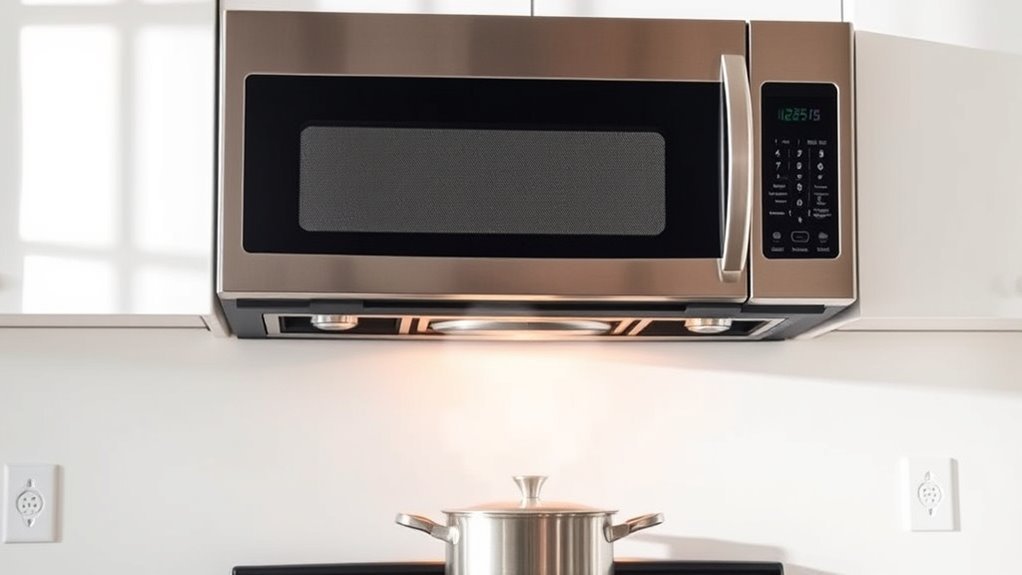
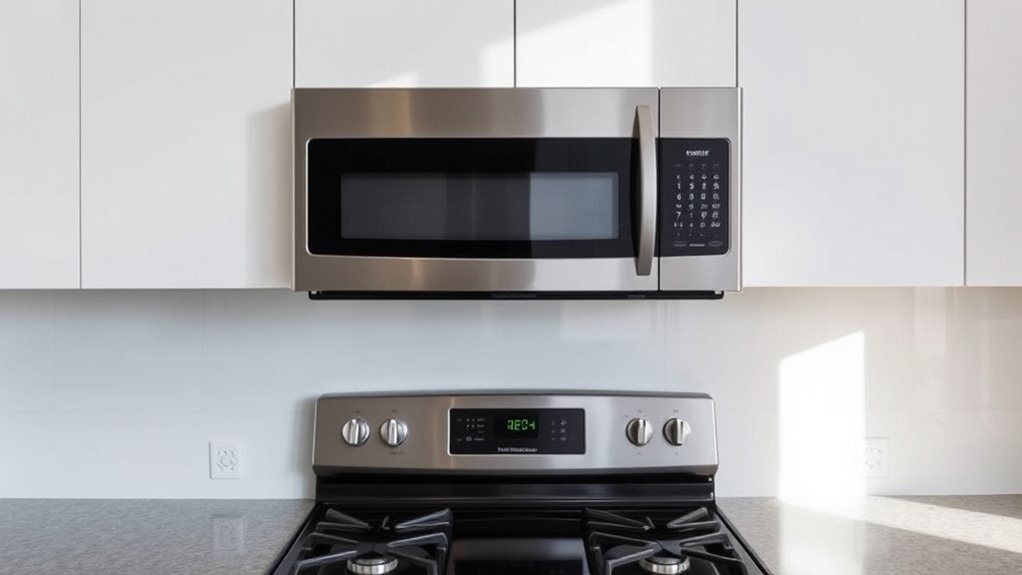
Although you might not always notice it, an above range microwave with an exhaust fan plays a key role in keeping your kitchen air clean while cooking. You rely on advanced microwave technology to heat your food quickly, but the built-in exhaust fan actively removes smoke, steam, and odors from your cooking space.
This fan pulls air through filters, trapping grease and particles, which boosts its efficiency and helps keep your kitchen fresh. When you turn on the microwave, the exhaust fan usually kicks in at the same time, providing continuous ventilation.
Some models let you adjust the fan speeds based on your cooking needs, giving you better control over air quality. The combination of microwave tech and an effective exhaust fan makes these appliances a smart, space-saving choice.
Adjustable fan speeds offer better air quality control, making these microwaves a smart, space-saving kitchen solution.
They prevent lingering smells and reduce moisture buildup, helping your kitchen stay comfortable and clean during your cooking routines.
Choosing the Right Size and Capacity for Your Kitchen
Before you pick out an above-range microwave, it’s a good idea to measure your kitchen space carefully. You want to make sure it’ll fit nicely without feeling cramped.
Also, think about how much cooking you do. The microwave’s capacity should match your needs—whether you’re reheating snacks or cooking larger meals. And don’t forget to check the ventilation requirements. Proper ventilation will keep your kitchen safe and help everything run smoothly.
Measuring Kitchen Space
When measuring your kitchen space for an above range microwave, it’s important to consider both the available width and the clearance above your stove. Start by noting your kitchen dimensions, focusing on the area above your cooking range.
Measure the width between cabinets and the height from the cooktop to the bottom of the upper cabinets or hood. Proper space planning ensures your microwave fits seamlessly without crowding the area or blocking ventilation.
Don’t forget to check for obstacles like lighting fixtures or exhaust vents that could affect installation. Accurate measurements help you pick a microwave that’s efficient and matches your kitchen’s layout.
Taking the time to measure carefully will save you from costly adjustments later on.
Microwave Capacity Options
After measuring your kitchen space, the next step is choosing the right microwave size and capacity to fit your cooking needs. Microwave sizes vary, so pay attention to capacity ratings—usually measured in cubic feet—to match your family’s needs.
A smaller capacity is perfect for singles or couples, while bigger families will benefit from roomy interiors that can handle larger dishes. Keep in mind, you want to balance cooking space with your kitchen’s style.
A bulky unit might overwhelm a small kitchen, but a sleek model can boost its visual appeal. Also, look for features that match your cooking habits, like sensor cooking or multiple power levels.
Choosing the right capacity ensures efficient meal prep without wasting space or energy. It keeps your kitchen both functional and stylish.
Considering Ventilation Needs
Three key factors influence how you should approach ventilation when choosing an above-range microwave: your kitchen’s layout, cooking habits, and the microwave’s exhaust system.
First, assess your kitchen airflow. Open layouts may need less powerful ventilation, while enclosed spaces require higher airflow to prevent smoke buildup.
Next, think about how often and what you cook. Heavy frying or frequent use means you’ll want stronger ventilation to effectively eliminate odors and grease.
Finally, evaluate the exhaust system type—recirculating or vented outside. Vented systems usually provide better ventilation efficiency, which improves air quality.
Matching your microwave’s exhaust capacity to your kitchen size ensures peak performance. By considering these factors, you’ll choose a microwave that keeps your cooking environment fresh and comfortable without over- or under-ventilating.
Understanding Venting Options: Recirculating vs. External Vents
Choosing the right venting option for your above range microwave can really affect your kitchen’s air quality and how well it performs. You usually have two choices: recirculating vents and external vents.
Recirculating vents pull air through a filter, clean it, and then release it back into your kitchen. They’re easier to install because they don’t need ductwork, making them a good choice if space or installation options are limited. But keep in mind, they often aren’t as effective because they rely on filters that need regular replacing.
Recirculating vents filter and recirculate air, offering easy installation but requiring regular filter replacement.
External vents, on the other hand, exhaust air outside your home, which means they do a better job of removing smoke, odors, and moisture. Installation can be more complicated and might require professional help to set up ductwork. But they provide better air quality and help keep your kitchen less humid.
In the end, your choice depends on your kitchen layout and how much effort you’re willing to put into installation and maintenance.
Power Levels in Above Range Microwaves and What They Mean
It’s a good idea to get familiar with the wattage of your above range microwave because it really influences how quickly and effectively your food cooks. Most of these microwaves come with multiple power levels, giving you the flexibility to tweak the heat depending on what you’re preparing.
Understanding how these settings work can help you cook your meals more evenly and prevent overcooking. So, taking a moment to learn about your microwave’s power options can make your cooking experience much smoother and more successful.
Understanding Microwave Wattage
Microwave wattage directly impacts how quickly and evenly your food cooks in an above range microwave. Knowing why wattage matters helps you pick a model that fits your cooking needs and makes your microwave more efficient.
Higher wattage means faster cooking times and more consistent results, while lower wattage might take longer and sometimes heat unevenly.
Here are some key points about wattage: Typical wattage ranges from 700 to 1200 watts in above range microwaves. Models with higher wattage cook food quicker and more evenly.
Wattage also affects energy use and overall efficiency. Choose wattage based on how often and what you usually cook.
Knowing the wattage helps you avoid undercooking or overcooking your meals.
Common Power Level Settings
Although higher wattage speeds up cooking, adjusting power levels lets you control how your food heats, ensuring better texture and flavor. Most above-range microwaves offer power settings from 1 (low) to 10 (high).
For example, level 10 cooks at full power, which is perfect for boiling or reheating. Level 5 is great for gentle cooking or simmering. Lower settings help with defrosting or warming without overcooking.
Your cooking preferences will guide which power levels to use. It’s helpful to check your microwave’s user manual for specific advice. These guides often explain how each setting affects cooking time and results.
Mastering power levels can help you make more consistent meals and get the most out of your microwave’s features.
Impact on Cooking Performance
When you adjust power levels on an above-range microwave, you directly influence how evenly and quickly your food cooks. Proper power settings boost cooking efficiency by improving heat distribution, so your meals cook thoroughly without overdoing any part.
This control helps keep moisture in and preserves flavor, making your food taste fresh and delicious. Adjusting power levels also lets you customize your meal prep for different dishes, giving you more flexibility.
Plus, using the right power setting can make your energy use more efficient, saving you money and reducing waste. Balanced heat distribution prevents cold spots, and controlled moisture helps maintain texture.
Noise Levels to Expect From Above Range Microwaves
You’ll notice that above range microwaves produce different noise levels depending on their features and settings. When choosing one, pay attention to sound ratings, which show how loud the exhaust fan is during operation.
Models with good noise reduction technology tend to run quieter without losing fan efficiency. User reviews are especially helpful here, giving you real-world info on noise during cooking and ventilation.
Proper installation also helps keep noise down. Following the manufacturer’s instructions ensures the unit fits securely, which reduces vibrations that can make noise worse.
Regular maintenance, like cleaning grease filters and checking fan blades, also helps keep noise levels low and the microwave working well. Considering these factors will help you find an above range microwave that offers strong ventilation with a comfortable noise level for your kitchen.
Essential Features to Look For in Microwaves With Exhaust Fans
Keeping noise levels manageable is just one part of choosing the right above range microwave. You’ll want to focus on several essential features to ensure your microwave with exhaust fan meets your kitchen needs efficiently.
Start by considering energy efficiency. An energy-efficient model saves you money and reduces your environmental impact. Don’t overlook the exhaust fan’s power—look for adjustable fan speeds to handle different cooking fumes.
Consider energy efficiency and adjustable exhaust fan speeds to save money and effectively manage cooking fumes.
Check user reviews to gauge reliability and real-world performance. Also, pay attention to the microwave’s capacity and cooking power to suit your meal prep.
Finally, easy-to-clean surfaces and intuitive controls make daily use hassle-free.
Here are the key features to look for:
- Energy efficiency ratings
- Adjustable exhaust fan speeds
- Positive user reviews
- Suitable cooking capacity and wattage
- Easy-to-clean design and user-friendly controls
Comparing Top Brands and Models of Above Range Microwaves
Choosing the right above range microwave means comparing top brands and models to find one that fits your kitchen and cooking style. Start by looking at brand reliability through user reviews and performance ratings to make sure your choice lasts.
Pay attention to design aesthetics so the microwave complements your kitchen’s look. Don’t forget to consider energy efficiency, which can save you money and support sustainability.
Check warranty options carefully because a good warranty gives you peace of mind if there are defects or issues. Installation requirements can vary, so confirm your space can accommodate the model you pick without hassle.
Finally, read reviews about maintenance tips—some models are easier to clean and service, saving you time and effort. By balancing these factors, you’ll confidently choose an above range microwave that meets your needs, looks great, and performs well for years.
How to Budget for the Best Above Range Microwave
When you’re getting ready to buy an above range microwave, it’s a good idea to figure out how much you’re willing to spend first. Think about what features matter most to you and set a budget that feels comfortable. This way, you won’t get sidetracked by models that are out of your price range.
Next, take your time to compare different options. Look at the features each microwave offers and see which ones give you the best bang for your buck. It’s all about finding that sweet spot where quality and price meet. And don’t forget to consider how much energy the microwave uses in the long run—saving on energy bills can make a big difference over time.
Setting Realistic Spending Limits
Although it’s tempting to splurge on the latest features, setting realistic spending limits guarantees you get the best above-range microwave without breaking the bank. Start by doing a thorough cost analysis to understand what price range fits your budget.
Knowing your spending cap helps you focus on models that offer value without unnecessary extras. To set realistic limits, consider your total kitchen upgrade budget and prioritize essential features over luxury add-ons.
Research average prices for reliable brands and factor in installation and maintenance costs. It’s also smart to leave a small buffer for unexpected expenses so you’re prepared for anything that comes up.
Comparing Features and Prices
Three key factors—features, price, and brand reputation—are essential when comparing above-range microwaves. To budget wisely, start by checking prices across trusted retailers to find models that fit your spending limit.
Next, explore feature evaluations such as cooking power, exhaust fan capacity, sensor cooking, and noise levels. Focus on features that match your kitchen needs without overspending on extras you won’t use.
Don’t forget to review warranty terms and customer feedback, as these reflect brand reliability and value. By balancing price checks with thoughtful feature considerations, you’ll find the best microwave for your budget and lifestyle.
This approach helps you confidently choose an above-range microwave that meets both your functional needs and financial expectations.
Considering Long-Term Energy Costs
After weighing features and prices, it’s important to consider the long-term energy costs of your above-range microwave. Picking a model with good energy efficiency can save you quite a bit over time. Don’t forget to think about how much energy the microwave and exhaust fan use during daily use.
To plan your budget, keep these points in mind:
- Look for ENERGY STAR® certified models to ensure better energy efficiency.
- Compare wattage and power consumption ratings to find more efficient options.
- Think about how often you’ll use the exhaust fan and microwave functions.
- Estimate your yearly energy costs based on your typical usage.
- Consider potential savings from modern inverter technology.
Easy Installation Tips for Your Above Range Microwave
Installing your above range microwave can be straightforward if you follow a few key steps. First, gather your installation tools and verify you have the correct wall brackets for secure mounting.
Measure the clearance space carefully to meet manufacturer guidelines and avoid obstruction. Check the power requirements before installation; you’ll need a dedicated outlet nearby that can handle the microwave’s load safely.
Align the cabinet accurately since misalignment can cause mounting issues or damage over time. Plan your ductwork carefully if your microwave exhausts externally—this is critical for proper ventilation.
Always follow safety precautions when handling wiring connections: turn off power at the breaker and double-check connections to avoid hazards. Taking time to organize these details before you start will make the installation process smooth and efficient, confirming your microwave functions safely and effectively above your range.
Maintaining Your Microwave’s Exhaust Fan for Long-Term Use
Once your above range microwave is securely installed, keeping its exhaust fan in good working order will help maintain air quality and extend the appliance’s lifespan. Regular fan cleaning prevents grease buildup, which can reduce airflow efficiency and increase noise.
Sticking to a maintenance schedule guarantees timely filter replacement, which is essential for trapping odors and particles. Performance checks help you spot issues early, while troubleshooting tips empower you to fix minor problems before they escalate.
To maintain your microwave’s exhaust fan effectively, clean fan blades and vents monthly to prevent clogging. Replace charcoal or grease filters every 3 to 6 months.
Listen for unusual noises that might indicate fan wear or obstruction. Check airflow strength regularly to ensure consistent ventilation. Always follow the manufacturer’s guidelines for routine maintenance.
Frequently Asked Questions
Can I Use an Above Range Microwave Without the Exhaust Fan Turned On?
Yes, you can use an above range microwave without turning on the exhaust fan, but it’s not always the best choice. The ventilation features in these microwaves are there to help remove smoke, steam, and odors from cooking.
If you skip using the fan, your kitchen might end up smelling like whatever you’re cooking, and moisture could build up. It’s a good idea to understand how your microwave’s ventilation works to keep your kitchen comfortable and safe.
Are Above Range Microwaves With Exhaust Fans Compatible With All Stove Types?
Not all above range microwaves with exhaust fans are compatible with every stove type. When you’re thinking about installing a microwave, stove compatibility depends on things like stove size, ventilation needs, and clearance.
Gas stoves usually need stronger ventilation, so you’ll want to check if the microwave’s exhaust fan can handle that. Electric or induction stoves might be less demanding in terms of ventilation.
Always look at the manufacturer’s guidelines to make sure the microwave fits safely and works efficiently. That way, you get the best performance without any issues.
Do Above Range Microwaves With Fans Require Special Electrical Outlets?
Above range microwaves with fans usually need a dedicated 120-volt, 15-20 amp electrical outlet for proper installation. It’s a good idea to check the installation instructions to make sure your kitchen setup matches these electrical requirements.
Most units plug into a standard outlet, but some might need to be hardwired. Before you buy, double-check your space to ensure it meets these electrical needs.
This way, you’ll avoid any issues during installation and ensure your microwave and exhaust fan work safely and efficiently.
How Do Above Range Microwaves Affect Kitchen Airflow and Ventilation?
Imagine a stuffy kitchen versus one where air flows freely. Above range microwaves with exhaust fans help improve ventilation by pulling out smoke, steam, and odors.
You’ll notice better air circulation, which prevents lingering smells and moisture buildup. But if the fan isn’t powerful or properly vented, airflow can be weak, reducing its effectiveness.
Choosing the right model is key to keeping your kitchen fresh, comfortable, and well-ventilated during cooking.
Can the Exhaust Fan in These Microwaves Help Reduce Cooking Odors Completely?
The exhaust fan in above range microwaves can’t completely eliminate cooking odors, but it does help a lot with odor elimination. You’ll notice that fan efficiency plays a big role—higher efficiency fans remove more smoke and smells.
To get the best results, use a microwave with a strong exhaust fan and keep it running during and after cooking. While it won’t be perfect, it’ll definitely help reduce lingering odors in your kitchen.
Conclusion
Choosing the right above range microwave with an exhaust fan is like finding the perfect dance partner—balancing power, size, and noise to move seamlessly through your kitchen routine. With every vent and watt, you’re creating a space where cooking breathes easy and smells fade away like whispers.
Trust your choices, install with care, and maintain with love so your microwave becomes the steady rhythm that keeps your culinary harmony alive day after day. Selecting an above range microwave with exhaust fan is essential for a clean, efficient kitchen experience.