How to Clean Kitchen Sink Drain: A Step-by-Step Guide
Many of us know the frustration of a clogged or smelly kitchen sink drain. It’s a common problem that can make cleaning up feel like a chore.
Luckily, keeping your kitchen drain clean and fresh isn’t as hard as you might think.
To clean your kitchen sink drain, start by clearing visible waste and running cold water while using the disposal for small scraps.
Then, pour half a cup of baking soda followed by a cup of vinegar down the drain, letting it fizz for 10-15 minutes.
Flush with boiling water to remove loosened grime.
Use a plunger or drain snake for stubborn clogs.
Maintaining this routine helps prevent odors and blockages, and exploring these tips can keep your drain fresh and flowing smoothly.
Key Takeaways
- Clear visible waste and run the disposal with cold water to wash away small food scraps.
- Use a plunger or drain snake to loosen stubborn debris that’s causing slow drainage.
- Pour half a cup of baking soda into the drain, then follow with a cup of vinegar. Flush with hot water afterward.
- Let the baking soda and vinegar react and sit for 10-15 minutes before rinsing with boiling water.
- Regular maintenance helps. Flush with hot water weekly and use natural cleaners once a month.
Why a Clean Kitchen Sink Drain Prevents Odors and Plumbing Issues
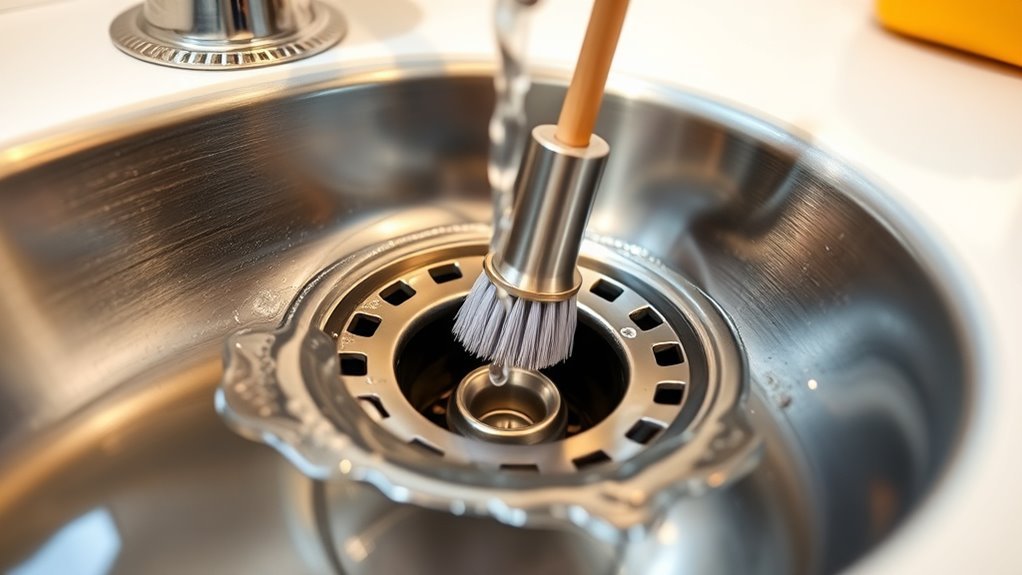
A clean kitchen sink drain helps keep your home smelling fresh and your plumbing working well. When you take care of drain hygiene, you stop food particles, grease, and bacteria from building up. These can cause bad smells and blockages.
Regular cleaning prevents these issues before they start, making sure your kitchen stays inviting. It’s a simple way to keep odors at bay and your sink functioning smoothly.
Plus, a clean drain reduces the chances of clogs that slow down water flow or cause backups. Ignoring drain care can lead to costly repairs from slow drainage or plumbing problems.
How to Identify Common Kitchen Sink Drain Problems
You’ll know there’s a problem with your kitchen sink drain when water starts pooling or taking forever to go down after you’ve washed the dishes. It’s pretty frustrating, right? Usually, slow drainage happens because food scraps, grease, or soap scum build up inside the pipes, creating a blockage.
The good news is, catching these signs early makes it easier to fix the issue before it turns into a bigger, messier problem. So, if your sink isn’t draining as quickly as it used to, it’s time to take a closer look and figure out what’s going on.
Signs of Drain Clogs
Whenever your kitchen sink drain starts acting up, recognizing the signs early can save you a lot of hassle. You might notice water pooling in the sink or draining slower than usual—both clear signals that a clog is forming.
Gurgling sounds when water goes down or unpleasant odors coming from the drain also indicate trouble. These signs warn you that it’s time to focus on drain maintenance to avoid bigger blockages.
Catching clogs early helps with clog prevention, saving you from costly repairs and messy backups. By staying alert to these symptoms, you can act quickly, ensuring your kitchen sink keeps running smoothly without interruption.
Don’t ignore these warning signs. They’re your first clue to taking action.
Causes of Slow Draining
Though slow draining might seem like a minor annoyance, it often hints at underlying plumbing issues in your kitchen sink.
One common cause is grease buildup. When hot grease cools, it solidifies and sticks to the pipes, narrowing the drain and slowing water flow.
Food residue also plays a big role. Bits of food can get stuck in the drain, mixing with soap scum and debris to create clogs.
Over time, these blockages grow, making your sink drain sluggish. Foreign objects or mineral deposits can also be causes, but grease and food buildup are usually the main culprits.
What Household Items You Need to Clean Your Kitchen Sink Drain
Before you start cleaning your kitchen sink drain, gather a few common household items that make the job simple and effective. For basic kitchen sink maintenance, you’ll need baking soda and white vinegar. These eco-friendly solutions help break down grime without harsh chemicals.
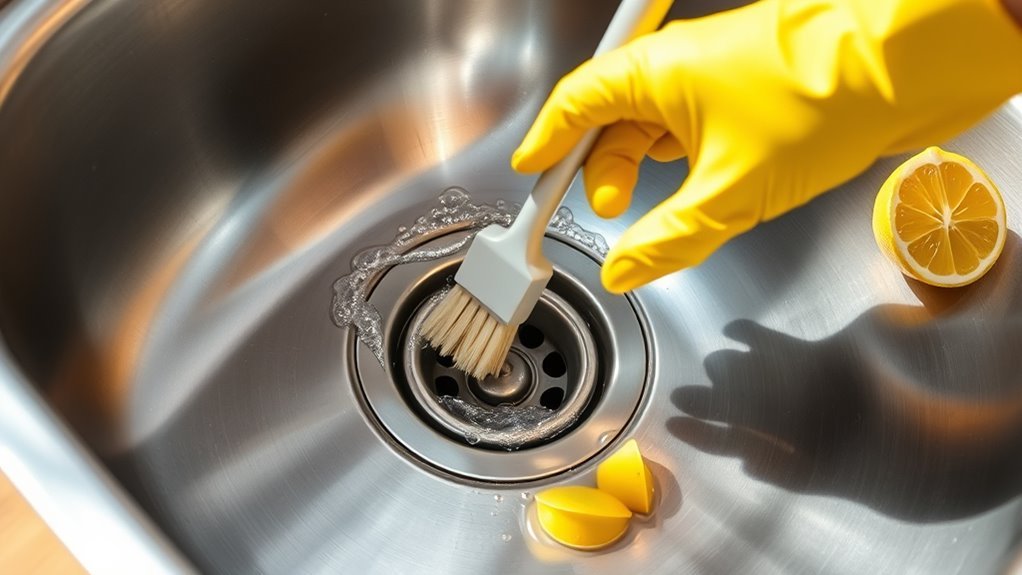
A kettle or pot of boiling water is essential to flush away loosened debris. Grab a scrub brush or an old toothbrush to reach stubborn spots inside the drain or around the stopper. You’ll also want a rubber plunger to dislodge blockages gently.
Keep a pair of rubber gloves handy to protect your hands while working. Finally, a clean cloth or sponge will help wipe down the sink area after cleaning. With these simple items, you’re set to maintain a fresh, clog-free kitchen sink drain using natural, safe methods that won’t harm your plumbing or the environment.
How to Clear Food Scraps and Debris From Your Kitchen Sink Drain
Once you have your cleaning supplies ready, the next step is to remove any food scraps and debris that may be clogging your kitchen sink drain. Start by clearing visible waste from the drain opening.
If your sink has a food disposal, run it briefly with cold water to help break down small scraps. Next, use a plunger or a drain snake to dislodge stubborn debris deeper in the pipe.
Regularly clearing food scraps prevents buildup and is essential for good drain maintenance. Following these steps keeps your kitchen sink drain clear and reduces unpleasant odors.
This helps ensure smooth drainage and prolongs the life of your plumbing system.
How to Use Baking Soda and Vinegar to Clean Your Kitchen Sink Drain
You only need a couple of simple ingredients—baking soda and vinegar—to give your kitchen sink drain a good clean. It’s surprisingly easy to do, and you’ll be amazed at how well it works. Just follow these straightforward steps to make sure your drain gets thoroughly cleaned and stays clear.
First, pour about half a cup of baking soda directly into the drain. Then, add a cup of vinegar. You’ll notice it bubbling up—that’s totally normal! Let it fizz and work its magic for about 15 minutes. During this time, you can grab a brush or a sponge to clean around the sink area if you like.
After the waiting period, flush the drain with hot water to wash away any loosened grime and residue. And that’s it! You’ll be surprised at how fresh and clear your sink feels afterward. Plus, doing this regularly can help prevent clogs and keep everything flowing smoothly.
Ingredients Needed
Two simple ingredients can effectively clean your kitchen sink drain: baking soda and vinegar. These natural cleaners are eco-friendly and part of essential drain maintenance tips that keep your pipes clear without harsh chemicals.
Before you start, gather these items to ensure a smooth process:
- Baking soda: Acts as a gentle abrasive and deodorizer.
- White vinegar: Creates a fizzing reaction that breaks down grime.
- Hot water: Helps flush away loosened debris after cleaning.
Using these ingredients is a smart way to maintain your drain regularly. They work together to clear buildup and neutralize odors, making them a top choice for keeping your kitchen sink drain fresh and clog-free naturally.
Step-by-Step Process
Although cleaning your kitchen sink drain might seem challenging, using baking soda and vinegar makes it simple. Start by pouring half a cup of baking soda directly into the drain. Let it sit for a minute to help break down grime.
Next, slowly pour one cup of vinegar down the drain. You’ll see fizzing—that’s the reaction working to clear out buildup. Cover the drain with a plug or cloth to keep the fizz contained and let it sit for 15 minutes.
After that, flush the drain with boiling water to wash away loosened debris. This easy routine helps keep your drain clear and odor-free, making your kitchen smell fresh and work smoothly without harsh chemicals. Repeat this once a month for best results.
Tips For Best Results
To get the best results when cleaning your kitchen sink drain with baking soda and vinegar, timing and technique really matter. Start by pouring baking soda directly into the drain, then follow with vinegar. Let the mixture fizz and sit for at least 15 minutes before flushing with hot water. This reaction helps break down grime and neutralizes odors effectively.
Keep these drain maintenance tips in mind:
- Use baking soda and vinegar monthly to prevent buildup.
- Avoid pouring grease or food scraps down the drain.
- Rinse with boiling water after each use to clear residue.
These odor prevention strategies help keep your sink smelling fresh and reduce clogs. Regular care ensures your drain stays clean and works smoothly over time.
Easy Ways to Remove Grease Buildup Without Harsh Chemicals
Removing grease buildup from your kitchen sink drain doesn’t have to involve harsh chemicals. Instead, you can use simple, eco-friendly solutions that are safe for your plumbing and the environment.
Start by regularly cleaning your grease traps—these devices catch leftover fats before they clog your drain. To tackle grease at home, pour a mixture of baking soda and vinegar down the drain. Let it fizz for 15 minutes, then flush with boiling water. This natural reaction loosens and breaks down grease without damaging pipes.
Another effective method is using lemon juice combined with hot water, which cuts through grease and leaves a fresh scent. Avoid pouring cooking oil directly down the drain; instead, collect it and dispose of it properly.
How to Flush Your Kitchen Sink Drain for Better Flow and Odor Control
Want to keep your kitchen sink draining smoothly and smelling fresh? It’s pretty simple—you just need to give it a good flush now and then. Start off by pouring boiling water straight down the drain; it helps loosen up any gunk stuck inside.
Next, sprinkle some baking soda into the drain. After that, pour in a mixture of vinegar and water—this fizzy combo works wonders for breaking down residue and getting rid of odors. Just let it sit for a bit, then rinse with more boiling water if needed, and you’re all set!
Use Boiling Water
Although it might seem simple, pouring boiling water down your kitchen sink drain can effectively dissolve grease and food buildup that cause clogs and odors. The heat helps break down sticky residues and flush them away.
This method is quick, chemical-free, and easy to do regularly. To get the best results, pour slowly in stages so the heat can work through the buildup.
Make sure to scrape food scraps beforehand to prevent new buildup. Repeating this weekly can help with maintenance and keep odors at bay.
Apply Baking Soda
Following the boiling water rinse, applying baking soda helps tackle stubborn grime and neutralize odors in your kitchen sink drain. Sprinkle about half a cup of baking soda directly into the drain. Its natural abrasive properties work to loosen buildup without harsh chemicals.
Baking soda benefits include deodorizing your drain and offering an eco-friendly cleaning alternative that’s safe for pipes and the environment. It’s a reliable alternative to commercial drain cleaners, which can be corrosive and harmful.
After adding baking soda, let it sit for 10-15 minutes to maximize its effectiveness. This step refreshes your drain, improves water flow, and controls unpleasant smells, setting the stage for the next phase of your cleaning process.
Add Vinegar Solution
Once you’ve let the baking soda settle, pour a cup of vinegar down the drain to create a fizzing reaction that helps break down buildup and flush away debris. This natural chemical reaction is key to improving your sink’s flow and odor control.
The vinegar benefits include dissolving grease, neutralizing odors, and killing bacteria without harsh chemicals. For best results, let the solution sit for 15 minutes before rinsing with hot water.
To maintain a clean kitchen sink drain, consider these tips:
- Use this vinegar and baking soda method every 1-2 weeks to prevent clogs.
- Avoid pouring grease and food scraps down the drain.
- Rinse with boiling water after each use to prolong the benefits of your cleaning routine.
When to Use a Plunger or Drain Snake for Tough Clogs
When should you grab a plunger instead of a drain snake to tackle a tough kitchen sink clog? Start with a plunger if the clog is near the surface and water drains slowly but isn’t completely blocked. Plungers create suction that can quickly loosen debris.
If plunging doesn’t do the trick or the clog feels deeper, switch to a drain snake. A drain snake physically breaks up or pulls out stubborn blockages further down the pipe.
Here’s a quick guide to help you decide:
| Situation | Use a Plunger | Use a Drain Snake |
|---|---|---|
| Water drains slowly | Yes, try plunger techniques | No, usually unnecessary |
| Water doesn’t drain at all | Yes, start with the plunger | Yes, if the plunger fails |
| Clog feels deep | No | Yes, drain snake is best |
Knowing when to use each tool saves time and helps avoid damage, making your sink drain clear and functional quickly.
Simple Habits to Maintain Your Kitchen Sink Drain Regularly
Although it’s easy to ignore, developing simple habits can keep your kitchen sink drain running smoothly and prevent stubborn clogs. Regular maintenance is key to keeping your drain hygienic and avoiding costly repairs. Staying proactive means water flows freely, and odors stay at bay.
Here are three easy habits to practice regularly:
- Rinse with hot water weekly. This helps dissolve grease buildup and flushes away debris.
- Use a natural cleaner monthly. Baking soda and vinegar break down residue without harsh chemicals.
- Check and clean the drain stopper. Removing trapped food particles prevents blockages and unpleasant smells.
Incorporating these habits into your routine makes regular maintenance simple. You’ll save time and effort by preventing problems early, keeping your kitchen sink drain fresh and functional.
How to Prevent Future Clogs and Keep Your Kitchen Sink Drain Smelling Fresh
To prevent future clogs and keep your kitchen sink drain smelling fresh, adopt a few simple practices that target common causes of blockages and odors. Start with preventive maintenance: avoid pouring grease, coffee grounds, and food scraps down the drain. Use a drain strainer to catch debris before it enters the pipes.
Regularly flush your drain with hot water to dissolve minor buildups and keep things flowing smoothly. For odor control, pour a mixture of baking soda and vinegar down the drain once a week. Let it fizz for 15 minutes, then rinse with hot water. This natural solution breaks down residues and neutralizes bad smells.
You can also use lemon peels or essential oils for a fresh scent. By sticking to these habits, you’ll minimize clogs and keep your kitchen sink drain clean and odor-free without harsh chemicals or costly repairs.
Frequently Asked Questions
Can Chemical Drain Cleaners Damage My Kitchen Sink Pipes?
Yes, chemical drain cleaners can damage your kitchen sink pipes if you’re not careful. The ingredients often contain harsh chemicals like lye or sulfuric acid, which can corrode certain pipe materials.
This is especially true for older metal or PVC pipes. Always check what material your pipes are made of before using these cleaners.
If your pipes aren’t compatible, the chemicals might weaken them or even cause leaks.
To stay safe, consider using safer alternatives or calling a professional to protect your plumbing.
How Often Should Professional Drain Cleaning Be Scheduled?
How often do you want to avoid unexpected clogs and costly repairs? You should schedule professional drain cleaning every 12 to 18 months to keep things flowing smoothly.
Regular drain maintenance helps prevent buildup, and a plumbing inspection during the service can spot early issues before they become serious.
If your household uses your sink heavily or you notice slow drainage, consider more frequent cleanings to protect your pipes and maintain peak performance.
Are Garbage Disposals Safe to Use With All Types of Food Waste?
You shouldn’t use garbage disposals with all types of food waste. Fibrous items like celery, corn husks, and potato peels can clog your system, and greasy or starchy foods can cause buildup.
For smooth disposal maintenance, only grind soft, small food scraps and run plenty of cold water while using it. This helps avoid jams and keeps your kitchen sink drain working efficiently.
What Are the Signs of a Leaking Kitchen Sink Drain?
You’ll notice signs of a leaking kitchen sink drain through water pooling under the sink or a musty smell, which are key leak detection clues.
You might also see corrosion or water stains on the cabinet floor. If you hear dripping sounds or notice the drain feels loose, it’s time to act.
Regular plumbing maintenance helps you catch leaks early before they cause bigger damage or mold growth.
Can Hard Water Affect My Kitchen Sink Drain’s Cleanliness?
Yes, hard water can affect your kitchen sink drain’s cleanliness by leaving behind mineral deposits, which can lead to clogs and buildup.
These deposits can slow down drainage, cause unpleasant odors, and make cleaning more difficult. Over time, your pipes may become more prone to issues.
To keep your drain clear, use effective cleaning solutions designed to dissolve those mineral deposits. Regular maintenance with the right products is key.
It helps prevent buildup, keeps your drain flowing smoothly, and ensures your sink stays fresh and functional.
Conclusion
Keeping your kitchen sink drain clean prevents odors, avoids plumbing issues, and guarantees smooth water flow. Regular cleaning helps you stay ahead of any problems before they get worse.
You can clear debris with simple tools like a drain snake or a plunger when clogs happen. Using baking soda and vinegar is also a natural way to freshen things up and break down buildup.
Make it a habit to flush your drain regularly and adopt easy maintenance routines. This way, you’ll keep your drain smelling fresh and working perfectly over time.
Taking these steps protects your home, saves money, and keeps your kitchen cleaner and more hygienic every day. Maintaining a clean kitchen sink drain is key to a healthier, more efficient space.