How to Organize Kitchen Drawers: A Step-by-Step Guide
Many people struggle with cluttered kitchen drawers, making it hard to find what you need when you’re in the middle of cooking. If you’re tired of digging through a jumble of utensils and gadgets, you’re not alone.
Organizing your kitchen drawers can feel overwhelming, but with a few simple steps, you can transform chaos into order.
To organize your kitchen drawers, start by emptying them completely and sorting items into categories like utensils, gadgets, and baking tools. Decide what to keep, toss, or donate, then choose organizers that fit your drawer size and needs.
Arrange frequently used items upfront for easy access and group similar tools to streamline cooking.
Keep your layout functional and tidy by regularly reassessing and maintaining the setup. You’ll find even more tips to customize your space effectively ahead.
Key Takeaways
- Empty all kitchen drawers, sort items by type, and decide what to keep, donate, or toss. This helps create optimal space and makes it easier to find what you need.
- Wipe down drawer interiors and check the condition of each item. Doing this before organizing keeps everything clean and safe.
- Pick out drawer organizers that fit your drawer size and match your needs. Options like utensil trays, dividers, or adjustable compartments work well.
- Group items by function and how often you use them. Place the most-used tools in shallow, easy-to-reach drawers for convenience.
- Keep your organization on track by regularly decluttering. Return items to their spots and wipe down drawers to stay tidy.
Benefits of Organizing Kitchen Drawers
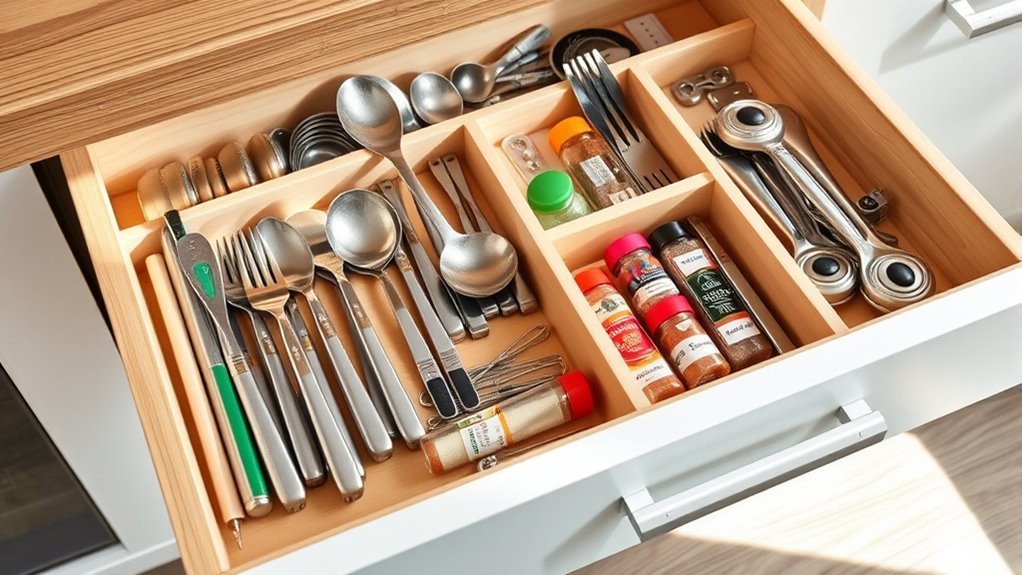
When you organize your kitchen drawers, you’ll save time by quickly finding the tools and utensils you need. This means less stress and more focus on cooking instead of searching.
With everything in its place, you’ll enjoy increased efficiency and better accessibility, making meal prep much smoother. Organized drawers also help your kitchen look clean and inviting.
Having organized drawers boosts efficiency, accessibility, and keeps your kitchen looking neat and welcoming.
Keeping a good inventory prevents you from buying duplicates or missing essential items. This makes cooking and planning way easier and less frustrating.
Streamlined meal prep becomes second nature when you know exactly where everything is. It cuts down on delays and helps you enjoy cooking more.
How to Empty and Sort Kitchen Drawers
First things first, pull everything out of your kitchen drawers. This way, you can see exactly what’s inside and have a clear view of all your tools and utensils. Once everything’s out, it’s a good idea to start grouping similar items together—like all your spatulas in one pile, measuring spoons in another, and so on. It makes the sorting process a lot easier and less overwhelming. After that, you can decide what you really want to keep, what can go in the trash, and if there’s anything that should be moved to other spots in your kitchen.
Remove All Items
Clear out every item from your kitchen drawers to get a fresh perspective on what you have. This step is essential for effective drawer cleaning and item evaluation. Take everything out and place it on a clean surface.
As you do this, you can wipe down the inside of each drawer to remove crumbs and dust. Inspect items for damage or expiration. Identify duplicates or things you no longer use.
Group similar items together loosely for easier sorting later. Removing all items helps you see the full scope of what’s inside and sets the stage for organizing efficiently. Don’t rush this process.
Thorough drawer cleaning combined with careful item evaluation guarantees your kitchen drawers become truly functional and clutter-free.
Categorize Kitchen Tools
Although emptying your kitchen drawers gives you a fresh start, categorizing your tools is what brings order to the chaos. Begin by grouping your kitchen tool types—cutlery, cooking utensils, baking tools, and specialty gadgets. Sorting them this way helps you see exactly what you have and what you use most.
Next, consider drawer space optimization by assigning each category a specific drawer or section. Place frequently used tools within easy reach, and store less-used items in deeper or less accessible drawers. This method not only streamlines your cooking process but also prevents clutter from building up again.
What to Keep, Donate, or Toss From Kitchen Drawers
First things first, go through your kitchen drawers and set aside the items you use all the time and are still in good shape. These are the things you definitely want to keep because they’re essential and in working order.
Next up, look for those gadgets or tools you don’t really use anymore but are still in decent condition. Maybe you got them as gifts or tried them once and never touched them again. These can be donated to someone who might get more use out of them.
And finally, toss out anything that’s broken, expired, or just plain beyond repair. Clearing out these items will help you free up space and keep your drawers neat and organized.
Identify Usable Items
Sorting through your kitchen drawers can feel overwhelming, but focusing on identifying usable items makes it manageable. Start by pulling everything out and sorting through each piece.
Keep only the kitchen essentials you use regularly to maximize your drawer space. Ask yourself if each item is functional, in good condition, and fits your cooking style.
Here’s what to keep:
- Utensils you use daily, like spatulas and knives
- Gadgets that simplify meal prep, such as peelers or can openers
- Measuring tools you rely on for recipes
- Items that fit neatly without crowding the drawer
Select Donation Candidates
Now that you’ve identified which items you use regularly, it’s time to decide what to keep, donate, or toss. Review the remaining items against clear donation criteria: they should be clean, functional, and in good condition. Avoid donating broken or heavily worn tools.
Next, research local charities to find those accepting kitchen items; some may have specific guidelines. Choose versatile utensils, cookware, or gadgets others can use, which increases the chances your donation will benefit someone else.
Items that no longer serve you but meet these standards make perfect donation candidates. By thoughtfully selecting what to donate, you free up space and give your gently used kitchenware a new life. This helps keep your drawers organized and clutter-free.
Dispose of Unwanted Items
You’ll want to separate your kitchen drawer items into three clear groups: keep, donate, or toss. This step is essential for effective drawer decluttering and guarantees you only hold onto what’s truly useful.
For items to toss, consider those that are broken, expired, or duplicates you never use. Look for recycling options to handle metal, plastic, or glass responsibly. Kitchen recycling helps reduce waste.
When deciding what to keep, prioritize utensils and tools you use regularly. Donate items that are in good condition but no longer serve your kitchen needs.
Here’s a quick checklist:
- Toss broken or expired items responsibly.
- Recycle materials via local kitchen recycling programs.
- Keep everyday essentials within easy reach.
- Donate gently used items to charity or community centers.
This approach simplifies your drawer decluttering and keeps your kitchen efficient.
Choosing the Right Kitchen Drawer Organizers
When choosing kitchen drawer organizers, think about what you store and how often you use those items. Different drawer types, like deep or shallow, need specific organizers to make the most of your space.
Also, consider the material—plastic, bamboo, or metal—as each offers durability and style to match your kitchen’s look and function.
Here’s a quick guide to help you decide:
| Drawer Type | Recommended Organizer Material |
|---|---|
| Shallow | Plastic or bamboo trays |
| Deep | Adjustable metal dividers |
| Utensil | Bamboo or plastic inserts |
| Multi-purpose | Flexible, modular compartments |
Make sure the organizers fit your drawer size and what you want to store. For example, bamboo adds warmth and is eco-friendly, while plastic is lightweight and easy to clean. Metal dividers are great for heavier tools.
Matching the right material to your drawer type helps keep your kitchen neat and functional.
Grouping Kitchen Drawer Items for Efficiency
When organizing your kitchen drawer, try grouping items by what they’re used for. It makes everything so much easier to find when you need it. Plus, it helps keep your space looking tidy and functional.
Don’t forget to keep the tools you use most often right at the front or in an easy-to-reach spot. That way, you won’t have to dig around every time you need a spoon or a pair of scissors. It’s all about saving time and making your kitchen work smoothly!
Categorize Items by Function
Although kitchen drawers often become a catch-all for miscellaneous items, categorizing them by function can transform your cooking space into a more efficient and enjoyable area. Start by identifying your drawer essentials and grouping items into functional zones.
This approach helps you find what you need quickly and keeps your kitchen organized. Consider these categories to create clear functional zones in your drawers:
- Utensils and cutlery
- Baking tools and measuring cups
- Cooking gadgets and small appliances
- Food storage wraps and bags
Prioritize Frequently Used Tools
Focus on the tools you reach for most often to make your kitchen drawer organization truly efficient. Place these frequently used items in the most accessible drawers, ideally those with a shallow drawer depth, so you can grab them quickly without digging around.
Keep utensils like spatulas, peelers, and measuring spoons near the front for maximum tool accessibility. Less-used tools can go in deeper or lower drawers since you won’t need them as often.
Use drawer dividers or trays to group similar tools together. This saves time and keeps everything from cluttering up. By prioritizing frequently used tools and considering drawer depth, you’ll create an intuitive system that speeds up your cooking every day.
Best Ways to Arrange Utensils and Everyday Tools
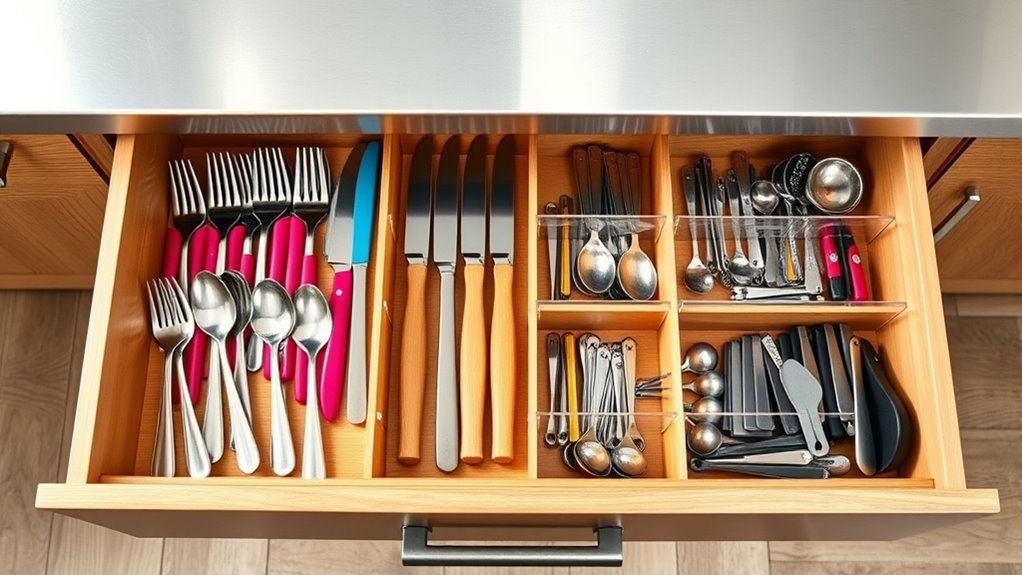
Organizing your utensils and everyday tools effectively can save you valuable time during meal prep and cleanup. Start by choosing utensil trays or drawer dividers that fit the drawer depth to maximize space efficiency. Arrange tools based on cooking frequency, placing the most-used items front and center for easy reach.
Consider these tips for ideal tool placement:
- Use drawer labels to quickly identify sections and make things more accessible.
- Group similar utensils together, like spoons, forks, and knives, to keep everything neat.
- Reserve deeper drawers for bulky tools, while shallow ones are perfect for flat utensils.
- Regularly reassess your layout to ensure it matches your current cooking habits.
Organizing Specialty Kitchen Drawer Gadgets
Since specialty kitchen gadgets often come in unique shapes and sizes, you’ll want to customize your drawer setup to fit them. Start by grouping your gadgets based on what they do and how often you use them.
Use adjustable drawer dividers to create compartments that hold each gadget snugly. This keeps things from cluttering or getting damaged. Plus, it makes everything easy to see and grab when you need it.
Here’s a simple layout idea for organizing your specialty gadgets:
| Gadget Type | Suggested Divider Size | Placement Tip |
|---|---|---|
| Measuring Tools | Small compartments | Near baking supplies |
| Can Openers | Medium compartments | Close to the pantry |
| Zesters & Peelers | Long, narrow slots | Next to prep knives |
| Thermometers | Thin, secure spaces | Near cooking thermometers |
| Specialty Graters | Wide, shallow sections | By cutting boards |
Customize Your Drawer Layout to Fit Your Cooking Style
Tailor your drawer setup to match how you cook daily, making your kitchen more efficient and enjoyable. Start by evaluating your cooking preferences and personal habits to decide which utensils and tools need the most accessibility.
Consider drawer dimensions carefully to guarantee your storage solutions fit perfectly and maximize space.
Measuring drawer dimensions ensures your organizers fit perfectly, maximizing every inch of your kitchen storage space.
Focus on layout flexibility so you can rearrange drawers as your needs change. An ergonomic design helps reduce strain, placing frequently used items within easy reach.
Don’t forget to blend functionality with aesthetic appeal to keep your kitchen inviting.
Here’s how to customize your drawer layout effectively:
- Group utensils by how often you use them to improve accessibility
- Measure drawer dimensions to choose or create the right organizers
- Use adjustable dividers to keep your layout flexible
- Incorporate trays or inserts that match your habits and style
This tailored approach turns your drawers into a practical, stylish extension of your cooking routine.
Tips to Maintain Kitchen Drawer Organization Long-Term
Although setting up your kitchen drawers takes effort, keeping them organized long-term requires consistent habits and smart strategies. Start with regular assessments—set a monthly reminder to check each drawer’s contents and adjust as needed.
Incorporate seasonal organizing by rotating items based on your cooking habits throughout the year. Develop efficient habits such as always returning items to their designated spots immediately after use.
Establish a decluttering routine to remove unused or broken items, preventing buildup that disrupts your functional layouts. Invest in adaptable storage solutions that fit your evolving needs and allow you to rearrange compartments easily.
Focus on drawer maintenance by wiping down surfaces and checking for wear, ensuring everything stays in good condition.
Quick Fixes for Kitchen Drawer Clutter
When clutter sneaks into your kitchen drawers, quick fixes can make a big difference without needing a full overhaul. You don’t have to spend hours reorganizing; simple clutter solutions can restore order fast. Start by clearing out anything you don’t use regularly. Then, use drawer dividers to separate utensils and tools, making everything easier to find and saving space.
Try these quick organization tips:
- Add adjustable drawer dividers to customize compartments.
- Use small containers or trays to group similar items.
- Remove duplicates or expired items to free up space.
- Line drawers with non-slip mats to keep items in place.
These quick fixes improve how your drawers look and how well they work. Doing them regularly helps prevent clutter buildup and keeps your drawers neat with minimal effort. You’ll enjoy a tidier space and easier access to your kitchen essentials every day.
Frequently Asked Questions
How Do I Childproof Kitchen Drawers Safely?
To childproof kitchen drawers safely, install reliable drawer locks that prevent little hands from opening them. Choose locks designed for child safety, like magnetic or adhesive types, so you don’t damage your drawers.
Make sure the locks are strong but easy for adults to open in emergencies. Regularly check the locks to ensure they’re secure, keeping your child safe from sharp or dangerous items stored inside.
What Materials Are Best for Drawer Liners?
You’ll find that rubber, foam, and vinyl are the best drawer liner materials because they provide grip, cushioning, and durability. These materials help keep your utensils and tools from sliding around, which is one of the top drawer liner benefits.
Plus, they protect your drawers from scratches and spills. Choose a non-adhesive liner if you want easy removal and cleaning, or adhesive-backed if you prefer a more secure fit.
Can Drawer Organizers Prevent Utensil Rust?
Yes, drawer organizers can help prevent utensil rust by keeping your tools dry and separated, which is a key tip for maintaining utensils. When utensils aren’t piled together, moisture evaporates faster, reducing rust risks.
Combine this with rust prevention techniques like drying utensils thoroughly before storing and using liners that absorb moisture. Using organizers lets you keep your drawer tidy while also protecting your utensils from damage and rust buildup over time.
How Often Should I Deep Clean Kitchen Drawers?
You should deep clean your kitchen drawers about every three months, kind of like hitting the refresh button on a tired playlist. This helps prevent crumbs, grease, and bacteria from building up over time.
To do a good clean, remove all items first. Wipe down the surfaces with warm, soapy water, and let everything dry completely before putting items back.
While you’re at it, check for rust or damage. Keeping your drawers in good shape makes sure they stay fresh and work well for longer.
Are There Eco-Friendly Options for Drawer Organization?
Yes, you can definitely choose eco-friendly options for drawer organization. Look for organizers made from sustainable materials like bamboo, reclaimed wood, or recycled plastic.
These options help reduce environmental impact. You can also adopt zero waste by repurposing containers or using fabric pouches instead of plastic trays.
Conclusion
By organizing your kitchen drawers, you save time, reduce stress, and create a more enjoyable cooking space. You’ll sort, declutter, and customize to fit your style.
Choose the right organizers, group items for efficiency, and keep everything easy to find. A well-organized drawer isn’t just neat—it’s functional, inviting, and tailored to you.
Remember, maintaining your kitchen drawer organization makes a big difference. So start today, stay consistent, and enjoy the benefits of a tidy, efficient kitchen drawer every day.