How Big Is a Standard Dishwasher? The Complete Answer
Are you tired of shopping for a dishwasher only to find models that don’t quite fit your kitchen? You’re not alone—many people struggle with choosing the right size that matches their space and needs.
Finding a dishwasher that fits perfectly can feel like a puzzle, but understanding standard sizes makes it much easier.
A standard dishwasher is typically 24 inches wide, 24 inches deep, and 35 inches high, fitting neatly into most kitchen spaces. You’ll want to measure your available width, height, and depth carefully, accounting for baseboards and toe kicks, to guarantee a perfect fit.
These dimensions affect your kitchen layout, door clearance, and overall workflow. If you keep these factors in mind, you’ll also uncover how size impacts capacity and cleaning performance in your next dishwasher choice.
Key Takeaways
- A standard dishwasher usually measures 24 inches wide, 24 inches deep, and 35 inches high.
- Built-in dishwashers follow these standard sizes, making it easy to fit them into your cabinets.
- Portable dishwashers range from 18 to 24 inches in width and tend to be taller because of the wheels.
- Getting accurate measurements of width, height, and depth helps ensure a perfect fit and easy installation.
- Standard dishwashers typically hold 12 to 16 place settings, offering a good balance between capacity and cleaning power.
Typical Dimensions of Standard Dishwashers Explained
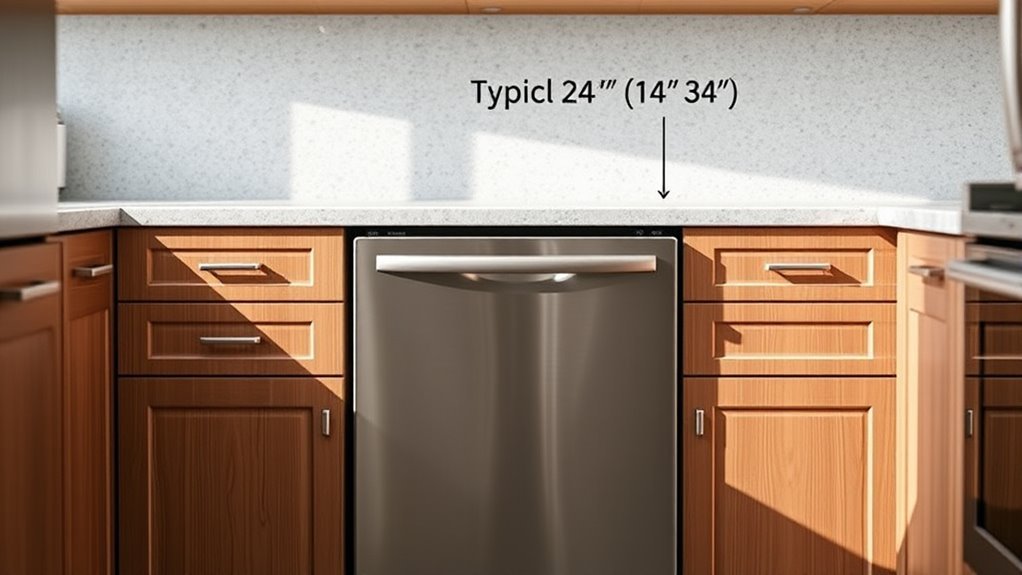
Standard dishwashers typically measure about 24 inches wide, 24 inches deep, and 35 inches high. These dimensions fit most kitchen cabinets and make installation under countertops straightforward.
Standard dishwashers usually measure 24 inches wide, 24 inches deep, and 35 inches high for easy installation.
When you’re shopping for a dishwasher, keep these measurements in mind since they’re the most common size on the market. If your kitchen has unique space constraints, you might want to consider custom sizes.
Custom-sized dishwashers can vary in width and height, making them a good choice if standard models won’t fit your space. Knowing typical dimensions helps you avoid surprises during installation and ensures your new dishwasher fits seamlessly.
Before buying, measure your space carefully and think about whether a standard model or a custom size will work best. Doing this will help you get a perfect fit without any hassle.
Why Dishwasher Depth and Height Matter for Installation
Knowing the width of your dishwasher is just part of the puzzle when planning your kitchen layout. Depth and height are just as important to avoid installation headaches.
If your dishwasher is too deep, it might stick out beyond your cabinets, messing up your kitchen’s look and causing door clearance problems. A shallow unit can leave awkward gaps, making it harder to secure properly.
Height matters too. Dishwashers that are too tall won’t fit under standard countertops, while shorter models might create gaps or need custom adjustments. Measure from the floor to the underside of your countertop to ensure a perfect fit.
Paying attention to both depth and height helps you avoid costly modifications. It guarantees your dishwasher fits seamlessly, saving you time and effort. Addressing these dimensions early keeps your kitchen functional and looking balanced.
How Dishwasher Size Affects Your Kitchen Layout
When you’re figuring out your kitchen layout, it’s important to think about the size of your dishwasher. You want to make sure it fits comfortably without cramming everything else in too tight.
Think about where you’ll put it so that your workflow stays smooth and easy. Sometimes, even a small difference in the size of the dishwasher can really change how your kitchen feels and functions day to day.
Space Planning Essentials
Since dishwashers come in various sizes, planning your kitchen layout carefully can save you from space issues down the line. You’ll want to account for countertop considerations to keep your workspace functional and visually balanced.
The dishwasher should fit snugly under the counter without crowding adjacent cabinets or appliances. Pay close attention to clearance requirements, especially the space needed to open the dishwasher door fully without obstruction.
This clearance affects traffic flow and usability, so measure door swings and nearby walkways precisely. Remember, a dishwasher that’s too large or oddly placed can disrupt your kitchen’s rhythm and limit your countertop workspace.
Thoughtful space planning guarantees your dishwasher integrates seamlessly, maintaining both efficiency and comfort in your kitchen environment.
Appliance Placement Tips
Although dishwasher sizes vary, placing them thoughtfully can really improve your kitchen’s flow and functionality. Take time to evaluate the clearance requirements so doors open fully without blocking walkways or interfering with cabinets.
Positioning your dishwasher near the sink makes plumbing connections easier and simplifies dish transfer, which boosts efficiency. Small adjustments to installation angles can also improve how the door swings and how you load or unload dishes comfortably.
Make sure to leave enough space around the unit for ventilation and easy maintenance access. By keeping these tips in mind, you’ll avoid cramped spaces and create a layout that feels natural and easy to work in, no matter your kitchen’s size or style.
Built-In vs Portable Dishwasher Sizes: What to Know
When you’re trying to decide between a built-in and a portable dishwasher, it’s important to look at their sizes and how they fit into your space. Built-in models usually need a dedicated spot under your countertop, so they’re pretty much fixed in one place. On the other hand, portable dishwashers take up some floor space and need easy access to water hookups, but they can be moved around if needed. Understanding these size and installation details can really help you plan your kitchen layout better and make the best choice for your space.
Dimensions Comparison Overview
If you’re choosing between a built-in and a portable dishwasher, understanding their size differences is important. These categories vary not just in design but also in dimensions, which can influence your installation options.
Built-in dishwashers are usually 24 inches wide, 24 inches deep, and 35 inches high. They fit snugly under counters, saving floor space but requiring precise measurements.
Portable dishwashers tend to be narrower, around 18 to 24 inches wide, and are taller because of their wheels and countertop space. They offer more flexibility but need extra floor space when in use.
Knowing these size details helps you pick the right dishwasher without any surprises.
Installation Space Requirements
You’ll need to account for specific installation space requirements depending on whether you choose a built-in or portable dishwasher. Built-in dishwashers typically need a dedicated 24-inch wide cabinet space under your countertop, with about 24 inches in depth and 34 inches in height. Be sure to measure carefully, including space for plumbing and electrical hookups.
Portable dishwashers, on the other hand, don’t require permanent installation but do need enough floor space near a sink for water access and drainage. When planning, think about space considerations like door clearance and ventilation.
For both types, following installation tips such as leveling the appliance and securing connections will help ensure peak performance. By understanding these requirements, you can avoid costly adjustments and make sure your dishwasher fits perfectly.
How to Measure Your Space for a New Dishwasher
Measuring your space accurately guarantees your new dishwasher fits perfectly without costly adjustments. Before shopping, focus on precise measuring techniques and space considerations.
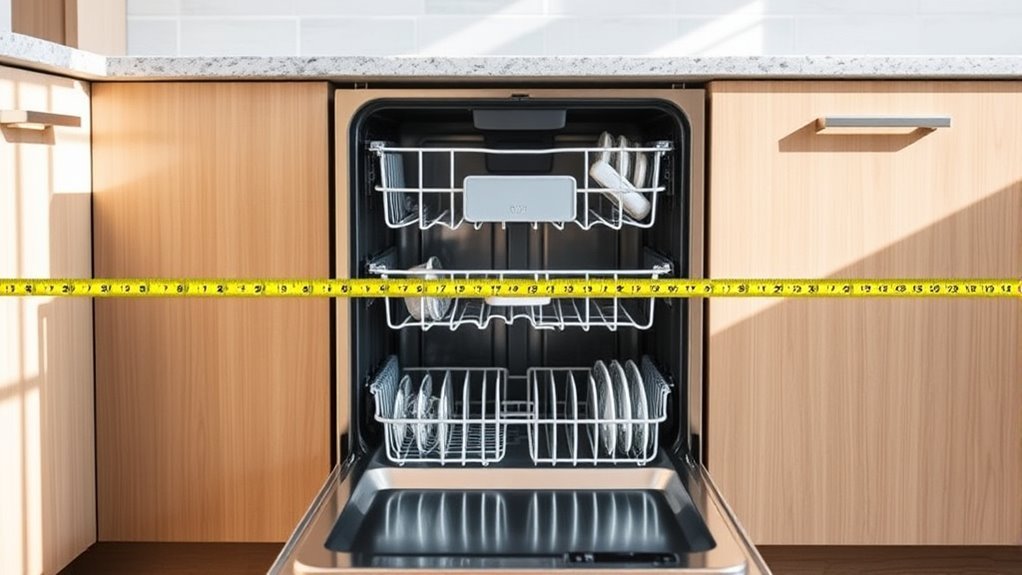
Start by clearing the area where the dishwasher will go to get unobstructed access. Use a tape measure to check:
- The width of the opening, making sure it’s level and free of obstructions.
- The height from the floor to the countertop to confirm vertical clearance.
- The depth from the front edge to the back wall or cabinet.
- The surrounding space near plumbing and electrical connections.
Don’t forget to account for any toe kicks or baseboards that might reduce usable space. Double-check your measurements to avoid surprises during installation.
What Size Dishwasher Fits Under Standard Kitchen Counters
Most standard kitchen counters can fit dishwashers that are about 24 inches wide, 24 inches deep, and 34 inches high. When choosing a dishwasher, it’s important to check that it meets clearance requirements so it fits snugly under your counter and the door opens properly.
Countertop compatibility matters too. Your counter height and overhang can affect whether the dishwasher fits well. Make sure to measure carefully before buying.
Here’s a quick reference table with typical dishwasher dimensions and clearance tips:
| Dimension | Standard Size |
|---|---|
| Width | 24 inches |
| Depth | 24 inches |
| Height | 34 inches (adjustable legs) |
| Clearance for door | 2-3 inches |
Be sure to measure your space carefully, including toe kicks or baseboards. This way, your dishwasher will install smoothly without gaps or obstructions. Considering these factors guarantees your new dishwasher fits perfectly under your standard kitchen counters.
When to Choose Compact or Slim Dishwashers
Although standard dishwashers work well for many kitchens, a compact or slim model can be a smart choice if space is limited or your household doesn’t need to wash a lot of dishes. These models focus on saving space while still being functional and stylish.
You might want to go for a compact or slim dishwasher if:
- Your kitchen has limited width under counters.
- You live alone or with a small family, so you don’t need to wash many dishes regularly.
- You want to free up floor space for other appliances or storage.
- You prefer a sleek design that fits seamlessly into tight spots.
Usually, these dishwashers are around 18 inches wide, compared to the standard 24 inches. That makes them ideal for apartments or as secondary dishwashers. Choosing a compact or slim model helps keep your kitchen both practical and attractive, even in tight spaces.
How Dishwasher Size Influences Capacity and Performance
You’ll see that the size of your dishwasher really impacts how many dishes it can fit in one go. Bigger models usually mean you can load up more at once, which can save you both time and energy. But, no matter what size you choose, it’s all about how you pack it — stuffing it correctly is what keeps your dishes looking spotless.
Capacity and Load Size
A standard dishwasher typically holds between 12 to 16 place settings, which directly affects how much you can wash in one cycle. When thinking about load optimization, you want to balance the size and arrangement of your dishes to get the most out of each load without overcrowding.
Capacity considerations also impact your cleaning routine and water use. Larger dishwashers handle more items but need more space in your kitchen. Smaller models save space but may require more frequent runs.
Properly loading plates, pots, and utensils helps improve wash coverage. Just be sure not to overload, so everything gets cleaned thoroughly and you avoid damaging your dishes.
Understanding your dishwasher’s capacity helps you plan meals and cleanups more efficiently.
Impact on Cleaning Efficiency
Knowing your dishwasher’s capacity is just the start; how its size affects cleaning efficiency matters a lot too. When you choose a dishwasher that fits your needs, you guarantee ideal wash results.
Larger models often have advanced cleaning cycles designed to handle heavy loads without sacrificing performance. But if you overload a small dishwasher, the cycles may not clean well, leaving residue behind.
Running a half-empty large dishwasher wastes water and energy, which reduces efficiency. To get the best results, match the dishwasher size to your typical load size and choose the right cleaning cycles.
This balance helps you maintain excellent wash performance while conserving resources, making sure your dishes come out spotless every time without unnecessary waste.
Common Mistakes When Choosing Dishwasher Size
Although it might seem straightforward, many people make avoidable errors when selecting a dishwasher size. Getting the right fit goes beyond just measuring space; you also need to consider compatibility with your kitchen layout and your household’s capacity needs.
Choosing the right dishwasher size involves more than measurements; consider kitchen layout and household needs too.
Here are four common mistakes to avoid:
- Overlooking the dishwasher’s capacity. A unit that’s too small means multiple loads, wasting time and energy.
- Ignoring whether the dishwasher works with your existing plumbing and electrical setup.
- Assuming all standard dishwashers are the same size, which can cause installation problems.
- Not thinking about future needs, like a growing family or more entertaining.
Adjusting Kitchen Cabinets for Your Dishwasher
When choosing the right dishwasher size, you might need to make some adjustments to your kitchen cabinets to ensure a proper fit. Start by measuring the cabinet height to make sure there’s enough vertical space for your new appliance.
If your cabinets are too low, you may need to trim or raise them slightly. Also, think about the door clearance—your dishwasher door should have enough room to open fully without hitting cabinets or walls.
You might need to adjust neighboring cabinets or remove baseboards to create enough space. Keep in mind that some dishwashers have adjustable legs, which can help with minor height issues.
Finally, check behind the cabinets for hoses and vents. Make sure they aren’t pinched or blocked when you install the dishwasher. With careful adjustments, your dishwasher will fit perfectly and work smoothly without any damage or hassle.
Frequently Asked Questions
What Materials Are Standard Dishwashers Typically Made From?
Standard dishwashers typically combine stainless steel and plastic components. You’ll find stainless steel in the tub for durability and better energy ratings, while plastic parts help reduce weight and cost.
When choosing a dishwasher, consider design features that match your kitchen and installation needs to ensure a perfect fit. To keep it running smoothly, remember to clean filters regularly.
This mix of materials balances performance, longevity, and efficiency for your daily use.
How Energy-Efficient Are Standard-Sized Dishwashers?
Energy consumption in standard-sized dishwashers is like a gentle stream—steady and manageable.
Many models now come with eco-friendly features that help you save water and electricity without sacrificing cleaning power.
Choosing an Energy Star-rated dishwasher means you’ll cut down on your utility bills while reducing your environmental footprint.
What Is the Average Noise Level of a Standard Dishwasher?
The average noise level of a standard dishwasher usually ranges between 44 to 60 decibels.
You’ll notice quieter models use advanced noise reduction technology and sound insulation to minimize disruption.
If you want a peaceful kitchen, look for dishwashers labeled “quiet” or “ultra-quiet,” as they often operate below 50 decibels.
These features keep the noise low, so you won’t even realize your dishwasher’s running while you relax or work nearby.
How Long Does a Typical Dishwasher Cycle Last?
A typical dishwasher cycle lasts between 1.5 to 2 hours, but it really depends on the wash settings you pick.
Quick or eco-friendly modes usually take less time, around 30 to 60 minutes. Heavy-duty or sanitize settings can push the cycle over 2 hours.
Choose the setting that fits your needs, balancing thorough cleaning with saving energy and water.
Are There Standard Dishwasher Sizes for Commercial Kitchens?
Think of commercial dishwashers as the workhorses of your kitchen, built to handle heavy loads. Yes, there are standard dishwasher sizes for commercial kitchens, but they vary based on your space and installation needs. You’ll find undercounter, door-type, and conveyor models, each designed to fit specific workflow requirements.
Planning carefully helps ensure your dishwasher fits seamlessly. This boosts efficiency and prevents your kitchen from feeling cramped or cluttered. Choosing the right size means smoother operations and a more streamlined workflow.
Conclusion
Choosing the right dishwasher means measuring your space, considering your kitchen layout, and understanding the difference between built-in and portable models.
It’s important to know when to pick a standard, compact, or slim dishwasher, and how size impacts capacity and performance.
Avoid common sizing mistakes by adjusting your cabinets when needed and planning carefully for easy installation.
Focusing on these factors helps you find the perfect dishwasher that fits your space, style, and needs seamlessly.
And if you’re wondering about the size of a standard dishwasher, understanding its dimensions is key to making the right choice for your home.