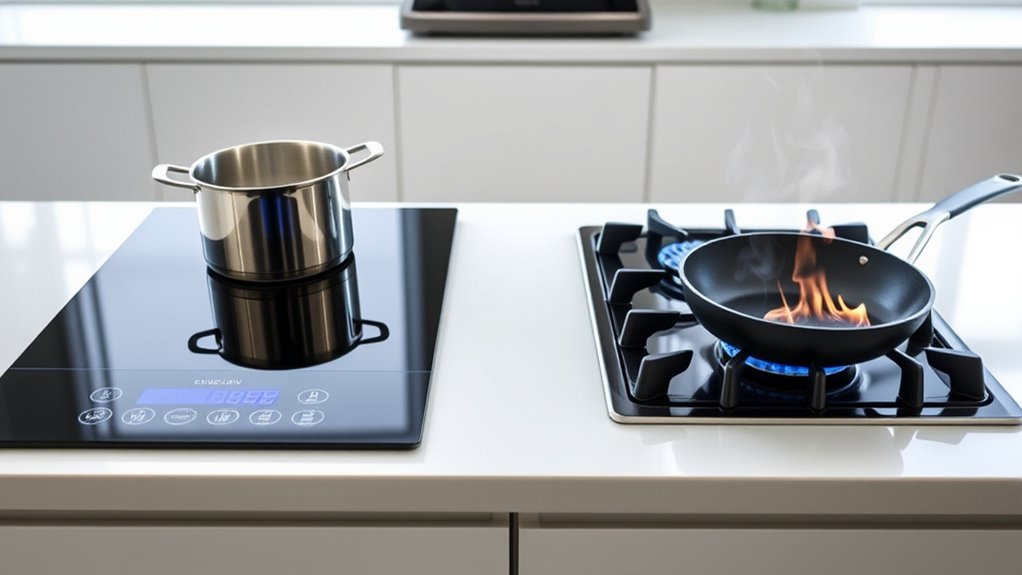
Induction Range vs. Gas: Which Is Better?
Are you tired of waiting forever for your stove to heat up or struggling to control the temperature precisely? You’re not alone—many people find choosing the right cooktop confusing and frustrating.
Finding the perfect match can make cooking safer, faster, and more enjoyable.
If you want faster cooking, precise heat control, and improved safety, an induction range is usually the better choice. It heats cookware directly, uses energy efficiently, and stays cooler to prevent burns.
Gas ranges offer visible flames and work with any cookware, but they waste heat and pose fire risks. Your decision depends on cooking style, budget, and kitchen setup—keep exploring to find which fits your needs perfectly.
Key Takeaways
- Induction ranges heat cookware directly, offering faster and more precise temperature control. They also enhance safety with cool-to-touch cooktops and automatic shutoff features.
- Gas ranges show visible flames and work with all types of cookware, but they respond slower to temperature changes and come with higher risks of fire and gas leaks.
- Induction cooking is more energy-efficient, with about 85-90% energy transfer, making it more environmentally friendly by lowering greenhouse gas emissions compared to gas ranges.
- Gas ranges tend to have lower upfront costs, but they are less efficient overall. Induction might cost more initially but can save you money in the long run.
- The choice between induction and gas depends on your personal preferences, kitchen setup, budget, safety concerns, and whether you have access to gas or electricity.
How Induction and Gas Ranges Work
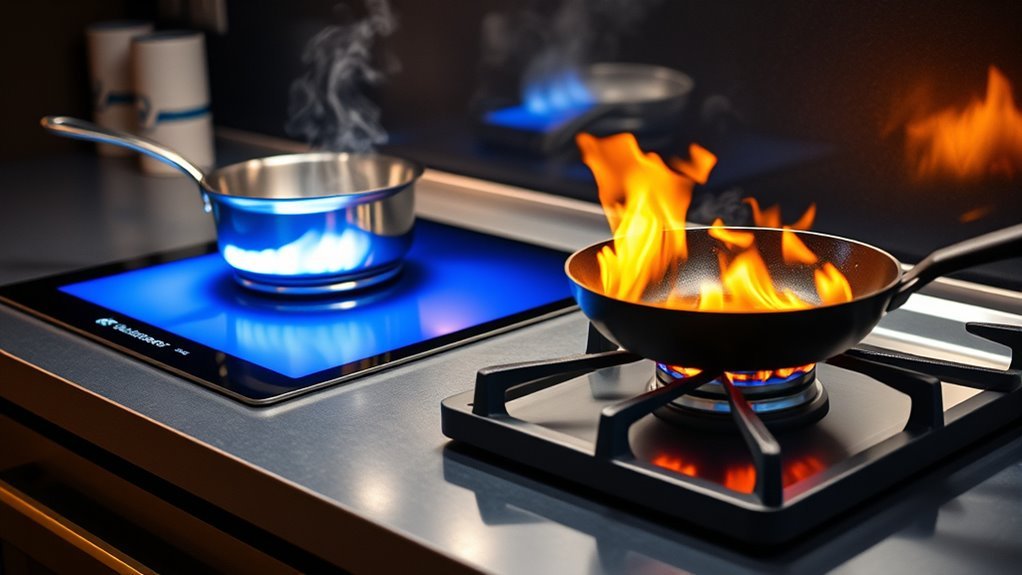
While both induction and gas ranges serve the same basic purpose, they work in very different ways. Induction technology uses electromagnetic fields to directly heat your cookware, which means the cooktop itself stays relatively cool. This method requires you to use compatible magnetic cookware, like cast iron or stainless steel, to activate the heating process.
On the other hand, gas combustion relies on a flame fueled by gas to heat your pots and pans. You don’t have to worry about cookware compatibility with gas ranges since any type of pot or pan will work.
With induction, you get exceptional temperature precision because the heat responds instantly to adjustments, offering more control over your cooking. Gas ranges also provide good heat control, but the temperature changes are less immediate compared to induction.
Understanding these fundamental differences helps you decide which range suits your cooking style and kitchen needs best.
Cooking Performance: Speed and Heat Control Compared
Because cooking performance depends on both speed and heat control, it’s important to compare induction and gas ranges in these areas. You’ll find that induction offers better temperature precision and quick heat response, making for consistent cooking and great simmering.
Gas burners, while a bit slower to adjust, shine in flavor enhancement thanks to their open flame and broader pan compatibility.
Here’s a quick comparison:
| Feature | Induction | Gas |
|---|---|---|
| Heat Responsiveness | Instant, precise | Slight delay, less exact |
| Simmering Capability | Excellent, stable | Good but can fluctuate |
| Maintenance Ease | Easy, smooth surface | Needs burner cleaning |
Induction’s safe surface and easy maintenance make it appealing. But if you value flavor and traditional cooking, gas might be a better fit.
Both options provide reliable cooking results. Your choice depends on what’s most important for your kitchen.
Safety Features: Which Range Is Safer?
How safe is your cooking range? When comparing induction and gas ranges, safety regulations are key in protecting you from common accidents. Induction ranges are safer on the surface because their cooktops stay cool to the touch, which reduces heat hazards and burn risks. This makes them especially good if you have kids at home.
Gas ranges, on the other hand, can pose fire risks and the chance of gas leaks. They require careful monitoring and proper ventilation to prevent dangerous situations. Induction cooktops use electrical currents, so electrical safety is important. Luckily, modern models often include automatic shutoff and fault detection for added security.
Gas stoves rely on open flames, which increase fire hazards and the risk of accidental burns. Overall, induction ranges have more built-in safety features that lower the risk of heat and fire accidents. If safety is your main concern, induction ranges offer peace of mind with advanced technology designed to prevent cooking mishaps and keep your household safe.
Energy Efficiency: Induction vs. Gas Range Costs
When you’re trying to figure out which range to go for, it’s a good idea to look at how much energy each one uses and what that means for your bills. Generally, induction ranges tend to use less energy, so they could help you save money in the long run. Let’s take a closer look at the energy consumption and costs of induction versus gas ranges to help you make a decision.
Energy Consumption Comparison
Energy efficiency is key when choosing between an induction range and a gas stove, especially if you want to keep your utility bills low. Induction ranges usually score higher on efficiency because they heat the cookware directly with electromagnetic energy, which means less wasted energy.
On the other hand, gas stoves tend to lose more heat into the air, making them less efficient overall. When you compare energy use, induction’s lower power needs mean a smaller environmental impact. A cost analysis of electricity versus natural gas also shows differences in how sustainable and efficient each option is.
Operating Cost Differences
Although induction ranges often cost more upfront, they usually save you money in the long run because of lower operating expenses. Induction cooktops convert energy more efficiently, so less electricity is wasted compared to gas burners.
Fuel prices for gas can fluctuate a lot, which affects your monthly costs. Electricity rates tend to stay more stable, making your expenses more predictable. This difference plays a big role in your ongoing costs.
Here’s a quick comparison of operating costs:
| Factor | Induction Range |
|---|---|
| Energy Efficiency | High (about 85-90%) |
| Fuel Prices Impact | Low (stable rates) |
| Monthly Operating Cost | Typically lower |
Installation and Maintenance for Induction and Gas Ranges
When setting up your kitchen, choosing between an induction or gas range impacts both installation and ongoing maintenance. Induction ranges need specific wiring requirements, usually a 240-volt outlet, while gas ranges require proper gas line connections and ventilation for safety. It’s important to consider these factors before making a decision.
Here are some points to keep in mind for installation and maintenance:
- Induction ranges need less ventilation, which simplifies installation.
- Gas ranges require regular checks for gas leaks and proper venting.
- Wiring for induction is straightforward but must meet electrical codes.
- Gas ranges might need professional installation for gas line setup.
- Cleaning induction surfaces is easier since they have a smooth top without burners.
Best Range for Different Cooking Styles and Recipes
How do you decide which range suits your cooking style best? Think about your cooking techniques and how well each range can handle your recipes. Gas ranges are great if you love flambéing or sautéing, thanks to their instant heat and visible flames.
Induction ranges provide precise temperature control, making them perfect for delicate sauces and simmering. Surface materials and cookware compatibility are also important; induction needs magnetic pots, while gas works with any cookware.
| Cooking Style | Best Range | Key Benefit |
|---|---|---|
| High-heat searing | Gas | Quick heat and rich flavors |
| Gentle simmering | Induction | Precise control and heat retention |
| Everyday cooking | Both | Easy to use and clean |
Ultimately, your experience depends on how each range matches your favorite recipes and cleaning habits. Pick what works best for your flavor preferences and cookware for the best results.
Upfront and Long-Term Costs of Induction and Gas Ranges
Since choosing a range impacts your budget beyond just the purchase price, it’s important to consider both upfront and long-term costs. Induction ranges usually cost more initially because of their advanced technology and specialized cookware needs.
But they can save you money in the long run since they use electricity more efficiently, helping to lower your energy bills over time. Gas ranges tend to be less expensive upfront but may lead to higher monthly utility costs depending on your gas rates.
Here’s what to keep in mind:
- Induction ranges often cost more at the start.
- Gas ranges are generally cheaper to buy.
- Induction offers better energy efficiency, reducing electricity costs.
- Gas ranges might increase your monthly gas bills.
- Maintenance and repair costs can vary, but induction units tend to be more expensive to fix.
Environmental Impact: Which Range Is Greener?
Although both induction and gas ranges serve the same purpose, their environmental impacts differ quite a bit. Understanding these differences can help you choose a greener option.
Induction ranges use electricity, which can be sourced from renewable energy. This can significantly lower your carbon footprint if your provider offers green options. Gas ranges, on the other hand, rely on fossil fuels, releasing carbon dioxide and pollutants directly into your home and the atmosphere.
This makes induction a more eco-friendly choice, especially if sustainability matters to you. Plus, induction cooking is more energy-efficient because it transfers heat directly to your cookware with minimal waste.
Gas stoves lose a lot of heat to the surrounding air, making them less efficient. By choosing induction, you not only cut greenhouse gas emissions but also support a more sustainable lifestyle.
If reducing your environmental impact is important, induction ranges offer a cleaner, greener way to cook.
Common Myths That Affect Your Induction vs. Gas Choice
When deciding between induction and gas ranges, you might come across several myths that can cloud your judgment. Clarifying these misconceptions is important because many of them aren’t actually true. User testimonials show that these beliefs often unfairly influence choices.
When choosing between induction and gas, don’t let myths cloud your judgment—trust facts and user experiences.
Here are some common myths to think about:
- Induction stoves are too complicated to use.
- Gas ranges provide instant heat, while induction is slow.
- Only special cookware works with induction.
- Gas stoves are cheaper to operate in the long run.
- Induction ranges don’t offer precise temperature control.
In reality, induction ranges heat up faster and allow for precise control. User testimonials also highlight how easy they are to use and how much energy they save. Although induction needs magnetic cookware, most modern pots and pans are compatible.
Myth clarification shows that gas isn’t always cheaper when you consider efficiency and environmental costs. Don’t let these myths influence your decision—focus on the facts and real user experiences. That way, you can choose the best option for your kitchen.
How to Choose Between Induction and Gas Ranges?
How do you decide which range suits your kitchen best? Start by thinking about your personal preferences: how you like to cook, the types of meals you prepare, and how comfortable you are with new technology.
If quick heating and precise temperature control are important to you, induction might be the way to go. But if you prefer traditional cooking with visible flames and versatility, gas could be a better fit.
Also, consider energy efficiency and safety. Induction ranges heat up faster and stay cool on the surface, which reduces burn risks. Gas ranges give you immediate heat adjustments and can be used during power outages.
Think about your kitchen setup and your budget too. Installation costs and fuel availability are important factors to keep in mind.
Finally, match the range to how you cook daily, and consider how easy it is to clean and maintain. By weighing these factors along with your personal preferences, you’ll find the range that fits your lifestyle and kitchen perfectly.
Frequently Asked Questions
Can Induction Ranges Work During a Power Outage?
No, induction ranges won’t work during a power outage because they rely entirely on electricity as their power source. You can’t cook without power, which is one of their main limitations.
This can be inconvenient if you’re used to cooking during unexpected outages. However, induction ranges avoid open flames, so they’re safer in that regard.
But since they depend on electricity, you’ll need a backup plan if the power goes out.
Are Induction Cooktops Compatible With All Cookware Materials?
You might be surprised, but not all cookware works with induction cooktops. Compatibility depends on magnetic materials—only pots and pans with magnetic bases, like cast iron or some stainless steel, will heat up.
If your cookware isn’t magnetic, the cooktop won’t recognize it, leaving you frustrated. To test, grab a magnet: if it sticks to the bottom, you’re good to go. Otherwise, you’ll need new induction-friendly cookware.
How Noisy Are Induction Ranges Compared to Gas Stoves?
You’ll find induction noise is generally minimal, often just a soft hum or occasional buzzing when the fan kicks in to cool the cooktop.
Gas stoves, on the other hand, create a steady flame sound but don’t have that electronic hum.
While gas efficiency is lower compared to induction, the noise level is more constant and familiar.
Do Gas Ranges Affect Indoor Air Quality Significantly?
Yes, gas ranges can affect your indoor air quality quite a bit. When you cook, gas emissions release pollutants like nitrogen dioxide and carbon monoxide, which can irritate your lungs and make respiratory problems worse.
If you use a gas range, it’s important to ensure good ventilation. Turn on exhaust fans or open windows to help reduce indoor pollutants and keep your cooking environment safer and healthier.
Can Induction Ranges Be Used for Professional Cooking Competitions?
You can definitely use induction ranges in professional cooking competitions.
It’s a bit like a race car driver switching from gas to electric—some chefs love the precision and instant control.
Many professional chefs appreciate induction’s fast, even heating, especially when they need to perform under pressure.
You’ll see induction cooktops in many high-profile contests now, showing they’re trusted tools for top-tier cooking.
Conclusion
When choosing between induction and gas ranges, you’ll want to think about speed, safety, and cost. Induction cooktops heat up to 50% faster than gas, so you get your meals quicker and save energy.
Plus, induction is safer because there are no open flames. While gas offers precise heat control, induction’s modern tech often saves money in the long run and is better for the environment.
Reflect on your cooking style and kitchen setup to pick the best fit for you. When it comes to induction range vs. gas, consider what matters most for your cooking needs.