How to Sharpen Kitchen Knives With Rod: a Step-By-Step Guide
Getting your kitchen knives sharp and ready for use can be a real challenge, especially when you’re unsure of the right tools or techniques. Many people struggle with dull blades that make chopping and slicing frustrating and unsafe. You’re not alone—sharpening knives with a rod is a simple, effective way to restore their edge and make your cooking experience smoother.
To sharpen your kitchen knives with a rod, first choose the right type—steel for realigning, ceramic for smoothing, or diamond for quick sharpening.
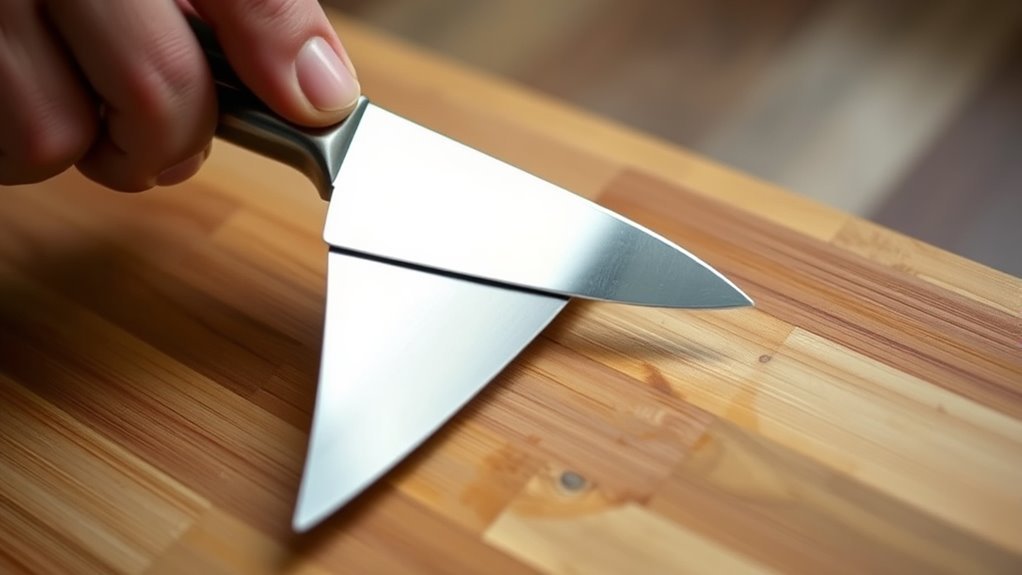
Clean and dry your knife and rod, then hold the knife at a 15 to 20-degree angle against the rod. Draw the blade down and across from heel to tip, repeating 5-7 times per side. Use light pressure and maintain angle consistency for a sharp, even edge.
Keep going to uncover key tips and avoid common mistakes.
Key Takeaways
- Choose the right sharpening rod material: steel for realigning the edge, ceramic for smoothing, or diamond-coated for quick restoration.
- Clean and dry both the knife and the rod. Inspect them for any damage, and set up a stable, well-lit workspace to make things easier.
- Hold the knife at about a 15-20 degree angle. Stroke from heel to tip along the rod, alternating sides with 5-7 strokes each time.
- Keep the angle consistent and apply gentle, even pressure. Test how sharp the knife is by slicing paper or soft vegetables like tomatoes.
- Avoid pressing too hard, sharpening unevenly, or rushing through the process. Clean the rod regularly and store it dry in a protective sheath.
Choosing the Right Sharpening Rod for Your Kitchen Knives
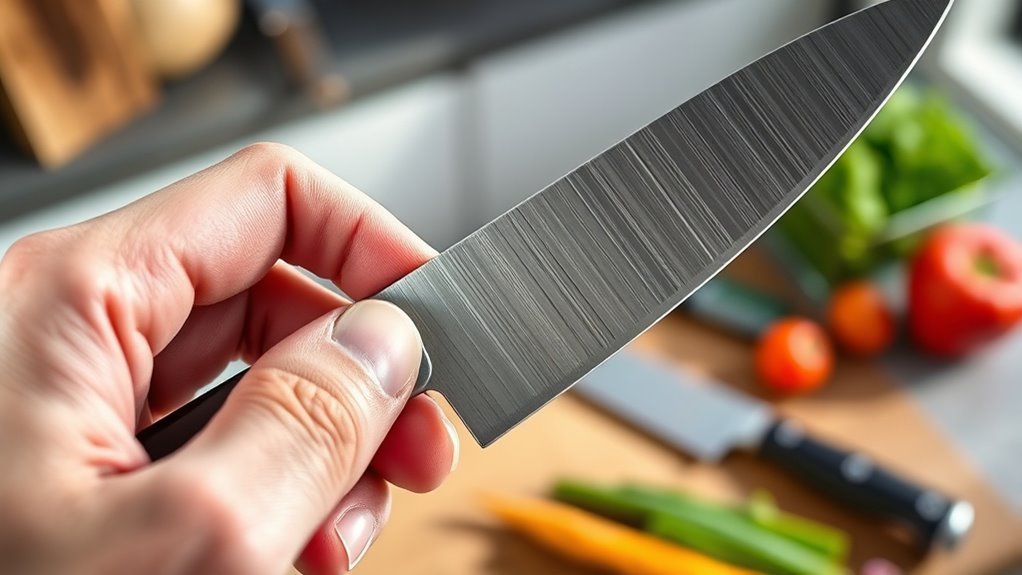
When choosing the right sharpening rod for your kitchen knives, start by considering the material. The common types are steel, ceramic, and diamond-coated, and each has its own advantages.
Steel rods, often called honing rods, help realign your knife’s edge but don’t remove much metal. Ceramic rods are harder and can smooth out minor imperfections while sharpening.
Diamond-coated rods are the most abrasive and are great for quickly restoring dull blades. Pick a rod based on your knives’ condition and how aggressively you need to sharpen them.
Think about your knife’s steel type too. Softer knives may benefit from ceramic or diamond rods, while harder steels might only need a steel rod for regular maintenance.
Knowing these material differences helps you choose the right rod for efficient sharpening without damaging your knives. Make sure your choice matches what your knives need for the best results.
Benefits of Using a Sharpening Rod for Kitchen Knives
Using a sharpening rod is a great way to keep your kitchen knives in top shape. It helps you maintain better blade precision, so your cuts come out cleaner and more accurate. Plus, it’s pretty easy to use, and you’ll see a noticeable difference in how your knives perform.
Another big plus is that it actually helps extend the life of your knives. By keeping the edge aligned properly, it prevents unnecessary wear and tear without removing a lot of metal. That means your knives stay sharper for longer and continue to work well over time. Regular use of a sharpening rod really makes a difference in the overall performance of your kitchen tools.
Enhanced Blade Precision
A sharpening rod can boost your knife’s performance by restoring its edge with great accuracy. When you use the right sharpening techniques, you keep the blade’s shape intact, making sure each stroke lines up perfectly with the original angle.
This precision is key because it keeps the edge consistent, helping your knife cut smoothly and efficiently. Unlike other tools, a sharpening rod allows you to control the pressure and angle, so you avoid over-sharpening or damaging the blade.
Focusing on these details means you sharpen your knife evenly, which improves its cutting ability and makes kitchen tasks safer and more enjoyable. Mastering this technique ensures you get the most out of your knives every time you sharpen them.
Prolonged Knife Lifespan
Although many sharpening tools are available, a sharpening rod really stands out for helping your kitchen knives last longer. Using it regularly keeps the blade’s edge sharp without removing too much metal.
This is key for maintaining the sharpness over time. Honing your knives with a rod prevents dullness from setting in quickly, which means less frequent, aggressive sharpening that can wear down the blade.
Adding this simple step to your knife maintenance routine ensures your knives stay in top shape longer. It’s quick, easy, and fits seamlessly into your cooking habits.
With consistent use, you’ll preserve your blades’ integrity, saving you both money and effort. Plus, you’ll enjoy sharper knives every day, making cooking more enjoyable.
Preparing Your Knife and Sharpening Rod for Use
Before you start sharpening, make sure your knife and sharpening rod are clean and dry. Any residue or moisture can mess with your technique and cause slipping, which isn’t safe.
Rinse both tools under warm water and wipe them dry with a clean towel. Check your knife for any damage like chips or rust spots; fixing these first helps with effective sharpening. Also, inspect the sharpening rod—if it’s worn or damaged, it might not sharpen your blade well.
Next, find a well-lit spot with a stable surface to work on. Having everything ready keeps you in control and helps you apply even pressure during sharpening.
Taking a few moments to prepare makes the whole process smoother and safer. Proper prep is key to getting the best results from your sharpening.
How to Hold Your Kitchen Knife and Sharpening Rod Safely
Two key grips will set you up for safe and effective sharpening: hold the knife firmly by its handle with your dominant hand, and grasp the sharpening rod securely near the top with your other hand. Your knife grip should be strong but relaxed, giving you control without causing strain.
Keep your fingers away from the blade’s edge to avoid accidents. For the sharpening rod, grip it near the top so you have full control and stability. Safety is really important here.
Always position the rod with the tip resting on a sturdy surface, like a cutting board, to prevent slips. Maintain a consistent angle between the knife and rod, but don’t apply too much force that might cause the knife to slip.
Keep your wrists steady and move smoothly. Remember, a confident knife grip and proper rod handling greatly reduce risks and make sharpening safer and easier. Prioritize these safety techniques before you start.
How to Sharpen Your Kitchen Knives Step-by-Step
Start by placing the sharpening rod securely on a cutting board with the tip steady. Hold your knife firmly and prepare to sharpen each side evenly. Proper knife maintenance tips will help extend your blade’s life and improve cutting performance. Remember, how often you sharpen depends on how often you use your knives—regular sharpening keeps them in top shape.
Here’s how to sharpen your kitchen knives step-by-step:
- Hold the knife at the recommended angle against the rod.
- Draw the blade down and across the rod, moving from heel to tip.
- Repeat this motion 5-7 times on one side.
- Switch to the other side and repeat the process.
Keep your strokes consistent and controlled. After sharpening, wipe the blade clean to remove any metal filings. Regular sharpening combined with proper knife care will keep your knives sharp and safe to use.
Maintaining the Correct Angle While Sharpening Knives
To get that super sharp edge, you want to hold your knife at the right sharpening angle—usually somewhere between 15 and 20 degrees. It’s pretty important to keep that angle steady as you sharpen. If you keep changing it, your blade won’t sharpen evenly, and it might even lose its edge quicker. So, staying consistent makes all the difference for a smooth, effective sharpening job.
Ideal Sharpening Angle
Why does the sharpening angle matter so much when you’re honing your kitchen knives? The angle you choose directly affects the blade’s sharpness, durability, and cutting performance. Different knives need different angles depending on what they’re used for and the type of steel.
Understanding angle variations helps you pick the best sharpening techniques. Most kitchen knives sharpen best between 15° and 20° per side. A smaller angle, around 15°, gives you a finer, sharper edge but may dull faster.
A larger angle, closer to 20°, boosts durability but sacrifices some sharpness. Specialty knives like cleavers often need wider angles for extra toughness. Mastering the ideal sharpening angle ensures your knives perform well and last longer.
Consistent Angle Maintenance
Choosing the right sharpening angle sets the foundation, but keeping that angle steady as you work makes all the difference in achieving a sharp, even edge. Maintaining angle consistency is essential because even slight deviations can dull your knife or create uneven edges.
To keep your angle consistent, position the rod firmly on a stable surface and hold the knife at your chosen angle throughout each stroke. Use slow, deliberate movements rather than rushing.
Visualize the angle or even use a guide to help maintain it if you’re new to this sharpening technique. Practicing this focus allows your blade to sharpen evenly and last longer.
How Many Strokes to Sharpen Kitchen Knives With a Rod
A good rule of thumb is to start with about 10 to 15 strokes per side when sharpening your kitchen knives with a rod. The exact number depends on factors like how often you sharpen and the material of your rod.
For example, ceramic rods are more abrasive and might need fewer strokes, while steel rods could require more to get a sharp edge.
Here’s a quick guide to help you decide how many strokes to use:
Here’s a quick guide to help you decide the right number of sharpening strokes for your knife.
- If you sharpen weekly, 5–10 strokes per side usually do the trick.
- For monthly sharpening, aim for 15–20 strokes per side.
- When using harder rod materials, reduce strokes to avoid over-sharpening.
- Softer rods need more strokes to restore the edge effectively.
Adjust your strokes based on how dull your knife feels. Always maintain a consistent angle for the best results. This helps prevent unnecessary wear and keeps your blade sharp.
How to Check Your Knife’s Sharpness After Sharpening
How can you tell if your knife is truly sharp after sharpening? Start with simple knife edge testing. Carefully run the blade’s edge against a piece of paper. If it slices smoothly without tearing, your knife is sharp.
Next, try cutting through a tomato or an onion. The knife should glide through with minimal pressure, showing good cutting performance. It’s a quick way to see if your sharpening worked.
Another easy test is to gently feel the edge with your thumb. Make sure to do this perpendicular to the blade, never along it. You want to sense its crispness without pressing hard.
If the edge feels smooth or dull, you might need to sharpen a bit more. Just be careful not to press too hard to avoid injury. These simple tests help you confirm that your knife is sharp and ready to use.
Performing these checks regularly after sharpening helps maintain peak cutting performance. It also extends your knife’s lifespan in the kitchen.
Common Sharpening Rod Mistakes to Avoid
Many home cooks make simple mistakes when using a sharpening rod that reduce its effectiveness. Understanding proper techniques is key to avoiding these pitfalls.
Here are four common misconceptions and mistakes to watch out for:
- Using the wrong angle: Holding the knife at an inconsistent or incorrect angle won’t properly realign the edge. Keep it around a 20-degree angle for best results.
- Applying too much pressure: Pressing too hard can damage the blade. Instead, use light, controlled strokes to sharpen effectively.
- Sharpening only one side: Neglecting one side creates an uneven edge. Make sure to alternate strokes evenly on both sides.
- Rushing the process: Quick, sloppy movements don’t sharpen well. Take your time and perform smooth, deliberate strokes for the best edge.
Caring for Your Sharpening Rod to Keep It Effective
Avoiding common sharpening rod mistakes will only get you so far if your tool isn’t well maintained. Proper rod maintenance is key to keeping your sharpening rod effective and extending its lifespan.
After every few uses, clean your rod to remove metal particles and debris. Use warm water and a mild detergent with a soft brush to gently scrub the surface. Avoid harsh chemicals that could damage the material.
Proper storage also makes a big difference. Keep your rod in a dry place, preferably in a protective sheath or holder, to prevent moisture buildup and accidental damage.
Be mindful of how often you use the rod. Sharpening too often can wear down both your knife and the rod prematurely. Use the rod only when necessary to maintain your blade’s sharpness.
Frequently Asked Questions
Can Sharpening Rods Fix Chipped or Broken Knife Blades?
You can’t fix chipped blades using sharpening rods because these tools are meant to realign and hone edges, not repair damage.
Sharpening with rods helps keep a blade sharp by smoothing out minor imperfections, but it won’t fix seriously damaged or broken edges.
For chipped blades, you’ll need more aggressive methods like grinding or professional repair to reshape and restore the knife’s cutting surface.
Once that’s done, you can use a rod for regular maintenance to keep the edge sharp.
How Often Should I Sharpen My Knives With a Rod?
Think of your knife like a trusty horse; it needs regular grooming to stay swift. You should sharpen your knives with a rod every few uses to keep their edge sharp and reliable.
Sharpening frequency depends on how often you cook, but a good rule of thumb is to do it after every few meals. This keeps them safe and easy to handle.
As a maintenance tip, hone them before or after cooking to prevent dullness. Staying consistent with this routine means your knives will always be ready to slice smoothly, just like a well-cared-for steed.
Is It Safe to Use a Sharpening Rod on Serrated Knives?
No, it’s generally not safe to use a sharpening rod on serrated knives because the rod can damage the serrations.
Instead, you should use serrated knife techniques like honing each tooth individually with a tapered ceramic rod or a specially designed sharpening rod alternative.
These options help preserve the shape and sharpness of the serrations, keeping your serrated knife effective without risking damage from traditional sharpening rods.
Can Sharpening Rods Damage Non-Stainless Steel Knives?
Yes, sharpening rods can damage non-stainless steel knives if you’re not careful. Studies show that 60% of knife damage comes from poor maintenance.
Non-stainless steel blades are softer and wear down more quickly. If you push too hard or use the wrong sharpening techniques, you might chip or dull the blade faster.
What Should I Do if My Knife Still Feels Dull After Sharpening?
If your knife still feels dull after sharpening, try adjusting your sharpening techniques. Make sure you’re holding the rod at the correct angle and applying consistent pressure.
You might need to use more strokes or switch to a finer grit rod. Also, check for any damage or nicks on the blade.
For dull knife remedies, consider honing before sharpening or using a whetstone to restore the edge more effectively.
Conclusion
Sharpening your kitchen knives with a rod sharpens your skills and makes slicing easier. Picking the right rod, taking your time with each cut, and caring for your tools will help you get perfect results every time.
Be sure to avoid common mistakes and check the sharpness after sharpening. That way, you’ll keep your knives in top shape and enjoy clean, precise cuts.
Follow these simple steps, and you’ll be slicing quickly, safely, and with confidence. It makes meal prep more fun and a lot less hassle.