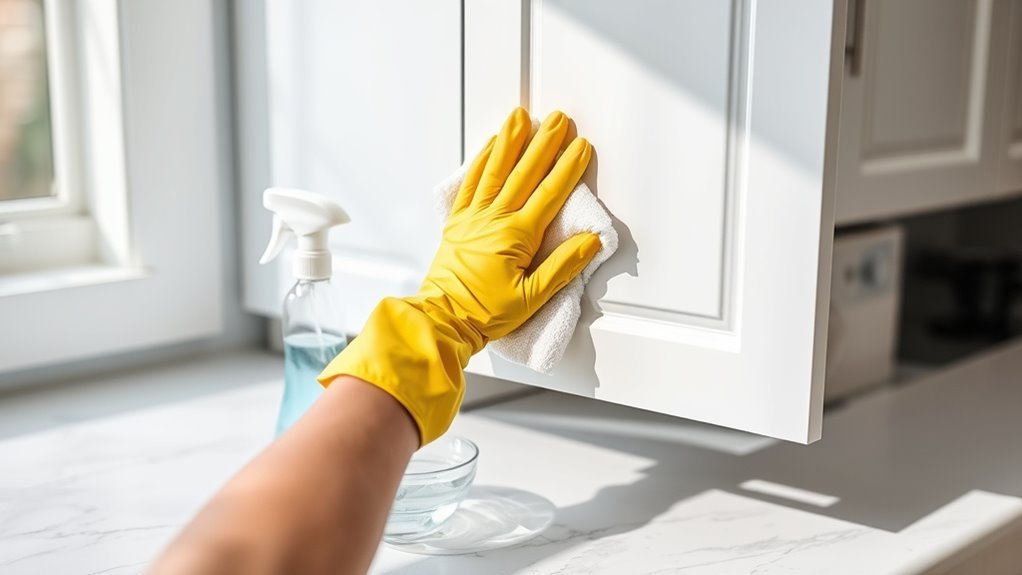
How to Clean Grease Off Kitchen Cabinets: A Step-by-Step Guide
Many homeowners know the struggle of keeping kitchen cabinets grease-free. It’s a common issue that can feel overwhelming, especially with daily cooking and sauce splatters. Don’t worry—you’re not alone in dealing with this messy problem.
To clean grease off your kitchen cabinets, first clear and dust the surfaces. Mix warm water with dish soap and wipe down cabinets using a soft cloth.
For stubborn spots, apply a baking soda paste, let it sit, then scrub gently. You can also use a vinegar, water, and dish soap spray for tough grease.
Always dry thoroughly to protect finishes. If you want tips on preventing buildup and handling tougher stains, there’s more to uncover ahead.
Key Takeaways
- Clear your cabinets and remove dust before cleaning so you can access everything easily and get better grease removal.
- Use warm water mixed with dish soap or a spray made of vinegar and dish soap for effective grease cutting.
- For tough grease spots, apply a baking soda paste, let it sit for 10 minutes, then gently scrub and rinse.
- Pick cleaning methods based on your cabinet material and test solutions on hidden areas first to avoid damage.
- Keep your cabinets clean by improving kitchen ventilation and wiping away grease regularly to stop buildup.
What Causes Grease Buildup on Kitchen Cabinets
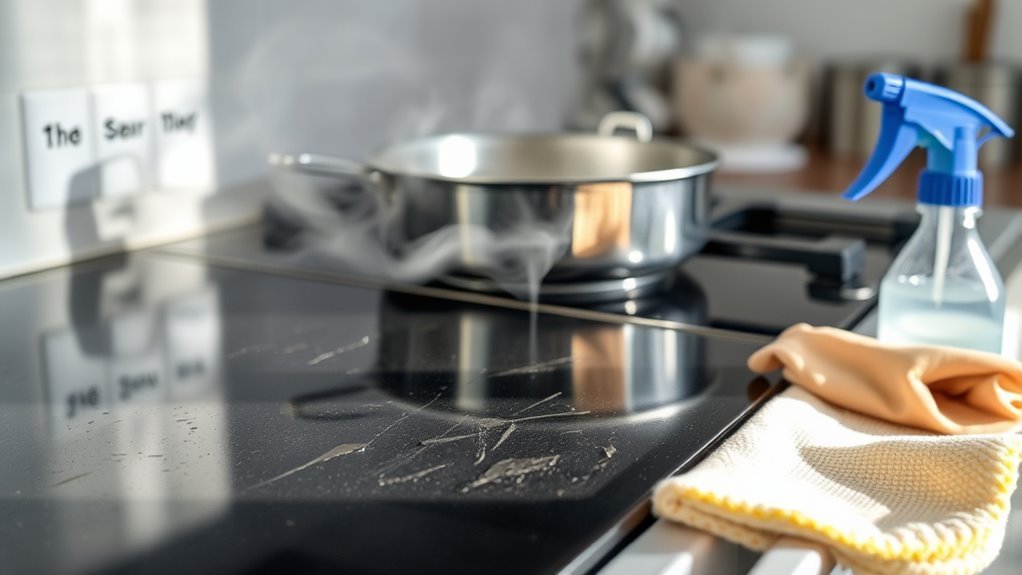
Grease buildup on kitchen cabinets mainly happens because of cooking. When you fry, sauté, or grill, tiny grease particles become airborne and settle on nearby surfaces, including your cabinets.
These grease sources include oil splatters and steam carrying fats, all of which contribute to that stubborn film over time.
Oil splatters and greasy steam combine to create that persistent, stubborn film on your kitchen cabinets.
Your kitchen habits matter too. If you often cook without using a vent or exhaust fan, grease spreads more easily.
Leaving splatters uncleaned lets the buildup grow thicker, making it harder to remove later.
Even boiling or simmering can release greasy steam, coating your cabinets slowly but surely.
Knowing where the grease comes from and how your habits impact buildup helps you stay mindful.
This way, you can take steps to reduce how much grease sticks around, keeping your cabinets cleaner longer and your kitchen feeling fresh.
How to Clean Grease Off Cabinets Step-by-Step
Cleaning buildup off your kitchen cabinets doesn’t have to be overwhelming. Start by mixing warm water with a few drops of dish soap in a bucket. Dip a soft cloth or sponge into the solution, wring it out, and gently wipe down your cabinets, focusing on greasy spots.
For tougher grease, create a paste with baking soda and water. Apply it to the greasy areas and let it sit for about 10 minutes. Then, scrub lightly to lift the grime. Rinse with a clean, damp cloth and dry thoroughly to prevent any damage.
Incorporate regular cabinet maintenance tips by wiping spills immediately and using gentle cleaners. This helps avoid wear and keeps your cabinets looking fresh. Maintaining this routine supports your kitchen organization by keeping everything clean and inviting.
Regular cleaning also prevents grease buildup from becoming a bigger problem later. It saves you time and effort in the long run. Follow these simple steps, and your cabinets will stay looking great and last longer without any hassle.
How to Prepare Kitchen Cabinets for Cleaning
Before you dive into cleaning, it’s a good idea to clear everything off your cabinets. That way, you’ll have full access to all surfaces and won’t have to move things around multiple times. Once everything’s cleared, gather up your cleaning supplies—think gentle cleaners, microfiber cloths, and maybe a soft brush for tricky spots. Being prepared like this makes the whole process way easier and helps you get better results.
Clear Cabinet Surfaces
Although it might seem simple, thoroughly clearing your cabinet surfaces is key to effective grease removal. Start by removing all items from the doors and shelves, including decorative objects or magnets. This makes it easier to access surfaces and avoids damaging your belongings during cleaning.
Maintaining good cabinet organization beforehand also helps make the process quicker and less stressful. Next, wipe down the surfaces with a dry cloth to remove loose dust and debris. This step prevents particles from smearing when you apply your cleaning solution later.
Gather Cleaning Supplies
Once your cabinet surfaces are clear and dust-free, you’ll want to gather the right cleaning supplies to tackle the grease effectively. Having the proper tools on hand ensures you can apply effective techniques without interruption. Prepare everything beforehand to make the process smoother and more efficient.
Here’s a quick list of essentials you’ll need:
- Microfiber cloths for gentle, streak-free wiping
- A soft-bristle brush to reach grooves and crevices
- A mild degreasing cleaner or homemade vinegar solution
- A bucket or spray bottle to mix and apply cleaning solutions
With these tools ready, you can confidently move forward knowing you have what’s necessary to remove grease without damaging your cabinets. Effective techniques paired with the right supplies really make all the difference.
DIY Grease-Cutting Cleaning Solution
When grease builds up on your kitchen cabinets, you can tackle it effectively by mixing a simple DIY grease-cutting cleaning solution using common household ingredients. Homemade solutions are budget-friendly and free from harsh chemicals, making them safe for your cabinets and family.
Start by combining equal parts white vinegar and warm water in a spray bottle. Vinegar’s natural acidity cuts through grease without damaging surfaces. Add a teaspoon of liquid dish soap, which contains natural degreasers, to boost the solution’s power. Shake the bottle gently to mix everything well.
Combine equal parts white vinegar and warm water, add dish soap, and shake gently to create a natural grease-cutting spray.
To use, spray the solution generously onto greasy cabinet surfaces and let it sit for a few minutes. Then, wipe down with a soft cloth or sponge, applying gentle pressure to remove stubborn grease. Rinse with a damp cloth afterward to prevent residue buildup.
This simple blend of natural ingredients offers an effective, eco-friendly way to keep your cabinets clean and grease-free.
What Household Items Remove Grease Best
If you want to remove grease effectively, you’ll find several common household items that work wonders. These items break down oily residues on your kitchen cabinets without harsh chemicals. For example, dish soap targets grease directly, while baking soda acts as a gentle abrasive to lift grime. Vinegar solution and lemon juice both cut through grease with natural acidity, leaving a fresh scent, especially when combined with essential oils. Cornstarch can absorb oily buildup, making it easier to wipe away. Rubbing alcohol and hydrogen peroxide also disinfect and remove stubborn grease spots, but use them carefully to avoid damage.
Here are four top household items to try:
- Dish soap mixed with warm water
- Baking soda paste
- Vinegar solution (equal parts vinegar and water)
- Lemon juice with a few drops of essential oils
Using these items, you’ll clean your cabinets effectively and naturally.
How to Clean Different Cabinet Materials Safely
Because each cabinet material reacts differently to cleaning agents, you’ll need to choose methods that protect their finish while removing grease effectively. Using safe cleaners tailored to your cabinet materials helps prevent damage and keeps them looking fresh.
Here’s a quick guide to help you pick the right cleaner and method:
| Cabinet Material | Safe Cleaner | Cleaning Method |
|---|---|---|
| Wood | Mild dish soap + water | Soft cloth, gentle wiping |
| Laminate | Vinegar + water | Sponge, avoid abrasive scrubbers |
| Painted | Baking soda paste | Soft cloth, spot test first |
Always test any cleaner on a small hidden area first. Avoid harsh chemicals on delicate surfaces to preserve your cabinets’ finish.
How to Tackle Stubborn or Old Grease Stains
Got some old or stubborn grease stains? No worries! When grease has been sitting there for a while, you’ll need a bit more muscle—think stronger degreasing solutions—to really break it down. Just remember to be gentle when you’re scrubbing so you don’t harm your cabinet surfaces. It’s all about finding that sweet spot between cleaning thoroughly and being careful. Let’s take a look at how you can handle those tough stains without causing any damage.
Effective Degreasing Solutions
Although tackling stubborn grease stains can feel intimidating, using the right degreasing solutions makes the job much easier. You want to choose products that effectively break down grease without harming your cabinet surfaces.
Both commercial degreasing products and natural solutions have their place depending on how severe the stain is and your preference for eco-friendly options. Here are some effective options to try:
- Commercial degreasers with citrus-based formulas for strong grease removal
- A mixture of warm water, dish soap, and vinegar as a natural solution
- Baking soda paste applied directly to tough spots for gentle lifting
- Rubbing alcohol for quick spot cleaning of greasy fingerprints
Selecting the right solution helps you tackle grease efficiently while keeping your cabinets safe and looking fresh.
Gentle Scrubbing Techniques
Two key tools you’ll need for gentle scrubbing are a soft-bristled brush and a microfiber cloth. When dealing with stubborn or old grease stains, use gentle abrasives like baking soda mixed with water to form a paste.
Apply the paste carefully with the soft-bristled brush, scrubbing in circular motions to lift grease without damaging the cabinet surface. Follow up by wiping with soft cloths dampened with warm water to remove residue.
| Tool | Purpose | Tip |
|---|---|---|
| Soft-bristled brush | Scrub gentle abrasives | Use circular motions |
| Microfiber cloth | Wipe off grease and paste | Damp with warm water |
| Baking soda paste | Acts as gentle abrasive | Apply sparingly, avoid excess |
This method tackles tough stains while preserving your cabinets’ finish.
When to Get Professional Help for Grease Buildup
How do you know if grease buildup on your kitchen cabinets has gone beyond what you can handle? Sometimes, even after scrubbing and trying homemade solutions, the grease stays stubborn or starts damaging the cabinet’s finish. That’s when it’s time to consider professional cleaning to get rid of the grease without harming your cabinets.
When grease won’t budge or damages your cabinet’s finish, it’s time to call in professional cleaning help.
You should seek professional help if:
- Grease stains are deeply embedded and won’t lift with regular cleaning
- Your cabinets show signs of discoloration or surface damage
- DIY methods cause paint or varnish to peel or fade
- You want to restore your cabinets with minimal risk and maximum efficiency
Professional cleaners have specialized tools and safe solvents designed for tough grease removal. They can make your cabinets look fresh again without causing unnecessary damage. Don’t hesitate to call in experts if grease buildup keeps bothering you or if you want to avoid costly repairs in the future.
How to Prevent Grease Buildup on Kitchen Cabinets
If you want to keep your kitchen cabinets looking clean and fresh, preventing grease buildup is key. Start by improving ventilation when you cook—use an exhaust fan or open windows to reduce airborne grease particles. Wipe down cabinets regularly with a mild detergent or vinegar solution to stop grease from settling.
Avoid letting spills and splatters sit; clean them promptly to minimize buildup. Incorporate grease prevention into your kitchen routine by using protective barriers like cabinet liners near the stove. Also, consider using splash guards when frying or cooking with oils to catch grease before it reaches your cabinets.
Tips to Keep Your Kitchen Cabinets Grease-Free Longer
Want to keep your kitchen cabinets grease-free for longer? One of the best things you can do is stick to a regular cleaning routine. Just wiping down the surfaces often helps prevent that stubborn grease from piling up before it even has a chance to stick around.
And here’s a little trick—applying a protective coating or sealant can really make a difference. It creates a barrier that stops grease from penetrating the surface, making your future cleanups much easier and quicker. So, a little effort now can save you a lot of scrubbing later!
Regular Cleaning Routine
Regularly wiping down your kitchen cabinets prevents grease buildup and keeps them looking fresh longer. Establishing a consistent cleaning schedule is key to maintaining their appearance and avoiding tough grease stains.
Here are some tips to help you stay on top of it: Wipe your cabinets weekly with a mild detergent and warm water. Use a microfiber cloth to avoid scratching the surfaces.
Be sure to clean up any splatters or spills right away while cooking. Deep clean your cabinets once a month to tackle stubborn grease and keep everything looking its best.
Use Protective Coatings
Although grease can quickly build up on kitchen cabinets, applying protective coatings can help reduce that buildup and make cleaning easier. You might want to try using protective sprays made specifically for kitchen surfaces; they create a barrier that keeps grease and grime at bay.
Before you apply the spray, make sure your cabinet surfaces are clean and dry. This helps the coating stick better and last longer. These sprays work well on wood, laminate, and painted cabinets, keeping their look intact while making maintenance simpler.
Reapply the protective spray every few months or after deep cleaning to keep it effective. Adding this extra layer of defense means you’ll spend less time scrubbing and more time enjoying your kitchen. It’s a simple step that helps keep your cabinets looking fresh and grease-free longer, saving you effort and helping your finishes last.
Frequently Asked Questions
Can Grease Buildup Affect the Air Quality in My Kitchen?
Yes, grease buildup can impact the air quality in your kitchen. When cooking oils and food residues are heated, they release air pollutants that can contaminate indoor air.
These pollutants can irritate your respiratory system and cause unpleasant odors. Regularly cleaning grease off surfaces helps reduce these pollutants and keeps the air fresher and healthier.
Keeping grease in check is essential for preventing poor air quality and creating a safer cooking environment.
Are There Specific Brands of Cleaners Recommended for Grease Removal?
You don’t have to rely solely on commercial brands for grease removal. Many people recommend natural alternatives like vinegar, baking soda, and lemon juice, which are effective and safe for your cabinets.
If you prefer store-bought options, brands like Krud Kutter and Goo Gone work well. They’re popular choices for tackling grease without too much hassle.
For a budget-friendly approach, try DIY solutions mixing dish soap with warm water. These choices keep your kitchen clean without harsh chemicals.
How Often Should I Clean My Kitchen Cabinets to Avoid Grease Buildup?
Think of kitchen cabinets like a diary; they reveal what’s been cooking!
Cleaning them every two weeks helps prevent grease from sneaking in.
Make it a habit to wipe spills immediately and use a gentle degreaser regularly.
This way, you stop grease buildup before it starts, keeping your kitchen shiny.
Plus, you’ll save yourself from tough scrubbing sessions later on.
Can Grease Buildup Cause Permanent Damage to Cabinet Finishes?
Yes, grease buildup can cause permanent damage to your cabinet finishes by breaking down the protective coatings and causing discoloration or warping.
To avoid this, wipe spills immediately and use gentle cleaners regularly. Incorporating cabinet maintenance strategies like routine cleaning and applying polish helps protect surfaces.
Staying consistent with these habits will help preserve your cabinets’ appearance and extend their lifespan.
Is It Safe to Use Commercial Degreasers Around Children and Pets?
It’s not always safe to use commercial degreasers around children and pets because many contain harsh chemicals. You should take safety precautions like ventilating the area and keeping kids and pets away during and after cleaning.
Also, store these products securely so little hands or paws can’t get to them. Instead, try natural alternatives like vinegar, baking soda, or lemon juice—they’re effective and much safer.
Always read labels carefully and test in a small area before full use to protect your family. This way, you can clean safely without risking their health.
Conclusion
Cleaning grease off your kitchen cabinets is like wiping fog from a window—you reveal the true shine beneath. Just like a friend once told me, “A little daily care keeps the grime away.”
By following these steps and using simple household items, you’ll restore your cabinets’ sparkle and keep them looking fresh longer.
Remember, consistent effort is your best defense against grease buildup, turning your kitchen into a bright, welcoming space every day.