How Much for Kitchen Remodel? The Complete Answer
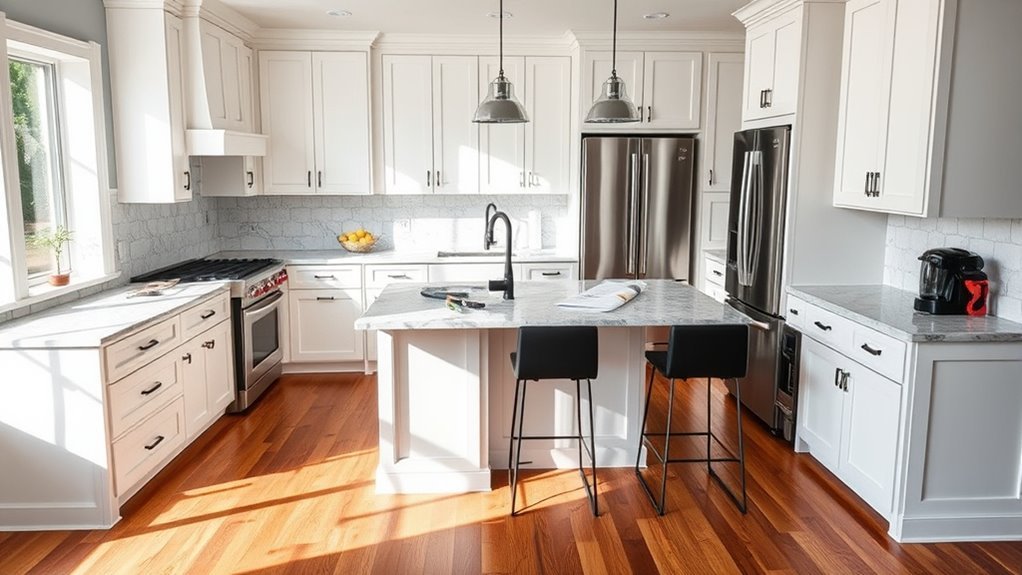
Feeling overwhelmed by the thought of remodeling your kitchen? You’re not alone. Many people struggle to figure out how much it will cost and how to stay within budget. Knowing what to expect can make the process much less stressful.
You can expect to spend between $20,000 and $50,000 on a kitchen remodel, depending on your kitchen’s size, layout, and choice of materials. Labor often accounts for 20% to 35% of the cost, and eco-friendly upgrades can add value but may increase expenses.
Setting a clear budget with must-haves and nice-to-haves helps manage costs. Strategic savings on cabinets and countertops can keep you on track.
Investigate further to uncover tips on budgeting, materials, and when to hire pros.
Key Takeaways
- Average kitchen remodel costs typically range from $20,000 to $50,000. The final amount depends on the scope, materials, and labor involved.
- Labor usually makes up about 20-35% of the total cost. The percentage can vary based on project length and whether specialty trades are needed.
- The size of your kitchen, its layout, and the materials you choose can significantly affect your overall expenses. These factors are key for planning your budget.
- To set a realistic budget, start by listing your priorities. Get multiple quotes and add a contingency fund of around 10-15% for unexpected costs.
- To save money, consider refinishing cabinets instead of replacing them. Choosing mid-range materials and focusing on key functional upgrades can also help keep costs down.
What’s the Average Kitchen Remodel Cost in 2024?
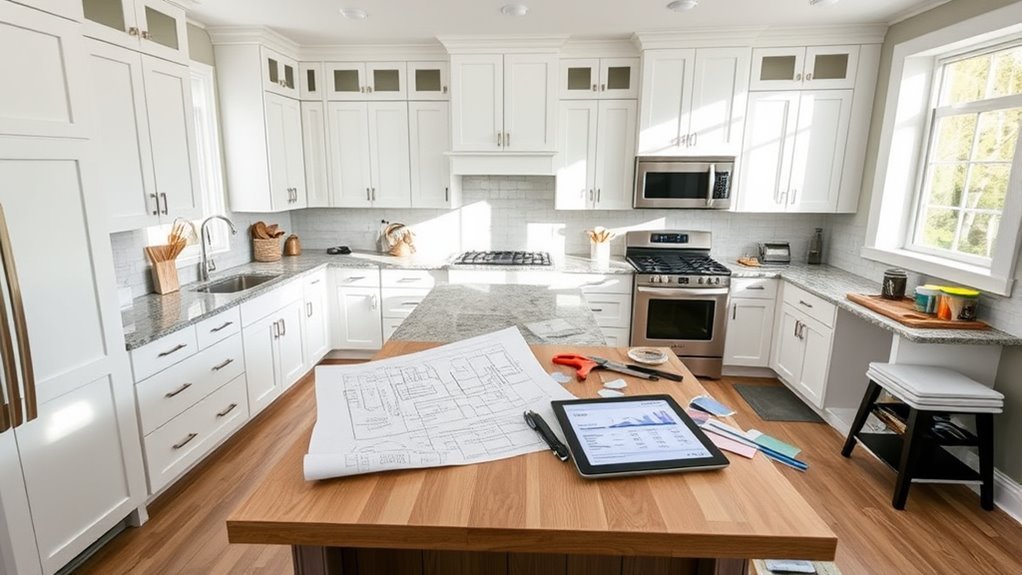
Wondering how much a kitchen remodel will cost in 2024? On average, expect to spend between $20,000 and $50,000, depending on the scope and materials.
New design trends like open shelving, mixed metals, and eco-friendly finishes can influence your choices and overall costs. Choosing sustainable materials or smart appliances might bump up expenses but can add long-term value.
To stay on budget, focus on strategies that match these trends without overspending. Prioritize must-haves over nice-to-haves and consider mid-range options that still look stylish.
Remember, labor and installation often make up a big part of the total cost, so get multiple quotes before making a decision. Knowing the average helps you prepare so there are no surprises.
Smart budgeting ensures you get the kitchen you want without breaking the bank.
How to Set a Realistic Kitchen Remodel Budget
Knowing the average kitchen remodel cost gives you a helpful starting point, but setting a realistic budget means customizing those numbers for your specific needs and priorities.
Start by listing must-haves versus nice-to-haves so you can allocate funds wisely. Use budgeting strategies like breaking down costs by categories—cabinets, appliances, labor—to get a clear financial picture.
List must-haves versus nice-to-haves and break down costs by categories for smart budgeting.
Don’t forget to include a contingency fund of about 10-15% for unexpected expenses. To save money, consider options like choosing mid-range materials, refinishing instead of replacing cabinets, or shopping during sales.
Prioritize upgrades that add value and improve functionality. It’s also smart to get multiple quotes from contractors to ensure you’re getting competitive prices.
How Kitchen Size and Layout Affect Remodel Costs
The size and layout of your kitchen really influence your remodel costs. Bigger kitchens need more materials and labor, which can add up quickly.
Your kitchen’s layout efficiency also matters. A well-planned layout reduces the need for plumbing and electrical rerouting, saving you money.
If your kitchen has an open layout or an irregular shape, expect higher costs because of structural changes needed.
Here’s a quick look at how size and layout impact your budget:
| Kitchen Size | Layout Efficiency | Cost Impact |
|---|---|---|
| Small (<100 sq ft) | High (compact) | Lower costs, simple |
| Medium (100-200 sq ft) | Moderate (standard) | Moderate costs |
| Large (>200 sq ft) | Low (complex) | Higher costs, more work |
Knowing your kitchen’s size and layout helps you plan a remodel that fits your budget without surprises.
Which Materials Impact Kitchen Remodel Costs Most
Your choice of cabinetry material can really have a big impact on your kitchen remodel costs, since some options tend to be much more expensive than others. The same goes for your countertops—they come in a variety of materials that can significantly influence your budget. Let’s take a closer look at how these decisions can shape the overall cost of your kitchen makeover.
Cabinetry Material Choices
Since cabinetry often takes up a big part of your kitchen remodel budget, choosing the right material can really impact costs. Your choice affects not just durability but also cabinet styles and finishes.
Wood types like maple give a classic look but tend to be more expensive. MDF is budget-friendly and provides smooth finishes. Think about how each material matches your style and how long you want it to last.
| Material | Cost Range | Popular Cabinet Finishes |
|---|---|---|
| Solid Wood | $$$ | Stained, Painted |
| MDF | $ | Painted, Laminated |
| Plywood | $$ | Veneer, Painted |
Picking the right cabinetry material helps you stay within your budget while getting the look and feel you want for your kitchen.
Countertop Surface Options
When you choose countertop materials, you directly impact both the style and cost of your kitchen remodel. Granite vs quartz is a common debate: granite offers natural beauty and heat resistance but can be pricey and requires maintenance. Quartz, on the other hand, is durable, low-maintenance, and often costs less, making it a popular choice.
If you’re eco-conscious, consider eco-friendly options like recycled glass or bamboo countertops. These reduce environmental impact without sacrificing style. They can sometimes cost more upfront but add value over time.
Ultimately, your choice depends on your budget, lifestyle, and aesthetic preferences. By understanding how different materials influence costs, you can make smarter decisions that balance beauty, durability, and sustainability in your kitchen remodel.
How Labor and Contractor Fees Affect Your Kitchen Remodel Cost
When you’re remodeling your kitchen, labor costs usually take up a big chunk of your budget. This includes all those hands-on jobs like carpentry, plumbing, and electrical work. It’s helpful to know how contractors typically charge—some might give you a flat fee, while others bill hourly or take a percentage of the total project cost.
Getting a clear picture of how they charge can really help you plan ahead and keep your budget in check. Plus, understanding these details means you’re less likely to run into surprises when the final bill comes in.
Labor Cost Breakdown
Understanding the breakdown of labor costs is key to managing your kitchen remodel budget effectively.
Labor costs can vary depending on the types of workers involved and how long the project takes.
To stay in control of expenses, keep these important factors in mind:
- Labor Types: Different specialists like electricians, plumbers, and carpenters charge varying rates based on their expertise and demand.
- Project Timeline: The longer your remodel takes, the higher the labor costs will be, since workers bill by the hour or day.
- Scope of Work: More complex tasks need more time and skill, which can increase labor charges.
Contractor Fee Structures
Contractor fee structures play an essential role in shaping your kitchen remodel budget. Understanding common payment options like fixed-price, cost-plus, or time-and-materials helps you see how fees impact your overall costs.
Fixed-price contracts offer predictability, so you know exactly what you’ll pay. Cost-plus structures might fluctuate because material prices can change. Time-and-materials can lead to higher costs if the project takes longer than expected.
When talking to your contractor about fees, ask for detailed estimates and compare bids. This helps ensure transparency and avoid surprises. Also, clarify the payment schedule upfront so you’re clear on when payments are due.
Impact on Budget
Labor and contractor fees often make up a big part of your kitchen remodel budget, sometimes 20% to 35% of the total cost. Knowing how these fees impact your budget helps you plan better, especially when choosing features for your kitchen.
More complex designs and custom features need skilled labor, which can increase costs. If you’re in a hurry or need work done quickly, labor fees might go up due to overtime or extra crews.
Experienced contractors might charge more upfront but can help you avoid costly mistakes, saving you money in the long run.
Kitchen Remodel Upgrades Worth the Extra Cost
Why should you consider spending more on certain kitchen remodel upgrades? Because some investments boost both your kitchen’s functionality and long-term value.
For example, choosing luxury appliances not only makes cooking more enjoyable with advanced features but also boosts your home’s appeal. These appliances tend to be more durable and perform better, making the extra cost worth it.
Energy efficiency is another upgrade that pays off over time. Installing energy-efficient lighting, refrigerators, and dishwashers helps cut your utility bills and reduces your environmental impact. That means saving money each month while helping the planet.
Upgrades like high-quality countertops and smart storage solutions also make a big difference. They enhance daily convenience and look great. Although they might seem more expensive upfront, they make your kitchen more enjoyable and increase your home’s market value.
Focusing on these smart upgrades ensures your remodel isn’t just stylish but also a smart financial move.
How to Estimate Costs for Cabinets, Countertops, and Appliances
When you’re trying to figure out how much your remodel will cost, it’s important to look at a few key things. For cabinets, think about what material you want, the size of your space, and the style you’re going for. All these factors can really change the price.
Then, when it comes to countertops, the material you pick makes a big difference—some are more affordable, while others can be quite pricey. So, it’s good to shop around and see what fits your budget.
And don’t forget about appliances! They come in all kinds of brands and features, which means their prices can vary a lot. Knowing what you need and what you’re willing to spend helps you set a realistic budget for your whole project.
Cabinet Pricing Factors
Understanding the key factors that influence cabinet pricing can help you create a realistic budget for your kitchen remodel. When estimating costs, consider these three main elements:
- Cabinet styles: You can choose between stock, semi-custom, or custom cabinets. Stock cabinets are the most affordable, while custom designs offer more flexibility but come at a higher price.
- Cabinet finishes: The type of finish affects both cost and appearance. Painted or stained finishes vary widely, with high-gloss or specialty finishes costing more.
- Materials and construction: Solid wood and plywood tend to increase costs compared to MDF or particleboard. Features like soft-close hinges and dovetail joints also add to the price.
Countertop and Appliance Costs
Countertops and appliances play a big role in your kitchen remodel’s overall cost and functionality. When choosing countertop materials, options like granite, quartz, or laminate come into play—each varies a lot in price and durability.
Quartz tends to be more expensive but requires less maintenance, while laminate is budget-friendly but less durable. Your choice affects both how your kitchen looks and its long-term value.
Similarly, appliance brands can really impact costs. High-end brands like Viking or Sub-Zero come with premium prices, while mid-range brands like Whirlpool or GE offer reliable quality at a lower cost.
Finding the right balance of quality and budget is key. To get accurate estimates, research specific materials and brands, and include installation fees in your planning.
This way, you can avoid surprises and ensure your remodel fits your needs and budget.
Smart Ways to Save Money on Your Kitchen Remodel
Although kitchen remodels can quickly become expensive, you don’t have to break the bank to achieve a fresh, functional space. By focusing on budget-friendly upgrades and cost-effective materials, you can keep costs down without sacrificing style.
Kitchen remodels don’t have to be costly—smart choices keep your space stylish and budget-friendly.
Here are some smart ways to save money on your kitchen remodel:
- Prioritize Key Areas: Focus your budget on parts that matter most for functionality and look, like cabinets and countertops. Avoid replacing everything unless it’s absolutely necessary.
- Choose Cost-Effective Materials: Go for durable, affordable options like laminate countertops or engineered wood cabinets. They mimic high-end finishes but cost much less.
- Refinish Instead of Replace: Instead of tearing out cabinets or flooring, consider refinishing or repainting them. It’s a great way to give your kitchen a fresh look at a fraction of the cost.
When to DIY and When to Hire Kitchen Remodel Professionals
Deciding whether to do your kitchen remodel yourself or hire professionals depends on your skills, budget, and how complex the project is. If you have basic carpentry skills and some free time, DIY can save money and give you more control.
But for plumbing, electrical work, or major structural changes, it’s best to get professional advice. This helps you avoid costly mistakes that could impact safety and quality.
Here’s a quick guide to help you decide:
| Task Type | DIY Tips | When to Hire Professionals |
|---|---|---|
| Simple Updates | Paint cabinets, install shelves | Complex tiling or custom cabinetry |
| Electrical/Plumbing | Avoid unless certified | Installing new outlets or plumbing fixtures |
| Structural Changes | Stick to minor adjustments | Moving walls or making major layout changes |
Use DIY tips for small, manageable tasks. For anything beyond your skill level, rely on professionals to ensure safety and a good finish.
How Permits and Inspections Add to Kitchen Remodel Costs
Because kitchen remodels often involve electrical, plumbing, or structural work, you’ll likely need permits and inspections to meet local building codes. These requirements add to your overall costs but ensure safety and legality.
Knowing the different permit types and inspection fees can help you plan your budget better.
Understanding permit types and inspection fees is essential for effective budgeting in your kitchen remodel.
Here’s how permits and inspections affect your costs:
- Permit Types: Depending on your project, you might need electrical, plumbing, or structural permits. Each has its own fee, usually between $50 and several hundred dollars.
- Inspection Fees: After getting permits, inspections check that the work meets codes. You may need to pay separate fees for multiple inspections at different stages.
- Delays and Rework: Not obtaining permits or passing inspections can cause delays or require corrections, which can add to your expenses.
Frequently Asked Questions
How Long Does a Typical Kitchen Remodel Take From Start to Finish?
A typical kitchen remodel takes about 6 to 12 weeks from start to finish, but things like project scope, material availability, and contractor schedules can affect that.
You’ll go through different phases, including planning, demolition, installation, and finishing. Each of these has its own timeline, so staying organized helps keep everything on track.
If you’re prepared and communicate well with your team, you can avoid unnecessary delays and get your dream kitchen sooner.
What Are the Latest Kitchen Design Trends in 2024?
You’ll notice that the latest kitchen design trends in 2024 focus on modern materials like quartz and recycled glass for durability and style.
Vibrant colors are making a big comeback, so don’t hesitate to add bold cabinetry or backsplash hues to brighten your space.
Mixing these elements creates a fresh, personalized look that really stands out.
You’ll want to blend functionality with eye-catching details to keep your kitchen both practical and trendy.
How to Choose the Right Kitchen Lighting for Your Remodel?
In terms of choosing kitchen lighting, don’t put all your eggs in one basket. You’ll want a mix of ambient lighting to set the mood and task lighting to brighten work areas like countertops and sinks.
Think about where you need focused light for cooking and where softer, diffused light creates a warm atmosphere. Combining these guarantees your kitchen is both functional and inviting, making it a joy to cook and gather.
What Eco-Friendly Options Are Available for Kitchen Remodeling?
You can choose eco-friendly options like sustainable materials such as bamboo cabinets or recycled glass countertops to minimize environmental impact.
Opt for energy-efficient appliances and LED lighting to reduce electricity use.
Consider low-VOC paints and finishes to improve indoor air quality.
Using reclaimed wood or sustainably sourced flooring also helps.
These choices not only benefit the planet but can save you money on energy bills while creating a healthier kitchen space.
How to Handle Unexpected Issues During a Kitchen Remodel?
When unexpected issues pop up during your kitchen remodel, stay flexible with budget adjustments so you can cover surprises without stress.
Keep open, honest communication with your contractor. This way, you can quickly address problems and find solutions together.
Regularly check on the progress and don’t hesitate to ask questions. This helps you catch issues early and avoid surprises.
Being proactive helps you manage delays or extra costs, making sure your remodel stays on track.
Even if there are hiccups, staying flexible and informed keeps everything moving smoothly and your expectations met.
Conclusion
When planning your kitchen remodel, remember the average cost in 2024 ranges between $25,000 and $50,000, but it can vary widely based on size and materials.
Setting a clear budget helps you avoid surprises, especially since labor can account for up to 30% of total costs.
By knowing when to DIY and choosing your materials wisely, you can create a stunning kitchen without breaking the bank.
Smart planning truly makes all the difference, especially when considering the total cost of a kitchen remodel.