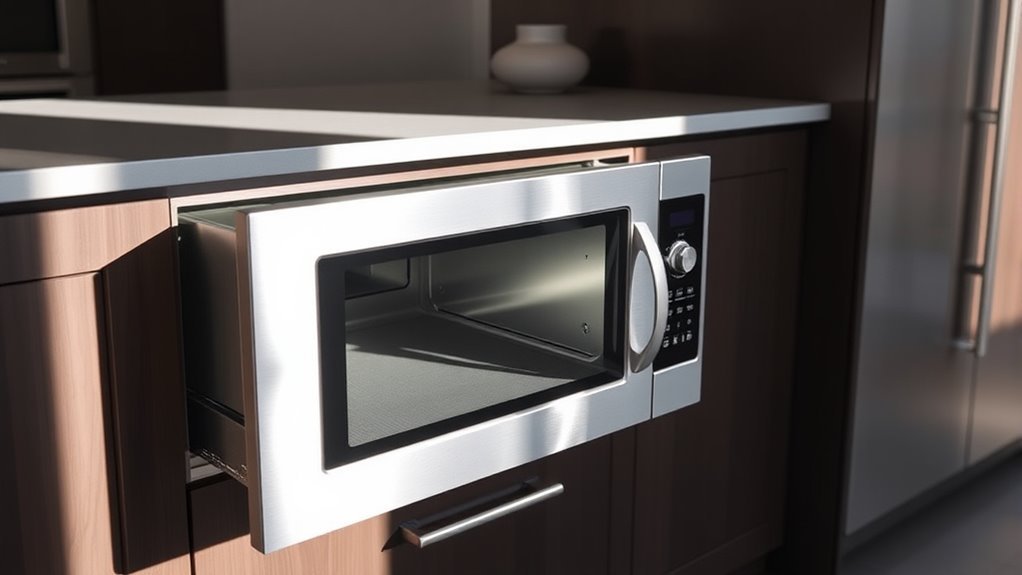
Pull Out Microwave Drawer Guide: What to Know Before You Buy
Are you tired of cluttered countertops and awkward microwave placements? Many people struggle with finding the perfect spot for their microwave that’s both convenient and stylish.
If you’re looking to maximize space and improve kitchen flow, a pull-out microwave drawer might be just what you need.
Pull Out Microwave Drawer Guide: What to Know Before You Buy
Choosing a pull-out microwave drawer saves counter space and offers easy, ergonomic access by installing at waist level.
They fit seamlessly into cabinetry, with sizes from 24 to 30 inches wide and capacities suited to your cooking needs.
Installation requires precise measurements and may cost more than traditional units but elevates kitchen style and safety.
Features like child locks and sensor cooking improve use and protection.
Keep exploring to uncover how to pick the perfect model and placement for your kitchen.
Key Takeaways
- Microwave drawers save counter space and provide ergonomic, waist-level access for safer, easier cooking and multitasking.
- Choose sizes between 24 to 30 inches wide, with capacities from 1.2 to 2.0 cubic feet, depending on your meal sizes and dish dimensions.
- Proper installation requires accurate cabinet measurements, correct electrical outlet placement, and enough space for airflow and drawer extension.
- Safety features like child locks, heat protection, and automatic shut-off help ensure safe operation during use.
- Position your microwave drawer near prep zones or within island cabinetry to optimize your kitchen workflow and keep the design sleek and integrated.
Why Choose a Microwave Drawer Over a Traditional Microwave?
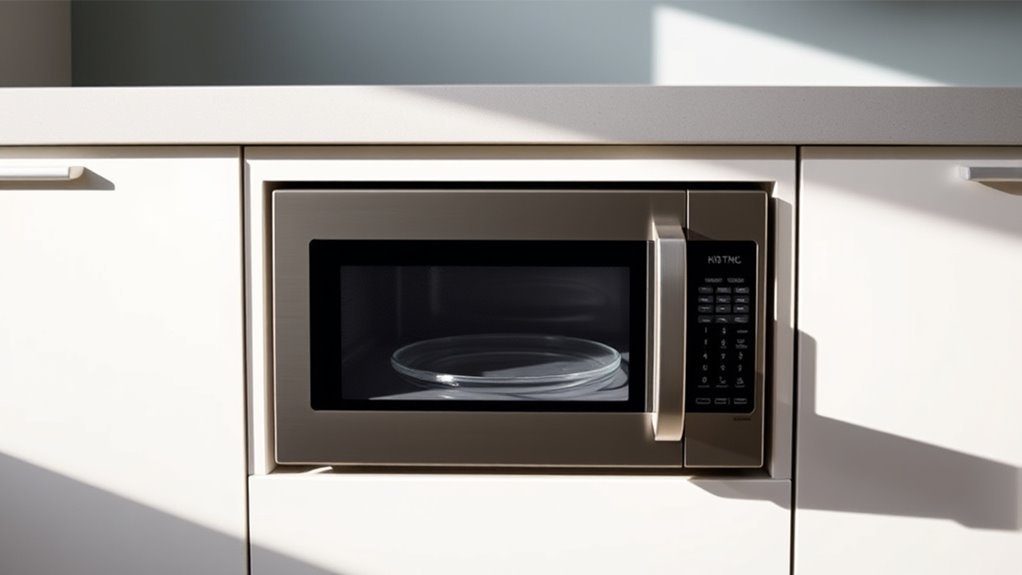
Although traditional microwaves remain popular, a microwave drawer offers unique advantages that can improve your kitchen experience. One key benefit is its seamless integration into your cabinetry, saving counter space and creating a sleek, modern look.
You won’t have to worry about reaching over hot surfaces since the drawer pulls out at a comfortable height. This enhances safety and makes everyday use more convenient.
From a user perspective, microwave drawers provide easy access, especially when you’re multitasking. You can slide the drawer open with a simple touch, making it more ergonomic and reducing back strain.
Plus, their intuitive controls and even heating ensure your food cooks evenly every time. Choosing a microwave drawer means better functionality combined with stylish design, transforming how you interact with this everyday appliance.
Best Kitchen Layouts for Microwave Drawers
Where you place your microwave drawer can really impact your kitchen’s flow and efficiency. For the best ergonomics, try installing it at waist level. This way, you won’t have to bend or reach as much, making it easier to handle hot dishes safely.
Another good option is to integrate the microwave drawer into island cabinetry. It keeps your counters clear and helps create a smooth traffic pattern. Plus, it looks sleek and modern.
If you prefer a more seamless look, positioning the drawer below the countertop is a great choice. It creates a clean, unified appearance that blends well with contemporary kitchen styles.
In a galley or U-shaped kitchen, placing the microwave drawer near prep zones makes sense. It reduces unnecessary movement, which boosts your cooking efficiency and keeps things convenient.
Remember, balancing good ergonomics with your kitchen’s design is key. The right layout will make sure your microwave drawer functions well and complements your overall style.
Choose a placement that fits your space and daily routine so you get the most out of this handy appliance.
Microwave Drawer Sizes and Capacity Explained
Choosing the right microwave drawer size is key to fitting your cooking needs and your kitchen space. Sizes usually range from 24 to 30 inches wide, so think about what fits best.
Capacity is also important. Most models offer between 1.2 to 2.0 cubic feet, which affects what dishes you can comfortably reheat or cook.
If you often make large casseroles or big family meals, a larger capacity is essential. Smaller households might prefer a compact size to save space.
Remember, internal dimensions matter more than the external size. Be sure to check both before making your decision.
And don’t forget to consider how much counter or cabinet space you have available. This helps ensure your microwave drawer integrates smoothly into your kitchen.
Microwave Drawer Installation Basics
Before you start installing your microwave drawer, it’s a good idea to measure the space carefully. You want to make sure it will fit perfectly without any surprises. Also, take a moment to check where your electrical outlet is located so you can plan for easy access once it’s installed.
And don’t forget to think about how the drawer will look with your cabinets. You want everything to blend nicely for a smooth, seamless look in your kitchen.
Measuring Space Requirements
Although microwave drawers save counter space, you’ll need to carefully measure the installation area to confirm a proper fit. Start by noting the drawer dimensions, including width, height, and depth, to make sure they match your space. Pay special attention to the installation height, as it affects both ergonomics and ventilation.
When measuring, keep these key points in mind:
- Cabinet opening width and height
- Depth of the cabinet to fit the drawer comfortably
- Clearance above and below the drawer for airflow
- A level surface to support the weight of the drawer
- Space to fully extend the drawer without obstruction
Getting accurate measurements helps prevent installation issues and makes sure you choose a microwave drawer that fits seamlessly into your kitchen layout.
Electrical Outlet Placement
When installing a microwave drawer, you’ll need to make sure the electrical outlet is positioned properly for safe and easy power access. The outlet should be behind or just beside the drawer cavity to keep cords hidden and prevent strain.
Check the microwave’s electrical requirements before installation because most units need a dedicated 120-volt outlet with a grounded three-prong plug. Avoid using extension cords or adapters, as they can be safety hazards.
Make sure the outlet is easy to access for maintenance but won’t interfere with the drawer’s operation. Planning the outlet location early helps you meet electrical codes and ensures your microwave drawer works safely and efficiently without last-minute adjustments.
Cabinet Integration Tips
How can you guarantee your microwave drawer fits seamlessly into your kitchen cabinetry? Focus on key cabinet integration tips to keep your design looking great and ensure everything works properly.
First, evaluate your cabinet styles and think about custom cabinetry for a perfect fit. Pay attention to the installation height and cabinetry depth to match both ergonomic needs and appliance size.
Material compatibility and matching finishes are really important for a cohesive look. Make sure your drawer complements the existing surfaces and finishes in your kitchen.
Don’t forget about ventilation requirements. Proper airflow is essential to prevent overheating and keep your microwave functioning efficiently.
Keep these points in mind: choose cabinet styles that blend with your overall kitchen look, ensure the installation height suits how often you use the microwave, match materials and finishes carefully, confirm the cabinetry depth fits snugly, and plan ventilation openings following the manufacturer’s guidelines.
Microwave Drawer Controls: Touch Panels and Sensors
Microwave drawer controls combine sleek touch panels with advanced sensors to make your cooking experience effortless. Thanks to sensor technology, these controls respond quickly to your touch, offering impressive touch sensitivity that helps you select settings without frustration.
The user interface is designed with ergonomic principles, ensuring that buttons and icons are intuitively placed for easy access. You’ll find various control options, from simple presets to customizable programming features that let you tailor cooking times and power levels to your needs.
Responsive feedback, like subtle sounds or visual cues, confirms your selections so you always know the microwave drawer is working. Many models also include child locks integrated into the touch panel, providing extra peace of mind without sacrificing convenience.
Microwave Drawer Safety Features for Families
Because safety is a top priority in homes with children, microwave drawers come with features designed to protect your family. These user-friendly features help prevent accidents while keeping cooking safe.
Many models include child locks to keep curious hands away from hot surfaces and controls. Emergency shut-off mechanisms activate instantly if something goes wrong, giving you peace of mind. Heat protection systems help reduce burns by keeping exterior surfaces cool to the touch.
Here are some key safety features to look for:
- Child locks that disable the drawer’s operation
- Emergency shut-off to quickly stop cooking
- Heat protection to keep surfaces cool
- User-friendly features for easy, safe operation
- Automatic pause or stop if the drawer opens mid-cycle
These elements work together to create a safer kitchen environment. They let you use your microwave drawer confidently around your family.
Pros and Cons of Microwave Drawers vs Other Types
When you’re trying to decide between microwave drawers and other types, it’s good to think about how much space they take up and how easy they are to get to. Microwave drawers tend to be more space-efficient and can blend seamlessly into your cabinetry, making your kitchen look sleeker. Other types, like countertop or over-the-range microwaves, might be a bit bulkier or more obvious, but they’re usually easier to install.
Speaking of installation, microwave drawers can be a bit more complicated and often come with a higher price tag. If you’re comfortable with some home improvement projects, it might be worth it for the sleek look and convenience. On the other hand, traditional options are generally simpler and cheaper to set up. So, it really comes down to what you value most—whether it’s saving space, ease of installation, or just the overall look of your kitchen.
Space Efficiency Comparison
Although countertop and over-the-range models remain popular, microwave drawers offer a unique space-saving advantage you might not have considered. Their design aligns perfectly with smart space optimization strategies, making your kitchen feel more open and organized.
Unlike bulky countertop units, microwave drawers tuck neatly into cabinetry, freeing up valuable surface area. Here’s what you’ll appreciate about their compact design benefits:
- Utilizes under-counter space effectively
- Keeps countertops clear for cooking prep
- Integrates seamlessly with kitchen cabinetry
- Avoids overhead clutter in tight kitchens
- Provides a streamlined, modern look
Accessibility and Convenience
If you prioritize ease of use, microwave drawers offer clear accessibility advantages over traditional countertop or over-the-range models. Their ergonomic design allows you to slide the drawer out at waist level, so you don’t have to bend or reach awkwardly.
This makes the overall user experience better, especially if you have limited mobility or want to avoid spills. Unlike over-the-range microwaves, you can easily check and stir your food without lifting heavy dishes.
Some people might find the sliding mechanism less intuitive at first compared to a simple door hinge. Microwave drawers also don’t provide the same visual cues as countertop models, which might affect quick access.
Still, if convenience and ergonomic design matter most, microwave drawers stand out for accessibility.
Installation and Cost Differences
Because microwave drawers need built-in cabinetry, their installation is usually more complicated and expensive than countertop or over-the-range models. You’ll need precise measurements and professional carpentry to make sure the drawer fits perfectly.
These installation challenges can affect your overall costs. You might have to make custom cabinetry adjustments, move electrical outlets behind the drawer, or modify countertops and cabinets.
Labor costs tend to be higher for this type of installation, and this can increase your total kitchen renovation expenses.
While microwave drawers look sleek and are easy to access, they do come with a bigger price tag and often require expert help.
Before you decide, compare these challenges and costs with other microwave options to see what fits your kitchen and budget best.
Choosing the Right Microwave Drawer for Your Cooking Needs
How do you find a microwave drawer that fits your cooking style and kitchen space? Start by thinking about what you cook often and how your kitchen looks. If you usually heat big dishes, go for a drawer with a roomy interior. For sleek, minimalist kitchens, stainless steel or built-in panels are great choices.
Also, consider features like sensor cooking or multiple power levels that match your daily routines.
Here’s a quick guide to help you decide:
| Feature | Ideal For |
|---|---|
| Large Capacity | Families, batch cooking |
| Compact Size | Small kitchens, tight spaces |
| Sensor Cooking | Precise heating |
| Touch Controls | Modern, easy-to-clean design |
| Integrated Panels | Seamless kitchen look |
Microwave Drawer Maintenance Tips
Once you’ve picked the perfect microwave drawer that fits your cooking style and kitchen design, keeping it in good shape will ensure it works well for years. Regular maintenance is key to avoiding common issues like drawer jamming or uneven heating.
Use simple cleaning methods to prevent buildup and keep everything running smoothly. Wipe down the interior and exterior with a damp cloth and mild detergent regularly.
Don’t forget to clean the drawer tracks to stop debris from causing jams or sticking. Check the drawer’s seal for cracks or wear and replace it if needed.
Avoid using abrasive cleaners that could damage surfaces or sensors. Lastly, inspect and clean the ventilation areas to keep proper airflow flowing.
Top Microwave Drawer Brands and Models
Choosing the right microwave drawer can really boost your kitchen’s functionality and style. When looking at top brands, KitchenAid, Sharp, and Bosch consistently stand out. They offer durable, sleek designs that fit perfectly into modern kitchens.
Popular models like the KitchenAid KMBD304GSS and the Sharp SMD2480ES feature easy-to-use controls and strong performance, making them favorites for many homeowners. Bosch’s 500 Series is also a great choice, known for quiet operation and even cooking.
When comparing these brands, consider features like capacity, wattage, and installation options. Each brand has its own strengths, but all provide reliable quality. Focusing on popular models that are efficient and stylish will help improve your cooking experience and enhance your kitchen’s look.
Frequently Asked Questions
Can Microwave Drawers Be Used in Outdoor Kitchens?
Yes, you can use microwave drawers in your outdoor kitchen, but you’ll need to consider some installation factors carefully.
These units aren’t always designed for outdoor exposure, so you must ensure proper weatherproofing and ventilation.
Look for models that are specifically rated for outdoor use to avoid damage from moisture or temperature changes.
With the right installation and protection, a microwave drawer can be a convenient and stylish addition to your outdoor kitchen setup.
Do Microwave Drawers Consume More Energy Than Traditional Microwaves?
Of course, your microwave drawer probably guzzles energy like a rockstar at an all-you-can-eat buffet — just kidding! Actually, microwave drawers are generally as energy-efficient as traditional microwaves.
You won’t see your energy bill skyrocket, but keep in mind installation requirements can affect overall efficiency. Proper setup guarantees your drawer runs smoothly without wasting power, so don’t overlook that step if you want to keep things green and lean.
Are Microwave Drawers Compatible With Smart Home Systems?
Yes, many microwave drawers come with smart technology integration, so you can control them through your smart home system. This makes it easy to operate using voice commands or smartphone apps, which is really convenient.
These models often include user interface options like touchscreens or app controls, allowing you to customize settings effortlessly. Just make sure to check if the microwave drawer is compatible with your existing smart devices.
That way, you can enjoy seamless integration and a smooth cooking experience without any hassle.
Can I Convert a Regular Cabinet Into a Microwave Drawer Space?
Yes, you can convert a regular cabinet into a microwave drawer space, but you’ll want to keep some installation tips in mind. First, measure the microwave drawer’s dimensions carefully to make sure the cabinet can fit it properly and allow for good ventilation.
You’ll also need to reinforce the cabinet bottom to support the weight of the microwave drawer. And don’t forget to check that electrical wiring is accessible or updated for safe installation.
Planning ahead will make the whole process much smoother and easier.
How Loud Are Microwave Drawers Compared to Countertop Models?
Microwave drawers generally have a similar sound level compared to countertop models, but you might notice they’re a bit quieter. Since they’re installed under the counter, the cabinetry can help muffle the sound, making it seem less loud.
That said, noise levels can vary depending on the brand and model. It’s a good idea to check reviews or try out the microwave yourself if you can. Overall, drawer microwaves aren’t louder than your standard countertop ones.
Conclusion
Choosing a microwave drawer might just be the subtle upgrade your kitchen’s been quietly hinting at. It blends convenience and style without shouting for attention, fitting seamlessly into your space and routine.
While it may not be the loudest option on the market, its understated charm and smart features can truly transform your cooking experience.
So, before you decide, consider if this sleek solution could be the gentle nudge your kitchen needs toward effortless efficiency.
If you’re looking for a low-profile, functional addition, a microwave drawer could be the perfect choice.