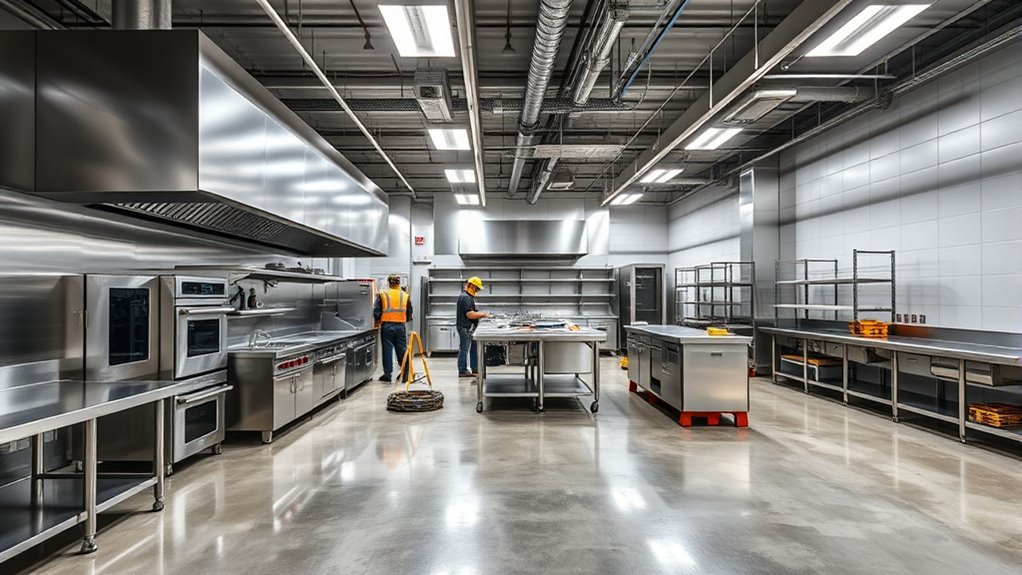
How to Build a Commercial Kitchen: A Step-by-Step Guide
Starting a commercial kitchen can feel overwhelming, especially when you’re unsure where to begin. Many people struggle with designing a space that’s efficient, safe, and compliant with regulations. You’re not alone—building a successful kitchen takes careful planning and attention to detail.
To build a commercial kitchen, start by planning a layout that guarantees smooth workflow and meets safety codes. Set a realistic budget covering equipment, labor, and contingencies. Choose a location with reliable utilities and good access.
Design zones for cooking, storage, and cleaning to boost efficiency. Hire skilled contractors, manage the timeline, and train your staff thoroughly.
Keep up with maintenance and upgrades to sustain performance. Following these steps will set a strong foundation for success and guide you through every stage.
Key Takeaways
- Plan your kitchen layout to ensure smooth workflow, safety, and that appliances fit your menu and expected volume.
- Pick a location with the right zoning, utility access, easy access for suppliers and staff, and consider noise levels.
- Make sure you meet health, ventilation, and fire safety standards, and train your staff on safety and emergency procedures.
- Create a detailed project timeline, work well with contractors, and keep a close eye on progress to stay on track.
- Regularly maintain equipment, plan for upgrades, and keep staff training current to keep your kitchen running smoothly and safely.
Plan Your Commercial Kitchen Build: Key Considerations
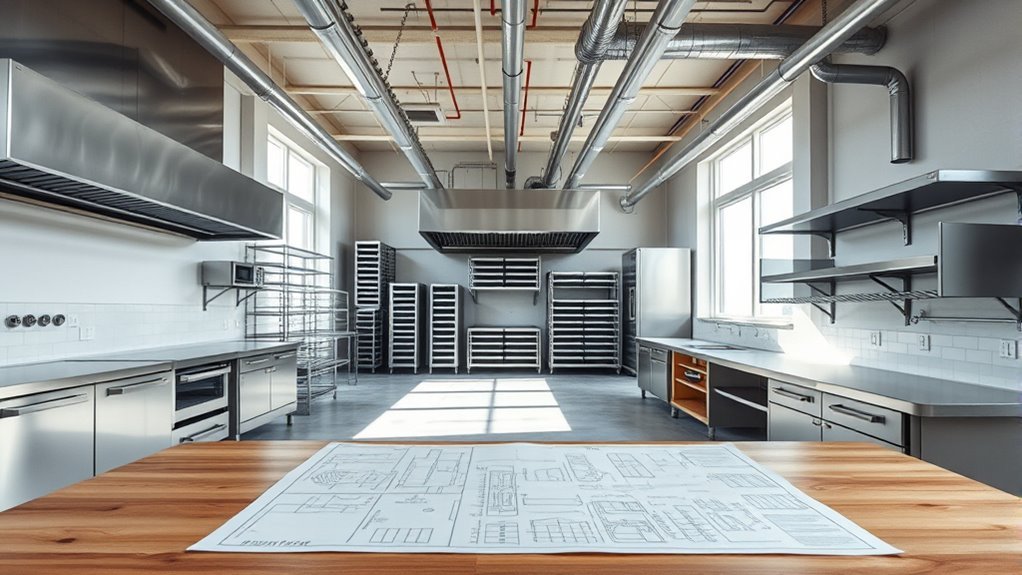
Before you dive into construction, it’s important to plan your commercial kitchen carefully to make sure it meets your operational needs and complies with regulations.
Start by designing a smooth workflow that minimizes unnecessary movement and keeps things efficient.
Choose appliances that match your menu and can handle your expected volume to keep equipment running smoothly.
Don’t forget safety standards—make sure your layout follows local codes, including proper ventilation and fire suppression systems.
Incorporate smart storage solutions to keep ingredients and tools organized and easy to access, reducing clutter and delays.
Plan for adequate water, gas, and electrical supplies to support your equipment without interruptions.
Kitchen aesthetics matter too; a clean, professional look boosts morale and leaves a good impression on clients.
Finally, invest in thorough staff training so your team can operate the kitchen safely and efficiently.
Thoughtful planning in these areas creates a solid foundation for a successful commercial kitchen build.
Set a Realistic Budget for Your Commercial Kitchen
Although planning your commercial kitchen’s design is important, setting a realistic budget is what keeps everything on track and avoids unexpected costs. Start by creating a detailed breakdown that covers all expenses like equipment, installation, permits, and labor.
Having a clear plan helps you see where your money is going and find areas to adjust if needed.
A clear plan reveals spending patterns and highlights opportunities for budget adjustments.
Next, explore funding options such as small business loans, grants, or leasing equipment to lower your upfront costs. Don’t forget to include contingency funds because surprises often come up during construction.
Keep your budget flexible but stay focused, and review it regularly as your project progresses.
Choose the Best Location for Your Kitchen
When choosing the best spot for your commercial kitchen, think about accessibility, space, and utilities to keep things running smoothly. Start with a detailed location analysis to check zoning rules and make sure your kitchen follows local laws.
Accessibility is key—pick a location that’s easy for suppliers and staff to reach. Consider how close competitors are; being right next door might mean too much competition, but being a bit farther away can help target your ideal customers.
Don’t forget about utilities—reliable water, gas, and electricity are a must for daily operations. Think about future growth too—choose a spot that has room to expand as your business grows.
Lastly, be aware of noise restrictions that could limit your hours or operations. Weigh all these factors carefully to find a location that sets your commercial kitchen up for success from the start.
Design a Commercial Kitchen Layout That Maximizes Workflow
Once you’ve chosen the perfect location, focus on designing a kitchen layout that helps your team work efficiently. Start by zoning—group cooking stations, storage, service areas, and cleaning zones separately to avoid cross-traffic.
Prioritize workflow by placing equipment to minimize unnecessary steps and prevent bottlenecks. Make sure staff can move naturally from prep to cooking, plating, and service areas.
Create clear safety zones around hot equipment and busy spots to prevent accidents. An effective layout balances easy access and functionality so your team can work quickly without crowding.
Include plenty of storage near workstations to cut down on backtracking. Keep service areas close to exits for smooth delivery.
Designing your kitchen with these ideas in mind will help improve workflow, reduce delays, and create a safer, more productive environment. Your layout is the foundation for a smooth-running operation that supports your kitchen’s success.
Select the Right Commercial Kitchen Equipment
Choosing the right commercial kitchen equipment can really impact your operation’s efficiency and quality. Start by figuring out the essential equipment types based on your menu and workflow.
Partner with reliable kitchen suppliers who offer energy-efficient models that fit your budget. Don’t forget to check equipment warranties and maintenance plans to keep everything running smoothly.
Space optimization is important—pick compact, multi-functional units to make the most of your kitchen layout without sacrificing safety. Always prioritize safety features to protect your staff and meet basic operational standards.
| Equipment Type | Key Feature | Consideration |
|---|---|---|
| Ovens & Ranges | Energy Efficiency | Warranty & Maintenance |
| Refrigeration | Space Optimization | Equipment Safety |
| Food Prep Machines | Multi-functionality | Budget Considerations |
| Dishwashers | Fast Cycle Times | Kitchen Suppliers |
Comply With Health, Ventilation, and Fire Safety Regulations
Although setting up your commercial kitchen, you need to make sure you’re following health, ventilation, and fire safety rules to keep everyone safe. Start by checking local fire codes and health inspection requirements.
Install proper ventilation to remove smoke, steam, and odors efficiently. This helps keep the air quality up to standards and creates a healthier environment. Regularly check and assess for potential hazards early on.
Keep your equipment well-maintained to avoid malfunctions that could lead to safety problems. Train your staff on safety procedures, emergency plans, and proper use of equipment. Lastly, keep detailed records of inspections and maintenance to make future health inspections smoother.
Hire Qualified Contractors and Kitchen Designers
To guarantee your commercial kitchen runs smoothly and meets all necessary standards, you’ll want to hire qualified contractors and kitchen designers who specialize in this field. During your kitchen renovation, these experts ensure your layout maximizes efficiency while complying with health and safety regulations.
Focus on contractor selection by seeking professionals with proven experience in commercial kitchens—not just general construction. Check references, review past projects, and confirm their familiarity with local codes.
Partnering with the right kitchen designer helps translate your vision into a practical, functional space that supports your menu and workflow. Remember, a skilled team minimizes costly mistakes and delays, ultimately saving you time and money.
Don’t hesitate to ask for detailed bids and timelines to compare contractors fairly. By carefully choosing your contractors and designers, you set the foundation for a successful commercial kitchen that meets your operational needs and regulatory requirements.
Schedule Construction and Manage Your Timeline
When you’re planning your project, it’s important to set realistic deadlines. This helps keep everything on track and prevents you from feeling overwhelmed. Make sure to coordinate schedules with your contractors so there are no surprises or conflicts down the line.
Don’t forget to keep an eye on progress regularly. Checking in often allows you to spot any issues early on, so you can address them before they become bigger problems. Staying on top of your timeline will make the whole process much smoother!
Establish Realistic Deadlines
When planning your commercial kitchen, setting realistic deadlines keeps the project on track and reduces stress. Effective kitchen timeline management means balancing ambition with practicality to avoid delays and costly overruns.
Focus on setting achievable goals by breaking down tasks into smaller steps and anticipating potential setbacks. This way, you can stay flexible and prepared for any surprises along the way.
Use a clear timeline to monitor progress and make adjustments as needed. Having a realistic schedule helps ensure everything stays on track and your project runs smoothly.
Coordinate Contractor Schedules
Although coordinating multiple contractors can be tricky, keeping their schedules aligned is key for smooth construction and timely completion. It’s important to establish clear communication with all contractors from the start so everyone understands their deadlines and dependencies.
Use scheduling tools like shared calendars or project management apps to keep track of each contractor’s tasks. This helps avoid overlaps or downtime and keeps the project moving smoothly. Regularly update the schedule based on progress or unexpected delays, and quickly share any changes with everyone involved.
Taking a proactive approach prevents bottlenecks and keeps things on track. Staying organized and maintaining open communication will help you manage timelines effectively. This way, each contractor knows when to start and finish their work, supporting a seamless build for your commercial kitchen.
Monitor Progress Regularly
Since construction timelines can shift unexpectedly, monitoring progress regularly helps you catch issues early and stay on track. Use progress tracking tools to compare actual work against your schedule, making it easier to spot delays or bottlenecks.
Establish clear performance metrics like milestone completions and quality checkpoints to measure contractor output effectively. Communicate frequently with your team to ensure everyone stays aligned and any adjustments happen promptly.
Review progress reports and inspect work on-site to maintain control over the project’s pace and quality. This proactive approach minimizes costly setbacks and helps you meet your planned opening date.
Train Your Staff to Use the New Kitchen Efficiently
Equip your team with the skills and knowledge they need to navigate the new kitchen confidently. Start by designing a detailed staff training program that covers equipment use and safety protocols.
Incorporate hands-on sessions during onboarding so everyone gets familiar with the layout and tools. This helps boost kitchen efficiency from day one.
Focus on workflow optimization by demonstrating the best practices for station setup and movement. This reduces wasted time and prevents accidents.
Encourage team collaboration to foster better communication and smooth operations during busy hours.
Make continuous improvement a priority by regularly gathering feedback and adjusting training materials. This way, your staff stays adaptable and proficient as the kitchen evolves.
Investing in thorough training not only improves productivity but also creates a safer, more cohesive work environment where everyone understands their role in keeping the kitchen running smoothly.
Maintain and Upgrade Your Commercial Kitchen Over Time
As your commercial kitchen operates day after day, regular maintenance is crucial to keep equipment running smoothly and avoid costly breakdowns. Focus on routine checks and schedule timely upgrades to improve energy efficiency and reduce downtime.
Keep your staff training current to handle new technology and emergency protocols effectively. Adjust your kitchen setup seasonally to match seasonal menus and stay connected with your suppliers for steady inventory.
Frequently Asked Questions
What Are the Best Energy-Saving Appliances for Commercial Kitchens?
You’ll want to choose energy-efficient ovens and commercial refrigeration units that cut power use without sacrificing performance. Look for ENERGY STAR-rated appliances, as they meet strict efficiency standards.
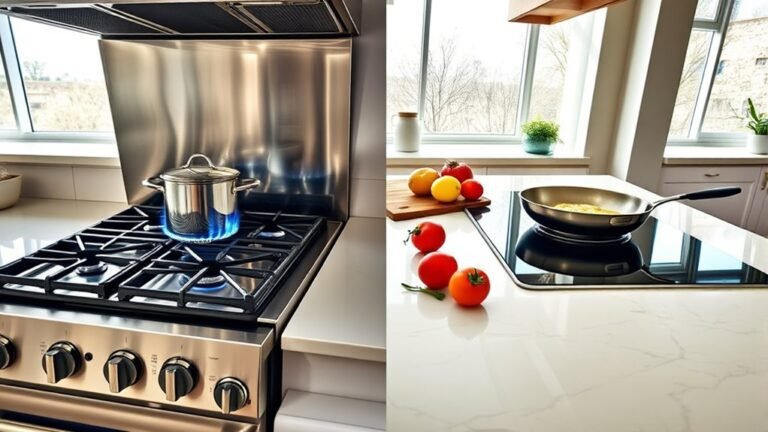
Convection ovens and induction cooktops also save energy by heating faster and more efficiently. For refrigeration, go for models with LED lighting, better insulation, and smart temperature controls.
These choices will help lower your utility bills while keeping your kitchen productive and efficient.
How Do I Handle Waste Disposal in a Commercial Kitchen?
You handle waste disposal by implementing effective waste management strategies that separate recyclables, compostables, and landfill waste. Set up clearly labeled bins to encourage proper sorting.
Investigate recycling options for plastics, metals, and cardboard to reduce your environmental impact. Regularly train your staff on these practices to maintain consistency.
Partner with local waste services that support commercial recycling and composting programs. This helps keep your kitchen cleaner and more eco-friendly.
What Insurance Policies Are Needed for a Commercial Kitchen?
Think of insurance policies as a safety net beneath your commercial kitchen tightrope walk. You’ll need liability coverage to protect against accidents or injuries on-site.
Don’t forget property insurance to cover your equipment and space. Since food safety is vital, consider product liability insurance in case of contamination claims.
Also, workers’ compensation is essential if your staff get hurt. These policies keep your business secure and let you focus on cooking up success.
How Can I Make My Commercial Kitchen Eco-Friendly?
To make your commercial kitchen eco-friendly, start by choosing sustainable materials like bamboo countertops and recycled steel appliances.
Conduct energy audits regularly to find areas where you can cut back on energy use. Upgrading to energy-efficient lighting and appliances can also make a big difference.
Implement water-saving fixtures to reduce water consumption. You can also compost organic waste and opt for eco-friendly cleaning products.
These steps not only help protect the environment but can also save you money in the long run.
What Are Common Mistakes to Avoid When Opening a Commercial Kitchen?
Don’t make the huge mistake of skimping on staff training. It’s like expecting a rocket to launch without a countdown. Proper training is essential for smooth operations and safety.
You’ll also want to avoid poor menu planning. Offering too many dishes can overwhelm your kitchen and staff, leading to mistakes and delays. Keep it simple and focused to ensure quality.
Neglecting proper equipment and ignoring local health codes can sink your business fast. Make sure everything is up to code and well-maintained from the start.
Focus on these areas, and you’ll set yourself up for success instead of chaos when opening your commercial kitchen.
Conclusion
When you plan carefully, set your budget, and choose the perfect location, everything falls into place—just like the first time your team moves effortlessly through your new kitchen.
You’ll find that hiring the right experts and scheduling wisely not only saves time but also makes construction day a smooth kickoff.
As you train your staff and keep the space in top shape, you’ll realize that building a commercial kitchen isn’t just a project. It’s the start of your success story.