Gas vs. Electric Range: Which Is Better?
Many people struggle with choosing the right range for their kitchen, feeling overwhelmed by all the options.
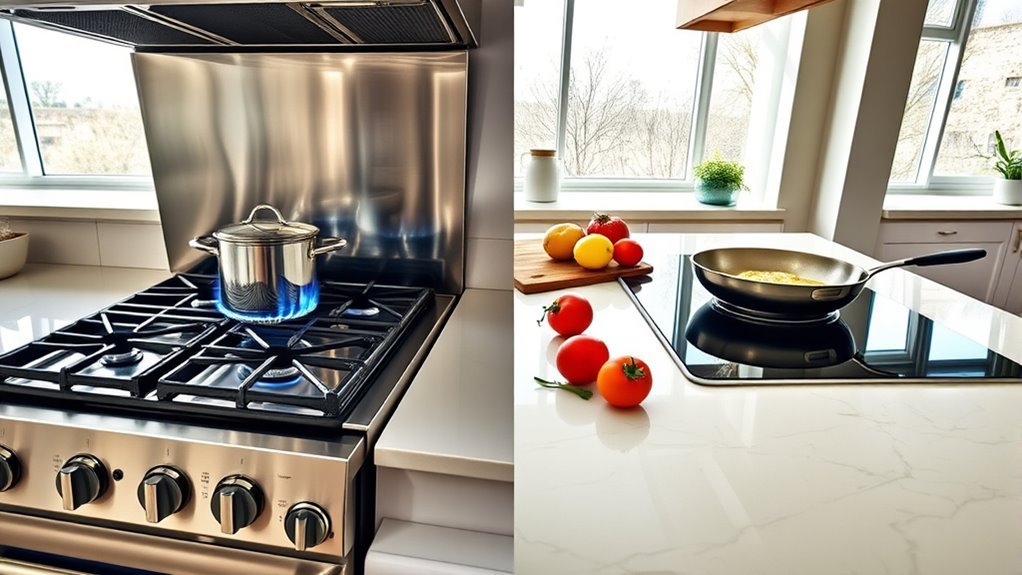
Choosing between a gas or electric range depends on how you cook and what matters most to you. Gas ranges give you instant heat with precise flame control, making them perfect for quick cooking. However, they can create hot spots and require more maintenance.
Electric ranges offer steady, even heat, especially induction models that are energy efficient and safer. But they tend to change temperature slower, which might affect your cooking style.
Your choice also impacts energy use, costs, and the environment.
If you want to find the best fit for your kitchen and lifestyle, keep exploring.
Key Takeaways
- Gas ranges give you immediate heat control, making them perfect for high-heat cooking like searing and stir-frying.
- Electric ranges provide even, consistent heat, which is great for slow cooking and simmering.
- Gas ranges tend to have a bigger environmental impact because of greenhouse gas emissions, unlike more energy-efficient electric models.
- Electric ranges usually cost less upfront and are easier to maintain than gas ranges.
- Safety concerns vary: gas ranges need leak checks and proper ventilation, while electric ranges require electrical safety maintenance.
How Gas and Electric Ranges Work
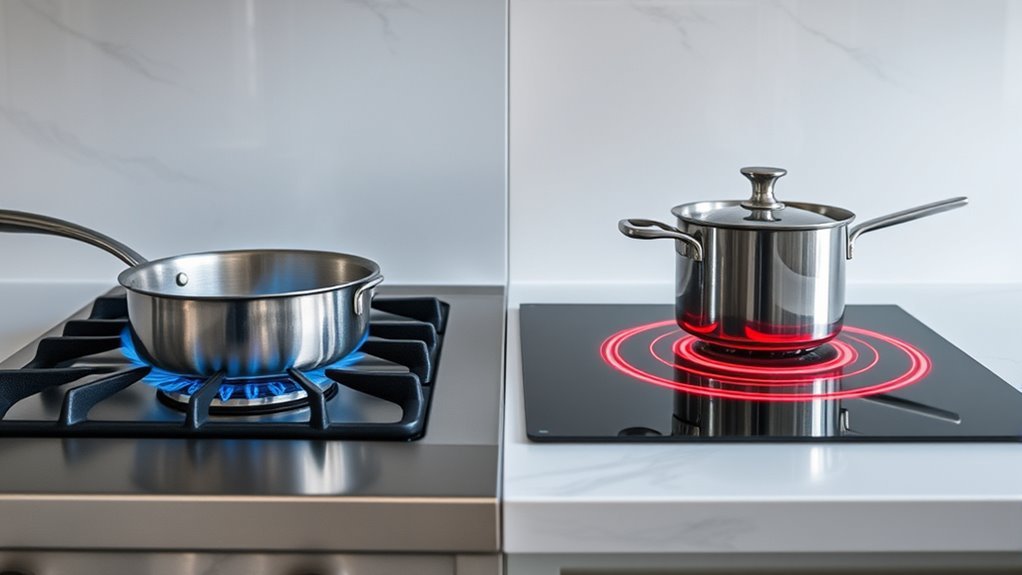
A gas range heats your food by burning natural gas or propane, creating an open flame that you can easily adjust for precise cooking control. When you turn the knob, gas flows to the burner and ignites, giving you immediate heat that responds quickly to your adjustments.
Electric ranges, on the other hand, use electric coils or smooth tops that heat up through electrical resistance. They take a bit longer to reach the right temperature but offer even heating.
You might also encounter induction cooking, which uses electromagnetic fields to heat pots directly. It’s faster and more energy-efficient than traditional electric options.
Some hybrid ranges combine gas burners with induction elements, giving you the best of both worlds—quick flame control and the efficiency of induction. Understanding these basics helps you pick the range that fits your cooking style and kitchen needs perfectly.
Temperature Control: Gas vs. Electric Ranges
Although both gas and electric ranges serve the same purpose, they offer very different experiences when it comes to temperature control. When you’re cooking, sensitivity to temperature is crucial, especially for precise techniques like simmering or searing.
Gas ranges respond instantly to changes in flame size, giving you real-time control. Electric ranges, on the other hand, heat up and cool down more slowly but provide steady temperatures for consistent cooking.
Here’s a quick comparison to help you understand:
| Feature | Gas Range | Electric Range |
|---|---|---|
| Temperature Response | Instant flame adjustment | Gradual heat changes |
| Precision Control | High, great for sensitive dishes | Moderate, best for steady heat |
| Heat Distribution | Direct, can be uneven | Even and consistent |
| Ideal Techniques | Searing, stir-frying | Baking, slow cooking |
| User Experience | Requires monitoring flame | Easier to maintain settings |
Your choice depends on how much control you want over temperature sensitivity during cooking.
Energy Efficiency: Gas vs. Electric
While temperature control shapes your cooking experience, energy efficiency affects your kitchen’s overall cost and environmental impact. Gas ranges usually use less energy during cooking because they heat instantly and allow precise flame control, making cooking more efficient. This means you use less energy to get the results you want.
Electric ranges, especially those with induction technology, convert energy to heat more efficiently, reducing wasted energy and lowering your environmental footprint. When choosing, think about whether gas is available in your area, as it can impact convenience and long-term efficiency.
Appliance longevity also varies. Electric ranges often have fewer mechanical parts, which can mean they last longer and need less maintenance. Gas ranges might need more upkeep because of burners and valves.
Ultimately, your choice affects not just your immediate energy use but also how sustainable and durable your kitchen setup will be. Considering these factors helps you pick a range that fits your lifestyle and values.
Costs of Gas vs. Electric Ranges
When comparing gas and electric ranges, you’ll find that upfront costs and long-term expenses can vary a lot. Your initial investment might be higher for gas ranges due to the more complex components, but electric models tend to cost less to buy.
However, energy prices and fuel availability in your area can greatly influence your long-term savings. Keep these points in mind to figure out what fits your budget best.
Gas ranges might have higher maintenance costs because of burners and gas lines. On the other hand, electric ranges often last longer and need fewer repairs.
Regional preferences also matter, as some markets favor one type over the other, which can affect resale value. Plus, fluctuating energy prices for gas or electricity impact your ongoing costs.
Finally, the availability of natural gas or electricity at your home can sway the overall affordability. Weigh these factors carefully to choose a range that balances your initial investment with future savings.
Installation Requirements for Gas and Electric Ranges
Understanding the costs of gas and electric ranges also means considering how each one needs to be installed in your kitchen. Gas ranges require a gas line hookup and proper ventilation to safely remove combustion gases, which can increase installation costs.
Electric ranges, on the other hand, need a dedicated high-voltage outlet but usually have simpler ventilation requirements, often just a range hood or vent fan.
Here’s a quick comparison to help you decide:
| Feature | Gas Range | Electric Range |
|---|---|---|
| Ventilation Requirements | High (gas combustion) | Moderate (steam, smoke) |
| Installation Costs | Higher (gas line + vent) | Lower (electrical outlet) |
| Complexity | Professional installation needed | Easier DIY in some cases |
Safety Considerations for Gas and Electric
Since safety is a top priority in any kitchen, you should carefully consider the risks associated with both gas and electric ranges. Gas ranges pose fire hazards and the risk of gas leaks, so proper ventilation needs are essential to prevent buildup of harmful fumes. Electric ranges, on the other hand, carry the potential for electric shock, especially if you’re not cautious or if wiring is faulty.
Safety first: gas ranges risk leaks and fire, while electric ranges can cause shocks if mishandled.
To guarantee safe use, keep these points in mind:
- Always check for gas leaks regularly and ensure proper ventilation.
- Avoid using damaged cords or outlets to prevent electric shock.
- Understand the appliance lifespan so you know when replacements are necessary.
- Get user training or read manuals thoroughly before operating either range.
- Maintain a fire extinguisher nearby, suitable for both electrical and gas fires.
Cleaning and Maintenance: Gas or Electric?
Both gas and electric ranges need regular cleaning and maintenance to work efficiently and safely. For gas ranges, remove burner grates and caps to clean spills and crumbs with warm, soapy water. Keep burner ports clear to ensure an even flame.
Maintenance tips include checking for gas leaks and inspecting ignition systems regularly. Electric ranges usually have smooth tops or coil burners. Use a specialized scraper and cleaner on smooth tops to avoid scratches.
For coil burners, lift them to clean underneath easily. Make sure coils are properly seated and check wiring connections from time to time. Wipe up spills promptly to prevent buildup, and avoid harsh chemicals that could damage surfaces.
Cooking Styles That Suit Gas or Electric Ranges
When you’re trying to decide between a gas or electric range, it’s all about how you like to cook. Gas ranges are fantastic if you want quick, precise control. They heat up fast and give you that instant adjustment, perfect for high-heat cooking or simmering your favorite sauces.
On the other hand, electric ranges tend to provide more even heat, which is great if you prefer slow, steady cooking or baking. They’re usually easier to clean and can be a good choice if you like a more consistent temperature.
High-Heat Cooking Precision
When you need precise control over high heat, gas ranges often give better results because you can adjust the flame instantly. This makes them perfect for high heat techniques like searing, where quick temperature changes are important.
With a gas range, you can easily turn up the heat or lower it in seconds. That gives you more control over your cooking process.
Here are some cooking styles that benefit from the precision of a gas range:
- Searing steaks to lock in juices
- Stir-frying at high temperatures
- Blackening fish with quick, intense heat
- Flash-frying small batches
- Reducing sauces quickly without burning
If you often use these methods, a gas range is likely a better choice for your high-heat cooking needs than electric options.
Even Heat Distribution
Although gas ranges excel at quick heat adjustments, electric ranges often provide more consistent, even heat across the cooking surface. Their better heat retention and steady temperature control make them ideal for dishes that need uniform cooking.
Gas ranges, on the other hand, give you exceptional flame control. They’re perfect for quick temperature changes but can sometimes have hot spots that affect cooking evenly.
| Cooking Style | Best Range Type |
|---|---|
| Pancakes & Crepes | Electric |
| Stir Fry | Gas |
| Grilled Sandwiches | Electric |
| Sautéing Vegetables | Gas |
| Baking on Stovetop | Electric |
Choose electric if you want consistent heat retention. Go for gas when precise flame control is more important.
Simmering and Slow Cooking
How do you achieve the perfect simmer or slow cook without burning or uneven results? Mastering simmering techniques is key, and your choice between gas and electric ranges can impact this. Gas ranges offer instant heat control, making it easier to adjust temperatures quickly for gentle simmering. Electric ranges provide steady, even heat, which benefits slow cooking by maintaining consistent temperatures over time.
To optimize your simmering and slow cooking, consider using low, steady heat to avoid scorching. Choosing heavy-bottomed pots helps with heat retention. Stirring occasionally distributes heat evenly, and monitoring temperature closely gives you precise control.
Taking advantage of slow cooking benefits like improved flavors and tender textures is also important. Both range types serve these needs, but your cooking style might favor one over the other.
Environmental Impact of Gas and Electric Cooking
Because your choice between gas and electric ranges directly affects energy consumption and emissions, understanding their environmental impact is essential. When you think about sustainability, electric ranges often come out ahead, especially if your electricity is from renewable sources like wind or solar.
Gas ranges burn natural gas, releasing carbon dioxide and other pollutants directly into your kitchen and the atmosphere. Emissions analysis shows that gas cooking generally produces more greenhouse gases per use compared to electric, though this depends on your local energy mix.
Cooking efficiency also plays a role. Gas ranges give instant heat and precise control, which can reduce cooking time. Electric induction ranges offer better energy efficiency by transferring heat directly to cookware.
To minimize your environmental footprint, consider where your energy comes from and how efficiently your range uses it. This way, you can make a responsible choice that aligns with your eco-friendly goals.
Choosing the Best Range for Your Kitchen and Lifestyle
What factors should you consider when choosing the best range for your kitchen and lifestyle? It’s important to balance your cooking habits with your kitchen’s style to find a range that fits both your practical needs and design taste. Here’s what to keep in mind:
- Cooking habits: Do you prefer precise temperature control or easy cleanup? Think about what makes cooking easier for you.
- Energy source availability: Is natural gas accessible, or will you rely on electricity? Your home’s setup can influence your choice.
- Kitchen aesthetics: Will the range match your kitchen’s style and layout? A good fit can enhance the overall look.
- Budget: Consider both upfront costs and long-term energy expenses to find a range that’s affordable.
- Maintenance: Think about how much time you want to spend on upkeep. Some ranges are easier to clean and maintain than others.
Frequently Asked Questions
Can I Convert a Gas Range to Electric or Vice Versa?
You can’t easily convert a gas range to electric or vice versa because of big conversion challenges. The different fuel sources need separate hookups, and the internal parts aren’t interchangeable.
Plus, installation costs can add up fast since you might need new wiring or gas lines. It’s usually more practical to buy a new range designed for your preferred energy type instead of trying to convert an existing one.
Do Gas or Electric Ranges Affect Indoor Air Quality?
Imagine your kitchen’s air as a delicate aquarium; gas ranges release emissions that can cloud this environment, impacting indoor air quality. Electric ranges offer cleaner emissions impact with better cooking efficiency and even heat distribution.
You’ll notice fewer safety concerns and lower maintenance requirements with electric models. However, energy consumption varies by your local grid.
Choosing wisely helps balance your health and cooking experience without sacrificing performance.
Which Range Type Is Better for Baking Specific Recipes?
You’ll find electric ranges better for baking specific recipes because they offer superior baking consistency and temperature precision. Electric ovens maintain steady heat, so your cakes and pastries bake evenly without unexpected hot spots.
This precision helps you follow recipes exactly, making sure you get predictable results every time. While gas ovens heat up quickly, electric models give you the control you need to perfect delicate baked goods.
Are There Smart or Wi-Fi-Enabled Gas and Electric Ranges?
Imagine your kitchen as a command center where your range acts like a smart, glowing signal. Yes, you can find smart, Wi-Fi-enabled gas and electric ranges that connect to your devices, offering features like remote temperature control and cooking alerts.
These ranges symbolize modern convenience, helping you save time and improve energy efficiency. With them, you’ll cook smarter, not harder, while keeping an eye on energy use right from your phone.
How Do Warranties Compare Between Gas and Electric Ranges?
You’ll find that warranty durations for both gas and electric ranges usually range from one to two years, but some brands offer extended coverage.
Repair costs can vary. Gas ranges might have higher expenses because of specialized parts and safety concerns, while electric ranges often have simpler repairs.
Always check the specific warranty details before buying so you know what’s covered and how long you’re protected against unexpected repair costs.
Conclusion
Choosing between gas and electric ranges depends on your cooking style and kitchen needs.
Gas offers quick, precise heat that’s perfect for those who love control. It’s like having a maestro’s baton in your hand for cooking.
Electric ranges provide steady warmth and are easy to clean, making them ideal for convenience seekers.
Think about your budget, energy efficiency, and environmental impact to find your perfect match.
Whichever you choose, a good gas or electric range will have your kitchen ready to cook up a storm!