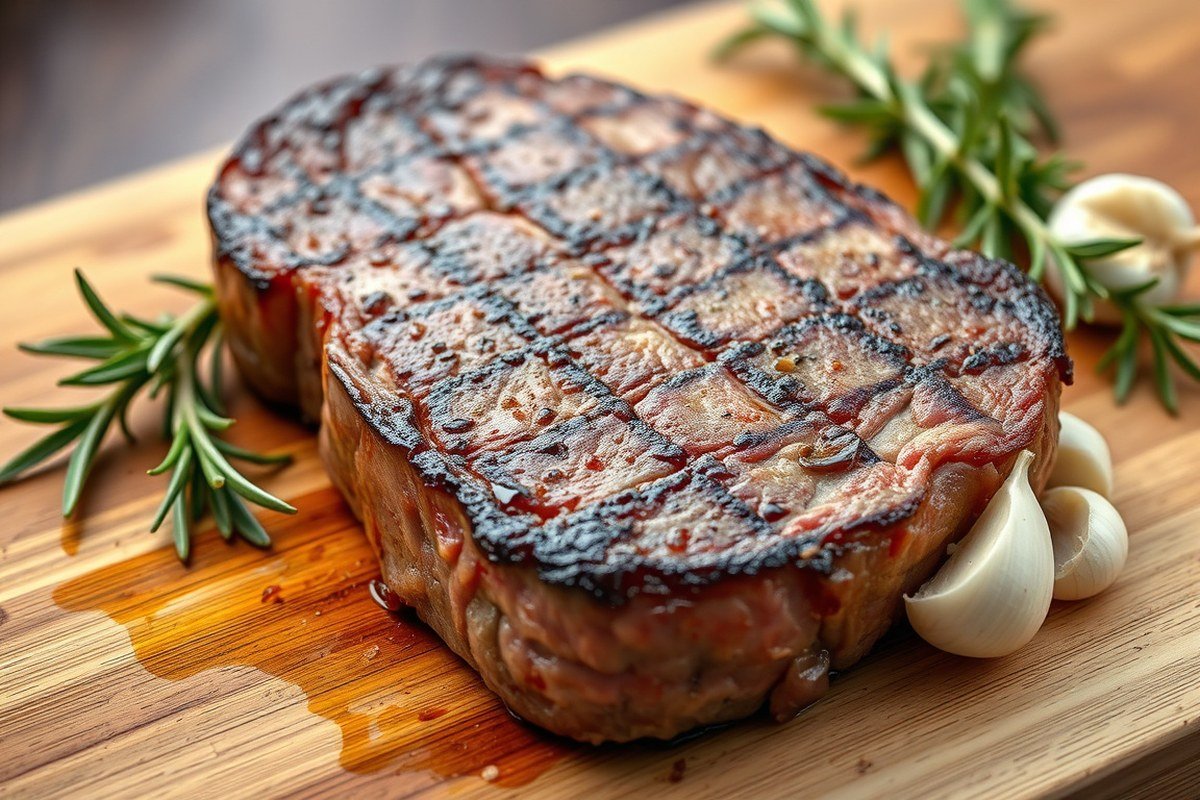
How to Cook a New York Strip Steak Perfectly: 8 Reliable Methods and Pro Tips
To cook a New York strip steak perfectly, start by bringing it to room temperature and seasoning simply with salt and pepper. Use high-heat methods like pan-searing or grilling for steaks about 1 to 1.5 inches thick to achieve a flavorful crust and a tender interior.
This guidance suits home cooks aiming for precise doneness every time. You’ll find reliable methods that suit various steak thicknesses and tips on avoiding common mistakes to consistently enjoy a juicy, well-textured New York strip.
Key Takeaways
- Let your New York strip steak rest at room temperature for 20 to 30 minutes before cooking.
- Season the steak generously with salt and pepper just before cooking for the best crust.
- Pan-sear or grill 1 to 1.5-inch thick strips for 4 to 8 minutes to reach medium-rare doneness.
- Thicker steaks benefit from two-stage cooking methods like reverse searing or sous vide for even cooking.
- After cooking, tent the steak loosely with foil and rest for at least 5 minutes before slicing.
- Oven finishing after pan-searing adds a controlled heat phase to prevent overcooking.
1. How to Cook New York Strip Steak for Perfect Doneness

Cooking a New York strip steak to the desired doneness level depends mainly on thickness, internal temperature, and timing. A 1-inch (2.5 cm) thick steak takes about 4 to 6 minutes on the stove for medium rare, while thicker steaks require more careful timing and temperature control. Use a meat thermometer to check the internal temperature, aiming for 120-125°F (49-52°C) for rare, 130-135°F (54-57°C) for medium rare, 135-145°F (57-63°C) for medium, 145-155°F (63-68°C) for medium well, and above 155°F (68°C) for well done. Avoid cutting the steak early to retain juices; instead, rely on the thermometer or the firmness method by pressing the steak gently to assess doneness.
Thicker steaks, those over 1.5 inches (3.8 cm), benefit from a two-stage cooking method like reverse searing to ensure even cooking. The total cooking time will be longer, sometimes up to an hour. For thinner steaks, direct pan-searing or grilling offers quick cooking times, but overcrowding the pan reduces heat and results in uneven cooking. Always let the steak sit at room temperature for about 30 minutes before cooking for even heat distribution.
- Bring the steak to room temperature. Remove the New York strip from the fridge and let it sit for 30 minutes to promote even cooking throughout.
- Preheat your pan or grill to medium-high. Ensure the surface is hot enough for a good sear, typically 425-450°F if you use an infrared thermometer or a heavy skillet that retains heat well.
- Sear the steak for 2 minutes per side. This applies for steaks up to 1.5 inches thick. Avoid moving the steak during searing to develop a crust.
- Transfer the steak to the oven if needed. For medium rare, bake at 400°F for 2-3 minutes after searing; for medium, bake for 3-5 minutes; adjust longer for medium well or well done.
- Check internal temperature. Insert a meat thermometer into the steak’s side and into the thickest part. Use these targets: 120-125°F for rare, 130-135°F for medium rare, 135-145°F for medium, 145-155°F for medium well, and 155°F+ for well done.
- Rest the steak. Allow it to rest for at least 5 minutes after cooking. Carryover cooking will raise the internal temperature by a few degrees while retaining juices.
- Test doneness without cutting. Press the steak gently with your finger or tongs: a soft, spongy feel indicates rare to medium rare, a firmer feel suggests medium to medium well, and very firm means well done.
2. Choosing the Best Cooking Method for Your New York Strip

Choosing how to cook your New York strip steak depends on factors like thickness, desired flavor, texture, and available equipment. For steaks about 1 to 1½ inches thick, high-heat methods such as pan-searing or grilling are popular for achieving a well-browned crust with a juicy interior. Thinner steaks cook quickly and benefit from faster methods, while thicker cuts require approaches that promote even doneness.
| Method | Heat/Setup | Best Use |
|---|---|---|
| Cast-Iron Pan-Sear | High heat, thin oil film | Fast crust, weeknight timing |
| Grill, Two-Zone | Sear over hot side, finish over cool side | Smoky notes, porch cooking |
| Reverse Sear | Set your oven to a temperature about 10 to 15 degrees Fahrenheit lower than the target final heat, then complete cooking in a preheated hot skillet. | Edge-to-edge doneness on thick cuts |
| Broiler | Position the oven rack so it sits between 4 and 6 inches (10 to 15 cm) below the heating element for best heat application. | Indoor “grill” without flare-ups |
| Sous Vide + Sear | Set bath to target temp, quick sear | Pinpoint doneness, low stress for guests |
Pan-searing in a cast-iron skillet heats the steak quickly with a thin layer of oil, forming a flavorful crust in about 3-4 minutes per side for a 1-inch steak. This method requires a good stove and skillet but no special equipment. Grilling introduces smoky flavors and requires a two-zone setup, where you sear the steak on a high-heat side and move it to cooler heat to finish cooking. This suits outdoor cooks and steaks 1 inch thick or slightly more. For thicker cuts, reverse searing offers more control. Start the steak in a low 250°F oven until 10, 15°F below your target internal temperature, then sear quickly in a hot pan to develop crust while preserving an even interior.
Sous vide requires a precision cooker or immersion circulator and water bath, but it lets you cook steaks exactly to your preferred temperature with minimal risk of overcooking. After cooking in the bath, you finish by searing briefly in a hot pan for that classic crust. This method works safely for thick or thin cuts, especially when entertaining, though it takes an hour or more plus equipment investment.
Rest steaks after any cooking method for about 5 minutes tented loosely with foil to retain juices and avoid drying out.
For thinner steaks under 1 inch thick, stick with pan-searing or grilling to avoid overcooking, which happens quickly. Thick steaks over 1½ inches benefit most from reverse searing or sous vide plus searing to get reliable, even doneness. Broiling is a convenient indoor option resembling grilling but watch the steak closely 4, 6 inches from the heating element to prevent flare-ups and burning.
3. Preparing and Seasoning Your New York Strip Steak Correctly
Preparing and seasoning your New York strip steak properly sets the foundation for a flavorful and evenly cooked meal. Trim excess fat carefully, allow the steak to rest at room temperature for about 30 minutes, and use a straightforward seasoning approach to improve the natural taste. Avoid marinating to keep the steak’s texture and char intact, unless you prefer a specific flavor profile.
Trimming and Cleaning the Steak
Leave a thin layer of fat on the New York strip steak to add flavor and juiciness during cooking. Excess fat should be trimmed away to prevent flare-ups or an overly greasy texture. Removing silverskin, the tough connective tissue, improves tenderness and allows seasonings to penetrate better. Use a sharp knife and work carefully close to the surface.
Trimming fat completely is unnecessary because some fat renders during cooking and improve flavor; however, large chunks that won’t render well can cause uneven cooking. Avoid washing or soaking the steak before cooking, as water can interfere with searing and crust formation.
Room Temperature Resting Guidelines
Bringing the steak to room temperature helps it cook evenly and predictably. Cold steak placed directly into a hot pan can result in a crust that forms too quickly while the inside remains undercooked. Allow the steak to rest on the counter for about 30 minutes before cooking. This timing works well for standard thickness strips of 1 to 1.5 inches.
Resting at room temperature also prepares the meat for better seasoning adhesion and shortens cooking time slightly. Don’t leave the steak out longer than 45 minutes to avoid food safety risks. Pat the steak dry with paper towels just before seasoning to remove surface moisture, which prevents steaming and encourages a good sear.
Seasoning Tips: What and When to Add
Simple seasoning with salt and freshly ground black pepper highlights the beef’s natural flavors. Apply ½ tablespoon of steak seasoning per side to a 12- to 16-ounce strip steak, or use a mix of kosher salt, garlic powder, and onion powder if you prefer a homemade blend. Season both sides evenly right after patting the steak dry and before placing it in the pan.
Herbs like fresh rosemary and thyme complement the steak well, especially when added during cooking or in a finishing sauce. Avoid marinating New York strip as it’s a tender cut that cooks well quickly; marinades can mask its flavor and interfere with crust development. For extra richness, rub a light coating of high-smoke-point oil on the steak before seasoning to help spices adhere.
- Trim excess fat and silverskin from the steak using a sharp knife, leaving a thin fat layer intact.
- Pat the steak dry thoroughly with paper towels to remove surface moisture.
- Place the steak on the counter, uncovered, for 30 to 45 minutes to bring it to room temperature.
- Lightly coat the steak with a high-smoke-point oil such as canola or grapeseed oil.
- Season both sides generously with about ½ tablespoon of your preferred steak seasoning or a salt and pepper mix.
- Allow the seasoned steak to rest a few minutes while heating your pan or grill to help the spices settle.
- Proceed to cook promptly after this preparation for best flavor and texture.
4. Mastering Pan-Searing and Oven Finishing for the Perfect Crust
Start by searing the New York strip steak in a hot skillet with a high-smoke-point oil to build a deep, flavorful crust. Then, finish cooking the steak in a preheated oven to achieve the perfect internal temperature evenly. This pan-sear and oven-finish method prevents burning while locking in juices and ensures consistent doneness.
Heating the Skillet Properly
Use a heavy, oven-safe skillet to retain heat well. Preheat the skillet over medium-high to high heat until it’s very hot and you see faint smoke. Heating it properly allows for a quick sear without sticking or burning.
Choose an oil with a high smoke point such as avocado oil or vegetable oil. These oils tolerate high heat without breaking down or producing off-flavors. Avoid olive oil, as it can burn at searing temperatures.
Searing Both Sides for Crust
Lightly coat the steak with olive oil and season generously with salt and pepper before placing it in a hot skillet. Let the steak sit without shifting to develop a crust evenly. Cook each side for 2 to 3 minutes until browned richly, avoiding any burnt spots.
Resist the urge to press down on the steak or move it constantly. Letting it sit undisturbed creates a uniform crust. Excess smoke calls for a slight reduction in heat to prevent burning, while keeping a close eye on the searing time.
Oven Finishing Timing and Temperature
After searing, transfer the skillet to a 350°F oven to finish cooking. Oven finishing cooks the steak gently and evenly, helping you hit the exact doneness desired. Cooking times depend on steak thickness and preferred doneness.
| Steak Thickness | Oven Time at 350°F | Doneness Target |
|---|---|---|
| 1 inch | 6 to 8 minutes | Medium rare (130, 135°F internal) |
| 1.5 inches | 10 to 14 minutes | Medium rare to medium (135, 145°F internal) |
| 2 inches | 14 to 18 minutes | Medium (140, 145°F internal) |
Use a meat thermometer to check internal temperature. Remove the steak from the oven when it’s about 5°F below your target, as carryover cooking will raise it slightly while resting.
- Heat a heavy oven-safe skillet over medium-high heat until hot and smoking lightly.
- Add 1 tablespoon of avocado or vegetable oil and swirl to coat the pan.
- Apply olive oil evenly on both sides of the New York strip steak, then sprinkle salt and pepper to taste.
- Place the steak in the skillet and sear without moving for 2 to 3 minutes per side until a brown crust forms.
- Transfer the skillet directly to a preheated 350°F oven.
- Finish cooking for 6 to 18 minutes depending on thickness and desired doneness; check with a meat thermometer.
- Remove the skillet from the oven and let the steak rest for about 5 minutes before serving.
5. Using Reverse Searing and Sous Vide for Thick New York Strip Steaks
Reverse searing and sous vide are two effective low-then-high heat methods for cooking thick New York strip steaks. Both techniques help achieve even doneness from edge to edge while building a flavorful crust and tender texture. Reverse searing involves slowly cooking the steak at low heat before finishing it over intense heat. Sous vide uses precise water bath temperature control to cook the steak evenly before a quick sear.
Reverse Searing Process Explained
Reverse searing starts by cooking the steak gently at low heat to reach the desired internal temperature evenly without overcooking the exterior. After that, the steak is seared over high heat to develop a crisp, browned crust. This method works best with steaks about 1.5 to 2 inches thick, especially cuts with good marbling like New York strip.
This two-stage method prevents the common problem of a thick steak being burnt outside while remaining underdone inside. It takes longer than traditional searing, but produces a tender, juicy steak with a consistent medium-rare center.
- Preheat your oven to 250°F (120°C).
- Season the steak well with salt and pepper or your preferred rub.
- Set the steak on a wire rack positioned above a baking sheet.
- Cook the steak in the oven until its internal temperature is about 10-15°F below your target doneness (for medium-rare, aim for 115°F to 120°F). This usually takes 20-30 minutes for a 1.5-inch-thick steak.
- Remove the steak and let it rest for 5 minutes.
- Heat a cast-iron skillet or grill to high heat.
- Cook the steak in a hot pan for 4 to 5 minutes on each side until a rich brown crust develops and it attains your preferred finish (approximately 130°F for medium-rare).
- Rest briefly again before serving.
Tip: Use a meat thermometer to track internal temperature closely to avoid overshooting the desired doneness during the oven phase.
Sous Vide Basics and Cooking Times
Sous vide precisely controls the temperature of the steak by vacuum-sealing it in plastic and cooking it in a water bath at the exact final temperature you want. This ensures uniform doneness from edge to edge without overcooking.
For a 1 to 1.5-inch thick New York strip steak, set your sous vide bath between 129°F and 135°F to target medium-rare to medium doneness. Cooking times range from 1 to 3 hours depending on thickness and texture preference. For example, cook a 1-inch steak for 1 to 2 hours, or a 1.5-inch steak for 2 to 3 hours.
- Fill a sous vide container or pot with water and set the sous vide precision cooker to your desired temperature (129°F to 135°F for medium-rare to medium).
- Season the steak lightly with salt and pepper. You may also include aromatics like garlic or herbs in the vacuum bag.
- Vacuum-seal the steak in a food-safe plastic bag or use the water displacement method with zip-lock bags.
- Submerge the sealed steak in the water bath intensely heated by the sous vide device.
- Cook the steak for 1 to 3 hours depending on thickness (1 inch = 1, 2 hours, 1.5 inch = 2, 3 hours).
- Remove the steak from the bag and pat dry thoroughly.
Warning: Always follow manufacturer instructions on your sous vide equipment and use food-safe bags designed for sous vide cooking.
Finishing Techniques After Sous Vide
After sous vide cooking, the steak needs to be quickly seared to develop a crust and color. Patting the steak dry with paper towels is essential to get a good Maillard reaction. Use a hot cast-iron skillet or grill to sear the steak for about 1 to 2 minutes per side.
Some choose to brush their steak with a high smoke point oil like canola or avocado to aid browning. Finish with a quick crust formation without raising internal temperature significantly.
- Preheat a skillet or grill to very high heat.
- Brush or lightly oil the steak’s surface to help sear evenly.
- Sear the steak for 1 to 2 minutes on each side until nicely browned.
- Optionally sear the edges briefly for a uniform crust.
- Rest the steak for a few minutes before serving.
These finishing techniques quickly add flavor and texture while preserving the perfectly cooked interior created by the sous vide process. This method works well for thick steaks or when precise doneness is important, such as for dinner gatherings or preparing multiple steaks at once.
6. Common Mistakes and How to Fix Them When Cooking Strip Steak
Dry or tough steak most often results from overcooking or high heat applied too long. It’s best to keep the internal temperature below 150°F to maintain tenderness. Temp control really matters because beyond that heat, muscle fibers tighten excessively and push out juices that keep the meat moist. Under-seasoning is another common mistake that dulls flavor; steak needs enough salt and pepper applied before cooking to bring out its natural taste.
Timing also impacts doneness. New York strip cooks quickly, so each side usually needs just 3 to 4 minutes on medium-high heat for medium-rare. Overcooking can be avoided by removing the steak from the pan immediately once it reaches the target temperature. Use a meat thermometer near the thickest part and pull the steak between 130°F and 140°F depending on desired doneness since it will rise slightly while resting.
- Overcooking: Remove steak from heat at 130°F (medium-rare) or 140°F (medium) to avoid drying out.
- Undercooking: Use a digital thermometer to check temperature early; add brief extra sear time if needed.
- Under-seasoning: Season generously with salt and pepper at least 40 minutes before cooking or right before searing.
- Not resting: Let steak rest 5 to 10 minutes on a plate loosely tented with foil to keep juices inside.
- Skipping slicing against grain: Always cut perpendicular to muscle fibers for more tender bites.
- Too much flipping: Flip only once or twice to develop a good crust without losing juices.
If you skip resting, the juices inside the steak won’t redistribute and will flow out as soon as you cut it. To fix this after cooking, remove the steak from the pan promptly and loosely cover it with foil. Let it rest for 5 to 10 minutes at room temperature. This pause redistributes juices evenly and helps the meat relax, making it juicier. Without resting, expect a dryer steak and less flavor with every bite.
7. Resting, Slicing, and Serving New York Strip Steak for Best Results
Resting your New York strip steak after cooking is essential to keep it juicy and tender. When you cook steak, the heat pushes juices towards the center. Resting allows these juices to redistribute evenly, so they don’t pour out the moment you slice. Aim to rest the steak for about 5 to 10 minutes, depending on its thickness. A thicker steak may need closer to 10 minutes, while a thinner one can rest around 5 minutes. Cover the steak loosely with foil during this time to maintain warmth without trapping steam, which can soften the crust.
Slicing the steak correctly also impacts tenderness and flavor. Always cut against the grain, the direction the muscle fibers run, to shorten those fibers, making each bite easier to chew. On a New York strip, the muscle grain typically runs lengthwise, so slice perpendicular to that. Use a sharp knife to make clean cuts and avoid tearing the meat, which preserves texture and appearance.
Serving your steak with appropriate side dishes can improve the overall experience. Classic accompaniments include roasted or mashed potatoes, grilled vegetables like asparagus or bell peppers, and a fresh green salad. A simple compound butter made with garlic and herbs adds richness if you want an easy garnish. For wine pairings, a full-bodied red like Cabernet Sauvignon complements the beef’s deep flavor well.
- Remove the steak from heat and transfer it to a warm plate or cutting board.
- Loosely tent the steak with foil to keep it warm without trapping steam.
- Rest the steak for 5 to 10 minutes, depending on thickness, to let juices redistribute.
- Identify the grain direction by looking for long muscle fibers running along the steak.
- Use a sharp knife to slice against the grain into strips about ¼-inch thick for tender bites.
- Arrange slices on a warm plate, slightly overlapping for an inviting presentation.
- Add a finishing touch like a pat of herb butter or a sprinkle of flaky salt to improve flavor.
- Serve with your choice of sides, try roasted potatoes, grilled asparagus, or a salad to balance richness.
8. Storing and Reheating Leftover New York Strip Steak Safely
Leftover New York strip steak should be stored properly to keep it safe and tasty. Place the steak in an airtight container or tightly wrap it with plastic wrap or aluminum foil. Store it in the refrigerator within two hours after cooking to prevent bacteria growth. You can safely keep the steak in the fridge for up to 4 days. Beyond that, quality and safety start to decline.
Freezing is a good option if you want to keep the steak longer. Wrap the steak tightly in plastic wrap and then place it inside a heavy-duty freezer bag or airtight container. You can freeze cooked or raw New York strip steak for 3 to 4 months. Label the package with the date so you can track storage time. Thaw frozen steak in the refrigerator overnight before reheating to preserve texture and flavour.
Reheating steak without drying it out requires gentle heat and moisture retention. The best methods gently warm the steak while avoiding direct high heat that toughens the meat. You can use an oven, stovetop, or microwave, but take care with timing and temperature.
- Reheat in a low oven at 250°F (120°C) wrapped in foil for 20-30 minutes until warmed through
- On the stovetop, heat a skillet on low and warm the steak with a splash of beef broth or water, covered
- Microwave on medium power in short intervals (30 seconds), flipping the steak to heat evenly
- Let the steak rest a minute after reheating to redistribute juices
- Add a small pat of butter or drizzle with olive oil after warming to restore moisture
- Avoid reheating multiple times to prevent toughness and flavor loss
Keep the steak covered or wrapped during reheating to trap steam and maintain moisture.
Avoid using direct high heat like a hot pan or broiler for reheating alone, as it can dry out leftover steak quickly. The oven method is often the most reliable for maintaining a juicy texture. Always check the temperature to ensure it is heated to at least 140°F (60°C) internally for safe consumption. Following these guidelines helps you enjoy your New York strip steak leftovers safely, with as much moisture and flavor as possible.
Step-by-Step Action Plan for Cooking Your New York Strip Steak
Follow these clear steps to perfectly cook your New York strip steak today.
- Before you start: Remove the steak from the refrigerator and let it reach room temperature for about 30 to 45 minutes. This ensures even cooking.
- 15 minutes before cooking: Season the steak generously with salt and pepper or your preferred seasoning. Good seasoning improve flavor and crust formation.
- Start cooking: Preheat your pan or grill to high heat until very hot, then place the steak down. A properly heated surface creates a strong sear.
- Cooking time: Cook the steak for about 3 to 5 minutes per side for medium-rare, depending on thickness. Flip only once to develop an even crust.
- Check doneness: Use a meat thermometer to ensure internal temperature reaches 130°F for medium-rare or adjust to your preference. Accurate temperature prevents overcooking.
- Resting phase: Let the steak rest on a cutting board for 5 to 10 minutes after cooking. Resting allows juices to redistribute, keeping the steak juicy.
- Slicing and serving: Cut against the grain in thin slices to maximize tenderness. Proper slicing improves the eating experience.
Frequently Asked Questions
Can You Marinate a New York Strip Steak Before Cooking?
Yes, marinating a New York strip can add flavor and tenderness, but keep it short, about 30 minutes to 2 hours, to avoid breaking down the meat too much and altering its texture.
Should I Let the New York Strip Steak Come to Room Temperature?
Letting the steak sit out for 20 to 30 minutes before cooking helps it cook more evenly by reducing temperature gaps between the surface and center.
Is New York Strip Steak Suitable for Grilling or Pan Searing Better?
Both work well; grilling adds smoky flavor while pan searing gives a crisp crust, especially for steaks around 1 inch thick.
How Long Should I Rest a New York Strip Steak After Cooking?
Rest the steak for 5 to 10 minutes so juices redistribute, which keeps the meat moist and tender when sliced.
Can I Reuse the Pan Drippings After Searing a New York Strip Steak?
Yes, pan drippings make a great base for sauces or gravies, but deglaze the pan quickly with liquid to avoid burning the flavorful bits.
What Sides Pair Best with New York Strip Steak?
Classic sides include roasted vegetables, mashed potatoes, or a fresh salad; these balance the steak’s rich taste without overpowering it.
Before You Go
Cooking a New York strip steak properly depends on controlled heat, correct timing, and adequate resting. Start with seasoning and bringing the steak to room temperature, then focus on the searing technique. Try these steps on your next steak to enjoy a flavorful and juicy result that shows off this cut’s best qualities.





4 Comments