How Long Does a Dishwasher Last? The Complete Answer
Are you tired of your dishwasher breaking down just when you need it most? Many people struggle with figuring out how long their appliances will last and when it’s time to replace them. You’re not alone in wondering if your dishwasher has reached the end of its lifespan.
You can expect your dishwasher to last around 9 to 12 years, but its lifespan depends on how often you use it, how well you maintain it, and the brand quality. Frequent use may add wear, while proper cleaning and water quality help extend its life.
If you spot leaks, strange noises, or poor cleaning, it might be time to consider repair or replacement.
Keep reading to uncover detailed tips on maximizing your dishwasher’s durability and efficiency.
Key Takeaways
- The average dishwasher lasts about 9 to 12 years. How long it actually lasts depends on how much you use it, how well you take care of it, and the brand’s quality.
- Built-in, portable, and drawer dishwashers each have different lifespans. The brand’s reliability also plays a big role in how often they need repairs and how long they last.
- Hard water can cause mineral buildup inside your dishwasher, speeding up wear and tear. Using water filters and proper detergents can help extend its life.
- Signs that your dishwasher might be failing include leaks, strange noises, poor cleaning results, and higher utility bills. These can be clues it’s time to consider replacing it.
- Regular maintenance, like cleaning filters and spray arms, keeps your dishwasher running efficiently and helps it last longer.
How Long Does a Dishwasher Typically Last?
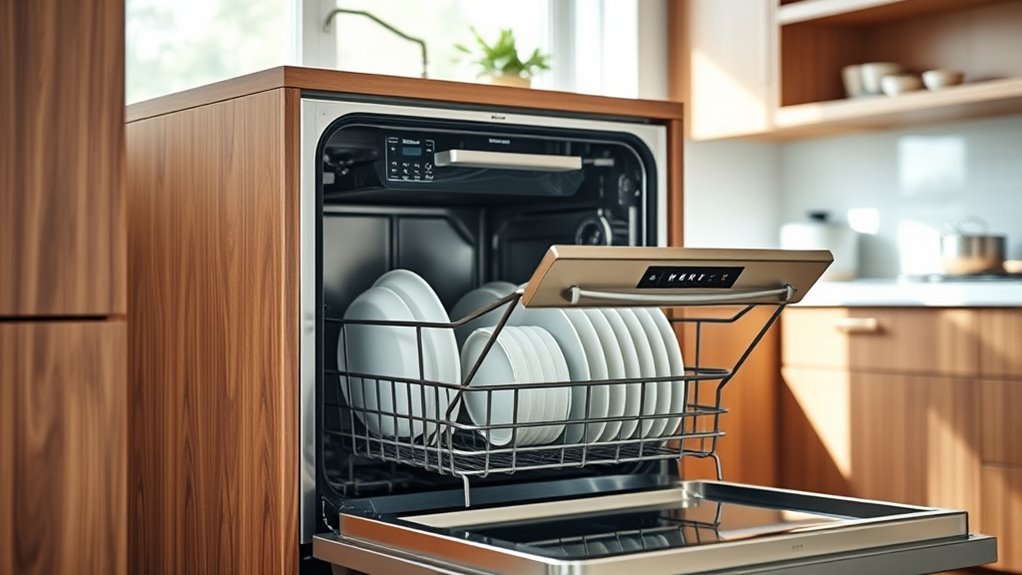
How long does a dishwasher typically last before you need a replacement? On average, your dishwasher can work efficiently for about 9 to 12 years. But keep in mind, this can vary based on how often you use it and how well you maintain it.
Paying attention to energy efficiency is super important. Newer models save water and electricity, which can seriously cut down your utility bills. When choosing a dishwasher, don’t forget to check the warranty. A good warranty can save you money on repairs and shows the manufacturer’s confidence in their product.
Energy-efficient dishwashers lower bills, and a solid warranty protects your investment and signals quality.
If your dishwasher is nearing the end of its warranty and starts breaking down more often, it might be time to think about upgrading to a newer, more energy-efficient model. Regular maintenance like cleaning filters and checking spray arms can help extend its lifespan.
Still, wear and tear will eventually catch up, making replacement the most practical choice.
How Dishwasher Type and Brand Affect Lifespan
The lifespan of your dishwasher doesn’t just depend on maintenance and usage. It also varies a lot based on the type and brand you pick. Different dishwasher types like built-in, portable, or drawer models have unique designs and maintenance needs that affect how long they last.
Brand reliability and component quality are also key. High-end brands often feature advanced technology, better energy efficiency, and longer warranties. This usually means fewer repairs and a longer lifespan.
Customer reviews and repair history can help you find brands known for durability. Balancing price, quality, and reputation is a smart way to choose a dishwasher that will last.
How Usage Frequency Changes Dishwasher Durability
Although frequent use keeps your dishwasher running smoothly by preventing buildup and stale water, it also means your machine experiences more wear and tear over time. Your usage patterns directly impact how long your dishwasher lasts.
If you run it daily with heavy cycle settings and large load sizes, the components will face more strain than occasional use with lighter cycles. Your maintenance habits, like regularly cleaning filters and checking spray arms, play an essential role in offsetting this wear.
Your user experience improves when you optimize energy efficiency by selecting appropriate cycle settings and water temperature for each load. Using the right detergent choice tailored to your water hardness and soil levels prevents residue buildup, extending durability.
Balancing how often and how intensely you use your dishwasher while keeping up with maintenance guarantees it stays reliable for years without sacrificing performance.
How Water Quality Affects Dishwasher Lifespan
Since maintenance and usage habits influence your dishwasher’s longevity, water quality also plays a big role in how long it lasts. Hard water contains minerals that cause buildup, which can clog pipes and wear out parts faster. Using water filters can help reduce this risk and extend your dishwasher’s life.
Soft water is gentler on your dishwasher but might require careful detergent choice to avoid residue. High water temperature can speed up wear, so balancing temperature and detergent is important. Plumbing issues caused by poor water quality mean more repairs and a shorter lifespan overall.
How to Spot When Your Dishwasher Is Failing
You’ll start noticing some telltale signs when your dishwasher isn’t working like it used to. Maybe it’s making strange noises, or you see water leaking out during a cycle. Sometimes, the dishes just don’t come out as clean as they used to, which can be pretty frustrating.
When these issues pop up, it’s a good idea to give your machine a little check-up. Ignoring these warning signs might lead to bigger problems down the road, and repairs can sometimes get costly. So, catching these early can really save you some headaches and cash later on.
Common Dishwasher Problems
When your dishwasher starts showing signs like unusual noises, incomplete cleaning, or water pooling at the bottom, it’s a clear sign that it might be failing. Common issues include clogged spray arms, faulty door seals, or a malfunctioning drain pump.
You might also notice detergent residue left on dishes or the dishwasher not filling with water properly. These problems often point to internal issues that need quick attention.
To troubleshoot, start by checking the filter and spray arms for blockages, and make sure the door latch is secure. Fixing these common problems early can help your dishwasher last longer and save you from costly repairs.
Recognizing these signs helps you act fast before a small problem turns into a major breakdown.
Signs of Inefficiency
Though your dishwasher might still run, signs of inefficiency can mean it’s starting to decline.
You’ll notice cycles that leave streaky dishes or poor drying that makes you towel off every plate.
If your energy or water bills are going up without explanation, your dishwasher might be working harder than it should.
Excessive noise or weird performance, like stopping mid-cycle, often points to faulty sensors or worn-out parts.
Repeated repairs can seem like a quick fix but usually mean deeper trouble.
Paying attention to these signs helps you decide whether to repair or replace your dishwasher before it completely fails—saving you time, money, and frustration.
Key Signs You Need to Upgrade Your Dishwasher
If your dishwasher starts leaving spots on dishes or runs longer than usual, it might be time to consider an upgrade. One key sign is declining energy efficiency. Older models tend to use more power, which boosts your utility bills.
Try doing a quick cost analysis to compare repair costs with investing in a new unit that has better eco-friendly features. Modern dishwashers come with soil sensors, adjustable racks, and quiet cycles that make cleaning easier and more effective.
Check online for reliability ratings and user reviews to find models that last longer and need less maintenance. Installation is also easier with newer models, saving you time and money.
Upgrading not only improves cleaning quality but also reduces environmental impact. If you notice ongoing issues or rising costs, it’s smarter to replace the old machine rather than keep paying for repairs.
Dishwasher Maintenance Tips to Extend Lifespan
To make sure your dishwasher lasts as long as possible, it’s a good idea to stick to a regular cleaning routine and load it properly every time. Taking a few minutes to clean out the filter and check the spray arms can really make a difference. These little steps help prevent buildup and keep everything running smoothly. Trust me, a bit of maintenance now can save you from bigger problems down the line and keep your dishwasher in great shape for years to come.
Regular Cleaning Routine
A regular cleaning routine keeps your dishwasher running smoothly and extends its lifespan. To keep it hygienic, make sure to clean the filter, spray arms, and door seals at least once a month.
Removing food debris and mineral buildup helps prevent clogs and makes sure water flows efficiently. Also, run an empty cycle with a dishwasher cleaner or white vinegar to get rid of odors and residue.
Don’t forget to check and wipe down the door gasket regularly. This helps avoid mold and leaks. Sticking to these simple tasks keeps your dishwasher working well, reduces repairs, and helps it last longer.
Proper Loading Techniques
Keeping your dishwasher clean is just one part of extending its lifespan. How you load it matters a lot too. Proper organization and load balancing help ensure everything gets cleaned well and prevent damage to the machine.
Place larger items like pots and pans on the bottom rack so they don’t block the water spray. Load plates and bowls facing the center for better water flow. Spacing items evenly prevents overcrowding and lets water reach all surfaces.
Position utensils handle-down in the utensil basket to avoid nesting and improve cleaning. Following these tips keeps your dishwasher running smoothly and makes sure your dishes come out spotless.
Filter and Spray Care
Regularly cleaning your dishwasher’s filter and spray arms can really boost its efficiency and help it last longer. If you forget to maintain the filter, food debris can clog the system, slowing down water flow and cleaning power.
Buildup in spray arms can block water jets, making your dishes less clean and putting extra wear on the machine. So, it’s a good idea to keep these parts in check.
| Task | Frequency |
|---|---|
| Filter cleaning | Weekly |
| Spray arm cleaning | Monthly |
| Check for clogs | Each cycle |
To keep things running smoothly, remove and rinse the filter under running water, giving it a gentle scrub if needed. For the spray arm, detach it and clear out any debris from the holes with a toothpick or soft brush.
This simple routine helps ensure proper water flow and extends your dishwasher’s life. Staying on top of filter and spray arm care keeps your appliance working well for years to come.
Should You Repair or Replace Your Dishwasher?
When should you decide to repair your dishwasher instead of replacing it? It mainly depends on the repair costs versus the benefits of a new model. If the repair is minor and affordable, fixing your current dishwasher makes sense. But if the costs are close to half the price of a new one, replacing might be the smarter choice.
Think about these points before making a decision:
- How old is your dishwasher? If it’s older than 10 years, it’s probably better to replace it.
- How often does it break down? Frequent issues suggest it’s time for a new unit.
- Is your dishwasher energy efficient? New models save water and money over time.
- What are the repair costs? Expensive fixes can add up quickly and might not be worth it.
How to Choose a Long-Lasting Dishwasher Model
Although many dishwashers look similar, choosing a long-lasting model means paying attention to build quality, trusted brands, and energy efficiency. Start by researching brands known for durability and good customer service—you want a dishwasher that lasts.
Next, check the materials used. Stainless steel interiors tend to be more durable than plastic ones. Don’t forget to look at energy efficiency ratings, as models with better ratings often have advanced tech that can extend their lifespan and save you money on utility bills.
Pay attention to noise levels too. A quieter dishwasher usually means better insulation and quality parts, which contribute to its durability. Finally, read user reviews to find out about common issues or praise for how long the dishwasher lasts.
Top Signs It’s Time to Buy a New Dishwasher
If your dishwasher keeps leaving dishes dirty, that’s usually a pretty good sign it might be time for a new one. It can be frustrating to run the same cycle multiple times and still end up with grimy plates.
You should also keep an ear out for strange noises that don’t stop, or if you notice water pooling around the base. Those kinds of issues often indicate bigger problems, and sometimes it’s just easier to replace the dishwasher than keep fixing it.
Frequent Cleaning Failures
You’ll know it’s time to replace your dishwasher when it keeps leaving dishes dirty or spotted, even after running full cycles. Poor cleaning results often point to bigger issues beyond your usual cleaning habits or maintenance.
Before deciding to replace it, check if your dishwasher shows:
- Persistent food residue or grease on dishes
- Cloudy or streaked glassware after every wash
- Water spray or drainage problems
- Frequent cycle interruptions or incomplete washes
If you’ve tried improving your cleaning techniques and sticking to regular maintenance but the problems still happen, it’s a sign that your dishwasher’s internal parts might be failing. At this point, repairs could cost more than a new machine.
Replacing it now will give you spotless dishes and peace of mind.
Unusual Noises Persist
Three or more unusual noises coming from your dishwasher during a cycle usually mean something’s wrong inside. If you notice persistent clanking or unusual vibrations, don’t ignore them.
These sounds often indicate worn-out or loose parts like the motor, pump, or spray arms. Over time, these issues can get worse and cause damage that’s costly to fix.
You might try tightening screws or cleaning filters, but if the noises keep coming back, it’s a clear sign your dishwasher is nearing the end of its lifespan.
Continuing to run a machine with these persistent sounds could lead to complete failure, forcing you to replace it suddenly. When noises won’t stop despite your efforts, it’s smarter to invest in a new dishwasher than keep patching up an aging one.
Water Leakage Issues
Water leakage is one of the most obvious signs that your dishwasher is failing. If you notice water pooling around your appliance, it’s essential to act quickly. Early leak detection can save you from expensive damage and mold growth.
Check for these common warning signs:
- Water puddles under or around the dishwasher.
- Damp or warped flooring near the unit.
- A musty odor signaling hidden moisture.
- Visible cracks or worn seals on hoses or door gaskets.
Some problems can be fixed with simple repairs like replacing seals or tightening connections. But persistent leaks often mean it’s time to consider a new dishwasher.
Ignoring water leakage can lead to costly repairs or permanent damage, so don’t delay making a decision.
Frequently Asked Questions
Can You Run a Dishwasher Without Detergent?
You can run a dishwasher without detergent, but your dishwasher won’t work as well.
Dishes won’t come out as clean, and grease or food residue might stay behind.
If you’re out of detergent, you can try alternatives like baking soda or vinegar.
But keep in mind, these options aren’t as effective as regular dishwasher detergent.
For the best results, it’s best to use proper dishwasher detergent.
That way, your dishes stay sparkling and your machine runs smoothly.
Is It Safe to Put Plastic Containers in the Dishwasher?
Yes, you can put plastic containers in the dishwasher, but it’s important to check the plastic types first. Look for dishwasher-safe labels or symbols on the containers.
Avoid plastics labeled with recycling codes 3, 6, or 7, as they might warp or release chemicals when heated. It’s best to steer clear of these for dishwasher cleaning.
Use the top rack to keep plastics away from intense heat and prevent warping. Also, choose gentle dishwasher settings to protect your containers from damage.
This way, your plastics stay safe, clean, and in good shape.
How Much Water Does a Dishwasher Use per Cycle?
A dishwasher uses about 3 to 5 gallons of water per cycle, similar to a gentle rain nourishing your garden.
Focusing on cycle efficiency means you’re not just saving water but also helping conserve it at home. Modern dishwashers are made to use less water while still leaving your dishes sparkling clean.
Can Dishwashers Sanitize Baby Bottles Effectively?
Yes, your dishwasher can effectively sanitize baby bottles if it has a sanitization process option. This feature uses high temperatures to kill harmful bacteria and keep bottles safe for your little one.
Make sure you place bottles and nipples properly, so water and heat can reach all surfaces. Use a dishwasher detergent that’s safe for baby items, and always check the manufacturer guidelines.
With these steps, your dishwasher becomes a reliable tool for keeping baby bottles clean and safe.
What Are the Energy Efficiency Ratings for Dishwashers?
Think of energy efficiency ratings as your dishwasher’s green heartbeat, pulsing with promise to save both power and cash.
These ratings show how much energy a dishwasher uses, helping you pick models that sip electricity instead of guzzling it.
The higher the rating, the smarter your choice, which means lower bills and less environmental impact.
When shopping, look for Energy Star labels. They’re your trusted guide to high efficiency and minimal energy use.
Conclusion
You’ve learned how factors like type, brand, and water quality impact your dishwasher’s lifespan.
Just like a trusty pocket watch, your dishwasher needs care and attention to keep ticking smoothly.
By spotting early signs of trouble and maintaining it well, you can extend its life and avoid sudden breakdowns.
When it’s time to repair or replace, make an informed choice to keep your kitchen running efficiently for years to come.
Knowing how long a dishwasher lasts helps you plan better and get the most out of your appliance.