How to Spatchcock a Chicken: A Step-by-Step Guide for Juicy, Evenly Cooked Meat
Spatchcocking a chicken means removing the backbone so it can be opened flat, allowing it to cook more evenly and quickly. This technique helps achieve a juicy interior and crispy skin by maximizing surface area exposure to heat. You don’t need special butchery skills—just a sharp tool and a few minutes of prep.
Cooking a whole chicken can be time-consuming and uneven if left intact. Spatchcocking addresses this by flattening the bird, which promotes uniform heat distribution and faster roasting times. This method works great whether you’re grilling, roasting, or smoking the chicken, making it a versatile skill for home cooks.
In this article, we'll cover everything from selecting the right tools and detailed steps to spatchcocking a chicken, safety tips to avoid injury, and ideas for seasoning and cooking it after preparation. You’ll have practical knowledge to confidently prepare beautifully cooked chicken every time.
Essential Tools for How to Spatchcock a Chicken

Choosing the Right Knife or Kitchen Shears
A sturdy pair of kitchen shears or a sharp chef’s knife is vital for spatchcocking a chicken safely and effectively. Kitchen shears with strong blades designed for poultry cutting make backbone removal easier. If you prefer using a knife, ensure it’s sharp enough to cut through cartilage without excessive force.
While a boning knife offers precision, it might not provide the leverage needed for straight cuts along the backbone. Poultry shears with curved, serrated blades often provide more control, especially if you’re new to spatchcocking.
- Heavy-duty kitchen shears
- Sharp chef’s or boning knife
- Cut-resistant gloves for safety
Additional Tools That Can Help
A large cutting board with a non-slip base is essential for stability while cutting. Having a flexible bench scraper or poultry bone tweezers can assist in removing any small bones or cartilage fragments after cutting.
Using a kitchen towel or silicone mat underneath your work surface helps prevent slipping. For seasoned cooks, a meat mallet can be used after spatchcocking to even out thicker parts of the chicken for consistent cooking.
Step-by-Step Process on How to Spatchcock a Chicken
Removing the Backbone
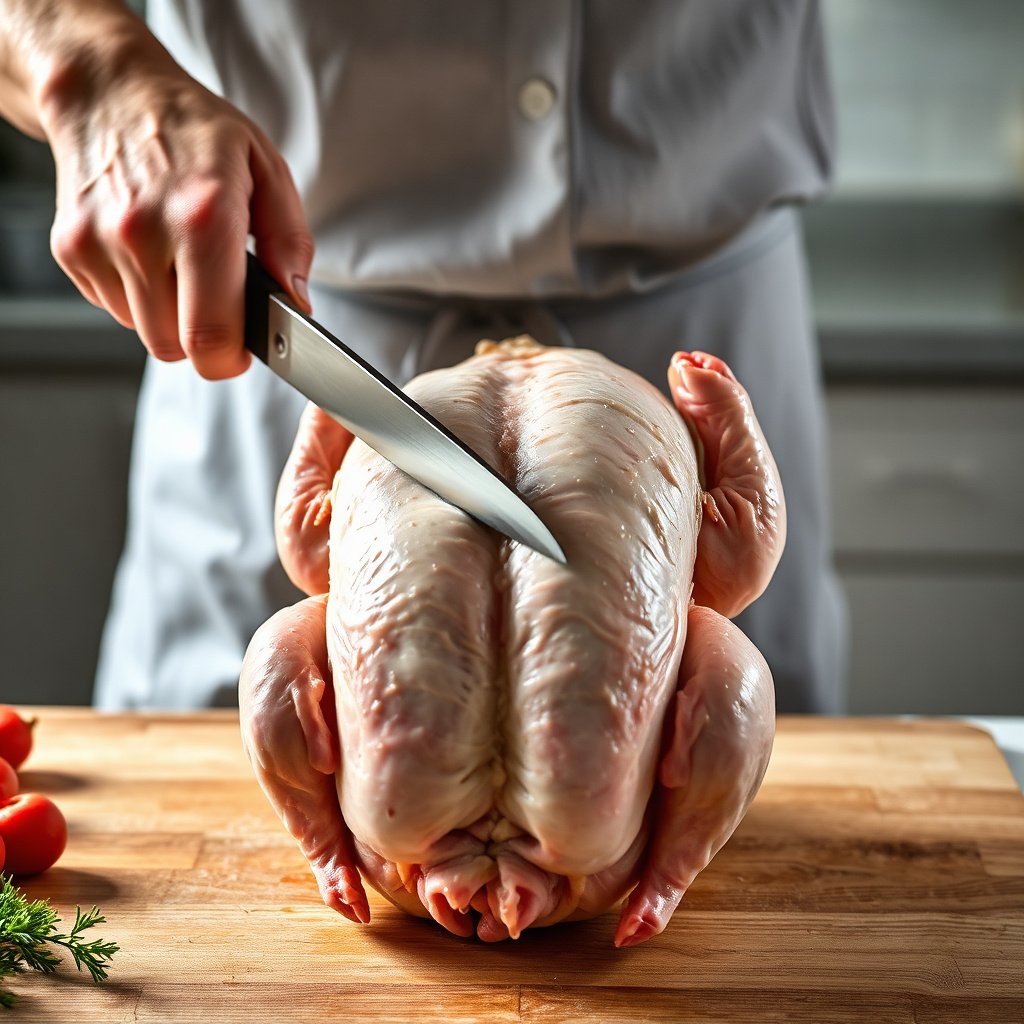
Place the chicken breast-side down on the cutting board. Locate the backbone running from the neck to the tail. Using your kitchen shears or knife, start cutting alongside one side of the backbone, applying steady pressure to slice through the ribs and cartilage until you reach the tail area.
Repeat the process on the other side of the backbone, removing it completely. Save the backbone for making stock or use it in another recipe. Removing the backbone allows the chicken to lay flat and cook faster.
Flattening the Chicken
Flip the chicken so the breast is facing up. Press firmly down on the breastbone with the heels of your hands until it flattens and you hear a slight crack. This step ensures the chicken lies flat, helping it cook more evenly in the oven or on the grill.
If the breastbone is particularly thick or resistant, you can score it with a sharp knife beforehand for easier flattening. Watch out not to puncture the skin to keep juices sealed inside.
Safety Tips When Learning How to Spatchcock a Chicken

Handling Sharp Tools Carefully
Use cut-resistant gloves when working with sharp kitchen shears or knives to reduce the risk of accidental cuts. Always cut away from your body and keep fingers clear of the blades. Stability on the cutting board prevents slips that could lead to injury.
Keep your knives well-maintained and sharpened—dull blades require more force, increasing the chance of accidents. If the chicken moves around, pat it dry and use a damp towel underneath the board for grip.
Managing Raw Chicken Safely
Raw chicken can carry harmful bacteria, so wash your hands thoroughly before and after handling. Clean all tools, cutting boards, and surfaces with hot, soapy water or a sanitizing solution after prepping the chicken to avoid cross-contamination.
Use separate utensils and plates for raw and cooked chicken. Thaw frozen chicken fully in the refrigerator rather than at room temperature to minimize bacterial growth during preparation.
Cooking Techniques for Spatchcocked Chicken

Roasting in the Oven
Preheat your oven to 425°F (220°C). Place the spatchcocked chicken on a rimmed baking sheet or roasting pan. Season generously with salt, pepper, and herbs. Roasting at high heat encourages crispy skin while keeping the meat juicy and tender.
Roast for about 40-50 minutes until the internal temperature reaches 165°F (74°C). Let the chicken rest at room temperature before carving to allow juices to redistribute.
- High heat roast (425°F/220°C)
- Use a wire rack for crispier skin
- Rest before carving
Grilling a Spatchcocked Chicken
Set up a two-zone grill with one side for direct heat and the other for indirect. Start cooking the chicken skin-side down over indirect heat to prevent flare-ups and drying out. Flip occasionally to achieve even grill marks and caramelization.
Close the grill lid and cook until internal temperature hits 165°F (74°C). Let the chicken rest briefly, then carve and serve. Grilling imparts smoky flavor that pairs well with bold marinades and spice rubs.
Seasoning and Marinades for Spatchcocked Chicken

Simple Dry Rubs and Herb Mixes
A basic dry rub of salt, black pepper, garlic powder, and paprika enhances natural chicken flavors without overpowering the meat. Fresh herbs like rosemary, thyme, and oregano add aroma and complexity when sprinkled before cooking.
Applying the rub on both sides ensures flavor penetrates deeply. Let the chicken rest after rubbing to absorb seasonings better, usually for 30 minutes up to overnight if refrigerated.
- Salt and pepper base
- Paprika or chili powder for color
- Chopped fresh herbs
Flavorful Marinades for Juicier Meat
Marinating with acidic ingredients like lemon juice, vinegar, or yogurt breaks down proteins and tenderizes the meat. Combine these with olive oil, garlic, spices, and herbs to boost flavor infusion during a 2-6 hour soak.
Avoid overly salty marinades which can draw moisture from the chicken. Pat the chicken dry before cooking to help skin crisp up nicely, even when using a marinade.
Storing and Using Leftover Spatchcocked Chicken

Proper Storage Techniques
Cool leftover chicken quickly and store it in an airtight container in the refrigerator. Consume within 3-4 days for the best taste and safety. Freezing cooked chicken is possible for up to 2-3 months, wrapped tightly to prevent freezer burn.
Reheat leftovers thoroughly to an internal temperature of 165°F (74°C) before eating. Avoid repeated reheating to maintain texture and quality.
For a deeper understanding of the spatchcocking technique and its culinary background, you can explore the spatchcocking technique on Wikipedia. spatchcocking technique on Wikipedia.
Creative Ways to Use Leftovers
Shred leftover spatchcocked chicken for salads, sandwiches, or tacos. Use bones leftover from the build for making rich homemade chicken stock or broth. Chicken works well in soups, casseroles, and pasta dishes, extending the meal’s utility.
Adding leftover chicken to stir-fries or grain bowls brings flavor and protein, keeping meals diverse and minimizing waste.
- Shredded chicken for sandwiches
- Make chicken stock with leftover bones
- Use in soups, salads, and stir-fries
Comparison of Tools for Spatchcocking Chicken
Here’s a comparison of common tools used to spatchcock a chicken, highlighting their ease of use, safety, and efficiency.
| Tool | Ease of Use | Safety | Efficiency | Best For |
|---|---|---|---|---|
| Kitchen Shears | Very easy | High (with gloves) | Fast and precise | Beginners and quick prep |
| Chef’s Knife | Moderate | Moderate | Requires skill | Experienced cooks |
| Boning Knife | Moderate | Moderate | Precise cuts | Detail work and trimming |
| Meat Cleaver | Difficult | Low | Heavy-duty cuts | Butchery and tough joints |
Frequently Asked Questions
Can I spatchcock a frozen chicken?
You should fully thaw the chicken before spatchcocking. Cutting into frozen or partially frozen chicken is dangerous and increases the risk of uneven cuts and injury.
Is spatchcocking better than trussing a chicken?
Spatchcocking offers faster, more even cooking by flattening the chicken, while trussing keeps the bird compact. Each method has merits depending on cooking style and presentation.
How long does it take to spatchcock a chicken?
With practice, spatchcocking usually takes 5-10 minutes. Initially, allow extra time as you become familiar with the steps and handling tools safely.
What temperatures should I cook a spatchcocked chicken at?
Roasting at 425°F (220°C) is common for crispy skin and moist meat. Grill temperatures vary but typically range from medium to high heat with indirect zones.
Can I use a spatchcocked chicken recipe with different poultry?
Yes, spatchcocking techniques work well on turkey, Cornish hens, and other similarly sized birds, adjusting cooking times for size.
Key Takeaways
- Removing the backbone flattens the chicken for even cooking
- A sharp knife or kitchen shears work best for spatchcocking
- Safety and hygiene are important when handling raw poultry
- Spatchcocked chicken cooks faster with juicy meat and crispy skin
Conclusion
Approaching how to spatchcock a chicken with clear steps and the right tools makes preparing poultry quicker and yields tastier results. This method enhances cooking times by opening up the chicken to even heat distribution, eliminating the common problem of uneven doneness. Balancing technique, tool choice, and safety results in a reliable way to elevate your homemade roast chicken experience.
For most home cooks, kitchen shears paired with a stable cutting board offer the best combination of safety and efficiency when spatchcocking. Once prepped, roasting at high oven temperatures or grilling over indirect heat can produce both tender meat and crispy skin. Using simple dry rubs or bright marinades can further customize flavors. Keeping leftover chicken fresh and versatile ensures you get the most out of your meal.
If you haven’t tried spatchcocking yet, start with a whole fresh chicken and take your time learning the cutting steps carefully. It’s a rewarding skill that enhances everyday cooking and invites creative seasoning and cooking approaches. With safe handling and practice, you’ll consistently enjoy juicy, delicious chicken much faster than traditional methods allow.