How Much Is a Typical Kitchen Remodel? The Complete Answer
Thinking about a kitchen remodel but feeling overwhelmed by the costs? You’re not alone. Many people struggle to figure out how much they should budget for this big project.
You’ll typically spend between $12,000 and $35,000 on a kitchen remodel, depending on your kitchen’s size, scope, and materials. Simple updates like painting cabinets or changing hardware cost less, while full renovations with custom cabinetry and high-end appliances push costs higher.
Labor, layout, and unexpected repairs also influence your budget. Knowing these factors helps you plan wisely and avoid surprises.
Keep exploring to uncover smart tips and cost-saving ideas for your project.
Key Takeaways
- Typical kitchen remodel costs range from $12,000 to $35,000, depending on materials, scope, and design choices.
- Simple updates can cost between $1,000 and $10,000, while full renovations might go over $20,000 to $100,000 or more.
- The size and layout of your kitchen play a big role in costs, especially if you need structural or plumbing changes.
- It’s a good idea to budget an extra 10-20% for unexpected repairs or permit fees.
- If you’re on a budget, consider easy updates like painting cabinets, swapping out hardware, or adding peel-and-stick backsplashes for savings.
How Much Does a Typical Kitchen Remodel Cost?
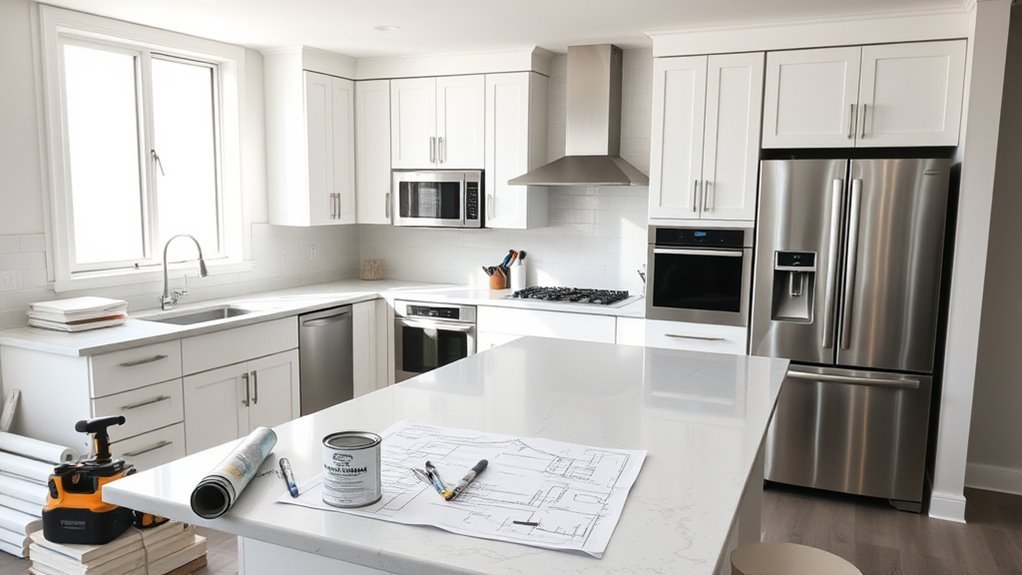
Wondering how much a typical kitchen remodel will set you back? On average, you can expect to spend between $12,000 and $35,000, depending on the scope and materials you choose. Knowing current design trends helps you make smart choices that boost your kitchen’s value without breaking the bank.
For instance, incorporating open shelving or sleek, minimalist cabinetry can refresh the space affordably. To stretch your budget, focus on budget-friendly tips like painting existing cabinets instead of replacing them or updating hardware for a modern touch.
Also, consider energy-efficient appliances, which save money long term. You don’t have to follow every trend; pick those that fit your style and budget. By planning carefully and prioritizing updates, you can create a stylish, functional kitchen without overspending.
Staying informed on costs and trends lets you remodel confidently, ensuring your project adds both beauty and value to your home.
Simple Updates vs. Full Renovations: Cost Differences
Although both simple updates and full renovations can change your kitchen, they vary a lot in cost and scope. Budget-friendly updates focus on refreshing the space without major construction—things like new paint, hardware, or appliances.
Luxury renovations, on the other hand, involve big changes like custom cabinets, layout modifications, and high-end materials, which can cost much more.
Here’s a quick comparison to help you see the difference:
| Aspect | Simple Updates |
|---|---|
| Cost Range | $1,000 – $10,000 |
| Timeframe | Days to a few weeks |
| Scope | Cosmetic changes, minor repairs |
| Impact on Home Value | Moderate |
| Aspect | Full Renovations |
| Cost Range | $20,000 – $100,000+ |
| Timeframe | Several weeks to months |
| Scope | Structural changes, new layouts |
| Impact on Home Value | Significant |
Choosing between these options depends on your budget and how dramatic a change you want.
Kitchen Remodel Cost Drivers: What Affects Your Budget
When you start planning your kitchen remodel, several factors will shape your budget more than you might expect. One major driver is the choice of kitchen style trends. If you go for high-end, custom cabinetry or luxurious finishes that are popular right now, your costs will add up quickly.
On the flip side, choosing budget-friendly materials like laminate countertops or stock cabinets can help keep expenses manageable without sacrificing style. Appliances also play a role; opting for energy-efficient models might cost more upfront, but they can save you money in the long run.
Labor costs depend on how complex your design is and the expertise needed. Keep that in mind as you plan. Don’t forget about fixtures and hardware—upgrading faucets or lighting can also add to your total.
Finally, unexpected issues like outdated wiring or plumbing repairs can bump up your budget. It’s a good idea to set aside a contingency fund for surprises. Knowing these cost drivers helps you make smarter choices that fit your financial goals.
How Kitchen Size and Layout Impact Remodel Costs
Since your kitchen’s size and layout determine how much material and labor are needed, they directly influence your remodel costs. A larger kitchen needs more cabinetry, flooring, and lighting options, which can increase expenses.
Your kitchen layout also impacts costs—open layouts might require structural changes, while galley or L-shaped kitchens focus on space optimization. Choosing cabinet styles and appliance placement that fit your space can affect both budget and workflow.
Relocating plumbing or electrical lines to improve appliance placement might raise labor costs but can boost functionality. Adding current design trends, like smart lighting or energy-efficient appliances, could mean higher upfront costs but add long-term value.
Ultimately, your kitchen layout should balance style with practical workflow efficiency to avoid costly changes later.
Breaking Down Kitchen Remodel Costs: Materials, Labor & Appliances
When you’re thinking about remodeling your kitchen, you’ll quickly see that materials, labor, and appliances are the main players when it comes to costs. Understanding how much each part contributes can really help you plan your budget better and make smarter decisions along the way. So, let’s take a closer look at what you can expect in each of these areas.
Material Cost Breakdown
Although labor and appliances play big roles in a kitchen remodel, the materials you pick often have the biggest impact on your budget. When choosing materials, think about sustainable options like bamboo or recycled glass. They’re eco-friendly and won’t cost a fortune.
These materials can help lower your carbon footprint and add a unique touch to your kitchen. If you’re on a tighter budget, consider budget-friendly choices like laminate countertops or engineered wood cabinets.
They give your kitchen a polished look without the high price tag of luxury materials. By balancing quality and cost, you can create a beautiful kitchen that fits your financial plan and embraces sustainability or affordability.
Labor And Appliance Expenses
Managing labor and appliance expenses is key when planning your kitchen remodel budget. Labor costs can vary a lot depending on which contractor you choose and your design choices, so it’s smart to get multiple quotes.
Skilled contractors might charge more, but they usually guarantee quality work, which can save you money on future repairs. Appliance brands also impact your costs; premium brands tend to be pricier but often offer better warranties and energy efficiency.
Installation fees are part of labor costs, so make sure to clarify what’s included upfront. Choosing energy-efficient appliances might cost more initially but can save you money over time.
The materials you source also affect labor expenses. Locally sourced materials might cut down on installation time and costs. Balancing these factors helps you stay within budget while creating a functional, modern kitchen.
How to Figure Out Your Kitchen Remodel Budget
figuring out your kitchen remodel budget can feel a bit overwhelming at first, but it’s really about getting a clear picture of what you can comfortably afford. Start by taking a good look at your finances—know your limits so you don’t end up stretching yourself too thin. Once you have a good sense of what’s doable, think about what parts of your kitchen are the most important to upgrade first. That way, you can focus your money on the things that matter most to you.
And don’t forget to add in a little extra for those surprise costs that always seem to pop up along the way. It’s better to be prepared than caught off guard when the unexpected happens. By planning ahead and setting a realistic budget, you’ll be able to enjoy your kitchen remodel without stressing too much about money.
Assess Your Financial Limits
Before you start choosing materials or layouts, it’s important to know how much you can realistically spend on your kitchen remodel. Take a close look at your savings, income, and any funds you can set aside without hurting your finances.
Budget planning isn’t just about the total cost. Think about hidden expenses like permits, unexpected repairs, and temporary living costs. Setting a firm spending limit helps you avoid overspending and stress later.
Use tools like budgeting apps or spreadsheets to keep track of your finances clearly. Remember, a well-planned budget keeps your project realistic and manageable.
Taking this step early ensures you make informed decisions and helps you avoid costly surprises along the way.
Prioritize Remodeling Needs
Although you’ve set a budget, you’ll need to prioritize your remodeling needs to make the most of your money. Start by identifying the essential features your kitchen must have for functionality and comfort.
Then, consider your style preferences to ensure the space reflects your taste while staying practical. Focus on what adds the most value and usability.
Here’s how to prioritize effectively:
- List essential features like storage, lighting, and appliances.
- Rank upgrades by their impact on daily use and enjoyment.
- Balance your style preferences with your budget constraints.
- Identify areas where you can compromise without sacrificing quality.
Account For Unexpected Costs
Since kitchen remodels often uncover hidden issues, you should set aside extra funds to cover unexpected costs. These surprises can include anything from outdated wiring to water damage behind walls.
To avoid surprises, build budget contingencies into your overall plan. Usually, setting aside 10-20% of your total budget works well.
This cushion helps you handle unforeseen repairs or upgrades without derailing your project. When figuring out your kitchen remodel budget, don’t just add up visible costs.
Anticipate these potential expenses to stay financially prepared and reduce stress during the process. By accounting for unexpected expenses upfront, you’ll manage your remodel more smoothly and avoid costly delays or compromises on your dream kitchen.
Affordable Kitchen Remodel Ideas to Save Money
How can you refresh your kitchen without breaking the bank? Focusing on budget-friendly upgrades can really transform your space while keeping costs low. Start by prioritizing small changes that make the biggest visual impact without major renovations.
Here are some affordable kitchen remodel ideas to save money:
- Paint your existing cabinets instead of replacing them for a fresh new look.
- Swap out old hardware like knobs and pulls for a modern update.
- Install a new backsplash using peel-and-stick tiles for easy, affordable style.
- Upgrade your lighting fixtures to brighten the space and add character.
These simple updates can dramatically improve your kitchen’s appearance and functionality. You don’t need to spend a fortune to get a stylish, updated kitchen.
With smart choices and budget-friendly upgrades, you’ll enjoy a refreshed space that matches your style and your wallet.
Hidden Costs to Watch Out for During Your Remodel
Saving money with budget-friendly upgrades is a smart way to refresh your kitchen, but it’s important to keep an eye on hidden costs that can quickly add up during your remodel. Unexpected expenses often pop up, like uncovering outdated wiring or plumbing behind walls, which might require immediate updates to meet safety codes.
You could also face extra charges for permits, disposal fees, or last-minute design changes. To avoid stress, build a budget contingency of about 10-20% into your overall plan. This cushion helps cover surprises without derailing your entire project.
Professional vs. DIY Kitchen Remodel: When to Hire Help
Deciding whether to tackle your kitchen remodel yourself or hire help depends on your skills, time, and budget. If you have experience with kitchen design and construction, DIY might save you money. But complex projects often need expert knowledge to ensure quality and stay on schedule.
Choosing DIY or professional help hinges on your skills, available time, and budget considerations.
Consider hiring help when:
- Your remodel involves electrical, plumbing, or structural changes
- You don’t have enough time to dedicate consistent hours
- You want a polished look that matches current kitchen trends
- You want to avoid costly mistakes and delays
Professionals can handle permits and troubleshoot issues you might not see coming. On the other hand, DIY works well for smaller upgrades if you’re comfortable with tools and have some extra time.
At the end of the day, balancing your skills, project needs, and deadlines will help you decide the best route for your kitchen remodel.
How to Get the Best Value Without Sacrificing Quality
Although it’s tempting to cut corners to lower costs, you can still achieve a high-quality kitchen remodel by making smart choices. Start by applying value engineering—focus on functionality and durability rather than expensive trends.
Prioritize quality materials in critical areas like countertops, cabinetry, and flooring to guarantee longevity and aesthetic appeal. You don’t have to splurge everywhere; instead, invest in key pieces that offer the best return over time.
Compare suppliers and contractors to find competitive pricing without sacrificing standards. Consider semi-custom cabinets or durable laminate instead of high-end options to save money while maintaining style.
Plan your layout to minimize costly plumbing or electrical changes. Small adjustments can greatly reduce expenses without compromising quality.
Frequently Asked Questions
How Long Does a Typical Kitchen Remodel Take to Complete?
A typical kitchen remodel usually takes about 6 to 12 weeks to complete. You’ll want to consider your budget, as unexpected costs can stretch out your timeline.
Delays in ordering materials or scheduling contractors might also affect how long the project takes. Staying organized and communicating clearly can help keep everything on track and within budget.
Planning ahead is key to avoiding surprises that could extend your remodel unnecessarily.
What Are the Latest Kitchen Design Trends for Remodeling?
If your kitchen could talk, it’d ask for modern materials like quartz countertops and matte black fixtures. Both are really popular right now.
Sustainable designs are stealing the spotlight too, with eco-friendly cabinets and energy-efficient appliances leading the charge.
You’ll also find open shelving and mixed textures creating cozy, inviting spaces.
How Do I Choose the Best Contractor for My Kitchen Remodel?
To choose the best contractor for your kitchen remodel, start by checking their qualifications, including licenses and insurance.
Ask for references and review past projects to make sure they do quality work.
Discuss project timelines upfront to ensure they fit your schedule and to avoid delays.
Get multiple quotes and trust your gut when it comes to communication and professionalism.
This way, you’ll find a reliable contractor who meets your needs and keeps your remodel on track.
What Permits Are Needed for a Kitchen Remodel?
Think of your kitchen layout like a puzzle—you can’t just move pieces without checking the rules.
For a kitchen remodel, you’ll need permits for electrical, plumbing, and structural changes, depending on local permit requirements.
Just like when I once rearranged my furniture without asking and hit a wall, skipping permits can lead to costly fixes.
Always check with your city’s building department to confirm your remodel stays safe and legal.
How Can I Increase My Home’s Value With a Kitchen Remodel?
You can increase your home’s value with a kitchen remodel by focusing on popular features like energy-efficient appliances, durable countertops, and modern cabinetry.
Keep your budget in mind to prioritize upgrades that give you the best return on investment. Adding smart storage solutions and updating the lighting also makes your kitchen more appealing.
Balancing style and functionality within your budget will help you create a space that attracts buyers and boosts your home’s market value effectively.
Conclusion
Starting a kitchen remodel is like giving your home’s heart a fresh new look with vibrant colors. You’ll want to balance your dreams with your budget.
Whether you’re making small updates or completely transforming the space, understanding costs helps keep surprises away.
By choosing materials, labor, and hidden fees carefully, you can create a kitchen that’s both stylish and valuable.
Remember, with smart choices and a clear plan, your kitchen remodel can be a masterpiece that feeds your soul without draining your wallet.