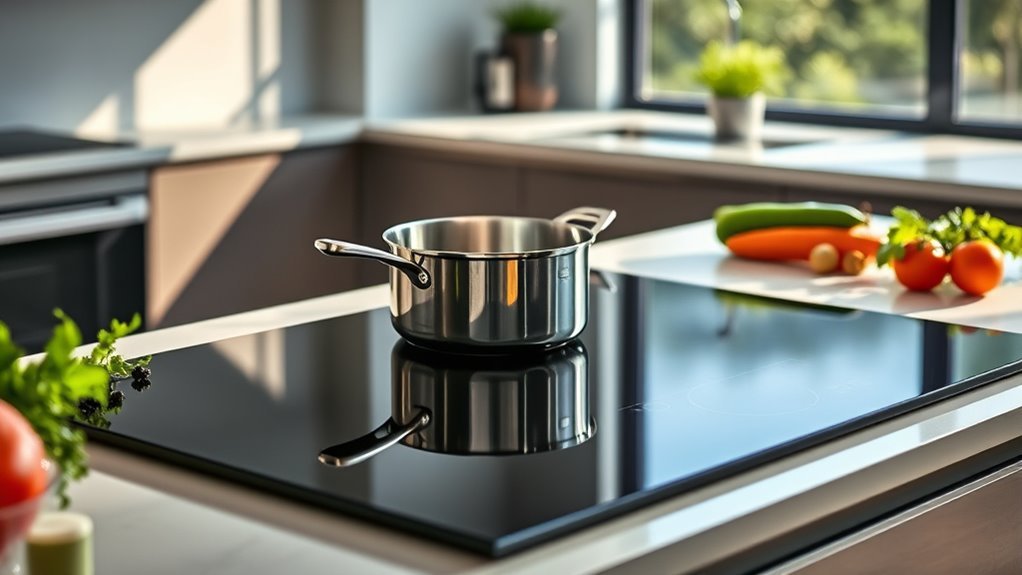
Advantages of Induction Hob: What You Should Know
Cooking frustrations are all too common—long wait times, uneven heat, and tricky cleanups can make meal prep a hassle. Many people struggle with finding a stove that’s both efficient and easy to use.
If you’re considering an upgrade, an induction hob might be just what you need.
If you switch to an induction hob, you’ll enjoy faster, more energy-efficient cooking with precise temperature control. It heats cookware directly using magnetic fields, so your cooktop stays cool and safe, reducing burn and fire risks.
Plus, it’s easy to clean and fits modern kitchens beautifully. Just make sure your cookware is compatible with induction technology.
Keep exploring to uncover more benefits and important considerations before upgrading your kitchen.
Key Takeaways
- Induction hobs heat cookware directly using electromagnetic energy, which means faster and more energy-efficient cooking.
- They provide precise temperature control with instant heat adjustments, helping you cook more accurately and waste less energy.
- Safety features include cool-to-touch surfaces, no open flames, and automatic shut-off to prevent accidents.
- To work well, the cookware needs to be magnetic, like cast iron or certain stainless steels.
- Installation checks electrical needs and cookware compatibility, but the energy savings and easy cleaning make up for the initial costs.
How Induction Hobs Work
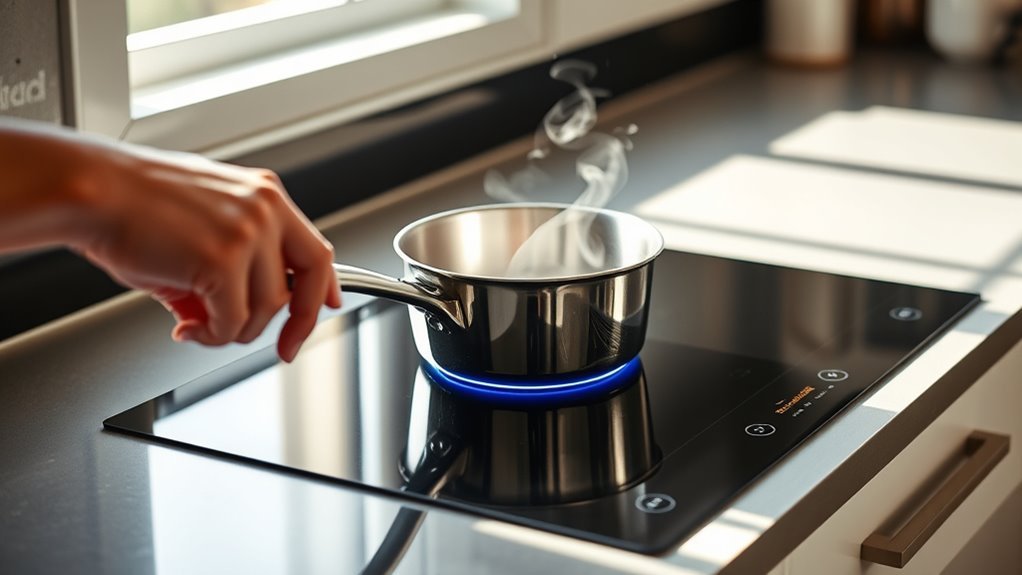
Although induction hobs might look like traditional cooktops, they work quite differently by using electromagnetic energy to heat your cookware directly. This makes cooking faster and more efficient.
Induction technology generates magnetic fields that induce heat only in compatible cookware materials, such as cast iron or stainless steel. This targeted heating boosts efficiency, reducing energy waste and cooking time.
Induction hobs use magnetic fields to heat only compatible cookware, enhancing efficiency and cutting cooking time.
When you consider the installation process, induction hobs are straightforward to set up, often just needing a suitable power outlet without complex ventilation.
Safety standards are high because the surface stays cool to the touch. This minimizes burn risks and makes using the hob safer and more comfortable.
While the upfront cost might seem higher compared to traditional models, you’ll save money on energy bills and enjoy a cleaner, safer kitchen environment.
How Induction Hobs Compare to Gas and Electric Models
Understanding how induction hobs generate heat directly in compatible cookware helps highlight their key differences when compared to gas and electric models. Unlike gas hobs that rely on an open flame or electric ones that use heating elements, induction hobs create a magnetic field that heats your pots and pans instantly. This method delivers superior induction efficiency, meaning less energy is wasted, and your kitchen stays cooler.
When you cook with an induction hob, you gain unmatched cooking precision. You can adjust the temperature instantly and maintain it consistently, unlike gas flames that can be uneven or electric elements that take time to change heat levels. This precision lets you control your cooking better, reducing the risk of burning or undercooking.
In short, induction hobs offer you a cleaner, more energy-efficient, and highly controllable cooking experience compared to traditional gas and electric models.
Why Induction Hobs Heat Faster
Because induction hobs generate heat directly within the cookware, they heat up much faster than traditional gas or electric stoves. This speed comes from magnetic induction, which uses an electromagnetic field to create heat inside the pan itself.
Unlike gas flames or electric coils that heat indirectly by warming the cooktop surface first, induction hobs bypass this step, delivering almost instant heat to your food. You’ll notice your meals start cooking immediately, cutting down wait times considerably.
This direct transfer of energy not only boosts cooking efficiency but also gives you precise temperature control, so you can adjust heat levels quickly and accurately. With induction, no energy is wasted heating the surrounding air or cooktop surface, which means your food gets hot faster and more evenly.
When you use an induction hob, you get the benefit of rapid heating combined with better control, making your cooking experience more efficient and enjoyable every time.
How Induction Hobs Save Energy
The way induction hobs deliver heat directly to your cookware doesn’t just speed up cooking. It also cuts down on wasted energy. Since the heat is generated within the pan itself, very little escapes into the surrounding air, unlike traditional gas or electric stoves.
This precise transfer means you use less power to get the same results, leading to noticeable energy savings. When you cook with an induction hob, you’ll see cost efficiency in your energy bills. The hob’s quick response to temperature changes helps you avoid overheating and reduces cooking times.
Plus, induction hobs only activate when compatible cookware is on them, preventing unnecessary power use. This efficient energy use benefits the environment and your wallet. It makes induction hobs a smart choice for anyone looking to cut down on household energy consumption without sacrificing cooking performance.
How Induction Hobs Enhance Kitchen Safety
You’ll really notice how induction hobs make your kitchen safer by getting rid of open flames and lowering the chances of burns. They turn off automatically when you’re not using them, so you don’t have to worry about leaving them on. And because their surface stays cool, you don’t have to stress about accidentally touching something hot and getting hurt. It’s a smarter, safer way to cook!
No Open Flames
Though many kitchens use gas flames, induction hobs eliminate open flames entirely, making your cooking space much safer.
This significantly reduces the risk of accidental fires or burns while you’re cooking. Without an exposed flame, you don’t need to worry about flammable spills igniting or clothes catching fire.
The safety benefits are especially great for households with children or pets, giving you peace of mind.
Plus, you’ll find it easier to keep the air quality better since there’s no combustion releasing gases into your kitchen.
Choosing an induction hob actively reduces hazards linked to traditional gas cooking, creating a safer environment for everyone.
This safety feature alone makes induction technology a smart choice if safety is a priority in your kitchen.
Automatic Shut-Off Features
Eliminating open flames greatly reduces fire risks, but induction hobs go a step further by including automatic shut-off features that improve kitchen safety. These features detect when a pot boils dry or when cookware is removed, shutting off the heat instantly to prevent accidents.
You’ll appreciate the automatic shut-off benefits, especially if you’re multitasking or tend to forget to turn the hob off. This technology minimizes the risk of burns, fires, and wasted energy, giving you peace of mind while cooking.
With induction hobs, you don’t have to constantly monitor your pots because the system actively protects your kitchen. These smart safety measures make induction hobs a reliable choice for anyone prioritizing a safer cooking environment.
Cool Surface Operation
One of the best safety features of induction hobs is their cool surface operation. It keeps the cooking zone relatively cool even while heating your food. You won’t burn yourself by accidentally touching the hob, unlike traditional stoves that get scorching hot.
The cool surface benefits also make cleaning easier since spills don’t bake onto a hot surface. Plus, they help reduce the risk of fires, making your kitchen safer. With these features, you can cook confidently, especially in busy kitchens or around children.
| Cool Surface Benefits | Safety Features |
|---|---|
| Reduces burn risks | Prevents accidental injuries |
| Lowers fire hazards | Minimizes heat exposure |
| Easier to clean | Improves user confidence |
| Maintains kitchen safety | Works only with induction-compatible cookware |
| Saves energy | Automatically cools down quickly |
Why Induction Hobs Are Easier to Clean
Because induction hobs heat only the cookware and not the cooktop surface, spills and splatters don’t get burned onto the hob. This means you won’t find yourself scrubbing stubborn, baked-on messes after cooking. You can quickly wipe away spills with a damp cloth or sponge, making your cleaning routine much simpler.
Effective spill management is key here—address spills promptly to prevent them from drying and becoming harder to remove. Using a soft cloth and mild detergent is usually enough to keep your induction hob spotless. Avoid abrasive pads or harsh chemicals that can scratch the smooth surface.
Since the cooktop stays relatively cool, you can clean it safely right after cooking without waiting for it to cool down completely. This convenience saves you time and effort, making your kitchen upkeep easier and more efficient.
Which Cookware Works Best With Induction Hobs?
If you want to get the best performance out of your induction hob, it’s important to use the right kind of cookware. Basically, you need pots and pans that have magnetic properties. Materials like cast iron and certain stainless steel options are ideal because they respond well to the magnetic field of the induction cooktop.
Before you start cooking, it’s a good idea to check if your cookware is labeled as induction-compatible. That way, you can be confident that it will work efficiently and heat evenly on your induction hob.
Compatible Materials
When choosing cookware for your induction hob, you’ll need materials that can interact with its magnetic field to heat efficiently. Not all pots and pans work well, so understanding the induction cookware types is essential.
Cast iron and stainless steel are popular because they meet material compatibility guidelines, ensuring quick, even heating. Avoid aluminum, copper, or glass unless they have a magnetic base.
Some manufacturers now produce hybrid cookware that combines compatible materials with non-compatible ones for versatility. To check if your cookware is suitable, look for an induction symbol or test with a magnet—if it sticks, it’s good to go.
Following these material compatibility guidelines helps you maximize your induction hob’s performance and enjoy faster, safer cooking every time.
Cookware Magnetic Properties
If you want your cookware to work efficiently with an induction hob, it needs to have magnetic properties that let it interact with the hob’s electromagnetic field. Basically, only ferromagnetic cookware is truly induction compatible.
Materials like cast iron and certain types of stainless steel contain iron, making them ideal for induction cooking. On the other hand, aluminum, copper, and glass won’t work unless they have a magnetic base added.
To check if your cookware is induction-compatible, just hold a magnet to the bottom of the pot or pan. If it sticks firmly, it’s suitable for your induction hob.
Choosing the right ferromagnetic cookware ensures faster heating, better energy efficiency, and a safer cooking experience. So, always prioritize magnetic properties when selecting pots and pans for induction cooking.
How Induction Hobs Offer Precise Temperature Control
Although traditional cooking methods can struggle with consistent heat, induction hobs give you precise temperature control by using electromagnetic energy to directly heat your cookware. This direct heating means the hob responds instantly when you adjust the settings, so you can maintain exact temperatures throughout cooking.
You’ll notice improved temperature regulation with induction, helping your sauces avoid scorching and delicate dishes from overcooking. With cooking precision at your fingertips, you can simmer, boil, or sear with confidence. Induction hobs detect the size of your pot, adjusting power accordingly, which boosts temperature accuracy.
Unlike gas or electric stoves, where heat fluctuates, induction offers stable and even heat distribution. This control lets you experiment with recipes that need fine-tuned temperatures and guarantees consistent results every time. Using an induction hob makes cooking more efficient and easier, making your kitchen experience smoother and more enjoyable.
Why Induction Hobs Are Perfect for Modern Kitchens
The precise temperature control offered by induction hobs fits perfectly with the demands of modern kitchens, where efficiency and style matter just as much as functionality. When you choose an induction hob, you’re embracing design trends that focus on sleek surfaces and minimalist controls.
These hobs blend seamlessly into your countertop, enhancing your modern kitchen’s look without adding clutter or bulky elements. You’ll love how easy it is to clean the smooth glass surface, keeping your kitchen looking pristine with minimal effort.
Plus, induction hobs heat only the cookware, not the surrounding area, making your kitchen safer and more energy-efficient. This matches modern values that emphasize sustainability and smart technology.
What to Know Before You Upgrade to an Induction Hob
Thinking about upgrading to an induction hob? Great choice! But before you make the switch, it’s a good idea to check if your current cookware is compatible. Not all pots and pans will work on induction stoves, so it’s worth testing or investing in some suitable ones.
Also, take a moment to understand the installation requirements. Making sure everything fits and is set up correctly will save you headaches down the line. And don’t forget about energy efficiency—induction hobs are usually pretty good at saving energy, so it’s worth considering how to get the most out of your new kitchen gadget.
Compatibility With Cookware
One key factor to consider when upgrading to an induction hob is whether your cookware is compatible with it. Not all materials work with induction, so it’s important to check before you make the switch. Induction hobs use magnetic fields to heat cookware, so only certain pots and pans will work effectively.
Here’s what you need to know about cookware materials and induction compatibility:
- Cast iron and stainless steel with magnetic bases work perfectly.
- Aluminum, copper, and glass cookware usually won’t work unless they have a magnetic layer.
- To test if your cookware is compatible, hold a magnet to the bottom—if it sticks, it will work.
- For the best performance, consider investing in cookware designed specifically for induction cooking.
Making sure your cookware matches your hob saves you money and helps you cook more efficiently.
Installation Requirements Overview
Although induction hobs offer great efficiency and control, you’ll need to check if your kitchen setup meets certain installation requirements to get the most out of your upgrade.
First, measure your available space carefully to ensure the hob fits seamlessly into your countertop. Since induction hobs often have specific dimensions, double-check compatibility with your existing kitchen layout.
Next, consider the electrical needs. Induction hobs usually require a dedicated circuit with higher amperage than traditional cooktops. Your electrical panel might need an upgrade.
It’s important to consult a licensed electrician to confirm your home’s wiring can handle the load safely. Addressing these factors beforehand can prevent costly modifications later and ensure your new induction hob performs well from day one.
Energy Efficiency Considerations
Ensuring your kitchen can support an induction hob is just the first step; understanding how it affects your energy use is just as essential. Induction hobs offer significant energy savings by directly heating your cookware, which reduces wasted heat. This eco-friendly technology not only cuts electricity bills but also lowers your carbon footprint.
Before upgrading, consider these key energy efficiency points. Induction hobs use electromagnetic fields to heat pots quickly and precisely. They consume less energy compared to gas and traditional electric stoves. Heat loss is minimal since the hob surface stays cooler, and faster cooking times mean less overall energy use.
Frequently Asked Questions
Are Induction Hobs Compatible With Smart Home Systems?
Yes, many induction hobs are compatible with smart home systems, letting you enjoy smart technology integration. You can control your cooking settings remotely, monitor energy consumption, and even get alerts.
This makes your kitchen more convenient and helps you maximize the energy efficiency benefits of induction cooking. Connecting your hob to your smart system can save you time and reduce energy waste.
Can Induction Hobs Be Repaired Easily if They Break Down?
Yes, you can usually get induction hobs repaired fairly easily, but repair costs vary depending on the issue.
Before calling a technician, try some troubleshooting tips like checking the power supply, making sure your cookware is compatible, and resetting the hob.
If the problem persists, professional repair might be necessary. Keep in mind that some parts can be pricey, so weighing repair costs against replacement is a smart move.
Do Induction Hobs Emit Any Harmful Electromagnetic Radiation?
No, induction hobs don’t emit harmful electromagnetic radiation that poses health concerns. The radiation levels they produce are very low and confined to the cooking zone, so you won’t be exposed to dangerous levels.
If you’re worried about radiation, induction hobs are actually safer than some other appliances because their electromagnetic fields stop as soon as you turn them off. You can cook confidently without worrying about health risks from radiation.
How Noisy Are Induction Hobs During Operation?
You won’t hear a jet engine when your induction hob’s on—it’s surprisingly quiet! Most of the noise comes from the fan or a slight hum, which won’t disrupt your cooking groove.
Thanks to its cooking efficiency, the hob heats quickly, reducing energy consumption and overall cooking time. So, you get a peaceful kitchen experience without sacrificing speed or efficiency.
You’ll barely notice the sound while enjoying faster, greener meals.
What Is the Average Lifespan of an Induction Hob?
You can expect your induction hob to last around 10 to 15 years with proper care. Its energy efficiency means you spend less on power, and the fast cooking speed reduces wear and tear.
Because it heats only the cookware, it stays cooler overall, which helps extend its lifespan. Regular cleaning and avoiding heavy impacts will keep it running smoothly for years to come.
Conclusion
Ready to upgrade your kitchen with an induction hob? Imagine cooking faster, saving energy, and enjoying precise temperature control—all while keeping your kitchen safer. Isn’t it great to have a sleek, modern appliance that fits seamlessly into your lifestyle?
With the right cookware and a bit of know-how, induction hobs make cooking easier and more efficient than ever. So, why stick to old technology when you can have the best induction hob?