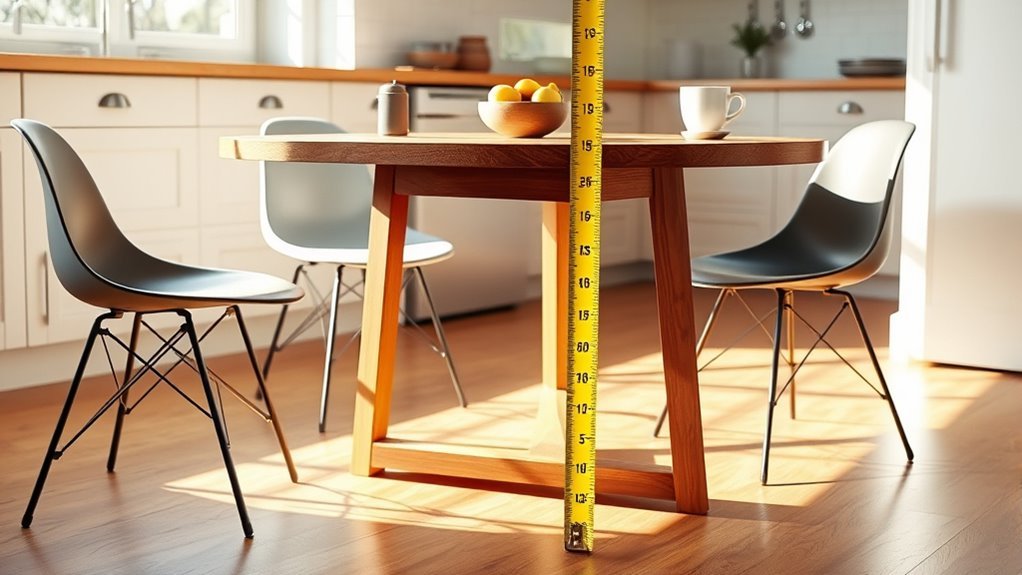
How Tall Is a Kitchen Table? The Complete Answer
Many people struggle with finding the right height for their kitchen table, and you’re not alone. It can be confusing to choose a table that’s just right for comfortable seating and style.
You’ll usually want a kitchen table between 28 and 30 inches tall for comfortable seating with standard chairs. If you use counter stools, a 34 to 36-inch table works best, while bar-height tables range from 40 to 42 inches.
Matching your table height with your chairs or stools guarantees good posture and comfort.
Considering your kitchen space and style is key too.
Keep exploring to find the perfect height that fits your needs and style seamlessly.
Key Takeaways
- Standard kitchen table height usually falls between 28 and 30 inches, with 29 inches being the most common size.
- Counter-height tables are typically 34 to 36 inches tall, while bar-height tables range from 40 to 42 inches.
- Choosing the right table height helps ensure comfortable seating by matching chair seats, which are usually 18 to 20 inches high, and leaving about 10 to 12 inches of space for legroom.
- It’s also recommended to have at least 36 inches of clearance around the table for easy movement and a smooth kitchen flow.
- Adjustable and custom kitchen tables provide flexibility, making it easier to find the perfect fit for your space and preferences.
What Is the Standard Height for a Kitchen Table?
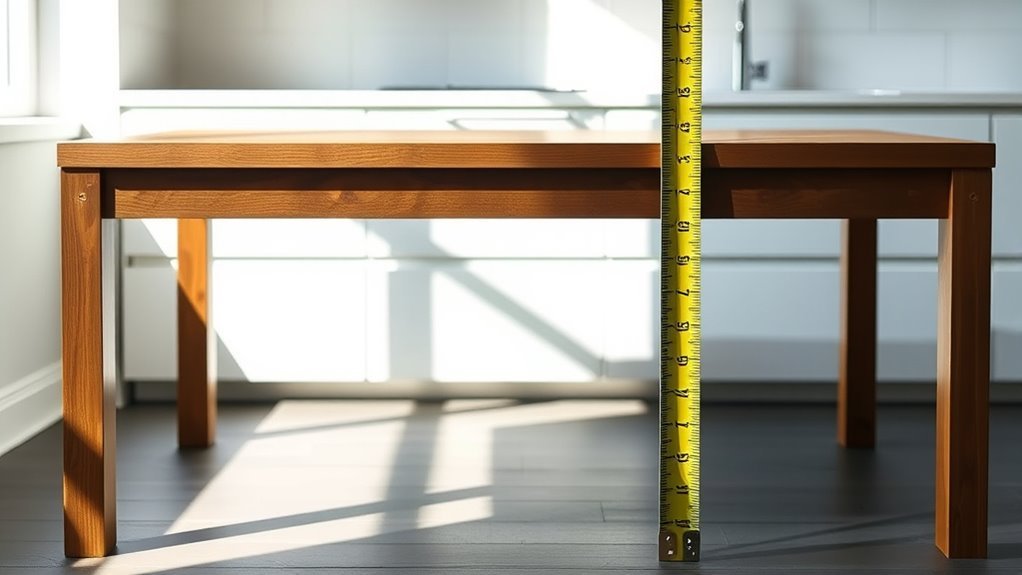
Most kitchen tables are about 28 to 30 inches tall, which matches well with standard chair heights. When choosing a kitchen table, knowing these common dimensions helps you find one that fits your space and needs.
While 28 to 30 inches is typical, you’ll see some variation depending on the style. For example, casual or rustic tables might be a bit shorter or taller, usually between 26 and 32 inches.
These height differences can change how a table feels in your kitchen. It’s a good idea to measure your chairs and space before making a purchase. Standard height tables are designed to work with most dining chairs, offering comfortable seating and legroom.
Knowing these details about standard heights ensures your kitchen table looks great and functions well in your home.
How Kitchen Table Height Affects Seating Comfort
When you pick the right kitchen table height, everyone at the table stays comfortable. Good seating ergonomics matter because they help you and your guests sit for longer without feeling uncomfortable.
If the table is too high, your shoulders and arms might tense up, leading to strain. On the other hand, if it’s too low, you might end up slouching or leaning forward awkwardly.
Your height and the heights of your regular diners are key factors in finding the best fit. Matching the table height with the right chairs allows your elbows to rest comfortably on the table edge, encouraging good posture.
Ignoring these details can cause discomfort, distract from your meals, or even lead to back pain. Paying attention to kitchen table height helps create a space that’s inviting and practical, where everyone can relax and enjoy their time together.
Ideal Kitchen Table Heights for Different Seating Types
When you’re trying to choose the perfect kitchen table height, the first thing to think about is the kind of seating you’ll be using. Whether it’s standard chairs, counter stools, or benches, each seating type has its ideal table height to keep you comfortable. So, let’s break down the best dimensions for each option and make your decision a little easier.
Standard Chair Height
One key factor in choosing the perfect kitchen table height is matching it to your standard chair height. Different chair styles can affect how comfortable you feel sitting, so pairing the table correctly makes a big difference.
Usually, standard chairs have a seat height of 18 inches. A table around 28 to 30 inches tall works well with this, preventing you from awkwardly bumping your knees or feeling cramped during meals.
Here’s a quick guide to help you match your chair style with the right table height:
| Chair Style | Seat Height (inches) | Recommended Table Height (inches) |
|---|---|---|
| Traditional | 18 | 28-30 |
| Upholstered | 18-19 | 29-31 |
| Ladder-back | 17-18 | 28-30 |
| Modern Plastic | 18 | 28-30 |
| Wooden Dining | 18 | 28-30 |
Matching your chair and table like this ensures both style and comfort during your meals.
Counter Stool Dimensions
Choosing the right counter stool dimensions makes all the difference in comfort and functionality at your kitchen table. Typically, counter stools are designed for heights between 24 to 27 inches, which match standard counter heights of 36 inches.
When selecting stools, make sure there’s about 9 to 13 inches of space between the seat and the countertop for comfortable legroom. You’ll find various styles—from sleek modern designs to rustic farmhouse options—that suit your kitchen’s vibe.
Also, consider materials like wood, metal, or upholstered cushions, which affect both durability and comfort. Picking the right height along with styles and materials ensures your seating looks great and feels just right during meals or casual chats.
Bench Seating Considerations
While counter stools are a great seating option for kitchen islands and counters, bench seating brings a different vibe to your kitchen table setup.
When choosing a bench, think about the material—wood, metal, or upholstered—as each affects comfort and style. Wood benches add warmth and durability, metal gives a modern look, and upholstery makes it cozier.
The style of your bench also impacts your table height. A backless bench needs a slightly lower table for easy access, while benches with backs require more clearance.
Usually, kitchen tables paired with benches should be around 28 to 30 inches tall to ensure comfortable seating. Keep these points in mind to make sure your bench fits both functionally and visually.
Choosing Between Counter Height and Bar Height Kitchen Tables
How do you decide between counter height and bar height kitchen tables? First, think about the benefits each one offers in terms of height. Counter height tables are usually around 36 inches tall, matching standard kitchen counters. They give off a casual, friendly vibe and work well in kitchens with lower ceilings or open layouts.
Bar height tables are generally about 42 inches tall, creating a more elevated, pub-like feel. They often serve as a striking focal point in your space and add a trendy touch.
Your choice also depends on your style. Counter height tables suit traditional or modern kitchens that want comfort and practicality. Bar height tables are great for contemporary or industrial designs, adding visual interest.
Think about who’ll use the table most and how it complements your kitchen’s look. By weighing these height options and your style, you’ll find a kitchen table that fits your space and lifestyle perfectly.
How to Measure Your Space for the Right Table Height
Measuring your kitchen space accurately helps you pick a table height that fits well and works smoothly. Use a tape measure and note the available floor space, paying attention to clearance around the table.
Make sure to leave at least 36 inches between the table edge and walls or furniture. This gives you enough room to move comfortably. Also, measure your chairs or stools to ensure they match your table height.
Here’s a quick guide for measuring your space:
| Measurement Focus | Recommended Space | Notes |
|---|---|---|
| Clearance Around Table | 36 inches | Allows easy movement |
| Chair Seat Height | 18-20 inches | Fits standard tables |
| Table Height | 28-30 inches | Typical kitchen table height |
| Counter Height | 34-36 inches | For counter-height tables |
Follow these tips to confidently choose a table that fits your kitchen perfectly.
When to Choose Custom or Adjustable Kitchen Table Heights
You might want to go for a custom kitchen table height if the standard sizes don’t quite fit your space or your needs. Sometimes, the measurements just don’t match up, and a custom solution can make all the difference.
On the other hand, adjustable tables are really handy if you need some flexibility—maybe for different activities or if multiple people with different heights will be using it. Think about your room’s layout and how you plan to use the table before making a decision. That way, you’ll find the perfect fit for your kitchen!
Benefits of Custom Heights
Although standard kitchen table heights work for many, choosing custom or adjustable heights lets you tailor the table perfectly to your space and needs. Custom design benefits include creating a table that fits your kitchen’s unique dimensions, ensuring it complements your décor and maximizes functionality.
You’ll enjoy personalized comfort, as the height can match your preferred seating arrangement and posture, reducing strain during meals or work. This approach also accommodates family members of different heights or specific accessibility requirements.
Adjustable Table Use Cases
When your kitchen serves multiple purposes—from casual dining to homework and crafting—adjustable table heights can really make a difference. You’ll appreciate features that let you switch between comfortable sitting and standing positions, making versatile designs a smart choice for busy, changing spaces. Picking adjustable or custom heights depends on your lifestyle needs.
| Use Case | Adjustable Features | Benefits |
|---|---|---|
| Family meals | Height adjustment for all ages | Inclusive comfort |
| Homework | Raised height for standing work | Better posture |
| Crafting | Lower height for detailed tasks | Improved precision |
| Entertaining | Flexible height for different setups | Adaptable atmosphere |
| Small spaces | Compact adjustable designs | Maximizes functionality |
Adjustable tables can adapt easily, and custom heights work well for specific fixed needs.
Selecting Based on Space
How can your kitchen’s size and layout guide your choice between custom and adjustable table heights? If you have tight space constraints, a custom-height table made to fit your kitchen perfectly can help you make the most of your space without feeling crowded.
On the other hand, adjustable tables give you flexibility if your layout changes or if you want to use your space for different purposes and users without taking up extra room.
Think about your style preferences too. Custom tables can be designed to match your décor exactly, while adjustable tables tend to have a more modern, utilitarian look.
In the end, if your kitchen is small and you want a seamless, integrated look, going custom might be the best choice. But if you value versatility and want to adapt your space easily, adjustable tables offer flexibility without sacrificing style or function.
How Kitchen Table Height Shapes Your Kitchen’s Look and Flow
Why does the height of your kitchen table matter so much? It directly affects your kitchen’s look and how smoothly you can move around. A table that matches your kitchen’s height creates visual harmony and makes navigation easier.
If the table is too tall or too short, it can throw off the balance of the space and make moving around awkward. Here’s a quick overview of how different table heights can change your kitchen’s vibe and flow:
| Table Height | Effect on Kitchen Look |
|---|---|
| Standard (28-30 inches) | Classic, balanced appearance |
| Counter height (34-36 inches) | Modern, open feel |
| Bar height (40-42 inches) | Bold, casual vibe |
| Too Low (<28 inches) | Cramped, awkward space |
| Too High (>42 inches) | Overwhelming, disrupts flow |
Pick a height that fits your space to boost both your style and ease of movement.
Best Kitchen Table Heights for Cooking, Dining, and Working
When you’re picking out a kitchen table, it’s all about what you’ll be using it for the most. Whether you’re whipping up meals, sitting down for dinner, or working on your laptop, the right height can make a big difference. The thing is, the perfect height for cooking might not be the same as what’s comfy for eating or working.
Let’s take a closer look at the best table heights for each activity so you can set up your kitchen to be both functional and comfortable for everything you do.
Ideal Height For Cooking
Choosing the right kitchen table height can really change your cooking experience by making tasks more comfortable and efficient. When you pick the ideal height, you’ll find cooking more ergonomic and preparation less tiring, which helps reduce strain on your back and arms.
Typically, a kitchen table height between 36 to 39 inches works well for most people, matching standard counter heights. Make sure the table height lines up with your elbow height when you’re standing for maximum comfort.
A slightly higher table can be great for tasks like chopping and mixing, keeping you upright and preventing fatigue. Adjustable or customizable tables are also a good option because they let you tailor the height to your needs.
Optimal Dining Table Heights
Although kitchen tables serve multiple purposes, finding the perfect height makes a big difference for cooking, dining, and working comfortably. When focusing on ideal dining table heights, you want to prioritize dining ergonomics to prevent strain during meals.
Most dining tables stand between 28 to 30 inches tall, which fits well with standard chair heights and allows for proper posture. Maintaining balanced table proportions guarantees your legs have enough clearance, and your arms rest naturally on the surface.
This height also supports casual activities like light meal prep or paperwork without causing discomfort. Choosing the right height lets you shift seamlessly between dining and other kitchen tasks, enhancing your overall kitchen experience without compromising comfort or functionality.
Comfortable Workstation Heights
When you spend time cooking, dining, or working at your kitchen table, the right height can make all the difference in comfort and efficiency. Comfortable workstation heights help you maintain good posture and reduce strain during different activities.
To optimize your kitchen table for various uses, consider these ergonomic tips. Adjusting your workspace can really improve your overall experience.
For cooking, a height between 36 to 39 inches helps prevent back strain while prepping. This height keeps you comfortable and allows for better movement.
Dining tables are usually around 28 to 30 inches. This height lets you sit relaxed and reach easily without hunching or stretching.
When working at your kitchen table, using adjustable chairs or stools that match a 28 to 30-inch surface can provide proper wrist and arm support. This setup makes your work more comfortable and efficient.
How to Match Chairs and Stools to Your Kitchen Table Height
If you want your kitchen seating to be comfortable and functional, matching the height of your chairs and stools to your table is key. Start by measuring your table height and then pick chairs or stools that leave about 10-12 inches of space between the seat and the tabletop.
This gap ensures enough legroom and comfort whether you’re dining or working. Think about styles that match your table height. For a standard 28-30 inch table, choose chairs with a seat height around 18 inches.
If you have a counter-height table that’s 34-36 inches tall, look for stools with seat heights of 24-26 inches. For taller bar-height tables, which are 40-42 inches, go for stools near 28-30 inches.
Don’t forget to consider stool types like swivel, backless, or those with backs. Your choice depends on your space and what feels most comfortable. Matching the right style and height will make your kitchen both functional and stylish.
Common Mistakes When Choosing Kitchen Table Height
Choosing the wrong kitchen table height can lead to discomfort and frustration during meals or work. One common mistake is falling into table height misconceptions, which often cause sizing errors.
Selecting an incorrect kitchen table height can cause discomfort and frequent sizing mistakes.
Many assume all kitchen tables have the same height, but they actually vary based on style and purpose. To avoid problems, make sure your table fits your space and needs.
Watch out for these mistakes:
- Ignoring the height of your chairs or stools, which can make sitting awkward.
- Overlooking the space needed for legroom, leading to uncomfortable seating.
- Assuming a “one-size-fits-all” height without measuring your kitchen’s layout and your family’s preferences.
Frequently Asked Questions
What Materials Are Best for Kitchen Table Durability?
You’ll want to choose materials like solid hardwood, metal, or tempered glass for kitchen table durability. When comparing materials, hardwood really stands out for its strength and resistance to wear.
Metal frames provide sturdy support, while tempered glass resists scratches and heat. Durability depends on factors like moisture resistance, ease of cleaning, and impact tolerance.
Avoid softer woods or particleboard if you want a table that lasts through daily use and spills.
How Do I Clean and Maintain a Wooden Kitchen Table?
Picture wiping away crumbs with a soft cloth, revealing your wooden kitchen table’s warm grain.
For cleaning, mix a little mild soap with water, then wipe the surface gently.
Dry immediately to prevent warping or damage. Regularly apply a wood conditioner or oil to keep it nourished and shiny.
Avoid harsh chemicals and keep hot items off the surface to protect the finish.
These simple tips will help preserve your table’s beauty, making it a cozy centerpiece for years to come.
Can a Kitchen Table Double as a Workspace?
Yes, your kitchen table can double as a workspace, but you’ll want to make sure it’s set up comfortably. Adjust your chair height or add cushions to help you maintain good posture.
Think about keeping your workspace organized by using trays or organizers. This helps separate work materials from kitchen items so you can switch between tasks easily.
With a little organization, your kitchen table can be a practical and cozy spot for both eating and working without feeling cluttered.
What Are the Trends in Kitchen Table Designs?
Imagine you’ve just updated your kitchen with a sleek, Scandinavian-inspired table featuring clean lines and light wood. That’s exactly what’s trending now—modern styles that adopt minimalist designs.
You’ll see tables with simple shapes, neutral colors, and materials like metal or glass. These designs focus on functionality without clutter, making your kitchen feel airy and open.
You’ll love how easy these tables blend into any décor while staying stylish and practical.
How Much Does a Custom Kitchen Table Typically Cost?
A custom kitchen table usually costs between $500 and $2,500, depending on your size and style choices.
If you want unique wood, intricate designs, or special finishes, expect to pay more.
You can pick from modern to rustic styles, which will also affect the price.
Keep in mind that larger tables or those with special features will cost more, but you’ll get a piece that fits your space and taste perfectly.
Conclusion
So, you’ve learned the “tall” tale of kitchen tables. Turns out, height really matters unless you enjoy eating spaghetti with neck cramps or chairs that double as torture devices.
Remember, your kitchen table isn’t just a piece of furniture. It’s where you’ll spill coffee, argue over recipes, and maybe even work or pretend to.
Choose wisely or get a daily reminder that not all heights are created equal—your back will thank you eventually.
When it comes to kitchen table height, the standard is usually around 28 to 30 inches. This height makes sitting comfortable and easy to get in and out of your chair.
If you prefer a more casual or bar-height setup, 36 inches is common. Just make sure your chairs match the height so you’re not straining your neck or slouching awkwardly.
So, remember, picking the right kitchen table height isn’t just about looks. It’s about comfort and making your space work for you.