How to Plan a Kitchen Remodel: A Step-by-Step Guide
Planning a kitchen remodel can feel overwhelming, especially with so many decisions to make. You’re not alone—many people struggle with turning their dream kitchen into reality while sticking to a budget and timeline.
Luckily, with a clear plan, the process can be smooth and rewarding.
To plan your kitchen remodel, start by defining your goals, style, and layout to suit daily needs and maximize efficiency. Set a realistic budget, prioritizing key updates while allowing for unexpected costs.
Choose durable materials, energy-efficient appliances, and plan lighting improvements early. Securing necessary permits and hiring trusted contractors will help ensure quality work.
Finally, create a clear timeline and prepare your home for the remodel. Keep going to uncover how to make this process smooth and successful.
Key Takeaways
- Define your kitchen goals, preferred style, and an efficient layout to boost both functionality and look.
- Set a realistic budget, focus on key areas, and keep some funds aside for unexpected costs.
- Choose durable materials, energy-efficient appliances, and plan good lighting with the right wiring upgrades.
- Get the necessary permits, follow building codes, and hire reputable contractors with solid credentials.
- Create a detailed timeline with milestones, prep your kitchen for the renovation, and stay in clear communication.
Define Your Kitchen Remodel Goals and Style
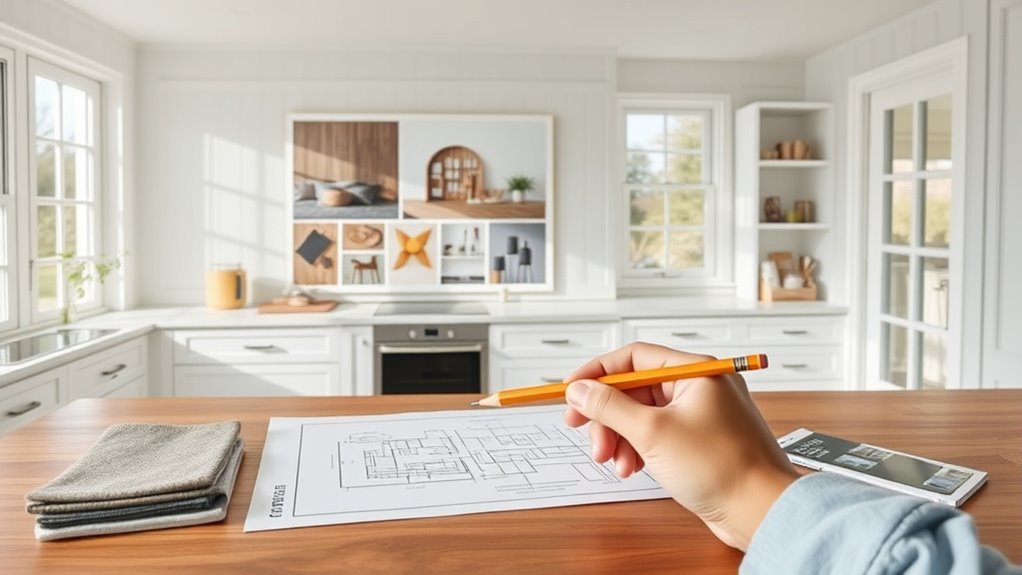
Where do you want your kitchen remodel to take you? Start by clearly defining your goals and style. Think about how you use your kitchen daily—do you need more space, better lighting, or an updated look? Knowing these goals helps guide every decision.
Next, focus on the aesthetics. Whether you prefer modern, rustic, or classic designs, knowing your style sets the tone for the whole project. Look for inspiration in magazines, online galleries, or social media like Pinterest.
Collect images and ideas that resonate with you. Note the colors, materials, and layouts you love. This curated collection will help you communicate your vision clearly to designers or contractors.
Set a Realistic Budget for Your Kitchen Remodel
Before you dive into your kitchen remodel, it’s a good idea to get a clear idea of how much you can comfortably spend. Think about what really matters most to you in the kitchen and prioritize those areas to make the biggest difference without breaking the bank. And hey, don’t forget to set aside a little extra just in case unexpected costs pop up along the way—that way, you’re covered and can keep things running smoothly!
Assess Your Financial Limits
Although a kitchen remodel can really change your home, it’s important to set a realistic budget to avoid overspending. Start by looking at your savings and monthly income to see how much you can comfortably spend without financial stress.
Think about budget-friendly options like refacing cabinets or choosing cheaper materials to make your money go further. Don’t forget to include extra costs that often pop up during renovations.
If your current funds aren’t enough, consider financing options like personal loans or home equity lines of credit. Just be careful with interest rates and repayment terms.
Knowing your financial limits upfront helps you plan better, avoid debt, and keep your kitchen project on track without hurting your overall finances.
Prioritize Key Renovation Areas
When setting a realistic budget for your kitchen remodel, focus on the areas that will make the biggest impact. Start by identifying what affects kitchen functionality the most, like appliances, storage, and lighting. Upgrading these can really improve how you use the space daily.
At the same time, think about the look of the room—cabinets, countertops, and backsplashes shape the overall style. Balancing both function and style ensures your remodel is practical and attractive without overspending.
Prioritize improvements that fix your biggest pain points first and allocate your funds accordingly. This focused approach helps you get the most value and avoids costly changes that don’t boost your kitchen’s performance or beauty.
Include Contingency Funds
Since unexpected expenses often come up during a kitchen remodel, it’s smart to include contingency funds in your budget. Planning for surprises like hidden damage, price hikes, or design changes helps keep your project on track.
Try to set aside about 10-15% of your total budget as a buffer. This extra money gives you flexibility and prevents you from having to cut corners or delay progress when costs increase unexpectedly.
Regularly monitor your spending and adjust your contingency fund if needed. Planning for the unknown makes the process less stressful and ensures your remodel stays on schedule.
Choose the Right Kitchen Remodel Layout for Your Space
Choosing the right kitchen remodel layout sets the foundation for a functional and enjoyable space. You’ll want to focus on kitchen flow, making sure moving between cooking, cleaning, and storage areas feels natural and effortless.
Think about layouts like the classic work triangle, which balances the sink, stove, and refrigerator for ideal efficiency. Open layouts can also help by reducing barriers, making the room feel larger and more inviting.
Assess your kitchen’s size and shape carefully—whether it’s galley, L-shaped, U-shaped, or an island setup. Each offers unique advantages depending on your space and lifestyle.
Don’t forget to plan for enough countertop space and storage to keep things organized without cluttering your work areas.
Plan Lighting and Electrical Upgrades Early
First things first, take a good look at your current wiring. You want to make sure it’s up to the task for new appliances and lighting. It’s much easier to handle these things early on rather than scrambling later.
Next, consider picking out energy-efficient fixtures. Not only will they make your space look brighter and more modern, but they’ll also help cut down on your electricity bills. Planning these upgrades ahead of time means you can avoid costly surprises down the road.
Assess Current Wiring
Before you start any demolition or design changes, take a close look at your kitchen’s wiring to understand its condition and capacity. Evaluating your current wiring helps identify outdated or damaged circuits that could pose safety risks during and after your remodel.
If your kitchen has old knob-and-tube or aluminum wiring, plan for wiring upgrades to handle modern appliances and lighting safely. Check if your electrical panel can support additional circuits or if it needs an upgrade.
Neglecting this step can lead to overloaded circuits and potential hazards. Consulting a licensed electrician early ensures your wiring meets current codes and supports your new layout. This keeps your remodel safe and efficient.
Prioritize electrical safety throughout your project to avoid costly fixes later.
Choose Energy-Efficient Fixtures
Energy-efficient fixtures not only reduce your kitchen’s environmental impact but also lower your utility bills over time. When planning lighting and electrical upgrades, prioritize options like LED bulbs and Energy Star-rated appliances.
These choices use less power and last longer, saving you money and reducing waste. Consider fixtures made from sustainable materials, such as recycled metals or responsibly sourced wood, to further minimize your remodel’s footprint.
Plan your lighting layout early to guarantee proper placement of outlets and switches for maximum efficiency. By integrating these elements from the start, you avoid costly adjustments later and create a kitchen that’s eco-friendly and cost-effective.
Choosing energy-efficient fixtures is a smart step toward a sustainable, functional kitchen you’ll enjoy for years.
Choose Kitchen Materials That Fit Your Style and Budget
Selecting the right materials is key to shaping both the look and cost of your kitchen remodel. You want options that are durable without overspending.
Start by thinking about your style and budget constraints. Some budget-friendly choices last long, while others focus more on aesthetics.
Here’s a quick comparison to help you decide:
| Material | Key Benefits |
|---|---|
| Laminate | Affordable, easy to clean |
| Quartz | Durable, low maintenance |
| Granite | High-end look, heat resistant |
| Hardwood | Warmth, refinishes well |
| Ceramic Tile | Versatile, budget friendly |
Select Appliances Based on Your Cooking Habits
When planning your kitchen remodel, think about the appliances that match how you cook daily. Your cooking preferences should guide your choices, making sure each appliance fits your routine perfectly.
Plan your kitchen remodel around appliances that fit your daily cooking style and routine seamlessly.
Start by considering features that make your tasks easier, like convection ovens for baking or induction cooktops for quick heating. These can really streamline your cooking process.
Next, focus on energy efficiency to save money and help the environment. Look for Energy Star ratings when comparing brands to find options that are both eco-friendly and cost-effective.
Finally, don’t rush brand comparisons. Read reviews and test models if possible to find reliable appliances that suit your style and budget.
Here’s a simple way to decide:
- Identify your cooking habits—baking, grilling, or quick meals.
- List must-have features that support those habits.
- Balance energy efficiency and brand reputation to get the best value.
Manage Kitchen Remodel Permits and Building Codes
Before you start tearing down walls or installing new fixtures, you’ll need to get the proper permits and make sure your remodel meets local building codes. Start by checking your city or county’s permit requirements—these can vary a lot depending on your project.
Whether you’re upgrading plumbing, electrical systems, or structural elements, getting the right permits ensures your work gets inspected and approved for safety.
Next, make sure your plans follow all relevant code rules, from electrical wiring to ventilation and fire safety. Ignoring these can lead to costly fines or having to redo work later.
Reach out to your local building department early to see what’s needed and submit your plans for approval. Being proactive helps you avoid delays and keep your project on track.
Hire Trusted Contractors and Designers for Your Remodel
Getting the necessary permits and following building codes help create a strong foundation for your project. But you’ll also need skilled professionals to bring your vision to life.
Start by verifying contractor credentials and reading client testimonials. This helps you ensure reliability and expertise. Good design collaboration will make sure your remodel fits your needs perfectly.
Clear project communication keeps you in the loop every step of the way. When hiring trusted contractors and designers, focus on these key points:
- Quality assurance and warranty options: Make sure they offer solid guarantees to protect your investment.
- Material sourcing: Choose pros who can access high-quality materials within your budget.
- Timeline management: Confirm they can meet deadlines without sacrificing quality.
Plan Your Kitchen Remodel Timeline
Make sure to set realistic deadlines so your remodel stays on track. Chat with your contractors to coordinate their schedules smoothly—it’s all about keeping things flowing. And don’t forget to add a little extra time just in case any unexpected delays pop up along the way.
Set Realistic Deadlines
Although the excitement of a kitchen remodel can make you eager to start, setting realistic deadlines is key to keeping everything on track and reducing stress. Without proper timelines, you might face frustration and costly delays.
To stay focused, break your remodel into clear project milestones. This way, you can track progress and celebrate small wins along the way.
Here’s how to set effective deadlines:
- Honestly assess each task’s complexity to avoid underestimating how long it will take.
- Build in buffer days for unexpected setbacks because remodels rarely go perfectly.
- Prioritize key milestones like demolition, cabinet installation, and final inspections to keep your momentum going.
Coordinate Contractor Schedules
Once you’ve set realistic deadlines, the next step is to coordinate contractor schedules to keep your kitchen remodel running smoothly. Keep communication clear by regularly checking in with each professional involved.
Confirm their availability and the start and end dates to avoid overlaps or gaps. Remember, schedule flexibility is key since minor adjustments may be needed to fit everyone’s workflow.
Use a shared calendar or project management app to track appointments and deadlines, so everyone stays on the same page. Proactively managing these schedules helps prevent costly downtime and keeps your remodel moving forward.
Staying organized and communicative now will save you headaches later and help your kitchen transformation stay on track.
Account For Unexpected Delays
Because kitchen remodels often involve multiple trades and deliveries, unexpected delays can easily disrupt your timeline. You need to plan for unforeseen issues to keep your project on track and reduce frustration. Here’s how you can prepare:
- Build Buffer Time: Add extra days between major milestones to absorb any setbacks you didn’t see coming.
- Stay Flexible: Be ready to adjust schedules if materials arrive late or if contractors face delays.
- Communicate Often: Keep open lines with your team so you can catch potential problems early and solve them quickly.
Prepare Your Home and Finalize the Design Before Completion
Before the remodeling crew arrives, make sure to clear out your kitchen and set up a temporary cooking space. This keeps things organized and helps your daily routine stay smooth.
Next, finalize your design by reviewing your plans. Focus on kitchen storage solutions and style inspiration to make sure everything matches your vision. Confirm materials, fixtures, and layout details with your contractor to avoid last-minute surprises.
Use this checklist to stay organized:
| Task | Details | Status |
|---|---|---|
| Clear out kitchen items | Pack dishes, appliances | In Progress |
| Set temporary cooking area | Use microwave, hot plate | Completed |
| Finalize design details | Confirm cabinets, lighting | Pending |
Frequently Asked Questions
How Can I Increase My Home’s Resale Value With a Kitchen Remodel?
You can boost your home’s resale value by focusing on popular kitchen trends like sleek cabinetry, energy-efficient appliances, and durable countertops.
Keep budget in mind by prioritizing upgrades that give the best return, such as improving lighting and the layout.
Avoid over-personalizing; go for neutral colors and timeless designs that appeal to many buyers.
This approach will make your kitchen remodel more attractive and help your home sell faster at a better price.
What Are Eco-Friendly Options for a Sustainable Kitchen Remodel?
Think of your kitchen remodel as planting a garden that grows sustainability.
You can use recycled materials like reclaimed wood or recycled glass countertops to reduce waste.
Choosing energy-efficient appliances cuts your utility bills and lowers your carbon footprint.
Don’t forget LED lighting and low-flow faucets to save water and energy.
These eco-friendly choices not only help the planet but also create a healthier, greener space you’ll love cooking in.
How Do I Handle Unexpected Issues During the Remodel Process?
When unexpected issues pop up, stay flexible and adjust your budget constraints first. Don’t hesitate to make design changes if needed; sometimes they save you time and money.
Communicate clearly with your contractor to understand the problem’s scope and possible solutions. Keep a contingency fund ready so surprises don’t derail your project.
Can I Live in My Home During the Kitchen Remodel?
Yes, you can live in your home during the kitchen remodel, but it takes some planning. Set up a temporary kitchen in another room with essentials like a microwave, mini-fridge, and coffee maker.
Keep your renovation timeline realistic so you know when your main kitchen will be ready. Expect some noise and dust, but with a temporary setup and a clear schedule, you’ll manage daily life without too much disruption.
What Smart Kitchen Technologies Should I Consider Adding?
You should consider adding smart appliances since 60% of homeowners say these boost kitchen efficiency dramatically. Smart refrigerators, ovens, and dishwashers can connect to your phone, letting you monitor and control them remotely.
Kitchen automation, like voice-activated lighting and automated coffee makers, simplifies daily tasks and saves time. By integrating these technologies, you’ll create a modern, convenient space that adapts to your lifestyle effortlessly.
Conclusion
Planning your kitchen remodel is like planting a garden—you need the right seeds, careful planning, and patience to see it bloom.
By defining your goals, setting a budget, choosing the right layout, and hiring trusted pros, you’re laying the groundwork for success.
Stick to your timeline, manage permits, and prepare your home to keep everything running smoothly.
Soon, you’ll enjoy a beautiful kitchen that’s both functional and stylish, tailored just for you.
Remember, a well-planned kitchen remodel will bring lasting value and joy to your home.