
How to Order Steak Well Done: Tips and Tricks for Juicy Results
To order a steak well done while still keeping it juicy, ask your server or chef to cook it to an internal temperature between 150°F and 170°F. Requesting a slightly lower temperature, around 150-155°F, helps maintain moisture without compromising food safety. Using the right steak cut and cooking method also affects how tender and flavorful your well-done steak will be.
This advice is for anyone who prefers their steak fully cooked but wants to avoid dryness and toughness. You’ll learn which cuts hold up best, how to communicate your preferences confidently, and tips to keep your steak juicy and delicious even when cooked to well-done.
Key Takeaways
- Ask for your steak cooked to 150-155°F for juicy, well-done results just above USDA safety guidelines.
- Choose steak cuts like ribeye or sirloin, which retain more moisture when cooked well done.
- Explain clearly to your server you want well done but juicy to avoid default overcooking.
- Rest your steak for 5-10 minutes after cooking to allow juices to redistribute evenly.
- Use medium-high heat and cook about 4-6 minutes per side for a one-inch thick steak.
- Consider bone-in steaks, as bones slow heat transfer and help keep meat moist longer.
What Defines a Well-Done Steak and Its Ideal Temperature

Well-done steak typically reaches an internal temperature of 160°F (71°C) or higher. This temperature ensures the beef is fully cooked with no pink remaining inside. According to the United States Department of Agriculture (USDA), cooking beef to at least 145°F (63°C) is necessary to eliminate harmful bacteria. A well-done steak surpasses this safety threshold by a significant margin, often reaching between 160°F and 170°F (71°C to 77°C), which ensures it is safe to eat but changes its texture and appearance.
To know when your steak is well done, use a reliable meat thermometer. Insert the probe into the thickest part of the steak away from bone or fat. Remove the steak from heat about 5°F before it hits your target temperature to allow for carryover cooking as the temperature continues to rise slightly off the heat. For example, if you want it well done at 160°F, take the steak off the heat when the thermometer reads 155°F. This step prevents overcooking, which can make the steak overly dry and tough.
A well-done steak appears brown or grayish throughout without any pink center. The texture is noticeably firm to the touch and slightly drier than steaks cooked to lower temperatures. You may notice the juices are minimal or absent, as the higher heat squeezes out the moisture. Despite potential dryness, achieving the right internal temperature avoids undercooking health risks. For a steak that’s a bit less firm, choose medium well doneness, which reaches 150°F to 155°F (66°C to 68°C) and retains a slight pink color inside while cooking most of the meat through.
| Steak Doneness | Internal Temperature °F (°C) | Physical Appearance and Texture |
|---|---|---|
| Rare | 120, 130°F (49, 54°C) | Red and juicy with a warm red center |
| Medium Rare | 130, 135°F (54, 57°C) | The inside of this steak shows a pink shade with a touch of red at the center, delivering a juicy texture. |
| Medium | 140, 145°F (60, 63°C) | Slightly pink in the center and moderately firm |
| Medium Well | 150, 155°F (66, 68°C) | Mostly firm with slight pink |
| Well Done | 160, 170°F (71, 77°C) | Fully cooked, no pink, firm and dry |
Strictly following the USDA guideline of 145°F minimum internal temperature helps reduce foodborne illness risks. Well-done steaks provide extra assurance since their higher cooking temperature kills bacteria like E. Coli or Salmonella. However, the tradeoff is a loss of natural juices and tenderness. Proper timing and carefully monitoring temperature with a meat thermometer prevent the steak from becoming overly tough and dry while ensuring it meets food safety standards.
Which Steak Cuts Are Best for Ordering Well Done
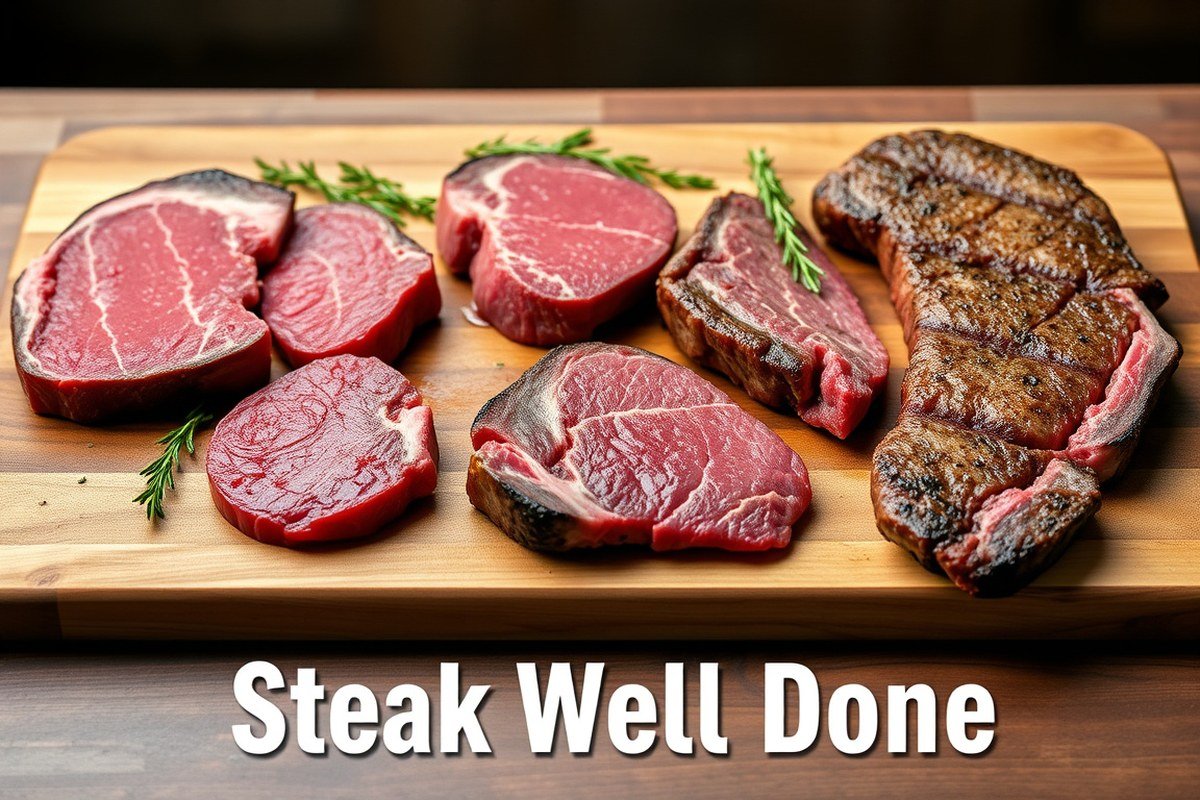
Selecting the right cut is critical when ordering a steak well done, because not all cuts handle extended cooking equally. High-quality cuts with more marbling and fat content hold moisture better and stay tender even when cooked through. Leaner cuts will dry out quickly and become tough and flavorless at a well-done temperature, often above 160°F (71°C).
Fat content makes a big difference. Cuts like ribeye and porterhouse have sufficient marbling, which melts during cooking and helps keep the meat juicy and tender despite the longer cook time. Choosing these fattier cuts reduces the typical well-done steak problems of dryness and toughness. In contrast, lean cuts such as sirloin or flank steak lose too much moisture and become leathery when cooked to well done.
- Ribeye: well-marbled; holds moisture well at well done.
- Porterhouse/T-bone: fattier cuts with both tenderloin and strip; better juiciness.
- Strip steak (New York strip): moderately marbled, better than lean cuts but less forgiving than ribeye.
- Sirloin: leaner, good for medium but gets tough well done.
- Flank and skirt steak: tough texture, stronger flavor, not recommended for well done unless marinated and thinly sliced.
- Filet mignon (tenderloin): very lean and tender, but prone to drying out well done.
Being intentional about your cut choice matters, especially in restaurants where well-done steaks sometimes get less desirable cuts. Steakhouses often reserve their best cuts for rarer cooking preferences, which can leave you with a subpar experience if you don’t specify or choose wisely. A well-marbled ribeye or porterhouse ordered well done will cost more than a lean cut, but the results are visibly more tender and flavorful. When ordering, ask if the well-done steak will be from a marbled cut to avoid disappointment.
Requesting a fattier, well-marbled cut can greatly improve your well-done steak experience by preventing dryness and improving flavor.
Using a quality cut isn’t just about taste but also texture. Cuts with intramuscular fat and some connective tissue break down better and stay juicy up to higher internal temperatures. On the other hand, lean muscles with minimal fat become chewy or hard after overcooking, resulting in a “hockey puck” texture. Aim for cuts known for marbling to offset the toughness naturally introduced by well-done cooking.
How to Order a Well-Done Steak at a Restaurant with Confidence
Ordering a well-done steak at a restaurant requires clear communication to avoid receiving a dry or overcooked piece of meat. Use specific phrases and ask thoughtful questions to guide the chef and ensure your steak is cooked properly. Don’t hesitate to mention preferences about temperature or cooking methods to get the best result.
Key Phrases to Use When Ordering
Clearly request a well-done steak and include specifics to help the chef cook it correctly. You might say, “Please cook my steak to well done, reaching 160°F inside.” This directs the kitchen to a safe temperature while trying to keep the meat moist. Identify the cut, too, fattier ones like ribeye hold moisture better at well done, while lean cuts like filet mignon require more careful cooking to avoid dryness. Here are some practical phrases you can use:
- “Please cook my steak well done, but still juicy.”
- “Can you cook it to 160°F internally and avoid over-charring?”
- “I prefer a slow, even cooking to keep the steak tender.”
These phrases signal that you want more than just a dry, overcooked steak, encouraging the chef to pay extra attention.
Questions to Ask Your Server or Chef
Asking questions helps you set expectations and understand how the kitchen handles well-done orders. Before finalizing your order, try these questions to avoid surprises:
- “How do you cook your well-done steaks to keep them flavorful?”
- “Will you use a thermometer to ensure it reaches 160°F without rushing?”
- “Do you recommend any specific cuts for well-done preparation here?”
These queries invite the server or chef to explain their process, revealing if they pay close attention to doneness or tend to overcook. A good kitchen will appreciate your interest and accommodate your requests to maintain quality.
How to Clarify Cooking Preferences
Keeping your communication clear helps ensure your steak arrives as you like. Before the steak is sent to the kitchen, confirm that the server understands your preferences by repeating your request. You can use this five-step approach:
- Request your steak well done, specifying the internal temperature as 160°F to meet food safety and doneness standards.
- Ask the server if the chef will use a meat thermometer to prevent overcooking.
- Request that the steak be prepared using methods that preserve moisture, such as resting the steak before serving.
- Mention your preferred steak cut, favoring ribeye or filet for well-done orders.
- Confirm with the server that your requests are understood before finalizing the order.
This structured approach minimizes risks of miscommunication and helps the kitchen deliver a juicy, well-done steak without unnecessary dryness or toughness.
Cooking Methods and Temperatures for a Perfect Well-Done Steak
Grilling, pan-searing with oven finishing, and sous vide are the best methods to cook a well-done steak. Each offers control over temperature and time, which is critical to avoid toughness and retain flavor. Your choice depends on your available equipment, steak thickness, and how much precision you want during cooking.
Grilling Times and Heat Levels
Grilling a well-done steak typically requires medium-high heat around 450°F (232°C). For a 1-inch thick steak, grill it about 5 minutes on the first side and another 3 minutes on the second. Adjust times if the steak is thicker or thinner. Always let the steak come to room temperature before grilling to ensure even cooking. Pull the steak off the grill about 5°F below the well-done target temperature to allow for carry-over cooking.
Steaks cooked too long on very high heat risk developing bitter chemicals, so maintaining controlled medium-high heat helps avoid this. Well-done steaks take longer, so thinner cuts or those with less fat may become tough if overcooked.
Pan-Searing and Oven Finishing Techniques
Pan-searing works well for well-done steak if you start on a hot pan with medium-high heat. Sear for about 4 to 6 minutes per side for a 1-inch thick steak. Then transfer the steak to a 350°F (175°C) oven to finish cooking evenly without burning the outside. Oven finishing time usually ranges from 5 to 10 minutes depending on thickness. Rest the steak 5 to 10 minutes after cooking to keep juices inside.
This method helps achieve a flavorful crust and thorough interior doneness. It works best for thicker or bone-in cuts where grilling times alone may cook the outside too fast.
Sous Vide for Precise Well-Done Cooking
Sous vide cooking means placing the steak in a sealed vacuum bag and immersing it in water heated to an exact temperature, often around 150°F (65.5°C) for a well-done result. This technique requires 1 to 3 hours, depending on the thickness of the steak, but ensures an even cook throughout without drying it out. Finish by quickly searing the steak on high heat for 1 to 2 minutes on each side to create a crust.
This is the most reliable way to get a perfectly tender well-done steak without drying it out. It requires special equipment and more time but offers excellent control. Use the table below to compare these cooking methods by steak thickness, temperature, time, and best outcomes.
| Cooking Method | Steak Thickness | Heat/Temp | Time per Side | Oven Finish Time | Rest Time | Notes |
|---|---|---|---|---|---|---|
| Grilling | 1 inch | 450°F (232°C) | 5 min first, 3 min second | None | 5-10 min | Adjust for thickness, pull off 5°F before target temp |
| Pan-Searing + Oven | 1 inch | Med-high pan, 350°F (175°C) oven | 4-6 min | 5-10 min | 5-10 min | Best for thicker cuts, oven evens cook |
| Sous Vide | Up to 1.5 inch | 150°F (65.5°C) | N/A (water bath) | 1-3 hours total cook | Rest minimal, quick sear after | Precise temp control, tender results |
Grilling is fastest but requires attention and adjustment for carry-over cooking. Pan-searing with an oven finish balances crust and thorough heat. Sous vide provides unmatched temperature control but needs extra equipment and time. Choose the method that fits your schedule and tools and matches the steak cut and thickness for the best well-done outcome.
How to Use a Meat Thermometer for Accurate Well-Done Doneness
Using a meat thermometer is the best way to ensure your well-done steak reaches the right internal temperature without overcooking. Insert the thermometer into the thickest part of the steak, away from bone and fat, to get an accurate reading. Begin checking the temperature late in the cooking process to avoid losing juices and to prevent overcooking.
Choosing the Right Thermometer Type
Choosing the right meat thermometer matters for accuracy and convenience. Digital instant-read thermometers are highly recommended because they provide quick temperature readings, usually within a few seconds. These thermometers typically cost between $10 and $30, depending on features like probe length, waterproofing, and temperature range.
Dial thermometers can work but tend to be slower and less precise, especially for thinner cuts. Remote or wireless thermometers are useful for monitoring steaks on the grill or in the oven without opening the lid or door, but these devices usually cost more and require batteries or charging. A properly chosen thermometer should have a temperature range that covers at least from 100°F to 200°F, allowing clear measurement through rare to well-done doneness levels.
Measuring Temperature Correctly
Accurate temperature measurement requires placing the thermometer probe properly and reading it carefully. Insert the probe into the thickest section of the steak, avoiding bone, fat, or gristle, which can give misleading results. For steaks with bone-in cuts, position the probe alongside the bone but not touching it. Steps to measure your steak’s internal temperature:
- Open the steak’s cooking surface carefully to access the thickest part.
- Insert the thermometer probe horizontally into the center of the thickest area, at least half an inch deep.
- Wait 5 to 10 seconds for a digital thermometer to stabilize the reading.
- Read the temperature and note if it’s close to or has reached 160°F, the USDA recommended minimum temperature for well-done steak.
- Remove the thermometer and avoid piercing the meat repeatedly to keep juices inside.
Insert the probe into the thickest part of the steak, not near any bone or fat, to get an accurate temperature reading.
Timing Your Temperature Checks
Begin checking the steak’s temperature during the final third of the estimated cooking time. For example, if you expect a 20-minute grilling period, start taking temperature readings around the 13 to 15-minute mark. This timing helps avoid overcooking by catching the moment the steak reaches 160°F internally.
Checking too early can result in unnecessary heat loss and drying out the steak. Also, testing frequently may cause juice loss due to repeated piercing. When cooking thicker cuts, you may want to check more than once but limit checks to every few minutes to maintain juiciness.
After cooking, allow your steak a resting period of about 5 minutes. The internal temperature can rise an additional 5°F during this time due to residual heat, ensuring it will finish at the well-done level without further cooking.
Tips to Keep Well-Done Steak Juicy and Flavorful
Keeping a well-done steak juicy and flavorful takes some attention before, during, and after cooking. The biggest challenge with well-done steaks is preventing dryness since the internal temperature exceeds 160°F, which naturally dries out muscle fibers. Marinades that contain acids like vinegar or citrus juice paired with oil help break down tough proteins and lock in moisture. A simple marinade made from 1 part olive oil, 1 part soy sauce, and a splash of lemon juice or balsamic vinegar works well. Marinate the steak for at least 30 minutes but no longer than 4 hours to avoid a mushy texture.
Temperature control during cooking is critical. Use medium to medium-low heat to avoid overcooking the outside before the inside reaches 160°F. Cooking too hot will char the surface, harming flavor and causing moisture loss. Using a meat thermometer ensures you hit the target temperature precisely without guesswork.
Resting time after cooking plays a key role in moisture retention. Allow the steak to rest uncovered for 5 to 10 minutes before serving. This lets juices redistribute throughout the meat rather than spilling out when slicing. Resting also improves tenderness and overall flavor.
- Marinate the steak 30 minutes to 4 hours in an acidic/oil-based marinade
- Cook on medium to medium-low heat, aiming for an internal 160-165°F
- Use a meat thermometer for precise temperature control
- Rest steak for 5 to 10 minutes after cooking before slicing
- Season with salt and pepper just before cooking to avoid drawing out moisture
- Ask for a sauce or butter topping to add moisture and flavor at serving
- Choose thicker cuts to help retain juiciness during cooking
Seasoning strategy matters, too. Salt draws moisture but also improve flavor when applied right before cooking. Avoid salting hours in advance, which pulls juice out and leads to dryness. Pepper and herbs can be added with the salt or used in the marinade. At a restaurant, request sauces with fat and umami ingredients, such as a mushroom or peppercorn sauce, which add richness to a drier well-done steak without overpowering its flavor. For home cooking, a pat of compound butter with garlic or herbs on top after resting can improve tenderness and moisture perception.
Common Mistakes When Ordering or Cooking Well-Done Steak and How to Fix Them
Ordering or cooking steak well done often leads to a tough, dry, and flavorless result. This happens because the meat loses much of its natural juices and fats during the longer cooking time needed to reach an internal temperature of about 160°F or higher. The key mistake is not adjusting cooking techniques to compensate for this extended time on heat. You need to choose the right cuts, control cooking temperature carefully, and avoid overcooking beyond well done.
One common error when ordering is not explaining your preferences clearly. Saying “well done” alone can lead to chefs cooking the steak to a hard, leathery texture. Instead, specify that you want the steak cooked through but still juicy and tender. For example, you can say, “Well done, but please keep it juicy and avoid an overly dry finish.” This tells the kitchen to use techniques like finishing the steak off the direct grill heat or resting it properly to retain moisture.
On the cooking side, avoid very high heat for the entire cook. High heat can char the outside before the inside cooks through, resulting in a burnt taste with a dry center. Instead, cook the steak over medium heat and consider finishing it in the oven or letting it rest under foil for several minutes after cooking. Using a meat thermometer is critical here, aim for an internal temperature just reaching 160°F, then remove the steak and rest it to let residual heat even out the doneness.
- Communicate “well done with juiciness” when ordering to signal gentle cooking methods.
- Choose thicker cuts or those with more marbling to keep flavor during longer cook times.
- Cook over medium rather than high heat to avoid charring and toughness.
- Finish the steak in the oven after searing to cook it evenly without drying out.
- Use a meat thermometer to avoid overcooking beyond 160°F internal temperature.
- Rest the steak 5 to 10 minutes covered loosely with foil before serving to redistribute juices.
- Consider marinating to add moisture and flavor before cooking.
Knowing these pitfalls helps you avoid the common frustration of a flavorless well-done steak. Servers may familiar with well-done orders sometimes assume the steak will be overcooked or dry, but clear communication and understanding proper cooking can improve what you get on your plate significantly. Take a moment to specify your wishes clearly and look for cooks who treat well-done steaks with care. This way, you get the thorough cooking you want without sacrificing taste or texture.
How Steak Thickness and Bone-In vs. Boneless Affect Well-Done Cooking
Steak thickness directly affects how long you need to cook it to reach a well-done temperature. Thicker steaks require more time on each side, or lower heat for longer, to cook evenly without burning the outside. For example, a 1-inch steak cooked at 450°F needs about 7 minutes on the first side and 5 to 6 minutes on the second side to hit well-done, while a thinner ¾-inch steak requires less time, around 5 minutes per side.
Bone-in steaks often retain heat differently because the bone acts as an insulator, which can cause the meat near the bone to cook more slowly than the outer edges. While the bone itself doesn’t change the flavor, it can keep the steak juicier and give a slightly different texture. That means you should either increase cooking time slightly for well-done bone-in steaks or finish cooking them with indirect heat for more even doneness throughout.
Adjust your cooking strategies depending on steak thickness and bone presence. Thicker steaks call for moderate heat and longer cooking times to prevent the outside from becoming too dry before the inside reaches well-done. Bone-in steaks benefit from starting with high heat to sear and finish with lower heat to cook more thoroughly near the bone.
| Steak Thickness | Cooking Time 1st Side at 450°F | Cooking Time 2nd Side at 450°F | Adjustment for Bone-In |
|---|---|---|---|
| ¾ inch (1.9 cm) | 5 minutes | 4-5 minutes | +1-2 minutes per side or finish indirect heat |
| 1 inch (2.5 cm) | 7 minutes | 5-6 minutes | +1-2 minutes per side or finish indirect heat |
| 1¼ inch (3.2 cm) | 8 minutes | 6-7 minutes | +1-3 minutes per side or finish indirect heat |
Remove your steak from heat about 5°F before your target well-done temperature to avoid overcooking.
Using a meat thermometer helps confirm you’ve reached the safe well-done temperature of at least 160°F, especially important with thicker or bone-in cuts that can cook unevenly. Expect bone-in cuts to take longer by a minute or two per side, or consider searing on direct heat then moving to indirect heat to finish cooking evenly. Monitoring time and temperature closely assures that your well-done steak stays juicy and flavorful despite the extended cooking.
Step-by-Step Action Plan for Ordering and Cooking a Well-Done Steak
Follow these steps to order or cook a well-done steak that stays juicy and flavorful while reaching the right temperature.
- Before Ordering: Choose a thick cut like ribeye or strip, preferably bone-in, since they handle well-done cooking better. You’ll notice more flavor and moisture.
- When Ordering: Politely specify “well done, please,” and ask if the kitchen can use a meat thermometer to reach 160°F or slightly above. Confirmation means they understand your preference.
- Upon Arrival: Check the steak for a uniform brown color inside and ask for a quick temperature check if unsure. A properly cooked well-done steak won’t have pink visible.
- Before Cooking at Home: Let the steak rest at room temperature for 20 to 30 minutes. This prevents uneven cooking.
- During Cooking: Use a combination of searing and oven roasting. Sear on high heat for 2-3 minutes per side, then roast at 325°F until a meat thermometer reads 160°F or above.
- Using a Meat Thermometer: Insert the probe into the thickest part without touching bone. Check temperature regularly to prevent overcooking.
- After Cooking: Rest the steak loosely covered for 5 to 10 minutes. This redistributes juices and keeps the steak moist.
- Before Serving: Slice the steak against the grain to improve tenderness and flavor absorption.
Frequently Asked Questions
Why Is a Well-Done Steak Typically Less Juicy Than Rarer Steaks?
A well-done steak is cooked to higher temperatures, causing more moisture loss. Using techniques like resting the steak or adding a marinade can help retain some juiciness.
Can I Request a Specific Internal Temperature for a Well-Done Steak at a Restaurant?
Yes, you can ask for 160 to 170°F for well done. Providing a temperature helps the chef meet your expectations precisely.
Does Cooking a Steak Well Done Affect Its Flavor Profile?
Yes, it reduces the red juices and intensifies the browned, caramelized flavors. Adding seasoning or sauce can improve flavor without overcooking.
Should I Avoid Certain Steak Cuts If I Want It Well Done?
Some tender cuts dry out faster when well done, so opt for thicker, fattier cuts like ribeye. They hold moisture better when cooked fully.
How Does Resting Time After Cooking Impact a Well-Done Steak?
Resting allows juices to redistribute, preventing dryness. Let a well-done steak rest for 5 to 10 minutes before serving.
Will Ordering Well Done Affect the Price of My Steak in a Restaurant?
Usually, the price stays the same, but cooking time might be longer. Some restaurants may charge extra for special requests, so check menus.
Key Points to Remember
Ordering or cooking a well-done steak that remains juicy and flavorful takes care, but following these specific steps makes it achievable. Start by selecting the right cut for your preference and communicating clearly with the kitchen. Your next action is to try ordering well done at a local steakhouse and request a temperature check to see the difference precision makes.






One Comment