How to Unclog a Double Kitchen Sink: A Step-by-Step Guide
Dealing with a clogged double kitchen sink can be frustrating, especially when it disrupts your daily routine.
You’re not alone—many people struggle with stubborn blockages that make washing dishes or cleaning up a hassle. Luckily, there are simple, effective ways to clear those drains and get your sink flowing smoothly again.
To unclog your double kitchen sink, start by filling each side separately to identify the clogged basin.
Use a plunger—seal one drain while plunging the other with quick, strong thrusts. You can also try pouring baking soda followed by vinegar, letting it fizz before flushing with boiling water.
If that fails, use a drain snake to break up tough blockages. For persistent issues, check the P-trap or consider professional help.
Keep following these steps to uncover more effective techniques and tips.
Key Takeaways
- To find out which side is clogged, fill one basin with water and watch how quickly it drains or if there’s any backup.
- Grab tools like a plunger, drain snake, or use baking soda and vinegar to clear out the blockage.
- Seal off the other drain and then plunge firmly or carefully insert the drain snake to break up the clog.
- Take apart the P-trap by loosening the slip nuts, remove any debris, and rinse everything thoroughly.
- If the clog keeps coming back, or if you notice leaks, foul smells, or gurgling sounds after trying DIY fixes, call a plumber.
How to Identify Which Side of Your Double Kitchen Sink Is Clogged
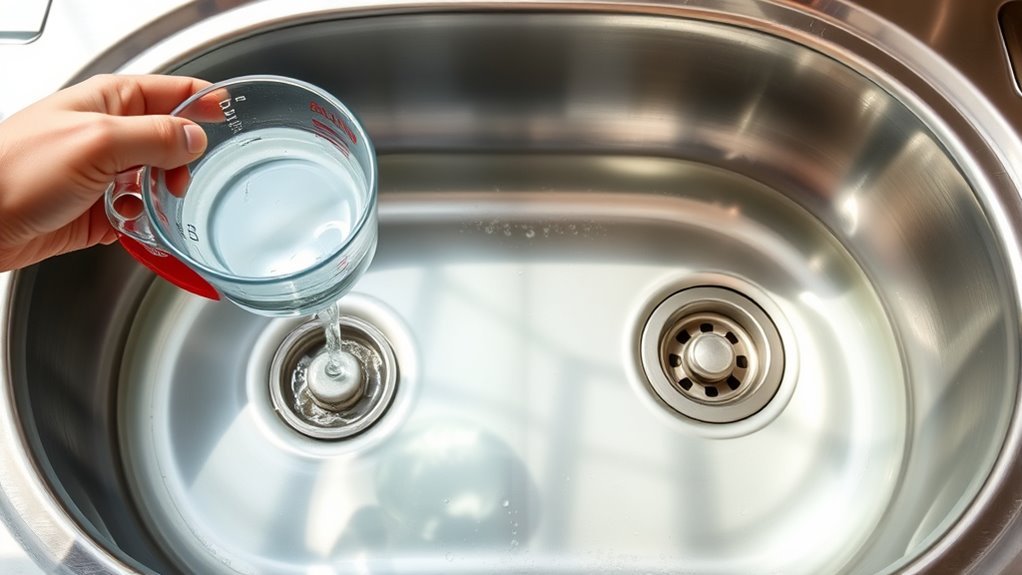
How can you tell which side of your double kitchen sink is clogged? Start with a simple sink drainage test.
Fill one side of the sink with water, then unplug the drain. Watch how quickly the water drains.
If it drains slowly or not at all, that’s your clogged side. Repeat the test on the other side to be sure.
You can also listen for gurgling sounds or notice water backing up into the opposite basin when draining one side. These signs point to a blockage in that pipe.
Avoid mixing water tests between sides to get clear results.
By doing this quick inspection, you’ll know exactly which side needs attention before you start unclogging.
This focused approach saves you time and makes fixing the problem easier.
Tools Needed to Unclog a Double Kitchen Sink
To clear out a clogged double kitchen sink, you’ll want to grab a few basic plumbing tools. A plunger is a good starting point—it’s simple but often effective. You might also need a pipe wrench if the clog is stubborn or if you’re planning to remove the pipes.
Chemical drain cleaners can help break down tough blockages, but just be cautious when using them. Follow the instructions carefully and avoid mixing different chemicals to stay safe.
And don’t forget your safety gear! Wearing gloves and goggles is a smart move to protect yourself from splashes or any potential messes during the process.
Essential Plumbing Tools
A few essential plumbing tools will make unclogging your double kitchen sink much easier and more efficient. Understanding plumbing basics helps you choose the right tools to tackle common clogs like grease buildup or food debris. Here are the must-haves:
- Plunger: A sturdy, cup-shaped plunger creates suction to dislodge blockages quickly.
- Pipe wrench: This adjustable tool helps you loosen and tighten pipe connections under the sink.
- Drain snake (or auger): A flexible, coiled wire that snakes through pipes to break up stubborn clogs deep inside.
With these tools, you’ll be well-equipped to handle most blockages without calling a plumber. Having a grasp of plumbing basics and using the right gear saves time and prevents damage during your unclogging process.
Chemical Drain Cleaners
While having the right tools like plungers and drain snakes can handle many clogs, sometimes you need a little extra help to clear stubborn blockages. That’s where a chemical drain cleaner can come in handy.
These products use powerful ingredients to break down grease, food debris, and other buildup causing the clog. When choosing a chemical drain cleaner, pick one made specifically for kitchen sinks and double drains to make sure it works effectively.
Follow the instructions carefully—pour the recommended amount down the drain and give it some time to work. Keep in mind, chemical drain cleaners are a last resort since they can be harsh on pipes and the environment.
Use them sparingly and only when mechanical tools haven’t cleared the clog.
Safety Equipment Needed
Three essential pieces of safety equipment will protect you as you work to unclog your double kitchen sink. Before you start, make sure you have the right gear to keep yourself safe from harmful substances, sharp objects, and splashes.
Here’s what you’ll need:
- Safety gloves: Protect your hands from harsh chemicals and sharp debris.
- Eye protection: Prevent splashes from drain cleaners or dirty water from getting into your eyes.
- Protective clothing: Wear old clothes or a waterproof apron to shield your skin and clothes from spills.
Wearing this safety equipment will help you work confidently and avoid injuries during the unclogging process. Don’t skip these basics. They’re vital for a safe, smooth job.
How to Use a Plunger to Clear Your Double Sink
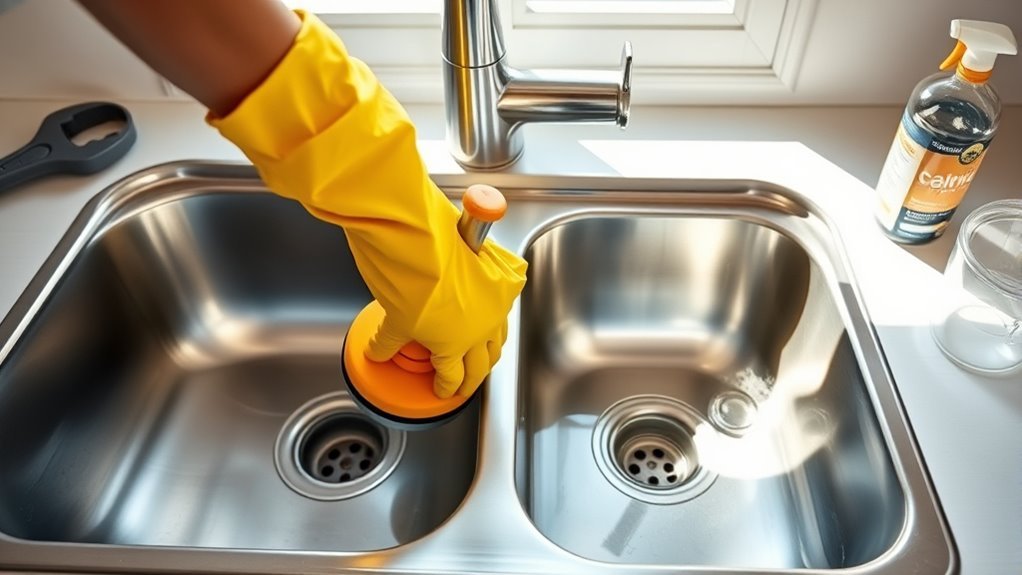
Before you dive in, it’s important to seal both sink drains so you can create the right pressure. Just place the plunger firmly over the clogged drain, making sure it’s sealed tight. Then, use steady, controlled pushes—no need to go crazy—so you don’t splash water everywhere. If you keep at it with the right technique, you’ll break up that blockage in no time and get your double sink draining smoothly again.
Preparing Your Sink
Once you’ve cleared the sink of any dishes or debris, block one side of the double sink to create proper suction. This step is essential for effective sink maintenance and drain hygiene.
Start by sealing the drain on the side you won’t be plunging, using a wet cloth or a sink plug. Then, fill the side you’ll plunge with enough water to cover the plunger’s cup. This water helps generate the pressure needed to dislodge the clog.
Finally, make sure you’re using a standard cup plunger, not a flange type meant for toilets. By preparing your sink this way, you’ll set the stage for a successful plunge and keep your drain clean.
Plunging Technique Tips
To get the clog moving, position your plunger firmly over the drain with a tight seal to maximize pressure. When you’re dealing with a double kitchen sink, block the other drain with a wet cloth to ensure effective plunging.
Use quick, strong thrusts instead of slow pushes. This creates the necessary suction to dislodge the blockage. Keep the plunger submerged in water because air breaks reduce pressure and make plunging less effective.
Alternate plunging on each side if both drains are clogged, focusing on one at a time. After several plunges, pull the plunger away sharply to break the clog free.
How to Use Baking Soda and Vinegar to Clear Your Sink
Start by pouring a cup of baking soda directly into the clogged drain, letting it settle for a moment. Baking soda helps break down grease and neutralize odors, making it perfect for kitchen sinks.
Next, slowly pour a cup of vinegar down the drain. The vinegar reacts with the baking soda, creating a fizzy reaction that helps loosen debris.
You’ll notice bubbling sounds as the mixture works to clear the clog, along with a fresh, natural scent replacing any bad odors. You might also see gradual draining improvement as gunk dissolves.
Let this sit for 15-20 minutes without running water. After that, flush the drain with boiling water to clear out any remaining residue.
This simple, eco-friendly method avoids harsh chemicals and effectively clears minor blockages in your double kitchen sink.
How to Use a Drain Snake to Clear a Double Kitchen Sink
Sure! Here’s a more conversational version of your instructions:
If you’re trying to clear a double kitchen sink with a drain snake, the first thing you want to do is pick the right size of snake for your pipes. Once you’ve got that sorted, gently insert the snake into the drain and start turning it. This helps break up whatever’s causing the clog. After you’ve done that, carefully pull out the debris to keep things clean and avoid making a mess or damaging your pipes.
Choosing The Right Snake
Selecting the right drain snake can make all the difference when clearing a double kitchen sink. You’ll want to consider both snake types and lengths to get the job done efficiently.
For most double sinks, a medium-length snake—about 25 to 50 feet—works best. It gives you enough reach without being too cumbersome to handle.
When picking a snake, think about the clog’s severity and your pipe layout. Here are some options:
- Drum snakes: Compact and easy for beginners, perfect for simple clogs.
- Hand augers: Offer better control, great for tougher blockages.
- Electric snakes: Powerful and fast, ideal for stubborn or deep clogs.
Choosing the right snake ensures you can navigate the complex pipes of a double sink without causing damage or wasting time.
Inserting The Drain Snake
Feed the drain snake carefully into the sink’s drain opening, aiming to reach the clog without forcing the cable. Use gentle twisting of the handle clockwise as you push the snake further in. This helps it navigate bends and avoids damaging the pipes.
Avoid common mistakes like pushing too hard, which can kink the cable or scratch the pipes. If you feel resistance, pause and try rotating the snake to work through the blockage.
For a double kitchen sink, insert the snake into each drain separately to check both sides. Keep feeding the snake until you feel it move freely, indicating you’ve passed the clog.
Removing Debris Safely
Carefully pull the drain snake back once you’ve reached or passed the clog, letting debris catch on the coil. Slowly retract the snake to prevent dropping debris back into the sink. When removing the snake, have a container or trash bag ready to catch the waste.
Handle the debris carefully to avoid spills or splashes. Wear gloves to protect your hands from bacteria and sharp objects. Clean the snake immediately after use to keep it in good shape and hygienic.
Here’s what you should remember:
- Use gloves to handle debris safely.
- Collect debris in a trash bag for easy disposal.
- Clean and disinfect the drain snake after clearing the clog.
How to Remove and Clean Your Double Sink’s P-Trap
Start by placing a bucket under the P-trap to catch any water or debris that might spill when you disconnect it. Next, loosen the slip nuts on both ends of the P-trap using your hands or an adjustable wrench if they’re tight.
Carefully remove the trap and empty its contents into the bucket. This step is key because buildup often causes clogs. Rinse the P-trap thoroughly with warm water and use a brush or old toothbrush to scrub away any stubborn grime or debris inside.
After cleaning, check the trap for cracks or damage and replace it if needed. Reattach the P-trap by tightening the slip nuts securely, but don’t overtighten to avoid damage.
Regular drain cleaning, including your P-trap, helps keep water flowing smoothly and prevents unpleasant odors. By following these steps, you’ll keep your double sink’s drainage system working properly and avoid frequent clogs.
When to Call a Plumber for Your Double Kitchen Sink
How do you know when it’s time to call a plumber for your double kitchen sink? Knowing when to DIY is key, but some situations clearly need professional help. If you notice any of these signs of emergency, don’t hesitate to reach out to a plumber.
Water pooling under the sink or around the cabinets is a big red flag. It could mean there’s a hidden leak that needs fixing. Persistent clogging that doesn’t improve after cleaning the P-trap or using a plunger is another sign.
Foul odors or gurgling noises coming from the drains may point to deeper blockages or venting issues. These signs suggest the problem is likely beyond simple DIY fixes and could cause damage if ignored.
Calling a plumber early can save you time, money, and stress. Trust your instincts—if the clog persists or gets worse despite your efforts, it’s wise to seek professional help instead of risking further damage.
How to Spot and Fix Venting Issues That Slow Your Sink
If your double kitchen sink drains slowly despite clearing visible clogs, venting issues might be the culprit. Proper ventilation design ensures air pressure stays balanced inside your plumbing system, letting water flow smoothly.
Slow draining in double sinks can signal venting problems disrupting balanced air pressure and smooth water flow.
When vents get blocked or aren’t designed well, negative air pressure can build up. This causes slow drainage or gurgling sounds when you use the sink.
To spot venting problems, listen for strange noises when water drains or see if both basins drain unevenly. You can also check the vent pipes on your roof for debris or nests. If you find any blockages, carefully clear them out using a plumber’s snake or garden hose.
Fixing venting issues might involve adjusting the size of the vent pipe or adding an air admittance valve under the sink. These steps help restore balanced air pressure and improve drainage speed.
If you’re unsure about what to do, it’s best to call a professional. They can fix the problem without risking damage to your plumbing system.
Effective Tips to Prevent Clogs in Your Double Kitchen Sink
While preventing clogs might seem challenging, a few simple habits can keep your double kitchen sink draining smoothly. Regular maintenance is essential, and inspecting your drains periodically helps catch issues early before they become bigger problems.
To stay ahead of clogs, use sink strainers to catch food particles and debris. This prevents them from going down the drain and causing blockages. Avoid pouring grease or oil down the sink, as they tend to solidify and clog the pipes.
Running hot water through both drains regularly can help flush away buildup. Making these small changes can go a long way in keeping your sinks clear and functioning properly.
How to Maintain Your Double Kitchen Sink Drain for Long-Term Flow
Maintaining your double kitchen sink drain just takes a few simple steps to keep everything flowing smoothly and avoid costly repairs.
Start by regularly flushing your drains with hot water to help break down grease and soap buildup. It’s also best to avoid pouring fats, oils, or coffee grounds down the drain since they can cause blockages over time.
Regularly flush drains with hot water and avoid fats, oils, or coffee grounds to prevent blockages.
To give your drain a boost, try using a mixture of baking soda and vinegar once a month. This natural combo helps dissolve residue without harsh chemicals. Keep a drain strainer in place to catch food particles before they enter the pipes.
Developing habits like wiping down sink surfaces and cleaning up spills right away can minimize grime that might clog your drains. Also, make sure to check your drain pipes periodically for leaks or slow drainage and fix any issues quickly.
Frequently Asked Questions
What Causes Frequent Clogs in Double Kitchen Sinks?
Frequent clogs in double kitchen sinks mostly happen because you let grease buildup and food debris accumulate in the drains. When grease cools, it hardens and sticks to the pipes, narrowing the flow and trapping bits of food.
You’ll notice slow draining or backups if you don’t rinse properly after cooking. To avoid clogs, scrape off food scraps before washing and avoid pouring grease down the sink.
Can Chemical Drain Cleaners Damage My Double Sink Plumbing?
Yes, chemical drain cleaners can damage your double sink plumbing. The strong chemical reactions they cause can corrode pipes, especially if your plumbing is older or made of metal.
Over time, this can lead to leaks or costly repairs. To protect your plumbing, try using chemical cleaners sparingly or choose safer options like natural solutions or mechanical methods.
Methods like plungers or drain snakes are effective and less likely to harm your pipes. This way, you can keep your sink clear without risking damage.
How Long Does It Take for a Plunger to Work?
You might think a plunger works instantly, but it usually takes a few minutes of steady pumping to see results.
If you don’t notice any progress after 5 to 10 minutes, the clog could be tougher and might need other methods.
Regular plunging not only clears blockages quickly but also helps prevent future clogs by keeping your pipes clear.
Are There Eco-Friendly Alternatives to Baking Soda and Vinegar?
Yes, you can use natural drain cleaners as eco-friendly alternatives to baking soda and vinegar. For example, citrus-based cleaners or enzyme-based products break down organic matter without harsh chemicals.
You can also try homemade remedies like pouring hot water mixed with lemon juice or using a salt and hot water combo to clear minor clogs. These options are gentle on pipes and better for the environment, so you don’t have to rely solely on baking soda and vinegar.
What Materials Are Best for Double Sink Drain Pipes?
You might think metal pipes are sturdy, but plastic pipes often win for double sink drain pipes. Plastic resists corrosion and is easier to install, while metal pipes can rust and make drain maintenance more complicated.
If you want reliable clog prevention, plastic’s smooth interior helps waste flow better. You’ll save time and hassle by choosing plastic, making your kitchen’s plumbing both durable and easier to maintain.
Conclusion
Unclogging your double kitchen sink is like clearing a tangled forest path. Once you figure out which side’s blocked and have the right tools, water starts flowing freely again.
With plungers, baking soda fizz, or a trusty drain snake, you’re the hero restoring harmony to your kitchen. Keep an eye on venting and regular maintenance, and your sink will run as smoothly as a gentle stream, ready for whatever dishes come your way.