How Much to Remodel a Small Kitchen? The Complete Answer
Remodeling a small kitchen can feel overwhelming, especially when you’re trying to stay within budget. Many people struggle with figuring out what they can afford and what’s worth the investment. You’re not alone—navigating costs and choices can be tricky.
You can expect to spend between $10,000 and $25,000 to remodel a small kitchen, depending on your choice of materials, appliances, and whether you change the layout. Sticking with the existing layout and opting for neutral finishes helps keep costs down.
Labor, cabinets, and countertop materials typically take the largest budget share. Planning for unexpected expenses with a 10-15% contingency fund is smart.
If you want to make the most of your budget, there’s plenty more to investigate.
Key Takeaways
- Small kitchen remodels usually cost between $10,000 and $25,000, depending on materials, labor, and layout changes.
- Keeping the existing layout helps reduce costs by avoiding plumbing and electrical work.
- Your choice of cabinets and countertops really impacts the budget, with laminates and laminate counters being more affordable than hardwood and granite.
- Upgrading to energy-efficient appliances might increase upfront costs but can save money over time through lower utility bills and better functionality.
- It’s smart to set aside 10-15% of your budget for surprises and make sure to get the necessary permits for electrical or plumbing updates.
Typical Cost of a Small Kitchen Remodel
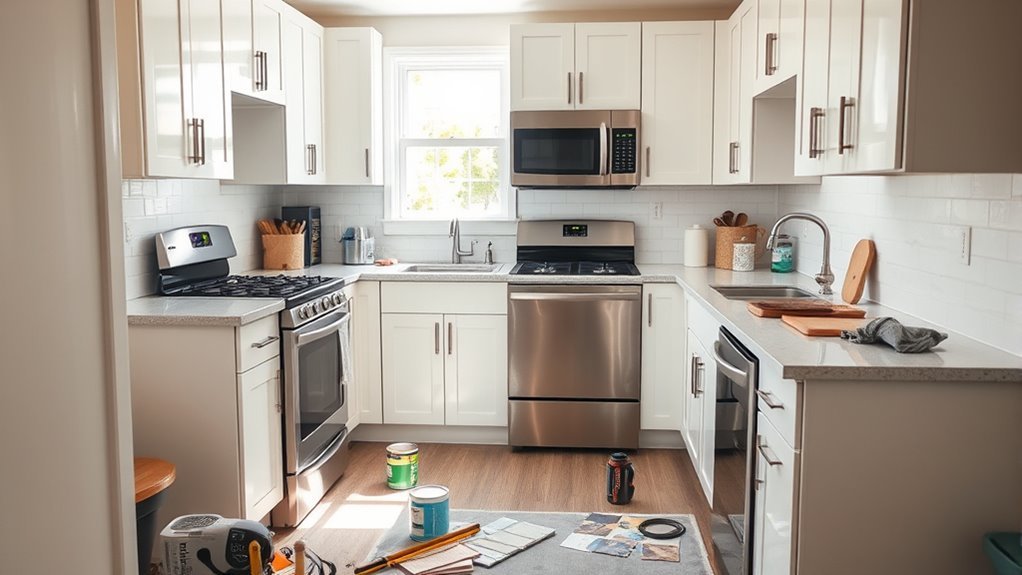
When remodeling a small kitchen, you’ll typically spend between $10,000 and $25,000, depending on materials and labor choices. Your kitchen layout heavily influences costs since changing plumbing or electrical setups adds to expenses. If you keep the existing layout, you’ll save money, but updating cabinets, countertops, and appliances still requires a budget.
Color schemes also play a role. Choosing premium paint, tiles, or backsplashes can increase costs, while simpler, neutral tones usually cost less. You’ll want to balance aesthetics with your budget by selecting materials that fit your style without overspending.
Small kitchens benefit from thoughtful designs that maximize space, so investing in efficient storage solutions within your budget is smart. Remember, your choices in layout and color schemes set the tone and functionality of the space, shaping both the final cost and your satisfaction with the remodel.
Breaking Down Main Remodel Expenses
When you’re planning a kitchen remodel, it’s really helpful to know where your money is likely to go. Think about the different costs involved—like the price of materials, the labor for the work, and any permits or other fees that might pop up along the way. Taking the time to break these costs down makes it a lot easier to set a realistic budget and avoid surprises down the line.
Material Costs Overview
Although labor and design are important, material costs often make up the largest part of your small kitchen remodel budget. When choosing materials, aim to balance quality and style with what you can afford.
Eco-friendly options like bamboo flooring or recycled glass countertops might cost a bit more upfront, but they can save you money over time and help the environment. On the flip side, luxury finishes such as marble countertops or custom cabinets can quickly increase your costs but add a lot of style and value.
Don’t forget essentials like tiles, paint, and hardware, which can vary quite a bit in price. By picking materials that match your style and budget, you’ll keep your remodel efficient without sacrificing the final look.
Labor Expense Breakdown
Material choices set the stage, but labor costs often take up a big chunk of your kitchen remodel budget. Understanding labor market trends can help you anticipate price changes and plan accordingly.
When talking with contractors, being informed about typical labor expenses makes you a stronger negotiator. Here’s a breakdown of the main labor costs you’ll come across:
- Demolition and removal of old fixtures
- Electrical and plumbing work
- Cabinet installation
- Flooring and tiling
- Painting and finishing touches
Each task needs specialized skills, which affects your overall labor fees. Keep in mind, negotiating with contractors can sometimes help lower costs, especially if you bundle multiple services.
Staying aware of current labor market trends helps you avoid overpaying. It also ensures you get quality work that fits your budget.
Permits And Miscellaneous
Several permits and miscellaneous expenses can quietly add up during your kitchen remodel. Before you start, check local permit requirements since you’ll likely need permits for electrical, plumbing, or structural changes. These permits guarantee your remodel meets safety codes but usually come with fees that vary by location.
Besides permits, miscellaneous expenses include waste disposal, temporary kitchen setup, and minor tools or materials you may need. Don’t forget unexpected costs like inspection fees or slight plan adjustments, which also contribute to the overall budget.
Planning for these permit requirements and miscellaneous expenses upfront helps you avoid surprises and keeps your project on track financially. Being prepared makes your small kitchen remodel smoother and prevents costly delays.
Budgeting for Cabinets and Storage
When you’re setting your budget, it’s good to remember that cabinet materials can really range in price. You might find some affordable options like laminates, but if you’re looking at hardwoods, those can get pretty pricey. It’s all about finding the right balance for your style and your wallet.
Don’t forget to think about smart storage solutions too, especially if your kitchen is on the smaller side. There are some clever options out there that can make the most of your space without breaking the bank. Knowing these costs upfront can help you make choices that fit both your style and budget perfectly.
Cabinet Material Costs
Choosing the right cabinets can make or break your small kitchen remodel budget. Cabinet material costs vary widely based on styles, finishes, and customization options. You’ll want to balance durability with your budget while keeping current cabinet trends in mind.
Good cabinet installation is key to ensuring longevity and proper function, especially when combined with lighting and accessories. Don’t forget about organization features that help maximize your space. Also, consider the long-term maintenance costs.
Here’s what to keep in mind regarding cabinet materials:
- Solid wood offers durability but tends to cost more.
- MDF is budget-friendly and has smooth finishes.
- Plywood strikes a good balance between strength and price.
- Laminate provides a wide variety of finishes.
- Custom cabinets give you unique styles but increase costs.
Choose wisely to get the most value out of your investment.
Storage Solutions Pricing
Allocating your budget effectively for storage solutions can transform your small kitchen’s functionality without overspending. When planning storage, focus on creative options like pull-out shelves, corner carousels, and vertical dividers that make the most of every inch.
These solutions usually cost between $100 and $500 per unit, depending on materials and complexity. Space optimization is key—you don’t need expensive custom cabinets to maximize your layout.
Modular storage kits and adjustable shelving are great options that offer flexibility at a lower price, typically around $50 to $200. Keep in mind that investing in quality hardware and efficient organization systems saves money over time by reducing clutter and improving access.
Countertop Costs for Your Small Kitchen Remodel
Countertops are a key part of both how your small kitchen looks and how well it works. Picking the right materials and knowing installation costs can help you stay on budget while making your space look great.
Popular options include granite, quartz, laminate, butcher block, and concrete. Each has its own style and price range. Installation costs depend on the material’s weight, complexity, and labor rates, usually adding 20-40% to the material cost.
When planning your budget, think about how durable and easy to maintain each material is. Also, consider the cost per square foot for both materials and installation. Make sure the style matches your kitchen’s overall design.
If you’re handy, DIY installation could save you some money. Lastly, think about how long the countertop will last and whether it comes with a warranty.
How Much Do Modern Appliances Add to Your Remodel?
When you’re remodeling a small kitchen, the appliances you pick can really influence your budget. The type and features of the appliances matter a lot—some can be pretty pricey, but they might be worth it in the long run.
Thinking about energy-efficient models is a smart move because they can save you money on your utility bills over time. Plus, they usually come with cool features that make cooking and cleaning easier. And let’s not forget about style—sleek, modern designs can really give your kitchen a fresh look without making it feel cramped.
Appliance Types and Costs
Choosing the right appliances can greatly impact both the functionality and budget of your kitchen remodel. When selecting appliances, consider how different brands offer varying features, energy ratings, and warranty options.
Smart technology appliances might cost more upfront but can make your life easier. Make sure to match appliance sizes with your kitchen layout to maximize space. Don’t forget to include installation costs and plan for maintenance tips to extend your appliance lifespan.
Key points to keep in mind include comparing brands for quality and price, checking energy ratings to avoid high utility bills, evaluating the benefits of smart technology versus the extra cost, measuring appliance sizes for your space, and reviewing installation costs and warranty options.
All these factors help you find the right balance between cost and functionality.
Energy Efficiency Impact
Although upgrading to modern, energy-efficient appliances may increase your initial remodel costs, they can greatly reduce your utility bills over time. Choosing energy-saving appliances helps you invest in a kitchen that’s kinder to the environment and your wallet.
Incorporating eco-friendly materials alongside these appliances boosts your kitchen’s sustainable design, making your remodel more future-proof. While the upfront expense might seem high, the utility cost savings over the years often offset this.
By selecting appliances with high energy ratings, you reduce electricity and water consumption, directly lowering monthly expenses. So, when planning your small kitchen remodel, factor in these long-term savings.
The combination of energy-saving appliances and eco-friendly materials guarantees your kitchen is efficient, sustainable, and cost-effective in the long run.
Design and Functionality
Since modern appliances often come with advanced features and sleek designs, they can significantly influence both the look and functionality of your kitchen. Upgrading appliances affects your layout and helps optimize space, making your workflow more efficient by clearly defining functional zones.
Thoughtful placement of appliances improves storage accessibility and complements your lighting design, creating a cohesive environment. Incorporating current style trends and matching color schemes boosts your kitchen’s visual appeal, making it feel fresh and inviting.
When planning your remodel, consider how appliances impact your kitchen’s flow and space use. Think about creating distinct zones for cooking, prepping, and cleaning. Proper appliance placement helps maximize storage and accessibility.
Lighting design can highlight your new appliances and make your space more inviting. Also, choosing color schemes that unify your style trends and appliances can enhance the overall aesthetic.
Modern appliances add both style and practical value, making them a smart investment in your kitchen remodel.
Labor Costs in a Small Kitchen Remodel
When you remodel a small kitchen, labor costs often make up a big part of your budget. Rates vary based on where you live and who you hire, but skilled workers like plumbers, electricians, and carpenters tend to charge higher prices.
The complexity of the work impacts how much you’ll pay. Installing custom cabinets or detailed tile patterns takes more time and expertise, which can drive up costs. On the other hand, simple updates like swapping out countertops or standard cabinets usually cost less in labor.
Efficient installation techniques can save you both time and money. Choosing experienced contractors who use modern methods benefits your budget. Knowing about labor rates and the process helps you plan for this key expense in your small kitchen remodel.
How Can You Save Money by Doing Some Work Yourself?
Labor costs can quickly add up during your kitchen remodel, but you can cut expenses by handling some tasks yourself. Using DIY techniques not only saves money but also gives you control over the project timeline.
Cut labor costs and stay on schedule by tackling simple kitchen remodel tasks yourself.
Focus on cost-effective solutions that don’t require specialized skills but still improve your kitchen’s look and function.
Consider taking on these tasks to save money:
- Painting cabinets or walls
- Installing new hardware like knobs and pulls
- Removing old fixtures or appliances
- Assembling flat-pack furniture or shelving
- Cleaning and prepping surfaces before professional work begins
How to Prioritize Upgrades Within Your Budget
Although your budget may be limited, you can still make impactful improvements by carefully prioritizing upgrades. Start by identifying your must-haves versus nice-to-haves. Focus on essential elements like cabinetry, countertops, and lighting that improve both function and aesthetics.
Use effective budgeting strategies by allocating funds first to these critical areas before considering decorative touches. Next, evaluate which upgrades offer the best return on investment and daily usability. Updating appliances or adding storage solutions often delivers more value than expensive finishes.
Set clear upgrade priorities based on your lifestyle and how you use the kitchen. Keep a detailed list and review it regularly to stay on track. By balancing your upgrade priorities with smart budgeting strategies, you’ll maximize your remodeling results without overspending.
This focused approach guarantees you get the most out of your small kitchen remodel while staying within your financial limits.
How Should You Plan for Unexpected Remodel Costs?
Since remodeling involves many variables, unexpected costs can come up even if you plan carefully. To handle these surprises, it’s smart to build in some budget flexibility.
Set aside at least 10-15% of your total budget as a contingency fund. This extra money will help cover surprises like hidden water damage, outdated wiring, or last-minute design changes without stressing out.
Here are some key tips to prepare for unexpected remodel costs:
- Do thorough research to anticipate potential issues.
- Pick reliable contractors who communicate clearly.
- Keep detailed records of all expenses.
- Focus on essential upgrades to avoid overspending.
- Regularly review your budget and adjust it as needed.
Best Ways to Finance a Small Kitchen Remodel
Unexpected expenses can quickly impact your remodeling budget, so it’s smart to have a solid financing plan in place. Look into different options like personal loans, tapping into your home equity, or contractor financing to cover costs without stress.
Renovation grants might also be available in your area, offering extra support. Before you start, set a budget and savings plan to avoid overspending. Comparing credit options can help you find the lowest interest rates and terms that fit your financial situation.
Here’s a quick comparison of common financing methods:
| Financing Method | Key Benefit |
|---|---|
| Personal Loans | Quick approval, fixed rates |
| Home Equity | Lower interest, tax benefits |
| Contractor Financing | Flexible payments through pros |
Choosing the right mix of these options helps you manage your remodel smartly and avoid financial strain.
Frequently Asked Questions
How Long Does a Small Kitchen Remodel Typically Take?
A small kitchen remodel usually takes around 3 to 6 weeks. It’s good to set realistic expectations because unexpected delays can come up.
Your budget also influences the timeline—using higher-end materials or custom work might stretch it out a bit. Planning ahead and staying in close touch with your contractor helps keep everything on schedule.
What Are the Most Popular Design Styles for Small Kitchens?
Sleek simplicity and smart space-saving solutions steal the spotlight in small kitchen design. You’ll see modern styles taking over, mixing clean lines with clever storage to make the most of limited space.
Popular color choices include bright whites and soft neutrals, which help open up the area visually. Many people also go for an open concept, connecting the kitchen to living spaces to make the area feel bigger and more inviting.
These styles are all about maximizing both function and style, so your small kitchen can be both practical and beautiful.
How Can I Maximize Storage in a Small Kitchen Layout?
You can maximize storage in your small kitchen by installing corner shelves and pull-out drawers that make every inch accessible. Use vertical space with tall cabinets or hanging racks.
Choose multi-functional furniture like an island with built-in storage. Incorporate hidden storage to keep clutter out of sight, and invest in custom cabinetry tailored to your needs.
These smart solutions help you stay organized without sacrificing style or space.
What Permits Are Needed for a Kitchen Remodel?
You’ll need permits for kitchen plumbing and electrical upgrades, since about 60% of remodels require official approval to meet safety codes.
Typically, you’ll get permits for plumbing changes, electrical wiring, and structural modifications. It’s a good idea to check with your local building department to make sure you follow their rules.
Getting these permits keeps your remodel safe and legal. It also helps maintain your home’s value in the long run.
How Do I Choose the Right Lighting for a Small Kitchen?
You’ll want to combine task lighting, accent lighting, and natural light for a small kitchen. Using different types of lighting helps make the space feel bright and welcoming.
Choose energy-efficient fixtures like LEDs with the right color temperature. Cooler light works well for work areas, while warmer light creates a cozy ambiance.
Pay close attention to where you place your lights to avoid shadows, especially over countertops and cooking zones. Installing dimmer switches gives you control over brightness levels.
This mix of lighting options keeps your kitchen bright and inviting without overwhelming the space. It also makes every task easier and more enjoyable.
Conclusion
Ready to transform your small kitchen without breaking the bank? By understanding typical costs, prioritizing upgrades, and handling some tasks yourself, you can create a space that fits your style and budget.
Don’t forget to plan for unexpected expenses and explore financing options to keep everything smooth. Why settle for less when a beautiful, functional kitchen is within reach?
Your dream remodel is closer than you think. When you consider how much to remodel a small kitchen, smart planning makes all the difference.