Built in Microwave Cabinet: A Complete Buying Guide
Many people struggle with finding the perfect built-in microwave cabinet that fits seamlessly into their kitchen. It can be tricky to balance style, size, and functionality without sacrificing safety or airflow.
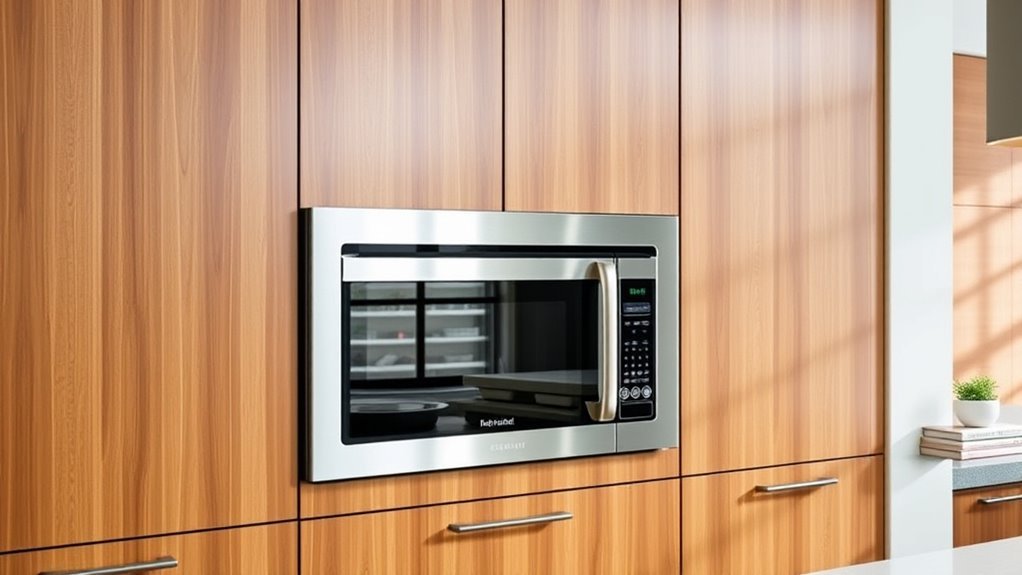
When choosing your built-in microwave cabinet, start by measuring the space carefully to guarantee a snug fit without blocking ventilation.
Pick a microwave size and features that match your cooking needs and kitchen style, from sleek modern designs to classic wood finishes.
Install it at eye level for convenience and safety, while considering proper electrical setup and airflow to avoid overheating.
Keep maintenance simple by cleaning vents and surfaces regularly.
Investigate more tips to perfect your kitchen integration and functionality.
Key Takeaways
- When choosing a built-in microwave, think about size, features, wattage, and placement to make sure it fits well and is easy to use in your kitchen.
- Measure your cabinet openings carefully, including width, height, and depth, so the microwave sits flush without sticking out.
- Follow the manufacturer’s ventilation guidelines, including proper clearances and venting options, to prevent overheating and help your appliance last longer.
- Pick cabinet materials and styles that match your kitchen’s look, balancing durability, style, and your budget.
- Keep your cabinet in good shape by cleaning surfaces regularly, checking vents for debris, and inspecting mounting hardware to stay safe.
Choosing the Right Built-In Microwave Size and Features
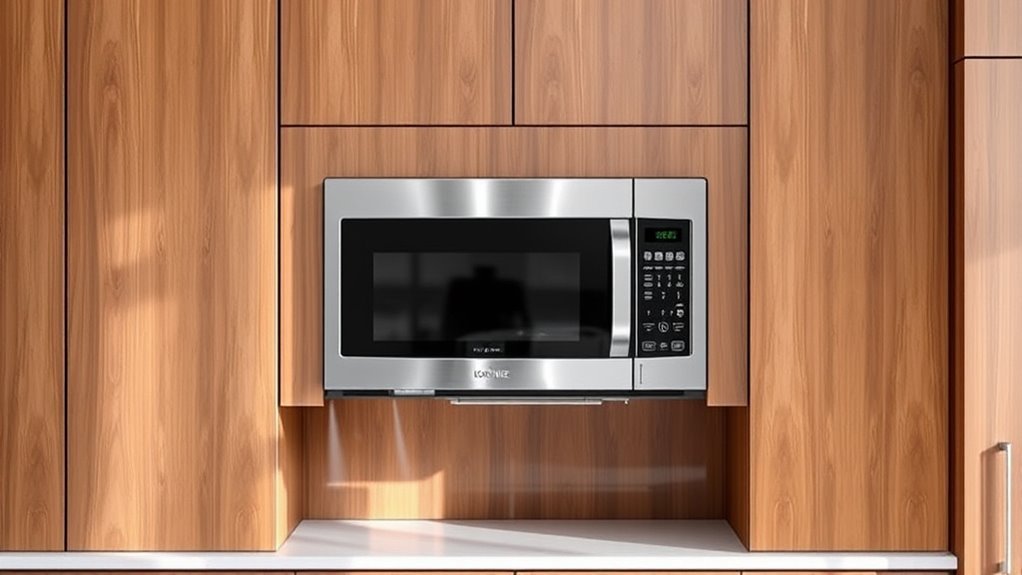
How do you pick the perfect size and features for your built-in microwave? Start by exploring different microwave types—countertop models aren’t your only option. Built-in microwaves come in various sizes, so think about your cabinet space and cooking needs.
Compact units save space but might limit capacity, while larger models can handle bigger dishes with ease. Next, compare features. Do you want sensor cooking, convection, or quick-start buttons? Some models also include steam cooking or grilling, which adds versatility.
Consider what you’ll use most often so you don’t pay for extras you won’t need. Also, check the wattage—higher wattage means faster cooking.
Measuring for a Built-In Microwave Cabinet
When you’re measuring for your built-in microwave cabinet, it’s really important to be precise. Make sure to double-check the space so everything fits just right.
And don’t forget to leave some clearance around the microwave—that’s super important for proper ventilation and safety. Taking your measurements carefully now will make the whole installation process much smoother and save you from any headaches later on.
Accurate Space Dimensions
Several key measurements confirm your built-in microwave cabinet fits perfectly in your kitchen. Accurate space dimensions are essential for ideal microwave placement and space optimization. Start by measuring the width, height, and depth of the space to ensure the microwave will fit comfortably without crowding.
First, measure the cabinet opening width to make sure it can accommodate the microwave’s full width. Then, check the height of the opening, including any trim or molding allowances. Next, measure the depth to verify the microwave won’t protrude beyond the face of the cabinet.
Don’t forget to account for any nearby cabinetry or appliances that might affect space. Taking these precise measurements helps you avoid costly mistakes and makes sure your microwave integrates seamlessly into your kitchen design.
Clearance and Ventilation Requirements
Although fitting your microwave snugly is important, ensuring proper clearance and ventilation is key for safe and efficient operation. Follow the clearance guidelines provided by the manufacturer, which usually include minimum distances around the microwave to prevent overheating.
Pay close attention to side, top, and rear clearances. Ignoring these can lead to performance issues or even damage your appliance. When planning your built-in microwave cabinet, think about different ventilation options.
Some microwaves vent through the back, others recirculate air through filters, and some need external venting. Make sure your cabinet design allows for these needs so air can flow freely. Proper ventilation helps prevent heat buildup, extends your microwave’s lifespan, and keeps everything safe.
Always double-check clearance requirements and ventilation options before you install to avoid costly mistakes.
Styles and Materials for Microwave Cabinets
When you’re picking out a microwave cabinet, it’s a good idea to consider different styles that match your kitchen’s vibe—whether you’re into a sleek, modern look or something more classic and traditional.
And don’t forget about the materials! Options like wood or MDF can really influence how durable your cabinet is and how good it looks. Plus, thinking about the finish is important too, because it helps keep your cabinet looking fresh and stylish over time.
Popular Cabinet Styles
When choosing a built-in microwave cabinet, the style and material you pick will greatly affect both its appearance and durability. You’ll want to see how your cabinet complements your kitchen’s overall look while meeting your functional needs.
Here are four popular cabinet styles to explore:
- Modern designs feature sleek lines and minimalist styles that emphasize clean, uncluttered spaces. They also focus on ergonomic considerations for ease of use.
- Classic aesthetics include timeless decorative accents and traditional details that add warmth and character to your kitchen.
- Custom cabinetry offers tailored solutions that fit your kitchen’s unique layout, blending functional layouts with personalized touches.
- Space-saving solutions are compact designs that maximize efficiency, making them perfect for smaller kitchens or integrated appliances.
Choosing the right style helps you blend beauty with practicality effortlessly.
Common Cabinet Materials
The style of your built-in microwave cabinet sets the tone, but the material determines how it performs and holds up over time. When choosing cabinet types, you’ll find options like solid wood, plywood, MDF, and particleboard. Each material has distinct advantages.
Solid wood offers natural beauty and strength, while plywood provides stability and resistance to warping. MDF is smooth and affordable, making it a good choice if you plan to paint your cabinet. Particleboard is budget-friendly but less durable.
Understanding these material advantages helps you pick a cabinet that fits your needs and kitchen environment. By selecting the right cabinet type, you guarantee your microwave cabinet looks great, supports your microwave securely, and lasts for years.
Durability and Finish Options
Durability is key to how well your built-in microwave cabinet handles daily use and kitchen humidity. Picking the right finish types and materials can help your cabinet last longer and match your kitchen style.
Consider these factors based on durability ratings:
- Laminate finishes are highly durable and resist moisture, making them perfect for humid kitchens.
- Wood veneers give a natural look but need proper sealing to prevent warping.
- Thermofoil coatings are budget-friendly with decent durability but can peel if exposed to heat.
- Solid wood has excellent durability but requires regular maintenance to keep its finish looking good.
Matching Your Microwave Cabinet to Kitchen Decor
Although choosing a built-in microwave cabinet might seem straightforward, matching it to your kitchen decor helps create a cohesive and stylish look. Think about your kitchen’s color schemes and design themes carefully.
Whether your style is modern, rustic, or traditional, your microwave cabinet should blend seamlessly and enhance the overall vibe.
Here’s a quick guide to help you match your microwave cabinet:
| Kitchen Style | Color Schemes | Microwave Cabinet Tips |
|---|---|---|
| Modern | Neutral, Monochrome | Go for sleek finishes and minimal design |
| Rustic | Earth tones, warm | Use wood textures and matte finishes |
| Traditional | Classic, rich hues | Choose ornate details and stained wood |
Planning Kitchen Layout With a Built-In Microwave
When you’re figuring out your kitchen layout, it’s a good idea to consider where your built-in microwave will fit best. You want it to be easily accessible without disrupting the overall flow of your space. Think about how you’ll use it daily—placing it at a comfortable height and within reach makes a big difference.
And of course, you’ll want it to blend smoothly with your kitchen’s style. Whether you’re going for a sleek modern look or something more traditional, choosing the right spot helps your microwave feel like a natural part of the design. So, take your time to find that perfect balance between convenience and style—you’ll thank yourself every time you cook!
Optimal Microwave Placement
Choosing the ideal placement for your built-in microwave can really improve your kitchen’s workflow and efficiency. Think about microwave height and how easy it is to access the cabinet to make your cooking routine smoother. Here are four key considerations:
Install the microwave at eye level so you avoid bending or reaching, making it safer and more convenient to use.
Position it near prep areas so you can quickly transfer hot dishes without crossing the kitchen.
Make sure the cabinet housing the microwave provides enough ventilation and is easy to clean.
Avoid placing the microwave too close to the stove or sink to prevent clutter and potential hazards.
Integration With Kitchen Design
Since a built-in microwave becomes a permanent part of your kitchen, you’ll want it to match your overall design. Picking a microwave cabinet that blends smoothly with your cabinets and matches your countertops and backsplash helps create a cohesive look.
Think about the microwave’s finish—stainless steel, black, or a custom panel—to keep everything in harmony with your kitchen’s theme. This way, your appliances and decor work together seamlessly.
Here’s a quick guide to help you visualize integration:
| Element | Consideration |
|---|---|
| Cabinet Style | Match your existing cabinetry |
| Microwave Finish | Coordinate with other appliances |
| Placement Height | Make sure it’s easy to reach |
| Surrounding Lighting | Highlight your design features |
Plan your layout carefully so your built-in microwave boosts both the functionality and the style of your kitchen.
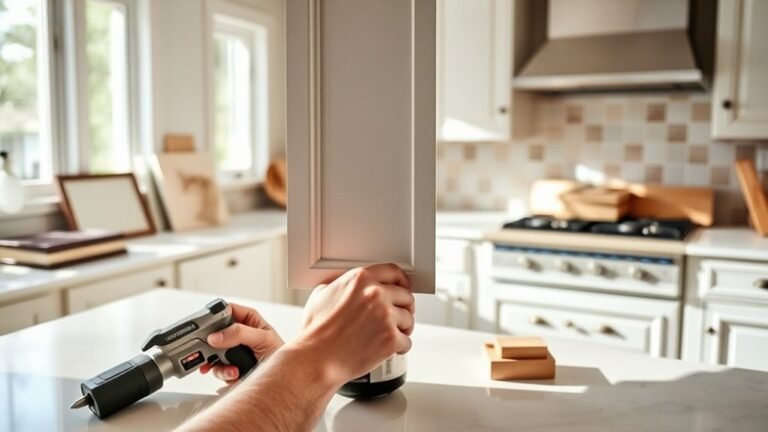
DIY or Professional Installation Options
How you install your built-in microwave cabinet can really impact how it looks and works. You can choose to do it yourself or hire a professional, and each option has its pros and cons.
Doing it yourself can save you money and give you more control over the timeline. But it also means you need the right tools and must follow safety precautions to avoid damage or injury.
Doing it yourself saves money and offers timeline control but requires proper tools and safety measures.
Hiring a professional can ensure the job is done correctly and safely. They have the expertise to prevent common mistakes and make sure everything fits and wiring is proper. The downside is it usually costs more.
When deciding, think about these factors:
- DIY tips: Gather all necessary tools, follow clear instructions, and prioritize safety to avoid costly mistakes.
- Professional services: They make installation easier and can give you advice on maintenance for long-term use.
- Cost comparison: DIY can save money upfront but risking errors might lead to higher costs later. Professionals charge more initially.
- Installation timeline: Doing it yourself might take longer, especially if you’re new to this. Professionals typically finish faster.
Consider your skills and budget carefully to pick the best option for you.
Ventilation and Safety Tips for Built-In Microwaves
Although built-in microwaves save space and look sleek, you need to guarantee proper ventilation to keep them running safely and efficiently. Without good ventilation methods, heat can build up, risking damage to the microwave and surrounding cabinetry.
Make sure your microwave’s installation manual specifies clearance requirements and venting options, like recirculating vents or external ducting. This will help you set it up correctly and avoid issues later on.
You also need to follow safety standards closely to prevent hazards like overheating or fire. Check that vents aren’t blocked and clean filters regularly to maintain good airflow.
Keep flammable materials away from the microwave opening, and never disable safety features such as automatic shutoff. Following these tips will help keep your microwave safe and working well.
Electrical Requirements and Wiring Basics
Before installing your built-in microwave, it’s important to understand the electrical requirements and wiring basics to ensure safe and reliable operation. Knowing the proper wiring specs and following safety guidelines can help prevent hazards and make sure your microwave works properly.
Here are some key points to keep in mind:
- Use a dedicated 120-volt, 15-20 amp circuit to avoid overloads and keep things safe.
- Follow the manufacturer’s wiring instructions exactly, including wire gauge and grounding details.
- If required by local codes, install a Ground Fault Circuit Interrupter (GFCI) outlet to protect against electrical shock.
- If you’re not experienced with electrical work, it’s best to hire a licensed electrician to handle the wiring and connections safely.
Cleaning and Maintaining Your Built-In Microwave Cabinet
Keeping your built-in microwave cabinet clean and well-maintained helps it stay functional and look great over time. Start with simple cleaning like wiping down the exterior regularly using a soft cloth and mild detergent. Avoid abrasive cleaners that can damage the finish.
For tougher stains, mix baking soda and water to gently scrub the surface without scratching. Regularly check for dust and debris around vents to ensure proper airflow and prevent overheating. Clean these vents with a vacuum or small brush.
It’s also a good idea to inspect the cabinet’s mounting hardware to make sure screws are secure, tightening them if needed. Be careful to avoid exposing the cabinet to excessive moisture, which can warp or damage the material. Following these tips will help extend the life of your built-in microwave cabinet and keep your kitchen looking neat and organized.
Fixing Common Built-In Microwave Issues
Maintaining your built-in microwave cabinet helps prevent many common problems, but sometimes issues still pop up. When that happens, quick troubleshooting can save you time and money. Here are four repairs you can often do yourself:
1. Microwave won’t start: Make sure the door latch is fully closed. Also, check the fuse or circuit breaker to see if they need resetting.
2. Turntable not rotating: Clean the turntable motor and ensure the roller ring is properly in place so the turntable can spin smoothly.
3. Microwave sparks or makes noise: Remove any metal objects inside and give the interior a thorough cleaning to prevent sparking.
4. Buttons not responding: Unplug the microwave for a few minutes to reset it, then plug it back in and try again.
If these fixes don’t solve the problem, it’s best to call in a professional. Keeping up with these simple steps helps keep your built-in microwave safe and working well for everyday use.
Frequently Asked Questions
Can Built-In Microwaves Be Used for Grilling or Convection Cooking?
Yes, you can use built-in microwaves for grilling and convection cooking if they have those features.
They’re great for techniques like browning and crisping, which add texture and flavor to your meals.
Plus, convection helps distribute heat evenly, so your dishes cook faster and more uniformly.
Just check your model’s specs to make sure it supports these functions so you get the most out of your built-in microwave.
Are There Energy-Efficient Built-In Microwave Models Available?
You’ll find energy-efficient built-in microwave models that really hit the nail on the head regarding saving power. These microwaves come with high energy ratings and eco-friendly features like sensor cooking and low standby power.
Choosing one means you’ll use less electricity without sacrificing performance. It makes your kitchen greener and helps keep your bills lighter.
How Do Built-In Microwaves Compare to Countertop Models in Cooking Performance?
Built-in microwaves generally match countertop models in cooking speed, so you won’t notice much difference there. However, you might find built-ins offer better food consistency because they often have advanced features and more even heat distribution.
If you care about a sleek kitchen look without sacrificing performance, built-in models deliver reliable cooking results just like countertop ones, but with a more integrated design.
What Are the Warranty Options for Built-In Microwave Cabinets?
You’ll typically find built-in microwave cabinets come with a warranty that lasts one to two years. Coverage usually includes parts and labor for any manufacturing defects.
Some brands offer extended warranties for an extra cost. These can cover things like electrical components or installation issues.
Always check the specific warranty terms before you buy. That way, you’ll know exactly what’s covered and how long the protection lasts. This helps you avoid surprises later on.
Can Built-In Microwave Cabinets Be Relocated Easily if Needed?
If you decide to move your built-in microwave cabinet like Sarah did during her kitchen remodel, you’ll find it’s not always easy. Relocating requires careful installation considerations, such as electrical hookups and cabinet support.
While design flexibility allows some repositioning, you’ll likely need professional help to avoid damage and guarantee safety. So, although it’s possible, plan your layout carefully to minimize the hassle of relocating built-in microwave cabinets later.
Conclusion
When choosing a built-in microwave cabinet, keep in mind that 60% of homeowners prefer built-in models for their sleek look and space-saving benefits. You’ll enjoy a streamlined kitchen that maximizes counter space while keeping your microwave easily accessible.
By considering size, style, ventilation, and electrical needs, you’ll create a functional and stylish setup. A well-chosen built-in microwave cabinet can really enhance your kitchen’s overall look and efficiency.
With proper maintenance, your built-in microwave cabinet will serve you well for years. It’s a smart choice that keeps your kitchen both beautiful and practical.