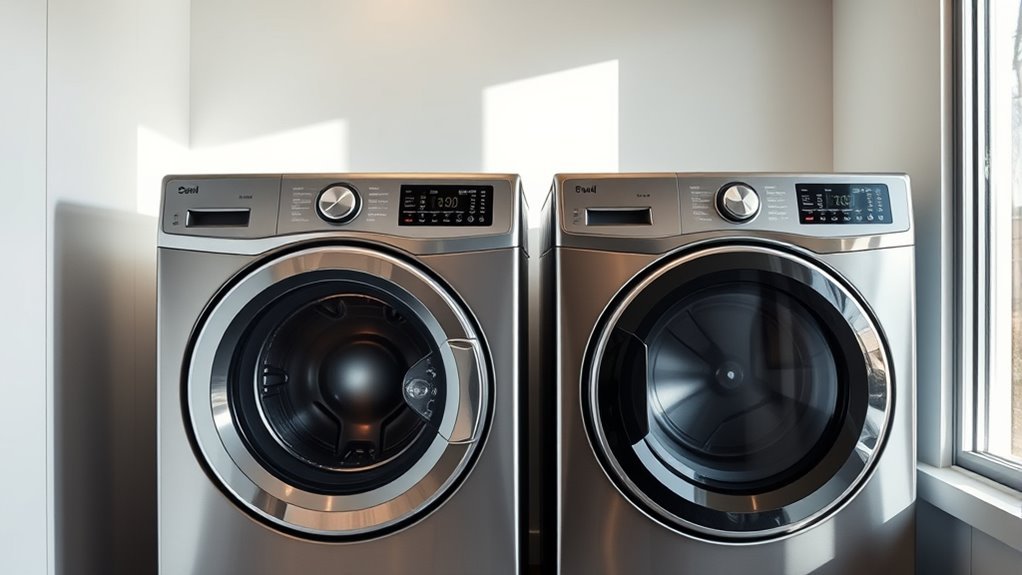
Gas vs. Electric Dryer: Which Is Better?
Choosing the right dryer can feel overwhelming, especially with so many options out there. Many people struggle with deciding between gas and electric dryers, wanting the best for their home and budget. If you’re feeling stuck, you’re not alone—this is a common dilemma.
Gas vs. electric dryer: which is better? Choosing between gas and electric dryers depends on your budget, home setup, and laundry needs.
Gas dryers heat faster, saving energy and cutting operating costs, but need a gas line and proper venting, raising installation complexity and expense.
Electric dryers cost less upfront and are easier to install but tend to dry clothes slower and use more electricity.
Both require regular maintenance to stay safe and efficient. Keep exploring to find the best fit for your home and lifestyle.
Key Takeaways
- Gas dryers heat up faster and use less energy, so they can be more cost-effective if you do lots of drying or large loads.
- Electric dryers tend to have lower upfront and installation costs, making them a good choice if you’re on a smaller budget or want a simpler setup.
- Gas dryers need proper venting and a gas line installed, which can come with risks like leaks and require more maintenance.
- Electric dryers usually dry clothes more gently, which is better for delicate fabrics, but they often take a bit longer to get the job done.
- The environmental impact varies: gas dryers emit greenhouse gases directly, while electric dryers’ emissions depend on how the power is generated.
How Do Gas and Electric Dryers Work?
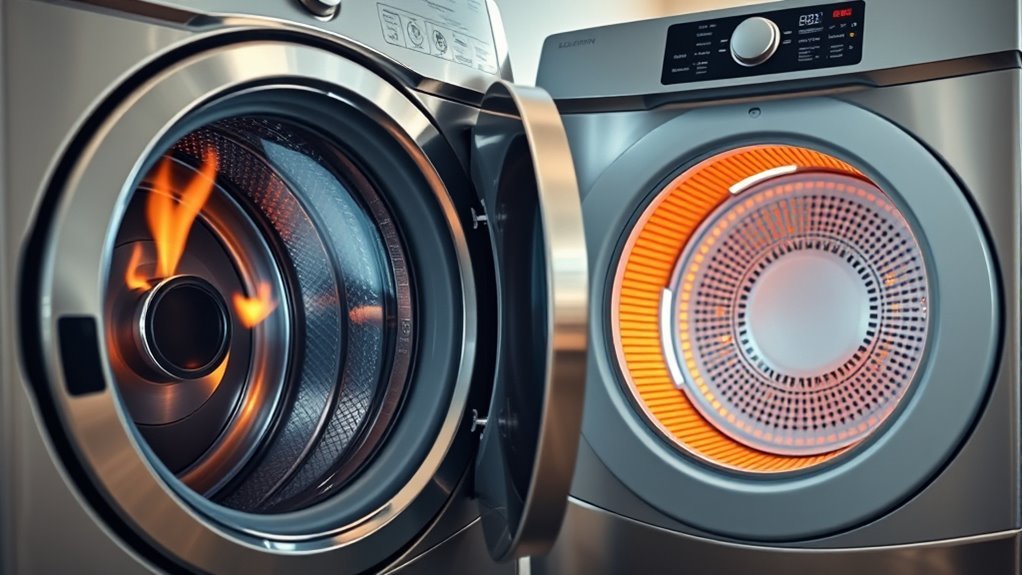
Although both gas and electric dryers serve the same purpose, they generate heat differently to dry your clothes. Regarding dryer technologies, gas dryers use natural gas or propane as their energy source, igniting a burner to produce heat. Electric dryers, on the other hand, rely on electric heating elements to warm the air inside the drum.
Your choice often depends on user preferences, such as installation availability and long-term operating costs. Gas dryers typically heat up faster, while electric models may be easier to install since they only need a power outlet.
Understanding these heating methods helps you decide which fits your household better. Maintenance tips also vary: gas dryers require regular checks for gas leaks and vent cleaning to guarantee safety, whereas electric dryers mainly need lint trap and vent maintenance.
Gas vs. Electric Dryer: Which Is More Energy Efficient?
Now that you understand how gas and electric dryers generate heat, it’s helpful to compare their energy efficiency to see which option can save you more on utility bills.
Gas dryers usually use less energy because natural gas heats up faster than electricity. This means shorter drying times and lower operating costs. Electric dryers, while easier to install, tend to consume more electricity, which can raise your utility bills over time.
Here’s a quick comparison:
| Feature | Gas Dryer |
|---|---|
| Energy Savings | Higher |
| Operating Costs | Lower |
| Heating Speed | Faster |
| Installation Cost | Higher |
| Environmental Impact | Lower CO2 emissions |
Choosing a gas dryer can lead to better energy savings and lower operating costs, especially if you dry large loads often. But availability and installation costs can influence your decision.
Gas vs. Electric Dryer: Which Dries Clothes Faster?
How quickly your clothes dry can really impact your daily routine. When it comes to drying speed, gas dryers usually have the upper hand. They produce higher heat output and heat up faster than electric models. This intense heat helps remove moisture quickly, so your clothes are ready in fewer cycles.
Gas dryers also tend to have better airflow design, which circulates warm air more efficiently. That means your clothes dry faster and more evenly.
But faster drying doesn’t always mean better for your fabrics. High heat can stress delicate materials, so you might need to adjust settings. Electric dryers typically use gentler, steadier heat, which can be easier on delicate clothes but might take longer.
Keep in mind, faster drying in gas models often means higher energy use during each load. Finding the right balance between speed, fabric care, and energy consumption is key to picking the best dryer for your needs.
Installation and Cost Differences for Gas and Electric Dryers
Choosing between a gas and electric dryer means thinking about installation and upfront costs. Gas dryers usually require a natural gas line and proper venting, which can be tricky.
If your laundry space doesn’t have these, expect to spend more on setup. Electric dryers are simpler if you already have a 240-volt outlet, but installing one can add to your costs.
Here’s a quick cost breakdown to help you compare:
| Feature | Gas Dryer | Electric Dryer |
|---|---|---|
| Installation Complexity | Higher (gas line and vent needed) | Lower (just electrical hookup) |
| Average Installation Cost | $300-$800 | $100-$300 |
| Potential Challenges | Gas hookup permits and safety checks | Electrical outlet upgrade |
Upfront and Long-Term Costs of Gas vs. Electric Dryers
Installation costs give you a quick idea of what to expect upfront, but it’s also important to think about the overall expenses for gas and electric dryers. Gas dryers usually cost more initially and need extra setup, like a gas line hookup, which can add to your upfront costs if you don’t already have one.
Installation costs offer a quick upfront estimate, but overall expenses for gas and electric dryers vary significantly.
Electric dryers tend to be simpler to install, but they might require a 240-volt outlet, which could mean extra work and costs if you don’t have one. When looking at long-term costs, fuel availability is a key factor.
Gas dryers often save you money over time because natural gas prices are usually lower than electricity rates. But if gas is expensive or hard to find in your area, an electric dryer might be cheaper to run.
Don’t forget to factor in maintenance and potential repairs, which can vary by model. However, these generally don’t have a huge impact on your total cost comparison.
Safety Considerations When Using Gas and Electric Dryers
Because dryers handle heat and energy sources differently, understanding their safety risks is essential to keep your home safe. Whether you have a gas or electric dryer, putting safety first helps prevent accidents like fires or exposure to harmful gases.
For gas dryers, always check for gas leaks. They can cause dangerous carbon monoxide buildup or even explosions if not noticed. With electric dryers, be on the lookout for frayed cords or faulty wiring, which can increase the risk of electrical shocks or fires.
Proper ventilation is key for both types of dryers. It helps prevent lint buildup that could ignite and ensures harmful gases like carbon monoxide safely exit your home. Regularly cleaning the lint filter and keeping the area around your dryer clear also reduces fire hazards.
Maintenance and Repair: Gas vs. Electric Dryers
When it comes to maintenance, it’s a good idea to regularly clean the lint filter and check the vents, whether you have a gas or electric dryer. Keeping these parts clean helps your dryer run smoothly and safely.
As for repair costs, gas dryers tend to be a bit more expensive to fix because they have more complex components. Knowing these differences can help you plan for regular upkeep and avoid any surprise expenses down the road.
Common Maintenance Tasks
Maintaining your dryer regularly keeps it running efficiently and safely, whether it’s gas or electric. To ensure top performance and prevent hazards, focus on these common maintenance tasks.
Clean lint traps and filters after every load to improve airflow and reduce fire risks. Perform vent maintenance by inspecting and clearing the exhaust ducts to prevent blockages.
Check the drum for wear and clean it to avoid damaging clothes and keep it operating smoothly. Inspect hoses, gas connections for gas dryers, and electrical wiring for electric dryers for leaks or frays.
Additionally, schedule periodic performance checks to catch issues early. Staying on top of these tasks helps your dryer run longer, safer, and more effectively.
Repair Costs Comparison
While both gas and electric dryers require occasional repairs, the costs can vary depending on the appliance and the issue. Generally, gas dryers have higher repair costs because of their complex parts like gas valves and igniters.
However, they tend to have fewer repairs over time compared to electric dryers, which have simpler parts such as heating elements that may wear out more often. Remember to check your warranty coverage, as it can significantly cut down your out-of-pocket expenses.
Electric dryer repairs are usually more affordable but might happen more frequently. In the end, understanding these factors helps you plan for maintenance costs and pick a dryer that matches your budget and lifestyle.
Environmental Impact: Which Dryer Is Greener?
Although both gas and electric dryers do the same thing, their environmental impacts are quite different. When thinking about sustainability, it’s important to consider energy use and emissions linked to each type.
Gas dryers usually use less electricity but rely on natural gas, which releases carbon dioxide when burned. Electric dryers depend entirely on electricity, which can be cleaner or dirtier depending on your energy source.
Here’s a quick look at the environmental impact:
- Gas dryers emit greenhouse gases directly during use.
- Electric dryers shift emissions to power plants, depending on how green your electricity is.
- Some models are more eco-friendly, with features like moisture sensors that cut drying time.
- Using renewable energy with electric dryers makes your laundry routine much more sustainable.
Choosing the Right Dryer for Your Home Setup
Understanding the environmental impact helps, but choosing the right dryer also depends on your home’s setup. You need to evaluate available hookups, space constraints, and the type of dryer that fits your laundry area.
Gas dryers require a natural gas line, while electric dryers need a 240-volt outlet. If your laundry space is small, compact electric models might be a better fit. Here’s a quick comparison:
| Feature | Gas Dryer | Electric Dryer |
|---|---|---|
| Hookup Required | Natural gas line | 240-volt electrical outlet |
| Installation Cost | Usually higher due to gas setup | Generally lower and plug-and-play |
| Laundry Space Needed | Typically larger because of venting | More flexible, compact options |
| Energy Efficiency | Usually more efficient | Slightly less efficient |
How to Pick a Dryer Based on Your Budget and Laundry Needs
When you’re picking out a dryer, it’s a good idea to consider both how much you’re willing to spend upfront and how much you might save on energy in the long run. Think about how often you do laundry and what size loads you usually have—this way, you won’t end up paying for features you don’t need or ending up with a dryer that’s too small or too big for your needs. Finding that sweet spot between your budget and your laundry habits will help you choose the perfect dryer for your home.
Initial Cost Comparison
Since budget often influences your choice of appliances, comparing the initial costs of gas and electric dryers can help you find one that fits your financial plan and laundry needs. Knowing the upfront costs shows how each option impacts your budget right away.
Gas dryers tend to cost more initially because they include extra parts like gas valves and ignition systems. Electric dryers usually have a lower purchase price, which can be appealing if you’re watching your spending.
Installing a gas dryer might require professional help, adding to your upfront expenses. On the other hand, electric dryers generally have simpler installation, which can save you money at the start.
Energy Efficiency Considerations
Energy efficiency plays a big role in how much you’ll spend on your utility bills and how quickly your clothes get dry. When choosing between a gas or electric dryer, think about the energy source. Gas dryers usually use less energy and dry clothes faster, which can save you money over time.
Electric dryers might cost more to operate depending on your local electricity rates, but they’re often more convenient if you don’t have natural gas access. Keep in mind that energy-efficient models, no matter the type, often have features like moisture sensors. These help prevent over-drying and save energy.
Capacity and Usage Needs
Understanding your laundry habits and budget helps you choose the right dryer capacity and features. Picking among capacity types—compact, standard, or large—depends mainly on how often you do laundry and the size of your household.
If you do laundry often or have a big family, a larger capacity dryer can save you time by handling more clothes in each load. If you live alone or do laundry less frequently, a smaller dryer might be a better fit for your needs and budget.
Think about these factors when choosing your dryer:
- How many loads you do each week
- The typical weight of laundry per load
- The space you have for installation
- Your budget for both upfront costs and ongoing expenses
Matching the capacity to your usage helps you get the most convenience and cost-efficiency.
Frequently Asked Questions
Can I Use a Gas Dryer if I Don’T Have a Gas Line Installed?
You can’t use a gas dryer without a gas line installed, so you’ll need to look into installation options if you want one. Installing a gas line can be costly and might require hiring a professional plumber, which adds to the expenses.
If installation isn’t feasible, consider electric dryers instead. They only need a proper electrical outlet, making them easier to set up.
Think about the upfront installation costs versus long-term energy savings before making your decision.
Do Gas Dryers Require More Ventilation Than Electric Dryers?
Yes, gas dryers do require more ventilation than electric dryers because they burn natural gas, producing combustion gases that need to be vented outside safely.
When you compare ventilation requirements, electric dryers are simpler since they only expel moist air.
Despite this, gas dryers often offer better efficiency because they heat up faster. So, while gas models demand extra ventilation work, they can save you energy in the long run.
Are Electric Dryers Quieter Than Gas Dryers?
Yes, electric dryers are generally quieter than gas dryers because they don’t have a burner igniting inside, which reduces noise levels. When you choose an electric dryer, you’ll notice less operational sound, making laundry time more pleasant.
Plus, electric models often provide consistent drying efficiency, so your clothes get dry without extra noise or effort. You’ll appreciate the balance of quiet performance and reliable drying in an electric dryer.
Can a Gas Dryer Be Converted to Electric or Vice Versa?
You generally can’t convert a gas dryer to electric or vice versa because the process is complicated. It involves changing the heating element, power supply, and ventilation setup.
Trying to do this yourself could be unsafe and expensive. It’s usually better to buy the type of dryer you need from the start.
When comparing costs, keep in mind that electric dryers often cost less upfront. But gas dryers might save you money on energy bills over time.
What Brands Offer the Most Reliable Gas and Electric Dryers?
You’ll find that brands like Whirlpool, LG, and Maytag offer some of the most reliable gas and electric dryers. These brands are known for their consistent performance and quality.
When you compare dryer performance, they rank high for efficiency, durability, and user-friendly features. They really focus on making your laundry experience smooth.
Brand comparisons show they balance energy use and drying speed well. That means you get great results without wasting time or power.
If you want a dependable dryer, sticking with these trusted names is a smart move.
Conclusion
Choosing between a gas and electric dryer is like picking the perfect dance partner—each has its rhythm and style.
Gas dryers heat up faster and often save on energy bills, while electric ones are easier to install and maintain.
Think about your home setup, budget, and laundry habits to find your best match.
With the right choice, you’ll keep your clothes and your energy use spinning smoothly every time, making gas vs. electric dryers a decision well worth considering.