How to Prevent a Fire in the Kitchen: A Step-by-Step Guide
Many people worry about kitchen fires, and it’s understandable—you’re not alone in wanting to keep your home and loved ones safe.
Preventing a fire in your kitchen is easier than you think if you follow some simple steps.
To prevent a fire in your kitchen, never leave cooking unattended and keep flammable items like oils and paper towels away from heat sources.
Clean grease buildup regularly and use appliances safely, unplugging them when not in use.
Install smoke detectors near your stove and have a Class K fire extinguisher handy.
Teach your family emergency plans and escape routes.
Following these key steps lowers your fire risk and helps you respond quickly if trouble starts.
There’s more to investigate on keeping your kitchen safe.
Key Takeaways
- Never leave cooking unattended, and keep flammable items away from heat sources to prevent fires from starting.
- Store flammable materials in cool, dry cabinets away from stoves and ovens to cut down on fire risks.
- Regularly clean grease buildup on stovetops, range hoods, and vents to avoid grease fires that can quickly get out of hand.
- Check and maintain appliances, unplug them when you’re not using them, and make sure safety features like automatic shut-offs are working properly.
- Teach family members how to use a fire extinguisher, hold kitchen fire drills, and post emergency contact info where everyone can see it easily.
How Kitchen Fires Start and Why Prevention Matters
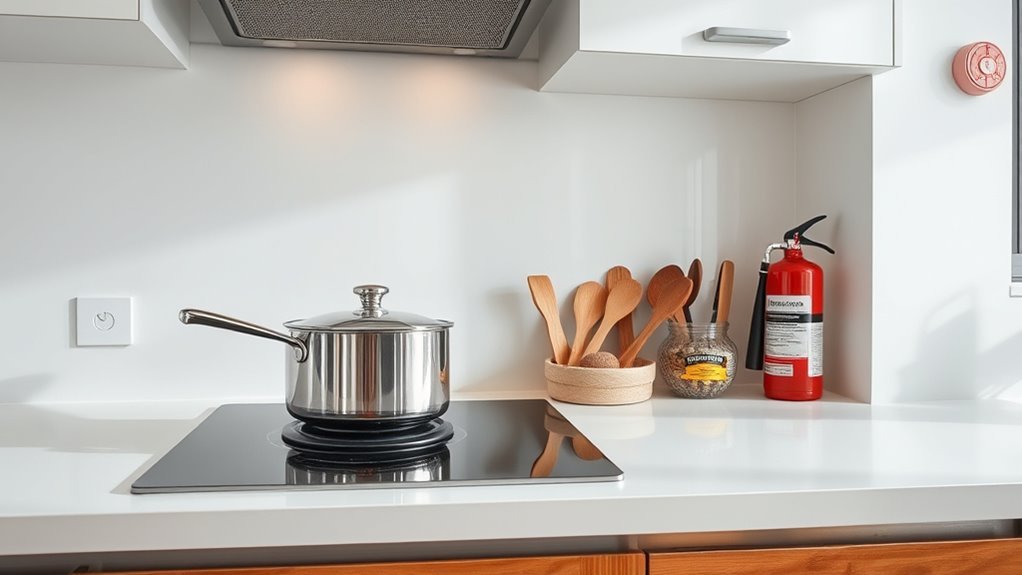
Although kitchen fires can happen quickly, you can take simple steps to prevent them. Most fires start because of unsafe cooking habits and unattended appliances like stovetops and ovens. Knowing how fires ignite helps you stay alert and adjust your actions.
Regularly maintaining your equipment is key—clean grease buildup and check for faulty appliances to lower the risk. Conducting a risk assessment of your kitchen setup can help you spot hazards before they become serious.
Keep your kitchen safe by regularly cleaning and inspecting appliances to catch hazards early.
Fire education is important because it teaches you to recognize dangers and respond effectively if a fire occurs. Knowing how to use a fire extinguisher or when to call for help can limit damage and keep everyone safe.
Making fire safety a regular part of your routine not only prevents fires but also boosts your confidence in handling unexpected situations. Staying informed and cautious significantly reduces the chances of a kitchen fire.
Keep Flammable Items Away From Heat Sources
You should always make sure to store flammable items like paper towels and oils away from your stove and any other heat sources. It’s just safer that way, you know? Keeping these items out of reach helps prevent accidental fires from sparks or hot surfaces.
Also, try to keep your countertops clear of clutter. When everything’s organized, it’s easier to avoid accidentally knocking something over or having something catch fire. Staying tidy in the kitchen really helps keep things safe for everyone.
Store Flammables Safely
Because flammable items can ignite quickly when exposed to heat, it’s essential to store them well away from stoves, ovens, and other heat sources.
You should identify all flammable materials in your kitchen, like cooking oils, sprays, and cleaning solvents, and keep them in a designated safe storage area.
Choose a cool, dry cabinet that’s far from any appliance that generates heat.
Make sure containers are sealed tightly to prevent leaks or spills, which can increase fire risks.
Avoid storing flammable materials in cabinets directly above or beside heat sources.
By organizing your kitchen this way, you reduce the chance of accidental ignition and make your cooking space safer.
Safe storage isn’t just about placement; it’s about preventing fires before they start.
Maintain Clear Countertops
Keeping flammable items stored safely is just one step in reducing fire risks in your kitchen. To protect your space even more, keep your countertops clear by moving flammable objects away from heat sources.
Focus on organizing your countertop so that paper towels, dishcloths, and cooking oils don’t crowd near the stove or toaster. Regularly decluttering helps you spot hazards early, making cooking safer and more efficient.
When you clear unnecessary items from your prep area, you reduce the chance that something could accidentally catch fire. Making countertop organization a habit creates a safer environment that prevents fire risks and keeps your kitchen running smoothly every day.
Manage Grease to Prevent Kitchen Fires
Although grease adds flavor to your meals, it can quickly turn dangerous if not handled properly. Managing grease properly is key to keeping your kitchen safe from fires.
Grease buildup on stovetops, range hoods, and vents can ignite easily, leading to fast-spreading fires. Make sure to clean these areas regularly to remove grease deposits.
Regularly cleaning grease from stovetops, range hoods, and vents prevents fast-spreading kitchen fires.
When cooking with oil, never leave it unattended. Keep a lid nearby to smother flames if necessary. This quick action can prevent small flare-ups from turning into big fires.
Avoid pouring grease down the drain, as it can clog pipes and create fire hazards in your plumbing. Instead, collect cooled grease in a container and dispose of it safely.
Staying vigilant and managing grease properly lowers your risk of kitchen fires. Your proactive approach protects your home and creates a safer cooking environment.
Controlling grease before it becomes a hazard is the first step in prioritizing fire safety in your kitchen.
Use Kitchen Appliances Safely to Avoid Fires
A key part of preventing kitchen fires is using your appliances correctly and safely. Proper maintenance helps ensure they work properly and reduces fire risks. Always check that safety features like automatic shut-offs and temperature controls are working before you start.
To keep your home and loved ones safe, follow these steps:
- Regularly clean and inspect your appliances for wear or damage. Frayed cords or broken parts can cause sparks.
- Use appliances only for what they’re meant for. Don’t overload outlets or use incompatible accessories.
- Unplug appliances when you’re not using them to prevent electrical faults and accidental activation.
Never Leave Cooking Unattended on the Stove
While using appliances safely helps reduce fire risks, the moments you spend actively cooking demand just as much attention. Never leave cooking unattended on the stove, as even a brief distraction can lead to dangerous flare-ups.
Practicing stove safety means staying by the stove whenever it’s on, especially when frying, grilling, or boiling. If you need to step away, turn off the burner to avoid accidental fires.
Cooking vigilance also means keeping an eye on food to prevent overheating or burning. Flames can quickly ignite nearby items, so continuous supervision minimizes fire hazards.
Stay alert, avoid multitasking too far from the stove, and use timers as reminders. By giving your full attention during cooking, you greatly reduce the risk of kitchen fires.
Clean Your Kitchen Regularly to Remove Fire Hazards
Keeping your kitchen clean is key to preventing fires. A cluttered, greasy space makes it easier for fires to start, so staying organized is really important for fire safety. Make sure every surface is free of flammable debris and grease buildup.
Here’s how to stay on top of it:
- Wipe down counters and stovetops daily to clear away grease and food particles that can catch fire easily.
- Clean your range hood and exhaust fan filters monthly to prevent greasy buildup, which is a common fire hazard.
- Declutter countertops and store flammable items like paper towels or cloths away from heat sources to reduce ignition risks.
Choose the Right Fire Extinguisher for Your Kitchen
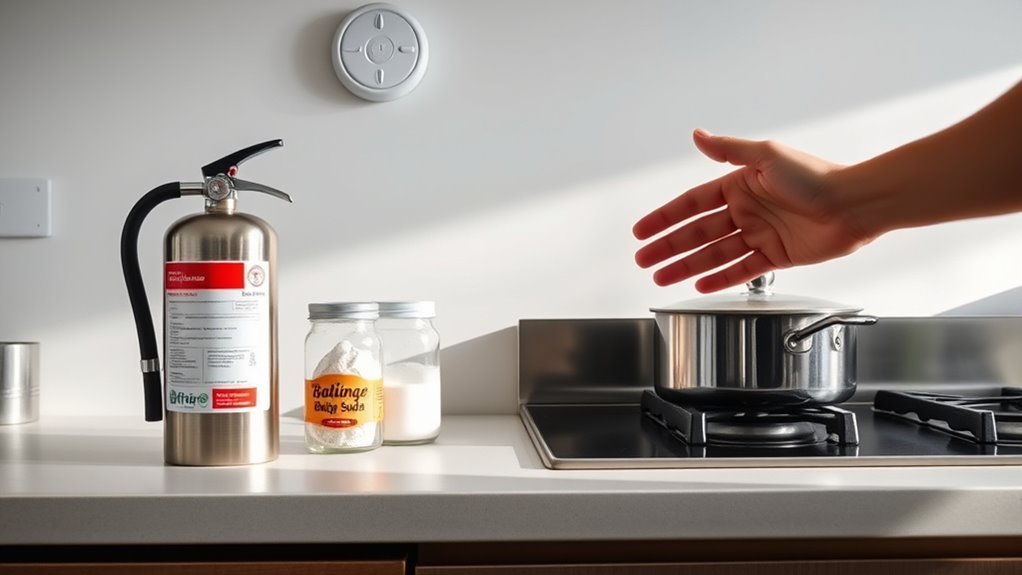
Choosing the right fire extinguisher can make all the difference in quickly stopping a kitchen fire before it spreads. In your kitchen, you’ll want a Class K extinguisher designed specifically for grease and oil fires, which are common in cooking areas.
However, a multipurpose extinguisher labeled ABC can also work since it covers ordinary combustibles, flammable liquids, and electrical fires.
Before an emergency, get familiar with the different fire extinguisher types and how to use them properly. Always check the pressure gauge to make sure your extinguisher is charged and ready to go.
Remember the PASS technique: Pull the pin, Aim at the base of the fire, Squeeze the handle, and Sweep side to side. Keep the extinguisher within reach but away from heat sources.
Install and Maintain Smoke Detectors Near the Kitchen
Because kitchen fires can start and spread quickly, installing smoke detectors near your cooking area is essential for early warning and safety. Proper placement helps you catch fires before they get out of control, giving you more time to act.
You should install smoke detectors at least 10 feet from the stove to avoid false alarms but close enough to detect smoke fast. Place detectors on the ceiling or high on walls, where smoke naturally rises and collects first.
Test your smoke detectors every month and replace batteries at least once a year to keep them reliable. Regular maintenance is key because dust and grease buildup can block sensors.
Clean your detectors gently with a vacuum or soft cloth to keep them functioning properly. By placing detectors correctly and staying on top of maintenance, you protect your home and loved ones from devastating kitchen fires.
Don’t wait for a warning to act—make safety your top priority in preventing kitchen fires.
Make a Fire Escape Plan Focused on Kitchen Emergencies
Smoke detectors give you early warnings, but having a clear fire escape plan focused on kitchen emergencies can save lives when seconds count. Start by identifying multiple escape routes from your kitchen and the surrounding areas. Make sure these paths are free of obstacles and easy to access quickly. Mark windows and doors that can serve as exits and ensure everyone in your household knows where they are.
Next, choose a safe meeting spot outside your home where everyone can gather after escaping. This way, you can quickly check if anyone is missing. Keep a list of emergency contacts, including the fire department and nearby neighbors, in an easy-to-find place. Share this list with all family members.
Regularly review and update your plan to reflect any changes in your home layout or household members. A well-prepared escape plan focused on kitchen fires gives you the best chance to react quickly and safely.
Train Your Family on How to Respond to Kitchen Fires
Although knowing how to prevent kitchen fires is important, training your family on how to respond if one happens is just as crucial. Everyone needs to stay calm and act quickly. Regular fire drills focused on kitchen emergencies help ensure that.
Preventing kitchen fires is vital, but teaching calm, quick responses through regular drills is equally important.
Make sure everyone knows the safest exit routes and what steps to take if a fire starts. Practice different scenarios so your family feels confident and prepared.
Here are some ways to prepare your family effectively:
- Teach everyone how to use a fire extinguisher and when it’s better to evacuate instead.
- Keep emergency contacts saved on every phone and posted visibly near the kitchen.
- Run fire drills that mimic different kitchen fire situations to keep everyone ready.
Frequently Asked Questions
Can Certain Kitchen Materials Increase Fire Risk?
Yes, some kitchen materials can increase fire risk if they’re not fire resistant. It’s a good idea to use fire-resistant materials and heat-resistant surfaces around cooking areas to help reduce danger.
For example, avoid placing flammable items near the stove or oven. Countertops made of stone or metal are better choices than wood or laminate, which can catch fire more easily.
Choosing the right materials helps keep your kitchen safer and prevents fires from starting.
How Do Weather Conditions Affect Kitchen Fire Safety?
Weather patterns and humidity levels can impact your kitchen fire safety by affecting how easily materials ignite.
In dry, low-humidity conditions, flammable items catch fire faster, so you need to be extra cautious.
During humid weather, moisture can reduce fire risk but might cause electrical issues that increase hazards.
Stay aware of these changes, adjust ventilation, and keep flammable materials away from heat sources to maintain a safe kitchen environment.
Are There Specific Fire Prevention Tips for Small Kitchens?
Yes, in small kitchens, it’s important to be extra careful with small appliances. Unplug devices when you’re not using them and avoid overloading outlets.
Keep your counters clear by managing clutter. This helps prevent flammable items from getting too close to heat sources.
Use compact storage solutions to free up space and make your kitchen safer. Also, make sure your kitchen is well-ventilated.
Staying organized and cautious can really help reduce fire risks, even in tight spaces.
What Role Does Kitchen Ventilation Play in Fire Prevention?
Did you know that poor kitchen airflow can increase fire hazards by up to 40%? Kitchen ventilation is key to preventing fires by removing heat, smoke, and flammable vapors.
When you ensure proper airflow, you help reduce grease buildup and prevent flammable gases from accumulating. Keeping your exhaust fans and vents clean and working well is so important.
This simple step can make your kitchen safer and help keep fire risks at bay.
How Often Should Fire Safety Equipment Be Replaced?
You should replace your fire extinguisher every 5 to 15 years, depending on its type and the manufacturer’s recommendations. The lifespan of a fire extinguisher can vary, so it’s good to check the label or ask the manufacturer.
For smoke detectors, replace the batteries at least once a year. It’s also recommended to swap out the entire unit every 10 years to make sure it stays reliable.
Staying on top of these replacements keeps your kitchen safer and ready to respond if a fire breaks out. Don’t skip these vital updates!
Conclusion
Preventing kitchen fires is like guarding a treasure—you’ve got to stay alert and take smart steps. Keep flammable items away from heat sources, and be careful with grease to avoid dangerous buildup. Never leave cooking unattended, even for a moment.
Use appliances safely and make sure you have the right fire extinguisher nearby. Regularly check that smoke detectors are working so you’ll be alerted early if something goes wrong.
Most importantly, create and practice a fire escape plan with your family. Staying prepared and cautious with kitchen fire prevention tips will help protect your home and loved ones from kitchen fire dangers.