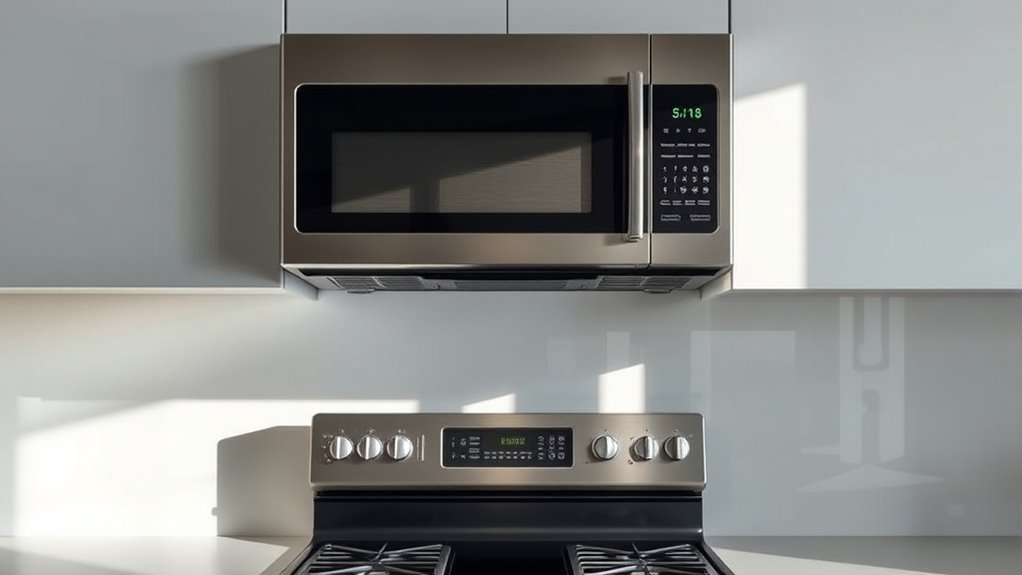
Microwave Over Stove Height Guide: What to Know Before You Buy
Many people struggle with finding the perfect spot for their microwave over the stove, balancing safety and convenience. It can be tricky to figure out the right height that feels comfortable and keeps your kitchen running smoothly.
You should install your microwave 13 to 16 inches above the stove to balance safety and ease of use, avoiding strain from reaching too high or clutter from placing it too low. This height also guarantees proper ventilation and protects your kitchen from heat damage.
Remember to measure your reach, stove type, and kitchen layout before choosing your microwave.
Getting it right can make your cooking experience safer and more comfortable.
Get it right, and you’ll improve both cooking comfort and safety—there’s more to uncover about making the perfect fit in your kitchen.
Key Takeaways
- Position the microwave 13 to 16 inches above the stove for safety, accessibility, and ventilation.
- Make sure it’s easy to reach, ideally between 15 to 48 inches from the floor, so it’s comfortable and safe to use.
- Keep at least 30 inches of clearance above gas stoves to allow safe combustion and prevent heat hazards.
- Choose the right ventilation type—ducted if you do heavy cooking or ductless for apartments—based on your kitchen setup and habits.
- Avoid common mistakes like placing the microwave too high or too low, which can make it hard to access, see, or properly ventilate the stove.
Why Microwave Height Above the Stove Affects Safety and Usability
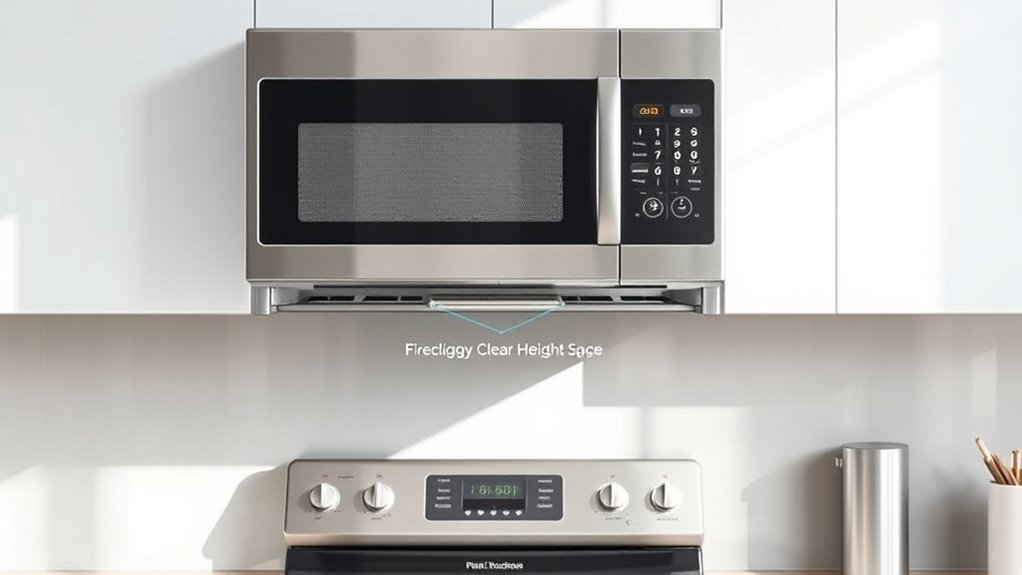
Because the microwave sits above your stove, its height directly impacts your safety and how easily you can use it. When you think about microwave ergonomics, placing it too high can strain your arms and neck, making it tough to reach hot dishes safely.
On the flip side, if it’s too low, it might interfere with your stovetop space or cause you to bend awkwardly. Proper placement helps you access the microwave comfortably without risking burns or spills.
Placing the microwave too low can hinder stovetop space and lead to awkward bending.
In kitchen design, balancing functionality and safety is really important. The microwave’s height affects visibility and control, so you want to avoid blocking your line of sight while cooking.
Thoughtful microwave placement also makes meal prep smoother. It lets you move seamlessly between the stove and microwave without unnecessary effort.
Ultimately, paying attention to where your microwave sits improves your kitchen’s overall safety and usability.
What’s the Ideal Height for a Microwave Over the Stove?
When it comes to installing your microwave over the stove, finding the right height is key. You’ll want it to be high enough so it’s safe and out of the way, but still easy enough to reach without any hassle. Most people aim for about 13 to 16 inches above the stove—that’s the sweet spot where you can comfortably grab your food without risking burns or spills.
Just keep in mind that everyone’s different, and your comfort matters most. So, it’s a good idea to measure your own height and see what feels best for you. Sticking to these general guidelines will help keep your kitchen both practical and safe.
Standard Installation Measurements
Installing a microwave over your stove requires careful attention to height for both safety and convenience.
Standard installation measurements usually recommend that the bottom of your microwave sits 13 to 16 inches above the stove’s cooking surface.
This range balances accessibility with proper ventilation. When planning your setup, make sure to check the manufacturer’s installation dimensions to guarantee the microwave clearance meets these guidelines.
Proper clearance prevents heat damage and allows enough space for cooking utensils and steam to escape.
By following these standard measurements, you’ll install your microwave at an ideal height that’s ergonomic and functional.
Safety and Accessibility Guidelines
When deciding on the ideal height for a microwave over your stove, safety and accessibility should always come first. Proper microwave ergonomics ensure you can reach and use your microwave comfortably without straining or risking spills.
User convenience means placing the microwave at a height that fits your reach and the flow of your kitchen. Keep these key factors in mind:
| Factor | Recommendation |
|---|---|
| Height from Stove | 13 to 15 inches above the stove |
| User Reach | 15 to 48 inches from the floor |
| Clearance | At least 30 inches above the stove top |
| Safety Precautions | Avoid placing it too high to prevent accidents |
Following these guidelines helps improve safety, reduces burns, and makes cooking more convenient.
How to Measure Your Space for Microwave Over the Stove Installation
Measuring your space accurately is the first step for a successful microwave over the stove installation. Gather basic tools like a tape measure, pencil, and notepad to get started.
Begin by measuring the width of the cabinet or wall space above your stove. Make sure it matches the microwave dimensions you’re considering.
Next, measure the height from the stovetop to the bottom of the cabinet above. This helps confirm there’s enough clearance for safe use and ventilation.
Measure clearance from stovetop to cabinet bottom to ensure safe use and proper ventilation.
Don’t forget to check the depth of the cabinet or wall. You want to ensure the microwave won’t stick out too much, which could affect your kitchen flow or safety.
Record all your measurements clearly, and compare them with the microwave dimensions listed in the manufacturer’s guide.
Accurate measurements will help you select a microwave that fits perfectly without any modifications or installation headaches.
With precise dimensions and the right tools, you’ll be ready to confidently move forward with your microwave over the stove setup.
Microwave Installation Safety Rules
Although it might seem straightforward, following safety rules during your microwave installation over the stove is really important to prevent accidents and ensure it works properly. Ignoring these safety tips can lead to fire hazards, electrical problems, or damage to your microwave.
Make sure to securely anchor the microwave so it doesn’t move or fall. Keep enough space between the stove and microwave to prevent heat damage. Use a dedicated electrical outlet that can handle the microwave’s power safely.
Lastly, follow the manufacturer’s guidelines for venting. Proper venting helps avoid smoke or steam buildup, keeping everything safe and functioning smoothly.
How Your Stove Type Affects Microwave Placement
Your stove type really influences where you should put your microwave above it. For example, with gas stoves, you need to leave extra space for safe combustion, so it’s all about making sure there’s enough clearance. Electric stoves, on the other hand, need good ventilation to prevent overheating, which can affect where you decide to place the microwave.
And if you have an induction stove, you’ll want to keep in mind that it’s pretty sensitive to heat. So, choosing the right height for your microwave is important to avoid any heat-related issues.
Gas Stove Clearance Requirements
Because gas stoves produce open flames and higher heat, you’ll need to keep specific clearances when installing a microwave above them. Following gas stove safety guidelines helps protect you and your kitchen from potential hazards. You don’t want to risk heat damage or fire by placing your microwave too close.
Here’s what to keep in mind:
- Maintain at least 30 inches of clearance between the cooktop and microwave bottom.
- Make sure there’s proper ventilation to prevent heat buildup.
- Use heat-resistant materials around the microwave area.
- Regularly check for signs of heat damage or wear.
Electric Stove Ventilation Needs
Gas stoves require more clearance because of the open flames, but electric stoves have different ventilation needs that affect where you place your microwave. Since electric stoves don’t produce open flames, you don’t need as much space above for safety.
That said, proper ventilation is still important to handle smoke, steam, and odors. When placing a microwave over an electric stove, make sure your ventilation system can handle the airflow without getting blocked.
Microwaves with built-in exhaust fans can help, but they shouldn’t replace a dedicated ventilation system designed for electric stoves. Position your microwave at a height that lets your ventilation work well while keeping it easy to access.
Finding this balance improves your cooking experience and keeps your kitchen air fresh without sacrificing safety or performance.
Induction Stove Heat Sensitivity
Although induction stoves generate less ambient heat than traditional models, you still need to keep their heat sensitivity in mind when placing a microwave above them. The stove’s surface and electronics can react negatively to excessive heat buildup.
Proper heat management is key to protecting both your stove and microwave. When positioning your microwave, leave enough space to prevent heat damage and ensure good ventilation to help dissipate heat.
Consider using heat shields or insulation if needed. Also, avoid microwaves that have poor heat resistance or inadequate cooling to keep everything running smoothly.
How to Ensure Proper Ventilation for Your Microwave
Proper ventilation is crucial for your microwave to work efficiently and safely. When installing a microwave over your stove, it’s important to understand the different types of ventilation—recirculating and external venting.
Recirculating vents filter air through charcoal filters and release it back into the kitchen. They’re a good option if you can’t duct outside. External venting, on the other hand, directs airflow outside your home, which is better for removing smoke, steam, and odors.
Think about airflow factors carefully. Make sure the vent system matches your stove’s cooking habits and your kitchen layout. Proper clearance around vents prevents overheating and ensures good airflow.
Check that the microwave’s vent placement lines up with your stove’s burners so it can effectively capture rising steam and grease. Also, remember to clean filters and vents regularly to keep airflow at its best.
Choosing the Best Microwave Model for Your Stove
When you’re picking out the best microwave to go with your stove, the first thing to think about is size and fit. You want to make sure it matches the space you have so it doesn’t feel cramped or awkward. Taking the time to measure your area can really save you headaches later on.
Also, don’t forget to check out the ventilation options. Good airflow is super important—not just for safety but also to keep everything running smoothly and efficiently. When you get these details right, your microwave will be a perfect addition to your kitchen, making your cooking experience better and more convenient.
Size and Fit
Choosing the right microwave size for your stove can really impact how your kitchen functions and looks. Make sure to measure the space carefully so the microwave fits perfectly above your stove. A microwave that doesn’t fit well can mess up your kitchen’s appearance and make it less convenient to use.
Keep these things in mind when selecting the size and fit:
- Measure your available space exactly to avoid surprises.
- Pick a microwave that matches your kitchen’s size and style.
- Think about how easy it is to access and the best height for daily use.
- Consider your cooking habits to choose a size that works for you without crowding the area.
Ventilation Options
Since your microwave sits above the stove, it needs to handle ventilation effectively to keep your kitchen smoke- and odor-free. You’ll want to understand the different ventilation types—ducted or ductless options—to choose the best microwave model.
Ducted vents expel air outside, which helps remove smoke and heat more efficiently. Ductless options filter and recirculate air back into the kitchen, making them ideal if external venting isn’t possible.
Each type has benefits depending on your kitchen setup and cooking habits. Ducted systems are great for heavy cooking, while ductless models are easier to install and work well in apartments.
Adjusting Microwave Height for Various Kitchen Layouts and Designs
Although kitchen layouts vary widely, you’ll want to position your microwave at a height that balances accessibility and safety. Proper placement is key for both function and looks in your kitchen.
Position your microwave where it’s both easy to reach and safe, enhancing your kitchen’s function and style.
Whether you have tall cabinets, open shelves, or a small space, adjusting the microwave height helps it blend in seamlessly and stay convenient to use.
Think about these factors when choosing the right height:
- Make sure it’s easy to reach without stretching or needing a step stool.
- Keep it high enough to reduce countertop clutter but low enough to avoid accidents.
- Match the microwave height to your cabinets for a cohesive look.
- Consider how it affects sightlines and the overall flow of your kitchen.
Reach Your Microwave Comfortably: Tips and Tricks
When you reach for your microwave, comfort and safety should come first to prevent spills or accidents. Ensuring microwave accessibility means placing it where you can easily open the door and remove hot dishes without stretching or bending awkwardly. Ergonomic placement reduces strain on your shoulders and back, making daily use safer and more convenient.
Use these tips to improve your microwave’s reach:
| Tip | Description | Benefit |
|---|---|---|
| Height Alignment | Place microwave at chest or eye level | Easier access, less strain |
| Clear Surroundings | Keep area around microwave clutter-free | Smooth operation, safer |
| Use a Step Stool | For taller placements | Safe access without overreach |
Common Mistakes When Installing Microwaves Too Low or High
Placing your microwave too low or too high can cause common problems that affect safety and ease of use. Many people don’t realize that installation mistakes often lead to these issues.
If your microwave is too low, you might find yourself bending awkwardly or risking burns from hot spills. Conversely, mounting it too high makes it harder to reach or see inside, which can be uncomfortable.
Avoid these mistakes by not straining to reach or see inside. Also, make sure it doesn’t block your stove’s ventilation system or create an awkward kitchen workflow that slows you down.
Frequently Asked Questions
Can I Install a Microwave Over a Gas Stove Without Professional Help?
Yes, you can install a microwave over a gas stove without professional help, but make sure you prioritize microwave safety.
Follow installation tips carefully, like securing the unit properly and maintaining the right height for ventilation. Avoid interference with the stove’s flame to keep everything safe.
If you’re unsure about electrical connections or mounting, it’s better to get a pro involved. Proper installation helps keep your kitchen safe and your microwave working well.
What Tools Do I Need for Microwave Installation Above the Stove?
You’ll need a toolbox bigger than a treasure chest for this! Start with a tape measure to check the microwave’s dimensions. Then, grab a stud finder to find secure mounting points.
Next, get a drill with bits, a screwdriver set, and a level to make sure everything is perfectly straight. Don’t forget safety goggles and gloves to protect yourself during the installation.
These tools help ensure your microwave fits snugly and securely above your stove, making the process safer and easier.
How Do I Clean the Microwave Vent Filters Effectively?
To clean the microwave vent filters effectively, start by carefully removing them from the microwave. Then, soak them in hot, soapy water.
Since vent filter materials are usually metal or charcoal, metal filters can be gently scrubbed with a brush. Charcoal filters, on the other hand, should be replaced instead of washed.
Try to clean or replace your filters every one to three months, depending on how often you cook. This helps keep your microwave vent working well and keeps your kitchen smelling fresh.
Are There Energy-Saving Microwaves Suitable for Over-Stove Installation?
Yes, you can find energy-saving microwaves designed specifically for over-stove installation. When shopping, look for models with high energy efficiency ratings, which help reduce power consumption without sacrificing performance.
Many brands offer various installation options, so you can choose one that fits your kitchen layout perfectly. By picking an energy-efficient unit, you’ll save on electricity bills while enjoying convenient cooking and ventilation right above your stove.
Can I Use a Microwave Over the Stove in a Rental Apartment?
Yes, you can use a microwave over the stove in a rental apartment, but you’ll want to check your rental rules first. Many landlords have rules about making permanent changes or drilling into walls, so installation is an important consideration.
You might need permission before mounting it, and sometimes renters choose countertop models instead. Always confirm with your landlord and think about using a microwave that requires minimal or no permanent installation to avoid any issues.
Conclusion
Think of your microwave over the stove as the crown jewel of your kitchen. Its height influences how smoothly your cooking flows. Setting it just right isn’t just about measurements; it’s about balancing safety and comfort, like finding the perfect rhythm in a dance.
Choosing the right height means protecting your space and making every meal a graceful experience. It’s about making your kitchen more functional and stylish.
So, measure carefully and find the ideal microwave over stove height. When you get it right, your kitchen will shine with ease and confidence.