How Induction Cooker Works? The Complete Answer
Many people struggle with cooking appliances that are slow, inefficient, or hard to control. If you’re tired of waiting forever for your stove to heat up or dealing with uneven cooking, you’re not alone.
Luckily, induction cookers offer a modern solution that’s faster, safer, and more precise.
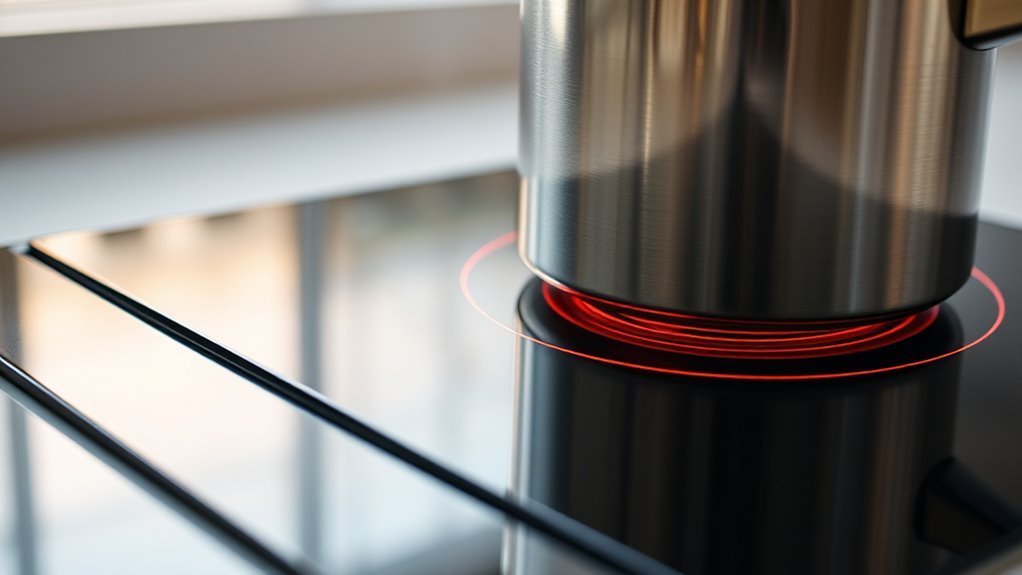
You use an induction cooker by placing magnetic cookware on its surface, where an electromagnetic field generated by a coil heats the pot directly, not the cooktop. This allows faster, precise temperature control with less wasted energy and a cooler kitchen.
Non-magnetic cookware won’t heat, so using the right pots is key. Induction cookers also have safety features like auto shutoff and child locks.
Keep going to uncover all the details behind how these efficient devices work.
Key Takeaways
- Induction cookers generate an electromagnetic field using an alternating current through a coil beneath the cooktop surface.
- This field induces electric currents in ferromagnetic cookware, heating it directly through electrical resistance.
- Only magnetic materials like cast iron or stainless steel effectively heat, while non-magnetic cookware remains cool.
- Built-in sensors and cooling systems regulate temperature, prevent overheating, and ensure safe operation.
- Induction cooking offers fast, energy-efficient heating with precise temperature control and a cooler, safer cooktop surface.
What Is Induction Cooking and How Is It Different?
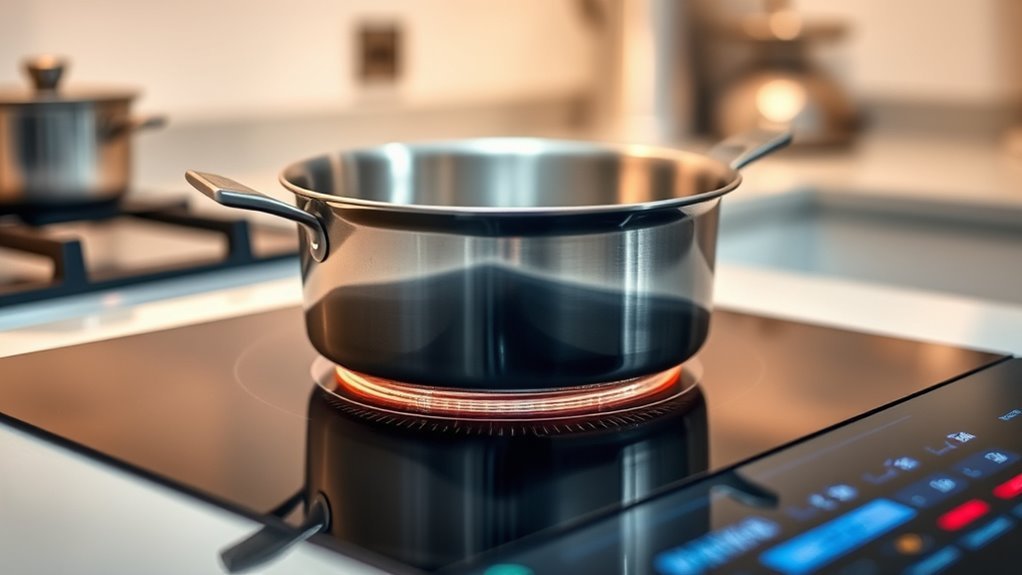
Although it may seem similar to traditional cooking methods, induction cooking uses electromagnetic energy to heat your cookware directly. This means instead of heating the air or a burner, the heat is generated right in the pot or pan, giving you precise and immediate temperature control.
You’ll notice the induction benefits quickly—your meals cook faster, and your kitchen stays cooler since less heat escapes. This method dramatically improves cooking efficiency, using less energy compared to gas or electric stoves.
You don’t have to wait for a burner to heat up or cool down because induction responds instantly when you adjust the settings. Plus, since the surface around the cookware remains relatively cool, cleaning is easier and safer.
When you switch to induction, you’re not just cooking—you’re upgrading to a smarter, more efficient kitchen experience that saves time, energy, and effort every time you prepare a meal.
How Induction Cookers Use Electromagnetic Fields to Heat Cookware
So, here’s the deal with induction cookers—they actually create an electromagnetic field just under their surface. It’s pretty neat because this field then induces electric currents directly inside your cookware. That means the heat is generated right in the pot or pan itself, not on the cooker’s surface.
And because the heat is produced directly in the cookware, it makes the whole cooking process much more efficient. You get to enjoy faster heating and better control over the temperature, all thanks to how these electromagnetic fields work.
Electromagnetic Field Generation
When you turn on an induction cooker, it creates a rapidly changing electromagnetic field just below the surface of the cooktop. This happens because the cooker uses electromagnetic principles, specifically alternating current running through a coil beneath the glass surface.
The alternating current generates a magnetic field that fluctuates at high frequencies. The strength of this electromagnetic field is carefully controlled to optimize energy transfer and safety.
You’ll notice the field strength adjusts depending on the power setting you choose, ensuring efficient heating without wasting energy. This precise control of electromagnetic field generation is what makes induction cooking different from traditional methods.
It allows heat to be produced directly in the cookware rather than on the cooktop itself.
Induced Currents In Cookware
Because the electromagnetic field generated by the induction cooker constantly changes, it induces electric currents directly in the cookware placed on top. These induced currents flow through the cookware materials, especially if they’re ferromagnetic like cast iron or stainless steel, which have high electrical resistance.
This resistance causes the currents to generate heat within the cookware itself. You’ll notice that cookware made from non-magnetic materials, such as aluminum or copper, won’t work well because they don’t support strong induced currents.
Heat Transfer Mechanism
Although induction cookers rely on electromagnetic fields, they don’t heat cookware by direct contact or flames. Instead, they use a specific heat transfer process based on the properties of the cookware.
Here’s how it works: The induction coil creates an alternating magnetic field that penetrates the cookware. Cookware made of high magnetic permeability materials like cast iron or stainless steel allows this magnetic flux to pass through efficiently.
This induces eddy currents inside the cookware, and these currents generate resistive heat directly within the material. The heat then spreads through the cookware via thermal conductivity, cooking your food evenly.
Keep in mind, cookware with low magnetic permeability or poor thermal conductivity won’t heat well. So, the induction process relies heavily on both magnetic properties to generate heat and thermal properties to distribute it evenly.
Key Components Inside an Induction Cooker
If you want to get a good idea of how your induction cooker heats things so quickly, it helps to know about its main parts. The main component here is the induction coil, which creates the electromagnetic field.
Basically, this coil is what makes everything tick. When you turn on the cooker, the coil generates an electromagnetic field that directly heats up the cookware. It’s pretty clever how all these pieces work together to make your cooking faster and more efficient.
Essential Parts Overview
An induction cooker relies on several key components working together to heat your cookware efficiently. This mix of parts uses induction technology to maximize cooking speed and ensure your food heats evenly.
Here are the essential parts inside an induction cooker:
- Power Supply Unit converts electricity to the right voltage for induction cooking.
- Control Board manages temperature settings and adjusts the power output.
- Induction Coil generates the magnetic field that heats your cookware. (More on this later.)
- Cooling System prevents overheating by dissipating excess heat from internal parts.
Understanding these parts helps you see how induction cookers deliver fast, safe, and energy-efficient cooking every time you use them.
Role of Induction Coil
Since the induction coil generates the magnetic field that heats your cookware, it plays an essential role in how an induction cooker works. When you turn on the cooker, the induction coil produces an alternating magnetic field.
This magnetic field penetrates the metal base of your cookware, creating electric currents called eddy currents. These currents generate heat directly in the cookware, cooking your food efficiently.
Without the induction coil’s magnetic field, the cooker wouldn’t be able to transfer energy to your pots and pans. You rely on this component to provide fast, precise heating while keeping the cooktop surface cool.
In short, the induction coil is the heart of the induction cooker. It converts electrical energy into a magnetic field that heats your cookware safely and effectively.
Induction Cooktop Temperature Control
Although induction cooktops heat differently than traditional stoves, you still have precise control over the temperature. Thanks to advanced temperature settings, you can quickly and accurately adjust heat levels, ensuring great control for different dishes. The induction technology responds instantly to your adjustments, helping you keep the heat steady without fluctuations.
Here’s how induction cooktop temperature control works for you:
- Instant heat changes: When you change the temperature, the induction coil adjusts the electromagnetic field right away.
- Precise increments: You can select exact heat levels, giving you fine control over simmering or boiling.
- Automatic sensors: Some models detect pan temperature and adjust power to prevent overheating.
- Consistent cooking: The even heat distribution helps you avoid hot spots and undercooked food.
This level of temperature control makes induction cooktops perfect for recipes that need careful heat management.
What Types of Cookware Work Best With Induction Cookers
Mastering temperature control on your induction cooktop is only part of the puzzle—choosing the right cookware makes a big difference in how well it performs. You want materials with strong magnetic properties, like cast iron or stainless steel, to ensure compatibility. Keep in mind, not all stainless steel pans work, so check for a magnetic base.
Cookware shape also matters. Flat bottoms are best because they maximize contact and promote efficient heat transfer. When it comes to heat conductivity, multi-ply or clad cookware usually outperforms single-layer options. Durability is key, especially if you cook often—hard-anodized aluminum with a magnetic base combines toughness and efficiency.
Cost is something to consider too. While premium brands typically offer better materials and longer-lasting cookware, there are budget-friendly options that work just as well. Trusted brands like All-Clad, Duxtop, and T-fal are known for their induction-ready designs. Picking cookware that balances these factors will help you get the most out of your induction cooker every time.
Why Induction Cookers Stay Cool During Cooking
When you cook with an induction cooker, the surface itself doesn’t get hot because it uses electromagnetic energy to heat only the cookware. This means the cooktop stays cool, making it safer and more comfortable to use.
The cooling mechanism inside the induction cooker also helps by quickly dispersing heat generated by its internal parts.
The induction cooker’s cooling system efficiently disperses heat from its internal components for safer operation.
Here’s why induction cookers stay cool during cooking:
- Electromagnetic induction heats only magnetic cookware, not the cooktop surface.
- The glass or ceramic surface absorbs very little residual heat from the pan.
- Built-in cooling fans and heat sinks actively cool the internal electronics.
- Safety features automatically shut off the cooker if no suitable cookware is detected, preventing unnecessary heat buildup.
All of this together ensures your induction cooker remains safe, efficient, and cool to the touch while you’re cooking.
How Induction Cookers Save Energy vs. Gas and Electric Stoves
You’ll probably notice that induction cookers are way more efficient with energy than gas or traditional electric stoves. That’s because they heat the cookware directly, rather than the air around it. This direct heating means there’s less energy wasted, so more of it goes straight into cooking your food.
And honestly, that makes a pretty big difference when it comes to your energy bills. Plus, because they heat up so quickly, your cooking is faster too. It’s a win-win situation — saving money and cooking more efficiently at the same time.
Energy Efficiency Comparison
Three key factors make induction cookers more energy-efficient than gas and electric stoves: direct heat transfer, faster cooking times, and less wasted energy. Using an induction cooker means better energy savings and cost efficiency because energy goes straight into heating your cookware.
Here’s how they compare:
- Induction cookers convert about 90% of energy into heat, while gas stoves convert roughly 40-55%.
- Electric coil stoves transfer around 70-75% of energy to pots.
- Faster heating means you spend less time cooking, which reduces overall energy use.
- Precise temperature control avoids overheating, saving energy and money.
Heat Loss Reduction
Beyond energy efficiency, induction cookers are great at minimizing heat loss, which means you save a lot of energy over time. Unlike gas or traditional electric stoves, induction cookers heat directly inside the cookware through magnetic fields.
This means you don’t lose much heat to the air around you. When you cook, most of the energy goes straight into your pot or pan, helping it heat faster and cook more evenly.
With gas stoves, a lot of heat escapes around the sides, and electric coils waste energy heating the burner instead of the cookware. By reducing heat loss, induction cookers help you save energy and keep your kitchen cooler.
Safety Benefits of Using Induction Cookers
Although induction cookers use powerful electromagnetic fields, they’re designed with safety as a top priority, making them much safer than traditional gas or electric stoves. You’ll appreciate how their advanced safety features protect you and your family in the kitchen.
Here are some key safety benefits you get with induction cookers:
- Child protection – Many models include lock functions to prevent kids from accidentally turning them on.
- Overheating prevention – Sensors keep an eye on the temperature and automatically reduce power if things get too hot.
- Automatic shutoff – The cooker switches off if it doesn’t detect cookware or after being on for a while, so there’s no flame risk or electrical hazards.
- Surface coolness – Since heat is only generated in compatible cookware, the surface stays cooler and reduces the chances of burns.
Making sure you use the right cookware also helps improve safety and performance. With these features, you can cook confidently knowing safety is built into every induction cooker.
Common Myths About Induction Cookers
While induction cookers offer impressive safety features, many people still have misconceptions about how they work. Let’s clear some of those up.
One common myth is that induction cookers are slow to heat. In reality, they heat up faster than traditional gas or electric stoves because the energy directly heats the cookware, not the cooktop surface.
Another misconception is that induction cookers waste energy or increase your electricity bill. Actually, they’re more energy-efficient since less heat escapes into the environment.
You might also hear that induction cookers only work with special pots, but as long as your cookware has a magnetic base, it’s compatible.
Finally, some worry that induction cookers emit harmful radiation. However, they operate within safe electromagnetic field limits.
Understanding these facts helps you appreciate induction cooking’s true benefits without falling for common myths.
How to Troubleshoot Common Induction Cooker Issues
If your induction cooker isn’t heating properly or showing error codes, don’t worry—you can often fix common issues yourself. Start with the basics to keep everything running smoothly.
First, check if your cookware is compatible. Induction cookers need magnetic pots and pans. Use a magnet to test—if it sticks, you’re good to go. Non-magnetic cookware won’t heat properly.
Next, listen for any noise. A gentle buzzing or humming is normal. But if you hear loud or irregular sounds, it could point to an issue with the internal coil or fan.
Make sure the surface and vents are clean. Dirt or food debris can cause overheating or sensor errors. Keep your cooker clean and ensure proper ventilation.
Finally, try resetting the cooker. Unplug it for a few minutes to clear error codes and restart the system.
These steps usually fix common problems. If issues continue, check the user manual or reach out to customer support for professional help.
Frequently Asked Questions
Can Induction Cookers Be Used Outdoors?
Yes, you can use induction cookers outdoors, but you should consider safety and power sources. Having a reliable power supply is key for outdoor use.
Induction cookers heat your cookware directly, so they stay efficient outside, making them handy for camping or picnics. Just be sure your setup is stable and protected from weather.
Avoid using them in wet or exposed conditions to prevent electrical hazards. With the right precautions, you can enjoy safe and efficient outdoor cooking.
How Do Induction Cookers Affect Pacemakers?
Though induction cookers use magnetic fields, they usually don’t cause pacemaker interference if you follow safety guidelines. You shouldn’t worry too much about them affecting your device, but it’s a good idea to keep the cooker a few inches away from your pacemaker.
If you’re especially cautious, talk to your doctor first. By balancing everyday convenience with safety, you can enjoy cooking without worrying about your heart device.
Are Induction Cookers Compatible With All Kitchen Countertops?
No, induction cookers aren’t compatible with all kitchen countertops. You need to check your countertop materials because induction cooktops generate heat through magnetic fields, not direct contact.
They work well on heat-resistant surfaces like granite, quartz, or ceramic. But materials like laminate or wood might get damaged or warped if they aren’t properly insulated.
What Is the Average Lifespan of an Induction Cooker?
You can expect your induction cooker to last around 10 to 15 years with proper care. Its efficiency helps cut down energy use, making it a smart, long-term choice.
To get the most out of it, avoid overheating and use cookware that’s compatible. Regular cleaning also helps keep it working smoothly.
Follow these tips, and your induction cooker will serve you well for many years, staying efficient and saving energy.
Can Induction Cooking Preserve More Nutrients in Food?
Yes, you can preserve more nutrients in food with induction cooking. Its efficiency heats food faster and more evenly, so you spend less time cooking and avoid nutrient loss.
Since induction cookers give you precise temperature control, you’re less likely to overcook your food. This helps keep more vitamins and minerals intact.
Using induction is a quick, efficient way to cook, which makes your meals healthier and packed with more nutrients.
Conclusion
Now that you know how induction cookers work using electromagnetic fields to heat your cookware efficiently and safely, isn’t it clear why they’re becoming so popular?
With precise temperature control, energy savings, and fewer safety risks, induction cooking offers a modern twist on your kitchen routine.
So, why stick with old methods when induction gives you faster, cleaner, and smarter cooking?
Give it a try—you might never want to go back!