What Temp Is a Freezer? The Complete Answer
Are you tired of guessing whether your freezer is at the right temperature? Many people struggle with keeping their frozen foods fresh and safe because they don’t realize how crucial proper temperature control is.
You should keep your freezer at 0°F (-18°C) to guarantee your food stays safe and fresh. This temperature stops bacteria growth, preserves texture and nutrients, and prevents spoilage and freezer burn.
Temperatures that are too warm or too cold can harm your food’s quality and waste energy. Use a freezer thermometer to monitor and adjust settings regularly.
Understanding these basics will help you maintain your freezer’s efficiency and get the best from your stored food.
Key Takeaways
- The ideal freezer temperature is 0°F (-18°C) for keeping food safe and fresh.
- Freezing at 0°F stops bacteria from growing, which helps prevent spoilage and nutrient loss.
- Keeping a steady temperature also stops freezer burn and keeps your food’s texture and flavor just right.
- Make sure to use a freezer thermometer to check the temperature regularly, and adjust it slowly if needed.
- While most foods do well at 0°F, some might need slight tweaks, but this setting works well for most items.
What Is the Ideal Freezer Temperature for Food Safety?
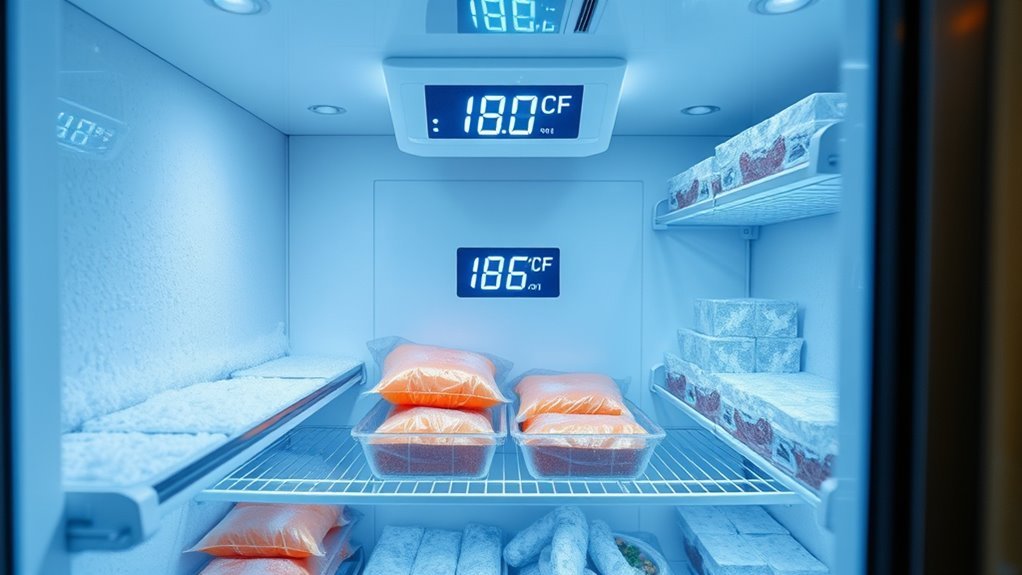
Maintaining the right freezer temperature is essential for keeping your food safe and fresh. When your freezer stays at the ideal temperature, it slows down the growth of bacteria that cause food spoilage. This means your meals last longer without losing quality or becoming unsafe to eat.
If your freezer is too warm, ice crystals melt, damaging food texture and increasing the risk of spoilage. You also need the right temperature to guarantee safe thawing. Thawing frozen food properly prevents bacteria from multiplying rapidly, which happens when food sits at unsafe temperatures.
Why Is 0°F (-18°C) the Recommended Freezer Temperature?
You want your freezer set at 0°F (-18°C) because it helps keep your food safe by slowing down bacteria growth. When the temperature is just right, your food stays fresh longer and is less likely to spoil. It’s like giving your food a little pause button so it stays good for longer.
Plus, setting your freezer at this temperature makes sure it runs efficiently. That means it doesn’t waste energy trying to stay cold enough, which can save you some money on your energy bills. It’s all about finding that sweet spot where your food stays fresh, and your freezer doesn’t work too hard.
Food Safety Preservation
Although freezing food at any low temperature slows down spoilage, setting your freezer to 0°F (-18°C) guarantees that harmful bacteria stop growing completely. Keeping this temperature steady is key to food safety and quality.
Maintaining 0°F helps prevent bacteria and pathogens from multiplying, which keeps your food safer for longer. It also helps reduce nutrient loss and preserves the texture and flavor of your meals.
Temperature fluctuations can cause ice crystals to melt and refreeze, leading to texture loss and potential bacterial growth. Sticking to 0°F ensures consistent preservation and minimizes freezer burn.
Optimal Freezing Efficiency
Setting your freezer to 0°F (-18°C) doesn’t just keep food safe. It also helps optimize energy use and keeps your appliance running efficiently. At this temperature, your freezer runs smoothly without overworking.
If you set it colder, your freezer will use more energy. This increases electricity bills without providing much extra benefit for your food. Temperatures above 0°F can lead to food spoilage and reduce freezer performance.
By sticking to 0°F, you find the right balance between energy consumption and freezing power. It keeps your food frozen well while saving electricity. This temperature is the ideal spot for reliable operation, cost savings, and appliance longevity.
How Does Freezer Temperature Impact Your Food’s Quality and Shelf Life?
When your freezer keeps the right temperature, it slows down bacteria growth and helps preserve the texture and flavor of your food. Staying at the right temperature also helps keep nutrients locked in, so your meals stay fresh and healthy longer.
If the temperature fluctuates, ice crystals can form, which damages cell structures. That makes your food mushy once you thaw it, reducing quality and enjoyment.
Here’s how temperature impacts your food’s quality and shelf life:
- Proper freezing prevents ice crystals from ruining the texture of your food.
- Consistent temperatures keep vitamins and minerals intact, so your food stays nutritious.
- When the temperature stays steady, frozen food lasts longer, helping you reduce waste and save money.
What Happens If Your Freezer Temperature Is Too Warm or Too Cold?
Maintaining the right freezer temperature keeps your food fresh and nutritious. But what happens if your freezer runs too warm or too cold?
If the temperature goes above 0°F (-18°C), your food may start to thaw and refreeze repeatedly. This increases the risk of spoilage and bacterial growth, which can ruin texture, flavor, and safety.
On the flip side, setting your freezer too cold—below 0°F—can cause freezer burn. That dries out your food and impacts taste and quality. While colder temps slow spoilage, extreme cold can damage delicate items like fruits and vegetables.
Frequent temperature changes, whether from a faulty seal or incorrect settings, make things worse. They cause inconsistent freezing cycles and can harm your food’s quality.
To keep your food safe and tasty, avoid letting your freezer stray too far from the ideal temperature. Consistent control ensures your frozen goods stay fresh and nutritious over time.
How Can You Check Your Freezer’s Temperature Accurately?
To get an accurate reading of your freezer’s temperature, the best thing to do is use a freezer thermometer. Just place it inside the freezer, and then you can check the reading whenever you want. It’s a simple way to make sure everything’s at the right temperature.
It’s a good idea to check the thermometer regularly, so you can catch any temperature changes early on. Keeping an eye on it helps ensure your food stays frozen and fresh, and it prevents any surprises that could lead to spoiled items.
Using A Freezer Thermometer
Although most freezers have built-in temperature displays, they can sometimes be inaccurate or fluctuate often. To make sure your freezer stays at the right temperature, use a freezer thermometer. It helps you spot any temperature changes and ensures your freezer is properly calibrated.
Place the thermometer in the coldest part of the freezer for the most accurate reading. Try to avoid putting it near the door or walls, where temperatures tend to vary more. Check the thermometer after 8 to 12 hours to get a stable reading.
Using a freezer thermometer gives you peace of mind that your food stays safe and your freezer runs efficiently. It also helps prevent unexpected temperature swings that could spoil your items.
Monitoring Temperature Consistently
Since freezer temperatures can shift unexpectedly, it’s important to check them regularly to keep your food safe. You can’t rely only on the built-in thermostat because door openings or power outages can cause fluctuations.
Using reliable monitoring devices like digital freezer thermometers or smart sensors helps you track changes consistently. These tools will alert you if temperatures go above safe levels, so you can prevent spoilage.
Here’s a quick comparison of common monitoring devices:
| Device Type | Features |
|---|---|
| Digital Thermometer | Easy to read, battery-powered |
| Smart Sensor | Alerts via smartphone app |
| Analog Thermometer | No batteries, simple design |
How Do You Adjust Your Freezer Temperature for Best Results?
How do you guarantee your freezer maintains the ideal temperature for preserving food quality? Start by understanding your freezer settings and making precise adjustments. Most freezers have a dial or digital control to set the temperature.
To adjust it effectively, check the current temperature with a freezer thermometer. Then, tweak the settings accordingly.
Here’s how to adjust your freezer temperature for best results:
- Locate the freezer settings control, usually inside the unit or on the door.
- Make small temperature adjustments and wait 24 hours before rechecking. This allows the freezer to stabilize.
- Avoid changing the settings too often. Consistent settings help maintain optimal freezing conditions.
What Are the Best Freezer Temperature Settings for Different Foods?
You’ll want to set your freezer temperature based on the types of food you store so they stay fresh longer. Different foods have their own ideal freezing points, which help keep their taste and texture just right.
Ideal Temperatures By Food
Although most freezers stay at around 0°F (-18°C), you can adjust the settings depending on what you’re storing. This helps keep your food fresh and extends how long it stays good.
Different foods need specific temperature ranges to stay safe and maintain quality. For example, delicate items like bread prefer slightly warmer conditions, while meats need colder temperatures to stay fresh.
Here are some ideal temperature ranges for common foods:
- Meat and poultry: Keep at -10°F to 0°F (-23°C to -18°C) to prevent spoilage and freezer burn.
- Fruits and vegetables: Store around 0°F (-18°C) to preserve texture and nutrients.
- Bread and baked goods: Best kept at 0°F to 10°F (-18°C to -12°C) to avoid drying out.
Adjusting your freezer temperature based on food type helps ensure everything stays as fresh as possible.
Adjusting Settings For Preservation
Setting your freezer to the right temperature depends on what you plan to store. For most foods, keeping it at 0°F (-18°C) preserves quality without wasting too much energy.
Meats and seafood do better at slightly colder settings, around -10°F (-23°C), to prevent texture loss. Fruits and vegetables stay fresh at the standard 0°F.
Try to avoid opening the door too often, as that can mess with the temperature and waste energy. If you’re freezing large batches, lower the temperature briefly to freeze quickly, then turn it back to the usual setting.
What Freezer Temperature Myths Should You Watch Out For?
How cold should your freezer really be? It’s time to clear up some common myths that might have you setting the temperature wrong. Many think colder is always better, but that’s not quite true. Too cold can waste energy and mess with your food’s texture.
Setting your freezer too cold wastes energy and can harm your food’s texture—colder isn’t always better.
On the other hand, some believe a slightly higher temperature is fine, which could put your food safety at risk. Here are three myths to watch out for:
- Freezers should be set below 0°F (-18°C) to keep food safe and fresh.
- Setting the freezer colder than necessary won’t speed up freezing or improve quality.
- Frequent opening doesn’t drastically change the internal temperature if the freezer is properly sealed.
Avoid falling for these myths to keep your freezer efficient and your food preserved properly. Knowing the right temperature helps you save energy and reduce food waste.
How Often Should You Check Your Freezer Temperature?
When should you check your freezer’s temperature to keep your food safe and your appliance running smoothly? Regular monitoring is really important. Checking it at least once a week helps you catch temperature changes early, preventing food from spoiling and avoiding costly repairs.
Using reliable methods like digital thermometers or smart sensors makes this task easier and more accurate. It’s a simple way to stay on top of your freezer’s health and keep everything running efficiently.
Here’s a straightforward schedule to help you stay on track with freezer maintenance:
| Frequency | Method | Purpose |
|---|---|---|
| Weekly | Digital thermometer | Detect temperature shifts |
| Monthly | Manual gauge check | Verify thermostat accuracy |
| Quarterly | Deep clean & inspect | Prevent frost buildup |
| Annually | Professional service | Ensure peak performance |
How Can You Keep Your Freezer Efficient and Evenly Chilled?
Although keeping your freezer efficient might seem simple, you need to take a few steps for even chilling and top performance. Start by organizing your items so cold air can flow freely around everything. Overcrowding blocks airflow, leading to uneven temperatures and making your freezer work harder, which wastes energy.
Here are three quick tips to help you out:
- Avoid Overpacking: Leave some space between items so air can circulate better.
- Regularly Defrost: Ice buildup blocks airflow and reduces energy efficiency.
- Keep the Door Closed: Try to open it as little as possible and keep it shut to maintain consistent temperatures.
Frequently Asked Questions
What Types of Freezers Are Best for Home Use?
You’ll find upright freezers great for easy access and organization, fitting well in tight spaces. Chest freezers offer larger storage capacity and often use less energy, boosting energy efficiency.
If you want to save on electricity bills and need more room for bulk storage, a chest freezer is ideal. But if you prefer convenience and better shelving, an upright freezer suits you best.
Consider your space and how you plan to use it to decide which type fits your needs best.
Can Freezer Temperature Affect Energy Consumption?
Yes, freezer temperature directly affects energy consumption. When you set your freezer too cold, it has to work harder, which wastes energy and increases your bills.
Sticking to the ideal setting, usually around 0°F (-18°C), keeps your food safely frozen without using extra power. This balance helps you save energy and extend your freezer’s lifespan.
How Long Does It Take for a Freezer to Reach the Set Temperature?
It usually takes your freezer about 4 to 24 hours to reach the set temperature. This depends on things like how full it is and the initial temperature inside.
When you change the temperature settings, the freezer’s cooling system works harder to stabilize. If you open the door often or add warm items, it’ll take longer.
To get it to the right temperature faster, keep the door closed and avoid overloading it right after making adjustments.
Are There Any Health Risks From Freezing Food Too Long?
You won’t face serious health risks from freezing food too long, but freezer burn can affect texture and taste. While freezing keeps food safe by stopping bacteria growth, storing it for too long can degrade nutrients.
To avoid this, follow some simple best practices: use airtight packaging, label items with dates, and rotate your stock regularly. This way, you keep your food safe, tasty, and nutritious without worrying about freezing it too long.
What Maintenance Is Needed to Keep a Freezer Running Well?
Keeping your freezer running smoothly is like tuning a finely tuned instrument.
You’ll want to focus on regular freezer cleaning to prevent frost buildup and odors.
Also, don’t forget about temperature monitoring—make sure it stays around 0°F (−18°C) for peak performance.
Check door seals for tightness and avoid overloading it.
These simple steps will keep your freezer humming efficiently and your food safely preserved.
Conclusion
Regarding freezer temperatures, keep in mind that “a stitch in time saves nine.” Setting your freezer at 0°F (-18°C) ensures your food stays safe, fresh, and tasty longer.
Don’t wait until problems occur—check your freezer regularly. Avoid common myths and adjust settings based on what you store.
By staying proactive, you’ll save both time and money. Keeping your freezer at the right temperature helps it work efficiently and keeps your food top quality every time.