How to Dispose of Kitchen Knives: A Step-by-Step Guide
Are you tired of worrying about what to do with your old or damaged kitchen knives? You’re not alone—many people struggle with safely disposing of sharp, rusty, or chipped blades. Proper disposal is important both for safety and the environment.
You should dispose of your kitchen knives when they’re chipped, rusted, or unsafe to use. Start by cleaning and drying them thoroughly.
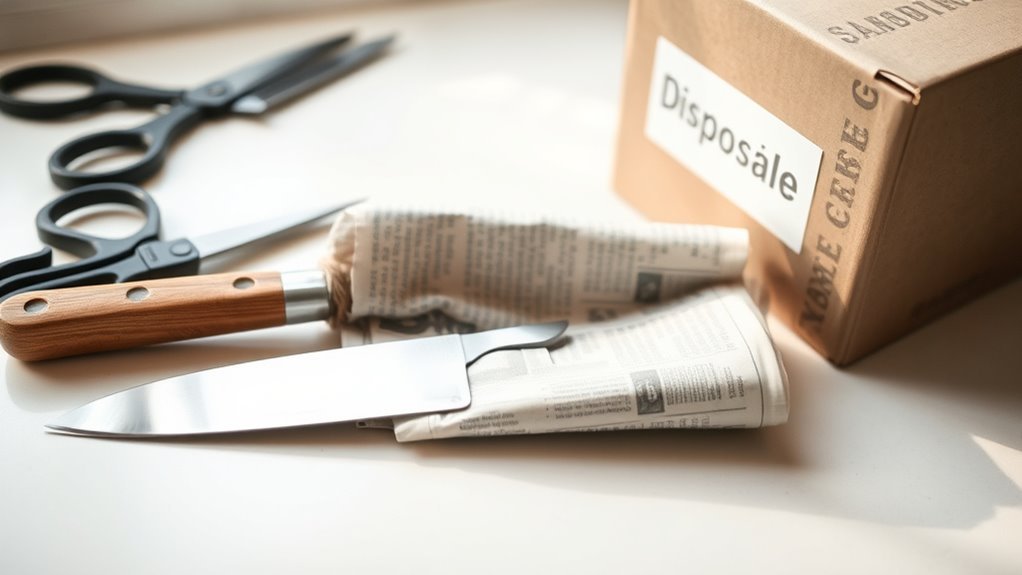
Then, wrap each blade in thick cardboard or bubble wrap and secure it with tape to prevent injuries. Label packages as “sharp objects” and place them in a sturdy container.
You can recycle, donate, or use disposal services depending on local options. Keep following for tips on safe methods and where to take your knives.
Key Takeaways
- Inspect knives for damage or wear to decide if disposal or donation is appropriate.
- Clean and dry knives thoroughly before preparing for disposal or donation.
- Wrap blades securely with cardboard or bubble wrap and label as “sharp objects.”
- Check local recycling or donation options for safe and responsible knife disposal.
- Dispose of broken or rusted knives in puncture-proof containers following local waste guidelines.
When Should You Dispose of a Kitchen Knife?
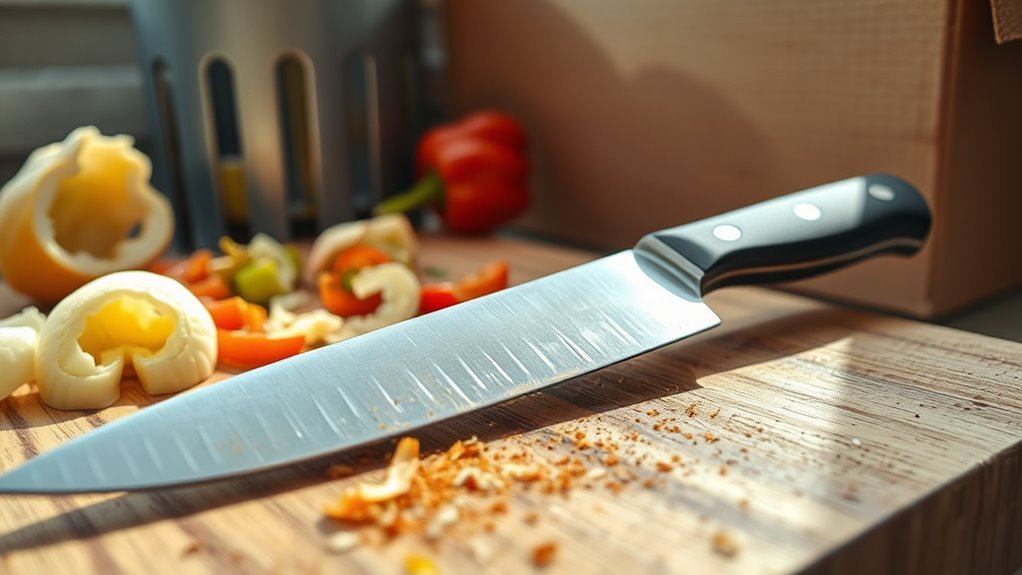
How do you know when it’s time to dispose of a kitchen knife? You should watch for clear signs that replacement is necessary. Over time, knives lose their sharpness, and sharpening can only do so much.
If your knife’s blade is chipped, cracked, or rusted beyond repair, it’s a definite sign to replace it. Another warning sign is when the handle becomes loose or breaks, making the knife unsafe to use.
The lifespan of a knife varies depending on quality and how well you care for it, but a good knife can last several years. Still, once its performance drops noticeably or it becomes unsafe, it’s best to let it go.
A quality knife lasts years, but when performance fades or safety declines, it’s time to replace it.
Ignoring these signs can lead to accidents or poor cutting results. Recognizing when to replace your knife keeps your kitchen safe and efficient.
How to Prepare Kitchen Knives for Safe Disposal
Before you toss out your kitchen knives, it’s a good idea to give them a thorough clean and make sure they’re completely dry. This helps prevent any rust or contamination later on.
Once they’re clean, wrap the blades securely with thick materials like cardboard or bubble wrap. This extra step is really important because it keeps anyone handling the trash safe from accidental cuts.
Taking these simple precautions makes sure everyone stays safe when your knives are on their way to disposal.
Cleaning And Drying
Although you might be eager to toss out your kitchen knives, you’ll want to clean and dry them first. Proper cleaning is key for keeping them in good shape and safe to handle.
Start by rinsing the blades under warm water to wash away food bits. Use a mild detergent and a soft sponge to gently scrub the knife, avoiding anything abrasive that could damage the blade.
Pay special attention to the handle and any small crevices where bacteria might hide. After washing, dry the knives right away with a clean towel to prevent rust and corrosion.
Keeping the knives dry also helps prevent slips and accidental cuts from slippery handles. Following these steps ensures your knives are safe and ready for the next stage of disposal.
Wrapping And Securing
Three simple steps will help you wrap and secure your kitchen knives safely for disposal. First, cover the blade completely with thick cardboard or several layers of newspaper. This protects anyone handling the waste from getting cut.
Next, wrap the entire knife tightly with strong tape to make sure the wrapping stays in place. Finally, place the wrapped knife in a rigid container like a plastic bottle or puncture-proof box to prevent accidents.
Focusing on knife safety during this step is really important. It helps prevent injuries to sanitation workers and anyone else who might handle the waste. Double-check local guidelines, as different disposal methods might require specific packaging.
Properly wrapping and securing your knives guarantees responsible disposal and keeps everyone safe during the process.
How to Wrap and Secure Kitchen Knives to Prevent Injuries
When you’re ready to dispose of kitchen knives, wrapping and securing them properly is key to avoiding injuries. Start by placing the blade on a thick layer of cardboard or bubble wrap. Wrap it tightly so the sharp edge is fully covered.
Properly wrap blades with cardboard or bubble wrap to prevent injuries when disposing of kitchen knives.
Use strong tape to secure the wrapping firmly. This prevents slips that could cause cuts. For extra safety, wrap the handle too to reduce the chance of the knife slipping from your grip.
If you have multiple knives, wrap each one individually to keep blades from touching. Then, place them in a sturdy box or container. Be sure to mark it clearly as “sharp objects” so others know it contains knives.
Following these steps helps minimize the risk of accidental cuts or punctures. It keeps you and sanitation workers safe. Proper wrapping and securing are essential when disposing of kitchen knives safely.
Can You Recycle Kitchen Knives? What You Should Know
Ever wonder if you can recycle those old kitchen knives? Well, the answer is yes, but it’s not as simple as tossing them into the recycling bin. Some metal recycling centers will accept knives, but you’ve got to be careful to stay safe during the process.
Before you recycle, it’s a good idea to check with your local recycling facility to see if they accept knives and what their specific guidelines are. And remember, safety first! Wrap the blades in heavy-duty tape or old cloth to prevent any accidental cuts when handling or transporting them. That way, you can do your part for the environment without risking injury.
Knife Recycling Options
Although kitchen knives are mostly made of metal, not all recycling centers accept them because of safety concerns and their mixed materials. Different types, like those with plastic handles or composite blades, can make recycling tricky.
Before tossing your knives in the bin, check with your local facility to see if they handle kitchen knives specifically. Some centers ask you to separate the metal from the handle or use special drop-off points.
Recycling metal helps reduce landfill waste and lowers the need for new raw materials. If your knives aren’t accepted curbside, consider donating or repurposing them.
Knowing your options helps you recycle responsibly while doing your part for the environment.
Safety Precautions for Disposal
Disposing of kitchen knives safely means handling them carefully to avoid injuries and make sure they’re disposed of properly. Always wear safety gear like thick gloves to protect your hands from accidental cuts.
Next, focus on secure packaging to prevent any hazards during transport or disposal. Wrap the knife blades in several layers of cardboard or bubble wrap.
Use strong tape to keep the wrapping tight so no sharp edges are exposed. Then, place the wrapped knives in a sturdy container, like a plastic or metal box, for extra protection.
Following these steps helps prevent injuries and ensures you’re following most recycling or disposal rules.
Where to Recycle Kitchen Knives Locally and Online
Wondering where to recycle your old kitchen knives without hassle? Start by checking local resources like community recycling centers or municipal waste programs. Many towns offer specialized recycling programs that accept metal items, including knives. You can often find this info on your city’s website or by calling your local waste management office. Some hardware stores also provide drop-off points for metal recycling.
If local options are limited, consider online solutions. Several companies specialize in recycling kitchen knives and other metal tools. They typically provide prepaid shipping labels, making it easy to send your knives safely. Look for services with clear instructions on packaging to prevent injuries during transit.
How to Donate Kitchen Knives Instead of Disposing of Them
Thinking about getting rid of those old kitchen knives? Why not give them a second life instead of tossing them out? You can donate them to local shelters, community centers, or even culinary schools. It’s a great way to pass on something useful and help others out.
Before you drop them off, make sure to clean the knives really well. And don’t forget to wrap the blades securely—no one wants to get hurt, after all! It’s also a good idea to check with the donation centers first to see if they have any specific requirements. This way, you’ll know your knives will be accepted safely and can be put to good use.
Finding Donation Centers
Although donating kitchen knives takes a bit of research, it’s a great way to give your blades a second life. To find the right donation spots, start by checking out community kitchens, many of which accept gently used knives for their cooking programs.
Next, look into local charities or shelters—they often need kitchen tools for cooking classes or meal prep. Don’t forget to check out thrift stores or nonprofit organizations that specialize in kitchenware donations.
Here’s a quick list to help you get started:
- Contact community kitchens to ask about knife donations.
- Reach out to shelters or charities focused on culinary training.
- Visit thrift stores or nonprofits accepting kitchen knives.
Preparing Knives Safely
Handle your kitchen knives with care before donating them to ensure safety for everyone involved. Start by thoroughly cleaning each knife, removing any food residue to prevent contamination.
Next, inspect the sharp edge for chips or damage. If the blade is dull or unsafe, consider having it professionally sharpened or repaired.
Wrap each knife individually in thick cardboard or bubble wrap to cover the sharp edge, then secure it with tape to prevent accidental cuts during handling.
Label the package clearly as “sharp objects” to alert donation center staff.
Following these steps makes sure knife safety is maintained for both you and the recipients. It also helps make your donation helpful and risk-free.
Proper preparation shows respect for your knives and the people who’ll use them.
How to Dispose of Broken or Rusted Kitchen Knives
When dealing with broken or rusted kitchen knives, safety and proper disposal are really important. You want to make sure these knives don’t pose a risk to anyone handling waste and that you follow local disposal rules.
Here’s how to dispose of them responsibly:
- Identify knife materials: Check if your knife has metal, plastic, or wooden parts. Some recycling centers only accept certain materials, so knowing this helps you sort correctly.
- Follow disposal regulations: Look up your local waste management rules. Some areas require knives to be taken to hazardous waste facilities or designated drop-off points.
- Secure the knife safely: Wrap the broken or rusted blade in heavy-duty tape or put it in a puncture-proof container. This helps prevent injuries during handling and transport.
Safely Dispose of Kitchen Knives in Household Trash
If you can’t recycle or drop off your kitchen knives, you’ll need to dispose of them safely in household trash to prevent injuries. Start by wrapping the blade securely in several layers of thick paper, cardboard, or bubble wrap to protect anyone handling the trash.
Then, tape the wrapping firmly to keep it from coming loose. For extra safety, place the wrapped knife inside a sturdy container like a plastic bottle or a small box. This helps ensure the blade won’t puncture trash bags or hurt sanitation workers.
Be sure to label the package with a warning like “Sharp Knife Handle with Care” to promote safety. Finally, dispose of the package in your regular trash bin, following your local waste management rules.
These methods help reduce the risk of accidents and make sure your old knives don’t pose a danger once discarded. Always prioritize safety when handling and tossing sharp objects.
How to Use Knife Disposal Services and Trade-In Programs
Many communities and retailers offer knife disposal services and trade-in programs that make it easy for you to safely get rid of old or unwanted kitchen knives. These options focus on knife safety and eco-friendly disposal, making sure your knives don’t end up harming others or the environment.
Here’s how you can take advantage of these programs:
- Locate a Service: Check with local waste management or retailers for knife disposal or trade-in options. Many hardware stores and knife brands participate in these programs.
- Prepare Your Knives: Wrap blades securely to prevent injury during transport. Label the package if required, following any specific instructions from the service provider.
- Drop Off or Ship: Deliver your knives to the specified location or use prepaid shipping labels if available. Trade-in programs often offer discounts or store credit in exchange.
Using these services helps you dispose of knives responsibly while reducing waste and improving knife safety in your community.
Tips to Avoid Waste When Upgrading Kitchen Knives
Taking advantage of knife disposal services and trade-in programs is a great start, but you can go further to minimize waste when upgrading your kitchen knives. First, choose knives made from sustainable materials like recycled steel or responsibly sourced wood handles. These options reduce environmental impact without compromising quality.
Next, focus on knife longevity. Invest in high-quality blades designed to last longer with proper care. Sharpen your knives regularly and store them correctly to extend their life so you won’t need replacements as often.
When it’s time to upgrade, consider donating your still-usable knives to local charities or community kitchens instead of discarding them. You can also repurpose old knives creatively, like turning blades into garden tools or art pieces.
Frequently Asked Questions
What Materials Are Kitchen Knives Typically Made From?
Kitchen knives are typically made from various materials like stainless steel, carbon steel, and ceramic. Stainless steel blades resist rust and are low maintenance, making them a popular choice.
Carbon steel blades hold a sharper edge but may require more care to prevent rusting or staining. Ceramic blades are lightweight and stay sharp longer but can chip easily if not handled carefully.
Understanding these materials and blade types helps you choose and care for your knives effectively.
How Can I Sharpen Kitchen Knives at Home?
Imagine a dull blade struggling through a tomato’s skin, frustrating, right? You can fix that quickly at home with some simple knife sharpening techniques.
Grab a sharpening stone or a honing rod—your essential tools for the job. Start by holding the knife at a 20-degree angle.
Then, sweep the blade evenly across the stone, keeping consistent pressure. Repeat on both sides of the blade.
Soon, your knives will glide effortlessly through anything, making prep work much easier.
What Are the Best Practices for Storing Kitchen Knives Safely?
To store kitchen knives safely, use solutions like magnetic knife strips or wooden knife blocks. Magnetic strips help keep your knives organized and easy to reach.
They also reduce the risk of cuts from digging around in drawers. Just make sure the strip is securely mounted and the blades are dry before hanging them.
Avoid tossing knives loosely into drawers because that dulls the blades and can cause injuries. Proper storage helps keep your knives sharp and your kitchen safe.
Are There Any Health Risks Associated With Using Old Kitchen Knives?
Using old kitchen knives can be like inviting hidden dangers to your dinner table. You’ll face knife safety issues because dull, chipped blades increase slipping risks, leading to cuts.
Plus, worn knives can harbor bacteria in tiny cracks, creating health hazards. To keep yourself safe, regularly inspect your knives and replace any that show signs of wear.
Don’t let a dull blade dull your kitchen safety!
How Do Professional Chefs Maintain Their Kitchen Knives?
Professional chefs maintain their kitchen knives through diligent knife care, including regular cleaning and proper storage. You’ll want to sharpen your knives frequently using techniques like honing with a steel rod and sharpening with whetstones or electric sharpeners. This keeps the edge precise and safe.
Avoid dishwashers and use handwashing instead to preserve the blade. By adopting these sharpening techniques and care habits, you’ll guarantee your knives stay effective and last longer.
Conclusion
Now that you know how to safely dispose of kitchen knives, you might wonder if tossing them in the trash is really that risky. It turns out, sharp blades can cause serious injuries to sanitation workers, so wrapping and securing them is essential.
Recycling options are limited but worth exploring to reduce waste. By following these steps, you not only protect others but also contribute to a safer, greener environment. Small actions like this truly make a big difference in keeping everyone safe.