How Much Is Kitchen Remodel? The Complete Answer
Thinking about giving your kitchen a fresh new look? You’re not alone—many people struggle with figuring out how much a kitchen remodel might cost. It’s a big project, and knowing what to expect can help you plan better.
You can expect to spend between $15,000 and $50,000 on a kitchen remodel, depending on factors like layout changes, materials, labor, and appliance choices. Keeping your current layout and opting for mid-range materials can help you save.
Labor costs and hidden expenses like plumbing upgrades also affect your budget. Whether you plan to DIY or hire pros, careful planning is key.
Investigate these details further to make smart decisions and control costs effectively.
Key Takeaways
- Average kitchen remodel costs usually fall between $15,000 and $50,000. Your choices in layout and appliances can really influence the price.
- Moving plumbing or electrical lines can significantly bump up your remodeling expenses.
- The quality of materials, like granite countertops or hardwood floors, directly affects the overall cost.
- Labor costs depend on where you live and how complex the project is. Skilled professionals might cost more upfront but can save you money in the long run.
- It’s a good idea to set aside a contingency fund of 10-15% to handle unexpected expenses during your remodel.
How Much Does a Kitchen Remodel Typically Cost?
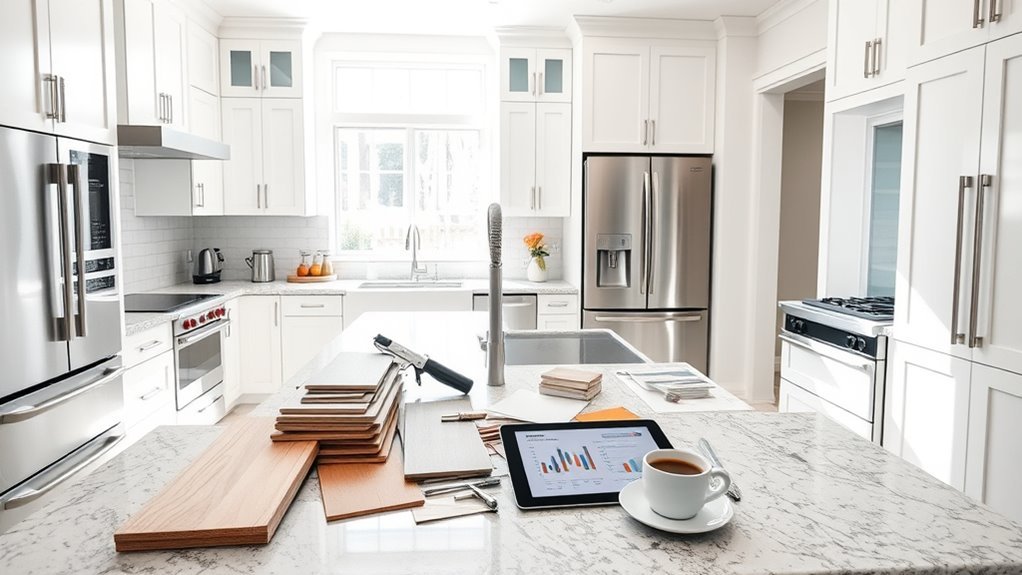
Wondering how much a kitchen remodel typically costs? While prices can vary a lot, you’ll usually spend between $15,000 and $50,000.
A big factor is how much you change your kitchen layout. Moving plumbing or electrical lines can really bump up the cost. If you stick to your current layout, it’s easier on your budget.
Changing your kitchen layout, especially plumbing or electrical, significantly increases costs; keeping the layout saves money.
Upgrading appliances also adds to the total. High-end refrigerators, ovens, or dishwashers will naturally cost more. But choosing energy-efficient models might save you money over time.
Your choice of materials, cabinets, and countertops will impact costs too. But focusing on layout and appliances gives you a good starting point for budgeting. Knowing these key elements helps you plan your remodel without surprises.
What Really Drives Kitchen Remodel Costs?
Although many factors influence your kitchen remodel costs, a few key elements have the biggest impact on your budget. First, your choice of design trends can greatly affect expenses, since cutting-edge styles often require pricier materials.
Effective budget planning helps you balance wants and needs. Considering eco-friendly options might have higher upfront costs but can save you money long term.
Layout optimization is also crucial. Moving plumbing or electrical lines can quickly raise costs, so planning carefully saves money. Your appliance choices matter too; high-end models cost more but can add value to your kitchen.
Color schemes and lighting effects not only improve aesthetics but can impact material and labor costs. Storage solutions like custom cabinetry add convenience but may increase expenses.
Don’t forget about renovation permits. Securing them is important and sometimes costly. Your choice of contractor influences your total spend—experienced professionals might charge more but can ensure quality and reduce costly mistakes.
Being mindful of these factors helps you control your remodel budget effectively.
How Average Kitchen Size Impacts Remodel Costs?
Because the size of your kitchen directly affects materials, labor, and appliance needs, it plays a big role in your remodel costs. When looking at average kitchen sizes, larger spaces naturally need more cabinetry, countertops, and flooring, which can increase expenses.
A remodel cost comparison between small and spacious kitchens shows how size impacts your budget. But focusing on layout efficiency and space utilization can help you get the most out of your space without overspending.
Your design style also matters. Sleek, minimalist designs might cut costs in bigger kitchens by using fewer bulky elements. Appliance choices are another factor—larger kitchens often fit higher-end or multiple appliances, adding to the overall cost.
Staying updated on renovation trends can help you choose affordable upgrades that suit your kitchen’s size. Knowing these details lets you plan a remodel that fits both your space and your budget wisely.
How Material Choices Affect Kitchen Remodel Costs
When you choose materials for your kitchen remodel, you directly influence both the style and the cost of your project. Material quality varies widely, so balancing design trends with cost-effective options is key. Sustainable choices might cost more upfront but can save you money in the long run.
Your appliance selection also impacts your budget, along with your choices for countertops, flooring, cabinetry, backsplash, and paint finishes. Each category offers a range of prices depending on the material and style you pick.
| Material Category | Impact on Cost & Style |
|---|---|
| Countertop Choices | Granite versus laminate affects your budget |
| Flooring Types | Hardwood is more expensive than vinyl |
| Cabinetry Materials | Solid wood costs more than MDF |
| Backsplash Styles | Tile options vary widely in price |
| Paint Finishes | Premium paints add extra durability |
Choosing wisely helps you stay within your budget while achieving your dream kitchen look.
How Labor Costs Impact Your Kitchen Remodel Budget
You’ll see that labor costs can really differ a lot depending on who you hire and what’s typical for your area. If you go with more experienced professionals, they’ll work faster and more efficiently, which can actually save you some cash in the long run. Just remember, if your project drags out longer than expected, those labor costs can add up, so keeping an eye on the timeline is pretty important.
Labor Rates Variation
Although labor rates can vary widely depending on location and expertise, they play a crucial role in shaping your kitchen remodel budget. Knowing these differences helps you plan better and avoid unexpected costs.
Labor rates reflect regional differences, with urban areas that have high demand often charging higher contractor fees and union rates. Skilled workers and specialists also tend to command premium pay, which can impact your overall expenses.
The complexity of your project matters too. More intricate designs require specialized labor, which can increase both the time needed and the overall cost.
Skill Level Importance
Because the skill level of labor directly affects both quality and efficiency, it greatly influences your kitchen remodel budget. Before hiring, do a thorough skill assessment to match workers’ experience with your project’s complexity.
High design expertise can help address renovation challenges smoothly, reducing costly mistakes. If your remodel needs specialized skills, include the cost of acquiring those skills or subcontracting experts.
Limited resource availability may drive up labor costs, so think carefully about task delegation to balance expenses and quality. Hiring less experienced workers might save money upfront but could lead to higher costs later due to errors or longer work times.
Timeframe and Efficiency
When your kitchen remodel takes longer than expected, labor costs can add up quickly and strain your budget. Staying focused on design efficiency helps keep your project on track and costs manageable. You want your contractor to work smart, not just hard, to avoid delays.
Think about these factors that can impact your labor expenses:
- Frequent design changes that throw off the workflow
- Waiting on materials that stop progress
- Poor coordination among subcontractors causing downtime
What Hidden Costs Should You Expect in a Kitchen Remodel?
How much have you factored in unexpected expenses for your kitchen remodel? Hidden costs often sneak up, causing budget overruns that catch many homeowners off guard.
Unexpected expenses can quickly derail your kitchen remodel budget if not carefully planned for.
For example, you might uncover outdated plumbing or electrical systems needing upgrades once walls come down. These necessary fixes add to your expenses but are vital for safety and code compliance.
Moreover, unforeseen structural issues like water damage or mold can surface, requiring immediate attention. Permit fees and inspection charges are another often-overlooked expense.
Even minor design changes during construction can increase costs, so it’s good to stay flexible. Delivery delays or material price hikes can also push your budget higher.
By anticipating these hidden costs, you can avoid unpleasant surprises and keep your remodel on track.
How to Set a Realistic Kitchen Remodel Budget
Unexpected expenses can quickly increase your kitchen remodel costs, so it’s smart to plan your budget with realistic figures from the start. Start by clearly defining your renovation goals and project scope—are you redesigning the layout or just updating the style? Knowing your preferences and space needs helps you prioritize your spending.
Next, consider these key factors to set your budget:
- Contractor selection: Pick reliable professionals who fit your budget and timeline.
- Material sourcing: Find a good balance between quality and cost for cabinets, countertops, and fixtures.
- Financing options: Look into loans or savings to cover planned expenses without causing stress.
Smart Ways to Cut Kitchen Remodel Costs Without Losing Quality
Although remodeling a kitchen can be costly, you don’t have to compromise quality to save money. Focus on budget-friendly upgrades like updating cabinet hardware, installing energy-efficient lighting, or refinishing existing cabinets instead of replacing them.
These small changes can refresh your kitchen’s look without breaking the bank. Prioritize efficient layouts by optimizing the work triangle between the sink, stove, and refrigerator to improve functionality without major structural changes.
Reusing materials where possible and shopping sales on appliances also cuts costs while maintaining quality. Choose durable but affordable materials like quartz laminate or engineered wood for countertops and flooring.
Avoid costly custom options in favor of semi-custom or stock products that still look great. By planning carefully and making strategic choices, you’ll achieve a stylish, functional kitchen remodel that stays within your budget without sacrificing long-term value or appeal.
When Should You Hire a Professional vs. DIY Your Kitchen Remodel?
Once you decide on the scope and budget for your kitchen remodel, the next step is figuring out whether to tackle the project yourself or hire a professional. If your kitchen design involves complex plumbing, electrical work, or structural changes, hiring a pro is a smart move. Professionals bring expertise in project management, making sure everything runs smoothly and up to code.
On the other hand, if you’re confident in your skills and the remodel is mainly cosmetic—like painting cabinets or swapping hardware—you might enjoy a DIY approach.
Consider these scenarios:
- You want a custom kitchen design that requires precise measurements and technical know-how.
- Managing contractors and timelines feels overwhelming or you don’t have the right tools.
- Your remodel involves installations that need permits or inspections.
Balancing your skills with the project’s demands helps you decide. Sometimes, a hybrid approach—DIY tasks combined with professional help—can save money without sacrificing quality.
Planning Your Kitchen Remodel Timeline and Budget
Before diving into your kitchen remodel, you’ll want to create a clear timeline and budget to keep the project on track. Start by gathering design inspiration to pinpoint the style and features you want. This helps you avoid costly changes later.
Next, list your renovation priorities, whether it’s upgrading appliances, improving storage, or enhancing lighting. Prioritizing guarantees you allocate your budget where it matters most.
Estimate costs for materials, labor, permits, and unexpected expenses. Allocate a contingency fund, typically 10-15%, for surprises. Set realistic deadlines for each phase, like demolition, installation, and finishing touches, to avoid delays.
Communicate regularly with contractors to stay aligned with your timeline and budget. By planning ahead and focusing on your renovation priorities, you’ll manage expenses effectively and complete your remodel smoothly.
This preparation turns your kitchen dreams into practical, affordable results.
Frequently Asked Questions
What Kitchen Layout Trends Are Popular in 2024?
In 2024, you’ll love open concept kitchens that flow seamlessly into living spaces. They create a spacious, connected feel perfect for entertaining and everyday living.
Minimalist design rules continue to dominate, emphasizing clean lines and clutter-free countertops. It’s all about keeping things simple and stylish.
Multifunctional islands are a must-have, offering extra seating and storage. They’re the perfect hub for cooking, dining, and socializing.
Color trends lean toward muted earth tones with bold backsplashes that add personality and visual interest to your kitchen.
Ergonomic layouts make cooking easier and more comfortable. Plus, vintage accents bring a touch of charm and nostalgia.
Integrated appliances blend into the cabinetry for a sleek, streamlined look. This creates a stylish and functional kitchen you’ll enjoy daily.
How Do I Choose the Best Lighting for My Kitchen Remodel?
Start by spotlighting style and substance. Choose lighting that matches your space and sparks your personality.
Pendant lighting is great for adding focused flair over islands or dining areas. Under-cabinet lights brighten countertops, banishing shadows and boosting functionality.
Think about layering different light sources to balance brightness and create the right ambiance.
Don’t forget to consider energy efficiency and dimmable options so you can customize your kitchen’s mood.
Trust your taste and try out different fixtures to find the perfect lighting fit for your space.
What Are the Best Eco-Friendly Kitchen Materials?
For the best eco-friendly kitchen materials, you should choose sustainable countertops like bamboo or recycled glass, which reduce environmental impact while looking stylish.
You’ll also want to consider recycled cabinetry made from reclaimed wood or repurposed materials to cut down on waste.
These options help create a greener kitchen without sacrificing quality or design. Plus, they’ll give your space a unique, natural feel that you’ll love every day.
How Can I Increase Kitchen Storage Without Major Renovations?
You can boost your kitchen storage by using creative ideas like vertical solutions. Think tall shelves or wall-mounted racks to free up counter space.
Try incorporating multifunctional furniture, such as an island with built-in drawers or a fold-out table, to make the most of your space.
Don’t forget about underutilized spots like the inside of cabinet doors or the tops of cabinets for extra storage.
These smart tweaks help you stay organized without the need for major renovations or big expenses.
What Smart Kitchen Technology Is Worth Investing In?
You should invest in smart appliances like Wi-Fi-enabled refrigerators and ovens that let you control settings remotely.
Kitchen automation tools, such as smart faucets and voice-controlled lighting, make cooking more efficient and enjoyable. These technologies save you time and reduce energy costs.
Conclusion
Remodeling your kitchen is like crafting a fine recipe. It takes the right ingredients, timing, and care to get it just right.
Understanding what drives costs—from materials to labor—helps you set a realistic budget and avoid surprises.
Whether you decide to hire a professional or handle some tasks yourself, smart planning makes sure your dream kitchen comes true without breaking the bank.
Stay focused, and your investment in a kitchen remodel will truly pay off.