How to Get Rid of Roaches in Kitchen: A Step-by-Step Guide
Dealing with roaches in your kitchen is a common frustration many people face. You’re not alone if this problem has you feeling overwhelmed or just plain fed up.
Luckily, there are simple steps you can take to get rid of these unwelcome visitors and keep your space pest-free.
To get rid of roaches in your kitchen, start by spotting droppings and sealing cracks where they enter. Keep your kitchen spotless—wipe surfaces daily and store food in airtight containers.
Use DIY baits like boric acid mixed with sugar or natural repellents such as peppermint oil. Apply sprays safely in hiding spots, especially at night.
Regularly monitor traps to track activity. Following these steps helps tackle infestations efficiently, and there’s more you can do to keep your kitchen roach-free.
Key Takeaways
- Look out for signs of roaches like droppings, egg cases, shed skins, or a musty smell in dark, warm spots of your kitchen. Spotting these early can help catch an infestation before it gets out of control.
- Keep your kitchen super clean by wiping down surfaces regularly and storing food in airtight containers. Don’t forget to clean the pantry often to remove crumbs and residue that attract roaches.
- Seal up any cracks, gaps, or holes around doors, windows, and walls with caulk or weatherstripping to block their entry points. Small openings can be big problems if left unchecked.
- Try using DIY baits and traps, along with indoor-safe sprays designed to target roaches and their eggs. Be sure to apply these products carefully and follow the instructions for safety.
- Use natural repellents like bay leaves or cucumber peels to deter roaches. Keep an eye on activity with sticky traps or glow-in-the-dark traps to monitor and prevent future infestations.
How To Identify a Roach Infestation in Your Kitchen
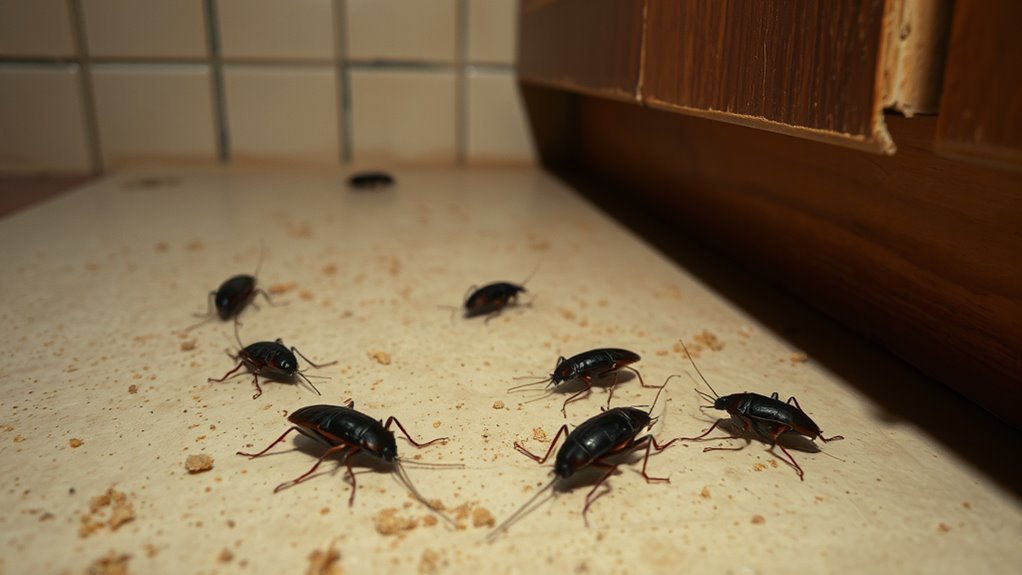
How can you tell if your kitchen is harboring roaches? First, look for common signs like droppings—tiny black specks that look like ground pepper—especially near food sources and dark corners.
You might also notice shed skins or egg cases, which show different roach types, like German or American roaches. These pests love dark, warm spots, so check under sinks, behind appliances, and inside cabinets.
Another clear sign is a musty smell if the infestation is severe. You might even see the roaches themselves, mainly at night when they’re most active.
Spotting these signs early helps you identify the specific roach types invading your kitchen, so you can take targeted action.
Don’t ignore subtle clues; catching an infestation early makes it easier to get rid of the problem before it gets worse.
Stay vigilant and inspect regularly to keep your kitchen roach-free.
Why Kitchen Roaches Are a Serious Health Risk
Because roaches carry bacteria and allergens, they pose a serious health risk in your kitchen. These pests are known for spreading harmful pathogens like Salmonella and E. coli, which can contaminate your food and surfaces.
Roaches also act as allergen sources, triggering asthma and allergic reactions, especially in children and sensitive individuals. Spotting signs early—like droppings, egg cases, and a musty smell—helps you take action quickly.
Ignoring these risks increases your chances of getting sick, so taking preventive steps is crucial. Good pest control combined with proper cleaning practices can reduce roach numbers and limit their impact.
Kitchen Cleaning Habits That Prevent Roach Infestations
Want to keep roaches out of your kitchen? It’s pretty simple—just wipe down your surfaces every day to get rid of crumbs and spills. That way, there’s nothing left for them to munch on! Also, make sure you’re storing your food in sealed containers; it cuts off their access to snacks and makes your kitchen less inviting. These small habits can really make a big difference in keeping your kitchen roach-free.
Daily Surface Wiping
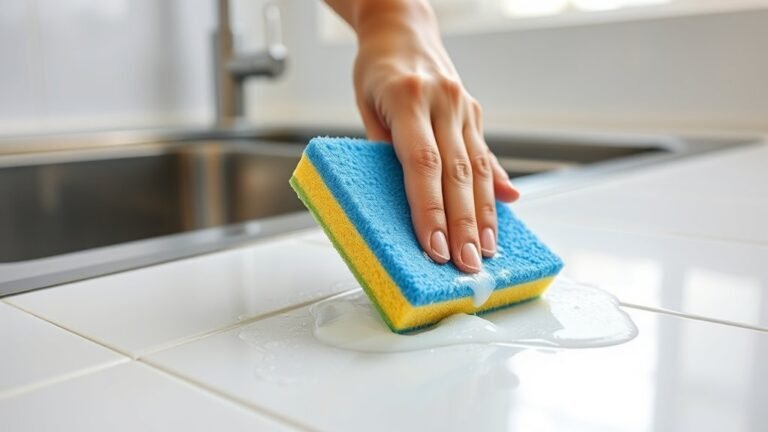
Wiping down kitchen surfaces daily removes crumbs, grease, and spills that attract roaches. Sticking to daily cleaning keeps your surfaces hygienic and makes your kitchen less inviting to pests. Quickly wiping counters, stovetops, and tables cuts off their food sources and hides spots, keeping your space fresh and roach-free.
| Before Daily Cleaning | After Daily Cleaning | Your Feelings |
|---|---|---|
| Greasy, crumb-filled | Spotless, grease-free | Relief and control |
| Visible spills | Clean, dry surfaces | Confidence in hygiene |
| Roach-friendly | Roach-resistant | Peace of mind |
Daily surface wiping is simple but powerful. Keep it consistent to protect your kitchen and enjoy a healthier home.
Proper Food Storage
Three key practices in proper food storage can drastically reduce roach infestations in your kitchen. First, always store food in airtight food storage containers. This prevents roaches from accessing crumbs, spills, or open packages.
Second, keep your pantry organized by regularly checking for expired or opened items. Toss anything that’s past its prime or poorly sealed. Third, keep your pantry clean and dry, wiping shelves often to remove food residues and moisture that attract roaches.
By combining airtight containers with a well-organized pantry, you cut off roaches’ food sources and hiding spots. These habits create an environment that’s inhospitable to roaches, making your kitchen less attractive to them and helping you stay pest-free.
Stick to these steps consistently for the best results.
How To Seal Entry Points To Keep Kitchen Roaches Out
If you want to keep those pesky roaches out of your kitchen, the first step is to find where they might be sneaking in. Think about cracks, gaps, or vents around your counters, cabinets, or even near pipes—that’s usually where they enter.
Once you’ve spotted these entry points, grab some good sealants like caulk or weatherstripping. Just apply them carefully to close up those openings tight. It’s a simple fix that can make a big difference!
And don’t forget—inspect and maintain these seals regularly. Over time, they can wear out or get cracked, giving roaches a free pass again. Staying on top of it keeps your kitchen sealed and roach-free!
Identify Common Entry Points
Roaches often slip into your kitchen through just a few common entry points, so pinpointing these spots is essential for keeping them out. Knowing where they typically enter helps you focus your sealing efforts effectively.
Roaches love hiding in places near moisture and food sources. Check areas around pipes, vents, and cracks regularly to spot potential entry points early.
| Entry Point Location | Why Roaches Use It |
|---|---|
| Gaps around plumbing | Moisture attracts roaches |
| Cracks in walls or floors | Easy access and hiding spots |
| Vents and window frames | Warmth and airflow paths |
Use Effective Sealants
When you spot cracks or gaps where pests sneak in, sealing them quickly prevents future infestations. Start by choosing the right sealant types—silicone caulk works well for small gaps, while expanding foam is ideal for larger holes. Make sure the surfaces are clean and dry before you apply.
For caulk, use a caulking gun for precise application and smooth it with a damp finger. Expanding foam requires careful spraying to avoid overfilling. Pay close attention to areas around pipes, baseboards, and vents.
Proper application methods guarantee the sealant adheres tightly, blocking roaches from entering. By effectively sealing entry points with the right materials and techniques, you create a strong barrier. This makes your kitchen less inviting to these unwanted pests.
Inspect And Maintain Regularly
Sealing entry points is just the first step in keeping your kitchen roach-free. You also need regular inspections and ongoing maintenance to make sure no new gaps open up.
Check door frames, window sills, and pipes every month. Repair cracks right away to stop roaches from sneaking in.
| Area to Inspect | Common Issues | Maintenance Tips |
|---|---|---|
| Door frames | Gaps, loose weatherstripping | Replace seals regularly |
| Window sills | Cracks, gaps | Use caulk to fill cracks |
| Plumbing pipes | Leaks, openings | Seal with silicone |
| Cabinets | Holes, damage | Fix or replace damaged parts |
| Baseboards | Cracks, gaps | Re-caulk and repaint |
Stay proactive. Regular inspections help prevent infestations before they start.
DIY Roach Baits and Traps For Your Kitchen
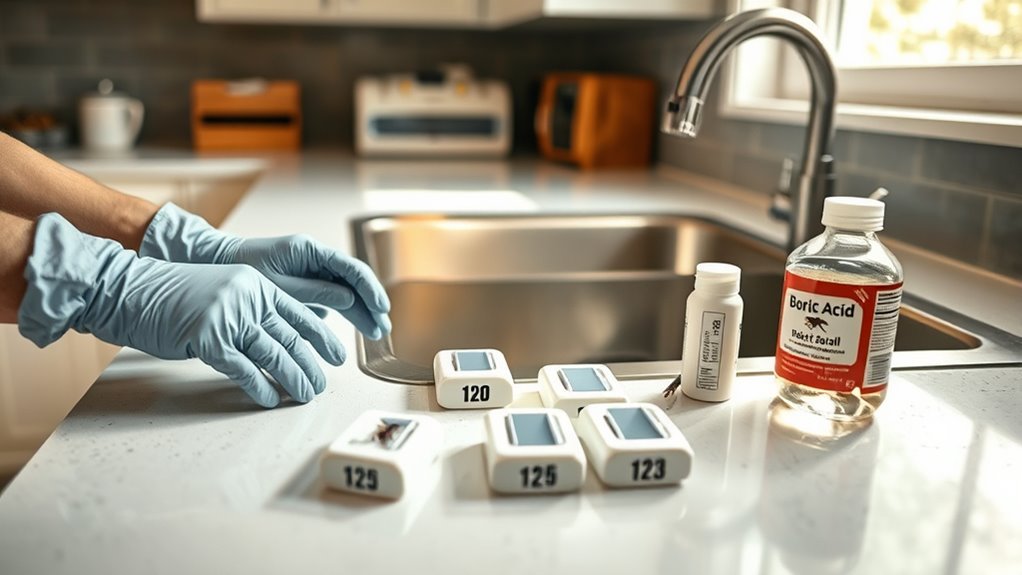
If you want to tackle your roach problem effectively, making DIY baits and traps can be a smart and budget-friendly strategy. Start with a homemade boric acid and sugar bait by mixing boric acid with a sugar mixture. The sugar attracts roaches, while boric acid kills them.
Another simple recipe combines baking soda with sugar bait. When roaches eat it, the baking soda reacts and eliminates them. You can also create essential oil traps using peppermint or eucalyptus oil, which repel roaches and lure them into sticky traps.
For a quick deterrent spray, mix vinegar and water in a spray bottle and apply it around entry points and corners. Vinegar disrupts roaches’ scent trails. Setting these DIY traps in your kitchen’s dark, moist areas helps you monitor and reduce roach activity without harsh chemicals.
With these easy homemade solutions, you’ll control roaches efficiently while keeping your kitchen safe.
When and How To Use Chemical Roach Sprays Safely
When you’re using chemical roach sprays, it’s really important to choose a product that’s meant for indoor use. Once you’ve got the right spray, be sure to read and follow the instructions carefully—that way, you’re using it safely and effectively.
When applying the spray, try to target only the areas where you see roaches or where they might hide. Avoid spraying near food or on surfaces that you or your family touch often to prevent any accidental ingestion or contact.
Also, make sure your kitchen is well-ventilated while you’re spraying. Opening windows or turning on a fan can help disperse any fumes. And don’t forget to wear gloves—that extra step can really help protect your skin from coming into contact with the chemicals.
Choosing The Right Spray
Although many sprays promise quick results, choosing the right chemical roach spray means understanding its ingredients and how to apply it safely. Look for sprays with proven effectiveness, targeting both adult roaches and their eggs.
Consider eco-friendly options if you have pets or kids. These sprays reduce harmful chemicals without sacrificing power. Check the label for active ingredients like pyrethroids or boric acid, which work well against roaches.
Avoid sprays with harsh toxins that stay in the air or on surfaces for a long time. Always pick a spray that fits your kitchen environment and safety needs. Making an informed choice helps you tackle roaches effectively while keeping your household safe.
Proper Application Techniques
Choosing the right spray is only part of the solution; applying it correctly guarantees you get the best results without risking your health. Start by reading the label carefully to understand the proper dosage—using more won’t speed up results and can be hazardous.
Focus your spray on areas where roaches hide, like cracks and crevices, rather than open surfaces. Spray during late evening or night when roaches are most active to maximize effectiveness.
Avoid spraying food preparation areas directly; instead, treat nearby spots to prevent contamination. Stick to the recommended intervals between applications to let the product work without overexposure.
Safety Precautions And Ventilation
To use chemical roach sprays safely, you need to prioritize your health and ensure proper ventilation. Good airflow helps reduce inhaling harmful fumes, which is one of the main benefits of ventilation. Always open windows and doors before spraying.
Use fans to circulate air and avoid spraying near food or utensils. Follow all safety instructions on the product label, including wearing gloves and a mask. Keep children and pets away from the sprayed area.
After spraying, leave the area for at least 30 minutes so the chemicals can settle. This helps ensure the space is safer to re-enter and reduces exposure to chemicals.
Natural Ways To Keep Roaches Out of Your Kitchen
When you want to keep roaches out of your kitchen without harsh chemicals, natural methods can be both effective and safe. Start by using herbal repellents like bay leaves, peppermint, and cucumber peels—they naturally deter roaches when placed near entry points or in cabinets.
You can also mix essential oils such as peppermint, tea tree, or eucalyptus with water and spray it around your kitchen. These oils disrupt roaches’ scent trails and make your kitchen less inviting.
Keep your kitchen clean and dry since roaches are attracted to food residue and moisture. Wipe down counters regularly and avoid leaving dishes in the sink overnight.
Seal cracks and crevices where roaches might enter. Using these natural strategies consistently creates an environment roaches want to avoid, reducing the chance of infestation without exposing your family to toxic chemicals.
How To Monitor Roach Activity After Treatment
Although treatments can reduce roach populations, you’ll need to monitor their activity closely to make sure the problem is truly under control. Using effective roach monitoring techniques helps you spot if any are still around or coming back.
Here are four easy activity tracking methods:
- Set sticky traps in corners and near food sources to catch roaches and see if they’re still around.
- Inspect common hiding spots daily, like under sinks and behind appliances, for fresh droppings or shed skins.
- Use glow-in-the-dark traps at night to observe roach movements when they’re most active.
- Keep a log of what you find to track trends and decide if more treatment is needed.
Tips To Prevent Kitchen Roaches From Coming Back
Since roaches thrive in kitchens with easy access to food and water, you’ll need to keep the area clean and dry to prevent them from coming back. Wipe down counters, sweep floors, and clean up spills or crumbs right away.
Store food in airtight containers and empty your trash regularly to cut off their food sources. Fix leaks to remove water access, and don’t leave pet food out overnight.
Sticking to these habits consistently is key for long-term prevention. Seal cracks and gaps where roaches can enter or hide, and add weather stripping around doors and windows.
Keep clutter to a minimum to reduce hiding spots. Regularly check your kitchen for signs of roach activity and deal with any problems immediately.
When To Call a Professional Exterminator For Kitchen Roaches
Keeping your kitchen spotless can go a long way in cutting down roach problems, but sometimes these pests stick around despite your best efforts. Knowing when to call a professional exterminator can save you time and frustration. Roaches tend to hide during the day and multiply quickly, making infestations tough to handle on your own.
Here are four signs it might be time to get professional help:
First, if you notice multiple signs like droppings, egg casings, or a strong odor, it’s a clear warning.
Second, if your DIY treatments and prevention methods haven’t made a dent in the roach population, it’s probably time to call in the pros.
Third, if roaches keep showing up despite thorough cleaning and sealing entry points, the problem might be bigger than you think.
Finally, spotting roaches in different rooms suggests a widespread infestation that needs professional attention.
A pest control expert can evaluate the situation thoroughly and use targeted treatments for a more effective and lasting solution. Don’t wait for things to get worse—act quickly and get your kitchen roach-free.
Frequently Asked Questions
Can Roaches Survive Without Food or Water for Days?
Yes, roaches can survive without food for weeks, but they need water more urgently. Their survival strategies include slowing their metabolism and hiding in dark places to endure food deprivation.
However, without water, they usually die within a few days. If you’re trying to control them, cutting off their water source is key because they’re far less resilient to dehydration than to lack of food.
Do Roaches Prefer Certain Types of Kitchen Appliances?
Yes, roaches do prefer certain types of kitchen appliances, especially those that offer warmth and moisture. You’ll often find roaches hiding around refrigerators, ovens, and dishwashers.
These appliances provide dark, cozy areas where roaches can thrive. To keep them away, regularly wipe down surfaces and fix leaks to maintain cleanliness.
Keeping these spots clean makes your kitchen less inviting for roaches and helps prevent an infestation.
How Long Do Roaches Typically Live Indoors?
Roaches typically live indoors for about six months to a year, depending on the species and conditions.
Their lifespan can be longer if they find ideal habitats with plenty of food, water, and shelter.
You’ll notice they thrive in warm, damp areas like kitchens and bathrooms.
To control them, focus on disrupting these habitats since their survival depends heavily on these indoor environments.
Are Some Roach Species More Common in Kitchens Than Others?
Roach species in kitchens are like uninvited guests who know exactly where to find food. You’ll mostly encounter German and American roaches, as their behavior thrives in warm, moist environments with easy access to food.
By keeping up strong kitchen hygiene—cleaning crumbs, sealing food, and fixing leaks—you disrupt their comfort zone. This makes your kitchen less inviting for these pests.
You’ve got the power to outsmart them through consistent cleanliness. A clean kitchen is your best defense against these unwelcome visitors.
Can Roaches Cause Damage to Kitchen Wiring or Appliances?
Yes, roaches can cause damage to kitchen wiring and appliances by chewing on insulation and wiring. This can lead to short circuits or malfunctions.
Besides physical damage, they also pose health risks by contaminating your kitchen with bacteria and allergens. To keep your kitchen clean and avoid electrical issues, act quickly.
Keep areas dry, seal entry points, and clean regularly to discourage roaches from sticking around.
Conclusion
Getting rid of roaches in your kitchen isn’t just a chore, it’s a mission to reclaim your space from these tiny invaders! Stay vigilant with cleaning, sealing entry points, and using DIY baits or natural remedies to cut down their numbers.
Remember, roaches can be as sneaky as ninjas, so keep monitoring and preventing their return. If they persist, don’t hesitate to call a pro—your kitchen deserves to be roach-free forever!