How to Organize Kitchen Cabinets: A Step-by-Step Guide
Are you tired of digging through cluttered kitchen cabinets just to find what you need? You’re not alone—many people struggle with keeping their storage spaces organized and functional.
Luckily, with a few simple steps, you can transform your chaos into a neatly arranged kitchen paradise.
To organize your kitchen cabinets, start by emptying and sorting everything into keep, donate, or toss piles, then clean the shelves thoroughly.
Choose adjustable shelving and clear containers that fit your space. Group items based on how often you use them, placing daily essentials within easy reach and seasonal items out of the way.
Maximize vertical space with risers and store cleaning supplies neatly near the sink. Keep labels handy and maintain regular checks for ongoing order.
You’ll find even more helpful tips to create a fully efficient setup.
Key Takeaways
- Empty all kitchen cabinets, sort items into keep, donate, or toss piles, and deep clean the shelves before organizing.
- Choose adjustable shelving and clear containers to maximize space and visibility of stored items.
- Group items by how often you use them, keeping daily essentials easy to grab and seasonal items stored higher up.
- Use vertical space with stackable risers and set aside a labeled section for cleaning supplies near the sink.
- Keep things organized with regular checks, involve family members, and use clear, color-coded labels for quick identification.
Clear Out and Sort Your Kitchen Cabinets
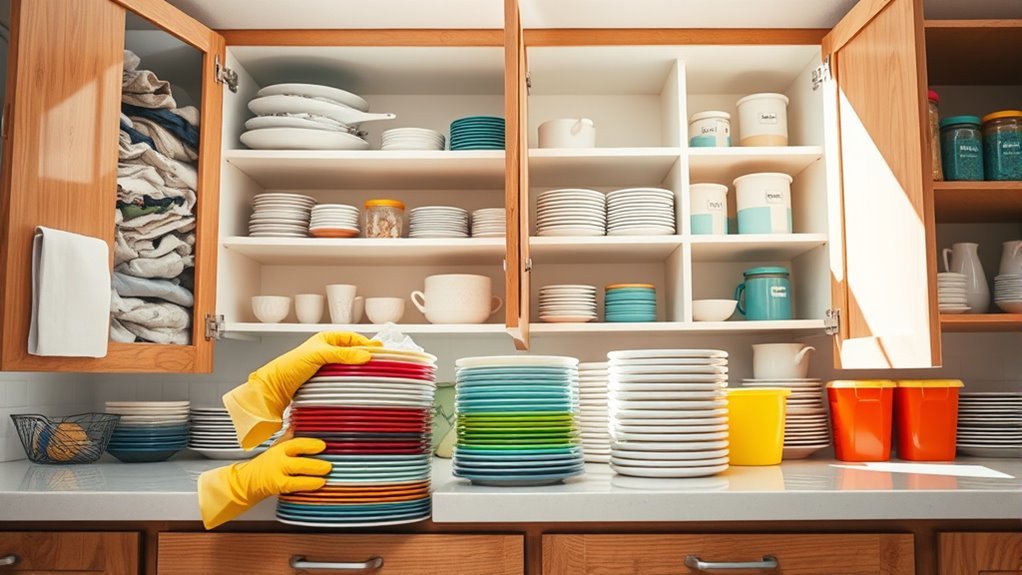
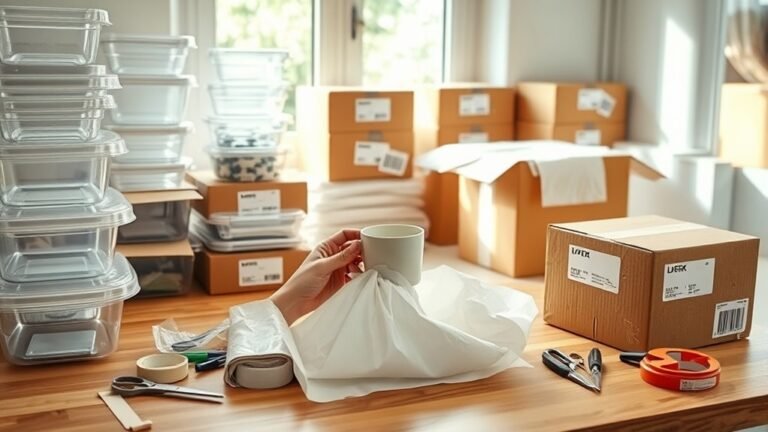
Start by completely emptying your kitchen cabinets to get a clear view of what you have. This step is essential in any effective kitchen decluttering technique. Once everything is out, you’ll see expired items, duplicates, or things you rarely use. Sort these into keep, donate, or toss piles. Be honest with yourself—holding onto clutter only makes organizing harder.
Next, focus on deep cleaning your cabinets. Wipe down shelves, corners, and cabinet doors with a gentle cleaner to remove grease and dust. Don’t forget to clean inside corners and edges where grime collects. Let everything dry thoroughly before returning items. This cleaning refreshes your cabinets and sets them up for a neat, organized space.
Choose Shelving, Containers, and Organizers for Your Cabinets
After cleaning and sorting your cabinets, it’s time to think about the best shelving, containers, and organizers to keep everything in place. Start by choosing shelf materials that suit your needs. Wood offers warmth and durability, metal provides strength and easy cleaning, while glass gives a sleek, modern look.
Next, pick container shapes that maximize your space. Rectangular or square containers fit neatly side by side, while round ones work well for bulkier items.
Consider these organizer options to boost efficiency. Adjustable shelving allows you to customize height for different items. Clear containers let you quickly see what’s inside. Pull-out baskets or trays make it easy to access items at the back.
Group Items by How Often You Use Them
One simple way to keep your kitchen cabinets organized is to group items based on how often you use them. Start by identifying items you reach for daily. These essentials should be stored in the most accessible spots, like eye-level shelves or near the stove. This helps you save time and makes meal prep easier.
Next, set aside a space for occasional items you don’t use as often, like special baking tools or large pots. Finally, tuck away seasonal items, such as holiday-themed dishes or summer picnic supplies, in higher or less accessible cabinets since you only need them once or twice a year.
Grouping items by frequency helps you streamline your kitchen workflow and keeps clutter at bay. When you organize this way, you’ll find what you need quickly and keep your cabinets neat without extra effort.
Make the Most of Vertical Space With Shelves and Risers
Want to make the most of your cabinet space? Adding shelves and risers is a quick and easy way to take advantage of the vertical area. Just pick shelves that fit your cabinet height and the items you want to store—this way, everything stays within reach and organized.
It’s a simple tweak that really pays off. You’ll be able to store more without making your kitchen feel cluttered. Plus, it’s a great way to keep things accessible and tidy!
Maximizing Vertical Storage
Maximizing vertical storage can transform your kitchen cabinets by creating extra space without expanding their footprint. To make the most of your cabinet height, focus on vertical storage solutions that boost accessibility and organization. You can:
- Install adjustable shelves or stackable risers to separate items and avoid wasted space.
- Use tension rods or hanging baskets inside cabinets to hang utensils or small containers.
- Store taller items vertically, like cutting boards or baking sheets, to keep them neat and reachable.
These strategies optimize your cabinet height, making every inch count. By thinking upwards and layering smartly, you’ll keep your kitchen clutter-free and efficient. Vertical storage solutions let you stash more while maintaining order, turning cramped cabinets into streamlined storage zones you’ll appreciate every day.
Choosing Appropriate Shelving
Vertical storage solutions like adjustable shelves and stackable risers are key to organizing your kitchen cabinets effectively. When choosing shelving, think about materials that match your style and are durable enough for everyday use.
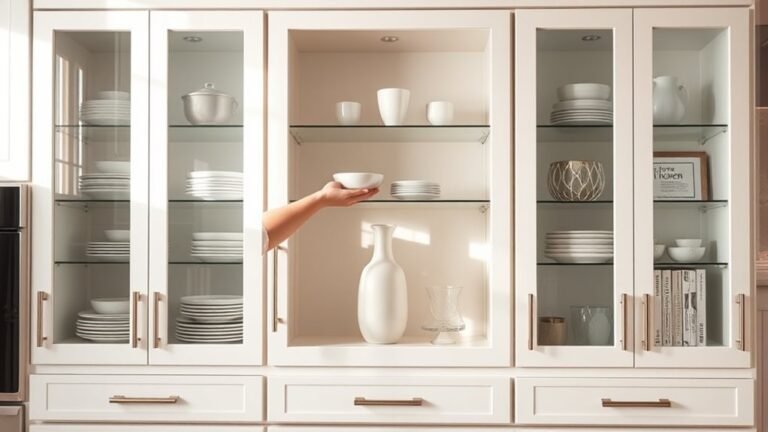
Adjustable shelves are great because you can change the height to fit taller items and maximize your space. Open or decorative shelving can also showcase your pretty dishware while keeping essentials within easy reach.
Don’t forget about corner shelving to make the most of tricky spaces. Make sure shelf supports are sturdy enough to hold your items without sagging. Pull-out shelves make accessing deep cabinets much easier.
Organize and Label Pantry Items in Your Kitchen Cabinets
Start by grouping pantry items based on their type and how often you use them. This creates a clear system that saves you time when cooking or shopping.
Begin with a pantry inventory so you know exactly what you have. It helps you avoid duplicates and keeps track of expired goods.
Next, set aside a specific area for bulk storage. Keep large containers or extra supplies neatly contained to prevent clutter.
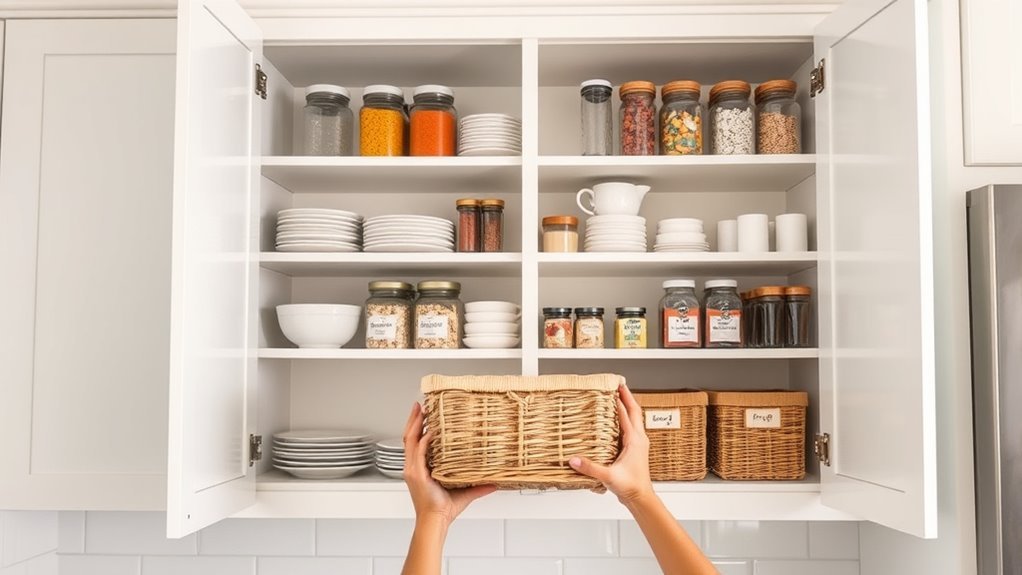
Use clear, airtight containers to keep food fresh and make it easy to see what’s inside. Label each container and shelf clearly to speed up meal prep and restocking.
You can use waterproof labels for durability, chalkboard stickers for easy updates, or color-coded tags to distinguish categories.
This approach keeps your kitchen organized and efficient. Maintaining a labeled pantry and managing bulk storage helps reduce clutter and waste.
Now you’ll know where everything is at a glance, making your kitchen a more pleasant and functional space.
Store Pots, Pans, and Lids for Easy Access
To keep your kitchen running smoothly, it’s really helpful to store your pots and pans somewhere you can grab them easily. Think about using racks, dividers, or pull-out shelves—they can make a big difference in keeping everything neat and within reach.
And don’t forget about the lids! Organizing them separately can help cut down on clutter and make your meal prep way more straightforward. Plus, when everything has its spot, cooking is just a little bit easier and way more enjoyable.
Efficient Pot and Pan Storage
Anyone who cooks regularly knows how frustrating it can be to dig through cluttered cabinets searching for the right pot or pan. Efficient pot and pan storage saves you time and keeps your kitchen tidy.
Start by stacking pots and pans to make the most of vertical space—nest smaller ones inside larger ones without scratching the surfaces. Next, set aside a spot just for lids so you don’t have to dig through piles; consider a lid rack or hooks inside the cabinet door.
Finally, keep your everyday pots and pans within easy reach to speed up meal prep. Here’s a quick checklist:
- Nest pots and pans by size for compact stacking
- Use a dedicated rack or hooks for lids
- Store frequently used cookware at eye level for quick access
This way, your cookware stays organized and easy to grab, making cooking a lot smoother.
Lid Organization Techniques
Three simple lid organization techniques can turn your kitchen cabinet into a model of efficiency. First, try vertical lid storage solutions like adjustable racks or tension rods to keep lids upright and easy to grab. This prevents stacking mess and saves space.
Second, install lid divider options inside cabinet doors. These handy organizers hold lids securely and make use of often-wasted space.
Third, group lids by size or type in pull-out baskets or bins. That way, you can find the right one quickly without digging.
Choosing the right storage solutions and dividers will cut down on clutter and speed up meal prep. These techniques make storing pots, pans, and lids straightforward, keeping your kitchen tidy and functional every day.
Arrange Plates, Bowls, and Glassware Safely
While arranging plates, bowls, and glassware, you’ll want to prioritize safety and ease of access. Proper plate stacking keeps your dishes stable and helps prevent chips or cracks.
For bowls, nest them carefully with soft liners or shelf liners to avoid scratches. Glassware should be stored upright on sturdy shelves to prevent tipping and breaking.
Focus on these key tips for dish safety:
- Stack plates vertically or in small piles to reduce weight pressure and make them easier to grab.
- Nest bowls with padding between them for extra cushioning and protection.
- Place glassware away from cabinet edges and in spots where they won’t be jostled during use.
Maximize Drawer Space With Dividers and Inserts
Maximizing drawer space starts with using dividers and inserts that keep everything neatly separated and easy to find. Installing drawer dividers helps you create designated spots for different utensils, preventing clutter and making it simple to grab what you need.
Use utensil inserts to organize forks, knives, spoons, and other small tools within your drawers efficiently. These inserts not only save space but also protect your silverware from scratches and damage.
Choose adjustable drawer dividers if you want flexibility for larger gadgets or baking tools. Clear or labeled inserts make it easier to maintain order and quickly identify contents.
Keep Cleaning Supplies Organized and Easy to Reach in Cabinets
It’s a good idea to set up a dedicated spot in your cabinets just for your cleaning supplies. That way, everything stays in one place, and you don’t have to hunt around when you need something.
Using clear containers with labels makes it super easy to see what’s inside and grab what you need in a jiffy. It’s a simple trick that keeps things tidy and accessible, so cleaning doesn’t feel like a hassle.
Designate Specific Storage Zones
Because cleaning supplies are used often, it’s helpful to designate a specific storage zone in your kitchen cabinets. Keep them organized and easy to access by choosing a convenient spot near the sink or trash area.
This way, grabbing supplies is quick and hassle-free.
Consider these practical storage ideas:
Use a lower cabinet with pull-out shelves to avoid bending and improve visibility.
Set aside a small section just for sprays, cloths, and gloves to keep things tidy.
Install hooks or small baskets inside cabinet doors for sponges and brushes.
Use Clear, Labeled Containers
A clear, labeled container makes it easy to find and grab your cleaning supplies without digging through cluttered cabinets. Choose materials like durable plastic or glass to keep items visible and protected.
Clear containers let you quickly spot what you need, saving time and effort. Use waterproof stickers or printed labels to clearly identify each item.
You can even color-code labels to group similar products, making your system more intuitive. Make sure labels are easy to read and placed consistently on each container.
This approach not only keeps your cleaning supplies organized but also helps maintain order over time by encouraging you to return items to their proper spots. With clear, labeled containers, your cabinet stays tidy and functional.
Maintain Your Organized Kitchen Cabinets With Regular Checks
Even after organizing your kitchen cabinets, it’s important to do regular checks to keep everything in order. Regular maintenance helps prevent clutter from building up and keeps your space functional.
Make a habit of doing a seasonal review to assess your storage and rotate items. This way, nothing expires or gets forgotten, and your cabinets stay fresh and inviting.
To keep your cabinets organized, schedule regular maintenance sessions for clutter prevention and storage assessment. Involving your family makes it easier to stick to the system.
During these reviews, rotate items so you use older products first and avoid waste. Consistent checks will help your kitchen stay neat and efficient.
Frequently Asked Questions
How Often Should I Deep Clean My Kitchen Cabinets?
You should deep clean your kitchen cabinets about every 3 to 6 months to keep them fresh and hygienic. Doing this regularly helps prevent grease buildup and stubborn stains.
To get started, empty out the cabinets and wipe the shelves with mild soap and warm water. Be sure to dry everything thoroughly before putting items back.
Don’t forget to clean the cabinet doors and handles regularly in between deep cleans. This keeps your kitchen looking spotless and organized.
What Materials Are Best for Cabinet Liners?
The best liner materials for your cabinets are non-adhesive vinyl, rubber, or cushioned foam. These options help protect surfaces from spills and scratches while being easy to clean.
When installing, measure your shelves precisely and cut liners to fit snugly. Using liners with textured surfaces can help prevent slipping.
Avoid adhesive liners if you want easy removal and cleaning. Following these tips will keep your cabinets protected and organized with minimal effort.
Can I Organize Cabinets if I Have Limited Space?
Yes, you can definitely organize cabinets even with limited space. Focus on space-saving solutions like using vertical storage to make the most of every inch.
Installing adjustable shelves or stackable organizers helps you fit more items without clutter. You can also hang hooks inside doors or use slim pull-out racks to keep things accessible.
These tricks make your small cabinets feel more spacious and help keep everything neat and easy to find.
How Do I Prevent Pests in Kitchen Cabinets?
To prevent pests in your kitchen cabinets, focus on pest prevention by keeping everything clean and dry. Store food in airtight containers to block access, and regularly wipe down shelves to remove crumbs.
Use natural repellents like bay leaves, cedar chips, or peppermint oil sachets—they’re safe and effective. Make sure to seal any cracks or gaps where pests might enter.
Staying consistent with these habits will help keep your cabinets pest-free.
Are There Eco-Friendly Organizers for Kitchen Cabinets?
Yes, you can definitely find eco-friendly organizers for your kitchen cabinets. Look for biodegradable bins made from natural materials that break down easily without harming the environment.
You can also choose sustainable shelves crafted from reclaimed wood or bamboo, which reduce waste and promote responsible forestry. These options not only keep your kitchen tidy but also help you minimize your ecological footprint while staying organized.
Conclusion
Your kitchen cabinets can either be a chaotic mess or a well-oiled machine. It’s all about how you organize them. Sorting, selecting the right containers, and making use of every inch helps turn clutter into calm.
Imagine opening your cabinets and instantly finding what you need. Instead of digging through piles of stuff, everything is in its proper place. That feeling of order makes cooking and cleaning so much easier.
With a little effort and regular upkeep, your kitchen can become both functional and inviting. Proper kitchen cabinet organization transforms your space into a place where everything has its spot, making daily tasks more enjoyable.