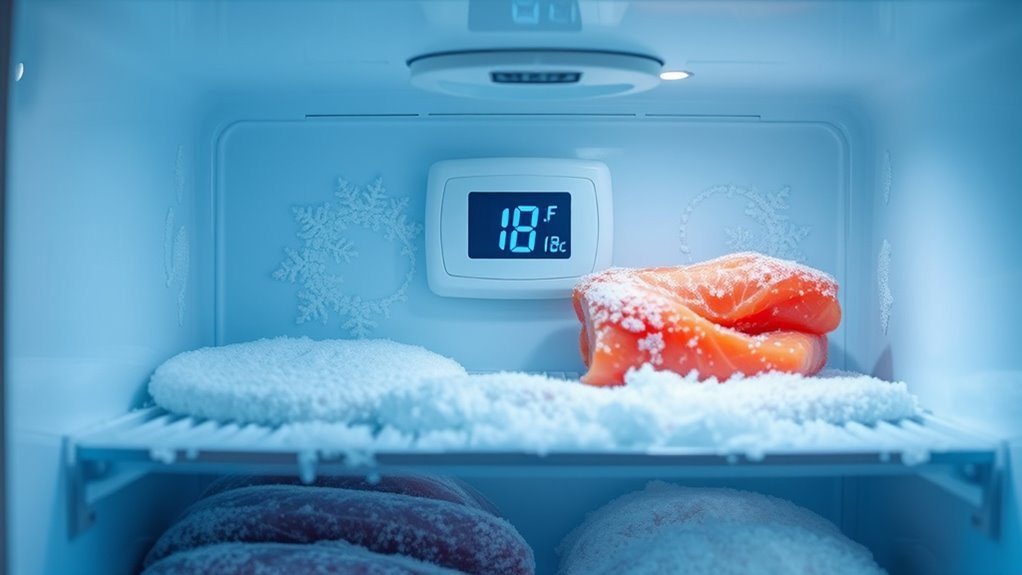
How Cold a Freezer Should Be? The Complete Answer
Many people struggle with keeping their freezer at the right temperature. It’s easy to either set it too warm, risking spoiled food, or too cold, which can cause freezer burn. You’re not alone in wanting to get it just right for freshness and efficiency.
You should set your freezer to 0°F (-18°C) to keep your food safely frozen and stop bacteria growth. This temperature preserves food quality and prevents spoilage.
Avoid overloading the freezer to guarantee good airflow and consistent cooling. Too warm can cause thawing and spoilage, while too cold may lead to freezer burn.
Regularly check the temperature and maintain your freezer for the best results.
There’s more to learn about optimizing freezer use and energy-saving tips ahead.
Key Takeaways
- The ideal freezer temperature is 0°F (-18°C) to keep food frozen solid and safe from bacteria growth.
- Proper airflow and avoiding overloading help ensure even cooling and prevent freezer burn and spoilage.
- Temperatures that are too warm can cause spoilage and affect food texture; too cold can lead to freezer burn and frost buildup.
- Organize and label your food, and make sure to check the temperature regularly to keep everything fresh and safe.
- Regularly clean the coils, check the door seals, and limit how often you open the door to keep your freezer running efficiently and save energy.
What Is the Ideal Freezer Temperature?
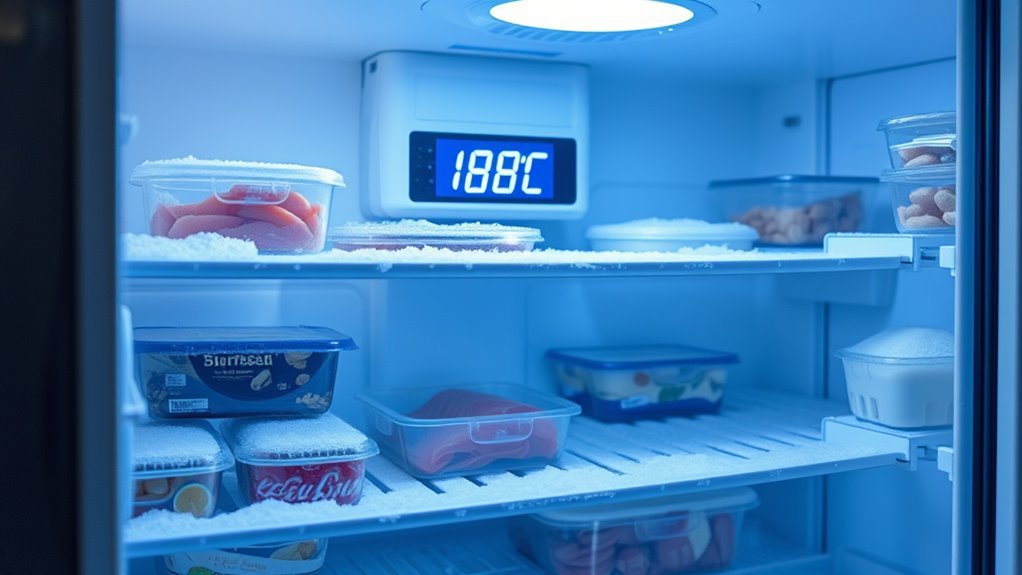
How cold should your freezer be to keep food fresh and safe? The ideal freezer temperature is 0°F (-18°C). Setting your freezer at this temperature keeps food frozen solid, which helps preserve quality and stops bacteria from growing.
When adjusting your freezer, aim for this specific temperature instead of guessing. Small changes can impact food safety, so getting it right is important. Monitoring temperature fluctuations closely is key because even slight changes can cause freezer burn or spoilage.
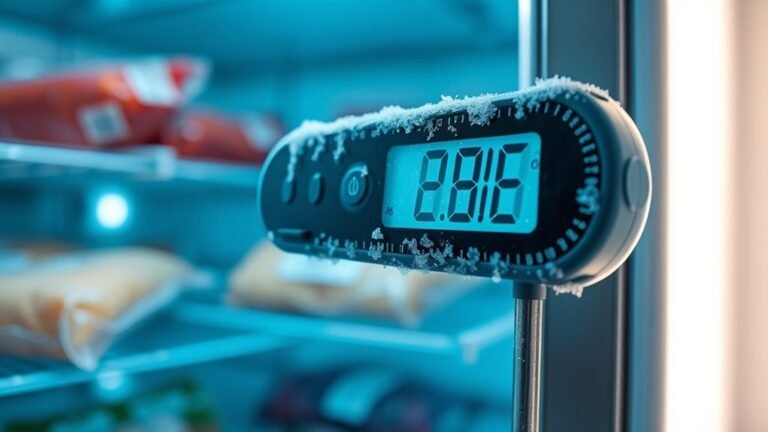
Using a reliable freezer thermometer helps you keep track of the internal temperature consistently. Avoid changing your freezer settings often, as this can create unstable conditions that might harm your food. Keeping your freezer steady at 0°F is the best way to maintain freshness and safety over time without worries about unexpected temperature swings.
Why Freezer Temperature Matters for Food Quality and Safety
Sure! Here’s a more conversational version of the text:
You want to make sure your freezer is cold enough so your food doesn’t spoil and harmful bacteria don’t have a chance to grow. If it’s not cold enough, the quality of your food can take a hit, and it could even be unsafe to eat. So, let’s talk about how keeping the right freezer temperature helps keep your meals fresh and your health protected.
Preventing Food Spoilage
Because freezing slows down the growth of bacteria and molds, keeping your freezer at the right temperature is essential to prevent food spoilage. Setting your freezer to 0°F (-18°C) guarantees food stays safe and maintains its quality longer.
Proper food storage also plays a key role. Airtight containers or freezer bags help prevent freezer burn and preserve flavor. Focus on organizing your freezer—group similar items together and label them with dates.
This way, you can easily rotate older products and avoid keeping food past its prime. Regularly checking the temperature and avoiding overpacking helps maintain consistent cold air circulation, which further protects your food.
Avoiding Bacterial Growth
Freezers set at or below 0°F (-18°C) stop bacterial growth, keeping your food safe and fresh. When your freezer stays at this temperature, it helps prevent foodborne germs from multiplying, so your food stays better longer.
Understanding how temperature affects bacteria can help you make smarter storage decisions. For example, above 40°F (4°C), bacteria grow quickly, which can cause food to spoil.
In the range of 32°F to 40°F (0-4°C), bacterial growth slows down. But once you go below 0°F (-18°C), bacterial growth stops altogether.
If your freezer is well below 0°F (-18°C), it keeps your food at its best quality by preventing bacteria from growing.
Set Your Freezer to the Right Temperature
Setting your freezer to the right temperature guarantees your food stays fresh and safe for longer. Aim for a consistent temperature of 0°F (-18°C), which balances food preservation and freezer efficiency.
When your freezer keeps this ideal temperature, it minimizes fluctuations that can cause ice crystals to form or food to spoil prematurely. Avoid opening the freezer door too often, as this leads to temperature swings that reduce efficiency and compromise food quality.
Many modern freezers have digital thermostats, making it easy to set and monitor the temperature precisely. If your freezer doesn’t have this feature, use an appliance thermometer to check and adjust the temperature regularly.
Properly configuring your freezer also helps prevent unnecessary energy use, saving you money. Keeping a stable, correct temperature extends the shelf life of your frozen items and keeps them safe to eat without overworking your freezer.
What Happens When Your Freezer’s Too Warm or Too Cold?
If your freezer’s too warm, your food might not stay properly frozen, which can lead to spoilage and bacteria growing. Nobody wants to deal with spoiled food, right? On the flip side, if you set it too cold, you might end up with freezer burn, and that can mess up the texture and taste of your favorite foods. So, let’s take a closer look at how these temperature extremes can impact both the quality and safety of your food.
Effects Of Warm Temperatures
Although it might seem minor, letting your freezer run too warm or too cold can cause serious problems. When temperatures fluctuate above the ideal range, your food won’t freeze properly, leading to spoilage and freezer burn.
These temperature changes also make your freezer work harder, which increases energy use and raises your electricity bill. If your freezer gets too warm, ice crystals can melt and refreeze, damaging your food’s texture and taste.
You might also notice frost buildup, which reduces storage space and efficiency. To avoid these issues, keep your freezer steady at the recommended temperature—usually around 0°F (-18°C).
Maintaining this balance ensures your food stays safe and your freezer runs efficiently without wasting energy.
Risks Of Excessive Cold
When your freezer runs too cold, it can cause more harm than you might expect. Extremely low temperatures can lead to freezer burn, which dries out frozen food and affects texture. This happens because moisture escapes, damaging your cold storage’s efficiency.
You might also notice frost buildup, which reduces airflow and makes the freezer work harder. This increases energy consumption. Overly cold settings can cause items like ice cream to become rock hard, making them tough to use.
Plus, some food packaging isn’t designed for ultra-low temperatures and may crack or break. That exposes your frozen food to potential contaminants.
Balancing your freezer temperature helps keep your food protected and your appliance running smoothly.
Food Quality And Safety
Finding the right balance in your freezer’s temperature is key to keeping your food safe and fresh. If it’s too warm, bacteria can grow, leading to spoilage and potential illness.
On the flip side, setting it too cold can cause freezer burn, drying out your food and ruining its texture and taste. Proper organization helps keep the temperature consistent by allowing air to circulate around your items.
Avoid overcrowding to ensure each package freezes properly. Regularly check your freezer’s temperature and set it to the ideal range of 0°F (−18°C).
Doing this helps preserve the freshness of your food, prevent waste, and keep everything safe to eat. A well-maintained freezer is essential for protecting your groceries and your health.
How Freezer Temperature Impacts Different Foods
Because different foods freeze at different rates and textures, you’ll want to adjust your freezer’s temperature to keep each item at its best. Setting the right temperature helps balance freezer efficiency and food freshness.
If it’s too cold, some foods can lose their texture or get freezer burn. If it’s too warm, spoilage can happen faster.
Here’s how temperature impacts common foods:
| Food Type | Ideal Freezing Temp (°F) | Impact of Incorrect Temp |
|---|---|---|
| Meat & Poultry | 0 to -10 | Texture toughens, bacteria risk |
| Vegetables | 0 to -5 | Nutrient loss, mushy texture |
| Fruits | 0 to -5 | Freezer burn, flavor degradation |
| Baked Goods | 0 to -10 | Dryness, staleness |
Adjust your freezer within these ranges to keep foods fresh longer without wasting energy.
Tips for Maintaining Consistent Freezer Temperatures
To keep your freezer at the right temperature, it’s a good idea to check it regularly with a reliable thermometer. That way, you’ll know if it’s cooling properly and can make adjustments if needed.
Also, try not to overload it. When you cram too much in, it blocks the airflow and can lead to uneven cooling, which isn’t great for your food. And don’t forget to make sure the door seals tightly. If the seal isn’t snug, cold air can escape, making it harder to keep everything at the right temp.
Monitor Temperature Regularly
Although it may seem simple, regularly monitoring your freezer’s temperature is essential for keeping it consistent and safe.
You want to avoid temperature fluctuations that can compromise food quality and safety. Using digital monitors makes this task much easier and more accurate.
Here’s how you can stay on top of it:
- Check the temperature at least once a week.
- Use digital monitors for precise and real-time readings.
- Place the monitor in the center of the freezer for accuracy.
- Record the temperature to spot any irregular patterns.
- Adjust the freezer settings immediately if temperatures stray from the ideal -18°C (0°F).
Avoid Overloading Freezer
When you overload your freezer, cold air can’t circulate properly. This causes uneven temperatures and makes the appliance work harder.
To keep your freezer running smoothly, respect its capacity and avoid stuffing it beyond the limit. Overfilling can disrupt load distribution and create hot spots where food may thaw or spoil.
Organize your items so there’s enough airflow around them. Place larger, denser items at the bottom and lighter ones on top. This helps maintain a balanced load.
A balanced setup helps the freezer stay at a steady temperature with less effort. It also prolongs its lifespan and saves energy.
Regularly check inside and remove excess items to keep airflow efficient. Managing the load and sticking to the recommended capacity ensures effective cooling and food safety.
Ensure Proper Door Sealing
One of the simplest yet most important steps to keep your freezer running properly is making sure the door seals correctly. When the door doesn’t close tightly, cold air can escape, making your freezer work harder than it needs to.
Check the door alignment regularly to ensure it closes evenly. Inspect the gasket for cracks, tears, or dirt buildup. Keeping the gasket clean with mild soap and water helps maintain its flexibility.
If you notice signs of wear, like cracks or tears, replace the gasket right away. Also, avoid slamming the door, as this can damage the seals and hinges over time.
How Often to Check and Adjust Your Freezer
Since freezer temperatures can fluctuate due to frequent door openings or power outages, you should check and adjust your freezer regularly to keep it at the right temperature. Doing routine maintenance helps prevent temperature swings that could spoil your food.
It’s a good idea to check your freezer’s temperature at least once a week. If you notice it rising above 0°F (-18°C), act quickly to adjust it back to the proper range. After power outages or heavy use, double-check the settings since these events can cause temperature shifts.
Regular checks ensure your freezer runs efficiently, saving energy and keeping your food safe longer. Make it a habit to inspect your freezer’s condition and temperature, and tweak the controls as needed. Staying proactive with maintenance helps you avoid costly spoilage and keeps your food perfectly frozen.
Best Thermometers and Tools for Monitoring Freezer Temperature
Choosing the right thermometer is key to accurately monitoring your freezer’s temperature and keeping your food safe. You want tools that are reliable, easy to read, and fit your needs.
Digital thermometers are popular because they give accurate, quick readings. Infrared thermometers let you check surface temperatures without opening the door, which is super convenient.
Keeping a temperature log helps you track any fluctuations over time. Freezer alarms will alert you immediately if the temperature rises unexpectedly, protecting your food from spoilage.
Wireless monitors are great for convenience because they send real-time updates straight to your phone, so you can check your freezer’s status remotely. Don’t forget calibration tools to keep your thermometers precise.
Here are some top tools to evaluate:
- Digital thermometers for accurate internal readings
- Infrared thermometers for quick surface checks
- Temperature logs to monitor trends
- Freezer alarms to alert temperature issues
- Wireless monitors for remote temperature tracking
Using these tools helps you keep your freezer at the perfect temperature consistently.
How to Troubleshoot Common Freezer Temperature Problems
If your freezer isn’t maintaining the right temperature, you’ll want to find out why quickly to prevent your food from spoiling. First, check the freezer door. Make sure it seals tightly because a loose or damaged seal lets warm air in, causing temperature swings. Clean the gasket regularly to keep it flexible and working well.
Next, avoid opening the freezer door too often or leaving it open for a long time. This can lead to uneven temperatures. If the temperature still fluctuates, look at the condenser coils. Dirty coils make the cooling less effective. Gently clean them with a brush or vacuum.
Also, double-check that the thermostat is set correctly and hasn’t been accidentally changed. If you see frost buildup, defrost the freezer. Excessive ice can block airflow and mess with the temperature.
Finally, listen for strange noises or see if the compressor runs all the time. These could be signs of mechanical problems that need a professional repair. Fixing these common issues will help keep your freezer at the right temperature reliably.
Energy-Saving Tips to Maintain Ideal Freezer Temperature
Keeping your freezer at the right temperature not only protects your food but can also help lower your energy bills. To do this efficiently, adopting some smart habits is key.
Maintaining the right freezer temperature safeguards food and reduces energy costs with simple, smart habits.
Start by choosing energy-efficient appliances when it’s time to replace your freezer. They use less power and keep a steady temperature. Here are five quick tips to save energy and keep your freezer running smoothly:
- Avoid overfilling your freezer; proper airflow helps maintain even temperatures.
- Keep the door closed as much as possible to prevent warm air from entering.
- Regularly defrost manual-freezers to prevent ice buildup.
- Clean condenser coils every six months to boost efficiency.
- Set your freezer temperature around 0°F or -18°C for optimal performance.
Frequently Asked Questions
Can Freezer Temperature Affect the Taste of Ice Cream?
Yes, freezer temperature can affect the taste of ice cream. If your freezer is too warm, the ice cream can turn icy and grainy, ruining that smooth, creamy texture you love.
On the flip side, if it’s too cold, the ice cream gets super hard, making it tough to scoop and enjoy. Keeping the right temperature helps preserve the flavor, so every bite tastes fresh and delicious just the way it should.
How Long Can Food Stay Safe in a Power Outage?
You might be surprised how long your food can stay safe during a power outage.
If you keep the freezer door closed, food stays safe for about 48 hours in a full freezer and 24 hours in a half-full one.
This careful food safety measure helps prevent spoilage. Once power returns, check for ice crystals and odors before eating.
Don’t take chances—when in doubt, throw it out to stay safe!
Does Opening the Freezer Door Frequently Raise the Temperature?
Yes, opening the freezer door frequently causes temperature fluctuations that raise the internal temperature. Every time you open the door, warm air rushes in, making the freezer work harder to cool down again.
This door opening can reduce your freezer’s efficiency and potentially affect food safety by allowing ice crystals to melt and refreeze. To keep your freezer stable, try to minimize how often and how long you open the door.
Can Freezer Burn Be Completely Prevented?
You can’t completely prevent freezer burn, but you can minimize it by practicing good freezer safety. Make sure you wrap your food tightly in airtight packaging and avoid leaving it exposed to air.
Also, keep your freezer at a consistent temperature to maintain food quality. While freezer burn won’t make food unsafe, it does affect taste and texture.
Taking these steps helps preserve your food better and keeps it tasting fresh longer.
Are Chest Freezers Better at Maintaining Temperature Than Upright Freezers?
Yes, chest freezers are better at maintaining temperature because their design keeps cold air inside when you open the lid. This is a big advantage of chest freezers.
Unlike upright freezers, they don’t lose as much cold air since cold air sinks and stays put. Upright freezers often have temperature fluctuations because of frequent door openings.
Conclusion
Think of your freezer as a time capsule, preserving your meals in a perfect moment. Keeping it at the ideal temperature, around 0°F (-18°C), is like finding that sweet spot between a winter’s hush and a gentle frost.
When you check it regularly, you help guard your food’s freshness and safety. It prevents the icy grip of spoilage or freezer burn from taking hold.
With a little care, your freezer becomes a trusted guardian of flavor and nutrition, day after day. Maintaining the right temperature is key to keeping your food fresh and safe.