How to Clean Greasy Kitchen Cabinets: A Step-by-Step Guide
Many of us know the struggle of keeping kitchen cabinets clean, especially when they get greasy and sticky over time. You’re not alone—this is a common issue, and it can be frustrating to keep them looking fresh.
Luckily, with a few simple steps, you can restore their shine and maintain a tidy, inviting kitchen.
To clean greasy kitchen cabinets, start by clearing the surfaces and wiping dust away. Mix mild dish soap with warm water, then scrub cabinets gently with a sponge or microfiber cloth, focusing on greasy spots.
Rinse frequently to avoid spreading grime, and dry with a microfiber towel to prevent streaks. For stubborn grease, try homemade solutions like vinegar or baking soda paste.
Keep your cabinets fresh and well-maintained for lasting shine—you’ll find helpful tips and tricks beyond this quick guide.
Key Takeaways
Gather warm water, mild dish soap, a sponge, and a microfiber towel before cleaning greasy cabinet surfaces.
Remove all items from cabinets, dust surfaces, and protect surrounding areas before cleaning.
Use a dish soap and warm water mixture to scrub greasy spots, rinsing the cloth frequently.
For stubborn grease, apply baking soda paste or citrus-based cleaners, gently scrubbing to protect the finishes.
Dry cabinets thoroughly with a microfiber towel to prevent streaks and keep everything looking polished.
Step-by-Step Method to Clean Greasy Kitchen Cabinets
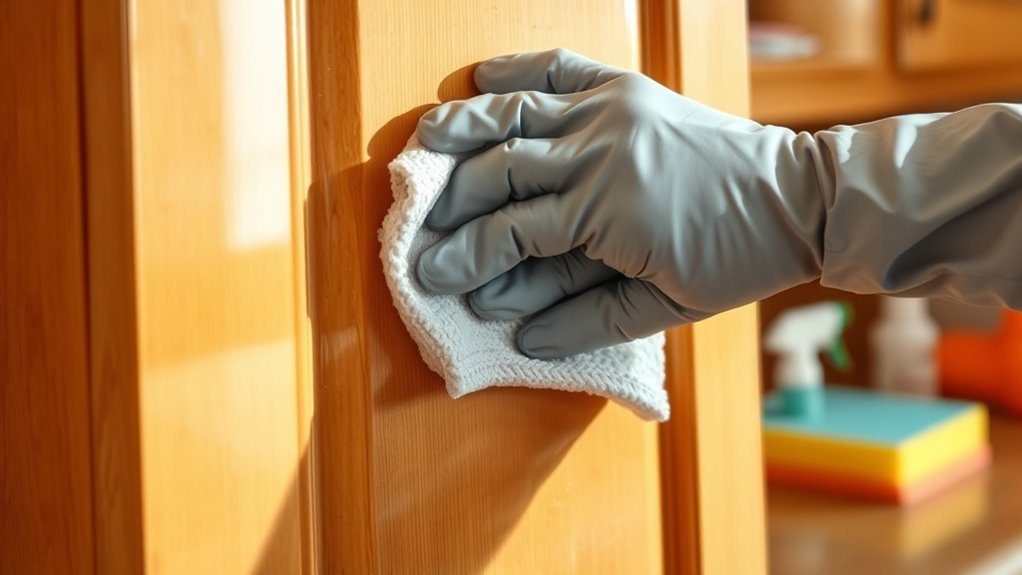
To tackle greasy kitchen cabinets, start by gathering your cleaning supplies: warm water, dish soap, a sponge or cloth, and a microfiber towel. Remove any items from the cabinets to give yourself clear access.
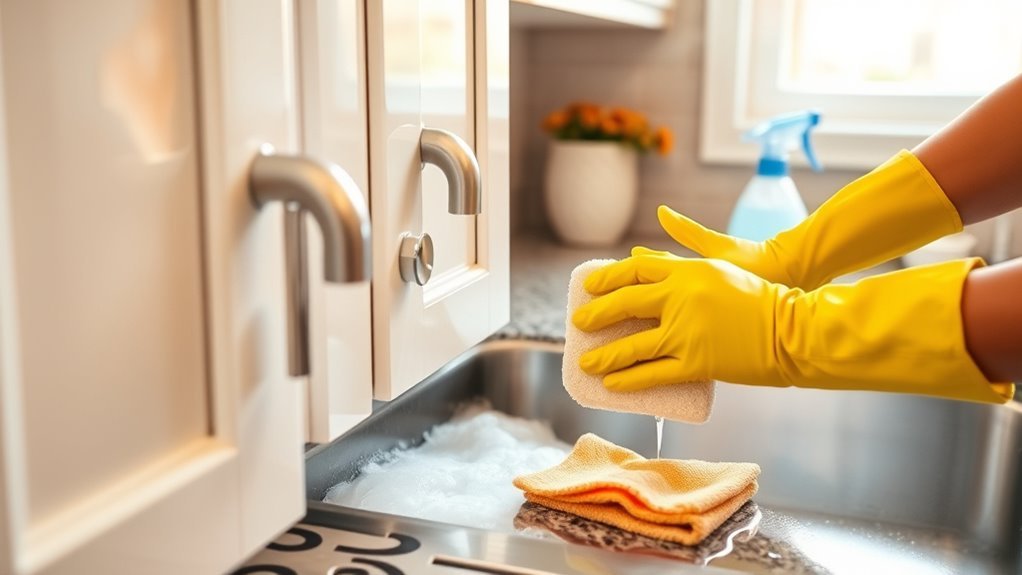
Next, mix a few drops of dish soap into the warm water. Dip your sponge or cloth into the solution, wring it out, and gently scrub the cabinet surfaces. Pay close attention to greasy spots.
Mix dish soap with warm water, then gently scrub cabinets, focusing on greasy areas for effective cleaning.
Rinse the cloth frequently to avoid spreading grime. Once cleaned, use the microfiber towel to dry and polish the cabinets, preventing streaks.
As you clean, think about your cabinet organization. Keeping things tidy can reduce buildup and make future cleaning easier.
Finally, set up a regular cleaning schedule—weekly or biweekly—to stop grease from building up. This step-by-step method will keep your cabinets grease-free and looking great.
What Supplies You’ll Need to Clean Greasy Cabinets
A few essential supplies will make cleaning greasy kitchen cabinets much easier and more effective. Start by gathering your cleaning tools: a soft microfiber cloth, a gentle scrub brush, a spray bottle, and a bucket for mixing cleaning solutions.
You’ll also want a mild dish soap or a specialized degreaser to tackle stubborn grease without damaging your cabinets’ finish. Don’t forget gloves to protect your hands and a sponge for quick touch-ups.
If your cabinets have intricate details, a toothbrush can help you reach tight spots. Having these tools on hand guarantees you can work efficiently without interruptions.
While focusing on cleaning, consider how your cabinet organization might benefit from this refresh. Clearing clutter and organizing contents after cleaning will help maintain cleanliness longer.
With the right supplies ready, you’ll be set to make your kitchen cabinets shine and stay grease-free.
How to Prepare Your Cabinets Before Cleaning
Before you start scrubbing, clear everything off your cabinet surfaces and remove any items inside the cabinets that could get in the way. This first step is essential for effective cabinet surface preparation.
Begin by taking a quick pre-cleaning checklist: empty the cabinet shelves, wipe down any loose dust or crumbs, and make sure you have a trash bag nearby for debris. Check for sticky spots or grease buildup that may need extra attention.
Next, protect your countertops and floor with a drop cloth or old towels to catch drips. Open windows or turn on ventilation to keep the area fresh.
Finally, gather your cleaning supplies close by so you won’t have to leave your workspace during cleaning. By following this routine, you’ll make the actual cleaning smoother and more efficient, preventing dirt from spreading and ensuring every greasy spot gets tackled properly.
Top Homemade Cleaners for Greasy Cabinets
Want to get rid of that stubborn grease on your cabinets? No worries! You can use some easy homemade cleaners made from stuff you probably already have in your kitchen. Things like vinegar, baking soda, and lemon are super handy and work really well.
Let’s look at a few simple recipes you can make in no time. They’re perfect for cleaning those greasy cabinets without any harsh chemicals.
Natural Ingredient Combinations
Two common natural ingredient combinations stand out for tackling greasy kitchen cabinets effectively. First, mixing vinegar and water creates a powerful natural cleaning duo that cuts through grease without harsh chemicals. Vinegar’s acidity breaks down oily residues, while water dilutes it for safe use on most cabinet surfaces.
Second, combining baking soda with a bit of water forms a gentle abrasive paste that lifts stubborn grime without scratching. Both options are eco-friendly solutions, letting you clean confidently while reducing environmental impact. These natural ingredient combinations are easy to prepare and cost-effective, giving you a reliable way to maintain your cabinets’ shine.
Using them regularly keeps your kitchen fresh and grease-free without relying on commercial cleaners.
Easy DIY Cleaning Solutions
Several easy DIY cleaning solutions can tackle greasy kitchen cabinets without the need for harsh chemicals. You can make powerful homemade solutions using simple ingredients like vinegar, baking soda, and lemon juice.
For example, mix equal parts vinegar and water with a few drops of dish soap to create an effective spray that breaks down grease quickly. Another option is a paste of baking soda and water, which gently scrubs away grime without damaging surfaces.
These eco-friendly products are safe for your home and the environment, so you won’t have to worry about toxic residue. By using these homemade solutions, you save money and reduce chemical exposure while keeping your cabinets spotless and fresh.
Just apply, wipe, and enjoy your clean, grease-free kitchen cabinets.
How to Remove Stubborn Grease From Kitchen Cabinets
When you’re dealing with stubborn grease that just won’t come off, it’s all about using the right ingredients and gentle scrubbing methods. Natural cleaners like vinegar or baking soda are great options because they can break down that tough buildup without relying on harsh chemicals. Plus, they’re gentle on your cabinets and safe to use around your family.
And to keep the grease from piling up again, try adopting some simple habits. Wiping down your cabinets regularly can make a big difference and prevent that stubborn layer from forming in the first place. It’s all about staying consistent and using the right tools—your kitchen will thank you!
Effective Degreasing Ingredients
Stubborn grease on kitchen cabinets needs strong, effective ingredients to break it down fast. Look for grease-fighting oils like citrus-based cleaners or vinegar, which cut through oily residues without harsh chemicals.
Enzymatic cleaners are a great choice too—they use natural enzymes to break down organic grease, making it easier to wipe away tough buildup. These ingredients target grease at its source, ensuring a thorough clean.
Avoid products that leave a residue or require lots of rinsing. Instead, choose formulations made for kitchen use. Picking the right degreasing ingredients makes cleaning quicker and more efficient.
This way, you can restore your cabinets’ shine while protecting their finish with less effort.
Gentle Scrubbing Techniques
Tackle greasy kitchen cabinets with gentle scrubbing techniques that protect their finish while removing buildup. Start with soft cloths dipped in a mild cleaning solution, avoiding harsh scrubbing that can damage surfaces.
For stubborn grease, try gentle abrasives like baking soda mixed into a paste. Apply it carefully and scrub in circular motions to lift grime without scratching. Always test an inconspicuous spot first to make sure there’s no damage.
| Tool | Best Use |
|---|---|
| Soft cloth | Wiping and gentle scrubbing |
| Baking soda paste | Removing tough grease spots |
| Soft brush | Reaching grooves and edges |
These methods help keep your cabinets clean and well-maintained without risking surface damage.
Preventing Grease Buildup
After gently scrubbing away grease, the next step is to focus on preventing buildup before it becomes a problem. Start by adjusting your cooking habits—cover pans when frying and wipe splatters immediately. Improving kitchen ventilation helps too; use exhaust fans or open windows to reduce airborne grease.
Develop a regular cleaning routine, wiping cabinets weekly with a mild detergent to keep surfaces fresh. For surface protection, consider applying a cabinet-safe sealant or wax that repels grease. Consistent cabinet maintenance not only preserves your kitchen’s appearance but also makes future cleanings easier.
How to Clean Different Cabinet Materials Safely
Because kitchen cabinets come in various materials, you’ll need to adjust your cleaning methods to avoid damage. For cabinets with wood finishes, avoid harsh chemicals. Instead, use a mild dish soap diluted in warm water and a soft cloth. Wipe gently to preserve the finish and prevent warping. When cleaning cabinet hardware, remove knobs and handles if possible, then soak them in soapy water to loosen grease. Use a toothbrush for detailed areas before drying thoroughly to avoid rust.
Laminate or painted cabinets handle stronger cleaners better, but still opt for gentle solutions to maintain their appearance. Avoid abrasive scrubbers that can scratch surfaces. For glass inserts, use a glass cleaner or a vinegar-water mix for streak-free shine. Always test your cleaning solution on a small, hidden spot first.
Why You Should Clean Greasy Kitchen Cabinets Regularly
Although greasy kitchen cabinets might not seem urgent to clean, neglecting them can lead to stubborn buildup that’s harder to remove over time. Regularly cleaning your cabinets offers several benefits, like maintaining their appearance and preventing unpleasant odors.
When grease builds up, it attracts dust and grime, which can damage the cabinet finish and shorten its lifespan. Keeping up with cleaning helps preserve both the look and function of your kitchen.
Simple maintenance tips, like wiping cabinets with a mild detergent and warm water, can help you avoid tough grease layers. Regular cleaning also cuts down on bacteria growth, making your kitchen healthier.
You’ll notice your kitchen feels fresher and looks more inviting. So, don’t wait for grease to become a big problem—stay on top of cleaning to enjoy these benefits and keep your cabinets in great shape for years.
How Often Should You Clean Your Kitchen Cabinets?
Keeping your kitchen cabinets clean not only keeps them looking good but also helps prevent buildup that can become harder to clean over time. Establishing a regular cleaning routine makes it easier to stay on top of grease and dust, keeping your kitchen fresh and inviting.
Regularly cleaning your kitchen cabinets prevents stubborn buildup and keeps your space fresh and welcoming.
Here are some suggestions on how often to clean:
- Weekly: Wipe down cabinets with a damp cloth to remove light grease and dust.
- Monthly: Use a mild cleaner to give your cabinet surfaces a deeper clean, especially around handles and edges.
- Quarterly: Check behind and under cabinet doors to catch any hidden grime and give those areas a quick clean.
- Annually: Do a thorough cleaning and look for any damage or wear that might need fixing.
Adjust your cleaning schedule based on how often you cook and what kind of meals you usually prepare. Following these guidelines makes maintenance simple and helps your cabinets stay their best.
How to Prevent Grease Build-Up on Kitchen Cabinets
If you want to cut down on grease buildup on your kitchen cabinets, a few simple steps can really help. Using grease traps or splatter guards when frying or cooking with oil catches airborne grease before it settles.
Switching to cooking methods like simmering instead of frying also keeps grease from splattering everywhere. Remember to ventilate your kitchen well to remove grease-laden air.
Wiping down your cabinets regularly with a gentle cleaner prevents grease from becoming stubborn. These quick habits make cleaning easier and keep your cabinets looking fresh.
Here’s a quick guide to prevention:
| Action | Benefit |
|---|---|
| Use grease traps | Catches airborne grease |
| Choose gentle cooking methods | Reduces grease splatter |
| Ventilate kitchen | Removes grease-laden air |
| Wipe cabinets weekly | Prevents buildup |
| Avoid harsh cleaners | Protects cabinet finish |
Quick Touch-Up Tricks to Keep Cabinets Looking Fresh
Regularly wiping down your cabinets goes a long way, but sometimes you need quick touch-ups to keep them looking fresh between deep cleanings. These simple tips help you maintain a sharp kitchen without hours of scrubbing.
Try these easy steps for a quick cabinet refresh:
- Use a microfiber cloth: Quickly pick up dust and fingerprints without harming the finish.
- Apply a vinegar-water spray: Mix equal parts vinegar and water for a natural, gentle degreaser.
- Spot clean stubborn spots: Dab a baking soda paste on greasy areas, let it sit briefly, then wipe away.
- Polish with olive oil: Lightly buff wooden cabinets to restore shine and protect the wood.
These quick touch-ups keep your cabinets looking fresh and help you go longer between deep cleanings, saving effort while keeping your kitchen spotless.
Frequently Asked Questions
Can Greasy Cabinets Damage My Kitchen Appliances?
Yes, grease buildup on your cabinets can indirectly harm your kitchen appliances. When grease accumulates, it creates a sticky environment that attracts dust and grime, which can settle on your appliances.
This buildup can cause your appliances to overheat or malfunction, reducing their efficiency and lifespan. Keeping your cabinets clean helps maintain a cleaner kitchen overall.
It also ensures your appliances run smoother and last longer. Don’t let grease buildup cut your appliance’s lifespan short!
Are There Professional Services for Cleaning Kitchen Cabinets?
Yes, you can definitely hire professional services for cabinet maintenance. They use expert techniques to tackle grease and grime effectively, restoring your cabinets’ appearance without damaging the finish.
Professionals have access to specialized cleaning products and equipment that you might not, ensuring a thorough clean. If you want to save time and guarantee a deep clean, hiring pros is a smart choice for keeping your kitchen cabinets in top shape.
How Does Humidity Affect Grease Buildup on Cabinets?
Humidity makes grease stickier and harder to remove on your cabinets. When moisture levels go up, grease attracts and holds onto dirt more easily, speeding up buildup.
To help prevent grease from building up, focus on controlling humidity by using exhaust fans or dehumidifiers while cooking. Keeping the air dry means less moisture, so grease doesn’t cling as much.
This makes cleaning easier and helps protect your cabinets from stubborn grime over time.
Can Cleaning Greasy Cabinets Improve Indoor Air Quality?
Yes, cleaning greasy cabinets can improve indoor air quality. When you remove grease buildup, you’re also reducing indoor pollution caused by trapped oils and food particles that attract bacteria and odors.
Grease removal prevents these contaminants from circulating in your kitchen air, making it fresher and healthier. Regularly wiping down cabinets helps you keep a cleaner environment.
This reduces airborne pollutants that can affect your breathing and overall well-being. So, a simple cleaning routine can make a big difference for your indoor air quality.
What Are the Environmental Impacts of Commercial Cabinet Cleaners?
Commercial cabinet cleaners often contain harsh chemicals that can leave chemical residue, harming indoor air quality and polluting waterways.
When you use these cleaners, you contribute to environmental damage and potential health risks. Instead, try eco-friendly alternatives like vinegar, baking soda, or plant-based cleaners.
These options reduce toxic buildup and minimize your environmental footprint, keeping your home safe and the planet healthier.
Conclusion
Cleaning greasy kitchen cabinets isn’t just about looks; it’s also about hygiene. Did you know kitchen surfaces can harbor up to 200 times more bacteria than a bathroom? Regular cleaning helps keep your kitchen safer and fresher.
By preventing grease build-up, you make cleaning easier and maintain a spotless look. With simple supplies and a little effort, you can easily keep your cabinets shiny and grease-free.
So, grab your cleaner and get started. Regularly cleaning your kitchen cabinets is the best way to keep them looking their best and ensure your kitchen stays clean and healthy.