Why Does My Dishwasher Smell? The Complete Answer
Are you tired of opening your dishwasher only to be hit with an unpleasant smell? You’re not alone—many people struggle with this frustrating issue. A foul odor can make even the simplest task of doing dishes unpleasant, but the good news is that it’s usually easy to fix.
Your dishwasher smells because trapped food debris, moisture, and grease create an ideal environment for bacteria and mold to grow, releasing unpleasant odors.
Clogged filters and drains can also cause stagnant water, adding to the bad smell.
Regularly scraping off food, cleaning filters, running hot water cycles, and using vinegar or baking soda will help keep it fresh.
If you want to understand all causes and quick fixes, you’ll find plenty of helpful tips ahead.
Key Takeaways
- Food debris trapped in filters and drains can cause bacteria to grow, which leads to that unpleasant smell in your dishwasher.
- Moisture and stagnant water inside the machine create the perfect environment for mold and mildew to develop.
- Regularly cleaning filters, wiping down door seals, and running hot water cycles can help keep odors at bay.
- Using vinegar or baking soda once a week deodorizes your dishwasher and breaks down grease and residue buildup effectively.
- If odors persist or you notice drainage problems, it might be time to call in a professional for cleaning or inspection to identify deeper issues.
What Causes Dishwasher Smells in the First Place?
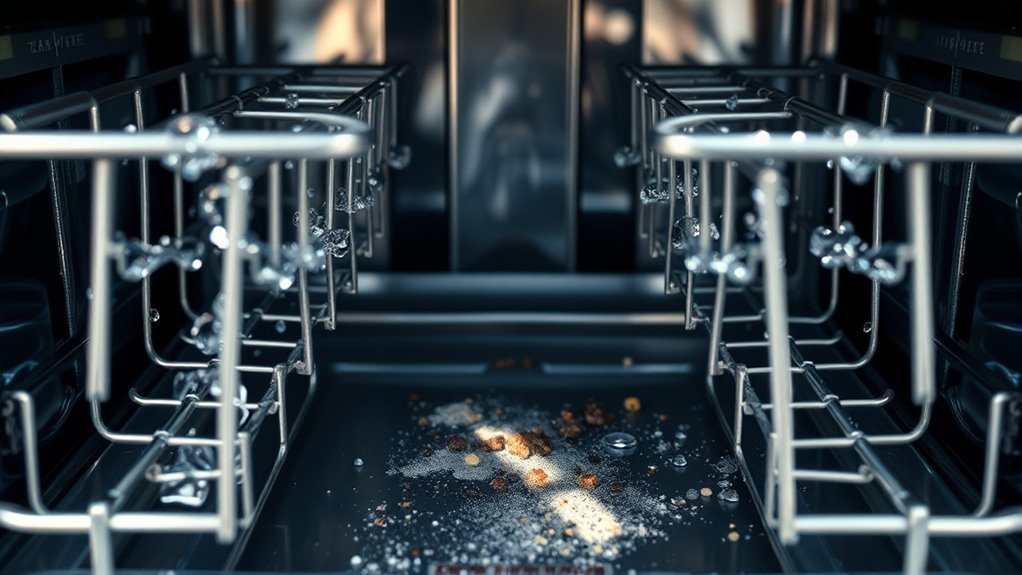
Although your dishwasher is built to clean dishes, it can start smelling bad over time. You might wonder why odors appear even with regular use. Usually, it’s due to moisture, trapped debris, and stagnant water that create a perfect spot for bacteria and mold to grow.
If you don’t maintain your dishwasher regularly, these microorganisms multiply and cause bad smells. To prevent this, keep your dishwasher dry and clean between washes. Make a habit of checking and cleaning filters, spray arms, and door seals where residue can gather.
Leaving the door slightly open after a cycle helps air circulate and dries out the interior. Ignoring these simple steps allows odors to develop and stick around. Staying proactive with maintenance keeps your dishwasher fresh and your kitchen smelling clean.
How Food Residue Causes Dishwasher Odors
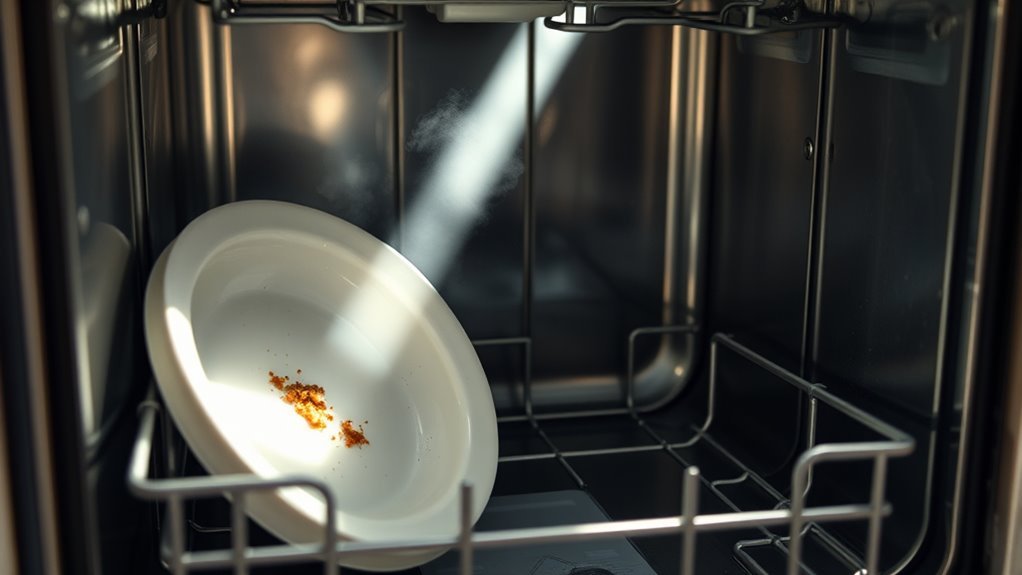
When food particles get trapped in your dishwasher, they can turn into a breeding ground for bacteria. And trust me, bacteria don’t smell too great! As they multiply, they produce those nasty odors that tend to stick around even after you’ve run a cycle.
That’s why it’s so important to clean your dishwasher regularly. Keeping it fresh isn’t just about making everything look shiny—it’s about stopping those bad smells before they start. A little bit of upkeep can go a long way in keeping your dishwasher smelling clean and fresh!
Food Particles Trapped
Because food particles often get stuck in your dishwasher’s filter, spray arms, or door seals, they can start to decompose and cause unpleasant odors. To fix this, focus on identifying food debris so you can locate trapped particles quickly. Regular cleaning of these areas helps prevent trapped debris and stops bad smells before they start.
| Location | Common Food Particles | Prevention Tip |
|---|---|---|
| Filter | Rice, pasta, vegetable bits | Clean filter weekly |
| Spray arms | Eggshells, fruit peel | Remove and flush spray arms |
| Door seals | Bread crumbs, sauce | Wipe seals after each cycle |
| Drain | Meat scraps, seeds | Run hot water cycles |
| Bottom basin | Coffee grounds, cheese | Scrape dishes before loading |
Bacterial Growth Effects
If you don’t remove food residue promptly, bacteria will start to multiply inside your dishwasher. These bacterial colonies feed on leftover food particles, breaking them down and releasing unpleasant odors.
Over time, the buildup gets worse, making your dishwasher smell musty or sour. To prevent this, focus on odor prevention by regularly cleaning the filter and wiping down interior surfaces.
Running a cleaning cycle with dishwasher-safe cleaning agents also helps eliminate bacterial colonies before they grow too large. Staying on top of food residue removal and routine maintenance will keep your dishwasher smelling fresh and working well.
Why Mold Grows in Dishwashers
Although dishwashers are meant to clean, they can actually create the perfect environment for mold to grow. Mold loves damp, warm spots, and your dishwasher often stays humid after a cycle. If you don’t manage this moisture, mold can develop quickly and cause unpleasant odors.
Here’s why mold tends to grow in dishwashers:
- Humidity control can be tricky. Residual water and steam tend to stick around inside, making it easy for mold to thrive.
- Food particles can cling to surfaces. Tiny bits trapped in nooks and crannies serve as food for mold.
- Not using the dishwasher often or leaving it closed after a cycle keeps moisture trapped, giving mold a chance to grow.
To prevent mold, you should keep your dishwasher dry and clean. Leave the door slightly open after use to let air circulate and wipe down seals and corners regularly. These small steps help prevent mold buildup and keep your dishwasher smelling fresh.
How Dirty Filters Make Your Dishwasher Smell
If your dishwasher’s filter gets clogged with leftover food, it can trap odors and cause your whole appliance to smell pretty bad. You might notice a funky smell sticking around if you don’t clean that filter regularly.
Keeping the filter clean is key — it helps prevent all that gunk from building up and keeps your dishwasher smelling fresh and fresh.
Filter Clogs And Odors
When your dishwasher’s filter gets clogged with food particles and grease, it creates the perfect environment for unpleasant odors to develop. Neglecting filter maintenance allows trapped debris to rot, leading to persistent smells.
To keep your dishwasher smelling fresh, focus on proper filter care. Here’s what you should do:
- Clean the filter regularly, usually once a week or as recommended.
- Rinse off food particles immediately after each cycle to prevent buildup.
- Use warm, soapy water and a soft brush to remove grease and grime.
Food Debris Build-Up
Clogged filters aren’t the only reason your dishwasher might smell bad. Food debris trapped in other parts of your machine can also cause unpleasant odors.
Bits of food residue can build up under the spray arms, in the door gasket, or around the drain. These areas can become a breeding ground for bacteria.
If you don’t clean these spots regularly, the trapped debris will start to rot and produce a bad smell.
To keep odors at bay, make it a habit to inspect and wipe down these areas during your routine dishwasher cleaning.
Removing leftover food particles not only keeps your dishwasher smelling fresh but also helps it work more efficiently.
How Drainage Issues Cause Dishwasher Odors
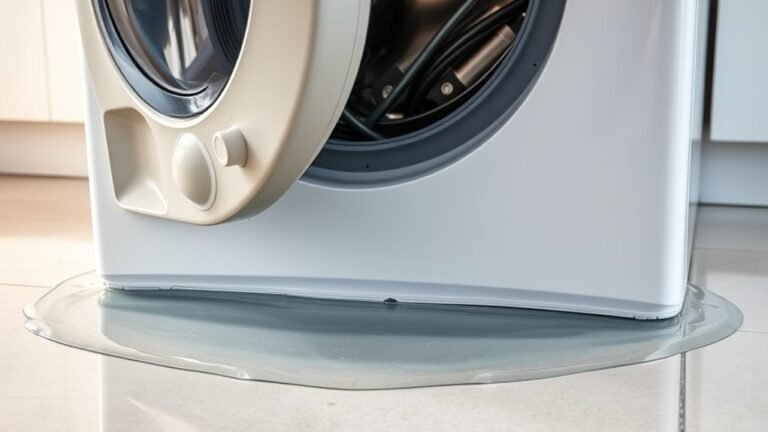
Because your dishwasher relies on proper drainage to remove dirty water, any blockage or slow drainage can lead to unpleasant odors. When water doesn’t drain correctly, it stays inside and creates a breeding ground for bacteria and mold that cause those foul smells.
To keep your dishwasher fresh, focus on drainage maintenance to prevent these odors from developing.
Here’s what you should keep an eye on:
- Check and clear the drain filter regularly to avoid clogs.
- Inspect the drain hose for kinks or blockages restricting water flow.
- Make sure the garbage disposal, if connected, is clean and not causing backups.
Quick Fixes to Stop Dishwasher Smells Now
If you want to stop dishwasher smells quickly, a few simple actions can make a big difference. Start with regular odor prevention by wiping down the door seals and removing food debris from filters. These maintenance tips keep the dishwasher fresh and working well, preventing buildup that causes bad smells.
Here’s a quick reference to tackle odors fast:
| Quick Fix | How It Helps |
|---|---|
| Clean Filter | Removes trapped food particles |
| Wipe Door Seal | Prevents mold and mildew growth |
| Run Hot Water Cycle | Flushes out residue and bacteria |
| Check Drainage | Stops stagnant water buildup |
| Leave Door Ajar | Lets moisture evaporate |
Following these steps regularly stops odors before they start. Incorporate them into your routine, and your dishwasher will smell clean and fresh, saving you from more extensive cleaning later.
Using Vinegar, Baking Soda & Commercial Cleaners
When you want to tackle dishwasher odors more thoroughly, using vinegar, baking soda, and commercial cleaners can make a big difference. Vinegar helps break down mineral buildup and neutralizes odors naturally, while baking soda acts as a gentle abrasive to absorb smells and clean residue.
Here’s how you can use these effectively: Pour a cup of white vinegar into a dishwasher-safe container on the top rack and run a hot water cycle to dissolve grime and freshen up the interior. Sprinkle a cup of baking soda on the bottom of the dishwasher and run a short hot cycle to deodorize and remove stains.
Use commercial dishwasher cleaners monthly to target hidden buildup, grease, and odors that vinegar and baking soda might miss.
How to Clean Your Dishwasher to Eliminate Odors
If your dishwasher is starting to smell, the first thing you want to do is take out any food debris that might be stuck inside. It’s a simple step, but it really helps get rid of the source of the odor.
After that, pour some vinegar into the bottom of the dishwasher and run a hot cycle. The vinegar works to break down any buildup and neutralize those pesky smells. Oh, and don’t forget to give the dishwasher filter a good clean every now and then—keeping that clean makes a big difference in keeping everything fresh and smelling nice.
Remove Food Debris
Food particles trapped in your dishwasher can lead to bad odors and bacteria growth. To keep your appliance fresh and working well, removing food debris is a key step in maintenance and odor prevention.
Start by checking the bottom of your dishwasher for leftover scraps that might clog filters or drains. Then, clean out the filter regularly to prevent buildup. Don’t forget to wipe down the door seals and edges where tiny bits can hide.
Here’s how to tackle food debris effectively:
- Remove and rinse the filter under running water
- Scrape off stuck-on food from spray arms and drains
- Wipe door seals and crevices with a damp cloth
These simple steps help protect your dishwasher from bad smells and keep it running smoothly.
Use Vinegar Rinse
Although your dishwasher may look clean after removing debris, lingering odors can still stick around. Using a vinegar rinse is a simple way to tackle these smells.
Vinegar helps break down grease, kills bacteria, and neutralizes odors. To do the rinse, place a cup of white vinegar in a dishwasher-safe container on the top rack.
Run a hot water cycle without detergent. This helps flush out residue and refreshes your dishwasher.
| Step | Purpose |
|---|---|
| Place vinegar | Targets odor-causing buildup |
| Run hot water cycle | Dissolves grease and bacteria |
| Avoid detergent | Prevents interference with vinegar |
| Repeat monthly | Keeps your dishwasher fresh |
This easy method keeps your dishwasher smelling clean and working well.
Clean Dishwasher Filter
Vinegar rinses help reduce odors, but trapped debris in your dishwasher filter can still cause unpleasant smells. For ideal dishwasher hygiene, regular filter maintenance is essential. Here’s how you can clean your dishwasher filter to eliminate odors effectively:
Remove the filter from your dishwasher’s base, usually located at the bottom. Rinse it under warm water, using a soft brush to scrub away food particles and grease. Soak the filter in a mixture of warm water and vinegar for 10-15 minutes to dissolve stubborn residues.
Keeping your filter clean prevents buildup that leads to bad smells and improves your dishwasher’s performance. Incorporate this simple step into your routine to maintain a fresh-smelling, efficient dishwasher.
Simple Daily Habits to Keep Your Dishwasher Fresh
How often do you think about the simple habits that keep your dishwasher smelling fresh? Incorporating easy dishwasher maintenance tips into your daily routine can make a big difference.
For starters, always scrape off food scraps from dishes before loading to prevent odors from trapped debris. Running your dishwasher on a hot water cycle regularly helps break down grease and residue that cause smells.
Using vinegar or baking soda once a week acts as a natural deodorizer and keeps buildup at bay. Also, leave the dishwasher door slightly open after each use to allow moisture to escape, preventing mold and mildew growth.
Wipe down the door seals and edges regularly, since these areas often trap grime. These odor prevention strategies not only keep your dishwasher fresh but also improve its efficiency and lifespan.
Stick to these simple habits, and you’ll avoid unpleasant smells, ensuring your dishwasher stays clean and odor-free every day.
When to Call a Pro for Dishwasher Smells
When should you call a professional to handle persistent dishwasher smells? If your DIY efforts haven’t gotten rid of the odor, it’s a good idea to get expert help. A professional can do a thorough smell diagnosis to find hidden issues like clogged drains, mold buildup, or faulty parts that you might miss.
You should reach out if you notice:
- Lingering odors even after cleaning and freshening
- Visible mold or grime in hard-to-reach spots
- Water drainage issues or strange noises during cycles
Professional cleaning goes beyond just scrubbing the surface. Technicians use special tools and safe chemicals to remove bacteria and grime that cause odors. They’ll also check for mechanical problems that could be contributing to the smell. By addressing the root cause with expert care, you’ll get your dishwasher smelling fresh and working efficiently again. If odors keep lingering after your attempts, don’t hesitate to schedule professional cleaning.
Frequently Asked Questions
Can Certain Dishwasher Detergents Cause Bad Smells?
Yes, certain dishwasher detergents can cause bad smells. Sometimes, ingredients in the detergent react with food particles or hard water, leading to unpleasant odors.
Fragrance options in detergents vary, and some scents might not do a good job of masking odors. They could even clash, making the smell worse.
To avoid this, pick detergents that are designed to break down residues. Also, choose fragrances that suit your preferences without overpowering your dishwasher’s environment.
Does Leaving the Dishwasher Door Open Prevent Odors?
You can kill two birds with one stone by leaving your dishwasher door open after a cycle.
This helps vent moisture, which is key to preventing odors.
When the inside stays damp and closed off, it becomes a breeding ground for mildew and smells.
How Often Should I Replace My Dishwasher’s Gasket?
You should replace your dishwasher’s gasket every 3 to 5 years to keep it in good shape and prevent odors. Over time, gaskets can crack or wear out, which can lead to problems.
When the gasket isn’t working right, water and food particles can get trapped, causing bad smells. Regularly check the gasket for damage and clean it to help it last longer.
Staying on top of gasket maintenance helps keep your dishwasher fresh and odor-free.
Can Hard Water Contribute to Dishwasher Smells?
Yes, hard water can definitely contribute to dishwasher smells. When you have hard water buildup, mineral deposits start accumulating inside your dishwasher, especially around the spray arms and filters.
These deposits trap food particles and moisture, creating a breeding ground for bacteria and mold, which cause unpleasant odors. To prevent this, you should regularly clean your dishwasher and consider using a water softener or dishwasher cleaner designed to tackle mineral deposits.
Are Dishwasher Smells Harmful to Health?
Dishwasher smells aren’t usually harmful, but ignoring them can lead to mold and bacteria buildup. Imagine you skip dishwasher maintenance for months; odors might signal germs that could cause mild allergies or stomach upset.
Conclusion
Just like a garden left untended, your dishwasher can start to smell when food scraps, mold, and grime take root.
But with regular cleaning—using vinegar, baking soda, or commercial cleaners—you’ll pull those odors out by the roots.
Keep your filters clean and watch for drainage issues, and your dishwasher will stay fresh, humming happily like a well-tended garden in bloom.
If smells persist, don’t hesitate to call a pro to keep things sparkling.
Incorporating main keyword: Why Does My Dishwasher Smell?