How to Clean a Kitchen: A Step-by-Step Guide
Are you tired of staring at a cluttered, dirty kitchen and not knowing where to start? You’re not alone—many people struggle to keep their kitchens spotless amid busy schedules.
Luckily, with the right tools and a simple plan, you can transform your space into a clean, welcoming area.
To clean your kitchen efficiently, start by gathering your cleaning supplies and clearing clutter from counters. Wash dishes promptly, then wipe down all surfaces with appropriate cleaners.
Don’t forget to sanitize handles and switches.
Sweep and mop the floors using eco-friendly solutions. Organize your cabinets and drawers to keep things tidy.
Develop daily habits like wiping counters and rinsing dishes to maintain cleanliness.
Following these steps sets a solid foundation.
Explore further to master deep cleaning and tackle stubborn stains.
Key Takeaways
- Prepare eco-friendly cleaning supplies and organize your tools so the cleaning process is quick and smooth.
- Clear clutter by sorting items, tossing expired food, and tidying up cabinets and drawers.
- Wash dishes systematically, wipe down countertops with suitable cleaners, and dry everything to keep your kitchen hygienic.
- Deep clean appliances like the fridge and oven, and mop the floors regularly with eco-friendly solutions.
- Set up a daily cleaning routine with a checklist to stop dirt from building up, keep odors in check, and maintain a spotless kitchen.
Get Your Kitchen Cleaning Supplies Ready
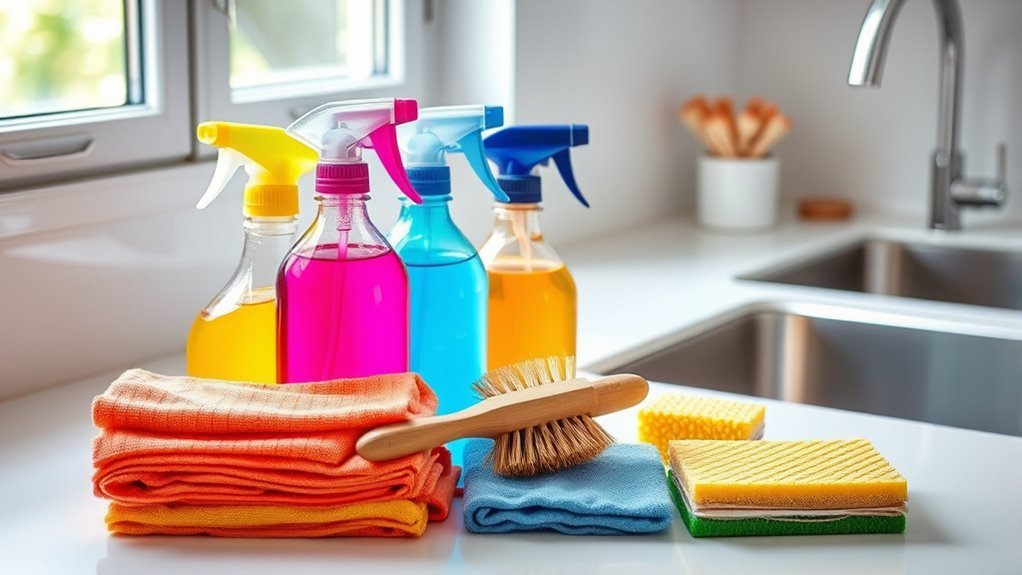
Before you start cleaning your kitchen, gather all the supplies you’ll need. Having everything on hand saves time and prevents interruptions.
Begin by choosing the right cleaning tools like microfiber cloths, sponges, scrub brushes, and a sturdy mop. These help you tackle different surfaces effectively.
Next, pick eco-friendly products to protect your health and the environment. Look for biodegradable sprays, natural degreasers, and plant-based detergents that won’t leave harsh chemical residues.
Don’t forget gloves to protect your hands and a bucket for mixing solutions. Organize your supplies in a caddy or basket so you can carry them around easily.
By preparing your cleaning tools and eco-friendly products in advance, you make the process smoother and more efficient. This way, you won’t have to stop mid-task searching for items.
Start By Clearing Out Kitchen Clutter
With your cleaning supplies ready, it’s time to tackle the clutter that often builds up on kitchen counters, tables, and sinks. Clearing out kitchen clutter instantly makes your space feel more open and manageable.
Use simple kitchen organization tips and decluttering strategies to sort items into categories: keep, toss, or relocate. Focus on removing non-essential items that don’t belong in the kitchen or that you rarely use.
Here’s a quick guide to help you declutter efficiently:
| Item Type | Action |
|---|---|
| Expired Food | Dispose of immediately |
| Utensils | Keep only frequently used |
| Appliances | Store or donate if unused |
| Paper & Junk | Recycle or discard |
Wash Dishes And Clear The Sink Area
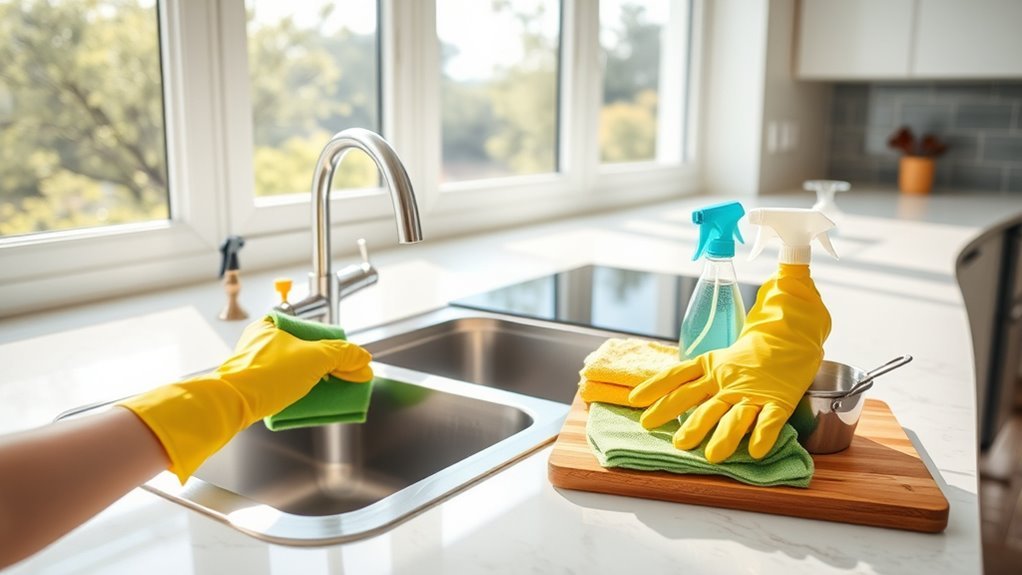
First, start washing your dishes—try to handle the really tough stains first, and use hot water to get it done faster. Once you’re finished with the dishes, go ahead and clear out any leftover debris. Organize the sink area so everything looks tidy and easy to access. This little routine makes keeping your kitchen clean and functional a whole lot easier.
Efficient Dishwashing Techniques
Tackle your dishes by organizing them into groups—glasses, plates, utensils—to make washing easier. Start by rinsing off food scraps, then fill one side of your sink with hot water and dish soap, and the other with clean water for rinsing.
Wash items from least to most dirty to keep the water cleaner longer. Use a sponge or brush to scrub effectively, especially on stuck-on food. After washing, rinse each item thoroughly and place it in a drying rack to dry.
Avoid overcrowding the rack to improve air circulation. For faster drying, pat dishes dry with a clean towel if needed. This method saves time and ensures your dishes come out sparkling clean every time.
Clearing And Organizing Sink
Clear out any remaining dishes and debris from the sink to create a clean workspace. Start by washing all dirty dishes promptly to prevent buildup. Rinse and place clean dishes in designated dish storage areas, like drying racks or cabinets, to keep your countertop clutter-free.
Focus on sink organization by wiping down the basin and faucet to remove grime and water spots. Use a small caddy or tray for sponges, scrubbers, and dish soap to keep cleaning tools tidy and easy to access.
Once everything’s clean and dry, return items like dish racks and soap dispensers to their spots to maintain order. This simple routine boosts your kitchen’s hygiene and efficiency, making daily cleaning quicker and your space more inviting.
Wipe Down Counters And Food Prep Surfaces
Wipe down your counters and food prep surfaces regularly to keep your kitchen hygienic and inviting. Proper daily maintenance is key, especially with different countertop materials like granite, laminate, or wood. Each type needs the right cleaning solutions to prevent damage and ensure cleanliness.
Follow these simple steps for effective cleaning:
- Clear away clutter and clean up spills quickly to prevent stains and bacteria from growing.
- Use a gentle, surface-appropriate cleaner to wipe down all food prep areas thoroughly.
- Rinse with a damp cloth and dry the surfaces to avoid water spots and keep your kitchen fresh.
Sanitize Frequently Touched Spots Like Handles And Switches
After you’ve cleaned your counters and prep surfaces, don’t forget about the smaller areas that get touched all the time. Handles on cabinets, appliance doors, and light switches are hotspots for germs and bacteria.
To keep your kitchen hygienic, make sure to sanitize these frequently touched spots regularly. Use a disinfectant spray or wipes that are safe for your surfaces and effective against common kitchen germs. Focus on high-contact points like refrigerator handles, faucet knobs, and drawer pulls.
Cleaning frequency matters here—try to sanitize these areas at least once daily, or more often if you’re cooking with raw ingredients. This simple step helps reduce cross-contamination and keeps your kitchen healthier overall.
Deep Clean Kitchen Appliances
Now’s a great time to give your kitchen appliances a good deep clean. Trust me, taking the time to scrub inside the refrigerator, degrease the oven surfaces, and freshen up your dishwasher really pays off. It might seem like a chore, but once you get started, you’ll notice how much better everything runs and how much more hygienic your kitchen feels.
Cleaning Refrigerator Interiors
A clean refrigerator interior keeps your food fresh and prevents unpleasant odors. Start by emptying the fridge completely, checking expiration dates, and discarding spoiled items.
Next, remove all shelves and drawers to wash them with warm, soapy water. While they dry, wipe down the fridge walls and door seals with a mixture of baking soda and water to eliminate stains and odors.
To keep your fridge organized and food fresh, follow these three simple steps:
- Group similar items together, like dairy, produce, and condiments.
- Store raw meats on the bottom shelf to avoid cross-contamination.
- Use clear containers or labels to easily identify leftovers and prevent waste.
Regular cleaning and organization help keep your kitchen healthier and reduce food spoilage.
Degreasing Oven Surfaces
Tackle stubborn grease on your oven surfaces by using the right cleaning techniques and products. Start by removing oven racks and soaking them in warm, soapy water.
For the oven interior, apply a high-quality degreaser designed for kitchen appliances. Let it sit for 10-15 minutes to maximize its effectiveness, then scrub with a non-abrasive sponge or brush.
Pay special attention to corners and crevices where grease tends to build up. Use oven cleaning tips like working from the top down and rinsing thoroughly to avoid residue.
Finish by wiping surfaces with a damp cloth and drying them completely. Following these steps guarantees your oven stays grease-free and performs efficiently, making your deep clean routine much easier.
Maintaining Dishwasher Hygiene
After thoroughly degreasing your oven, it’s a good idea to turn your attention to the dishwasher. Keeping it clean helps your entire kitchen run smoothly.
Proper maintenance prevents odors and buildup, so your dishes come out spotless every time. Here are some simple tips to deep clean your dishwasher effectively:
First, remove and clean the filter to prevent clogs and trapped food particles.
Next, run an empty cycle with a cup of white vinegar on the top rack. It helps dissolve grease and sanitizes the interior.
Finally, sprinkle baking soda on the bottom and run a short hot water cycle to eliminate stains and leave everything smelling fresh.
Sweep And Mop Kitchen Floors
Start by sweeping the kitchen floors thoroughly to remove crumbs, dust, and debris. Use a broom or vacuum designed for hard surfaces to ensure you pick up everything.
Regular floor cleaning prevents dirt buildup and keeps your kitchen hygienic. When mopping, choose eco-friendly options like vinegar solutions or biodegradable cleaners to protect both your floor and the environment.
Use a mop suitable for your flooring type—microfiber mops work well on tiles and are great for stain removal without harsh chemicals. Pay attention to tile maintenance by gently scrubbing grout lines to avoid damage.
Always wring out the mop well to prevent excess water, which can make surfaces slippery and unsafe. Aim to clean your floors at least once a week or more if your kitchen gets heavy traffic.
Using the right tools and consistent mopping techniques will keep your kitchen floor spotless and safe.
Organize Cabinets And Drawers To Keep Your Kitchen Clean
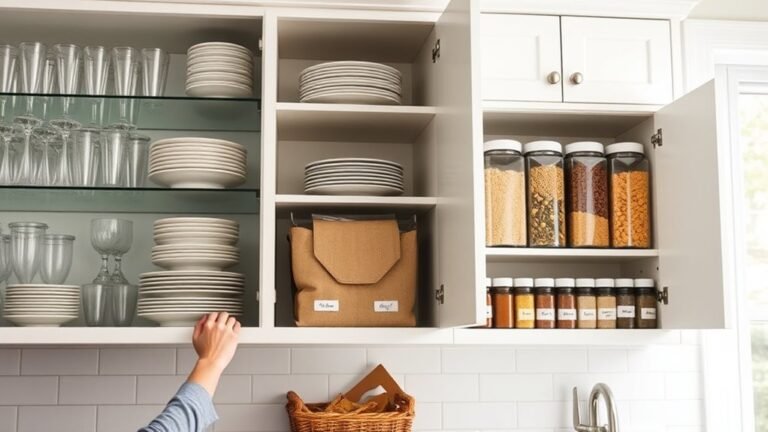
Although it might seem tedious, organizing your cabinets and drawers is key to keeping your kitchen clean and efficient. Start by focusing on cabinet organization—use shelf stacking to maximize vertical space and keep items visible.
Incorporate drawer dividers to separate utensils and maintain a neat utensil arrangement. Pantry labeling is another important step; it helps you find items quickly and keeps clutter at bay.
To make the most of your space and stay organized, try these three steps:
- Seasonal decluttering—remove expired or unused items to free up room.
- Item categorization—group similar items together for easy access.
- Space optimization—use stackable containers and adjustable shelves for flexibility.
Maintain A Daily Kitchen Cleaning Routine
Organizing your cabinets and drawers sets a good foundation, but keeping your kitchen clean daily is just as important.
To keep things fresh, develop simple habits like wiping down countertops, rinsing dishes right away, and sweeping floors at the end of each day.
These small tasks help prevent buildup and make deep cleaning much easier.
Create a straightforward cleaning checklist based on your kitchen’s needs. Include things like emptying the trash, sanitizing sinks, and checking for spills in appliances.
Following your checklist daily keeps you on track and helps avoid missed messes.
Troubleshoot Stubborn Kitchen Stains And Odors
When stains and odors stick around despite your efforts, you’ll need targeted strategies to handle them effectively. First, identify the source, then try these three powerful methods:
- Deep Clean with Natural Ingredients: Make a paste of baking soda and lemon juice or hydrogen peroxide to lift tough stains on counters and sinks. Let it sit for 10 minutes before scrubbing with a salt scrub to boost abrasion.
- Neutralize Odors: Pour coffee grounds or sprinkle baking soda in trash bins or the fridge to absorb smells. For stubborn odors, spray a vinegar solution mixed with essential oils like lavender or eucalyptus to freshen the air.
- Enzyme Cleaners for Organic Messes: Use enzyme cleaners to break down food residues, grease, or pet stains on floors and upholstery. These cleaners digest the source rather than just masking odors, making them perfect for stubborn kitchen spots.
Using these methods regularly keeps your kitchen fresh and spotless.
Frequently Asked Questions
How Often Should I Replace My Kitchen Sponges and Cloths?
You should replace your kitchen sponges every one to two weeks to keep them healthy, especially if they start smelling or look worn.
For cloths, wash them daily in hot water to kill bacteria and keep them fresh. If you see stains or odors that won’t go away, it’s time to swap them out.
Staying on top of this helps keep your kitchen clean and safe.
What Natural Cleaning Products Are Safe for Kitchen Surfaces?
Did you know 90% of people prefer natural cleaners for safety? You can safely clean kitchen surfaces using baking soda, which works as a gentle abrasive to remove grime.
A vinegar solution disinfects without harsh chemicals, making it a great natural option. Adding essential oils like tea tree or lavender gives antibacterial benefits and leaves a fresh scent.
Lemon juice is another natural cleaner that cuts grease and brightens surfaces. These ingredients help keep your kitchen clean and toxin-free, protecting both you and your family.
How Can I Prevent Mold Growth in the Kitchen?
To prevent mold growth in your kitchen, focus on keeping humidity levels low. Use a dehumidifier or exhaust fan while cooking to control moisture.
Wipe down wet surfaces immediately and fix leaks to avoid moisture buildup. Good ventilation helps—try opening windows whenever you can.
Regularly clean areas prone to dampness, like under the sink. By maintaining dryness and controlling humidity, you’ll stop mold before it even starts and keep your kitchen fresh.
What Is the Best Way to Clean Kitchen Garbage Disposal?
Did you know 30% of kitchen odors come from neglected garbage disposals? To keep yours fresh, try maintaining it by grinding ice cubes and citrus peels once a week.
This helps scrub the blades and get rid of trapped food particles, which also helps with odors.
You can also pour a mix of baking soda and vinegar down the disposal, then rinse with hot water after it fizzes.
These simple steps will keep your disposal clean and smelling great!
How Do I Safely Clean Kitchen Knives Without Dulling Them?
To safely clean kitchen knives without dulling them, always hand wash with warm, soapy water right after use. Never toss them in the dishwasher.
Use a soft sponge to avoid scratches that can harm the knife’s edge. Dry knives immediately to prevent rust.
For cutting boards, stick with wooden or plastic ones and clean them thoroughly to avoid cross-contamination.
Remember to regularly sharpen your knives so the edges stay sharp and effective.
Conclusion
Now that you’ve got the steps down, isn’t a sparkling kitchen worth the effort?
By staying organized and keeping up with daily cleaning, you’ll enjoy a fresh, inviting space every day.
Remember, tackling messes right away makes deep cleaning easier and faster.
So, grab your supplies, follow this guide, and watch how a clean kitchen transforms your cooking and mood.
Ready to make your kitchen shine like never before?
A clean kitchen is the key to a happy, stress-free cooking experience.