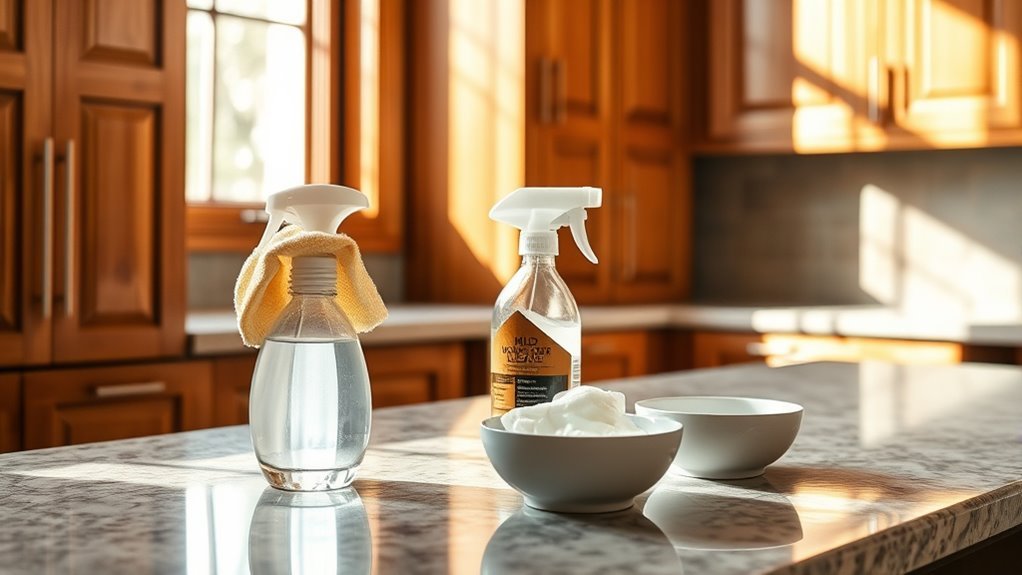
How to Clean Wood Kitchen Cabinets: A Step-by-Step Guide
Many homeowners find that keeping wood kitchen cabinets looking their best can be a real challenge. Over time, grease, dust, and fingerprints can take a toll, making cabinets look dull and cluttered.
You’re not alone—many people struggle with finding the right way to clean and maintain their cabinets to keep them looking beautiful.
To clean your wood kitchen cabinets, start by clearing them and dusting with a soft cloth. Use a gentle mix of warm water and mild dish soap or diluted vinegar to wipe down surfaces in circular motions, then dry immediately.
For grease, try a combination of soap and vinegar.
Clean hardware with a soft brush and soapy water, drying thoroughly. Regular maintenance keeps cabinets looking great, and exploring deeper tips will help you preserve their beauty longer.
Key Takeaways
- Clear your cabinets first, then dust with a soft cloth and look for grease or sticky spots before you start cleaning.
- Use gentle solutions like diluted vinegar or mild dish soap to protect the wood finish and avoid damage.
- Wipe the cabinets with a cloth sprayed with your cleaning solution, using circular motions. Make sure to dry immediately afterward.
- Clean hardware separately with warm, soapy water and a soft toothbrush. Dry thoroughly to prevent rust from forming.
- Keep your cabinets looking great with weekly mild wipe-downs, monthly deep cleans, and regular polishing to help them last longer.
How To Prepare Your Wood Cabinets For Cleaning
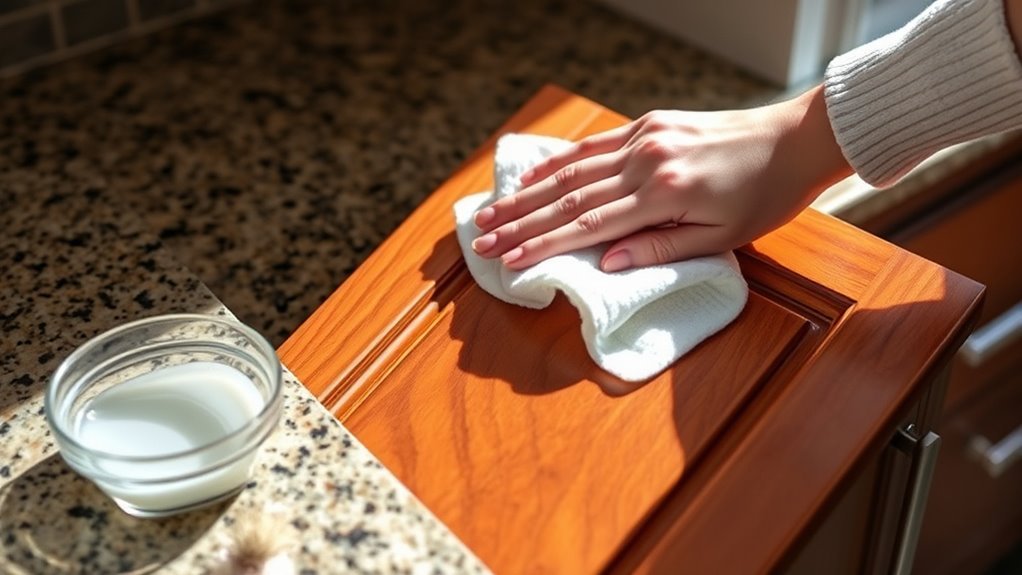
Before you start cleaning, clear off all items from your wood cabinets to give yourself full access. This way, you can reach every corner and won’t risk damaging your belongings.
Next, gently dust the surfaces with a soft cloth or microfiber duster to remove loose dirt and debris. This simple step is key to preserving your wood finish.
Avoid using abrasive materials that can scratch the wood. Check for sticky spots or grease buildup, especially near handles and edges, and treat these areas carefully.
Also, inspect your cabinets for any signs of wear or damage, like peeling or cracking finishes. This can help you decide the best cleaning approach.
Taking these preparatory steps ensures you protect the wood finish and extend the life of your cabinets. Proper preparation sets the stage for a safe, effective cleaning process.
Which Cleaning Products Are Safe For Wood Cabinets?
When it comes to cleaning your wood cabinets, you want to pick products that are gentle and won’t harm the wood. Natural options like a mix of vinegar and mild soap are great because they clean well without being too harsh. Just remember to dilute the vinegar and avoid soaking the wood.
On the other hand, steer clear of harsh chemicals like bleach or ammonia-based cleaners, as they can strip away the finish or even cause discoloration. Luckily, there are some commercial products made specifically for wood that are safe and effective. Look for cleaners labeled as safe for wood or furniture, and always follow the instructions on the label to protect your cabinets’ beautiful finish.
Natural Cleaning Solutions
Three natural cleaning solutions stand out as safe and effective for wood kitchen cabinets: vinegar, mild dish soap, and olive oil. These eco-friendly options help you maintain your cabinets without harsh chemicals. You can easily create DIY recipes at home—mix equal parts water and white vinegar for a gentle cleaning spray that removes grime without damaging the wood’s finish.
For tougher spots, add a few drops of mild dish soap to warm water and wipe with a soft cloth. Olive oil works wonders as a natural polish; apply a small amount to a cloth and rub it in to restore shine and protect the wood. Using these simple, natural solutions keeps your cabinets clean and healthy while supporting an environmentally friendly routine.
Avoiding Harsh Chemicals
Although it might be tempting to reach for strong cleaners to tackle stubborn stains, harsh chemicals can damage the finish and wood of your kitchen cabinets. Instead, stick to safe cleaning methods that protect the wood’s natural beauty.
You don don’t have to use aggressive products; eco-friendly alternatives like mild dish soap diluted in water or a vinegar and water solution work wonders without causing harm. Avoid bleach, ammonia, or abrasive cleaners as they can strip the finish or cause discoloration.
Always test any cleaner on a small, hidden area first. By choosing gentle, safe options, you’ll keep your cabinets looking fresh and maintain their durability.
Prioritize products designed specifically for wood or natural ingredients for the best results.
Recommended Commercial Products
When choosing commercial cleaning products for your wood cabinets, look for formulas specifically designed to be gentle on wood surfaces.
Eco-friendly options protect both your cabinets and the environment, making them ideal for regular use.
To help you decide, here’s a quick brand comparison of popular products safe for wood cabinets:
| Product Name | Features |
|---|---|
| Method Wood Cleaner | Plant-based, biodegradable |
| Murphy’s Oil Soap | Gentle, natural ingredients |
| Bona Wood Cleaner | Non-toxic, streak-free |
| Seventh Generation | Eco-friendly, hypoallergenic |
| Weiman Wood Cleaner | Removes grime, safe for finishes |
Choose a product that matches your preferences, focusing on eco-friendly options to keep your cabinets beautiful without harsh chemicals.
How To Remove Grease And Grime From Wood Cabinets Safely
Because grease and grime can build up quickly in your kitchen, you’ll want to tackle them with the right cleaning methods to protect your wood cabinets. For effective grease removal, start with a mild solution of warm water and a few drops of dish soap. Use a soft cloth or sponge to gently wipe the surfaces, avoiding harsh scrubbing that can damage the wood finish.
If grease persists, mix equal parts vinegar and water to break down stubborn buildup without harming the wood. Always test your cleaning solution on a small, hidden area first. After cleaning, dry the cabinets thoroughly to prevent moisture damage.
Regular cabinet maintenance includes promptly wiping spills and avoiding abrasive cleaners. By addressing grease and grime safely, you’ll preserve your cabinets’ appearance and extend their lifespan. Stick to gentle, natural cleaning agents to keep your wood looking fresh and maintain its protective finish without risking damage.
How To Clean Wood Kitchen Cabinets Step-By-Step
First off, gather all the cleaning supplies you’ll need. Having everything ready will make the whole process much easier and smoother. Once you’ve got your supplies, move on to preparing a gentle cleaning solution that’s safe for your wood cabinets. You want to be careful here so you don’t damage the finish.
Finally, clean the cabinets carefully, making sure not to use too much water or harsh scrubbing. After cleaning, dry the cabinets thoroughly to prevent any water damage or warping. And that’s it! With a little patience, your wood kitchen cabinets will look fresh and beautiful.
Gather Cleaning Supplies
To clean your wood kitchen cabinets effectively, you’ll need a few essential supplies. Start by gathering the right cleaning tools: a soft microfiber cloth to avoid scratching, a gentle sponge for scrubbing, and a small brush to reach crevices.
You’ll also want a bucket or bowl to hold your cleaning solution once you prepare it. Don’t forget rubber gloves to protect your hands. These supplies are vital for following proper maintenance tips that keep your cabinets looking fresh without damage.
Having everything ready before you start saves time and guarantees you don’t interrupt the process. With these tools on hand, you’re set to clean thoroughly and maintain your cabinets’ natural beauty for years to come.
Prepare Cleaning Solution
With your cleaning supplies ready, you can now mix the right solution to clean your wood kitchen cabinets safely. Proper wood cabinet maintenance starts with choosing a gentle cleaner that won’t damage the finish or the wood.
Follow this simple 3-step process:
- Combine warm water with a few drops of mild dish soap. This mixture is effective yet gentle.
- Add a splash of white vinegar for natural deodorizing and grease cutting—perfect for kitchen grime.
- Stir the solution well and pour it into a spray bottle for easy application.
Clean And Dry Cabinets
Spray the cleaning solution onto a soft cloth or directly onto the cabinet surfaces. Gently wipe away dirt and grease using smooth, circular motions. This helps prevent damage and keeps the wood’s natural finish looking great.
After cleaning, immediately dry the cabinets with a clean, dry cloth. This prevents moisture buildup that can warp or stain the wood. Regular maintenance is key to keeping your cabinets looking fresh and lasting longer.
Try to clean your cabinets once a week or more if your kitchen gets heavy use. Following this routine will help maintain their appearance and extend their lifespan.
How To Clean Hardware And Handles On Wood Cabinets
Start by removing any loose dirt or grease from your cabinet hardware and handles using a soft cloth or a toothbrush. This simple step helps prevent scratching during deeper cleaning.
Next, apply a gentle, non-abrasive cleaner suitable for metal or your hardware’s finish. To keep your hardware looking good and working well, follow these tips:
- Soak removable handles in warm, soapy water for 10 minutes to loosen grime.
- Use a soft-bristled toothbrush to carefully scrub crevices and detailed areas.
- Rinse thoroughly and dry completely to avoid water spots or rust.
For handle maintenance, regularly check for loose screws and tighten them to keep everything secure. Avoid harsh chemicals that can damage finishes, and wipe hardware dry after cleaning.
How To Dry And Polish Wood Cabinets For A Lasting Shine
Once you’ve given your wood cabinets a good clean, it’s really important to dry them off completely. Grab a soft, lint-free cloth and wipe away any remaining moisture—this helps prevent water spots and keeps the wood from getting damaged.
Next up, grab a gentle wood polish. Just a small amount will do! Applying it will help bring out a beautiful shine and add a protective layer to the surface.
Effective Drying Techniques
Two key steps guarantee your wood kitchen cabinets dry properly and keep their shine: gentle drying and careful polishing. Proper drying techniques are essential for moisture control, helping prevent warping or damage.
Here’s how you can dry your cabinets effectively: Use a soft, lint-free cloth to gently absorb moisture, avoiding harsh rubbing. Open windows or turn on a fan to improve air circulation, speeding up drying without risking heat damage.
Wipe down cabinet surfaces immediately after cleaning to prevent water from settling in cracks or seams. Following these steps helps ensure your cabinets stay beautiful and durable.
Best Polishing Methods
A few simple polishing techniques can bring out the natural beauty of your wood cabinets while protecting their finish. After making sure your cabinets are completely dry, choose a polish suited for your wood finishes—wax-based for a deep shine or oil-based for nourishment.
Apply a small amount of polish with a soft, lint-free cloth, working in gentle circular motions. Avoid over-applying, as too much polish can cause buildup. Focus on one section at a time to stay in control and prevent streaks.
Once polished, buff the surface lightly with a clean cloth to enhance the shine. Regular polishing not only refreshes your cabinets’ look but also adds a protective layer, helping preserve the wood finish and extend its lifespan.
Stick to these polishing techniques for lasting results.
How Often Should You Clean Wood Kitchen Cabinets?
Regularly cleaning your wood kitchen cabinets helps keep their beauty and extend their lifespan. Sticking to a good cleaning schedule is key to preventing dirt buildup and keeping your kitchen inviting.
You don’t need to clean them every day, but staying consistent makes a difference. Here are three simple tips to help you establish a routine:
- Weekly wipe-downs: Use a soft cloth with mild soap and water to remove everyday grease and dust.
- Monthly deep cleaning: Focus on grooves, handles, and edges to prevent grime from building up.
- Quarterly inspections: Check for scratches or damage and apply polish or touch-ups as needed.
Following these steps not only preserves your cabinets’ finish but also helps you avoid costly repairs later. Incorporating these cleaning habits into your routine means your cabinets will stay looking fresh and last longer.
And most importantly, it makes your kitchen a place you love to spend time in.
How To Remove Stubborn Stains From Wood Cabinets
Even with a solid cleaning routine, stubborn stains can still find their way onto your wood cabinets. To tackle these spots, you’ll want to use effective stain removal techniques that won’t damage the finish. Start by mixing a gentle solution of warm water and mild dish soap.
Use a soft cloth to gently rub the stain. Avoid harsh scrubbing, which can wear down the wood. For tougher stains, try a paste of baking soda and water. Apply it with a soft cloth, then wipe clean.
Be cautious of cabinet cleaning myths like using harsh chemicals or abrasive pads. These can harm your cabinets instead of helping. Avoid bleach or ammonia-based cleaners as they often strip wood finishes. If stains persist, a wood cleaner made for cabinets can work wonders.
How To Prevent Dirt And Damage On Wood Cabinets
Preventing dirt and damage on wood cabinets starts with simple daily habits you can easily adopt. By adding preventative maintenance to your routine, you’ll keep your cabinets looking fresh and help them last longer. Here’s how to get started:
- Wipe spills immediately. Don’t let liquids sit on the wood; they can cause stains and warping. Cleaning up quickly prevents long-term damage.
- Maintain cabinet organization. Keeping your cabinets clutter-free helps avoid scratches and dents caused by shifting items. Use organizers to protect the surfaces.
- Use gentle cleaning products. Harsh chemicals can damage the wood finish. Stick to mild cleaners and soft cloths to keep your cabinets looking their best.
When To Call A Professional For Wood Cabinet Cleaning Or Repairs
While daily care helps keep your wood cabinets looking good, some issues need a pro. If you see deep scratches, water damage, or peeling finishes, it’s time to consider professional help. Trying to fix these yourself might make things worse or even void your warranty. Professionals have the right tools and skills to restore your cabinets properly, making them look as good as new.
If you notice mold, warping, or loose hinges, don’t wait to call a specialist. They can evaluate the damage and suggest the best solution. Acting quickly can save you money by avoiding costly replacements. When your cabinets need more than just cleaning, trusting a professional ensures thorough care and lasting results.
Frequently Asked Questions
Can I Use Vinegar to Clean Wood Kitchen Cabinets?
Yes, you can use vinegar to clean wood kitchen cabinets, but make sure to dilute it first to protect the finish.
Vinegar is great at cutting through grease and grime naturally. Mix one part vinegar with one part water and use a soft cloth to clean.
This method helps keep your cabinets shiny without harsh chemicals. Just remember to test a small area first to be safe.
How Do Humidity Levels Affect Wood Cabinet Maintenance?
Humidity levels play a big role in wood cabinet maintenance. If you don’t manage humidity control, wood can swell, warp, or crack over time.
You’ll want to keep your kitchen’s humidity steady to protect the wood’s integrity and ensure proper preservation. Using a dehumidifier or good ventilation helps prevent moisture damage.
Are There Natural Alternatives to Commercial Wood Cleaners?
Yes, you can use natural alternatives to commercial wood cleaners. Try mixing mild detergents with water for gentle cleaning without harsh chemicals.
Adding a few drops of essential oils like lemon or tea tree not only boosts cleaning power but also leaves a fresh scent. You’ll avoid damaging your wood cabinets while keeping them clean and smelling great.
Just be sure to test any solution on a small area first.
Can Wood Cabinets Be Cleaned With Steam Cleaners?
You might worry that steam could warp or damage your wood cabinets, but how effective a steam cleaner is depends on careful use. Yes, you can clean wood cabinets with a steam cleaner, but you need to keep the nozzle moving and avoid prolonged exposure to moisture.
This approach helps loosen grime and grease while keeping your cabinets safe. Using low steam settings and wiping dry immediately can protect the finish and keep your cabinets looking fresh.
How Do I Repair Scratches on Wood Cabinets Myself?
To repair scratches on wood cabinets yourself, start by cleaning the area thoroughly. This helps remove dirt and dust so the repair sticks better.
Next, use a wood finish marker or crayon that matches your cabinet’s color. Fill in the scratch gently, then wipe away any excess with a soft cloth.
For deeper scratches, you might need to apply wood filler. Let it dry completely before lightly sanding the area. Finish up by refinishing the spot to match the rest of the cabinet.
This simple fix can make your cabinets look almost new again without the need for costly replacements.
Conclusion
Now that you know how to clean your wood kitchen cabinets safely and effectively, why wait to give them the care they deserve? Regular cleaning keeps them looking beautiful and helps extend their life.
Using the right products and techniques is key to avoiding damage and stubborn stains. When in doubt or facing tough repairs, don’t hesitate to call a professional.
Your cabinets will thank you for the attention! Caring for them with proper cleaning will keep your kitchen looking its best for years to come.