Electrician for Oven Repairs: What to Know Before You Contact Them
Dealing with oven troubles can be frustrating, especially when your favorite meals are on hold. Many people struggle with figuring out whether to fix it themselves or call in a professional.
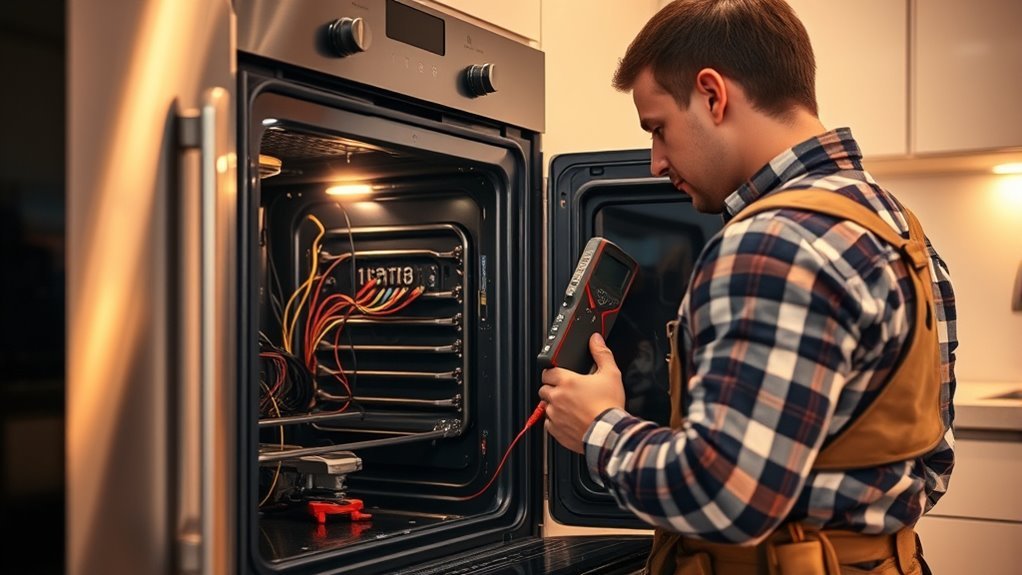
If your oven isn’t working right, finding the right electrician for repairs can make all the difference. When you need an electrician for oven repairs, look for someone licensed and experienced with ovens to guarantee safe, reliable fixes.
Don’t attempt DIY repairs because electrical issues can be risky and complex. Always turn off power before any work begins.
Understand that repair costs vary based on parts and labor, and more serious problems may require replacement. Knowing these basics helps you make informed decisions and handle repairs smoothly.
Keep exploring to uncover essential tips and details.
Key Takeaways
- Verify the electrician’s licensing, certification, and experience specifically with oven electrical repairs for safety and quality assurance.
- Prepare your oven area by clearing space, ensuring good lighting, and turning off power at the circuit breaker before the electrician arrives.
- Be ready to provide the oven’s model, age, and repair history to help the electrician diagnose issues efficiently.
- Understand that electrical oven repairs often cost more than mechanical ones, with parts ranging from $50 to $200 and labor costing $75 to $150 per hour.
- Discuss repair timelines upfront, considering diagnosis complexity, parts availability, and technician scheduling to set realistic expectations.
Signs You Need Professional Oven Electrical Repairs
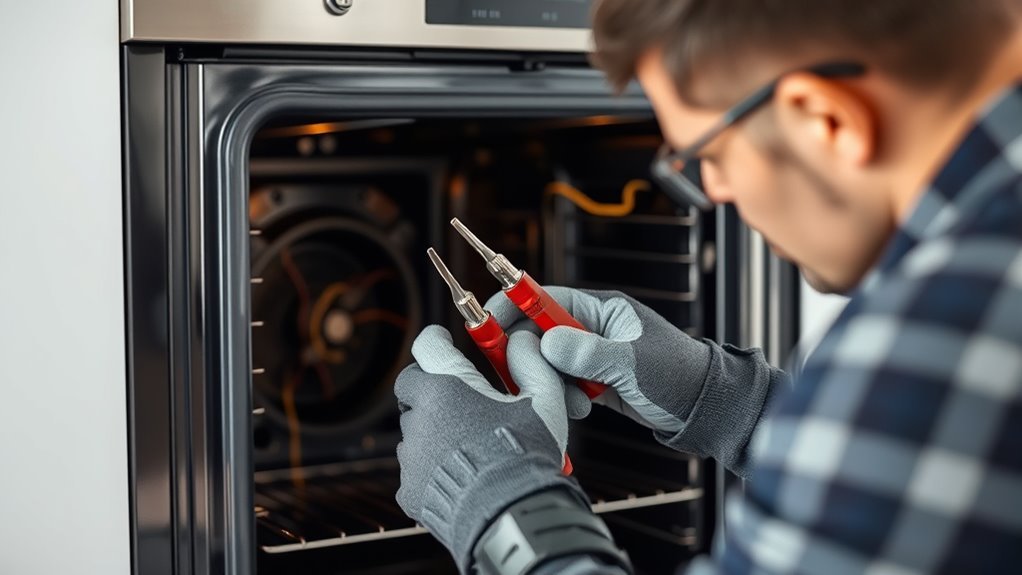
How do you know when your oven needs professional electrical repairs? Look out for clear signs like uneven heating, sparks when you turn it on, or flickering display lights. These usually indicate an electrical problem that shouldn’t be ignored.
Keep an eye on safety signs like a burning smell, tripped circuit breakers, or visible damage to the power cord or plug. If you notice any of these, stop using the oven right away and call an electrician.
Ignoring these warning signs could lead to bigger issues, including fire hazards. Getting a professional to fix it ensures the repair is done safely and correctly, saving you time and money.
Don’t risk your safety by trying DIY fixes when you see these signs. Instead, seek expert help promptly to keep your home safe and your oven functioning properly.
Common Oven Electrical Problems to Watch For
Recognizing the signs that your oven needs electrical repairs is just the first step. It’s also important to understand common oven electrical problems to watch for.
Oven wiring issues often cause inconsistent heating or the oven failing to turn on. Faulty thermostats can lead to inaccurate temperature readings, making your food undercooked or burnt.
Other problems include blown fuses, malfunctioning heating elements, and tripped circuit breakers. Knowing these issues helps you communicate clearly with your electrician.
| Problem | Symptom | Possible Cause |
|---|---|---|
| Oven wiring issues | Oven won’t heat or powers off | Damaged wires or loose connections |
| Faulty thermostats | Incorrect oven temperature | Malfunctioning sensor |
| Blown fuses | Oven doesn’t turn on | Electrical overload |
| Heating element fault | Uneven or no heat | Burned-out element |
| Circuit breaker trips | Power cuts during use | Short circuit |
Stay alert for these issues to ensure timely repairs.
Why It’s Safer to Avoid DIY Oven Repairs
Although fixing your oven yourself might seem like a way to save money, it comes with serious safety risks you shouldn’t ignore. Ovens have complex electrical parts, and without the right knowledge, you could be exposing yourself to danger.
Even a small mistake can lead to electric shocks, fires, or more damage to your appliance. Skipping safety precautions not only puts you at risk but also your home and family.
Handling high voltage parts needs specialized tools and experience that most DIYers don’t have. Plus, ovens often have hidden wiring or components that look harmless but can carry live current.
How to Find a Qualified Oven Repair Electrician
Looking for a qualified oven repair electrician? First things first, you want to check if they’re licensed and certified. This step is pretty important because it ensures they’re meeting the safety standards and have the proper training. You definitely don’t want someone working on your oven who isn’t qualified!
Next, it’s a good idea to look for someone with plenty of experience specifically with ovens. The more they’ve worked on different models and issues, the better they’ll be at fixing your oven right the first time—saving you from costly mistakes down the line.
And don’t forget to shop around a bit! Compare their service costs to find a good deal that doesn’t compromise on quality. Getting a fair price while ensuring the job’s done right is the best way to go.
Verify Licensing And Certification
Before hiring an electrician for oven repairs, you should always check their licensing and certification. Licensing importance can’t be overstated. It guarantees the electrician meets local regulations and safety standards.
Without proper licensing, you risk subpar work or even legal issues. Certification verification confirms the electrician has the specific skills and training needed for oven repairs. Ask to see their credentials and verify them through official state or industry websites.
This step protects you from inexperienced or unqualified technicians and ensures the work complies with safety codes. Taking the time to verify licensing and certification not only safeguards your oven but also gives you peace of mind that the job will be done right the first time.
Don’t skip this vital step before making your choice.
Check Experience With Ovens
Verifying an electrician’s licensing and certification is a good start, but you also want to make sure they have hands-on experience with ovens specifically. Different oven types need different repair techniques, so ask if they’re familiar with various models like gas, electric, and convection ovens.
Check their past work to confirm they have the right expertise. Look for signs like years spent repairing ovens professionally, knowledge of multiple oven types and brands, and familiarity with troubleshooting common issues.
It’s also helpful if they can explain their repair techniques clearly and have positive reviews from customers who’ve needed oven repairs. This way, you’ll feel more confident about their experience and skills.
Compare Service Costs
Finding the right electrician for oven repairs often comes down to comparing service costs without sacrificing quality. Start by looking at service price comparisons to get a sense of typical charges in your area.
Don’t just focus on the total price. Ask for a detailed cost breakdown to understand labor, parts, and any extra fees. This way, there are no surprises down the line.
Remember, the cheapest option isn’t always the best. You want a good balance between fair pricing and reliable service. Take your time reviewing estimates from multiple electricians.
Don’t hesitate to ask questions about what each charge covers. Doing this will help you make an informed choice and avoid overspending on your oven repair.
Top Questions to Ask Your Oven Repair Electrician
What questions should you ask to confirm your oven repair electrician is the right fit? Knowing the right questions helps you assess their skills and guarantees a smooth repair experience. Start by confirming their electrician qualifications to verify they’re certified and experienced.
You can also ask for oven troubleshooting tips to see if they can help you prevent future issues. Here are five key questions to ask:
- Are you licensed and insured for oven repairs?
- Can you provide references or reviews from past clients?
- What oven troubleshooting tips do you recommend for common problems?
- How do you diagnose and handle electrical issues in ovens?
- What is your estimated timeline and cost for the repair?
These questions help you gauge their expertise, reliability, and transparency. This way, you’re more likely to hire someone who can effectively fix your oven and keep it running safely.
How to Prepare Your Home Before the Electrician Arrives
Before the electrician comes over, it’s a good idea to clear the area around your oven so they can easily get to it. This just makes the whole process smoother and quicker. You should also turn off the power to the oven to keep everything safe while they’re working.
And don’t forget to gather any information or manuals you have for the appliance. It can really help the electrician figure out what’s wrong faster. Just a few simple steps can make a big difference in making the repair process go smoothly!
Clear Access To Oven
To help the electrician work efficiently, clear a path to your oven by moving any furniture, rugs, or obstacles that could block access. Proper oven placement and appliance accessibility are key to smooth repairs.
Before the electrician arrives, verify you:
- Remove nearby chairs or tables that crowd the oven area
- Roll up or lift rugs covering the floor near the appliance
- Clear countertops next to the oven for tools and parts
- Make sure lighting is good enough to see the oven’s back and sides
- Keep pets and children away from the work zone
Turn Off Power
Although the electrician will handle the main power shutoff, you should turn off your oven’s power at the circuit breaker beforehand to guarantee safety. This step minimizes risks during the circuit inspection and keeps power safety in your home.
Locate your breaker panel and switch off the oven’s dedicated breaker. Make sure the oven is completely powered down before the electrician arrives to make their job smoother and safer.
| Step | Why It Matters |
|---|---|
| Turn off oven breaker | Prevents accidental shocks |
| Verify power is off | Ensures safe circuit inspection |
| Notify electrician | Keeps them informed for safety |
Preparing this way helps avoid hazards and supports a thorough and secure oven repair process.
Gather Appliance Information
When you gather detailed info about your oven, it helps the electrician diagnose and fix the issue faster. Before they arrive, collect important details like the model number, age, and past repairs.
This info helps the electrician understand your oven’s specs and history, speeding up troubleshooting. Make sure to have these ready:
- Oven model and serial numbers
- Date of purchase and installation
- Description of the problem and when it started
- Any previous repair records or warranties
- Photos of the oven’s control panel and error messages
Oven Repair Costs: What Affects the Price?
Since oven repairs can vary a lot, understanding what influences the cost can help you plan your budget. Factors like the oven’s brand, the specific problem, parts needed, and labor rates all play a role.
Knowing this breakdown can help you anticipate expenses and avoid surprises. Here’s a quick look at common repair factors and how they affect the price:
| Repair Factor | Description | Typical Cost Range |
|---|---|---|
| Parts | Replacement components | $50 – $200 |
| Labor | Electrician’s hourly rate | $75 – $150/hr |
| Oven Brand | High-end brands cost more | Varies |
| Type of Repair | Electrical vs. mechanical | Electrical often higher |
| Urgency | Same-day or after-hours service | Additional fees |
How Long Do Oven Electrical Repairs Usually Take?
Understanding the costs involved in oven repairs helps you prepare financially, but knowing how long the repairs take lets you plan your schedule accordingly. Repair timelines for oven electrical issues can vary depending on the problem’s complexity and parts availability. When you contact an electrician, setting clear service expectations upfront can save you time and frustration.
Here’s what typically influences repair timelines:
- Diagnosis time to identify the exact electrical fault
- Availability of replacement parts
- Complexity of the wiring or component repair
- Technician’s workload and scheduling
- Testing and ensuring the oven works properly after the repair
Most straightforward electrical repairs, like fixing wiring or replacing heating elements, usually take about 1 to 3 hours. More complex issues might need additional visits or longer service windows. By understanding these factors, you can better manage your day and know what to expect when booking an oven electrical repair.
When to Repair Your Oven and When to Replace It
How do you decide whether to repair your oven or replace it altogether? Start by looking at repair indicators: frequent breakdowns, high repair costs, or parts that are no longer available. These signs suggest it might be time to consider replacing your oven.
If your oven heats unevenly or fails to reach the right temperature despite repairs, that’s a strong indicator of deeper issues. It’s worth thinking about replacing it rather than fixing ongoing problems.
Next, weigh factors like the oven’s age, energy efficiency, and overall condition. Older ovens often lack modern safety features and use more power, which costs you more in the long run.
If your oven is over 10-15 years old and repairs will cost more than half of a new model, replacing it usually makes more financial sense. Ultimately, you want to balance convenience, safety, and cost.
Evaluating these repair signs and replacement factors helps you make an informed choice. Whether to fix or replace depends on what makes the most sense for your budget and safety.
Tips to Prevent Future Oven Electrical Issues
To keep your oven working smoothly, it’s a good idea to get regular maintenance checks. That way, you can catch any electrical issues before they become big problems. Using your oven the right way and sticking to the manufacturer’s guidelines can also help prevent unnecessary troubles. Just a few simple steps like these can save you a lot of time and money in the long run.
Regular Maintenance Checks
Because ovens endure constant use and heat, regular maintenance checks are essential for preventing electrical problems before they happen. Scheduling routine inspections helps catch small issues early, so they don’t turn into costly repairs. Preventive maintenance keeps your oven safe and running efficiently.
Here are some tips for effective regular maintenance checks:
- Inspect the power cord and plug for damage or wear.
- Check heating elements for signs of deterioration.
- Clean oven vents and fans to prevent overheating.
- Test the oven’s electrical connections to ensure they’re secure.
- Monitor the control panel and switches to make sure they work properly.
Proper Usage Practices
Following a few simple usage practices can greatly reduce the risk of electrical issues in your oven. Always avoid overloading your oven or using cookware that blocks ventilation, as this can cause overheating and strain the electrical components.
Stick to manufacturer guidelines to guarantee proper oven safety and prevent damage. Regularly cleaning your oven to remove grease and debris helps prevent fire hazards and keeps electrical parts working properly.
Using your oven efficiently not only enhances safety but also improves energy efficiency, saving you money on utility bills. Finally, avoid using extension cords and always plug your oven directly into a dedicated outlet to prevent electrical overloads.
Frequently Asked Questions
Can Oven Electrical Issues Affect the Entire Kitchen’s Wiring?
Yes, oven electrical issues can affect the entire kitchen’s wiring. When your oven draws too much power, it can cause circuit overloads that trip breakers or damage other appliances.
You should never ignore these signs because they can compromise kitchen safety. If you notice flickering lights or frequent breaker trips, it’s important to address the problem quickly.
Calling a professional electrician is the best way to ensure the issue is fixed safely and to prevent further damage.
Are There Specific Brands of Ovens That Are More Prone to Electrical Faults?
It’s no coincidence that some oven brands have better reliability than others when it comes to electrical issues.
Certain brands tend to be more prone to common electrical problems like faulty wiring or thermostat issues.
If you’ve noticed frequent breakdowns, it’s a good idea to check reviews on oven brand reliability before making a purchase or calling for repairs.
This can help you avoid ongoing headaches and keep your kitchen safe and functional.
Do Electricians Offer Warranties on Oven Repair Work?
Yes, electricians often provide warranty coverage or repair guarantees on oven repair work. When you contact them, make sure to ask about the length and details of their warranty so you know what’s protected.
These guarantees give you peace of mind, ensuring that if the same issue happens again within the warranty period, they’ll fix it without extra charges. Always get the details in writing before they start the work.
Can Regular Oven Use Frequency Impact Electrical Component Lifespan?
Think of your oven like a trusty horse; the more you ride it without proper care, the quicker it tires. Yes, regular oven use can wear down electrical components faster, especially if oven maintenance is neglected.
You’ve got to stay on top of it to avoid surprises. Prioritizing electrical safety means scheduling checks and keeping your oven clean, ensuring it runs smoothly and lasts longer despite frequent use.
Is It Safe to Use Extension Cords With Ovens Temporarily?
It’s generally not safe to use extension cords with ovens, even temporarily. Ovens draw a lot of power, and using the wrong cord can lead to overheating or fires.
If you really need to use one for a short time, make sure it’s a heavy-duty, high-amperage cord rated for your oven’s power. Still, it’s best to avoid extension cords altogether.
The safest option is to plug your oven directly into a grounded outlet. That way, you avoid potential hazards and keep everything running smoothly.
Conclusion
Now that you know the sparks to watch for and how to find a skilled electrician, you’re ready to handle oven issues with confidence.
Remember, attempting DIY electrical repairs can be dangerous and might end up costing you more in the long run.
By asking the right questions and understanding repair costs, you can keep your oven running smoothly without draining your wallet.
Stay proactive about oven repairs, and it’ll reward you with many hassle-free meals ahead.