Best Energy Efficient Refrigerator: Top Picks and Buying Tips
Are you tired of high electricity bills from your old refrigerator? Many people struggle with finding an appliance that keeps food fresh without draining energy. You’re not alone—choosing an energy-efficient fridge can feel overwhelming with so many options out there.
To find the best energy-efficient refrigerator, look for ENERGY STAR-certified models that fit your household size to avoid wasted energy. Focus on features like advanced insulation, inverter compressors, and LED lighting to save electricity.
Top freezer fridges often use the least energy, while brands like Whirlpool, Frigidaire, and GE offer budget-friendly efficient options under $1000. Maintaining seals and cleaning coils also helps.
Keep exploring to uncover how fridge types, energy labels, and smart tech impact savings.
Key Takeaways
- Choose ENERGY STAR-certified refrigerators for proven energy savings and lower utility bills.
- Consider size and type, with top freezer models typically using the least energy.
- Look for advanced features like inverter compressors, LED lighting, and smart cooling to boost efficiency.
- Check the EnergyGuide label for annual energy use and compare ratings to find the most efficient option.
- Maintain your fridge by cleaning coils, sealing doors properly, and avoiding placing hot food inside.
Choosing an Energy Efficient Refrigerator
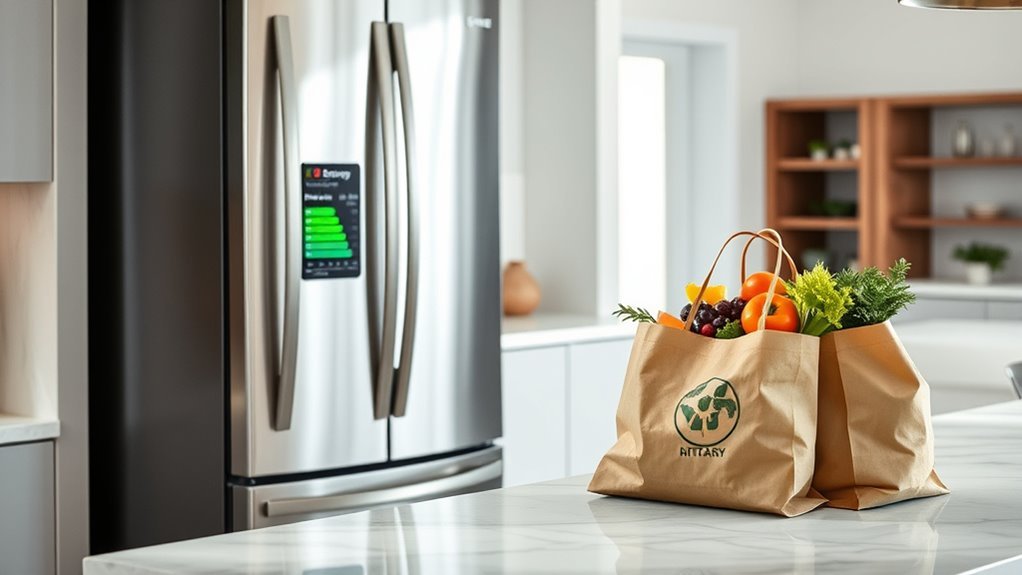
When choosing an energy-efficient refrigerator, look for models with the ENERGY STAR label. These meet strict efficiency standards and help reduce your energy impact significantly compared to regular models.
Picking an ENERGY STAR fridge not only benefits the environment but can also save you money on your utility bills over time. It’s a smart choice for both your wallet and the planet.
Choosing an ENERGY STAR fridge saves money and supports a healthier planet—smart for your wallet and the environment.
Think about the size that fits your household needs. Bigger isn’t always better for efficiency, and a large fridge can waste energy if it’s too big for your use.
Check out the energy consumption figures on the yellow EnergyGuide label. These numbers show how much electricity the fridge uses each year, helping you compare models easily.
Top Energy Efficient Refrigerator Features
Although energy efficiency starts with choosing the right model, understanding key features that improve a refrigerator’s performance can help you make a smarter choice. Look for advanced insulation materials that reduce cold air loss, meaning your fridge uses less energy to keep things cool. Good insulation is especially important in warmer environments and helps cut down energy use.
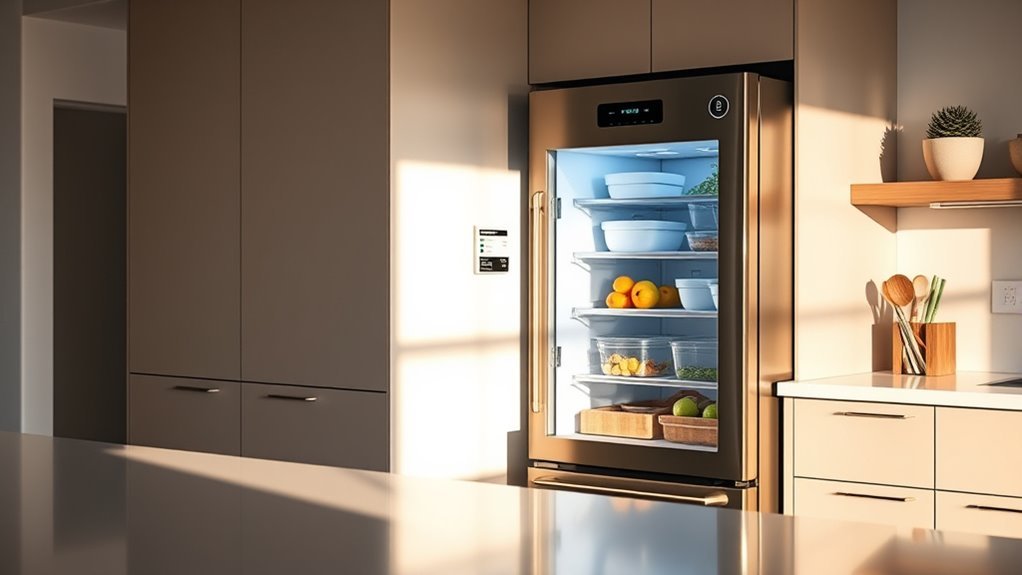
Smart technology is another game-changer. Features like adaptive cooling systems and temperature sensors adjust based on how you use the fridge, so energy isn’t wasted. Some models even let you control them remotely through smartphone apps, so you can monitor and change settings from anywhere.
Also, consider refrigerators with efficient compressors. These cycle on and off as needed instead of running all the time. Energy-saving LED lighting is another bonus because it creates less heat inside the fridge. Focusing on these features means you’ll get a fridge that saves energy and keeps your food fresher longer.
Decoding Energy Star Labels and Ratings
How do you know if a refrigerator truly saves energy? Start by decoding Energy Star labels and ratings. They’re designed to guide your purchase with clear info on energy savings.
Understanding these labels helps you avoid myths, like bigger always means more energy. The Energy Star label guarantees the fridge meets strict efficiency standards, so you get proven savings.
Energy Star labels dispel myths and ensure your fridge meets high efficiency standards for real savings.
When comparing ratings, look at the estimated yearly energy consumption and efficiency scores. These reflect real-world performance and help you make smarter choices.
This awareness lets you weigh the upfront cost against long-term savings on electricity. A fridge with a higher Energy Star rating often costs less to run, even if it’s more expensive initially.
Comparing French Door, Side-by-Side, and Top Freezer Fridges
When you’re trying to decide between a French door, side-by-side, and top freezer fridge, it’s all about how their design influences space and energy use. Each style has its own way of organizing things, which can really make a difference in how your kitchen functions. So, let’s break down how these options compare in terms of energy efficiency and practicality.
Design and Space Efficiency
Choosing the right refrigerator design can really impact your kitchen’s space efficiency and overall functionality.
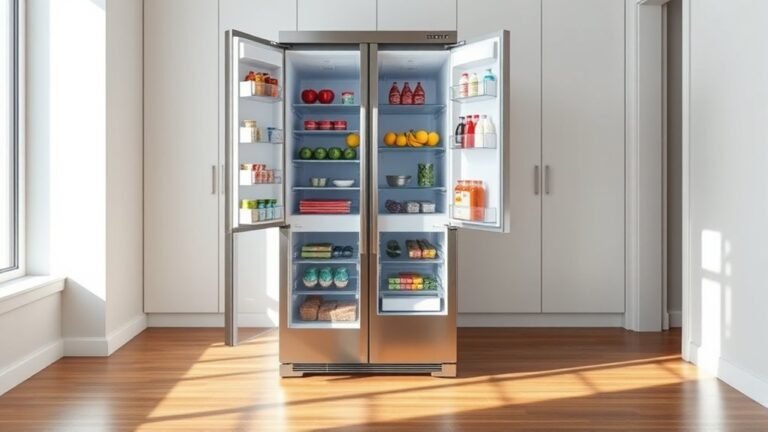
French door models offer versatile layouts, with wide shelves and spacious freezer drawers that make organizing large items a breeze.
Side-by-side fridges have narrow doors that fit well in tight spaces, but their vertical layout can limit how you store wider items.
Top freezer refrigerators are compact and often take up less floor space, making them great for smaller kitchens.
When picking a fridge, think about how each design matches your kitchen’s size and your storage needs.
French door and side-by-side models focus on easy access and organization, while top freezers maximize space savings.
Matching your fridge style to your kitchen layout helps you make the most of your space.
Energy Consumption Comparison
Although each refrigerator style offers unique benefits, their energy consumption varies a lot, affecting your utility bills and environmental impact. Knowing the energy use trends can help you pick the best option.
French Door models tend to use more energy because they’re bigger and have multiple doors. But recent innovations have made them more efficient.
Side-by-Side fridges use moderate energy. Their design makes it easy to organize, but opening the doors can cause cold air to escape.
Top Freezer units usually have the lowest energy consumption. They’re simpler mechanically and have smaller capacity, which helps save energy.
Best Energy Efficient Refrigerators Under $1000
If you want to save on energy bills without breaking the bank, there are plenty of efficient refrigerators priced under $1000 that deliver solid performance. When exploring budget options, you’ll find models from trusted brands like Whirlpool, Frigidaire, and GE offering energy-efficient features without sacrificing quality.
Comparing these brands, Whirlpool often leads with reliable compressors and good insulation, while Frigidaire focuses on user-friendly designs and smart cooling technology. GE models tend to balance energy efficiency with spacious interiors.
Look for ENERGY STAR-certified units to guarantee you’re getting the best efficiency. Also, consider size and style to match your household needs. By focusing on reputable brands and their budget options, you can find a refrigerator that cuts energy use and keeps your costs down.
With smart brand comparisons, you’ll get the most value for your money under $1000, making energy savings both accessible and affordable.
Premium Energy Efficient Refrigerators to Consider
Thinking about upgrading to a premium energy-efficient refrigerator? Well, you’re in for some pretty cool benefits! These models come packed with advanced cooling technologies that help keep your food fresher for longer, so you don’t have to worry about spoilage as much.
Plus, many of them have that Energy Star certification. What does that mean? Basically, they use less power, which is good for your wallet and the environment—without sacrificing any performance or features. Let’s take a closer look at what makes these refrigerators stand out and why they might be worth considering for your home.
Features of Premium Models
Because premium energy-efficient refrigerators combine cutting-edge technology with sleek design, they offer features that go beyond basic cooling. When you choose a premium model, you get energy-saving features that help lower your utility bills without sacrificing performance. These refrigerators use advanced insulation technology to keep temperatures steady while reducing energy loss.
Here are three standout features you’ll find in premium models:
- Smart temperature controls that automatically adjust cooling based on how you use the fridge.
- Multi-zone compartments that let you customize storage for different types of food.
- Energy-efficient compressors that optimize power use without making noise.
Together, these features keep your food fresher longer and cut down on energy use. That makes a premium refrigerator a smart choice for your home.
Energy Star Certification Benefits
Energy Star certification shows that a refrigerator meets strict energy-efficiency guidelines set by the EPA, helping you save money and reduce your environmental impact.
Choosing an Energy Star-certified model means you’ll see significant energy savings compared to standard refrigerators. This results in lower utility bills and less strain on natural resources.
These refrigerators use advanced insulation and efficient compressors to perform at their best without wasting electricity.
Besides saving you money, Energy Star units help reduce environmental impact by supporting cleaner air and fewer greenhouse gases.
Opting for an Energy Star-certified fridge isn’t just good for your wallet — it’s a responsible choice for the planet.
It’s a win-win that keeps your kitchen efficient and eco-friendly.
Advanced Cooling Technologies
Choosing a refrigerator with advanced cooling technologies can take your energy savings and food preservation to the next level. These refrigerators use smart cooling systems that adjust temperature and humidity for maximum freshness while reducing energy use.
Plus, many models incorporate eco-friendly materials that minimize environmental impact without sacrificing performance. Here are three features to look for:
- Multi-zone cooling: Independently controls compartments for better temperature management.
- Adaptive smart cooling: Learns usage patterns to enhance energy efficiency.
- Eco-friendly insulation: Uses sustainable materials that improve thermal retention.
Key Energy-Saving Technologies in Refrigerators
Many innovations in refrigerators have drastically cut power consumption while maintaining performance. One key technology is smart cooling, which adjusts temperature and humidity based on the contents and usage patterns. This precision cooling reduces energy waste and keeps your food fresher longer.
Manufacturers also use eco-friendly materials in insulation and components, which improves thermal efficiency and lowers environmental impact. These materials help maintain consistent temperatures without demanding extra power.
Eco-friendly insulation and components boost thermal efficiency, reduce power use, and minimize environmental impact.
Other energy-saving features include inverter compressors that adjust their speed to meet cooling needs efficiently. LED lighting consumes less electricity and generates minimal heat. Door alarms and improved door seals prevent cold air from escaping, so the fridge doesn’t work harder than necessary.
When you choose a refrigerator with these technologies, you’re investing in lower energy bills and a smaller carbon footprint—without sacrificing convenience or performance.
How Size and Capacity Impact Energy Use
When picking out a refrigerator, it’s a good idea to go for a size that fits your needs. You don’t want to end up with a big fridge that has lots of empty space because that can actually waste energy. Think about how much storage you really need so you’re not cooling empty space that just uses up power.
Larger fridges tend to use more energy, but the good news is that some models are designed to be more efficient. So, a bigger fridge doesn’t always mean a huge jump in energy use if it’s built smartly. Getting a fridge that balances size and efficiency can really help you save on energy bills while still giving you enough room for your groceries.
Understanding how the way a fridge is designed and how much space it uses impacts its energy consumption can help you make a smarter choice when shopping.
Optimal Refrigerator Dimensions
Selecting the right refrigerator size can really help cut your energy bills. When choosing dimensions, think about how the unit fits in your kitchen’s space and how it promotes a good layout.
A well-sized fridge prevents wasting energy on excess cooling volume or cramped interiors. Keep these tips in mind:
- Measure your available refrigerator space carefully to avoid models that are too big and use more power.
- Pick dimensions that allow easy access and good airflow around the unit, which boosts efficiency.
- Make sure the fridge’s height and width fit your kitchen layout so you don’t sacrifice functionality or energy use.
Capacity Versus Energy Use
How does the size and capacity of your refrigerator affect its energy consumption? Simply put, bigger refrigerators usually consume more energy, but that doesn’t mean you should pick the smallest model.
Proper capacity planning is key. If you choose a fridge too large for your needs, you’ll waste energy cooling unused space. On the other hand, a fridge that’s too small may lead to overcrowding, forcing it to work harder to maintain temperature, which also increases energy use.
To maximize energy savings, pick a refrigerator that comfortably fits your household’s food storage requirements without excess space. Efficient capacity planning helps you avoid paying for energy you don’t need, keeping your utility bills low while ensuring your food stays fresh.
Space Efficiency Considerations
Finding the right balance between size and capacity is just the start when considering energy efficiency in refrigerators. You want a fridge that fits your space without wasting energy on unused volume. Here’s how to think about space efficiency:
- Choose compact designs that suit your kitchen layout. Smaller fridges use less energy but still need smart storage solutions to maximize space.
- Avoid oversized models, which consume more power to cool empty space. Pick a size that matches your household needs.
- Look for adjustable shelving and door bins so you can organize items efficiently and reduce the need to open the door often, saving energy.
Maintenance Tips for Energy Efficient Refrigerators
Although energy-efficient refrigerators are designed to save power, you’ll get the best results by maintaining them properly. Start by adopting energy-saving habits like keeping the door closed as much as possible and setting the temperature to the manufacturer’s recommended levels.
Regularly clean the condenser coils. Dust buildup forces your fridge to work harder, which increases energy use. Routine inspections help you catch issues early; check door seals for cracks or gaps that let cold air escape. Replace faulty seals promptly to keep efficiency high.
Also, defrost manual-defrost models before ice buildup exceeds a quarter-inch. Excess frost reduces cooling efficiency. Keep your fridge level to ensure proper door sealing and compressor function. Lastly, avoid placing hot or warm food inside since it makes the compressor run longer.
Where to Find the Best Energy Efficient Refrigerator Deals
Maintaining your energy-efficient refrigerator well can save you money over time, but getting a great deal upfront also makes a big difference. To find the best energy-efficient refrigerator deals, you’ll want to explore several options that combine savings with quality.
Check online discounts on websites like Amazon, Home Depot, and Best Buy. They often have exclusive online deals on energy-efficient models. Signing up for their newsletters can give you early access to sales.
Don’t forget about local appliance stores. They often run seasonal promotions or clearance sales, especially during holidays, which can really save you money.
Using price comparison tools like apps and browser extensions can help you compare prices across different retailers in real time. This way, you ensure you’re getting the lowest price on your preferred refrigerator.
Frequently Asked Questions
How Does Refrigerator Placement Affect Its Energy Efficiency?
Your refrigerator’s placement directly impacts its energy efficiency because proper spacing around the unit helps with airflow.
When you leave enough space between the fridge and walls or cabinets, heat can escape easily from the coils. This allows the compressor to work less and run more efficiently.
If you crowd the fridge or block vents, it struggles to cool properly, which wastes energy.
Can Energy-Efficient Refrigerators Reduce Food Spoilage?
Think of an energy-efficient refrigerator as a vigilant guardian for your groceries. Yes, it can reduce food spoilage by keeping temperatures steady enough to preserve your food better.
Thanks to advanced technology, these fridges minimize temperature fluctuations, so your fruits and veggies stay fresher longer. Plus, you’ll save energy and cut costs on your bills.
What Is the Average Lifespan of an Energy-Efficient Refrigerator?
You can expect an energy-efficient refrigerator to last about 10 to 20 years. To get the most out of its lifespan, make sure to follow some basic maintenance tips like cleaning the coils regularly and checking the door seals.
Doing these simple things helps your fridge run smoothly and also boosts energy savings by lowering power use. Remember, keeping up with proper care can help you avoid costly repairs and keep your appliance efficient.
In turn, this saves you money and reduces waste over time.
Are There Tax Credits or Rebates for Buying Energy-Efficient Refrigerators?
You might think tax incentives for energy-efficient refrigerators are rare, but they’re actually available in many areas. You can often qualify for rebates or tax credits that help offset the initial cost.
These benefits reward you for energy savings and reduce your overall expenses. Check with local utility companies or government programs to see what’s offered.
Taking advantage of these incentives makes upgrading your fridge smarter and more affordable.
How Do Energy-Efficient Refrigerators Perform in Different Climate Zones?
Energy-efficient refrigerators perform well across different climate zones by adjusting their temperature controls to reduce climate impact.
In hot areas, these models work harder but use advanced insulation and compressors to stay efficient.
In cooler climates, they run more smoothly, helping you save energy.
You’ll notice consistent cooling without spikes in power use, saving you money and helping the environment no matter where you are.
Conclusion
Choosing the right energy-efficient refrigerator means saving money, reducing your carbon footprint, and keeping your food fresh longer. Focus on features that matter, compare styles that fit your space, and understand Energy Star ratings to make smart decisions.
Prioritize size, technology, and maintenance to boost efficiency. Whether you’re shopping on a budget or hunting for the latest innovations, stay informed, stay savvy, and stay green to enjoy the best fridge for your home and wallet.
In the end, selecting an energy-efficient refrigerator helps you save energy, cut costs, and enjoy fresher food every day.