Stove Burner Replacement Guide: What to Know Before You Buy
Are you tired of dealing with a burner that just won’t light or heats unevenly? You’re not alone—many people struggle with replacing stove burners and getting their kitchen back in top shape.
Finding the right fit can feel overwhelming, but don’t worry, we’re here to help.
Before replacing your stove burner, identify whether you have gas or electric, measure the burner diameter accurately, and check compatibility with your stove model for a perfect fit.
Consider burner wattage to match your cooking needs, and choose between OEM or aftermarket parts based on quality and budget.
Gather essential tools and follow safety steps when removing and installing burners.
If you want to master troubleshooting and maintenance for lasting performance, keep exploring what’s ahead.
Key Takeaways
- Identify your stove burner type (electric or gas) and measure its diameter accurately for a proper fit and even heat distribution.
- Consider gas burners for quick, precise heat, or electric burners for consistent, low-maintenance performance.
- Verify your stove model’s compatibility and check the burner wattage to match your cooking needs and ensure efficient operation.
- Choose OEM burners for guaranteed fit and quality, or opt for aftermarket ones to save money, but keep in mind they might have fit issues.
- Follow safety steps during installation, troubleshoot ignition problems, and maintain burners regularly to extend their lifespan.
How to Identify Your Stove Burner Type
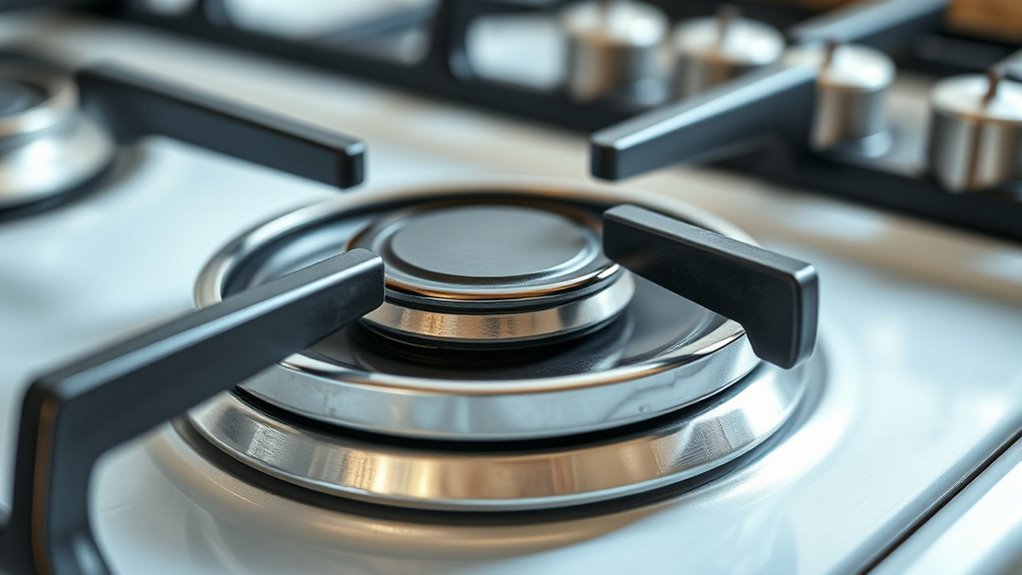
How can you quickly tell which stove burner type you have? First, take a close look at the burner materials and designs.
Most electric burners have coil elements made of metal, often exposed or covered by a smooth ceramic glass surface. Gas burners usually have metal rings with holes where the flame appears.
The materials used differ too: electric coils are often nickel-chromium, while gas burners use cast iron or steel. Burner designs also vary—electric burners tend to have flat or spiral coils, whereas gas burners show a circular or star-shaped pattern with visible gas ports.
Electric coils are nickel-chromium with flat or spiral designs; gas burners use cast iron or steel with star-shaped patterns.
You can also check the control knobs. Electric stoves often have settings like “warm” or “high,” while gas stoves adjust the flame size.
Gas vs. Electric Stove Burners: Which One Is Right for You?
Why choose between gas and electric stove burners? Your decision depends on your cooking style and your kitchen setup.
Gas burners provide excellent gas efficiency and superior heat distribution, giving you precise control over temperatures. They heat up quickly, making them great for searing and simmering.
Electric burners offer consistent performance and often last longer because they have fewer exposed parts. They’re easier to clean and can save energy in homes with efficient electric systems.
When it comes to installation, gas burners need access to a gas line and proper ventilation. Electric burners require a compatible outlet and sometimes a dedicated circuit.
If you like quick temperature adjustments and a traditional cooking feel, gas might be your best choice. If you want low maintenance and steady heat, electric is a solid option.
Think about your kitchen’s infrastructure and your cooking needs to decide which stove burner fits best.
Measuring Burner Size for the Perfect Fit
Choosing the right burner size is key to making sure your stove works efficiently and safely. To measure your burner, take it out and use a ruler or tape measure to find the diameter across its widest part.
Keep in mind that burner materials and styles can cause slight size differences, so measure carefully. Different styles, like sealed or open burners, may have their own sizing standards.
Here’s a quick guide for common burner sizes:
| Burner Style | Typical Diameter (inches) | Common Burner Materials |
|---|---|---|
| Open Burner | 6, 8, 9 | Cast Iron, Aluminum |
| Sealed Burner | 7, 9, 10 | Stainless Steel, Brass |
| Radiant Burner | 6, 8 | Ceramic, Steel |
Use these measurements to find a replacement that fits perfectly. This helps ensure good heat distribution and safety.
Checking Stove Burner Compatibility With Your Model
Want to make sure your new burner fits just right? First, find out what model your stove is. Once you’ve got that, take some careful measurements of the burner itself to see if it matches. And don’t forget to check the connection type — that’s key to making sure everything works smoothly with your stove.
Identify Your Stove Model
How do you guarantee your new stove burner fits perfectly? Start by identifying your stove model accurately. This step is essential because different models have unique burner configurations and specifications.
Use stove identification tips like checking the label usually found on the stove’s frame, inside the oven door, or at the back. The model number is your key to finding exact replacement parts.
Once you have this number, you can search for compatible burners online or contact the manufacturer directly. Avoid guessing or using generic parts because mismatched burners can cause poor performance or safety hazards.
Taking the time to identify your stove model correctly will ensure a smooth replacement process and help your stove operate safely and efficiently.
Measure Burner Dimensions
Measuring your stove burner’s dimensions accurately is key to making sure it fits your model properly. Start by removing the existing burner and use a ruler or tape measure to record its diameter and height.
Be sure to check the size of both the burner cap and base separately, since these parts can vary by design. Different materials like aluminum or steel might also slightly affect the fit, so keep that in mind.
Getting precise measurements helps prevent buying a burner that’s too big or too small, which could lead to poor performance or safety issues. When you’re ready to install, follow the tips carefully to ensure a secure fit without damaging any components.
Taking these steps will help you confirm that your replacement burner matches perfectly and works efficiently.
Check Connection Type
Before you buy a replacement burner, check the connection type to make sure it matches your stove model. Different stoves use different connection types, like plug-in, clip-on, or screw-in burners.
Identifying your stove’s specific connection type helps ensure the burner will fit and work properly. Take a close look at how your current burner attaches to the stove.
If you can, check your stove’s manual or visit the manufacturer’s website for details on compatible burner types and connection styles.
Using the wrong connection type can cause loose fittings or electrical hazards. By confirming the connection type beforehand, you save time and avoid frustration during installation.
Always prioritize burner compatibility to keep your stove functioning safely and efficiently.
How Burner Wattage Affects Heat and Efficiency
When you’re looking at burners, it’s important to consider their wattage because it directly influences how much heat they generate. Basically, the higher the wattage, the faster your food will cook. But here’s the thing—higher wattage can also mean it uses more energy, which might not be ideal if you’re trying to be energy-efficient.
Finding the right balance is key. You want a burner that gives you enough heat for your cooking needs without gobbling up too much power. So, understanding how wattage affects both heat output and energy consumption can help you pick a burner that’s just right for your kitchen and your goals.
Wattage and Heat Output
Three key factors determine how well a stove burner performs: its wattage, heat output, and efficiency. The wattage directly affects how much heat the burner produces. Higher wattage means more power, which leads to faster heating and higher temperatures. This is especially useful when you need to boil water quickly or sear meat.
Heat distribution is just as important. A burner with even heat ensures your food cooks uniformly without hot spots or cold patches. When choosing a replacement burner, consider both the wattage rating and how well it spreads heat across your cookware. This combo influences your cooking speed and results. Knowing these details helps you pick a burner that suits your cooking style and needs.
Efficiency and Energy Use
Although higher wattage burners heat up faster, they don’t always use energy more efficiently. When choosing a burner, think about how wattage affects both cooking and energy savings.
Higher wattage means quicker heating but can waste energy if you don’t control the heat properly. Lower wattage burners take longer but use energy more steadily.
Here’s how wattage impacts efficiency:
- High wattage delivers rapid heat, making it great for boiling or searing.
- Medium wattage offers balanced cooking with moderate energy use.
- Low wattage is perfect for simmering and slow cooking, helping you conserve energy.
Using the right wattage for your cooking task helps maximize energy savings and performance.
OEM vs. Aftermarket Burners: Pros, Cons, and Costs
When choosing between OEM and aftermarket burners, you’ll want to carefully consider the pros and cons of each option.
OEM advantages include guaranteed compatibility, better material quality, and reliable performance. They help ensure your stove works as it should and often come with better warranty coverage, giving you peace of mind if something goes wrong.
OEM burners offer guaranteed compatibility, superior materials, reliable performance, and enhanced warranty coverage for peace of mind.
On the flip side, aftermarket burners can be attractive because they usually cost less upfront. However, they might have inconsistent material quality and fit issues, which could impact your stove’s efficiency or safety.
Cost is a big factor in your decision. OEM burners tend to be more expensive, but their durability and warranty can make them a worthwhile investment.
In terms of performance, OEM parts generally outperform aftermarket options when it comes to longevity and steady heat output.
In the end, choosing between OEM and aftermarket burners comes down to balancing cost, quality, and how much you rely on long-term reliability, all based on your needs and budget.
Tools You Need and Safety Tips for Removing Burners
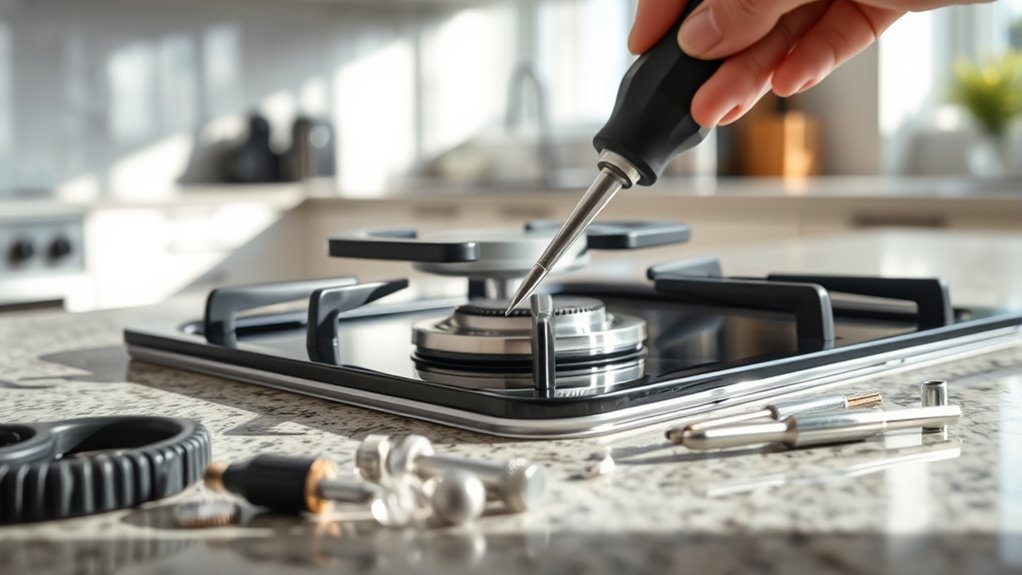
After deciding between OEM and aftermarket burners, the next step is gathering the right tools and following safety precautions to remove your old burners properly. Using proper removal techniques helps you avoid damage or injury. Before starting, unplug your stove or switch off the gas supply to prevent accidents.
Here are four essential tools you’ll need:
- Screwdriver (Phillips and flathead) to remove screws holding burners or drip pans.
- Pliers to grip and twist connectors or clips.
- Socket wrench for stubborn bolts securing burner components.
- Cleaning cloth to wipe away grease and debris during removal.
Always wear gloves and eye protection as part of safety precautions. Avoid rushing the removal steps; gently detach components to prevent breaking delicate parts or causing gas leaks. By preparing with the right tools and respecting safety tips, you’ll make burner removal smooth and safe.
How to Install a New Burner Step-by-Step
Installing a new burner involves five clear steps to ensure a secure fit and proper function. First, identify the burner type to confirm compatibility. Next, disconnect power or gas supply for safety.
Remove the old burner carefully, then position the new one in place. Finally, reconnect power or gas and test the burner for proper operation.
Here’s a quick table with essential installation tips for different burner types:
| Burner Type | Installation Tips |
|---|---|
| Electric Coil | Align terminals carefully; avoid bending |
| Glass-Ceramic | Handle with care to prevent cracking |
| Gas Burner | Check for gas leaks; tighten connections |
Following these steps and tips will help you install your new burner smoothly and safely. Be sure to double-check connections and test the burner before regular use.
This method works well for all common burner types, making your replacement process easier.
Troubleshooting Burner Replacement Problems
Although replacing a stove burner is usually straightforward, you might encounter some common issues that can slow things down. Knowing these troubleshooting tips can save you time and frustration.
Here are four common replacement problems to watch for. First, if the burner won’t ignite, check that it’s seated correctly and that the igniter is clean and properly aligned.
Watch for ignition issues by ensuring the burner is properly seated and the igniter is clean and aligned.
Second, if you notice an uneven flame or weak heat, make sure the burner ports aren’t clogged with debris or food residue. Third, if the burner clicks but doesn’t light, inspect the spark module and wiring for any damage or loose connections.
Finally, if a new burner doesn’t fit properly, double-check that you purchased the correct model and size for your stove.
How to Maintain Your New Stove Burner for Long Life
Once your new burner is installed and working properly, keeping it in good shape will help it last longer and perform better. Start with regular cleaning to prevent grease and food debris buildup, which can block gas flow and reduce efficiency. Use a soft brush or cloth and steer clear of harsh chemicals that could damage the surface.
Next, pay attention to your heat settings. Avoid using the highest setting all the time, as excessive heat can wear down parts faster. Instead, adjust the flame to fit your cooking needs—medium or low settings often work just fine and help extend the burner’s life.
Make sure to turn off burners completely after use. This prevents unnecessary wear and keeps everything in good working order. Finally, schedule occasional deep cleaning and check for any signs of damage or clogging.
Frequently Asked Questions
Can I Replace Stove Burners Myself or Should I Hire a Professional?
You can replace stove burners yourself if you’re comfortable with basic tools and understanding the different burner types. Just make sure you identify whether you have coil, sealed, or gas burners.
Follow installation tips carefully to avoid any damage or safety hazards. If you’re not confident about handling electrical or gas connections, it’s best to hire a professional.
They’ll make sure the replacement is done correctly and safely, saving you time and potential risks.
How Long Does a Typical Stove Burner Replacement Take?
Replacing a stove burner usually takes about 30 to 60 minutes. For example, Jamie swapped out a faulty burner in 45 minutes, balancing careful installation with checking connections.
Your installation time depends on your stove model and how comfortable you are with the process. Keep in mind, the cost to replace a burner varies based on the type and whether you hire a professional.
Doing it yourself can save you money, but it might take longer if you’re not familiar with the steps.
Are Replacement Burners Covered by Warranty?
Yes, replacement burners often come with warranty terms, but it’s important to check the details before you buy.
Warranty coverage usually depends on the manufacturer and retailer policies. Make sure the burner is compatible with your stove model to avoid voiding the warranty.
If you buy a compatible burner and keep your proof of purchase, you’ll be protected against defects or malfunctions during the warranty period.
Always read the fine print carefully to understand what’s covered and any exclusions.
What Are Common Signs That Indicate Burner Replacement Is Needed?
You’ll know it’s time for burner replacement when your burner seems to be reaching the end of its lifespan, usually after years of use.
Look out for uneven heating, burners that refuse to ignite, or visible damage like cracks or corrosion. These signs can affect your cooking and also pose safety risks.
Issues like gas leaks or electrical problems can be serious. If you notice any of these signs, replacing your burner quickly will help keep you safe and ensure your stove works efficiently.
Can Burner Replacement Improve My Stove’s Energy Efficiency?
Replacing your stove burner can be like giving your kitchen a new heartbeat. Yes, it can improve energy efficiency. Upgrading to newer burner types often means better energy savings because modern designs distribute heat more evenly and waste less fuel.
Conclusion
Replacing your stove burner is easier than you might think when you know what to look for. Did you know that 70% of stove issues come from burner problems?
Choosing the right type, size, and wattage ensures better cooking and energy efficiency. Follow safety tips and measure carefully to avoid any hassles.
With proper installation and regular maintenance, your new burner can deliver reliable performance for years to come. When it comes to stove burner replacement, knowing what to look for makes all the difference.