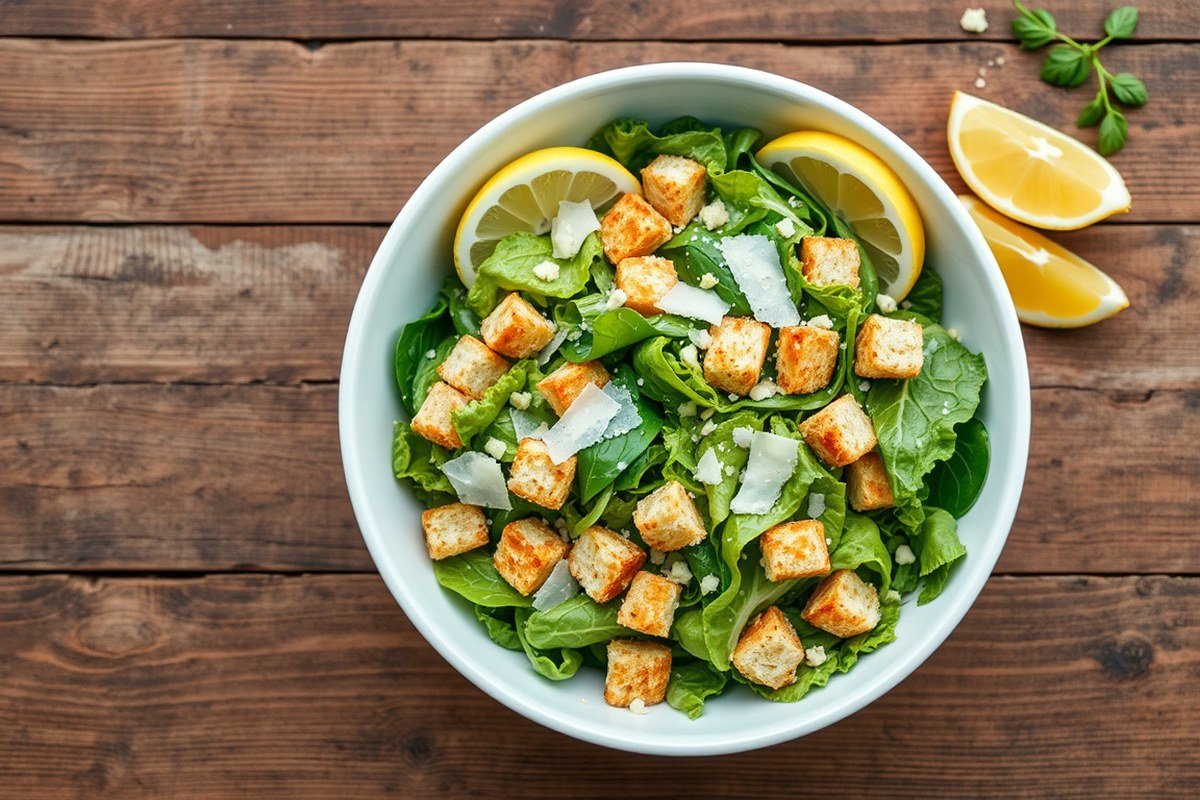
How to Make a Caesar Salad with Classic Dressing and Homemade Croutons
How to make a Caesar salad starts with fresh Romaine lettuce, a creamy classic dressing, and homemade Parmesan croutons. You can craft this flavorful salad in 15-20 minutes using pantry basics and simple steps. The result is a crisp, tangy, and satisfying dish that works as a side or a light meal.
This guide is for home cooks aiming to master a traditional Caesar salad with an authentic dressing and perfectly toasted croutons. You’ll learn how to prepare each component safely and how to customize the salad to your taste, including variations without anchovies and tips for keeping ingredients fresh.
Key Takeaways
- Use crisp Romaine lettuce for the freshest, crunchiest Caesar salad base.
- Make the dressing from scratch up to 3 days ahead and refrigerate in an airtight container.
- Oven-bake sliced baguette with Parmesan for 10-12 minutes to create flavorful croutons.
- Substitute anchovies with finely chopped capers or Kalamata olives to omit fish flavor.
- Keep homemade croutons fresh for up to 2 days by storing them in an airtight container at room temperature.
- Combine umami-rich ingredients like garlic, Parmesan, and anchovies for authentic dressing taste.
How to Make Classic Caesar Salad Step-by-Step

Preparing a classic Caesar salad involves careful handling of the romaine lettuce, proper assembly to keep everything crisp, and mixing the dressing and croutons at the right moment for balanced texture and flavor. Quality romaine lettuce should be fresh and firm, as its sturdy leaves hold up well under the creamy dressing. Taking the time to wash and dry the leaves thoroughly prevents sogginess and ensures a crisp salad. Adding dressing too early or in excess can wilt the leaves and reduce the crunch you want in a Caesar salad. Here is a step-by-step approach to help you prepare and assemble your salad cleanly and effectively, ideal for last-minute plating or impressing guests.
- Wash and dry the romaine lettuce. Rinse the leaves under cold running water to remove dirt and grit. Use a salad spinner or pat the leaves dry gently with paper towels to remove as much moisture as possible. Excess water dilutes the dressing and leads to sogginess.
- Tear the lettuce into bite-sized pieces. Avoid cutting with a knife, which can bruise the leaves. Instead, tear leaves into roughly 2-inch pieces to preserve their crispness and allow the dressing to coat evenly.
- Place the lettuce in a large mixing bowl. Choose a bowl big enough to toss without spilling. This helps distribute the dressing uniformly.
- Add the Caesar dressing gradually and toss gently. Pour a few tablespoons of dressing over the lettuce and use salad tongs or clean hands to toss lightly. Add more dressing only if necessary. Dressing should coat the leaves thinly, allowing the crisp texture to remain.
- Mix in freshly made or store-bought croutons just before serving. Croutons added too soon will absorb moisture and lose their crunch. Toss croutons with the dressed lettuce right before plating for the best texture contrast.
- Sprinkle freshly grated Parmesan cheese over the top. Parmesan adds sharp, salty flavor and a fine texture that complements both the creamy dressing and crunchy croutons. Add about 1/4 cup per serving, or to taste.
- Toss the salad lightly once more before serving. This brief final toss ensures even coating of all ingredients without crushing the leaves or croutons. Serve immediately.
Ingredients Needed for Classic Caesar Salad and Variations

A classic Caesar salad starts with a handful of simple ingredients that come together to create its distinct, rich flavor. The foundation includes crisp Romaine lettuce, homemade Caesar dressing with anchovies, garlic, lemon, and freshly grated Parmesan cheese. Variations let you swap in substitutes for anchovies, choose different oils or cheeses, and customize the salad for your tastes or dietary needs.
Classic Key Ingredients Explained
The core of a traditional Caesar salad is straightforward: Romaine lettuce, croutons, a creamy anchovy-based dressing, and Parmesan cheese. Romaine provides the crispy, fresh texture essential to the salad. Croutons add a crunchy contrast, usually made from day-old bread toasted with olive oil and garlic. The dressing combines raw egg yolks, garlic, anchovies, lemon juice, Worcestershire sauce, and extra-virgin olive oil, creating a creamy, umami-rich coating that defines the dish.
Make sure to use fresh lemon juice for brightness and freshly grated Parmesan for an authentic salty, nutty flavor. Anchovies give the dressing its signature savory depth, and the raw egg yolk enriches the texture but requires caution and fresh eggs to avoid food safety concerns. Homemade croutons and dressing made in about 15-20 minutes improve the salad well above store-bought versions.
- Romaine lettuce, washed and chopped
- Homemade croutons from crusty bread
- Raw egg yolks for creamy dressing
- Anchovy fillets or anchovy paste
- Fresh garlic cloves, mashed or minced
- Lemon juice, freshly squeezed
- Extra-virgin olive oil
- Freshly grated Parmesan cheese
- Worcestershire sauce and black pepper for seasoning
Use fresh eggs from a trusted source and keep the dressing refrigerated if not serving immediately to minimize food safety risks.
Anchovy Substitutes and Their Flavors
Anchovies are a hallmark of Caesar salad dressing, providing umami and complexity. If you prefer to omit them due to taste or dietary reasons, there are a few effective substitutes. Finely chopped capers or kalamata olives each provide salty, briny notes that mimic anchovies’ impact on the dressing. For measurement, 1 tablespoon of chopped capers or olives can replace one anchovy fillet.
Anchovy paste offers a convenient alternative. Generally, one anchovy fillet equals about ½ teaspoon of anchovy paste, but be mindful paste may taste somewhat different and usually requires tasting and adjusting quantities. The table below compares these common substitutions.
| Substitute | Amount per 1 Anchovy Fillet | Flavor Profile | Notes |
|---|---|---|---|
| Anchovy Paste | ½ teaspoon | Savory, salty, slightly milder than fillets | Adjust amount to taste; paste blends easily |
| Capers (finely chopped) | 1 tablespoon | Salty, tangy, briny | Add texture; good in vegetarian versions |
| Kalamata Olives (finely chopped) | 1 tablespoon | Rich, salty, fruity | Strong flavor; adjust quantity to avoid overpowering |
| Omission | N/A | Less umami depth | Recommended to add lemon or Worcestershire sauce to compensate |
Recommended Oils and Cheeses
Extra-virgin olive oil is the preferred choice for Caesar salad dressing because it offers a fruity, peppery flavor that complements the salty and tangy elements. Avoid lighter or neutral oils like canola or vegetable oil, which don’t contribute much to the dressing’s taste. In some variations, a blend of olive oil and a mild-flavored oil works to balance richness and smoothness.
For cheese, freshly grated Parmesan is standard. It lends a sharp, nutty taste and a creamy texture when incorporated into the dressing. Avoid pre-grated or processed cheese, which lacks the fresh flavor and can affect the salad’s texture. Pecorino Romano makes an interesting alternative with a stronger, saltier profile, but Parmesan remains the classic choice.
How to Make Authentic Caesar Salad Dressing Safely
Making traditional Caesar salad dressing involves raw egg yolks that give it a rich texture and anchovies for its distinctive savory flavor. To prepare it safely, use pasteurized eggs to reduce risk. If you prefer to avoid raw eggs, substituting mayonnaise keeps the dressing creamy but changes the flavor slightly. Balancing the right thickness and seasoning comes down to emulsifying well and tasting as you go.
Traditional Dressing Ingredients and Method
The core ingredients for authentic Caesar dressing are anchovies, raw egg yolks, garlic, lemon juice, Worcestershire sauce, Dijon mustard, and freshly ground black pepper. Anchovies provide umami depth, while egg yolks emulsify the oil and other liquids to create a creamy, clingy texture that coats the lettuce perfectly. Using pasteurized egg yolks lowers the risk of foodborne illness without altering the texture.
Prepare the dressing by blending the ingredients in a specific order to maximize emulsification and flavor blending. A blender or food processor works best to mince garlic finely and bind oil into the egg yolks thoroughly. The final product should be thick enough to coat leaves without dripping off or feeling greasy.
- Add two pasteurized egg yolks, 1 teaspoon Dijon mustard, and 2 finely chopped anchovy fillets or 1 teaspoon anchovy paste to a blender.
- Include 1 clove of minced garlic, 2 tablespoons fresh lemon juice, 1 teaspoon Worcestershire sauce, and a pinch of freshly ground black pepper.
- Blend briefly to combine, then slowly drizzle in 1/2 cup extra virgin olive oil while the blender runs to emulsify the dressing.
- Stop blending and taste; adjust lemon juice or seasoning as needed for brightness and balance.
- Transfer the dressing to a bowl and cover until ready to use to keep flavors fresh and ingredients stable.
Safe Replacements for Raw Egg Yolks
Raw egg yolks deliver the classic creamy texture, but if you’re worried about safety, swap each yolk for 1 tablespoon of mayonnaise. This shortcut maintains smoothness but tends to reduce the dressing’s richness and depth slightly. Mayonnaise also changes the dressing from a vinaigrette style toward a thicker, creamier consistency.
For those avoiding anchovies, use a smaller amount of Worcestershire sauce and add a dash of soy sauce or capers to preserve some savory flavor. Keep in mind these adjustments create a different taste profile than the traditional dressing.
Pasteurized egg yolks are sold in many grocery stores in small cartons, costing a few dollars more than fresh eggs. Using them allows you to keep the original recipe intact with reduced health risks.
Tips for Adjusting Flavor and Thickness
Achieving the right consistency hinges on steady emulsifying while adding olive oil gradually. Pour the oil in a slow, thin stream into the running blender or whisk vigorously by hand to prevent breaking the emulsion. A properly emulsified dressing looks thick, smooth, and glossy.
Balance acidity with lemon juice and tanginess with Worcestershire sauce and mustard. Start with measured amounts, then adjust to taste since citrus brightness and saltiness affect flavor markedly. Adding pepper last helps preserve its fresh bite.
Store leftover dressing in the refrigerator for up to 2 days, stirring before use if oil separates. Avoid making too far in advance to maintain peak texture and flavor.
Making Perfect Homemade Croutons for Caesar Salad
Choosing the right bread and preparing it properly makes all the difference in homemade croutons that perfectly complement a Caesar salad. A country-style bread or a day-old baguette cut into 1-inch cubes works best. These bread types have sturdy crusts and a good crumb that hold up well during baking, yielding crunchy croutons without becoming too hard or dry inside.
Even seasoning and careful baking ensure each crouton gets crisp and evenly golden with a tasty garlic and olive oil coating. Overcrowding the pan causes uneven baking, so spread the bread pieces in a single layer on the baking sheet. Baking at 350˚F for 10-12 minutes allows gentle toasting that produces crunch without burning. Tossing the bread in 3 tablespoons of extra-virgin olive oil per 3 cups of bread and seasoning with kosher salt and freshly ground pepper adds flavor without making them greasy.
Keeping croutons crunchy after baking requires cooling them completely before storage and using an airtight container at room temperature. Moisture is the enemy of crispness, so avoid storing croutons in the fridge where humidity softens them. Baking croutons 1 to 2 days ahead makes mealtime easier without sacrificing freshness.
- Slice the bread: Cut 3 to 4 thick slices (about 1-inch thick each) of day-old country-style bread or baguette. Cube into roughly 1-inch pieces, keeping the crusts intact for texture.
- Toss with oil and seasoning: Place the bread cubes in a large bowl. Add 3 tablespoons of extra-virgin olive oil, 1 teaspoon kosher salt, and ½ teaspoon freshly ground black pepper. Toss until all pieces are evenly coated.
- Spread on baking sheet: Arrange the bread cubes in a single layer on a rimmed baking sheet. Avoid crowding to help heat circulate evenly.
- Bake at 350˚F: Place the baking sheet in a preheated oven. Bake for 10 to 12 minutes, stirring once halfway through, until croutons are golden and crisp but not burnt.
- Cool completely: Remove the croutons from the oven and let them cool fully on the baking sheet to lock in crunchiness.
- Store properly: Transfer the cooled croutons to an airtight container. Keep at room temperature and use within 1 to 2 days for best texture.
For variation, mince 1 to 2 cloves of garlic and sauté briefly in the olive oil before tossing with the bread. This adds a deeper garlic flavor to the croutons. To keep croutons crisp longer, consider baking them slightly longer until very dry but keep an eye to prevent burning. Adding dried herbs like thyme or rosemary with the salt and pepper offers a fragrant twist.
Choosing and Preparing Lettuce for the Crispest Salad
Romaine lettuce is preferred for Caesar salad because of its firm, crisp leaves that hold up well to the creamy dressing without wilting quickly. The texture adds crunch, while the mild yet slightly bitter flavor balances the salad’s rich ingredients. Look for romaine heads that feel dense and heavy for their size with dark green outer leaves and lighter inner leaves, avoiding any with brown spots or limp edges.
Washing romaine properly is key to a fresh-tasting salad and to avoid watery leaves that dilute the dressing. Start by discarding any wilted outer leaves. Rinse the heads under cold running water, gently separating the leaves to remove dirt and grit. After washing, use a salad spinner to dry the leaves thoroughly. Excess moisture causes the dressing to slide off instead of sticking to the leaves and makes the lettuce soggy. Spin the lettuce until no visible water remains. For best results, you can wash and spin the lettuce up to three days ahead, then keep it stored properly to maintain crispness.
To store washed and dried romaine, place the leaves in an airtight container or a resealable plastic bag with a clean paper towel to absorb any remaining moisture. This setup slows down wilting and keeps the lettuce crisp for up to two days in the refrigerator. Keep the container in the crisper drawer if possible, where humidity is better controlled. Lettuce stored this way should feel firm and dry when opened. When the leaves feel slimy or begin to shrink, the lettuce is past its prime and should be used right away or composted.
For the best Caesar salad, add the chilled, dry lettuce to your bowl just before tossing it with dressing. Adding dressing to warm or wet leaves can cause them to wilt quickly. To prepare your salad ahead of time, hold off on mixing until serving, then toss gently to keep the leaves intact and crunchy.
Always dry romaine lettuce completely using a salad spinner before dressing to prevent sogginess and ensure the dressing clings nicely to the leaves.
Tips and Tricks to Perfect the Flavor and Texture
Creating the perfect Caesar salad depends largely on how you make the dressing and mix the components. The saltiness and strong flavor come from anchovies and Parmesan, while lemon juice adds a bright acidity to balance the creamy richness. Start by blending 4 anchovy fillets, 2 large egg yolks, 1 crushed garlic clove, 1 teaspoon Worcestershire sauce, 3/4 teaspoon Dijon mustard, 1/2 teaspoon black pepper, and roughly 1/4 cup lemon juice. This mixture sets the salt and acid levels for a balanced flavor. Always sample the dressing first before adding more lemon juice or salt to avoid overpowering the dish.
Adding black pepper early in the dressing combines its spice well with other ingredients. After blending, taste with a fresh romaine leaf to see how it complements the lettuce. More lemon juice goes in last if you want the salad brighter, usually in small increments like a teaspoon at a time. This way, you can avoid adding too much acid, which may make the salad bitter. Boost the dressing’s complexity by gradually stirring in small amounts of anchovy paste or Parmesan until you achieve the flavor depth you want. Remember, Parmesan cheese also adds saltiness and its sharp flavor, so balance cheese carefully to avoid overwhelming the salad.
A great Caesar salad depends heavily on its texture. To avoid sogginess, dress the lettuce just before serving and use croutons that are crisp and dry. Prepare croutons in advance and store them airtight to keep their crunch. Add croutons only after tossing the salad to preserve this texture. If the salad seems too dry, gently add more dressing with a spoon or drizzle and toss carefully by hand to protect the leaves.
Common mistakes include over-salting the dressing by adding too many salty ingredients at once. Fix this by tasting often and trying the dressing with a lettuce leaf before committing to more salt. Also, don’t add lemon juice all at once. Adding acidity little by little helps you fine-tune the brightness without making the dressing too sour. Use a teaspoon of water or extra olive oil to thin out the dressing if it becomes too thick, mixing until it smoothly coats the lettuce.
For meal prep or parties, mix and store the dressing separately, then toss with lettuce and croutons right before serving. This approach preserves the crisp texture and fresh flavor. When assembling, use your hands rather than a spoon; this prevents bruising the lettuce and keeps the salad looking and tasting its best. Adjust final seasoning with a small lemon squeeze or a pinch of black pepper just before serving, to keep the flavors lively.
Storing, Make-Ahead, and Serving Suggestions
Keep any leftover Caesar salad dressing chilled in a sealed container inside the fridge for as long as 3 days. Homemade croutons stay fresh at room temperature in a closed bag or box for up to 3 days too. For the salad, aim to enjoy it right after preparing, but if needed, store it in a covered dish and consume within 4 hours to prevent soggy leaves and wilted texture.
| Item | Storage Method | Safe Storage Time |
|---|---|---|
| Caesar Dressing | Airtight container, refrigerated | Up to 3 days |
| Homemade Croutons | Sealed bag or container, room temperature | Up to 3 days |
| Prepared Caesar Salad (tossed) | Covered bowl or container, refrigerated | Up to 4 hours |
| Prepared Caesar Salad (undressed) | Covered bowl or container, refrigerated | Up to 1 day |
Preparing the dressing and croutons a day or two ahead of time saves effort on serving day. Store the dressing in a sealed container in the fridge, stirring it before use. Keep croutons in an airtight container to maintain crunch. Chop the lettuce just before serving to preserve crispness. Toss everything together right before plating to keep the salad fresh and avoid sogginess. Here’s a simple checklist to prepare and serve Caesar salad efficiently:
- Make and refrigerate dressing up to 3 days ahead.
- Bake and store croutons in an airtight container at room temperature no more than 3 days before serving.
- Wash and dry lettuce, but chop just before serving to ensure crispness.
- Combine lettuce, dressing, parmesan, and croutons immediately before serving.
- Offer extra grated Parmesan on the side for guests.
Caesar salad pairs well with a range of dishes. It serves as a light lunch or a side alongside grilled chicken or fish. A chicken Caesar salad can be a meal itself by adding grilled chicken on top. Rich sides like garlic bread or pasta complement the salad’s freshness. Keep the salad as the crisp, tangy contrast to heartier mains to balance your meal.
Dietary Variations and Allergy-Friendly Substitutes
Adapting a Caesar salad to fit dietary needs like vegan, egg-free, or gluten-free diets is quite doable with some simple ingredient swaps and homemade dressing variations. These changes let you keep the salad’s classic appeal while accommodating allergies or lifestyle choices.
Vegan and Egg-Free Dressing Options
Traditional Caesar dressing uses raw egg yolk and anchovies, which some people avoid for dietary or allergy reasons. To make a vegan or egg-free dressing, replace egg yolks with silken tofu, cashew cream, or store-bought mayonnaise without eggs, which will provide the creamy texture. For the anchovy flavor, use capers, seaweed flakes, or a small amount of miso paste to mimic the umami taste. Here’s a simple vegan dressing recipe you can prepare up to a day in advance for better flavor:
- 1/4 cup silken tofu or 1/4 cup vegan mayonnaise
- 1 tablespoon lemon juice
- 1 teaspoon Dijon mustard
- 1 teaspoon capers or 1/2 teaspoon miso paste for umami
- 1 to 2 cloves garlic, minced
- 2 tablespoons olive oil
- Salt and pepper to taste
Blend all ingredients until smooth. This dressing keeps the creamy and tangy qualities of a Caesar without eggs or anchovies. Avoid over-blending as it can thin out the texture. Taste after blending to adjust acidity or salt.
Gluten-Free and Low-Allergen Croutons
Classic croutons use wheat bread, which isn’t suitable for gluten-free diets. Gluten-free bread or gluten-free crackers can be cubed and toasted to make suitable croutons. You can also omit croutons completely and add seeds like toasted pumpkin or sunflower seeds for crunch. Store-bought gluten-free bread costs more but toasting homemade croutons is very quick, about 10 minutes at 350°F (175°C) with olive oil and garlic powder. To make gluten-free croutons:
- Cube gluten-free bread (about 4 slices)
- Toss with 2 tablespoons olive oil and 1 teaspoon garlic powder
- Spread on a baking sheet and bake at 350°F for 8 to 10 minutes, stirring once halfway through.
- Cool completely before adding to salad
Double-check gluten-free labels to avoid cross-contamination, especially if allergies are severe.
Using gluten-free croutons preserves the crunch without sacrificing flavor. Omitting croutons? Adding thinly sliced radishes or cucumber keeps some texture variety in the salad.
Additional Protein Add-Ins
Vegetarians or vegans looking to add protein to their salad can use grilled tofu, tempeh, or chickpeas instead of chicken or anchovies. For egg-free options, these proteins also work well without risk of allergic reactions related to eggs. Season tofu or tempeh with a splash of soy sauce or lemon juice and grill or pan-fry for 5 to 7 minutes per side until browned. Some other protein additions that are allergy-friendly and complement the Caesar flavors include:
- Roasted chickpeas with smoked paprika
- Marinated and baked tempeh strips
- Grilled portobello mushrooms
- Tofu cubes tossed in a little nutritional yeast
These alternatives add substance and texture similar to classic Caesar toppings. They suit vegan, egg-free, and many allergy-sensitive diets. Cooking proteins at home helps control seasoning and avoid unwanted additives.
Step-by-Step Action Plan for Making Classic Caesar Salad
Follow these steps to create a crisp, flavorful Caesar salad from scratch, including dressing and homemade croutons.
- Before you start: Gather all ingredients for the salad, dressing, and croutons to ensure freshness and convenience.
- Day 1, Prep: Prepare the dressing by combining anchovies, garlic, egg yolks (or substitute), lemon juice, Dijon mustard, Worcestershire sauce, and olive oil. The dressing should emulsify into a creamy consistency, indicating it’s ready.
- Day 1, Croutons: Cube day-old baguette or sourdough bread and toss with olive oil, garlic powder, and salt. Bake at 375°F until golden and crisp, about 10-15 minutes.
- Day 1, Lettuce: Rinse and thoroughly dry Romaine lettuce leaves. Tear into bite-sized pieces, ensuring they stay crisp without excess moisture.
- Day 1, Assemble: Toss lettuce with just enough dressing to coat lightly and evenly. Add grated Parmesan and the homemade croutons last, mixing gently to avoid sogginess.
- Right before serving: Taste and adjust seasoning with salt, pepper, or extra lemon juice. The salad should taste balanced, fresh, and creamy without being greasy.
- Serving tips: Serve immediately on chilled plates to keep the salad crisp and refreshing.
Frequently Asked Questions
Can You Make Caesar Salad Dressing Without Raw Eggs?
Yes, you can use mayonnaise or store-bought dressing as a safe alternative to raw eggs in Caesar salad dressing. This keeps it creamy and safe to eat without sacrificing flavor.
What Is the Best Cheese for Caesar Salad Besides Parmesan?
Parmesan is traditional, but Pecorino Romano offers a sharper flavor and works well. It adds a different salty punch without changing the dressing much.
How Do You Prevent Caesar Salad Lettuce from Wilting?
Toss the romaine with dressing just before serving to keep it crisp. Pre-chopped lettuce waits longer before adding dressing, which helps maintain crunch.
Can You Grill the Romaine for Caesar Salad?
Grilling romaine adds smoky flavor and softens the outer leaves while keeping the inner leaves crisp. It creates a twist on the classic salad texture.
Should Caesar Salad Be Served Immediately or Chilled?
Serve Caesar salad immediately after tossing dressing for best texture. Chilling after tossing can make the lettuce soggy quickly.
What Is a Good Non-Anchovy Substitute in Caesar Salad?
Finely chopped capers or kalamata olives can replace anchovies for a salty, umami flavor. This works well for those who avoid anchovies.
The Bottom Line
Making classic Caesar salad from scratch lets you control every element for the freshest and most authentic flavor. Start by mastering the dressing and croutons, then build from the crisp Romaine base. Your next step is to try this action plan with simple ingredients at home to experience the difference fresh preparation makes.






One Comment