
What Is the History of the Susquehanna River? A Complete Timeline and Impact Guide
The history of the Susquehanna River stretches back thousands of years, originating roughly 10,000 to 8,000 years ago as it carved a deep canyon flowing into the Chesapeake Bay. This 444-mile river is the longest on the U.S. East Coast, flowing from Cooperstown, New York, through Pennsylvania, and ending in Maryland. Understanding what is the history of the Susquehanna River reveals its importance in shaping regional ecosystems, native cultures, and modern communities.
Anyone interested in the environmental and cultural heritage of the northeastern United States will find insights about the river’s origin, early inhabitants, industrial role, ecological impact, and ongoing conservation efforts. This overview covers how the river influenced settlement patterns, industry, and the Chesapeake Bay’s health, highlighting key moments and challenges in its timeline.
Key Takeaways
- The Susquehanna River formed a 400-foot deep canyon near the Chesapeake Bay around 8,000 to 10,000 years ago.
- Indigenous groups have inhabited the Susquehanna River Valley for at least 16,000 years, managing the land in ways that preserved its resources.
- The Susquehannock tribe arrived in the river valley nearly 500 years ago, influencing the region’s cultural landscape.
- The river’s 1,191-foot elevation drop from New York to the bay enabled critical transportation and industrial development.
- The Susquehanna contributes about half of the Chesapeake Bay’s freshwater and significant amounts of nutrients and sediment.
- Over 3.9 million people currently live in the Susquehanna River Basin, relying on it for drinking water and agriculture.
How and When Did the Susquehanna River Originate?

The Susquehanna River dates back roughly 340 million years, ranking it among the planet’s oldest rivers. Its path was formed well before the Appalachian Mountains rose, which later influenced its direction. Originally, this area was covered by a shallow sea where layers of sediment settled, creating the rock formations that would direct the river’s flow.
During the Paleozoic Era, tectonic forces pushed up what would become the Appalachian range. The rising mountains caused the early Susquehanna to carve a deep valley as it flowed from what is now central New York toward the Chesapeake Bay. This long geological process established the river’s primary elevation gradient and drainage basin, covering parts of New York, Pennsylvania, and Maryland.
Glacial advances during the last Ice Age, roughly 20,000 years ago, significantly influenced the river system. Glaciers carved out more defined valleys and altered drainage patterns by blocking parts of the river, forcing it to find new routes. As the ice sheet retreated, meltwater further shaped the valley floor and created tributaries that now feed into the Susquehanna, including the West Branch and Juniata Rivers. These events contributed to the river’s current winding course and varied elevation.
A unique aspect of the Susquehanna’s geological history involves meteor impacts near the river. Though such impacts are rare, they have occasionally modified the local landscape by creating basins and altering sediment layers. This has affected water flow and sediment deposition in certain sections, helping define pockets of ecological diversity.
Over millions of years, the Susquehanna River’s elevation and path have been shaped by erosion, the build-up of sediment, and tectonic activity. The river runs 444 miles, beginning at Otsego Lake in Cooperstown, New York, and ending at the Chesapeake Bay in Havre de Grace, Maryland. Its valley’s form results from gradual geological changes that created fertile floodplains, which supported Native American communities in the past and today serve agricultural uses. These changes explain the river’s ongoing significance both ecologically and for human activity.
Who Were the First People Living Along the Susquehanna River?
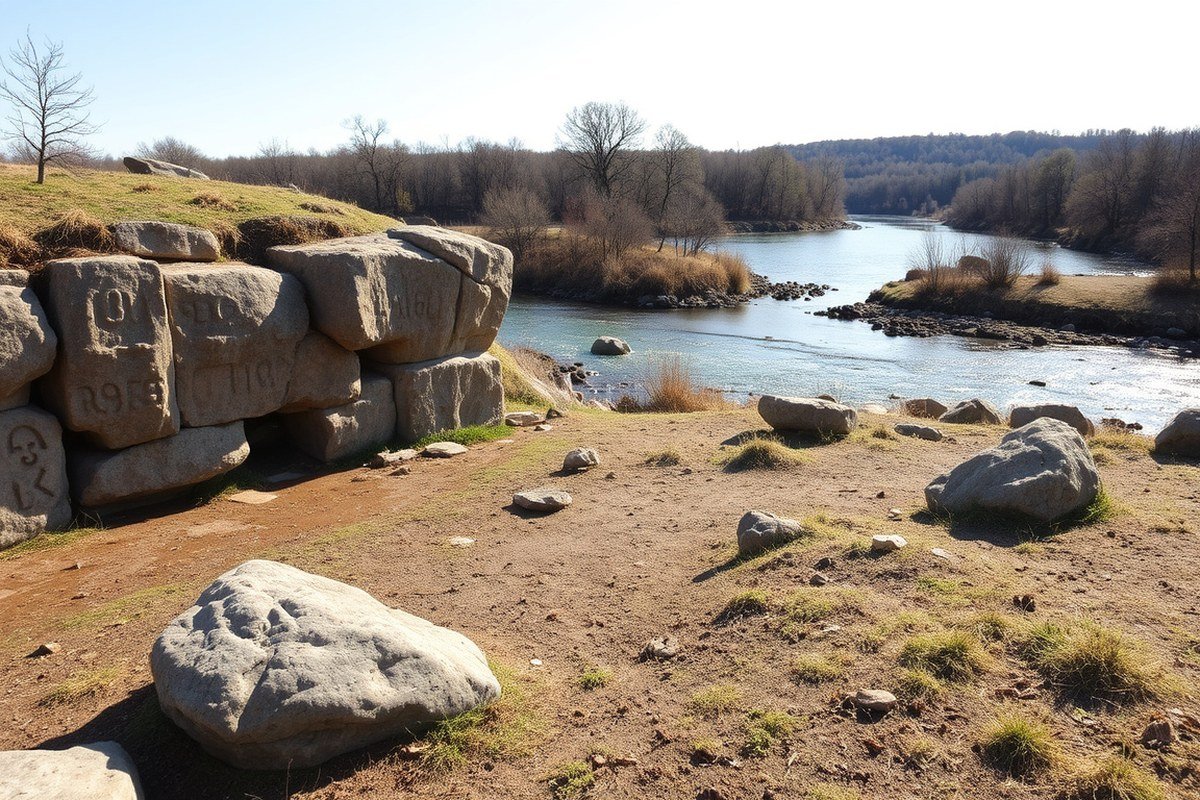
The first people to inhabit the Susquehanna River Valley arrived more than 10,000 years ago, establishing a long history of Indigenous presence. These early groups evolved through distinct cultural periods, the Paleo-Indian, Archaic, and Woodland, which set the foundation for later tribal societies. The Susquehannock tribe, an Iroquoian-speaking people, became one of the most influential native nations living along the river.
Paleo-Indian and Archaic Period Settlers
The earliest inhabitants, known as Paleo-Indians, appeared in the region shortly after the last Ice Age ended, around 10,000 to 8,000 BCE. These nomadic hunter-gatherers followed megafauna and gradually adapted to the changing climate. Archaeological sites reveal stone tools and early rock art attributed to these people.
As the climate warmed, the Archaic period (approximately 8,000 to 1,000 BCE) saw increased diversification in subsistence strategies. Archaic groups exploited a wider variety of plants and animals, using the river’s resources such as fish and freshwater mussels. They crafted more specialized tools, enabling more efficient hunting and fishing.
Woodland Cultures and Village Life
The Woodland period, starting around 1,000 BCE and lasting until European contact, marked significant advancements in social organization and technology. This period phased in agriculture, pottery, and permanent villages. Cultures like the Shenks-Ferry people established multi-household villages along the Susquehanna. They are credited with introducing a stratified society, implying organized leadership and division of labor.
This shift toward horticulture included growing staple crops such as corn, beans, and squash. These crops supplemented fishing and gathering, helping sustain growing populations without overexploiting river resources. The balance between agriculture and natural resource use promoted long-term environmental stability in the valley.
The Susquehannock Tribe’s Role and River Use
By the early 1600s, the Susquehannock people were a dominant force in the lower Susquehanna River Valley. This Iroquoian-speaking nation skillfully managed the river’s abundant fisheries, relying heavily on species like shad, sturgeon, and catfish. Their settlements, including multiethnic villages in present-day Cumberland County, were strategically located to maximize access to these resources.
The Susquehannock traded furs and river resources extensively, becoming middlemen connecting native groups from New York, Ohio, and Canada with European markets. Their river-based economy and military strength shaped the political dynamics of the region until their decline in the 17th century, after which the Haudenosaunee gained control.
Archaeological Evidence of Indigenous Settlements
Archaeological discoveries along the Susquehanna River support the long-term Indigenous presence. Rock art sites, artifacts like arrowheads, pottery shards, and remnants of village structures have been found, often linked to Woodland and Shenks-Ferry cultures. Radiocarbon dating places some of these findings thousands of years in the past.
Such evidence provides insight into the complex societies that existed before European contact and underscores the importance of the river as a continuous resource and cultural landmark. These settlements reveal how native people adapted to and shaped the Susquehanna environment over millennia.
Native Agricultural Practices and Ecosystem Sustainability
Indigenous agricultural practices in the Susquehanna Valley revolved around small-scale farming using crop rotation and companion planting that minimized soil depletion. The “Three Sisters” method, planting corn, beans, and squash together, promoted healthy soil and biodiversity. This helped sustain local fauna and flora that depended on the river’s ecosystem.
Also, native groups practiced controlled burns and selective hunting to maintain open landscapes and prevent overgrowth, supporting habitat diversity. These methods balanced human needs with the health of the river environment, demonstrating a relationship of stewardship rather than exploitation.
Respect archaeological sites by observing without disturbing them, as many areas along the Susquehanna hold irreplaceable cultural and historical importance.
How Did European Colonization Change the Susquehanna River Region?
European exploration and colonization transformed the Susquehanna River region significantly during the 17th and 18th centuries. Early settlers exploited the river for transport and commerce, while indigenous populations declined due to displacement, conflict, and changing land use. Settlements like those in Pennsylvania and Maryland developed along the riverbanks, fueling economic growth but also triggering tensions between Native Americans and colonizers.
Early European Exploration and Contact
Europeans first explored the Susquehanna River area in the early 1600s, entering a landscape rich with Native American history. The river was integral to local tribes, such as the Susquehannock and Lenape, who depended on it for sustenance and travel. By the late 17th century, figures like William Penn negotiated with the Lenape for settlement rights around the lower Delaware River, which indirectly affected regions connected to the Susquehanna.
Early explorers saw the river’s importance as they mapped its nearly 444-mile stretch from Otsego Lake in New York, flowing through Pennsylvania, and ending in the Chesapeake Bay in Maryland. This path provided a important route for travel and commerce, which helped increase European interest in settling the nearby areas.
Impact on Indigenous Populations and Land Use
European settlement led to severe disruptions for the indigenous peoples living along the Susquehanna. As colonizers expanded, Native American groups faced displacement from ancestral lands through treaties, warfare, and forced removal. The Susquehannock people, among the last native groups in the region before colonization intensified, suffered population losses and loss of territory.
Colonial practices also altered traditional land use. Europeans cleared forests for agriculture and settlements, reducing native habitats and changing how land and river resources were managed. The introduction of European farming techniques displaced Indigenous agricultural practices, and colonial demand for timber and fur shifted local economies.
Development of Settlements Along the River
By the 17th and 18th centuries, the Susquehanna River valley became home to several European settlements. The Province of Pennsylvania, established by William Penn in 1681, included land along the river that drew settlers for its fertile soil and access to transportation routes. Maryland and parts of New York also claimed sections of the riverbank, sometimes overlapping as seen in border disputes with Connecticut.
Settlements such as those near Bradford County and Binghamton began to grow, fueled by river commerce and agriculture. Towns on the river provided critical links between the interior lands and the Chesapeake Bay, facilitating the movement of goods including grain, lumber, and tobacco during colonial times.
Economic Role of the River in Colonial Commerce
The Susquehanna River functioned as a natural highway supporting commerce and trade in the colonies. Settlers used the river to transport goods downstream to markets in Maryland and the Chesapeake Bay. Its drop of 1,191 feet over 444 miles provided water power for mills, essential to early colonial industry.
Shipping by boat remained the most efficient method for moving bulk goods before extensive road and rail networks existed. The river’s accessibility encouraged economic growth and attracted more settlers seeking opportunity along its banks.
Conflicts Arising from Colonial Expansion
Expansion along the Susquehanna sparked frequent conflicts between European settlers and Native Americans. Competition for land and resources led to violent clashes, war, and uneasy treaties. The colonial push altered the political landscape dramatically, with indigenous groups gradually forced away from river territories.
European powers also competed among themselves over control of the region, influencing local alliances and conflicts. These struggles shaped the development and governance of the colonies through the 17th and 18th centuries, as control of the Susquehanna River corridor meant control of significant transportation and economic advantages.
What Role Did the Susquehanna River Play in Industry and Transportation?
The Susquehanna River played a major role in industry and transportation during the 18th and 19th centuries, serving as a important waterway for moving goods like coal, lumber, and agricultural products. Early in the 1800s, muscle-powered ferries, rafts, and boats transported raw materials and finished goods along the river. River levels rising in spring after snowmelt allowed around 2,500 to 3,000 rafts and arks to travel from upstate Pennsylvania through October, carrying anthracite coal, pig iron, lumber, and farm produce downstream to markets.
The rapid growth of industrial centers along the Susquehanna was due in part to the river’s water power, which ran mills and coal machinery. By the 1820s, canals were constructed beside the river, creating an extensive shipping network. These canals allowed anthracite coal mined in northeastern Pennsylvania to reach ports and cities like Philadelphia and Baltimore with relative ease. This network of waterways turned the Susquehanna into a commercial super-highway, essential to the coal and lumber industries driving America’s industrial growth at the time.
Infrastructure along the river expanded with the building of ferries, dams, and locks to support navigation and commerce. Dams provided water control for milling and transportation, while ferries moved people and goods across the river before the widespread construction of bridges. Towns such as Washington Boro developed as “Rivertowns,” relying heavily on river commerce for their economies. These communities thrived because the river offered a direct route to larger markets and access to resources.
The commercial rafting trade, a defining feature of Susquehanna transport, began to decline in the late 19th and early 20th centuries, especially as railroads became more efficient and reliable. By 1917, the last commercial raft floated down the river to a lumber mill in Marietta, signaling the end of an era dominated by river-based bulk shipping. After that, railroads largely replaced canal boats and rafts, and many canal sections were eventually filled in and converted to railroad tracks.
Flooding has frequently disrupted travel along the Susquehanna River. Major floods from Hurricane Agnes in 1972 and Tropical Storm Lee in 2011 caused widespread damage to riverside towns and reshaped riverbanks, damaging key trade infrastructure. These floods highlighted the river’s power and vulnerability, making it clear how challenging it is to maintain transport routes amid constantly changing river conditions.
By the mid-1900s, the use of the Susquehanna River for industrial transport declined with the slowdown of coal mining and railroad activity. Still, the river’s historical role in supporting local economies and connecting industrial centers left a lasting impact on the towns that grew along its banks. The river provided the foundation for early transportation and commerce, shaping regional development for much of the 18th and 19th centuries.
How Has the Susquehanna River Impacted the Chesapeake Bay and Ecology?
The Susquehanna River supplies about 50 percent of the freshwater flowing into the Chesapeake Bay, making it the bay’s largest freshwater source. This significant input affects the bay’s water levels, salinity, and overall ecosystem health. Because the river drains approximately 43 percent of the Chesapeake Bay watershed, pollutants and nutrients carried from upstream can significantly impact the bay’s water quality and aquatic habitats.
The river’s freshwater inflow helps maintain a delicate balance in the Chesapeake Bay’s brackish water, where saltwater mixes with freshwater. This environment supports a diverse range of species, including striped bass, blue crabs, and oysters in the bay. In the Susquehanna and its tributaries, you’ll find native brook trout, which are sensitive to pollution and serve as indicators of ecological health. Other key species include migratory fish like American shad and freshwater mussels that depend on clean, oxygen-rich water.
Pollutants traveling downstream from the Susquehanna include nitrogen, phosphorus, and sediment. In 2003, the river contributed 44 percent of the nitrogen, 21 percent of the phosphorus, and 21 percent of the sediment entering the Chesapeake Bay. Excess nitrogen and phosphorus fuel harmful algae blooms, which can deplete oxygen levels and create “dead zones” where fish and other wildlife struggle to survive. Sediment can smother underwater grasses and oyster beds, disrupting habitats important for many species. The table below compares the estimated pollutant contributions relative to the bay’s total inputs:
| Pollutant | % Contribution from Susquehanna River |
|---|---|
| Freshwater | 50% |
| Nitrogen | 44% |
| Phosphorus | 21% |
| Sediment | 21% |
Major ecological challenges facing the river system include pollution from agricultural runoff, urban stormwater, and wastewater discharges. Flood events, such as those in 2011 and 2018, have also sent large amounts of sediment into the bay, damaging sensitive habitats like oyster reefs. These issues threaten water quality, reduce biodiversity, and affect industries dependent on the bay’s health, like fishing and tourism.
Efforts to reduce pollution require coordinated land management practices upstream, such as controlling fertilizer use, restoring wetlands, and improving wastewater treatment. Maintaining riparian buffers, vegetated areas alongside the river, helps trap sediment and nutrients before they reach the water. Regular monitoring of indicator species like brook trout can help assess improvements in ecological health.
Avoid using lawn fertilizers near the river and its tributaries to prevent excess nutrients from fueling algae growth downstream in the Chesapeake Bay.
What Historical Infrastructure Shaped River Use and Community Development?
The Susquehanna River’s flow and surrounding communities developed through a series of key infrastructure projects like bridges, canals, dams, ferries, and railroads. Early on, ferries were important for crossing the river, especially before bridges became common. They connected settlements and allowed movement of people and goods. However, as technology advanced during the 19th century, bridges gradually replaced ferries, providing fixed and more reliable transportation routes that helped towns along the river grow and prosper.
Canals were another major feature shaping river use. The Susquehanna Canal, constructed in the early 1800s, played a important role in navigation and trade. It allowed boats to bypass rapids and shallow sections, facilitating transport of coal and lumber. Yet, as railroads expanded, canals lost importance, with rail lines providing faster, year-round service. This shift accelerated community development near rail hubs and stations along the river, changing settlement patterns and economic activities.
Dams significantly altered the river’s ecology and navigation. The Conowingo Dam, built between 1926 and 1928 near the Maryland-Pennsylvania border, remains one of the largest hydroelectric projects on the river. It spans about 3 miles and impounds a large reservoir used for power generation and flood control. While the dam produces electricity and supports regional energy needs, it also interrupts fish migration and sediment transport, impacting river ecology downstream. Concerns over pollution and habitat disruption at Conowingo have drawn attention from environmental groups, including a 2016 ranking by American Rivers naming the Susquehanna as America’s third most endangered river largely due to dam-related issues.
The timeline of infrastructure development starts with ferries dominating crossings in the 18th century, followed by canal construction in the early 19th century. Railroads emerged by the mid-19th century, leading to bridge building that expanded in the late 1800s to early 1900s. The Conowingo Dam’s construction in the 1920s marked a major hydroelectric development. Each infrastructure phase progressively shaped human settlement. Communities initially clustered near ferry landings, then near canal locks and towpaths. Railroads encouraged the rise of towns with stations, while bridges spurred expansion across the riverbanks.
Building and maintaining such infrastructure required significant investment and coordination. Canal construction demanded engineering to manage locks and water flow, costing thousands of dollars per mile by 19th-century standards. Railroad and bridge projects required substantial steel and labor, altering landscapes and sometimes displacing residents. Dams like Conowingo involved complex engineering for dam walls, turbines, and powerhouses, with ongoing costs for operation and environmental mitigation. These projects produced reliable transport and energy sources but also introduced challenges, such as managing flood risks and ecological harm.
Understanding the history of bridges, canals, dams, ferries, and railroads along the Susquehanna River shows how human infrastructure shaped both natural flow and community growth. Each innovation allowed greater connectivity and economic opportunity but altered the river environment, creating a legacy of tradeoffs that continue to influence the region today.
How Has the Susquehanna River Environment Changed and What Threats Has It Faced?
The Susquehanna River faces many environmental challenges, including pollution, sediment buildup, farming runoff, waste from industries, floods, and climate shifts. A large portion of the pollution stems from surplus manure from farms, runoff filled with nutrients and sediment from agriculture, stormwater from cities and suburbs, and sewage that is either untreated or poorly treated. These contaminants change the river’s chemical makeup and reduce water quality, posing risks to aquatic life and the drinking water safety of more than 4 million residents in the watershed.
Over time, land use in the Susquehanna River basin has shifted from predominantly forested areas to mixed uses including dairy farms, coal mining operations, suburban developments, and urban centers. This increase in agricultural and industrial activity has led to higher levels of nutrient pollution, particularly nitrogen and phosphorus, which feed harmful algal blooms downstream in the Chesapeake Bay. Sediment runoff from farming and construction also clouds the water, reducing sunlight penetration and affecting fish and plant life.
Flooding remains a major environmental threat along the Susquehanna. The basin is one of the most flood-prone regions in the United States, with severe events such as Tropical Storm Lee in September 2011 causing historic floodwaters. Floods can spread pollutants into surrounding communities, damage infrastructure, and disrupt habitats. As climate change increases the frequency of intense storms, flood damage and pollutant runoff risks are expected to rise as well.
Environmental disasters such as acid mine drainage from abandoned coal mines and failing wastewater treatment plants have also contributed to water quality degradation. These sources release toxic metals and chemicals that harm aquatic life. Inadequate sewage treatment in older communities allows raw waste to enter the river during heavy rains, adding pathogens and organic pollutants.
Efforts to protect the Susquehanna include federal and state programs targeting nonpoint sources like farms and stormwater drains. Investments focus on upgrading wastewater treatment plants, restoring wetlands and riparian buffers to trap runoff, and community outreach to reduce pollution. These conservation projects have helped slow the river’s decline but much work remains to improve sediment controls, manage urban runoff, and prepare for climate-related challenges.
A practical checklist to reduce environmental threats includes reducing fertilizer and manure applications on farms, implementing erosion control measures, maintaining septic systems, managing stormwater through green infrastructure, and restoring natural floodplains. Timeline milestones to watch for include ongoing updates to wastewater plants and increased adoption of best management practices in agriculture, aiming for measurable water quality improvements within 5 to 10 years.
The tradeoff often involves balancing economic activities like farming and development with environmental protections. Farmers may face costs ranging from several hundred to thousands of dollars per acre to upgrade nutrient management systems. Communities may invest millions upgrading treatment plants over decades. Good results show clearer water, healthier fish and wildlife, and reduced flooding impact. Without action, water quality will continue to decline, jeopardizing both ecosystems and human health in the watershed.
What Conservation Efforts Have Helped Protect the Susquehanna River?
Efforts to protect the Susquehanna River include restoration projects, pollution controls, advocacy, and stewardship activities such as maintaining the river trail. Conservation groups, local governments, and volunteers work together to improve water quality, preserve wildlife habitat, and create recreational opportunities. Laws that regulate pollution and support restoration help safeguard the river for future generations.
Major Conservation Organizations and Their Roles
The Susquehanna River Trail Association (SRTA) stands out as a key organization in conserving the river, especially through its role in creating and maintaining the Susquehanna River Trail. Brook Lenker, the current president and one of the trail’s founders, has been a leading figure in advocating for the river’s preservation. The SRTA organizes cleanups, promotes sustainable outdoor recreation, and educates the public on the river’s ecological importance.
Other groups include state agencies like the Pennsylvania Fish and Boat Commission, which oversees fishing regulations and public access, and environmental organizations that focus on water quality improvement. These groups work to enforce pollution controls and support efforts to protect public lands and islands along the river. Many of the river’s 500 islands, mostly in public ownership, serve as natural habitats and conservation areas.
Timeline of Key Restoration Projects
Modern conservation efforts began gaining momentum in the 1990s with public planning investments between 1996 and 1997 that helped formalize protection goals for the river. The Susquehanna River Trail was officially opened in 1998 during a ceremony on Harrisburg’s City Island, marking a milestone in river stewardship by encouraging responsible recreation and community engagement.
Following that, tighter pollution controls were applied, spurred by federal and state legislation aimed at reducing nutrient runoff and industrial waste, addressing the river’s declining water quality. Restoration investments prioritize sections of the river that impact larger ecosystems like the Chesapeake Bay. Ongoing projects include habitat restoration and streambank stabilization to prevent erosion.
How to Participate in River Conservation Efforts
You can join conservation efforts by volunteering with groups like the Susquehanna River Trail Association or attending local river cleanups. Maintaining the trail, which stretches over 50 miles and includes around 23 primitive campsites, is one way volunteers help keep natural areas healthy and accessible. Staying informed about state regulations and choosing eco-friendly boating or fishing practices also aids water quality.
Another simple step involves reducing personal runoff pollution by using rain barrels, minimizing fertilizer use, and properly disposing of waste. Supporting policies that fund river restoration ensures long-term protection. For a practical start, contact local conservation groups or state environmental agencies to learn about accessible opportunities near you.
Regularly check your local watershed group’s announcements to find upcoming volunteer events and training sessions for river stewardship.
Taking Action to Protect and Appreciate the Susquehanna River
Understanding the Susquehanna River’s history and challenges helps you engage in its preservation effectively. Follow these steps to make a positive impact and connect with the river’s heritage.
- Today: Research local conservation groups focused on the Susquehanna River and subscribe to their updates. This keeps you informed about ongoing efforts and events.
- This week: Organize or join a river cleanup activity near your community. Participation directly improves water quality and habitat health.
- This month: Visit historical sites or museums along the river to deepen your understanding of its role in regional development. This enriches your appreciation and ability to share its story.
- Over the next 3 months: Reduce your personal impact on the river by adopting eco-friendly habits like limiting lawn fertilizer use and managing stormwater runoff. You’ll notice less pollution entering waterways in your area.
- Ongoing: Advocate for policies that support watershed protection by contacting local officials or attending public meetings. Increasing public support can influence stronger environmental regulations.
Frequently Asked Questions
What Cultural Influences Shaped Communities Along the Susquehanna River?
The Susquehanna River region reflects Native American, European, and later American cultural influences, shaping diverse local traditions and settlements. This blend is evident in place names, historical sites, and ongoing cultural practices in the valley.
How Did the Susquehanna River Affect Early American Religious Movements?
The Susquehanna River influenced the Latter Day Saint movement by marking historical events and migration routes tied to its early leaders. The river’s valley served as a backdrop for spiritual developments in American religious history.
What Economic Activities Thrived Along the Susquehanna River Beyond Transportation?
Agriculture, fishing, and milling prospered thanks to the river’s fertile valleys and water power. These activities supported local economies and shaped settlement patterns throughout the river’s course.
How Did the Terrain of the Susquehanna River Valley Affect Historical Settlement?
The river’s deep canyon and varied terrain created natural boundaries influencing town placement and travel routes. Settlers adapted to the landscape, which also provided natural resources and strategic advantages.
What Role Did the Susquehanna River Play During the American Revolution?
The river served as a strategic route for troop movements and supply transport during the Revolution. Control over the river and surrounding areas impacted military campaigns in the region.
How Has the Susquehanna River Inspired Local Folklore and Legends?
The river has inspired numerous local stories and legends tied to its natural features and historical events. These tales reflect the cultural identity and history of river communities.
Final Thoughts
The Susquehanna River has shaped cultural, economic, and environmental landscapes for thousands of years. By learning about its past and current challenges, you can help ensure its future health. Start by connecting with a local conservation group today and see how your efforts can contribute to the river’s wellbeing and heritage preservation.






3 Comments