Gas Washer and Dryer: A Complete Buying Guide
Are you tired of long drying times and soaring energy bills? You’re not alone—many people struggle with finding efficient laundry solutions that save both time and money.
If you’re looking to upgrade, a gas washer and dryer might be just what you need.
Gas washers and dryers are a smart choice if you want faster drying and lower energy costs. They use natural gas, which heats up quicker and costs less than electricity, saving you both time and money.
They come in various sizes and cycles to fit your laundry needs, but keep in mind they require proper ventilation and professional installation for safety.
Ready to find the right features, maintenance tips, and top brands for your home?
Key Takeaways
Gas washers and dryers use natural gas for faster drying and better energy efficiency compared to electric models.
Proper installation is important. Make sure your gas line is compatible, hire professionals for setup, and ensure good ventilation for safety.
Choose the right capacity for your household: small (2-3 cu. ft), medium (3.5-4.4 cu. ft), or large (4.5+ cu. ft).
Regular maintenance helps keep everything running smoothly. Check gas connections, look for leaks, and clean vents often to stay safe.
Top brands like Bosch, Whirlpool, Samsung, LG, and Maytag offer reliable gas washer and dryer options with advanced features.
Gas vs. Electric Washers and Dryers: How They Work
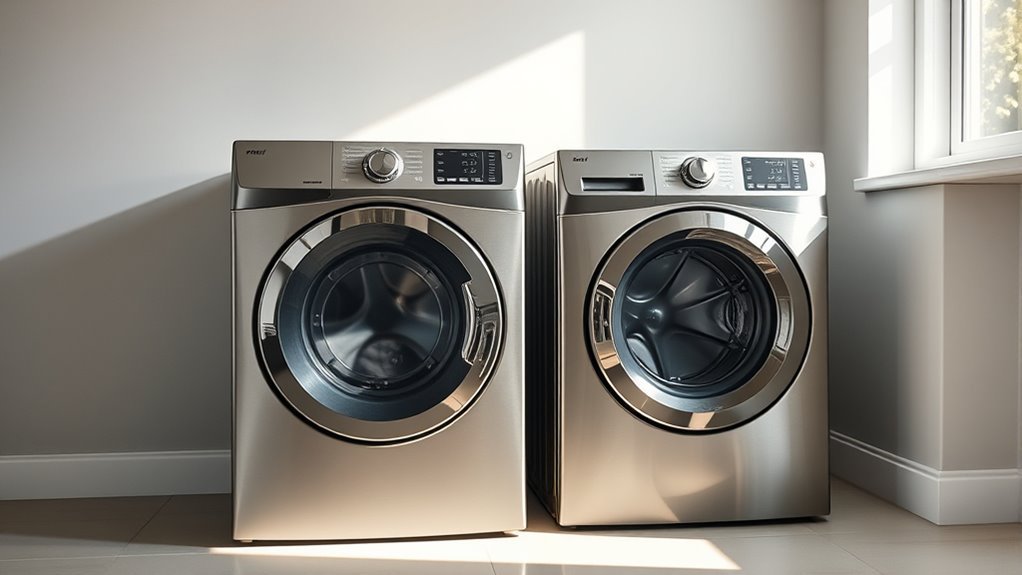
When choosing between gas and electric washers and dryers, understanding how each works can help you make the best decision for your home. Gas models use natural gas to heat the dryer, offering better gas efficiency and faster drying times. Electric versions rely on electric coils, which often means simpler installation requirements but potentially higher energy costs.
You’ll want to consider safety regulations, as gas appliances require proper ventilation and adherence to stricter codes. Performance comparisons show gas dryers typically heat up quicker, but electric units are easier to install in most homes.
Maintenance needs vary; gas units may need more frequent checks to ensure there are no leaks, while electric models usually require less upkeep. Cost analysis often favors gas for long-term savings, though initial installation can be more expensive.
Brand reliability and consumer reviews can help guide your choice, highlighting durability and user satisfaction. Understanding these factors helps you pick what fits your lifestyle best.
Top Benefits of Choosing a Gas Washer and Dryer
Although electric dryers have their advantages, choosing a gas washer and dryer offers several key benefits that can make a noticeable difference in your laundry routine.
First, gas models excel in energy efficiency, reducing operational costs compared to electric units. When you compare brands, you’ll find many top-rated gas units have higher performance ratings and positive reviews highlighting their faster drying times.
Gas dryers offer superior energy efficiency and faster drying times, earning higher ratings and positive reviews.
Installation requirements for gas appliances are different, so make sure your space meets safety standards like proper ventilation and gas line connections. These precautions help minimize risks and ensure safe operation.
Maintenance for gas washers and dryers is usually straightforward. Regular checks on gas lines and burners will keep your machines running smoothly.
Key Features to Consider: Capacity, Cycles, and More
Since your laundry needs can change, choosing a gas washer and dryer with the right capacity and cycles makes a big difference in convenience and efficiency. Look for capacity options that match your household size—larger capacities handle bulky items and bigger loads, saving you time.
Cycle types are important too. Versatile cycles let you customize washing and drying based on fabric types and soil levels, helping protect your clothes.
Here’s a quick guide to key features:
| Feature | Options Available | Benefits |
|---|---|---|
| Capacity Options | Small (2-3 cu. ft) | Great for singles or couples |
| Medium (3.5-4.4 cu. ft) | Works well for average families | |
| Large (4.5+ cu. ft) | Handles large or bulky loads | |
| Cycle Types | Normal, Delicate, Heavy Duty | Lets you customize care and efficiency |
| Additional Features | Steam, Quick Wash, Wrinkle Control | Improves fabric care and saves time |
Choosing wisely ensures your washer and dryer meet your specific needs without wasting resources.
How Gas Washers and Dryers Save You Energy and Money
You’ll see that gas washers and dryers use less electricity, so your utility bills tend to be lower each month. Plus, they dry your clothes faster, which means you save time and energy with every load. Picking gas appliances can be a smart move if you’re looking to cut costs without sacrificing how well they work.
Lower Utility Bills
When you choose a gas washer and dryer, you’re opting for a more efficient way to do laundry that can really lower your utility bills. Thanks to their better energy efficiency compared to electric models, you’ll see savings month after month. Here’s why:
- Gas dryers use natural gas, which usually costs less than electricity per unit of energy.
- Gas washers often need less electricity for water heating since gas heats water faster and more efficiently.
- A cost comparison shows that over time, gas appliances cut your overall energy use, which directly lowers your utility expenses.
Faster Drying Efficiency
Although gas washers and dryers may cost more upfront, they dry your clothes faster than electric models, saving you both time and energy. Their advanced drying tech and superior heat efficiency ensure quicker moisture removal.
Moisture sensors play a key role by adjusting drying cycles to prevent over-drying. This protects your fabrics and cuts down on energy waste. An optimized airflow design boosts drying speed while caring for your clothes.
Many gas dryers also feature steam options that refresh clothes and reduce wrinkles, helping you spend less time ironing. With higher energy ratings, these units use fuel more effectively, leading to lower utility bills over time.
Choosing gas means faster drying without sacrificing quality or efficiency. It’s a smart investment for anyone looking to save time and money while taking good care of their clothes.
What You Need to Know About Installing Gas Washer and Dryer Units
Installing gas washer and dryer units requires careful attention to safety and proper connections to guarantee efficient operation. Before you start, understand key installation requirements to avoid costly mistakes.
Proper installation of gas washers and dryers is essential for safety and efficient operation.
First, measure your laundry space accurately to secure proper unit placement and enough clearance for ventilation.
Next, evaluate gas line considerations. Your home must have a compatible gas line that meets safety regulations, which often means professional installation is the safest bet.
Finally, assess venting options. Proper venting guarantees moisture and exhaust exit safely, maintaining air quality and drying performance.
Here’s a quick checklist:
- Confirm space measurements and unit placement for accessibility and airflow.
- Verify gas line compatibility and decide between professional installation or a careful DIY setup.
- Choose and install venting that meets local safety regulations.
Following these steps helps you install your gas washer and dryer efficiently and safely.
Safety Tips for Gas Washer and Dryer Use
Because gas washer and dryer units involve combustible fuel, you must prioritize safety to prevent hazards like gas leaks or carbon monoxide buildup. First, install a reliable gas leak detection system near your appliances. This helps you catch leaks early before they become dangerous.
Always make sure your laundry area is well-ventilated to reduce the risk of harmful gas buildup. For fire safety, keep the area around your washer and dryer free of flammable materials like lint, paper, or cleaning supplies.
Regularly check the gas connections for tightness and any signs of wear or damage. If you ever smell gas or suspect a leak, turn off the gas supply immediately and call a professional for inspection. Never try to repair gas lines yourself.
Following these safety tips helps protect your home and family while enjoying the efficiency of your gas washer and dryer. Stay alert and proactive for worry-free use.
Maintenance Tips to Keep Your Gas Washer and Dryer Running Smoothly
Want to keep your gas washer and dryer running smoothly? One easy thing you can do is clean out the dryer vent regularly. It helps prevent lint buildup, which can clog the airflow and make your appliance work harder than it needs to. Plus, good airflow means your dryer will dry clothes faster and more efficiently.
It’s also a good idea to check the gas connections from time to time. Look for any leaks or damage to make sure everything’s safe and working properly. Taking these simple steps can really help keep your appliances in tip-top shape and even extend their lifespan.
Regular Vent Cleaning
Although you might not think about it often, regularly cleaning the vents on your gas washer and dryer is essential for keeping them running efficiently and safely. Over time, lint buildup can clog your ventilation systems, reducing airflow and increasing fire risk.
To maintain your appliances, follow these steps:
- Disconnect the dryer and gently remove the vent hose.
- Use a vent brush or vacuum to clear lint from both the hose and the wall vent.
- Reattach the hose securely, ensuring no gaps that could cause leaks.
Doing this every few months prevents overheating and extends your dryer’s lifespan. Keeping the ventilation systems clear helps your gas washer and dryer perform better, saves energy, and protects your home from potential hazards.
Don’t skip this simple, vital maintenance task.
Inspect Gas Connections
Keeping your vents clean helps your gas washer and dryer run safely, but paying attention to the gas connections is just as important. Regular gas line inspection guarantees there are no leaks or damages that could compromise connection safety.
Check the gas hose and fittings for cracks, corrosion, or loose attachments. Always turn off the gas supply before inspecting to prevent accidents.
If you notice a sulfur-like smell or hear a hissing noise, stop using the appliances immediately and call a professional. Maintaining tight, secure connections reduces the risk of gas leaks and improves overall safety.
How to Choose the Right Size Gas Washer and Dryer for Your Household
How do you know what size gas washer and dryer will fit your household’s needs? Start by evaluating your laundry habits and daily load size. Size considerations are essential to guarantee efficiency and avoid energy waste. Here’s how to match your appliance size to your household needs:
Determine the right gas washer and dryer size by assessing your laundry habits and daily load needs.
- Evaluate laundry volume: If you have a large family, choose a washer with a capacity of 4.5 cubic feet or more to handle bulky loads. For singles or couples, a smaller 2.5 to 3.5 cubic feet size usually suffices.
- Consider available space: Measure your laundry area carefully. Your washer and dryer should fit comfortably without crowding or blocking access.
- Factor in drying time: Larger dryers handle bigger loads faster, saving time. Match dryer capacity to washer size for balanced cycles.
Best Gas Washer and Dryer Brands to Consider
Choosing the right gas washer and dryer brand can make a big difference in performance and reliability.
If you’re into sleek design and advanced tech, Bosch models offer impressive efficiency and quiet operation. For energy savings, Whirlpool stands out, helping you cut utility costs without losing cleaning power.
Samsung often includes smart connectivity and innovative drying options, making it perfect if you want modern convenience at your fingertips. LG is known for reliability, giving you consistent results and fewer breakdowns, so you can enjoy peace of mind over the years.
Meanwhile, Maytag’s durability makes it ideal for heavy-duty use, handling frequent loads without wearing down. Each brand has its strengths, so think about what matters most—tech, energy efficiency, or dependability—to find the best gas washer and dryer for your home.
Where to Buy Gas Washers and Dryers and How to Get the Best Deals
Looking to buy gas washers and dryers? You’ll find them at all the big retailers out there, each offering their own prices and perks. It’s a good idea to know where to shop and when to make your purchase — that way, you can save a nice chunk of change. So, let’s check out some of the top stores and share some smart tips to help you snag the best deals.
Top Retailers Comparison
Several top retailers offer gas washers and dryers, each with unique advantages that can help you find the best deal. When choosing where to shop and comparing prices, consider these three popular options:
- Home Improvement Stores. They offer a wide range of models, expert advice, and often bundle deals for washers and dryers.
- Online Retailers. You get the convenience of shopping from home, access to numerous customer reviews, and the ability to compare prices quickly across different brands.
- Appliance Specialty Stores. These stores provide personalized service, installation options, and sometimes have exclusive models or special promotions.
Tips For Price Savings
When hunting for the best deals on gas washers and dryers, knowing where and when to buy can save you a lot. Use price negotiation strategies when visiting local stores, and don’t hesitate to ask for discounts or price matching.
Online retailers often offer competitive prices, especially during seasonal sales. Timing your purchase around major holidays or clearance events can help you save even more.
Here’s a quick guide to help you plan:
| Where to Buy | Best Time to Buy |
|---|---|
| Local Appliance Stores | End of season clearance |
| Big Box Retailers | Holiday sales |
| Online Marketplaces | Black Friday or Cyber Monday |
| Outlet Stores | Model changeover periods |
| Manufacturer Websites | Flash sales |
Following these seasonal sales tips and being savvy with negotiation can help you get the best value.
Frequently Asked Questions
Can Gas Dryers Be Used in Apartments or Rental Units?
You can use a gas dryer in apartments or rental units, but you’ll need to check apartment regulations first. Many places have strict rules about gas appliances because of safety concerns.
You also need proper venting options since gas dryers require venting to the outside to prevent carbon monoxide buildup. If venting isn’t possible, consider electric or ventless dryers to stay safe and follow your apartment’s rules.
Do Gas Washers and Dryers Require Special Ventilation?
It’s a coincidence if you thought gas washers and dryers don’t need special ventilation—they actually do. You’ll need to meet specific ventilation requirements to guarantee safe and efficient operation.
Proper venting prevents gas buildup and removes moisture, so it’s an essential installation consideration. Make sure your space allows for vent ducts leading outside, and check local codes.
Skipping this step risks safety and performance, so don’t overlook it when setting up your appliances.
How Long Is the Warranty on Typical Gas Washer and Dryer Models?
Typical gas washer and dryer models usually come with a warranty that lasts about one year, covering parts and labor.
You can often pay extra for warranty extensions that give you protection beyond that initial year. It’s a good idea to check the specific terms when you buy so you know what’s covered and for how long.
Extensions can save you money if something goes wrong after the original warranty ends.
Are Gas Washer and Dryer Sets Compatible With Smart Home Systems?
You might be surprised—yes, many gas washer and dryer sets offer smart home integration. But don’t assume all models support this; gas appliance compatibility varies widely.
If you want seamless control via your smartphone or voice assistant, you’ll need to check each unit’s features carefully. Some brands excel at smart connectivity, while others focus solely on traditional functions.
What Is the Average Lifespan of a Gas Washer and Dryer?
You can expect the average lifespan of a gas washer and dryer to be around 10 to 15 years. To help yours last as long as possible, follow maintenance tips like cleaning lint traps regularly and checking gas connections.
Keeping up with maintenance not only extends their life but also improves energy efficiency. This can save you money on utility bills in the long run.
With proper care, your appliances will perform well and serve you reliably for years.
Conclusion
Choosing a gas washer and dryer is like having a trusty steed in your laundry room—reliable, efficient, and ready to serve. You’ll save energy, cut costs, and enjoy faster drying times. Just consider capacity, installation needs, and maintenance to keep things smooth.
With the right size and brand, your laundry routine will feel less like a chore and more like a breeze. Upgrading to a gas washer and dryer can truly transform your laundry game.
So go ahead, embrace the efficiency of a gas washer and dryer and welcome the future with a classic twist!